Category: Computers

  • Order Szbox F12 Mini PC: 64GB RAM & 4TB SSD Available Now

    Order Szbox F12 Mini PC: 64GB RAM & 4TB SSD Available Now

    Key Takeaways

    1. The Szbox F12 mini PC is available on Aliexpress for €386 in a barebone version without RAM or SSD.
    2. Buyers can choose from Intel Core Ultra 5 125H, Core Ultra 7 155H, and Core Ultra 7 165H processors.
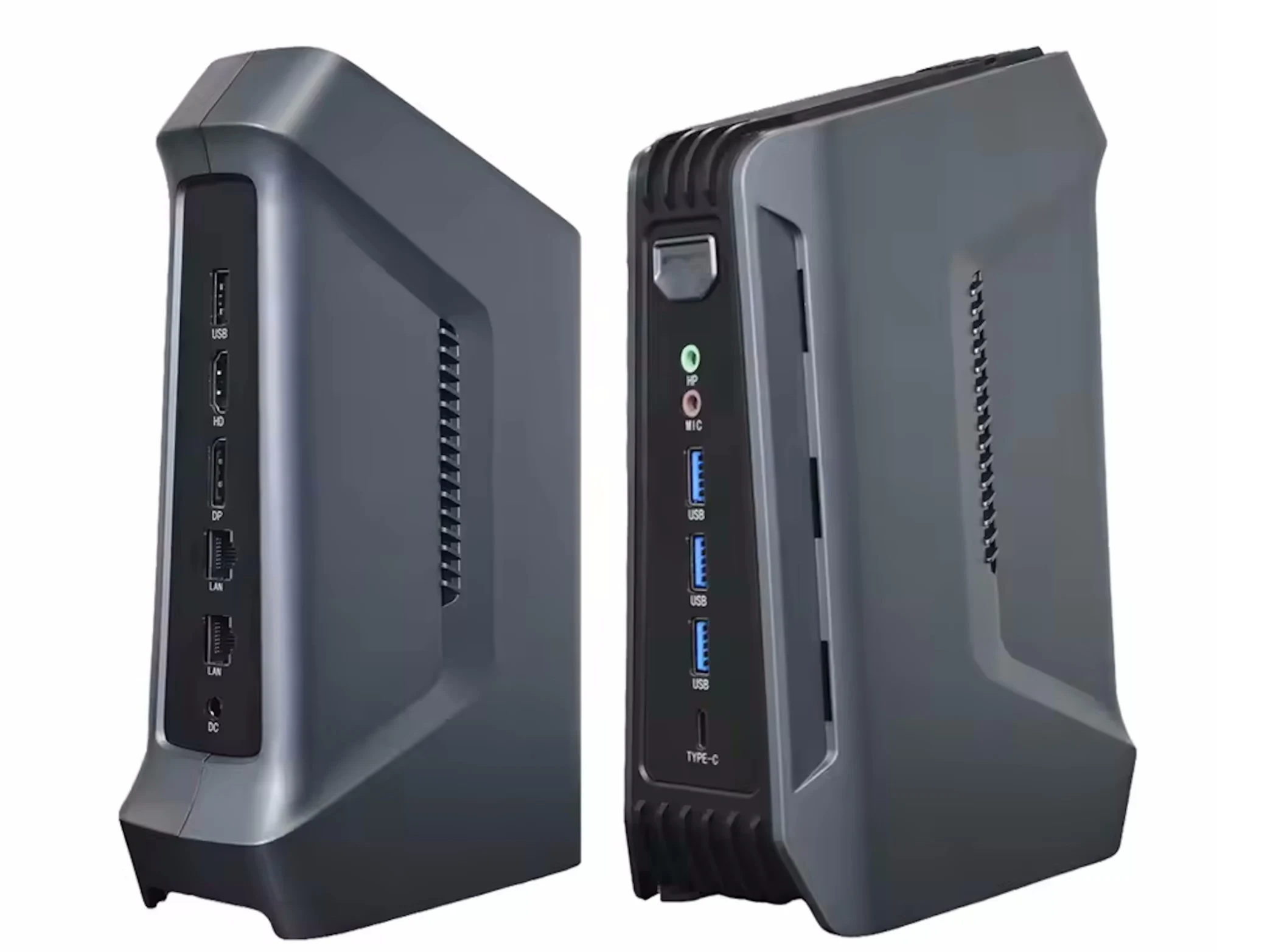
    3. It features a striking design measuring 6 x 3 x 8.5 inches and uses a vapor chamber cooling system.
    4. The mini PC supports up to 96GB of RAM and two M.2 2280 PCIe SSDs with a total capacity of 4TB.
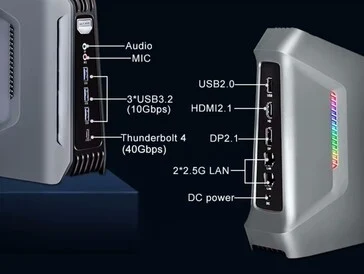
    5. Connectivity options include WiFi 6, two 2.5Gbit/s Ethernet ports, HDMI 2.1, DisplayPort 2.1, and multiple USB 3.2 Gen 2 ports.


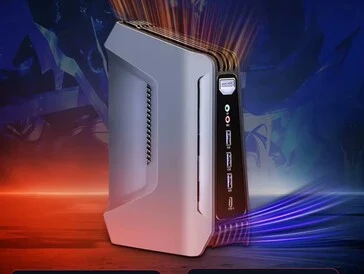
    The F12 is not a completely new mini PC, but it’s now available from Szbox. This computer is currently listed on Aliexpress for €386, which is the cost for the barebone version that doesn’t include RAM or an SSD. Buyers have the option to select from an Intel Core Ultra 5 125H, Core Ultra 7 155H, and Core Ultra 7 165H. This device ships from China to various countries, but customers should keep in mind the possible import costs.

    Striking Design and Dimensions

    As previously mentioned, this mini PC features a quite eye-catching design and measures approximately 6 x 3 x 8.5 inches. The cooling system reportedly uses a vapor chamber, which could assist in maintaining temperature levels even during heavy use. There’s no dedicated graphics card, but an external GPU can be connected using Thunderbolt 4. In this scenario, users might experience slower performance because of the limited bandwidth offered by TB4.

    Memory and Connectivity Options

    Regardless, the new Szbox F12 can be configured with up to 96GB of RAM and can hold two M.2 2280 PCIe SSDs with a combined capacity of 4TB. Additionally, the mini PC can connect to networks via WiFi 6 and two Ethernet ports that support 2.5Gbit/s each. Other connectivity features include HDMI 2.1, DisplayPort 2.1, and three USB 3.2 Gen 2 ports located on the front, along with two separate 3.5mm jacks designated for microphones and speakers.

    Source:
    Link

  • Surface Pro vs. MacBook Air: Is Microsoft’s Speed Claim True?

    Surface Pro vs. MacBook Air: Is Microsoft’s Speed Claim True?

    Key Takeaways

    1. Microsoft is promoting its Surface devices with Qualcomm Snapdragon X Elite as being 58% faster than the older MacBook Air with Apple M3.
    2. Comparisons may be misleading, as Microsoft is not comparing with the newer MacBook Air M4.
    3. Benchmark tests show the Surface Pro OLED with Snapdragon X Elite outperforms the MacBook Air M3 by about 49%.
    4. Apple M4 GPU performance significantly exceeds that of Snapdragon X Elite, with higher options available in the M4 Pro and M4 Max.
    5. Marketing claims should be viewed skeptically due to potential bias in performance comparisons.


    Apple’s M-series ARM processors have gained a strong reputation for delivering high speed with low power use in recent years, but now Microsoft is fighting back with its marketing strategies. According to a video linked below, Surface devices that run on the Qualcomm Snapdragon X Elite are said to be 58% quicker than the MacBook Air.

    A Closer Look at the Details

    However, when you dig deeper into the specifics, it becomes clear that Microsoft’s comparisons might not be entirely fair. They are comparing the older MacBook Air that features the Apple M3, rather than the newer MacBook Air M4, which starts at $849 on Amazon. Our benchmark tests indicate that the Microsoft Surface Pro OLED with the Snapdragon X Elite does indeed outperform the MacBook Air M3 by approximately 49% in the Cinebench 2024 Multi-Core benchmark. Still, its performance is nearly equal to that of the Apple M4, even though the MacBook Air lacks a fan, has two fewer CPU cores, and consumes less power.

    Performance in Graphics

    In terms of GPU performance, the Apple M4 significantly surpasses the Snapdragon X Elite. For those who require even greater performance, Apple provides more potent laptops featuring the Apple M4 Pro and Apple M4 Max. In contrast, Microsoft does not have any device equipped with a quicker Snapdragon chipset. This advertising effort by Microsoft further demonstrates that such marketing statements should be approached skeptically, as companies often attempt to tilt the scales in their favor.

    Source:
    Link

  • Space Forge Raises $30M for ForgeStar Satellites in Microgravity

    Space Forge Raises $30M for ForgeStar Satellites in Microgravity

    Key Takeaways

    1. Space Forge raised £22.6 million ($30 million) in Series A funding, the largest for a UK space-tech firm, led by the NATO Innovation Fund.
    2. The company utilizes unique space conditions to produce materials that cannot be made on Earth, benefiting industries like semiconductors and clean energy.
    3. Space-manufactured materials could reduce CO2 emissions by up to 75% and energy use by 60%, supporting global sustainability efforts.
    4. Funds will accelerate the development of the ForgeStar-2 satellite and finance the first ForgeStar-1 in-orbit demonstration planned for 2025.
    5. In the US, Space Forge aims to build a semiconductor manufacturing capability to strengthen the domestic supply chain and reduce reliance on Earth-based production.


    UK start-up Space Forge has successfully secured £22.6 million (approximately $30 million) in its Series A funding round, marking it as the largest amount raised by a British space-technology firm. The NATO Innovation Fund spearheaded this investment, with additional contributions from World Fund, the National Security Strategic Investment Fund, and the British Business Bank’s Regional Angels Programme.

    Unique Space Environment

    Space Forge takes advantage of the extraordinary conditions found in space—like microgravity, vacuum, and significant temperature variations—to create materials that can’t be made on Earth. These materials manufactured in space have the potential to push forward industries such as semiconductors, quantum computing, clean energy, and defense technologies.

    Environmental Benefits

    Research shows that materials produced in orbit could cut CO2 emissions by up to 75 percent and reduce energy use by as much as 60 percent for vital infrastructure applications. This could significantly improve climate resilience and aid in global sustainability initiatives.

    Future Plans

    The funds raised will help Speed up the development of ForgeStar-2, a next-gen, reusable manufacturing satellite, as well as finance the first ForgeStar-1 in-orbit demonstration that is expected in 2025. Both missions are set to confirm a scalable and returnable platform for creating high-performance materials in space.

    In the US, Space Forge Inc. is concentrating on establishing a comprehensive, end-to-end semiconductor manufacturing capability through the CHIPS and Science Act. Michelle Flemming, the company president, emphasizes the aim of enhancing domestic supply chain stability and decreasing reliance on traditional Earth-based production systems.

    Source:
    Link

  • Tsinghua Unigroup Chair Receives Suspended Death Sentence for Corruption

    Tsinghua Unigroup Chair Receives Suspended Death Sentence for Corruption

    Key Takeaways

    1. Zhao Weiguo, former chairman of Tsinghua Unigroup, received a death penalty with a two-year delay, likely resulting in life imprisonment due to serious misconduct impacting national interests.
    2. His wrongdoings included diverting state assets worth around 470 million yuan and causing losses of nearly 890 million yuan to a subsidiary.
    3. Despite his criminal actions, Zhao showed remorse and attempted to return some profits, influencing the court’s decision for a suspended sentence.
    4. Zhao played a key role in making Tsinghua Unigroup a leader in semiconductors but faced downfall after the company defaulted on $31 billion in debts.
    5. His conviction is part of a broader trend of investigations into individuals in China’s semiconductor sector, with future state assistance expected to involve stricter oversight.


    The Intermediate People’s Court in Jilin has given former chairman of Tsinghua Unigroup, Zhao Weiguo, a death penalty with a two-year delay, which usually turns into life in prison. As reported by state broadcaster CCTV, the court determined that Zhao’s wrongdoings were “extremely huge” and greatly harmful to national interests.

    Details of the Case

    Prosecutors laid out a clear pattern of misconduct: directing profitable contracts to family and friends, diverting state assets valued at around 470 million yuan (approximately $65 million) into private ownership, and burdening a listed subsidiary with deals that led to the state facing losses nearing 890 million yuan (around $124 million). Zhao confessed to his wrongdoings, showed remorse, and attempted to return some of the ill-gotten profits. These elements influenced the court’s decision to impose a suspended sentence rather than immediate execution.

    Zhao’s Background

    Zhao became involved with Tsinghua Unigroup in the 1990s and later initiated an aggressive strategy for acquisitions that temporarily turned the firm into a national leader in semiconductors. The company owned assets like mobile-chip designer Unisoc and NAND producer YMTC. This expansion was supported by government financing and extensive bond sales, which aligned Unigroup with Beijing’s “Made in China 2025” initiative aimed at achieving chip self-sufficiency.

    The Downfall

    However, the strategy fell apart when the group defaulted on bond repayments in 2020, accumulating debts estimated at about $31 billion. A restructuring led by the court in 2022 removed both Zhao and the original shareholders of the company—Tsinghua University and a Zhao-controlled entity—in favor of a consortium supported by state venture capital.

    Zhao’s conviction is part of a series of recent investigations into prominent individuals involved in China’s semiconductor efforts. Following years of significant investment—and some notable failures—officials are indicating that future state assistance will be accompanied by much stricter oversight.

    Source:
    Link

  • AMD Zen 7 Leak: New 3D Core, IPC Boost, Release Date & More

    AMD Zen 7 Leak: New 3D Core, IPC Boost, Release Date & More

    Key Takeaways

    1. AMD’s Zen 7 CPU architecture is expected to focus on enhancing efficiency, IPC (Instructions Per Cycle), and frequency, rather than significantly increasing core count compared to Zen 6.

    2. The introduction of a 3D Core is a key feature of Zen 7, utilizing advanced TSMC process nodes (1.4 nm for core chiplets and 4 nm for V-Cache chiplets).

    3. Zen 7 is anticipated to achieve a 15-25% IPC improvement over Zen 6, with each core featuring 2 MB of on-die L2 cache and 7 MB of L3 cache, extending the 3D V-Cache concept.

    4. AMD’s Epyc Zen 7 server processors may include 33-core chiplets, potentially allowing for total core counts of up to 264, with backward compatibility to Zen 6 IODs.

    5. The projected timeline for Zen 7 includes a “Tape Out” in October 2026, with a full launch expected by late 2027 or early 2028.


    By all accounts, it seems we still have over a year to wait before AMD reveals its next-generation Zen 6 CPU architecture. However, this hasn’t deterred Moore’s Law Is Dead from providing some insights about Zen 7, the successor to Zen 6. Recently, we reported that AMD has significant ambitions for Zen 7, including the launch of a 3D Core.

    Insights on Zen 7

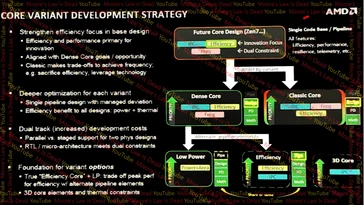
    Moore’s Law Is Dead has shared more details about Zen 7 and AMD’s innovative 3D Cores. The source suggests that while Zen 7 may not significantly increase the core count compared to Zen 6, AMD plans to enhance efficiency, IPC, and frequency across all core types. Currently, AMD is said to be developing a single Zen 7 CPU architecture and dividing it into five distinct variants.

    Exciting Developments

    While MLID outlines some of AMD’s architectural and design objectives for Zen 7, the most intriguing aspect is the rumored 3D Core. Based on internal documents allegedly seen by MLID and confirmed through an AMD insider, AMD is reportedly choosing the advanced TSMC 1.4 nm process node for Zen 7 core chiplets and a 4 nm process for V-Cache chiplets. Even though this approach may raise costs, AMD appears committed to using the latest TSMC process node for its CPU cores.

    Performance Expectations

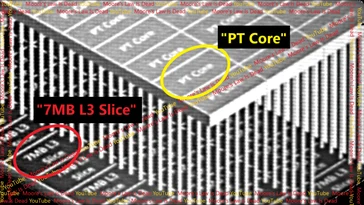
    With this cutting-edge process, Zen 7 is expected to achieve a 15-25% IPC improvement over Zen 6. This increase in IPC may be influenced by the cache modifications that AMD plans to implement in Zen 7 CPUs. The leaker indicates that Zen 7 processors will come with 2 MB of on-die L2 cache per core and 7 MB of L3 cache per core, utilizing V-Cache chiplets. This effectively means that AMD is extending the 3D V-Cache concept it first introduced with the Ryzen 7 5800X3D, giving each Zen 7 CPU core its own V-Cache, thus coining the term “3D Core.”

    If AMD successfully launches a 3D Core, it’s easy to imagine that Zen 7 CPUs could deliver outstanding gaming performance, especially since the leading gaming CPUs available today are AMD models featuring a dedicated L3 “3D V-Cache” component.

    Server Chip Developments

    Furthermore, MLID asserts that AMD’s Epyc Zen 7 server processors will incorporate 33-core chiplets, potentially leading to a total core count of up to 264. Additionally, it seems that the Zen 7 Epyc core chiplets will be backward compatible with Zen 6 IODs, which AMD plans to unveil next year.

    MLID mentions that AMD’s current goal for the “Tape Out” of Zen 7 is set for October 2026. Team Red is reportedly aiming for a full launch by the end of 2027 or the beginning of 2028.

    Finally, the fact that Zen 7 is more than two years away suggests that the information provided by MLID should be taken with caution. We will likely hear official confirmations about Zen 7 only once Zen 6 CPUs are available on the market.

    Source:
    Link


  • Lenovo ThinkStation PGX Mini-PC Revealed with Nvidia GB10 Chip

    Lenovo ThinkStation PGX Mini-PC Revealed with Nvidia GB10 Chip

    Key Takeaways

    1. The Nvidia GB10 ‘superchip’ was recently spotted on Geekbench, generating excitement in the tech community.
    2. Lenovo’s ThinkStation PGX mini-PC features 128 GB of LPDDR5x RAM and runs on Nvidia’s DGX OS, but storage details remain unclear.
    3. The ThinkStation PGX will compete with Apple’s M3 Ultra and AMD’s Ryzen AI Max+ 395, with Apple currently leading in benchmark scores.
    4. Nvidia’s GB10 chip features a combination of 10 Cortex-X925 and 10 Cortex-A725 cores, positioning it between competitors.
    5. Anticipation is growing for more information on the ThinkStation PGX, especially with upcoming events like Computex.


    A few days back, a surprising Nvidia chip popped up on Geekbench, seemingly out of nowhere. It was the GB10 ‘superchip’ that was announced some time ago, and even though the listings have been removed now, news has already spread. Thanks to Lenovo, we now get our first glimpse at one of the initial GB10-powered mini-PCs: the Lenovo ThinkStation PGX.

    Details on the ThinkStation PGX

    Sadly, Lenovo hasn’t shared much about the ThinkStation PGX mini-PC, with the press release mentioning it comes equipped with Nvidia’s DGX OS and software suite. It boasts 128 GB of LPDDR5x RAM on a 256-bit bus, but the storage capacity is not specified. A quick look at Nvidia’s GB10 spec sheet shows that it can support up to 4 TB. Those eager to purchase a Lenovo ThinkStation PGX will have to be patient until Q3 of this year. Although the price hasn’t been disclosed, it’s likely to be on the expensive side.

    Competition in the Market

    The Nvidia GB10 powered ThinkStation PGX is set to compete mainly against Apple’s M3 Ultra and AMD’s Ryzen AI Max+ 395. From the Geekbench scores alone, Apple leads the field in both single and multi-core benchmarks. The GB10 combines 10x Cortex-X925 cores and 10x Cortex-A725 cores, placing it somewhere between the M3 Ultra and the Strix Halo parts. However, Nvidia’s real strength lies in its software ecosystem, which will surely be tailored for the GB10. Still, we expect to learn more during Computex, where it will hopefully be showcased in greater detail.

    Anticipation for More Information

    Lenovo’s ThinkStation PGX has generated quite a buzz, but the lack of details leaves potential buyers curious. As more information trickles in, especially with upcoming events like Computex, the anticipation is building for what this mini-PC can really do. With its unique specs and powerful Nvidia backing, it could change the game in the mini-PC market.

    Source:
    Link

  • Huawei MateBook Fold: Ultimate Foldable Display Launch Soon

    Huawei MateBook Fold: Ultimate Foldable Display Launch Soon

    Key Takeaways

    1. Huawei will introduce the Nova 14 series and a new laptop running on HarmonyOS 5 on May 19.
    2. The new laptop features a foldable display and a sophisticated leather-like texture.
    3. It is speculated to be named “Huawei MateBook Fold Ultimate Design,” with the “Ultimate Design” emblem present.
    4. One variant is expected to have 32 GB of RAM and a 2 TB SSD in “Forged Shadow Black” color.
    5. Further details on features, pricing, and availability will be unveiled at the launch event.


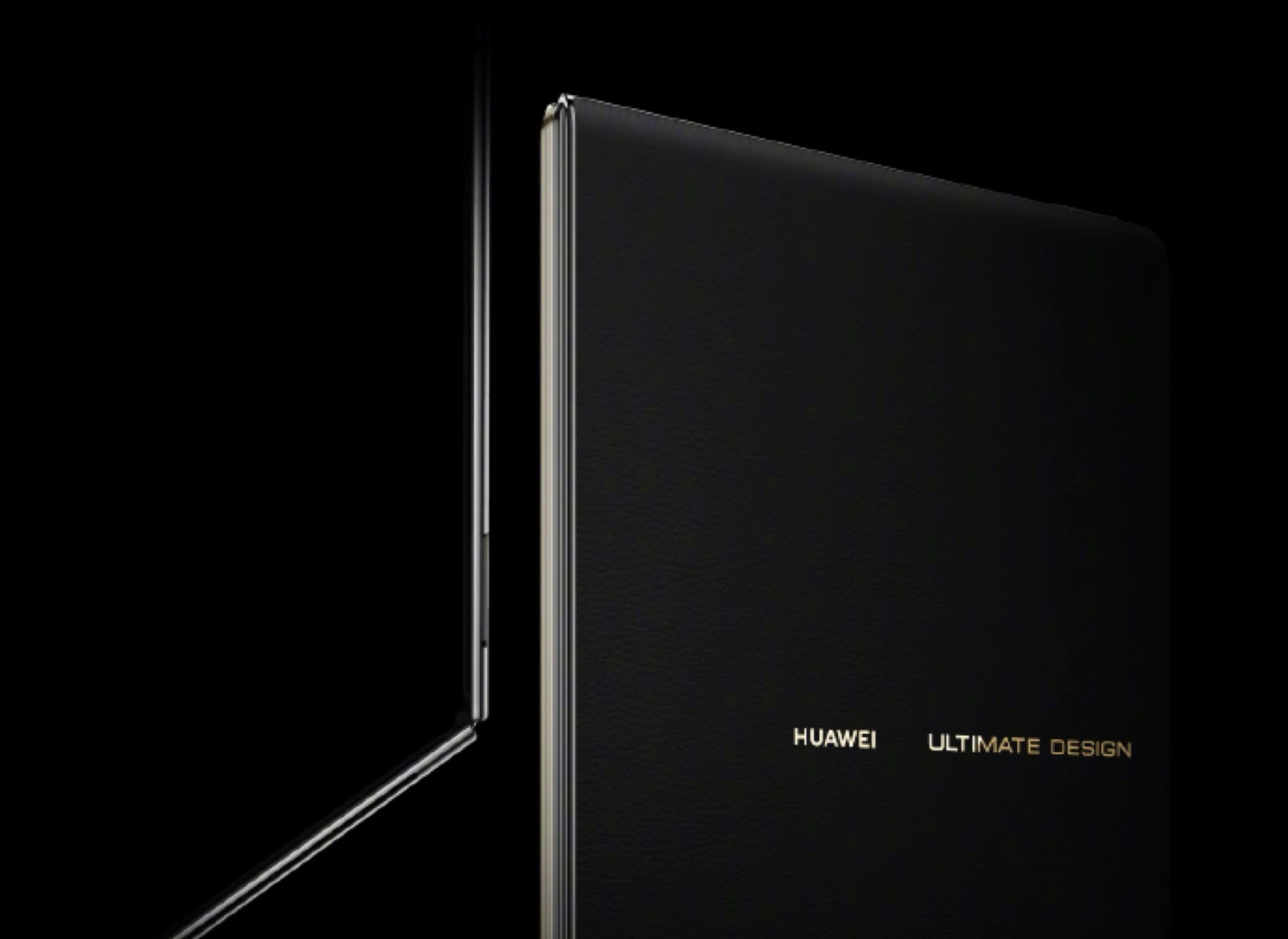
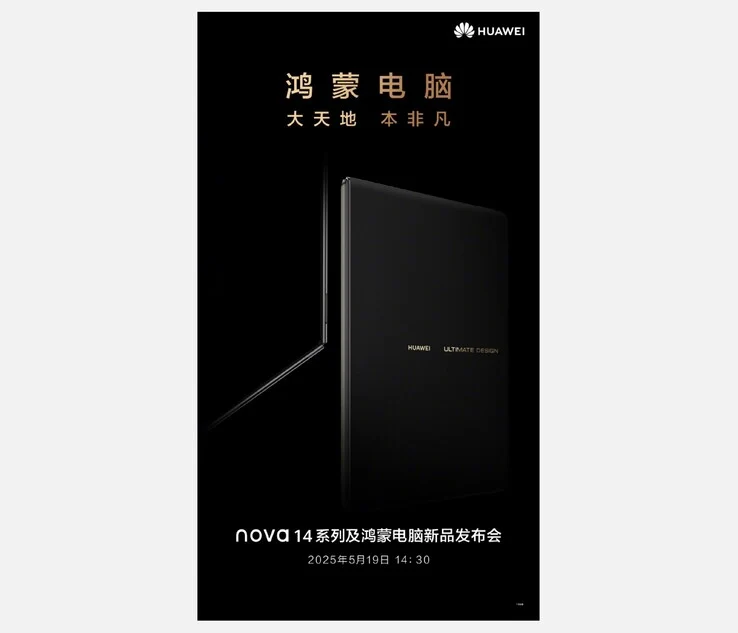
    Huawei has recently shared a teaser image on the Chinese social platform Weibo, announcing that on Monday, May 19, the company will introduce not only the Huawei Nova 14 series but also a new laptop running on HarmonyOS 5. This move seems aimed at demonstrating the features of its new desktop operating system, which will soon compete with Windows and macOS in the Chinese market.

    Teaser Insights

    The teaser image hints at a laptop featuring a foldable display, reminiscent of the Lenovo ThinkPad X1 Fold. However, Huawei’s model appears to be much sleeker, and the leather-like texture on the back adds a touch of sophistication. It’s still uncertain if a keyboard will be included, and if it is, whether it can be stored inside the closed laptop or needs to be carried separately. Information regarding the screen size and the processor remains unknown.

    Expected Specifications

    Speculations suggest that this device might be launched as the “Huawei MateBook Fold Ultimate Design,” which aligns with the “Ultimate Design” emblem visible on the back of the laptop. Reports indicate that at least one variant will come with 32 GB of RAM and a 2 TB SSD, available in a color called “Forged Shadow Black.” Additional details about features, pricing, and when it will be available are expected to be revealed at the launch event on Monday, May 19th.

    Source:
    Link


  • Nvidia to Use Samsung’s 2nm Node for New GPU Production

    Nvidia to Use Samsung’s 2nm Node for New GPU Production

    Key Takeaways

    1. Samsung Foundry’s 2 nm production yields have improved to 40-50%, despite reduced performance.
    2. Qualcomm is considering restarting collaboration with Samsung for the Snapdragon 8 Elite 2, and Nvidia may produce a new GPU using Samsung’s 2 nm technology.
    3. Nvidia is unlikely to use Samsung for its AI and data center chips due to strong ties with TSMC.
    4. Future Nvidia RTX 60 series gaming GPUs may benefit from Samsung’s GAA FET-based SF2 technology, but performance gains might be limited.
    5. Upcoming months are crucial for Samsung’s Foundry business, as Nvidia and Qualcomm’s decisions could lead to more contracts and opportunities.


    Samsung Foundry’s troubles may finally be coming to a close in the near future. An earlier article mentioned that their 2 nm production yields have improved to between 40-50%, but this has come with a reduction in performance. Even so, this hasn’t stopped major companies from considering the chipmaker. Qualcomm might restart its collaboration with Samsung Foundry for the Snapdragon 8 Elite 2 for Galaxy, and according to a recent report from Chosun, Nvidia could also follow suit.

    Nvidia’s Next Move

    The report suggests that a new Nvidia GPU could be produced using Samsung Foundry’s 2 nm technology. However, it doesn’t specify which variant (SF2/SF2P) is in question, and it’s too early to make any predictions. Nvidia’s highly profitable AI and data center chips are unlikely to be chosen due to the company’s strong ties with TSMC. Moreover, an alleged roadmap from TSMC earlier indicated some of its 2 nm clients, which included Nvidia.

    Future Gaming GPUs

    This leads us to the next generation of RTX 60 series gaming GPUs, which will utilize the Rubin architecture. Nvidia has previously collaborated with Samsung Foundry’s 8N technology for the Ampere (RTX 30 series) chips. Transitioning from TSMC’s Fin FET-based 4NP to Samsung’s GAA FET-based SF2 may bring some performance gains, but they probably won’t be as significant as the leap from Ampere to Ada Lovelace.

    Opportunities Ahead

    That being said, there’s a good possibility that Nvidia may choose Samsung’s nodes for its upcoming laptop GPUs or Windows-on-Arm products. Laptop processors are generally much smaller and simpler to produce. For instance, the Snapdragon X Elite has a die area of around 170 mm², while Nvidia’s flagship GB202 GPU is a massive 750 mm². Large chips like this are usually manufactured on established nodes, and SF2/SF2P has not been around long enough to be considered mature.

    In the upcoming months, Nvidia and Qualcomm will play a key role in determining the future of Samsung’s Foundry business. At the moment, Samsung doesn’t even need to surpass TSMC; matching their performance would be enough. If things turn out positively, more contracts could be on the horizon because Samsung, despite its challenges, has a strategy that keeps pace with its rivals. Its SF2Z node set for 2027 has backside power delivery, and its 1.4 nm SF1.4 is timed close to TSMC’s planned release of its A14 node.

    Source:
    Link

  • Intel Foundry Targets Breakeven by 2027

    Intel Foundry Targets Breakeven by 2027

    Key Takeaways

    1. Intel Foundry is losing billions each quarter while working to increase capacity and innovate technologies, aiming for breakeven by 2027.
    2. The first product using the new 18A technology, the Panther Lake CPU, will be released in late 2025, with plans to transition other series to this technology.
    3. Demand for chips from external clients is currently low, but Intel plans to utilize early 18A wafers for its own products to improve profitability.
    4. To achieve breakeven, Intel needs to generate low- to mid-single-digit billions in annual revenue from external wafers, supplemented by advanced packaging and partnerships.
    5. Intel plans to produce more premium client silicon internally, including the Nova Lake CPU, to enhance cost discipline and maximize capacity.


    Intel Foundry is continuing to lose “billions each quarter” as it works on increasing its capacity and innovating new technologies. During a talk at J.P. Morgan’s Global Technology, Media & Communications Conference, CFO Zinsner mentioned that they aim to reach breakeven by “sometime in 2027,” which is a timeline the company hinted at earlier this year.

    Upcoming Products and Technology

    The first product based on the new 18A technology, a client CPU known as Panther Lake, is set to be released in late 2025. Additionally, Intel plans to transition the Clearwater Forest Xeon series and some third-party designs to this same technology node. Management sees the 18A as a way to convince clients to embrace its next versions, 18A-P and 14A.

    Demand and Strategy

    Currently, the demand from outside sources is limited. Many potential clients are still testing chips, and Zinsner admitted that the “committed volume is not significant.” To counterbalance this, Intel is counting on its own products to use up most of the early 18A wafers, thereby enhancing fab utilization and profitability.

    To reach their breakeven goal, Intel needs to generate only “low- to mid-single-digit billions” in annual revenue from external wafers. This will be supplemented by advanced packaging, production of mature-node output like Intel 16, and collaborations with partners such as UMC and Tower. The use of High-NA EUV for 14A will increase costs at first, but Intel is confident that the improvements in density and performance will make the initial expenses worthwhile.

    Internal Production Plans

    Intel also intends to produce more of its premium client silicon internally. The new Nova Lake CPU, which is based on 18A-P, will be added to the internal production alongside Panther Lake. Zinsner believes that having Foundry “compete” for these wafers under the company’s smart-capital model will enhance cost discipline while maximizing capacity, which should improve margins even before large external orders come in.

    Source:
    Link

  • OneXPlayer G1 with AMD Ryzen AI 9 HX 370 & 64GB RAM Now Available

    OneXPlayer G1 with AMD Ryzen AI 9 HX 370 & 64GB RAM Now Available

    Key Takeaways

    1. One-Netbook launched the OneXPlayer F1 Pro with a 144 Hz OLED screen and AMD Ryzen AI 9 HX 370 APU, priced at $1,439.95.
    2. The OneXPlayer G1 was introduced on crowdfunding in January, following supply chain issues, and is now available with a detachable keyboard.
    3. The OneXPlayer G1 does not include the previously offered Intel Core Ultra 7 255H option, focusing instead on AMD processors.
    4. Pricing for the OneXPlayer G1 starts at $959 for the Ryzen 7 8840U model, featuring 32 GB of RAM and 1 TB of storage.
    5. Higher configurations with Ryzen AI 9 HX 370 and 64 GB of RAM are priced at a minimum of $1,319 and $1,519, respectively.


    One-Netbook has been quite active in the past few months, launching the OneXPlayer F1 Pro featuring a 144 Hz OLED screen and an AMD Ryzen AI 9 HX 370 APU late last year (current price $1,439.95 on Amazon). After updating the OneXPlayer X1 with the same APU, the company shifted its focus to new designs with the introduction of the OneXPlayer G1 and the OneXSugar Sugar 1 in partnership with Sugar Cubes.

    Launch and Supply Chain Challenges

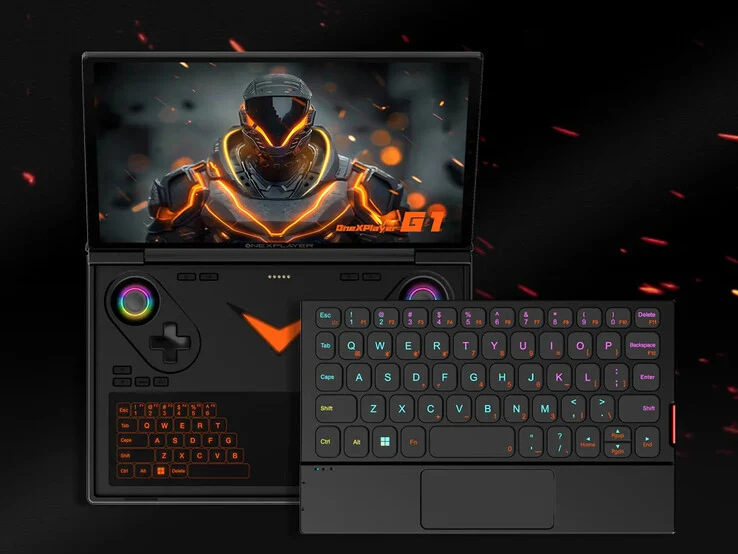
    Although the OneXSugar Sugar 1 has not yet debuted on Indiegogo, the OneXPlayer G1 made its way to One-Netbook’s chosen crowdfunding site in January. After facing some ‘unexpected supply chain issues,’ the company has now released the G1 detachable keyboard and is ready to offer the complete device through its OneXPlayer store.

    Hardware Options and Pricing

    Interestingly, One-Netbook has chosen not to provide the Intel Core Ultra 7 255H version that was previously available on Indiegogo. Instead, the OneXPlayer G1 can now be purchased directly, offering a selection between AMD’s Ryzen 7 8840U and the Ryzen AI 9 HX 370 APUs. No matter which APU you opt for, the OneXPlayer G1 comes with some impressive hardware details:

    At present, the OneXPlayer G1 is priced starting at $959 for the Ryzen 7 8840U, featuring 32 GB of RAM and 1 TB of storage, down from a regular price of $1,099. On the other hand, the options including the Ryzen AI 9 HX 370 and 64 GB of RAM are listed at a minimum of $1,319 and $1,519 respectively. For further information, check the product details on the OneXPlayer Store.

    Source:
    Link