Tag: AMD Zen 7

  • AMD Zen 7 Grimlock Ridge and Silverlake 32-core 8-core Leak

    AMD Zen 7 Grimlock Ridge and Silverlake 32-core 8-core Leak

    Key Takeaways

    1. Core Count and Design: Zen 7 desktop CPUs will feature up to 32 cores with two 16-core CCDs and a shared IOD, similar to future Zen 6 CPUs.

    2. Variants and Performance: AMD plans to release 16-core “Silverton” models potentially reaching clock speeds of 7 GHz, alongside 8-core “Silverking” models with reduced features.

    3. Cost Efficiency: The 8-core Silverking CPUs may lack V-cache and have lower bandwidth, allowing AMD to cut costs and improve manufacturing yields.

    4. Manufacturing Process: Zen 7 chips will be produced using TSMC’s advanced A14 node, a 1.4 nm-class process node, starting in 2028.

    5. User Benefits: Zen 7 CPUs will be compatible with the existing AM5 platform, offering significant performance improvements for current users without requiring new motherboards.


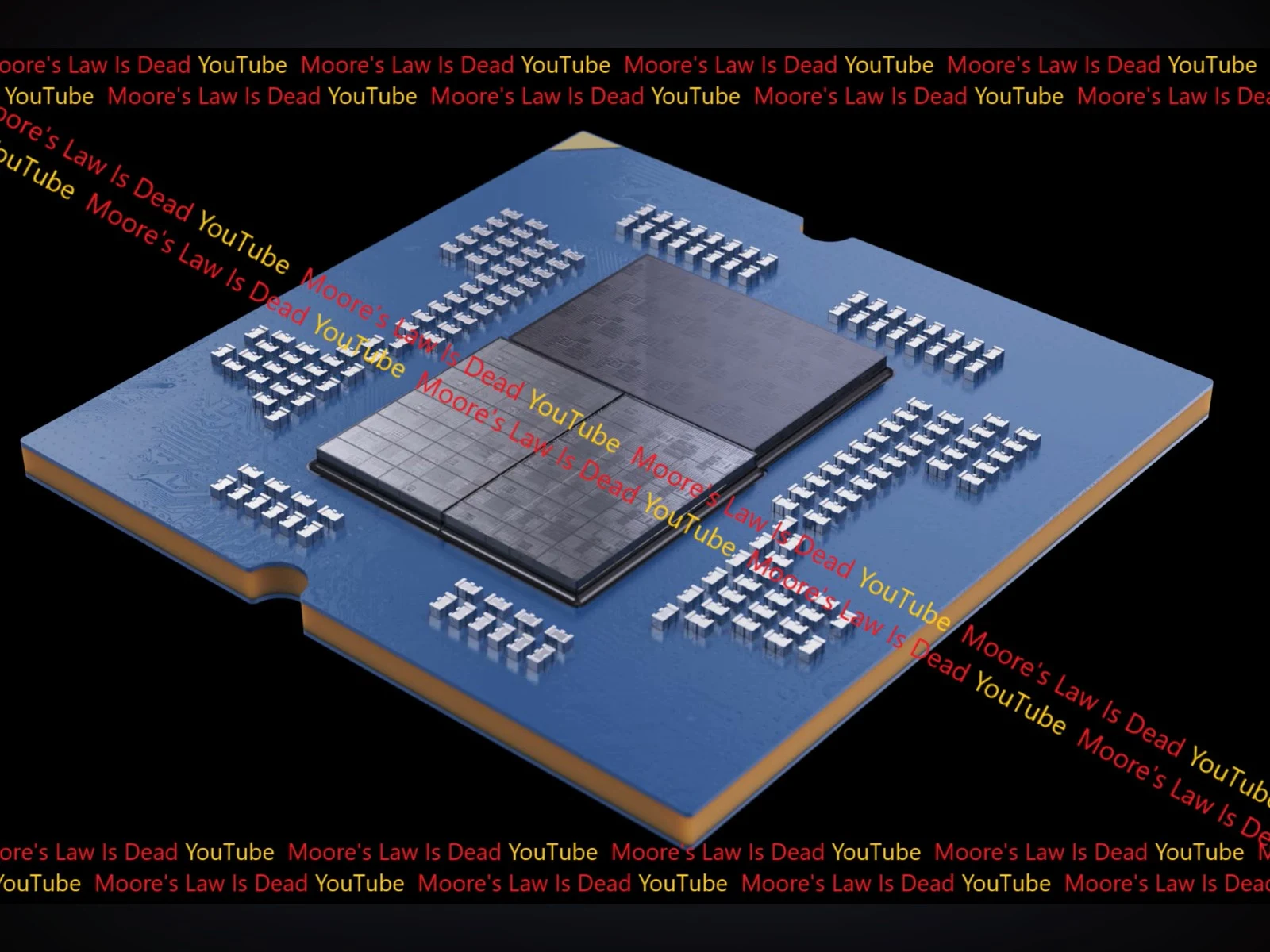
    Moore’s Law Is Dead has a reputation for leaking details about AMD and Intel desktop CPU designs ahead of any formal announcements. The leaker has now turned its attention to the upcoming Zen 7 desktop CPUs, codenamed “Grimlock Ridge.” In the latest revelations, MLID has shared images of Zen 7 CPUs based on real schematics, providing us with a sneak peek at these new processors.

    Specifications and Core Count

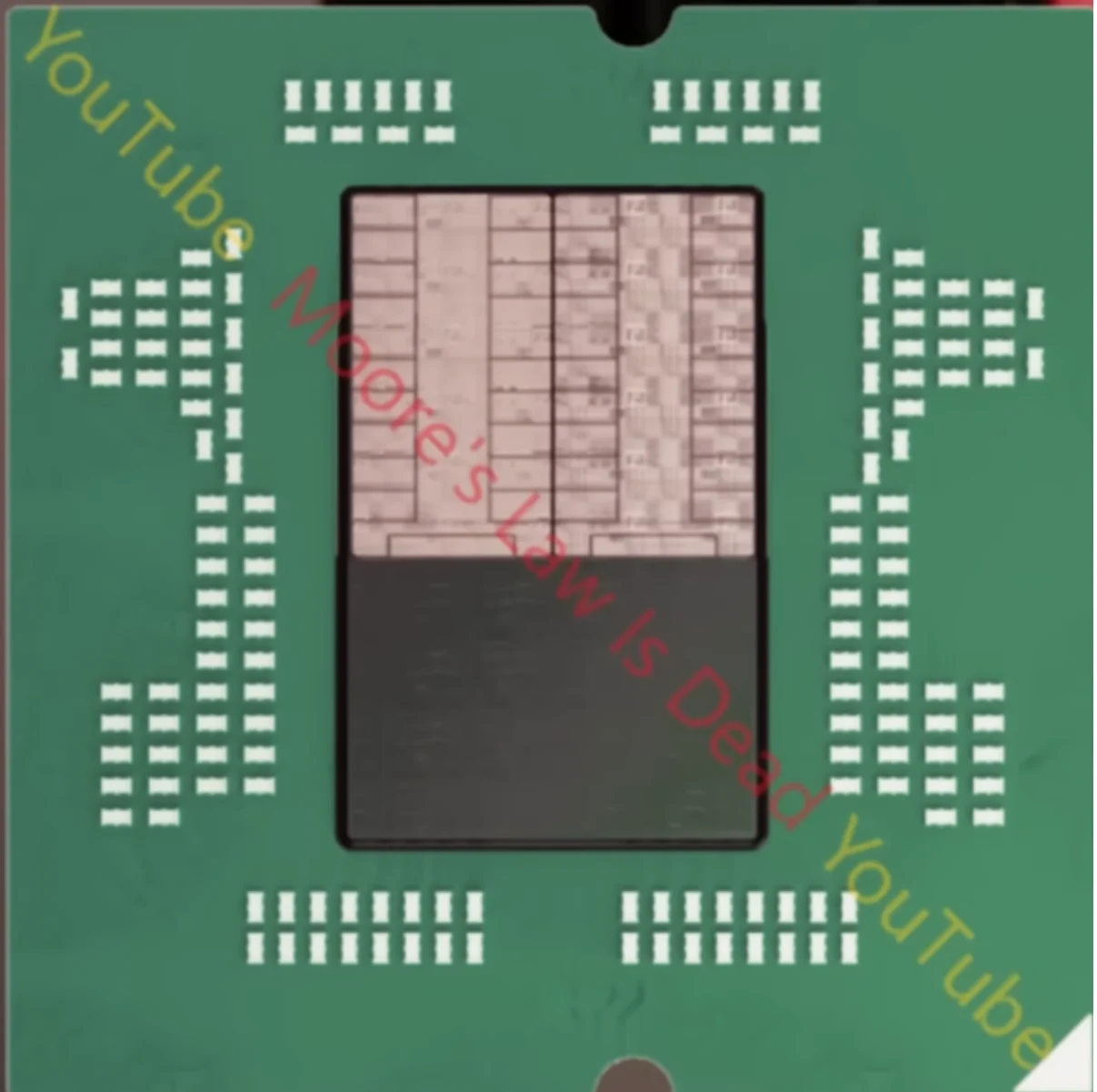
    According to the renders from MLID, the Zen 7 desktop CPUs will boast up to 32 cores, featuring two 16-core CCDs mounted on a 155 mm² IOD. It’s said that this IOD is the same one AMD will utilize for the Zen 6 CPUs expected in 2027. Each of the 16-core CCDs for Zen 7 appears to be approximately 98 mm² in size.

    Other Variants and Performance

    AMD is also planning to release other versions of the Zen 7 processors, including 16-core models nicknamed “Silverton.” These CPUs might achieve impressive clock speeds, potentially reaching as high as 7 GHz. However, MLID suggests that AMD might scale down the CCDs to just 8 cores in some variants. These 8-core models are reportedly codenamed “Silverking.”

    Cost and Manufacturing Insights

    MLID points out that the Zen 7 Silverking CPUs will likely make significant trade-offs, such as lacking V-cache support and having only half the bandwidth compared to the 16-core Silverton models. This strategy could help AMD reduce costs while also improving production yields. The Zen 7 chips are expected to be manufactured on TSMC’s advanced A14 node, a 1.4 nm-class process node that will begin production in 2028.

    In addition to the desktop variations, AMD may also use the most efficient 8-core configurations for mobile CPUs, which could include models like Grimlock Point and Grimlock Halo. We will discuss these mobile variants in another article.

    Implications for Gamers and Users

    So, what does all this mean for gamers and regular users?

    In simple terms, the AMD Zen 7 is projected to significantly enhance core counts and introduce improved 3D V-Cache. As Zen 7 CPUs will be compatible with the existing AM5 platform, which is also used by current Zen 4/Zen 5 and future Zen 6 processors, users can anticipate a substantial performance boost without needing to invest in a new motherboard. This is particularly beneficial for those who are still using older Zen 4 processors like the Ryzen 7 7800X3D (which you can find on Amazon).

    Source:
    Link


  • AMD Zen 7 Halo iGPU Leak: 35% Performance Boost Over Zen 6

    AMD Zen 7 Halo iGPU Leak: 35% Performance Boost Over Zen 6

    Key Takeaways

    1. The AMD Zen 7 Halo APU’s integrated GPU (iGPU) may match or exceed the 48 Compute Units (CUs) of the Zen 6 Medusa Halo iGPU, potentially reaching up to 64 CUs.
    2. The performance of the Zen 7 Grimlock Halo iGPU is speculated to be 20-35% better than that of the Zen 6 Medusa Halo iGPU.
    3. The iGPU in the Zen 6 Medusa Halo is expected to perform comparably to the RTX 4070 desktop GPU, with the Zen 7 Grimlock Halo iGPU possibly outperforming the RTX 5070.
    4. The Zen 7 Halo’s iGPU shares the same die as the RDNA 5 desktop “AT3” GPU, hinting at advanced graphics capabilities.
    5. The article mentions available purchase options, including the GMKtec AI Mini PC featuring the Ryzen Al Max+ 395 Strix Halo APU on Amazon.


    Earlier this month, a major leak from Moore’s Law Is Dead gave us insight into AMD’s Zen 7 specs and performance, covering everything from Zen 7 EPYC to the Zen 7 “Grimlock” AM5 desktop CPUs. The leak also included some information about the Zen 5 Grimlock Point and Grimlock Halo mobile APUs. During a recent episode of the Broken Silicon podcast, MLID hinted at the final performance and configuration of the AMD Zen 7 Halo’s integrated GPU (iGPU).

    Potential Performance of Zen 7 Halo iGPU

    According to MLID, the iGPU in the Zen 7 Halo might at least match the Compute Unit (CU) count of the Zen 6 Medusa Halo iGPU. Back in August, MLID reported that the Zen 6 Medusa Halo APU could come with a 48-CU iGPU along with 20 MB of L2 cache. Interestingly, it is expected that the iGPU in the Zen 6 Medusa Halo will share the same die as the RDNA 5 desktop “AT3” GPU.

    This means that the iGPU in the Zen 7 Grimlock Halo APU could have 48 or even more RDNA 5/5.5 CUs. MLID speculates that the CUs could reach as high as 64. While no specific performance metrics were provided, it is suggested that the Zen 7 Grimlock Halo iGPU could perform 20 to 35% better than the Zen 6 Medusa Halo iGPU.

    Comparing Performance to Current GPUs

    By doing some rough calculations, MLID suggested in an earlier leak that the performance of the AT3 RDNA 5 desktop GPU might sit between the RTX 4070 and RX 9070 (which is available on Amazon). Given that the iGPU in the Zen 6 Medusa Halo will be power-constrained, let’s consider the performance of the iGPU to be at the lower end of MLID’s projections, comparable to an RTX 4070.

    From our testing, the RTX 5070 desktop GPU is about 28% quicker than the RTX 4070 desktop GPU. Since MLID anticipates the Zen 7 Grimlock Halo iGPU to be 20-35% ahead of the Zen 6 Medusa Halo iGPU, the iGPU in the Grimlock Halo could potentially outperform the RTX 5070 desktop. However, as always, MLID’s figures are preliminary and not final, so our calculations could be significantly inaccurate.


    Source:
    Link


  • AMD Zen 7 Leak Reveals Major Performance Boost and 3D V-Cache

    AMD Zen 7 Leak Reveals Major Performance Boost and 3D V-Cache

    Key Takeaways

    1. AMD Zen 7 Architecture: AMD’s Zen 7 will utilize TSMC’s advanced A14 node, with production expected to start in 2028, moving away from N2X due to delays.

    2. Chiplet Variants: Two chiplet options named Grimlock will be released: Silverton with 16 cores and 3D V-cache support, and Silverking with 8 cores and no 3D V-cache.

    3. Performance Potential: Zen 7 could feature up to 32 cores and 448 MB of 3D V-cache in a dual CCD consumer-grade CPU, possibly seen in the Ryzen 9 9950X3D2.

    4. Laptop Innovations: New laptop models, Grimlock Point and Grimlock Halo, will combine different types of cores for improved performance, including Classic, Dense, Efficiency, and Low-Power cores.

    5. Power Efficiency Improvements: Zen 7 laptops may achieve significant performance-per-watt gains, with efficiency increases ranging from 17% to 36% at various power levels.


    Moore’s Law is Dead has revealed a significant leak regarding AMD’s Zen 7 architecture. This new information expands on earlier leaks about Zen 7 and provides details on its specifications, performance enhancements, and a possible release timeframe. It covers a variety of products, including consumer desktops, laptops, and server solutions.

    Manufacturing Insights

    Tom had mentioned that AMD Zen 6’s CCD would be fabricated using TSMC’s N2X node. However, TSMC’s latest roadmap indicates that mass production of N2X is expected to begin in 2027, leading AMD to likely transition to the N2P node. Zen 7 is set to follow this trend by utilizing TSMC’s advanced A14 node, which is projected to hit high-volume manufacturing in 2028.

    Chiplet Details

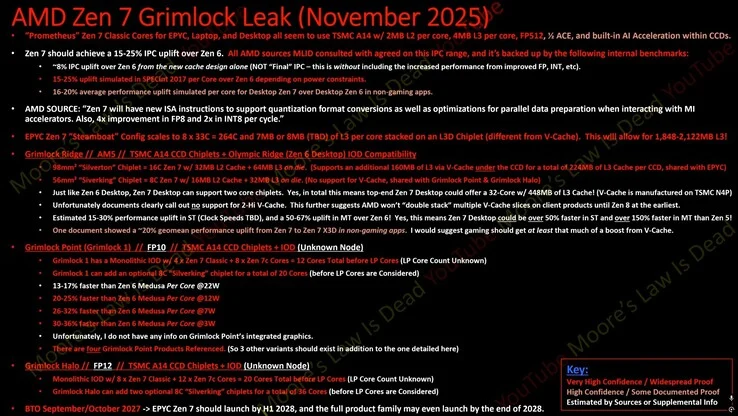
    AMD plans to release two Zen 7 chiplets known as Grimlock. The Silverton variant boasts 16 Zen 7 cores, a 32 MB L2 cache, a 64 MB L3 cache, and can support a 160 MB 3D V-cache tile per CCD. On the other hand, Silverking is a scaled-down option featuring 8 Zen 7 cores, a 16 MB L2 cache, a 32 MB L3 cache, and lacks support for 3D V-cache. Silverton is expected to appear in Epyc and premium Ryzen 13,000 series CPUs, while Silverfish will mainly cater to high-performance laptop components.

    Performance Potential

    Similar to Zen 6, Zen 7 will support two CCDs per die. With each CCD containing 16 cores, the highest-spec model could potentially feature 32 cores and a staggering 448 MB of 3D V-cache. However, this scenario will only materialize if AMD decides to introduce a consumer-grade CPU equipped with dual CCDs. We might witness this technology in action next year with the rumored Ryzen 9 9950X3D2.

    Laptop Innovations

    For laptops, Grimlock Point and Grimlock Halo will adopt the Strix/Medusa approach, blending Zen 7 with Zen 7c cores. Tom’s earlier leak noted that this generation would include four distinct types of CPU cores: “Classic,” “Dense,” “Efficiency,” and “Low-Power.” Grimlock Point will feature 4 Zen 7 cores alongside 8 Zen 7C cores, while Grimlock Halo (the successor to Medusa Halo) will launch with a configuration of 8 Zen 7 and 12 Zen 7C cores. Both models will also include an unspecified number of Zen 7 Low-Power cores.

    Performance Metrics

    Zen 7 desktop components are expected to deliver an average performance boost of 16-20% in non-gaming tasks compared to Zen 6. The IPC gain, however, is not as remarkable at 8%, though this number is still subject to change. In single-threaded tasks, Zen 7 desktops could show improvements of up to 20%, while multi-core performance could increase by 67%.

    Power Efficiency

    On the laptop front, Grimlock Point and Grimlock Halo could showcase significant enhancements in performance-per-watt, with potential increases of up to 36% at 3 watts, 32% at 7 watts, 25% at 12 watts, and 17% at 22 watts. This efficiency is expected to benefit chips like the anticipated Ryzen Z4 Extreme and aid OEMs and users in achieving better performance from portable gaming consoles.


  • AMD Zen 7 Leak: New 3D Core, IPC Boost, Release Date & More

    AMD Zen 7 Leak: New 3D Core, IPC Boost, Release Date & More

    Key Takeaways

    1. AMD’s Zen 7 CPU architecture is expected to focus on enhancing efficiency, IPC (Instructions Per Cycle), and frequency, rather than significantly increasing core count compared to Zen 6.

    2. The introduction of a 3D Core is a key feature of Zen 7, utilizing advanced TSMC process nodes (1.4 nm for core chiplets and 4 nm for V-Cache chiplets).

    3. Zen 7 is anticipated to achieve a 15-25% IPC improvement over Zen 6, with each core featuring 2 MB of on-die L2 cache and 7 MB of L3 cache, extending the 3D V-Cache concept.

    4. AMD’s Epyc Zen 7 server processors may include 33-core chiplets, potentially allowing for total core counts of up to 264, with backward compatibility to Zen 6 IODs.

    5. The projected timeline for Zen 7 includes a “Tape Out” in October 2026, with a full launch expected by late 2027 or early 2028.


    By all accounts, it seems we still have over a year to wait before AMD reveals its next-generation Zen 6 CPU architecture. However, this hasn’t deterred Moore’s Law Is Dead from providing some insights about Zen 7, the successor to Zen 6. Recently, we reported that AMD has significant ambitions for Zen 7, including the launch of a 3D Core.

    Insights on Zen 7

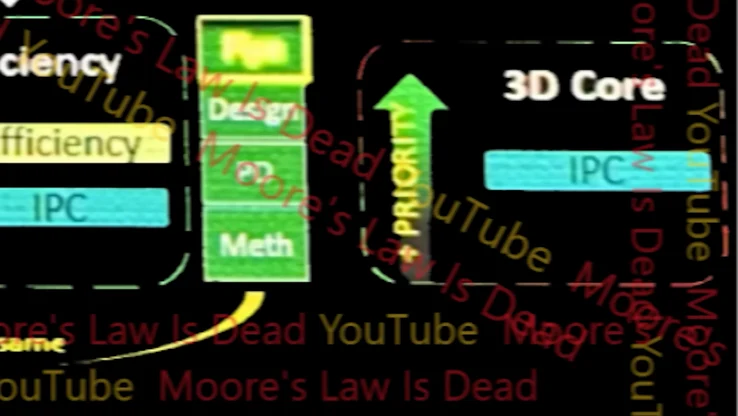
    Moore’s Law Is Dead has shared more details about Zen 7 and AMD’s innovative 3D Cores. The source suggests that while Zen 7 may not significantly increase the core count compared to Zen 6, AMD plans to enhance efficiency, IPC, and frequency across all core types. Currently, AMD is said to be developing a single Zen 7 CPU architecture and dividing it into five distinct variants.

    Exciting Developments

    While MLID outlines some of AMD’s architectural and design objectives for Zen 7, the most intriguing aspect is the rumored 3D Core. Based on internal documents allegedly seen by MLID and confirmed through an AMD insider, AMD is reportedly choosing the advanced TSMC 1.4 nm process node for Zen 7 core chiplets and a 4 nm process for V-Cache chiplets. Even though this approach may raise costs, AMD appears committed to using the latest TSMC process node for its CPU cores.

    Performance Expectations

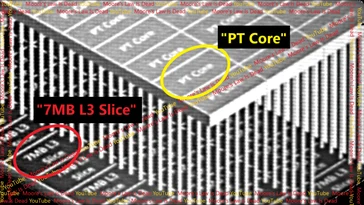
    With this cutting-edge process, Zen 7 is expected to achieve a 15-25% IPC improvement over Zen 6. This increase in IPC may be influenced by the cache modifications that AMD plans to implement in Zen 7 CPUs. The leaker indicates that Zen 7 processors will come with 2 MB of on-die L2 cache per core and 7 MB of L3 cache per core, utilizing V-Cache chiplets. This effectively means that AMD is extending the 3D V-Cache concept it first introduced with the Ryzen 7 5800X3D, giving each Zen 7 CPU core its own V-Cache, thus coining the term “3D Core.”

    If AMD successfully launches a 3D Core, it’s easy to imagine that Zen 7 CPUs could deliver outstanding gaming performance, especially since the leading gaming CPUs available today are AMD models featuring a dedicated L3 “3D V-Cache” component.

    Server Chip Developments

    Furthermore, MLID asserts that AMD’s Epyc Zen 7 server processors will incorporate 33-core chiplets, potentially leading to a total core count of up to 264. Additionally, it seems that the Zen 7 Epyc core chiplets will be backward compatible with Zen 6 IODs, which AMD plans to unveil next year.

    MLID mentions that AMD’s current goal for the “Tape Out” of Zen 7 is set for October 2026. Team Red is reportedly aiming for a full launch by the end of 2027 or the beginning of 2028.

    Finally, the fact that Zen 7 is more than two years away suggests that the information provided by MLID should be taken with caution. We will likely hear official confirmations about Zen 7 only once Zen 6 CPUs are available on the market.

    Source:
    Link


  • AMD Zen 7 3D Core Leaks: Mandatory Cache Chiplets for Gaming Boost

    AMD Zen 7 3D Core Leaks: Mandatory Cache Chiplets for Gaming Boost

    Key Takeaways

    1. AMD is expected to enhance gaming capabilities in Zen 6 CPUs by increasing the size of the 3D V-Cache.
    2. Zen 7 is rumored to introduce a unified CPU architecture with various core types, including “Classic,” “Dense,” “Efficiency,” and “Low-Power” cores.
    3. The new “3D Core” in Zen 7 will feature individual cache chiplets for each core, rather than a shared cache unit.
    4. AMD is heavily investing in the latest process node technology for Zen 7, aiming for cutting-edge manufacturing from TSMC or Samsung.
    5. Anticipation for more details on Zen 7, particularly regarding the 3D Core, is high, with expectations of improved gaming performance.


    We are currently at a stage in the progression of AMD Zen 5 Ryzen 9000 CPUs where there is an uptick in leaks and speculation about future AMD CPU designs. We’ve shared a lot of information about Zen 6 enhancements, such as the expected CPU core counts, clock speeds, and cache capacities. Additionally, leaks have verified that AMD plans to boost the gaming capabilities of Zen 6 CPUs further by enlarging the 3D V-Cache.

    AMD’s Future Plans

    Thanks to insights from Moore’s Law Is Dead, we might have a clearer picture of AMD’s strategy for CPU architectures post-Zen 6. Zen 7, or whatever name the successor to Zen 6 will carry, is said to introduce a range of new features, including a novel “3D Core”.

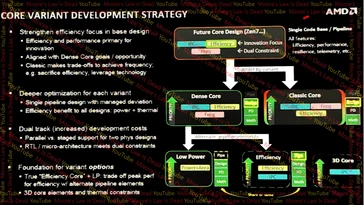
    According to the information provided by MLID, AMD aims to create a unified CPU architecture with Zen 7, which will then be divided into various product categories. Reportedly, Team Red is working on new core types, including “Classic,” “Dense,” “Efficiency,” and “Low-Power” cores for Zen 7. Moreover, AMD is investing heavily in the latest process node for Zen 7, meaning they will utilize whatever cutting-edge nodes are available from foundries like TSMC or Samsung at that time.

    The Exciting New 3D Core

    Despite the interesting details shared by MLID, none are as thrilling as the introduction of Zen 7’s new “3D Core.”

    MLID hasn’t disclosed too much about the 3D Core, as it seems the leaker is reserving details for a more comprehensive Zen 7 leak in the future. However, what we do know about the 3D Cores for Zen 7 is quite intriguing.

    To begin with, while Zen 7’s 3D Core uses the same cache-stacking concept seen in 3D V-Cache, it is fundamentally distinct. From our understanding, each Zen 7 3D Core will feature its own cache chiplet, instead of having a single cache unit shared across the entire CCD.

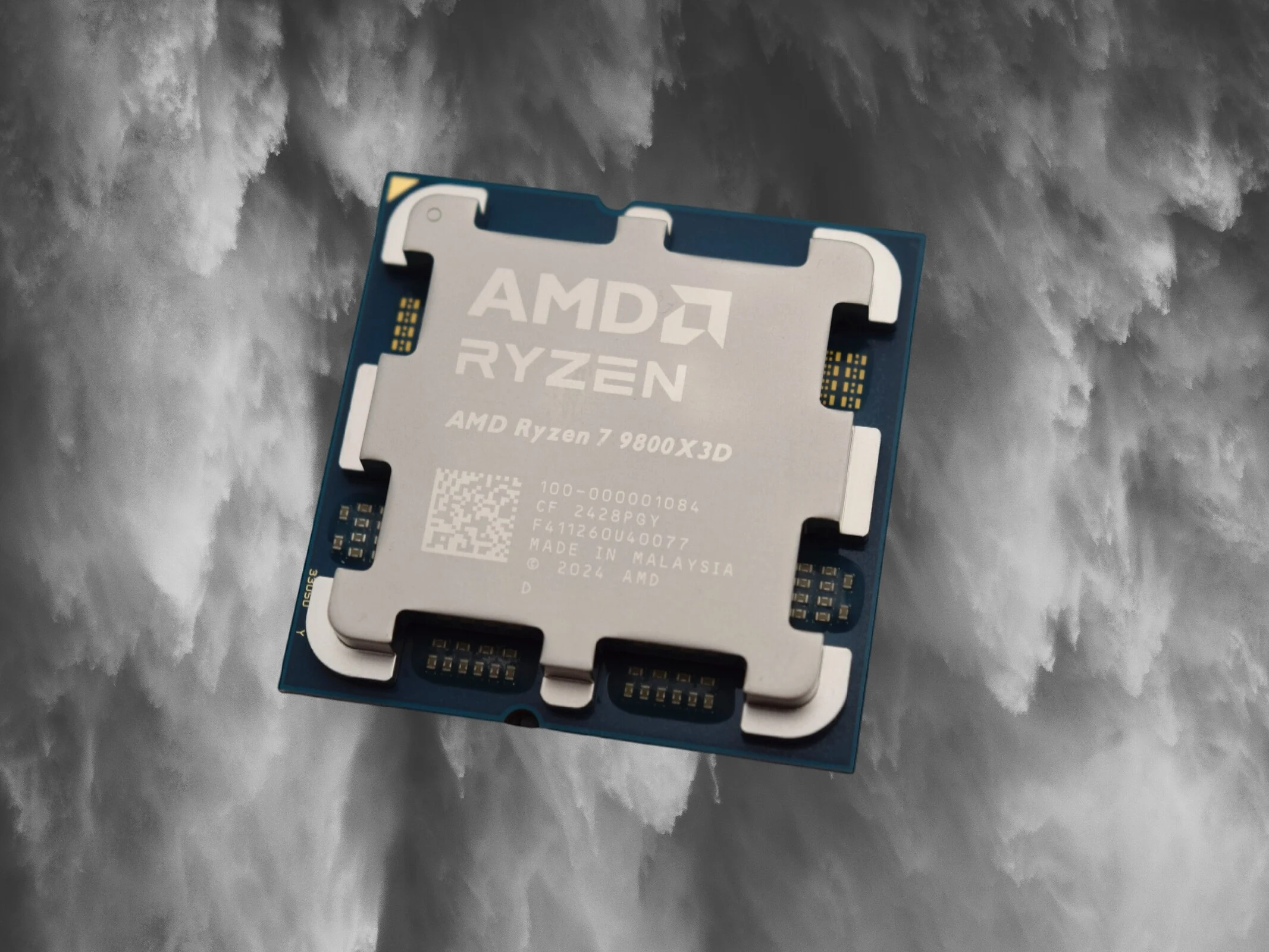
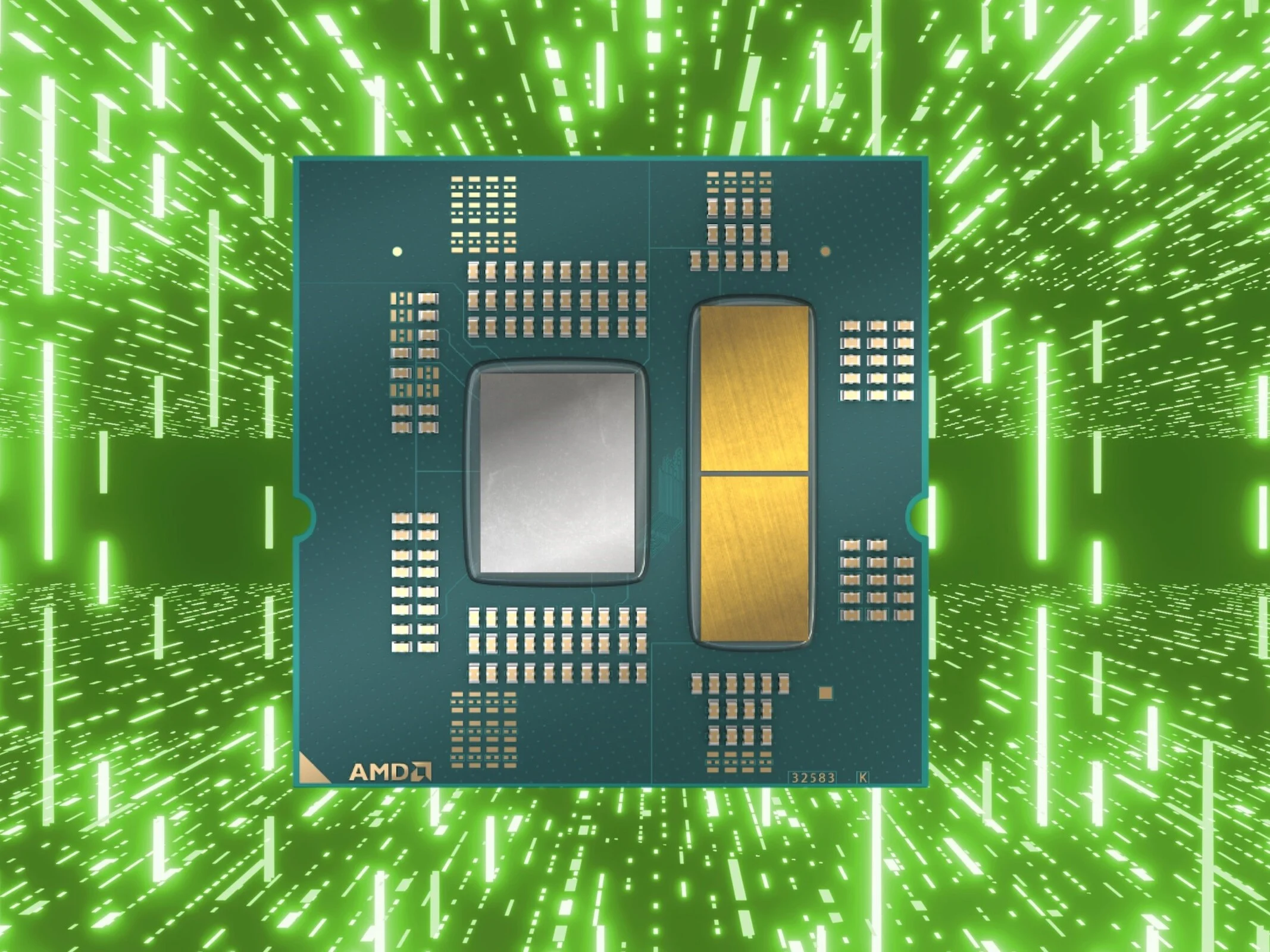
    Presently, AMD’s 3D V-Cache CPUs, like the Ryzen 7 9800X3D, utilize one 64 MB cache chiplet positioned beneath a CCD that houses 8 cores. This means the 64 MB 3D V-Cache is distributed across the CCD. MLID suggests that every 3D Core in a Zen 7 CPU will possess its own cache chiplet, rather than relying on one block for the entire CCD.

    Anticipation for More Details

    We’ll need to wait for a more detailed leak from MLID regarding Zen 7 to gain additional insights about the 3D core. Until that happens, it’s an exciting prospect if AMD is indeed pursuing this direction with Zen 7, as it could lead to significantly enhanced gaming performance.

    It’s already established that 3D V-Cache is extremely beneficial for gaming. Over the last two CPU generations, the top gaming CPUs available have been AMD models featuring 3D V-Cache, such as the Ryzen 9 9950X3D and Ryzen 7 7800X3D. Thus, it’s easy to imagine that a Zen 7 CPU equipped with 3D Cores, each having its own cache chiplet, could dominate gaming performance.

    As always, rumors like these are prone to inaccuracies or may overlook crucial details. Therefore, it’s wise to approach this information with a healthy skepticism.

    Source:
    Link