
Key Takeaways
1. Core Count and Design: Zen 7 desktop CPUs will feature up to 32 cores with two 16-core CCDs and a shared IOD, similar to future Zen 6 CPUs.
2. Variants and Performance: AMD plans to release 16-core “Silverton” models potentially reaching clock speeds of 7 GHz, alongside 8-core “Silverking” models with reduced features.
3. Cost Efficiency: The 8-core Silverking CPUs may lack V-cache and have lower bandwidth, allowing AMD to cut costs and improve manufacturing yields.
4. Manufacturing Process: Zen 7 chips will be produced using TSMC’s advanced A14 node, a 1.4 nm-class process node, starting in 2028.
5. User Benefits: Zen 7 CPUs will be compatible with the existing AM5 platform, offering significant performance improvements for current users without requiring new motherboards.
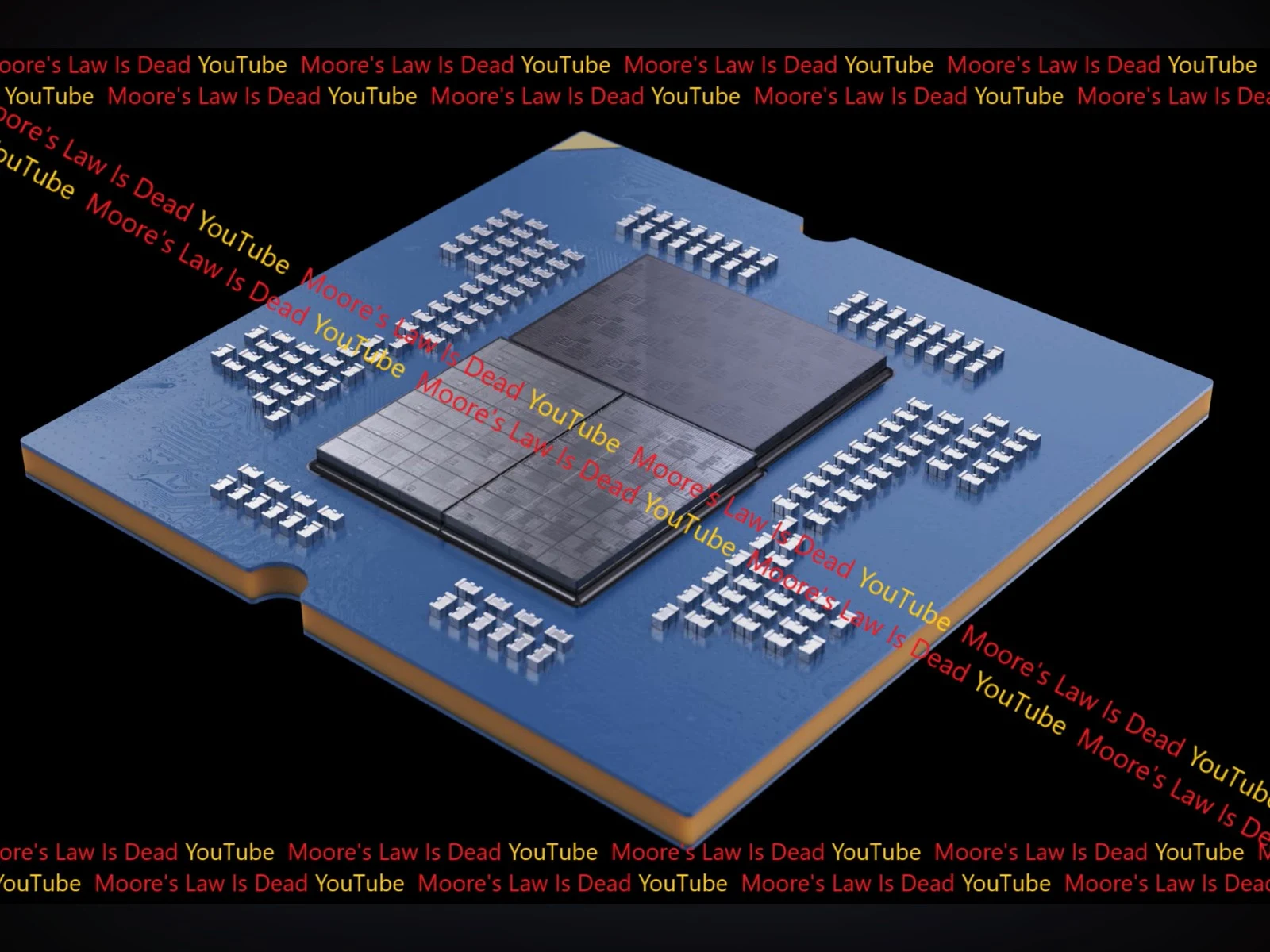
Moore’s Law Is Dead has a reputation for leaking details about AMD and Intel desktop CPU designs ahead of any formal announcements. The leaker has now turned its attention to the upcoming Zen 7 desktop CPUs, codenamed “Grimlock Ridge.” In the latest revelations, MLID has shared images of Zen 7 CPUs based on real schematics, providing us with a sneak peek at these new processors.
Specifications and Core Count
According to the renders from MLID, the Zen 7 desktop CPUs will boast up to 32 cores, featuring two 16-core CCDs mounted on a 155 mm² IOD. It’s said that this IOD is the same one AMD will utilize for the Zen 6 CPUs expected in 2027. Each of the 16-core CCDs for Zen 7 appears to be approximately 98 mm² in size.
Other Variants and Performance
AMD is also planning to release other versions of the Zen 7 processors, including 16-core models nicknamed “Silverton.” These CPUs might achieve impressive clock speeds, potentially reaching as high as 7 GHz. However, MLID suggests that AMD might scale down the CCDs to just 8 cores in some variants. These 8-core models are reportedly codenamed “Silverking.”
Cost and Manufacturing Insights
MLID points out that the Zen 7 Silverking CPUs will likely make significant trade-offs, such as lacking V-cache support and having only half the bandwidth compared to the 16-core Silverton models. This strategy could help AMD reduce costs while also improving production yields. The Zen 7 chips are expected to be manufactured on TSMC’s advanced A14 node, a 1.4 nm-class process node that will begin production in 2028.
In addition to the desktop variations, AMD may also use the most efficient 8-core configurations for mobile CPUs, which could include models like Grimlock Point and Grimlock Halo. We will discuss these mobile variants in another article.
Implications for Gamers and Users
So, what does all this mean for gamers and regular users?
In simple terms, the AMD Zen 7 is projected to significantly enhance core counts and introduce improved 3D V-Cache. As Zen 7 CPUs will be compatible with the existing AM5 platform, which is also used by current Zen 4/Zen 5 and future Zen 6 processors, users can anticipate a substantial performance boost without needing to invest in a new motherboard. This is particularly beneficial for those who are still using older Zen 4 processors like the Ryzen 7 7800X3D (which you can find on Amazon).
Source:
Link