Tag: Snapdragon X Elite

  • How to Use Windows 11 Shared Audio Feature

    How to Use Windows 11 Shared Audio Feature

    Key Takeaway

    – Windows 11 now natively supports simultaneous audio streaming to two Bluetooth devices.
    – Shared Audio uses Bluetooth LE Audio and requires specific hardware (e.g., Copilot+ PCs with Snapdragon or Intel Core Ultra 200 chips).
    – Microphone input is disabled on connected Bluetooth headsets, forcing use of the laptop’s built-in mic.
    – The feature is rolling out via Controlled Feature Rollout (CFR), so it may not be visible even on compatible devices.
    – Compatible headphones include Samsung Galaxy Buds2 Pro, Galaxy Buds3/Pro, and Sony LinkBuds S.


    New Audio Sharing Feature Rolls Out

    Microsoft resolved a persistent multi-user playback limitation by baking a native audio broadcaster directly into Windows 11. Instead of forcing users to wrestle with physical splitters or finicky third-party mirroring applications, the operating system splits the audio output stream at the system level, pushing synchronized sound to two separate Bluetooth devices at the same time.

    Taskbar Icon and Volume Controls

    A new status icon will appear on the taskbar to confirm the stream is live and to provide a direct shortcut back to the configuration overlay. Each listener can dial in a distinct volume profile using independent software sliders within the menu, or by pressing the physical volume buttons on their respective headsets. Note that this routing pipeline temporarily locks out standard Bluetooth headset microphone inputs, meaning Windows will automatically default to your laptop’s built-in microphone array for any voice calls what so ever.

    Hardware and Build Requirements

    Because this tool bypasses legacy Bluetooth Classic standards in favor of modern Bluetooth Low Energy (LE) Audio protocols, it requires Windows 11 build 26100.8522 or newer alongside specific internal hardware components. Compatible PCs include modern Copilot+ laptops driven by Qualcomm Snapdragon X Elite or Snapdragon X Plus processors—such as the Microsoft Surface Laptop 7, Surface Pro 11, Samsung Galaxy Book4 Edge, and Dell XPS 13 9345—as well as newer systems built on Intel Core Ultra Series 200 silicon.

    Supported Audio Devices

    For audio playback, users must connect broadcast-ready endpoints, which include the Samsung Galaxy Buds2 Pro, Galaxy Buds3, Galaxy Buds3 Pro, Sony LinkBuds S, and modern LE Audio-equipped hearing aids from manufacturers like ReSound and Beltone. Even if a machine satisfies the required hardware criteria and runs the correct build number, the Shared Audio option might still be missing from the interface entirely.

    Controlled Feature Rollout Process

    Microsoft is deploying this utility via a Controlled Feature Rollout (CFR). This server-side staging means the software architecture remains gated behind a configuration flag until Microsoft remotely activates the tile for your specific device pool. Windows 11 users should monitor there settings app for the appearance of this option rather than expecting instant availablity after a manual update.

    Sources
  • Tuxedo Halts Linux Laptop Plans with Qualcomm Snapdragon X Elite

    Tuxedo Halts Linux Laptop Plans with Qualcomm Snapdragon X Elite

    Key Takeaways

    1. Tuxedo has paused the development of a new ARM laptop powered by the Snapdragon X Elite SoC due to Linux compatibility issues.
    2. The performance features, such as battery life, that are effective in Windows environments do not translate well to Linux.
    3. Essential features like BIOS updates on Linux were found to be lacking with the Snapdragon X Elite architecture.
    4. Tuxedo is considering shifting to the newer Snapdragon X2 Elite SoCs for future development, leveraging work already done on the previous model.
    5. All work completed on the paused project will be made public to benefit the open-source community.


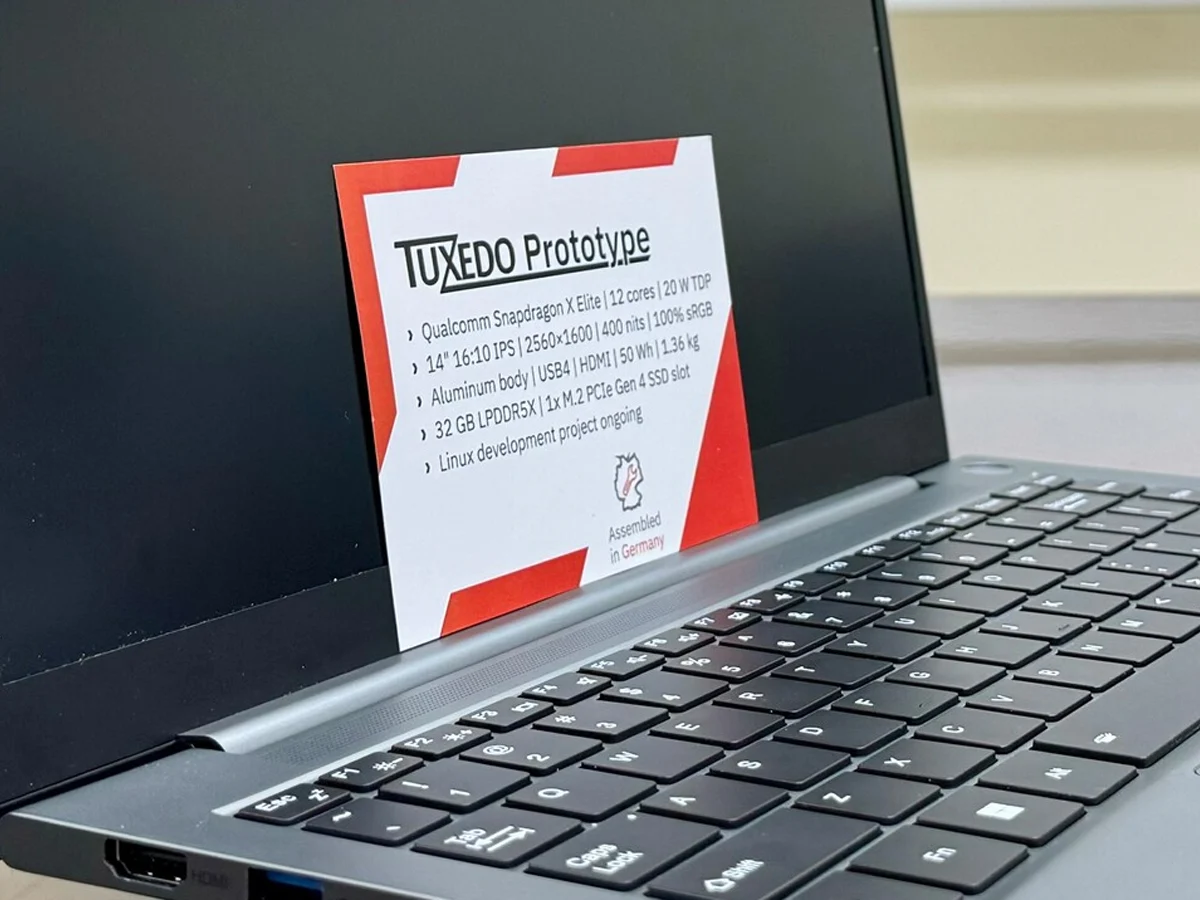
    Tuxedo has teased a new ARM laptop that is set to be powered by the 12-core Snapdragon X Elite SoC in 2024. The device was designed to run on Linux, which would have set it apart since most systems using Qualcomm’s PC SoCs run Windows on ARM (WoA).

    Project Put on Hold

    However, after a year and a half of development, Tuxedo has announced that they are pausing this project, as they found that Linux compatibility with the Snapdragon X Elite SoC is “less suitable than expected.” The company noted that many advantages of these SoCs, which are prominent in Windows environments, do not translate well to Linux (currently, the 2024 Microsoft Surface Pro is priced at $899.99 on Amazon).

    Issues with Performance

    For instance, Tuxedo pointed out that the impressive battery life that Qualcomm frequently promotes for Windows on ARM devices “was not achieved under Linux.” Furthermore, they indicated that several essential features, like BIOS updates on Linux, were lacking in this architecture.

    Looking Ahead

    Another important consideration for Tuxedo is that the Snapdragon X Elite SoCs are already two years old, with Qualcomm having introduced their successors. Investing further time and resources into these older processors seemed impractical, but the good news is that Tuxedo has not completely shelved the project.

    As stated in their announcement, if Tuxedo can leverage a “significant portion” of the work already done on the Snapdragon X Elite, they plan to continue development with the Snapdragon X2 Elite SoCs. Of course, support from Qualcomm will be crucial in this endeavor.

    Open Source Future

    The announcement also highlighted that all the work Tuxedo has accomplished on this project will be made public. This will ultimately allow the community to benefit from the time and effort the team has dedicated thus far.

    Source:
    Link


  • Dell Alienware Gaming Laptop with Nvidia N1X APU Launching in 2026

    Dell Alienware Gaming Laptop with Nvidia N1X APU Launching in 2026

    Key Takeaways

    1. Nvidia is developing the N1X APU, featuring 20 CPU cores and over 6,000 CUDA cores, aimed to be the most powerful APU for Windows laptops.
    2. Rumors suggest an Alienware laptop with the Nvidia N1X could launch in 2026, as reported by Moore’s Law Is Dead.
    3. The N1X APU’s release has been delayed to mid-2026, with potential availability for desktop computers as well.
    4. An insider claims the Nvidia N1X will be available to consumers by Q2 2026, with a Dell Alienware laptop aiming for a Q1 2026 launch.
    5. The Nvidia N1X may surpass the current fastest integrated GPU, the Radeon 8060S, in performance for gaming on Windows laptops.


    Nvidia is preparing to take on Qualcomm’s Snapdragon X Elite APUs for Windows next year. With a design featuring 20 CPU cores divided into two clusters and an integrated GPU boasting over 6,000 CUDA cores, the Nvidia N1X could potentially become the most powerful APU ever used in Windows laptops, surpassing even the robust AMD Strix Halo.

    Rumors of Alienware Laptop

    This news has caught the attention of Dell, as there are rumors suggesting that an Alienware laptop equipped with the Nvidia N1X will be launched in 2026. This information comes from Moore’s Law Is Dead.

    Delays and Expectations

    Previously, it was mentioned that the Nvidia N1X would be delayed until 2026. According to a source from MLID labeled as a “Major OEM,” both the Nvidia N1X and its N1 series are expected to launch by mid-2026. While these APUs are primarily aimed at Windows laptops, there’s a possibility that Nvidia might also make them available for desktop computers.

    Release Timeline

    An insider referred to as an “Nvidia Partner” told MLID that the Nvidia N1X APU “will definitely be available to consumers by Q2.” This claim is backed by the existence of a 16-inch Dell Alienware gaming laptop that is said to be powered by the Nvidia N1X. Dell is reportedly aiming for a launch in Q1 2026 for this laptop.

    The Nvidia N1X appears to be a strong contender, especially on the GPU front. With more CUDA cores than the RTX 5070 laptop GPU, the Nvidia N1X could emerge as the fastest gaming integrated GPU available on Windows, currently held by the Radeon 8060S from the AMD Strix Halo Ryzen AI Max+ 395.

    Source:
    Link


  • Surface Pro vs. MacBook Air: Is Microsoft’s Speed Claim True?

    Surface Pro vs. MacBook Air: Is Microsoft’s Speed Claim True?

    Key Takeaways

    1. Microsoft is promoting its Surface devices with Qualcomm Snapdragon X Elite as being 58% faster than the older MacBook Air with Apple M3.
    2. Comparisons may be misleading, as Microsoft is not comparing with the newer MacBook Air M4.
    3. Benchmark tests show the Surface Pro OLED with Snapdragon X Elite outperforms the MacBook Air M3 by about 49%.
    4. Apple M4 GPU performance significantly exceeds that of Snapdragon X Elite, with higher options available in the M4 Pro and M4 Max.
    5. Marketing claims should be viewed skeptically due to potential bias in performance comparisons.


    Apple’s M-series ARM processors have gained a strong reputation for delivering high speed with low power use in recent years, but now Microsoft is fighting back with its marketing strategies. According to a video linked below, Surface devices that run on the Qualcomm Snapdragon X Elite are said to be 58% quicker than the MacBook Air.

    A Closer Look at the Details

    However, when you dig deeper into the specifics, it becomes clear that Microsoft’s comparisons might not be entirely fair. They are comparing the older MacBook Air that features the Apple M3, rather than the newer MacBook Air M4, which starts at $849 on Amazon. Our benchmark tests indicate that the Microsoft Surface Pro OLED with the Snapdragon X Elite does indeed outperform the MacBook Air M3 by approximately 49% in the Cinebench 2024 Multi-Core benchmark. Still, its performance is nearly equal to that of the Apple M4, even though the MacBook Air lacks a fan, has two fewer CPU cores, and consumes less power.

    Performance in Graphics

    In terms of GPU performance, the Apple M4 significantly surpasses the Snapdragon X Elite. For those who require even greater performance, Apple provides more potent laptops featuring the Apple M4 Pro and Apple M4 Max. In contrast, Microsoft does not have any device equipped with a quicker Snapdragon chipset. This advertising effort by Microsoft further demonstrates that such marketing statements should be approached skeptically, as companies often attempt to tilt the scales in their favor.

    Source:
    Link

  • Qualcomm’s Fun Ads Take Aim at Intel: The Bigger Picture Explained

    Qualcomm’s Fun Ads Take Aim at Intel: The Bigger Picture Explained

    Key Takeaways

    1. The Qualcomm Snapdragon X Elite was expected to revolutionize Windows laptops like Apple’s M1 chip but faced high costs and software compatibility issues at launch.
    2. Intel’s Lunar Lake series was released shortly after the Snapdragon X Elite, offering good efficiency for daily tasks despite lower multi-thread performance.
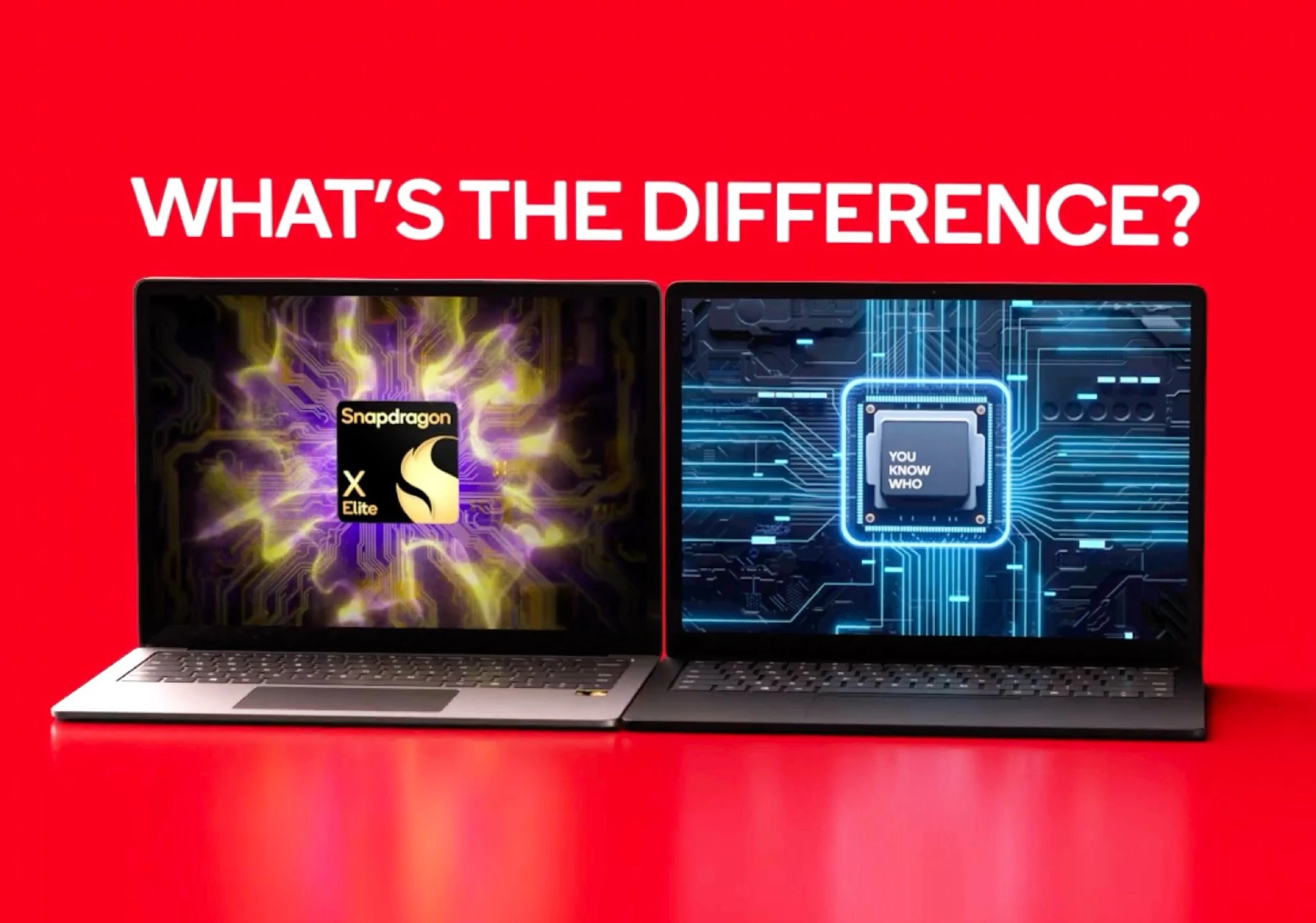
    3. Qualcomm highlighted a performance claim that Snapdragon X Elite maintains full performance on battery, contrasting with Intel’s Lunar Lake, but testing methods raise skepticism about this assertion.
    4. Performance testing showed that the Intel Core Ultra 7 performed nearly as well as the Snapdragon X Elite in single-core benchmarks.
    5. While the Snapdragon model maintained performance on battery, the claimed performance drop of 55% for Lunar Lake laptops should be viewed with caution based on testing results.


    The Qualcomm Snapdragon X Elite was anticipated to be a revolutionary moment for Windows laptops, akin to Apple’s M1 chip, as it promised extended battery life and remarkable performance. While Qualcomm met some of these expectations, the chip didn’t quite achieve a major breakthrough for the company, mainly due to the high costs associated with Snapdragon X Elite laptops and the widespread software compatibility challenges that surfaced at launch.

    Competition from Intel

    An important aspect to consider is that Intel introduced its Lunar Lake series as a direct rival just after the Snapdragon X Elite was released. Although these processors have fewer cores, resulting in lower multi-thread performance, Lunar Lake chips showcase impressive efficiency for daily tasks while providing sufficient performance for office and web-related applications. In response, Qualcomm has been running a series of advertisements (see below), asserting that Lunar Lake processors reduce their performance to 55% when not plugged in, while the Snapdragon X Elite supposedly maintains its full performance under similar conditions. Although this message was shared playfully, the fine print hints at issues within the testing approach.

    Testing Methodology and Results

    The CPU performance data is derived from Geekbench v6.2 Single-Core tests on Windows 11, conducted in October 2024. The Snapdragon X Elite (XIE-80-100) was evaluated using a Dell XPS 13 (9345) operating on “Balanced” Power Mode in Windows and “Optimized” mode in Dell Power Manager. Conversely, the Intel Core Ultra 7 256V was tested on a Dell XPS 13 (9350).

    The single-core Geekbench 6.2 test isn’t too challenging and doesn’t really reflect a system’s overall performance. Our thorough examination of the two Dell XPS 13 models (about $1,500 on Amazon) included in Qualcomm’s comparison showed that the Intel Core Ultra 7 256V performed nearly as well as the Qualcomm Snapdragon X Elite in Geekbench’s single-core benchmark.

    Battery Performance Insights

    When operating on battery, the Intel version did see a 9% reduction in CPU performance and a 3% decrease in GPU performance, while the Snapdragon model mostly preserved its performance levels. Therefore, although Qualcomm’s main message isn’t completely untrue, the bold claim of “55%” should be viewed skeptically, especially since such significant performance drops aren’t common for Lunar Lake laptops.

    Source:
    Link

  • Microsoft should offer Intel or Qualcomm options for Surface Laptop 7

    Key Takeaways

    1. Qualcomm’s Snapdragon X Elite processors are integrated into Microsoft’s Surface Pro and Surface Laptop, using a specialized ARM version of Windows.
    2. ARM laptops have potential compatibility challenges with older software and games, which can lead to unexpected issues for uninformed consumers.
    3. Microsoft has released Surface configurations with Intel’s Lunar Lake processors, offering better compatibility and superior battery life compared to ARM models.
    4. The Intel model excels in single-core performance and graphics capabilities, making it better for everyday tasks and occasional gaming, despite being noisier under heavy use.
    5. There is a significant price gap between the ARM and Intel Surface Laptop models, with the Intel versions being less accessible to average consumers, potentially leading to dissatisfaction and reduced sales.


    Since Qualcomm introduced its Snapdragon X Elite processors, Microsoft has been utilizing these chipsets in both the Surface Pro and Surface Laptop, integrating them with ARM architecture. This effort includes a specialized ARM version of Windows along with apps that are optimized for this platform. In our evaluations of ARM laptops, we have consistently highlighted possible compatibility challenges with older software and games.

    Informing Customers

    We often encourage manufacturers to make customers aware of these potential limitations. Generally, ARM laptops perform admirably, and as long as users are aware of or can tolerate the mentioned drawbacks, there’s nothing fundamentally wrong with them. However, if consumers are not informed, they may encounter unexpected issues. For instance, we recently noted that the Surface Laptop has been marked as a product that gets returned frequently on Amazon. It seems that business clients were not very pleased either.

    New Intel Options

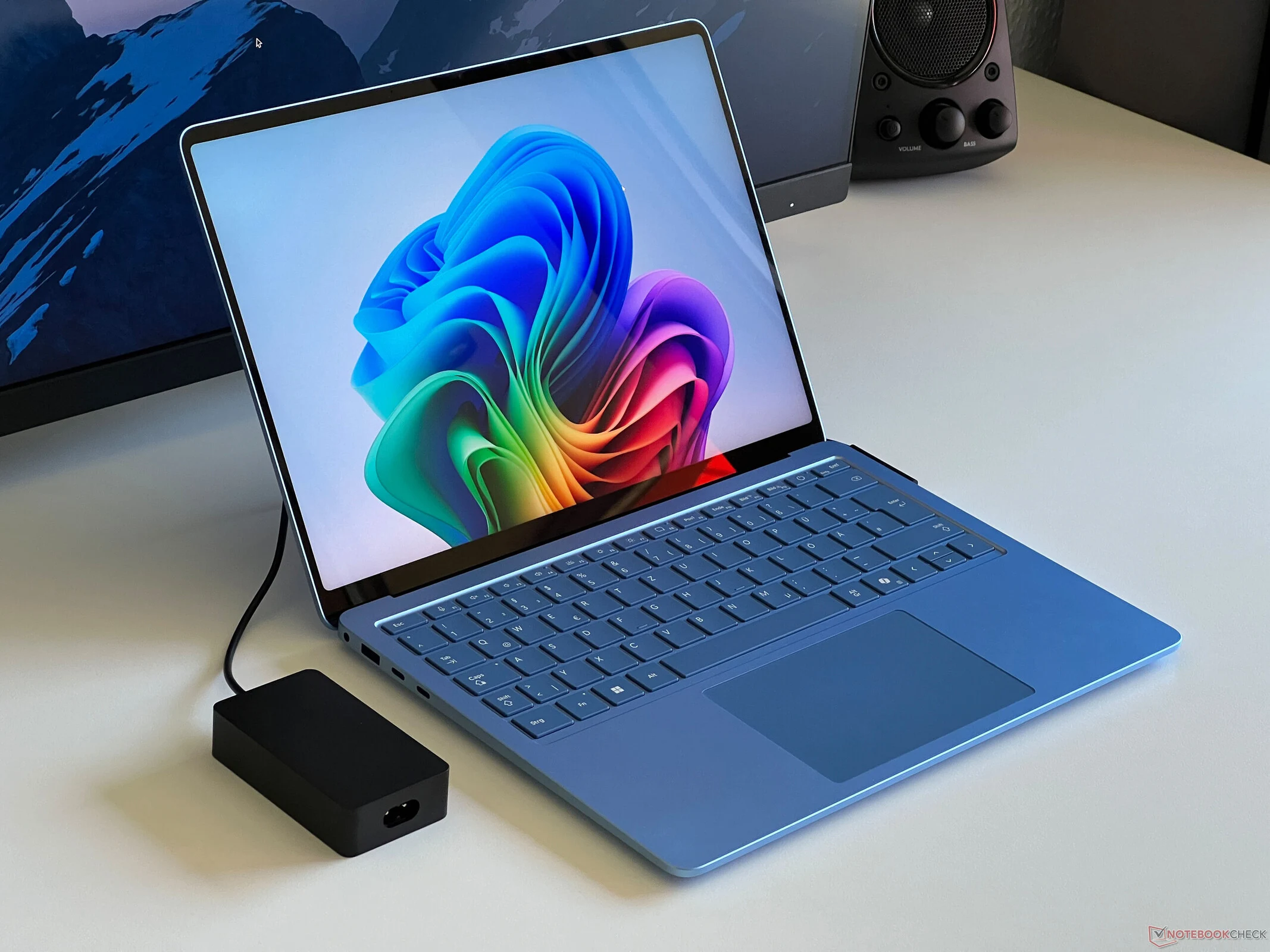
    In mid-February, Microsoft released Surface configurations labeled “for Business,” featuring Intel’s Lunar Lake processors. We have just completed an in-depth review of the larger Surface Laptop 7 15 with the Core Ultra 7 268V, making a direct comparison to the Snapdragon version. Besides the absence of compatibility problems, the Intel model even boasts superior battery life.

    While the multi-core performance of the processor is lower, the Lunar Lake chip matches the single-core performance, which tends to be more crucial for day-to-day tasks. The built-in Arc Graphics 140V GPU is also markedly more powerful. When it comes to occasional gaming, the Intel version excels significantly. The main downside is that the fan on the Intel model is noisier, but it’s important to mention that the peak noise level only occurs after several minutes of intense use. Under normal conditions, the Intel version operates quietly, especially when not in performance mode.

    Pricing Discrepancies

    Although the Surface Laptop for Business can be purchased by regular consumers through various outlets, the high retail price and absence of discounts create a noticeable price gap. For instance, our Intel test unit has a suggested retail price of €2760, making it €700 pricier than the comparable Snapdragon model, which is heavily discounted at €2,499 MSRP. Therefore, the Intel configurations are not a viable option for average users, even though these versions of the Surface Laptop 7 would likely be a better fit for many consumers. It’s unfortunate that Microsoft is pushing its less favorable ARM models onto individual customers, limiting their options. In the long term, this approach could result in unhappy customers and a decline in sales.

  • Microsoft Surface Laptop 7: Snapdragon X Elite Faces Return Issues

    Microsoft Surface Laptop 7: Snapdragon X Elite Faces Return Issues

    Key Takeaways

    1. Intel’s claim about high return rates for Qualcomm Snapdragon X laptops sparked debate, with Qualcomm refuting it.
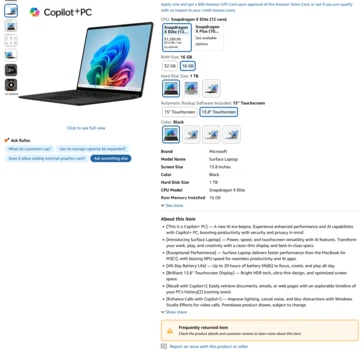
    2. The Microsoft Surface Laptop 7 is labeled as a “Frequently returned item” on Amazon, suggesting potential issues.
    3. User reviews highlight problems, including difficulty in setting up an Android development environment.
    4. Some users report inability to stream Hulu in 4K due to lack of Widevine L1 DRM on the Surface Laptop 7.
    5. Overall customer satisfaction is mixed, indicating Snapdragon X Elite laptops have room for improvement compared to Intel, AMD, and Apple Silicon devices.


    Last year, an executive from Intel stirred up some debate when she claimed that laptops using Qualcomm’s Snapdragon X chips “suffer from high return rates.” Qualcomm later refuted this assertion. Nevertheless, a listing on Amazon for the newly revealed Microsoft Surface Laptop 7 seems to hint that there might be some merit to Intel’s words.

    Return Rates and User Feedback

    The Surface Laptop 7 is marked with a tag stating it’s a “Frequently returned item” (H/T Windows Central), prompting Amazon to advise potential buyers to read reviews prior to making a decision. A quick look at the review section for the Surface Laptop 7 reveals some rather intriguing comments. One reviewer mentions having difficulty in establishing an Android development environment. This is quite strange since the device is powered by the Arm-based Snapdragon X Elite chip.

    Streaming Issues

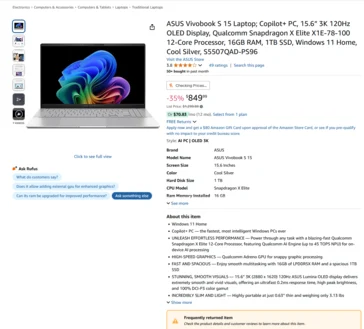
    In addition, another user points out that they are unable to stream Hulu in 4K. This could be linked to the fact that the Surface Laptop 7 lacks Widevine L1 DRM, which is again baffling. Interestingly, the Asus Vivobook S 15 also carries the same “Frequently returned item” label. However, the reviews for this laptop focus more on its specific issues rather than the Windows on Arm platform in general, including the fact that the RAM is not upgradeable.

    Overall Customer Satisfaction

    While a majority of customers seem happy with their purchase, it is evident that laptops with Snapdragon X Elite chips have some distance to cover before they can match the performance and experience offered by those that run on Intel, AMD, and Apple Silicon.

    Source:
    Link


  • Qualcomm Project Glymur Leaks with Snapdragon X2 Ultra Premium

    Qualcomm Project Glymur Leaks with Snapdragon X2 Ultra Premium

    Less than a year ago, Qualcomm presented its Snapdragon X Plus and Snapdragon X Elite chipsets, which feature the long-anticipated Oryon CPU cores. To give some context, the Snapdragon 8 Elite, which uses second-generation Oryon cores, powers many top-tier smartphones like the OnePlus 13, Galaxy S25 Ultra, and Nubia Z70 Ultra (currently available for $749 on Amazon), to name a few.

    Recent Chipset Developments

    Qualcomm is still rolling out first-generation chipsets, with the latest being the Snapdragon X (X1-26-100), which made its debut at CES 2025 in Las Vegas and is found in devices such as the Asus Zenbook A14. There have been whispers about next-gen chipsets since September 2024, when leaker Roland Quandt shared codenames like ‘SC8480XP’ and ‘Project Glymur’.

    Expectations for Future Chipsets

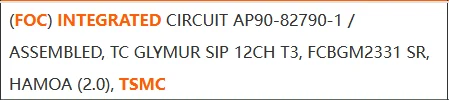
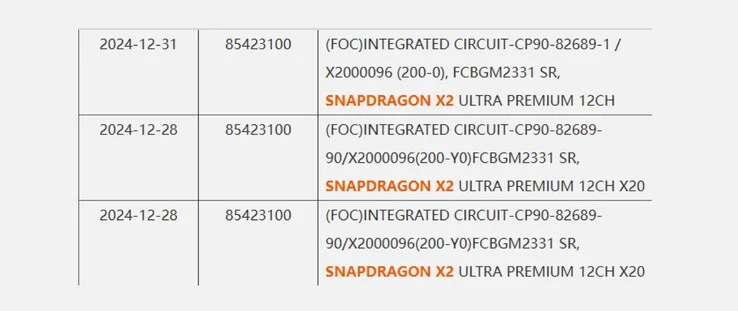
    Later, the same source hinted that Qualcomm is trialing the Snapdragon X Elite Gen 2 chipsets in desktop setups using All in One (AiO) 120 mm coolers. Recent findings from export databases indicate that Project Glymur is still being actively developed. The presence of ’12CH’ in these database entries has sparked rumors that Qualcomm’s upcoming Snapdragon X chipsets might offer support for twelve memory channels, marking a 50% increase over the first-generation models.

    New Chipset Identified

    Additionally, a new chipset has been observed under the name ‘Snapdragon X2 Ultra Premium.’ Identified with the part number X2-000-096, the ‘Ultra Premium’ label suggests it will serve as a stronger option compared to the SC8480XP. While details remain scarce at this time, Qualcomm has already indicated that its Snapdragon X Elite Gen 2 and Snapdragon X2 chipsets will feature third-generation Oryon CPU cores.

    Source:
    Link


  • Honor MagicBook Art 14 Launched in Europe with Snapdragon X Elite

    Honor MagicBook Art 14 Launched in Europe with Snapdragon X Elite

    After recently being introduced in China, Honor has now brought the MagicBook Art 14 Snapdragon to the European market. This new version of the lightweight laptop features a Qualcomm Snapdragon X Elite chipset and is designed to be sleek, equipped with AI features, and offers an impressive battery life.

    Stunning Visuals and Enduring Battery

    The MagicBook Art 14 Snapdragon comes with a 14.6-inch OLED screen that has a remarkable 3.1K resolution, boasting a 97% screen-to-body ratio for a captivating viewing experience. Thanks to Honor’s OS Turbo 3.0, users can enjoy up to 15.22 hours of 1080p video playback with just one charge, maximizing battery performance.

    Features that Stand Out

    Weighing only 1 kilogram, this laptop is more lightweight than its Intel version. Its slim design (10mm) doesn’t take away from its capabilities. The Snapdragon chipset can manage up to 12 cores and can reach speeds of 4.0GHz, alongside options for up to 32GB RAM and 1TB of storage.

    Advanced AI and User Privacy

    AI plays a major role in this device, with an AI-enhanced NPU that delivers up to 45 TOPS of AI computing power, making it effective for complex tasks. The camera also benefits from AI, featuring smart subject tracking, magnetic privacy protection, and background blurring.

    Unique Privacy Features

    The unique magnetic webcam is designed with user privacy in mind. It can be detached easily, allowing users to securely store it when not in use.

    Pricing and Where to Buy

    Currently, the MagicBook Art 14 Snapdragon is available on Honor’s German website for €1,699 (approximately $1,796 USD) in the configuration of 32GB RAM/1TB SSD and in a Starry Gray color. A €200 discount coupon is also offered. Buyers will receive optional free gifts, including Honor Earbuds X6 in white and a Pad 9 tablet powered by Snapdragon 6 Gen 1 in matching gray.


    Image 1
  • Honor MagicBook Art 14 Snapdragon Launches in Europe with Free Gifts

    Honor MagicBook Art 14 Snapdragon Launches in Europe with Free Gifts

    The MagicBook Art 14 Snapdragon is lightweight, weighing about 1 kilogram (kg), similar to its Intel version. However, it boasts a sleeker profile, measuring around 1 centimeter (cm) at its thickest part, thanks to the Snapdragon X Elite chipset it employs.

    Impressive Battery Life

    Honor claims that the Qualcomm platform allows this laptop to achieve an impressive screen-on time of up to 10.6 hours on a single charge. This makes it an appealing option for users looking for AI features in their new computers, offering performance of up to 45 TOPS.

    Innovative Camera Features

    In terms of camera capabilities, the MagicBook Art 14 includes smart subject-tracking, privacy protection, and background blurring functions. Additionally, you can detach the camera from its magnetic dock located on top of the screen when it’s not needed.

    Pricing and Offers

    This laptop has been made available on Honor’s German website, priced at €1,699 (~$1,796) for the configuration featuring 32GB RAM and a 1TB SSD in Starry Gray. There is currently a coupon available that provides a €200 (~$211) discount on the sale page.

    You can also get the laptop bundled with Honor Earbuds X6 in white, as well as the Snapdragon 6 Gen 1-powered Pad 9, which is presently listed at €249.90 (~$264) on Amazon.de, all in a coordinated shade of gray.