Category: All News

  • Easily Scratchable: Apple Vision Pro’s Front Glass Replacement Priced at $799 (~5,700 Yuan)

    Easily Scratchable: Apple Vision Pro’s Front Glass Replacement Priced at $799 (~5,700 Yuan)

    The much-anticipated Apple Vision Pro has officially launched in the United States, garnering attention from eager users. Initial tests showcased its laminated front glass, which is essentially a plastic layer on top of the glass. While the plastic layer may protect the glass from shattering, it is very susceptible to scratches.

    Scratch Vulnerability of the Apple Vision Pro

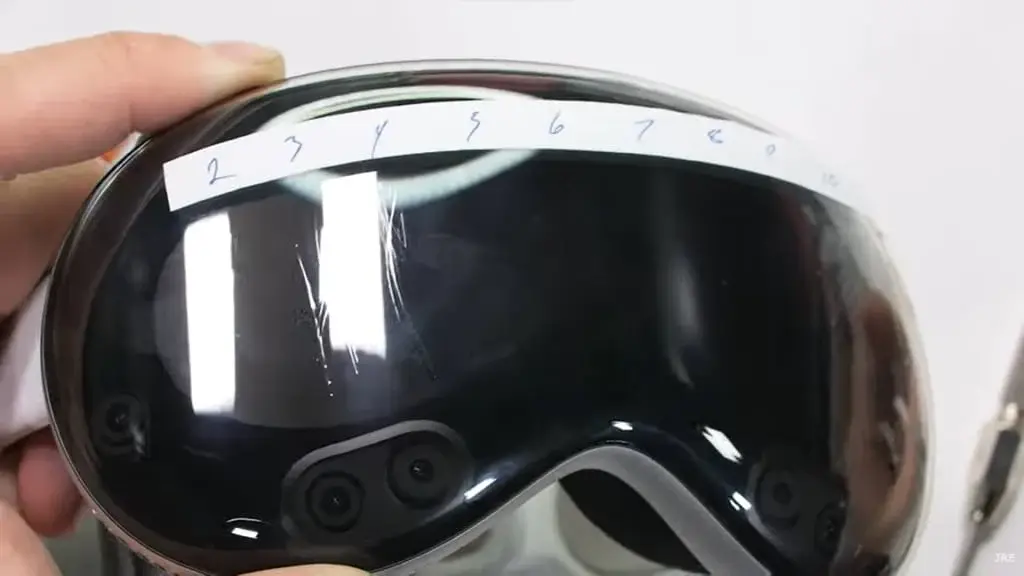
    Upon being scratched, the outer plastic layer will obstruct the view of the cameras through which you see the world. The $3499 Apple Vision Pro starts scratching at level 3!

    Youtube creator Jack Nelson from JerryRigEverything shared a teardown video today, focusing on the front glass covering the camera, sensor, and display of the Vision Pro. While laminated glass typically incorporates a plastic layer to enhance impact resistance, the Vision Pro’s design leaves this layer on the outside, making it highly prone to scratches.

    Scratch Tests and Results

    Tests employing Mohs hardness testing revealed that tools with a hardness level as low as 2 can leave light scratches on the Vision Pro’s front glass, with level 3 hardness tools causing deeper scratches. This contrasts sharply with most smartphone displays, which typically only show scratches at hardness levels of 6-7.

    As a consequence, everyday items such as keys, coins, and even dust pose a significant risk of leaving permanent marks on the Vision Pro’s front glass. To mitigate this issue, Apple includes a special protective case and polishing cloth in the product’s packaging. However, replacement of the front glass comes at a hefty cost of US$799 (~5,700 Yuan), underscoring the severity of potential damage.

    Drop Resistance of the Apple Vision Pro

    Despite this vulnerability, the outer plastic layer does offer an upside: enhanced drop resistance. Drop tests conducted by AppleTrack demonstrate that the front glass of the Vision Pro can endure multiple drops before succumbing to breakage, providing reassurance to users concerned about accidental impacts.

    While the Apple Vision Pro excels in one aspect, its vulnerability to scratches highlights the importance of proper handling and maintenance of the device. Apple CEO Tim Cook says this ‘special computing‘ device will soon launch in the Chinese market.
  • Over 7 Years of Updates, OnePlus President Kinder Liu Places User Experience as Top Priority

    Over 7 Years of Updates, OnePlus President Kinder Liu Places User Experience as Top Priority

    In the rapidly evolving landscape of smartphone technology, Samsung and Google have emerged as frontrunners in providing extended system update services for their flagship phones. The Samsung Galaxy S24 series and Google Pixel 8 series both promise seven years of OS updates.

    OnePlus Takes a Different Approach

    OnePlus has opted for a different approach, committing to four years of system updates for the OnePlus 12 and an additional year of security updates. OnePlus President Kinder Liu recently shed light on this decision in an interview with Tom’s Guide, emphasizing the importance of a smooth user experience over blindly extending the duration of system updates.

    The Importance of Hardware Performance

    Liu argues that merely prolonging the system update timeline does not address the underlying issues that may arise with hardware performance over time. Drawing a metaphorical comparison between a mobile phone and a sandwich, he explains that while software represents the fillings, hardware serves as the bread.

    Some manufacturers claim to offer seven years of system updates, but Liu suggests that they may overlook the fact that after four years, the hardware performance of the phone could decline significantly, akin to the bread of a sandwich becoming moldy. The result, he notes, is a potentially poor user experience despite the extended software support.

    Collaboration with TÜV Rheinland SUD

    To address concerns about hardware performance, OnePlus has collaborated with TÜV Rheinland SUD in Germany to conduct rigorous simulated use tests for the OnePlus 12 and 12R over many years. Based on the results of these tests, the company promises users a four-year “fast and smooth” performance guarantee. This proactive approach aims to ensure that the hardware keeps pace with software updates, maintaining a seamless and satisfactory user experience throughout the promised support period.

    Battery Degradation and Practical Challenges

    In addition to hardware considerations, Liu raises the issue of battery degradation over extended use. He highlights that when competitors boast of supporting system updates for up to seven years, the batteries of their phones may not last the entire duration. This brings attention to the practical challenges associated with prolonged device usage and the potential impact on overall performance.

  • Google Pixels to Receive February Update Including Latest Security Patch and Additional Features

    Google Pixels to Receive February Update Including Latest Security Patch and Additional Features

    Following the January 2024 update, Google has released the latest monthly update for Pixel smartphones and Pixel Watches. The February update is now available for various Pixel devices, including the Pixel 5a, Pixel 6, Pixel 6 Pro, Pixel 6a, Pixel 7, Pixel 7 Pro, Pixel 7a, Pixel Tablet, Pixel Fold, and the new Pixel 8 Series. Additionally, the monthly update for Pixel Watches is also rolling out. This update brings several changes and enhancements, which we will discuss in detail below.

    Security Enhancements and Fixes

    Based on the Android 14 QOPR1, the new update brings fixes and security enhancements for both Android-based vulnerabilities and specific issues on Pixel smartphones. The update includes fixes for a total of 15 security issues through the Android 14 February Security patch. Furthermore, there are camera improvements that enhance system stability and performance.

    Upcoming Features for Pixel Smartphones

    Google is also working on introducing new features for Pixel smartphones, which will be part of the upcoming Android 14 OPR2. The Android 14 QPR2 Beta 3.1 is already available for smartphones.

    Changelog for Pixel Smartphones

    Below is the official changelog for the Pixel smartphones, highlighting the changes included in the February 2024 update:

    Camera

    • General improvements for system stability and performance in certain conditions

    Display & Graphics

    • Fix for display getting corrupted in certain conditions
    • Fix for issue with outer display in certain conditions

    Framework

    • Fix for stability or performance with certain third-party apps

    Wi-Fi

    • General improvements for Wi-Fi stability and performance in certain conditions

    Device Applicability

    The fixes mentioned above are available for all supported Pixel devices unless otherwise indicated. Some fixes may be Carrier/Region specific.

    Firmware Versions for Compatible Smartphones

    The update is gradually rolling out to Pixel smartphones worldwide. It may take up to a week for each unit to receive the update as it is being rolled out in phases. Here are the firmware versions for each compatible smartphone, including the Verizon and Softbank locked versions:

    Global:

    Pixel 5a (5G): UQ1A.240205.002
    Pixel 6: UQ1A.240205.002
    Pixel 6 Pro: UQ1A.240205.002
    Pixel 6a: UQ1A.240205.002
    Pixel 7: UQ1A.240205.002
    Pixel 7 Pro: UQ1A.240205.002
    Pixel 7a: UQ1A.240205.002
    Pixel Tablet: UQ1A.240205.002
    Pixel Fold: UQ1A.240205.002
    Pixel 8: UQ1A.240205.004
    Pixel 8 Pro: UQ1A.240205.004

    Verizon:

    Pixel 7: UQ1A.240205.002.A1
    Pixel 7 Pro: UQ1A.240205.002.A1
    Pixel 7a: UQ1A.240205.002.A1
    Pixel Fold: UQ1A.240205.002.A1
    Pixel 8: UQ1A.240205.004.A1
    Pixel 8 Pro: UQ1A.240205.004.A1

    SoftBank (JP):

    Pixel 7: UQ1A.240205.002.B1
    Pixel 7 Pro: UQ1A.240205.002.B1
    Pixel 7a: UQ1A.240205.002.B1
    Pixel Fold: UQ1A.240205.002.B1
    Pixel 8: UQ1A.240205.004.B1
    Pixel 8 Pro: UQ1A.240205.004.B1

    Pixel Watch February Update

    All Pixel Watch devices are receiving the February 2024 update, which includes the latest security patch. This update primarily focuses on enhancing the system’s security and stability. The update will be available for all Pixel Watch devices starting today. However, this is the second update for Pixel Watches since the January 224 update.

    In addition to the February update, Pixel Watch recently received a camera app update that introduced some new features. Google regularly pushes updates for Pixel Watch devices, similar to Pixel Smartphones.

  • Reportedly, Huawei plans to launch a triple-folding phone this year

    Reportedly, Huawei plans to launch a triple-folding phone this year

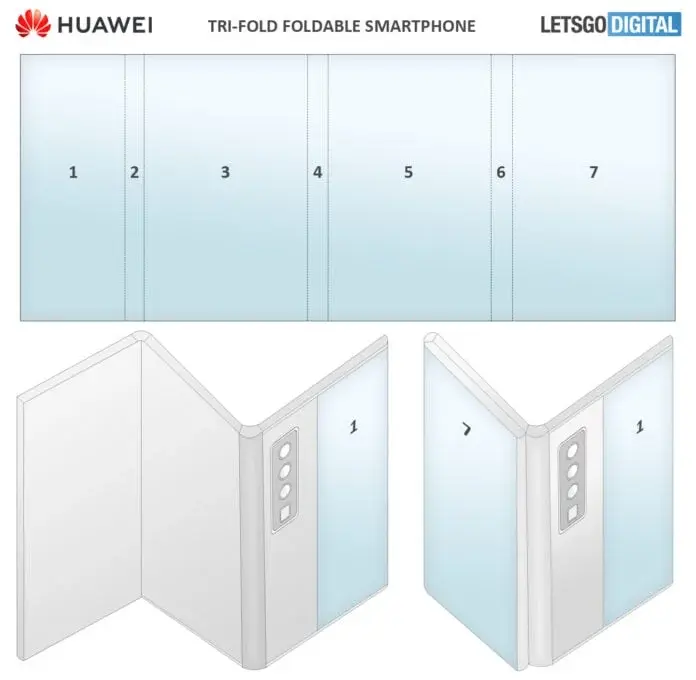
    Foldable phones are gaining popularity among mainstream consumers, and Huawei is reportedly planning to expand its efforts in this technology. According to multiple sources, including Taiwan’s TechNews, Huawei is developing a triple-folding phone that could be launched in the second quarter of 2024.

    Huawei’s Triple-Folding Phone

    The triple-folding phone is expected to feature a Z-shaped or S-shaped folding design, similar to other foldable phones. The screen size is rumored to be around 6.4 inches. Huawei has reportedly partnered with panel supplier BOE for the display, while hinge production involves companies Zhaoli and Fusda.

    Patents and Research

    Huawei has been researching triple-folding display technology for some time now. The company filed patents for this technology in 2021, with additional filings in March and July 2022. Industry insider Ross Young previously suggested that Huawei’s triple-folding phone could be released by the end of 2023, but there may have been delays. However, the latest reports indicate that the technology is now mature enough for market release.

    Expected Demand

    The development of Huawei’s triple-folding phone aligns with the anticipated increase in demand for foldable phones. Although shipments fell short of expectations in 2023, with only 15.7 million units sold, analysts predict a 12.3% year-on-year growth to 17.7 million units in 2024.

    Collaboration and Mass Production

    The Associated Press has confirmed Huawei’s collaboration with suppliers for the triple-folding device, suggesting that it is nearing mass production. While specific details about the phone are still under wraps, Huawei’s entry into the triple-folding market is exciting news for foldable phone enthusiasts.

    Conclusion

    As Huawei expands its efforts in foldable phone technology, the development of a triple-folding phone is a significant milestone. With a rumored launch in the second quarter of 2024, Huawei’s triple-folding phone could contribute to the growing demand for foldable devices. We will keep you updated on any further developments regarding this exciting new product.

    Reportedly, Huawei plans to launch a triple-folding phone this year
    Huawei triple folding phone patent in 2021. Image: LetsGoDigital.
  • Colorful Introduces RTX 3050 Graphics Cards with Dual-Fan Cooling at 1,399 Yuan ($200)

    Colorful Introduces RTX 3050 Graphics Cards with Dual-Fan Cooling at 1,399 Yuan ($200)

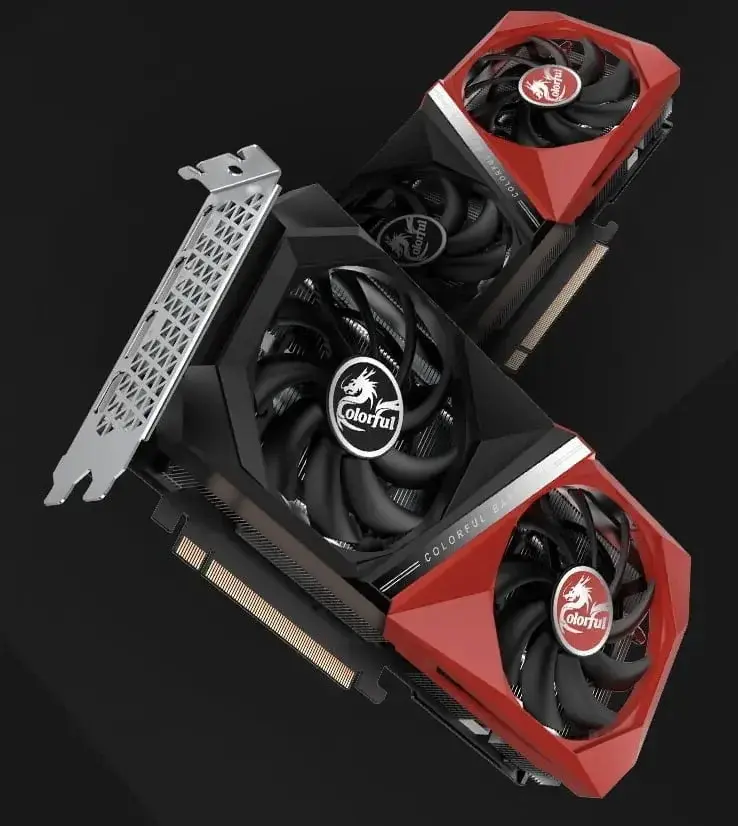
    Colorful has recently introduced two new graphics cards, the RTX 3050 Tomahawk DUO and Smart mini 6GB, priced at 1,399 yuan ($200). These cards are now available for purchase on JD.com. Both models come with dual-fan cooling systems and support intelligent start-stop technology, ensuring efficient performance. The Tomahawk DUO features a red and black design, while the Smart mini sports a purple and black aesthetic. Although they share similarities, there are differences in their dimensions and appearance.

    Specifications and Features

    Both the RTX 3050 Tomahawk DUO and Smart mini graphics cards are equipped with dual 90mm fans for effective heat dissipation. The Tomahawk DUO measures 255x130x41.3mm with a baffle, while the Smart mini is slightly smaller at 255×129.6×41.9mm with a bezel. These variations cater to different build requirements and preferences.

    Under the hood, the RTX 3050 series packs a powerful punch with 2304 CUDA cores, delivering impressive performance comparable to the OEM version. However, there is a notable difference in the memory bus width, reduced to 96bit for the 6GB variant. As a result, the bandwidth drops from 224 GB/s to 168 GB/s. While this adjustment helps lower costs, it may impact performance in memory-intensive tasks.

    Comparison with the 8GB Variant

    A comparison between the 6GB and 8GB variants of the RTX 3050 reveals significant disparities. The 6GB model experiences a 10% reduction in CUDA cores, a 25% decrease in video memory, and a corresponding decline in bandwidth. Additionally, the GPU frequency takes a substantial hit, with a 32% decrease in base clock and a 17% decrease in boost clock. However, the 6GB variant boasts a significantly lower TDP, consuming only 70W compared to the 130W of its 8GB counterpart.

    Conclusion

    In conclusion, Colorful’s latest RTX 3050 graphics cards offer budget-friendly options with impressive performance capabilities. Although the 6GB variant sacrifices some specifications compared to the 8GB model, it presents an enticing choice for gamers and creators who prioritize affordability without compromising too much on performance.

    Colorful Introduces RTX 3050 Graphics Cards with Dual-Fan Cooling at 1,399 Yuan (0)
  • Huawei Slows Down Phone Production and Shifts Focus to AI Chips

    Huawei Slows Down Phone Production and Shifts Focus to AI Chips

    Huawei is making a big change in its production plans, showing a strong interest in the growing area of artificial intelligence (AI). The tech giant has chosen to boost the production of its AI chip, the Ascend 910B, even though it means slowing down the making of its Mate 60 smartphones in at least one of its factories. This move is surprising because the Mate 60 had recently done better than Apple in terms of phone sales in China, as mentioned by the South China Morning Post. Huawei’s decision to focus more on AI chips than on smartphones highlights the company’s belief in the significant impact AI will have on the tech world.

    Increased Demand for AI Chips in China

    The Ascend 910B chip is important for developing AI models, and there’s a growing demand for it in China. This increase in interest comes as Chinese AI developers are finding it hard to get their hands on high-quality AI chips from abroad, like Nvidia’s H100, because of trade restrictions set by the United States. By concentrating on the Ascend 910B, Huawei is not only finding a way around these challenges but also setting itself up as an important player in the domestic AI market.

    Chinese Tech Companies Embrace AI

    Huawei’s new direction also shows how Chinese tech companies are eager to get involved in the AI field. Even though they’re a bit behind global leaders like OpenAI and Google, companies such as Baidu are moving forward with their own AI projects. China is also ahead in making rules for AI, requiring companies to get approval before they release AI products to the public.

    Preparing for the Future

    With this shift towards AI technology, Huawei is preparing for the future, focusing on an area that could change technology in big ways. This move shows Huawei is thinking ahead, ready to face current challenges while betting on the long-term importance of AI.

  • Vivo X Fold inches closer to launch, secures crucial certification

    Vivo X Fold inches closer to launch, secures crucial certification

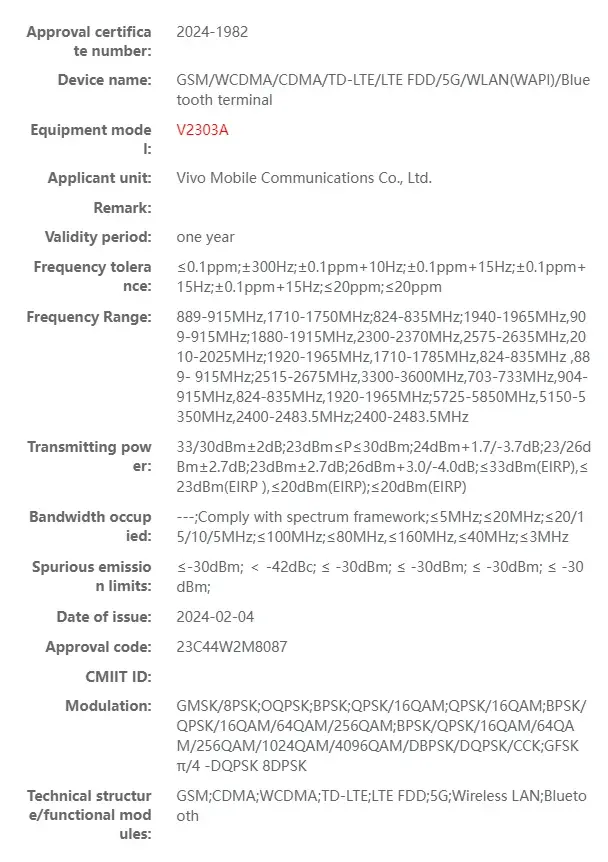
    Several reports indicate that Vivo will unveil the Vivo X Fold 3 and X Fold 3 Pro foldable phones in the first quarter of 2024 in China. The series seems to be nearing launch, as a new Vivo phone, believed to be the X Fold 3, has received radio certification in China. This certification suggests an imminent launch could be on the horizon.

    Vivo X Fold 3 bags radio certification

    An IMEI database listing that emerged in December revealed that the forthcoming Vivo X Fold 3 has the V2303A model number. This same device has now appeared in the database of China’s radio certification platform. While the listing remains silent on key specifications, it signifies an important hurdle cleared for the phone’s launch.

    Affordable foldable phone with Snapdragon 8 Gen 2 chipset

    Multiple leaks have claimed that the Vivo X Fold 3 will be an affordable foldable phone that will lack some of the premium features like an ultrasonic fingerprint scanner, wireless charging, and a periscope telephoto camera, which are said to be exclusively available on the X Fold 3 Pro.

    According to reports, the Vivo X Fold 3 will feature the Snapdragon 8 Gen 2 chipset. The device may pack a 5,600mAh battery, which may support 80W fast charging. At present, there is no clear information about the internal and external displays of the phone. However, it is expected to feature a 50-megapixel OV50H primary camera with OIS support. It is also being said that it will be a lightweight foldable phone that weighs around 220 grams.

    March launch event with three devices

    As far as the launch is concerned, Vivo may hold a massive launch event in March in China. It may see the arrival of three devices, such as the Vivo X100s smartphone, the Vivo Pad 3 tablet, and the Vivo X Fold 3 foldables.

  • Ahead of launch, live images of the Redmi A3 surface

    Ahead of launch, live images of the Redmi A3 surface

    Redmi A3: Upcoming Budget-Friendly Smartphone Revealed

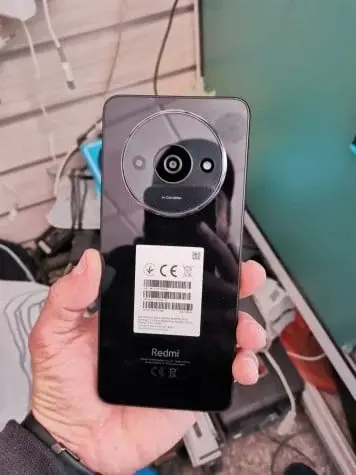
    Redmi, a popular smartphone brand known for its budget-friendly devices, is preparing to launch its latest offering, the Redmi A3. The design and specifications of the phone were initially revealed through retail posters spotted at various African retailers. However, recently, live images of the device have surfaced, thanks to GSMArena.

    Redmi A3 Design and Display

    According to reports, the Redmi A3 will come with a 6.71″ display, which is noticeably larger compared to its predecessors that featured 6.52″ displays. The camera island on the back of the phone also sports a different design, resembling the circular camera module seen on the Realme 11 Pro series.

    Redmi A3 Specifications

    Previous reports have indicated that the Redmi A3 will feature an HD+ LCD panel with a 90Hz refresh rate and a peak brightness of 400 nits. The phone will be equipped with a 13MP primary camera and an 8MP selfie snapper.

    Under the hood, the Redmi A3 will be powered by a MediaTek processor and will come with 4GB of LPDDR4X RAM and up to 128GB of eMMC 5.1 storage. The device will also support virtual RAM expansion of up to 4GB and will have a microSD card slot for storage expansion.

    Battery and Connectivity

    The Redmi A3 will pack a 5000mAh battery with 10W charging support. In terms of connectivity, the phone will offer dual-SIM support, 4G compatibility, WiFi 2.4GHz, Bluetooth 5.0, and various satellite navigation systems. It will also retain the 3.5mm audio jack and will utilize a USB Type-C port for charging.

    Exciting Features at an Affordable Price

    Redmi has gained popularity for offering feature-packed smartphones at affordable prices. With the Redmi A3, the brand aims to continue this trend by providing users with a larger display, improved camera design, and decent specifications, all at a budget-friendly price point.

    Overall, the Redmi A3 appears to be a promising option for those looking for a budget smartphone that doesn’t compromise on important features. Stay tuned for the official launch of the Redmi A3 to learn more about its pricing and availability

  • Unveiling the LG 27GS95QE OLED Gaming Monitor: 2K 240Hz Display and 1000 Nits of Brightness

    Unveiling the LG 27GS95QE OLED Gaming Monitor: 2K 240Hz Display and 1000 Nits of Brightness

    Korean electronics giant LG has unveiled the LG 27GS95QE OLED gaming monitor. The new LG monitor is capable of 2K resolution and offers a display refresh rate of 240Hz. It also has a peak brightness of 1000 nits and sports a 26.5-inch screen. The new LG monitor is well-suited for gaming applications and e-sports.

    Impressive Specifications

    The LG OLED gaming monitor has a GtG response time of 0.03ms and comes with DisplayHDR True Black 400 resolution. It covers 98.5% of the DCI-P3 color gamut while the normal-use brightness of the monitor is 275 nits. However, the brightness can be adjusted up to a maximum of 1000 nits.

    Advanced Features

    The new LG OLED gaming monitor supports AMD FreeSyncM Premium and NVIDIA G-Sync. The interfaces available on the monitor are HDMI 2.1 and a 4-pole headphone interface. It also supports AGLR anti-glare technology and LG Live Color Low Blue Light technology.

    Pricing & Availability

    In China, the LG OLED gaming monitor has a retail price of 5,999 yuan ($) and can be purchased from JD.com. There is no global availability information for the new LG OLED gaming monitor at this time. It is however expected that the monitor will be available in a sprinkling of markets outside China. It is also unclear how long the launch price will be before reverting to the original price of the monitor. More details about the LG OLED gaming monitor can be viewed from the brand’s website.

  • European Union Approves World’s First Law on Artificial Intelligence, Setting an Example

    European Union Approves World’s First Law on Artificial Intelligence, Setting an Example

    Artificial intelligence technologies are increasing in popularity every day. Almost every product, application, and service we use today either has AI integration or is in the process of acquiring it. However, this situation brings along certain challenges. Regulators worldwide are urging for the rapid development of AI to be monitored and for it to adhere to specific rules. Moreover, they have finally achieved their goal, as the European Union approved the final version of the Artificial Intelligence law, making a groundbreaking move in the world of AI regulations. Here are the details…

    European Union Approves World’s First Artificial Intelligence Law

    The European Union has passed its first extensive law overseeing artificial intelligence. The aim is to guarantee the secure, ethical, and human rights-conscious advancement and application of AI. Using a risk-based strategy, the law enforces stricter rules for high-risk systems. It also bans certain unethical practices, mandates transparency, and demands explainability in AI systems.

    Risk-Oriented Approach

    Artificial intelligence systems will be categorized based on potential levels of harm. High-risk systems, such as facial recognition or credit scoring, will be subject to stricter regulations.

    Prohibited Applications

    Unethical practices, like using hidden techniques or manipulating people’s emotions, will be banned in artificial intelligence systems.

    Transparency and Explainability

    It will be mandatory for artificial intelligence systems to provide information on how they operate and make decisions.

    Discrimination, Bias, and Injustice

    Measures to prevent discrimination, bias, and injustice in artificial intelligence systems have also been included in the law.

    The expectation is that this law will contribute to the responsible development and application of AI, turning it into a valuable tool for society. The main points of the law are as follows:

    The Artificial Intelligence law marks a crucial step for the future of AI. This law aims to support responsible and ethical development and use of AI in the EU and beyond, promoting its transformation into a beneficial tool for society.