– ARM CEO Rene Haas gifted Nvidia CEO Jensen Huang a Surface RT, highlighting its historical significance.
– The 2012 Surface RT featured an Nvidia Tegra 3 ARM chip, promising fanless design and 10-hour battery life.
– Windows RT’s limited software ecosystem and poor app support made the Surface RT a commercial flop.
– Despite failure, the Surface RT laid early groundwork for ARM’s eventual integration into Windows.
– Nvidia’s new RTX Spark platform will continue to run on Windows, building on that foundation.
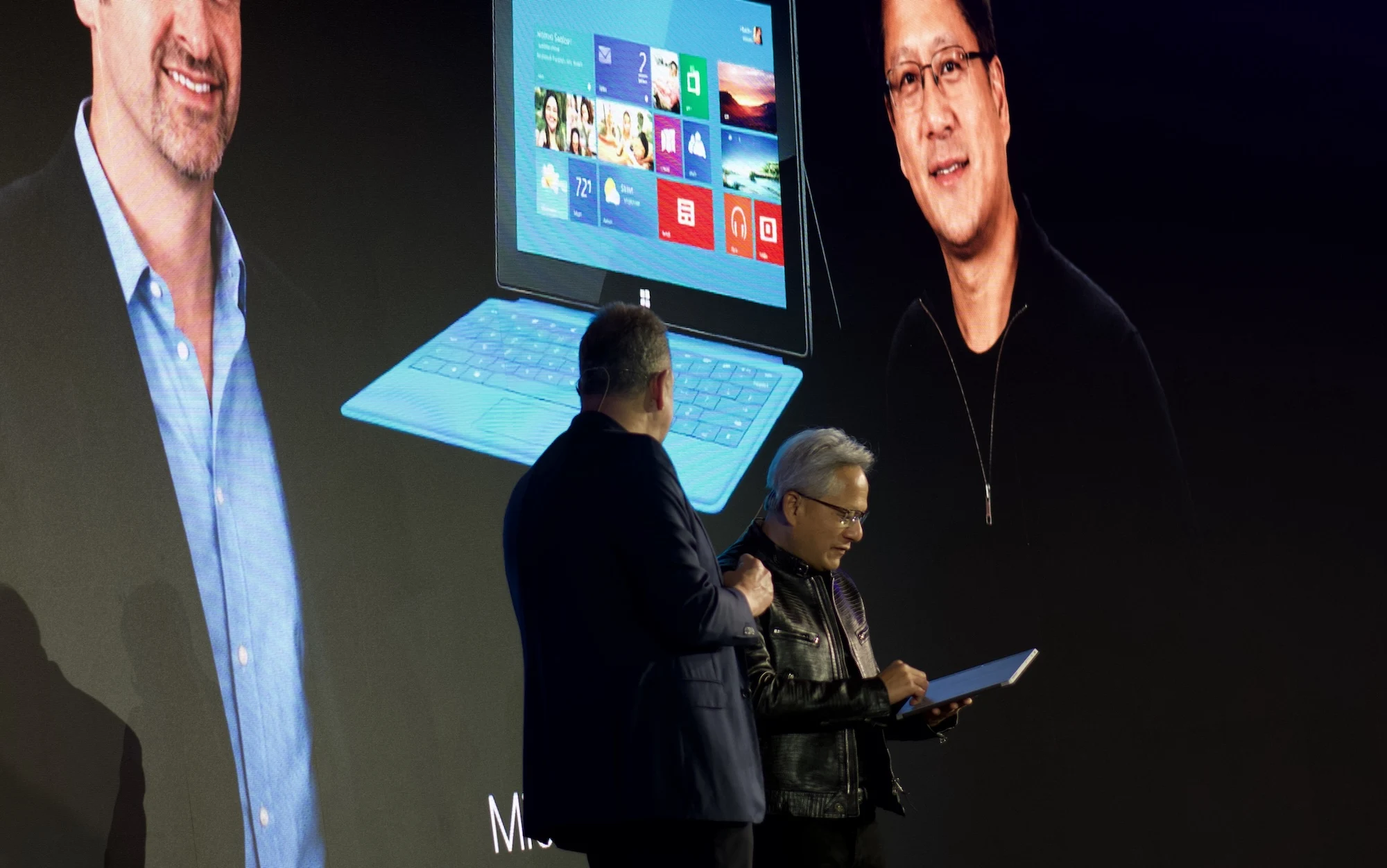
At Arm’s Computex press conference, amidst a host of AI-related topics, the chip developer had a little surprise in store at the end. Arm CEO Rene Haas invited Nvidia CEO Jensen Huang onto the stage and presented him with a Surface RT. It was a real blast from the past, showing how far things have come.
A gift from the past for Jensen Huang
The Surface RT was something special at the time, as the Windows device featured an ARM chip developed by Nvidia (Tegra 3). It was unveiled by Rene Haas, who was then working for Nvidia. The promise in 2012: a fanless design and ten hours of battery life thanks to an energy-efficient platform. These were groundbreaking claims back then.
How Microsoft redefined its Surface brand
The Surface RT arrived at a time when Microsoft had largely abandoned the original Surface concept, a rather large table with a touchscreen and sensors for its surface. Instead, the brand name was established for tablets and notebooks. This pivot was quite drastic and changed the direction of the company.
Back then, the device was something special. Much like the Windows Phone predecessors as MP3 players (Zune), it was extremely difficult to install apps or programs. At the time, the software infrastructure was nowhere near as advanced. In short, the Surface RT was an exciting device to give to relatives or acquaintances who weren’t very tech-savvy. After all, you couldn’t really go wrong with it, mess up the settings, or even catch malware. It was a locked down system.
Why it was considered a commercial failure
However, due to these limitations, the Surface RT and Windows RT were also a flop, especially since the devices weren’t particularly fast. Our review of the Surface RT from 2012 was also mixed. Microsoft’s first attempt failed, and it took several more attempts to help ARM gain some traction. After all, Windows was already working in the embedded systems sector, but that didn’t help much at the time.
- Limited app avalibility hindered adoption.
- Poor performance compared to Intel counterparts.
- Confusing marketing for consumers.
Ultimately, Microsoft, ARM and Nvidia laid the groundwork for establishing ARM in the Windows world. As Jensen Huang stated at the ARM keynote, the new RTX Spark platform will continue to run on Windows. This shows a full circle moment for the technology.