Author: GizNews

  • Audeze Launches MM-520 Planar Open Headphones for Producers

    Audeze Launches MM-520 Planar Open Headphones for Producers

    Key Takeaway

    – Flagship open-ear monitoring headphones with planar magnetic drivers for low distortion
    – Utilizes SLAM technology to enhance low-frequency bass response
    – Frequency range of 5 Hz to 50 kHz with <0.1% THD at 100dB SPL – User-replaceable memory foam earpads with magnetic mounts – Priced at $1,699.


    New Audeze MM-520 Flagship Headphone Released

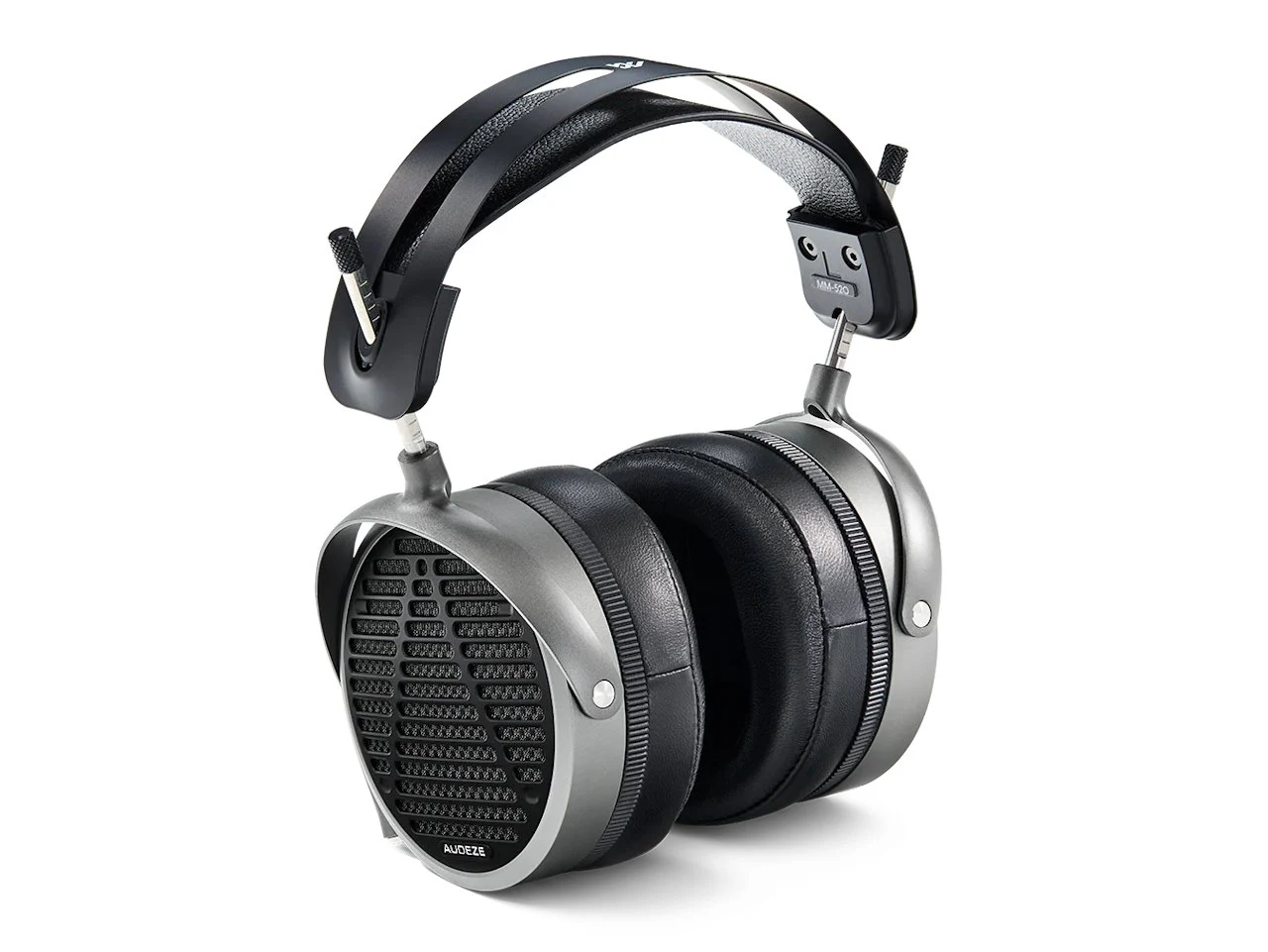
    Audeze has droped the MM-520, there latest flagship monitoring headphone. These are designd for accurate sound reproduction in an open-ear design what provides a wide soundstage. The headphones utilize the company’s latest planar driver technologies to handle the latest high resolution music mixes, giving you better detail in your audio.

    Planar Driver and SLAM Technology Details

    Planar headphones vibrate an ultra-thin, flat transducer rather then convenional cone drivers, with the goal of reducing distortion. They incorporate the company’s Symmetric Linear Acoustic Modulator (SLAM) technology to enhance low bass reproduction. This is important for getting that deep and precise bass response that professionals need.

    Frequency Range and Power Handling Specifications

    The MM-520 are able to cover a frequency range of 5 Hz to 50 kHz with a total harmonic distortion less than 0.1% (at 100dB SPL, 1 kHz) as a result, while handling a maximum input of 5-watts to produce sounds as loud as 130 dB SPL. That means you can mix at high volumes without any unwanted noise or distorion.

    Physical Features and Accessories Included

    The 555 g (19.6 oz.) headphones come with memory foam earpads that can be replaced by the user thanks to their magnetic mounts. They come with a 2.5 m (8.2 ft.) headphone cable, 3.5 mm to 6.3 mm adaptor, a travel case, and a soft carry bag. This bundle gives you everything you need for studio use or on the go.

    Pricing and Availability Information

    The MM-520 monitoring headphones are priced at $1,699 and can be purchased from the Audeze website. Readers can also look for them to arrive in the Audeze store on Amazon. Additional details and updates are available through Audeze, and also Audeze on Facebook for social media followers.


  • New $20 Dumb Phone Syncs With Smartphone, But Has Catch

    New $20 Dumb Phone Syncs With Smartphone, But Has Catch

    Key Takeaway

    – Dumbphone 2 syncs with your smartphone, not replacing it entirely
    – Priced at $20, runs custom software on a TCL Flip 2
    – Three monthly plans: Dumber ($20.99), Dumb ($25.99), Dumbest ($15.99)
    – Strengths: hands-on customer support; weaknesses: aging hardware, carrier lock-in
    – Born from a 30-day “Month Offline” challenge; plans to expand abroad


    The startup, which started as a neighborhood test in unplugging, has launched its second device. They bet that the cure for screen addiction isn’t total disconnection, but something “just dumb enough.”

    The New Dumbphone 2 Specs and Pricing

    Dumb.co has began selling the Dumbphone 2, a device advertised at $20 that syncs with a users existing smartphone. It’s built on a customized TCL Flip 2 (curr. $99 on Amazon) which is a proven flip phone running the company’s own software — it mirrors contacts, calls and messages through a “smart text” system while keeping a tight roster of essentials: Uber, maps, WhatsApp, Spotify, a camera and an alarm. A companion app walks users through linking iMessage or Google Messages.

    Origins and Community Roots

    Dumb.co grew out of Month Offline, a 30-day challenge that started in D.C. in 2025, in which small cohorts of neighbors swapped smartphones for flip phones and met weekly to talk through the experience. Lydia Peabody, a 27-year-old therapist who took part before becoming the company’s “chief dumb organizer,” says dumb.co has sold hundreds of the new model and plans to expand abroad by year’s end.

    The catch? The phone ships with a ready-to-activate SIM on one of three monthly plans. Dumber ($20.99) and Dumb ($25.99) run it as a companion to a smartphone, with the pricier tier adding a Spotify, Apple Music and podcast bundle. Dumbest ($15.99) makes it a fully standalone device with just the essentials.

    Reviewer Feedback and Trade-offs

    Early reviewers are somewhat optimistic. Jose Briones, who runs the Dumbphone Finder, had words of praise for the hands-on customer support — a real phone number answered by actual people. However, he did mention some valid trade-offs: the aging hardware will eventually need replacing, and the bundled plans lock buyers to dumb.co’s service rather than cheaper carriers like Mint or US Mobile.

    “It’s really the device for the person who wants to get away from their smartphone,” Peabody told Axios, “but maybe not be disconnected from smart technology entirely.”

    Final Thoughts and Plans

    The device offers a middle ground for those who want less screen time but still need some connectivity. Dumb.co is expanding abroad by the end of the year, and they have already sold hundreds of this new model. The phone’s design is simple yet functional, focusing on essential apps and services without the distraction of a full smartphone interface.


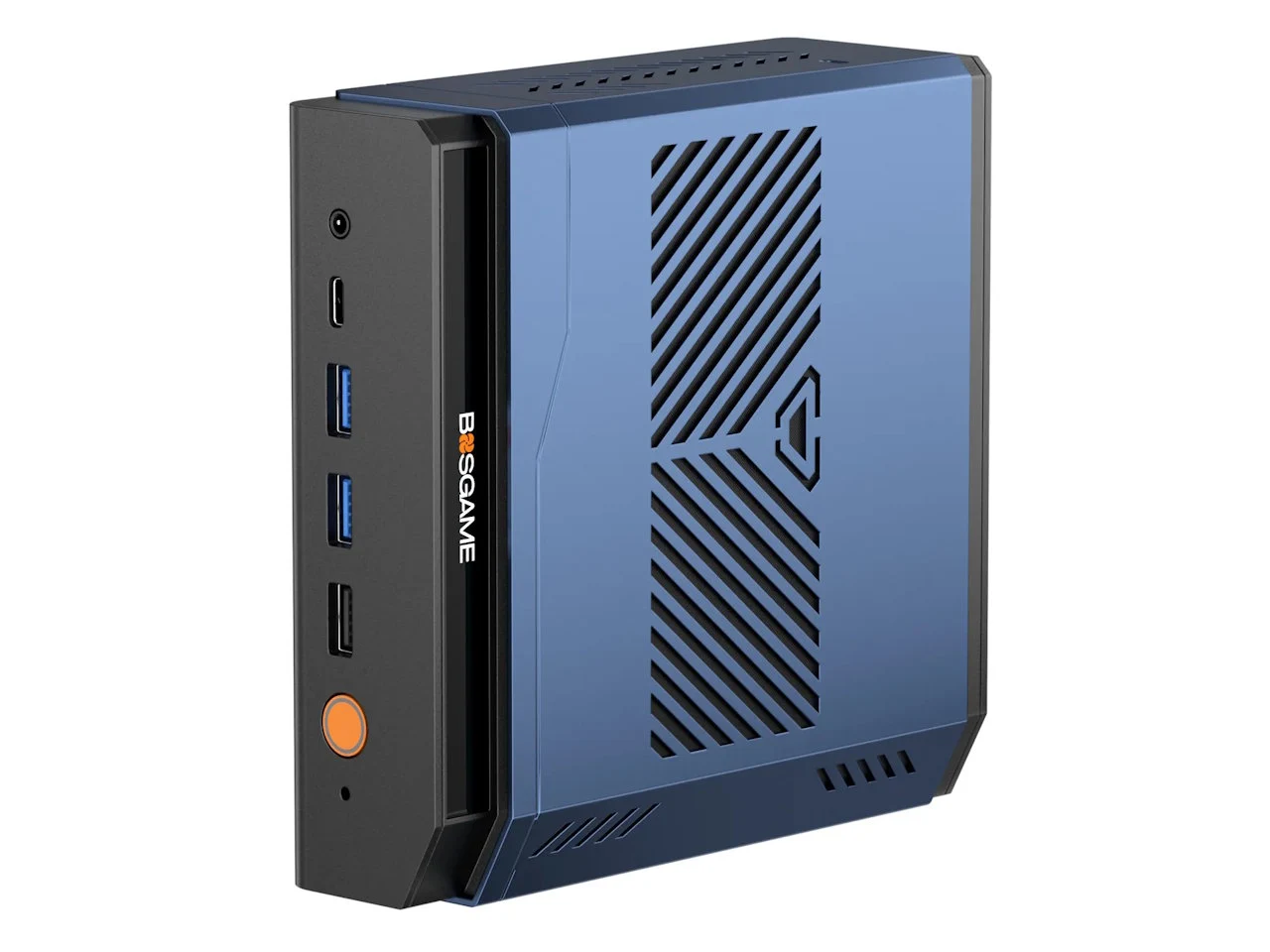
  • Bosgame VTA-439 Mini PC: Ryzen AI 9, 86 TOPS, 256GB RAM

    Bosgame VTA-439 Mini PC: Ryzen AI 9, 86 TOPS, 256GB RAM

    Key Takeaway

    – Runs AI applications like OpenClaw locally with 86 TOPS total AI compute (55 TOPS NPU + 31 TOPS CPU/GPU).
    – Powered by AMD Ryzen AI 9 HX 470 CPU, supports up to 256 GB DDR5 RAM and 6 TB NVMe storage.
    – Integrated Radeon 890M GPU (≈ Nvidia 1650 performance), upgradable via OCuLink eGPU port (supports up to RTX 5090).
    – Priced at $1,049 (sale) down from $1,599 MSRP for the 32GB RAM / 1TB SSD model.


    Bosgame Launches New AI Mini PC

    Bosgame has unveiled there VTA-439 mini PC, a device specifically engineered for running AI applicationns and services like OpenClaw locally, which potentially help owners circumvent the cost of purchasing AI tokens. This little machine is quite a powerhouse for its size, offering alot of compute capability for various tasks. It’s aimed at users who want to do heavy lifting without relying on cloud services.

    Powerful Specifications Under the Hood

    This mini PC is driven by a 12C/24T AMD Ryzen AI 9 HX 470 CPU, which can be paired with up to 256 GB of DDR5 SO-DIMM 5600MT/s RAM installed across two slots. For those needing ample storage, it supports up to 6 TB of M.2 2280 NVMe PCIe4.0 x4 storage across three slots, based on currently available 2 TB SSDs, providing plenty of space for large model files. The system is designed to not bottleneck even demanding workflows, making it a serious contender for local AI workloads.

    Importantly, the HX 470 offers a total of 86 TOPS of AI compute power, broken down into 55 TOPS from the NPU and 31 TOPS from the CPU/GPU. This enables the VTA-439 to smoothly run large AI models, OpenClaw, and various applications for image and video generation directly on the device. The levels of performance here allows for local inferencing without relying on internet connectivity.

    Graphics Performance and Connectivity

    For Windows 11 applications and games, the system utilizes an integrated AMD Radeon 890M graphics, which provides performance comparable to an Nvidia GTX 1650. Users can significantly boost this by connecting an external GPU (eGPU) to its OCuLink PCIe 4.0 x4 port, which supports powerful cards including the latest Nvidia RTX 5090. This makes it a very flexible setup for both productivity and occasional gaming, provided you have the budget for an eGPU enclosure.

    Pricing and Availability Details

    The VTA-439 configuration with 32 GB of RAM and a 1 TB SSD has an MSRP of $1,599.00, but is currently available for a lower price of $1,049 on the Bosgame website. This significant discount makes it a more accessible option for developers and hobbyists alike, though it’s still a considerable investment for most people. The pricing reflects its positioning as a premium device in the mini PC market, focusing on AI capabilities rather than being a budget option.


    Sources

  • Citizen Titanium Watch Limited-Edition Blue Washi Dial

    Citizen Titanium Watch Limited-Edition Blue Washi Dial

    Key Takeaway

    – Citizen launched the first light-powered analog watch in 1976, pioneering Eco-Drive technology that eliminates battery changes.
    – The new limited edition AQ4094-58L features a blue washi paper dial, which is semi-transparent to allow light to reach the solar cells.
    – Limited to 400 pieces worldwide, it is powered by the Caliber A060 movement, accurate to ±5 seconds per year with a perpetual calendar until 2100.
    – The case and bracelet are made from Super Titanium with Duratect hardening, weighing only 87.7 g despite a 40 mm case.
    – Priced at approximately $4,200 USD, it includes a 5-year warranty and 10 bar water resistance.


    Five decades ago, Citizen changed perceptions of watch batteries.

    Back in 1976, Citizen introduced the worlds first light-powered analog wristwatch, the technology now called Eco-Drive, which eliminates battery replacements completly by converting light into energy. To celebrate this milestone, the brand has debuts a new limited edition within its premium “The Citizen” line, with this Hong Kong exclusive featuring a blue washi paper dial not found on the global version.

    The limited edition AQ4094-58L

    The AQ4094-58L is limited to merely 400 pieces globally, which is tighter then the 650-piece allocation for the green-dialled AQ4091-56W that launched earlier in May 2026. The dial is constructed from traditional Japanese washi paper, chosen for both its aesthetic qualities and practical properties—washi paper is semi-transparent, allowing light to pass through to the solar cells beneath. The deep navy surface shows depth shifts depending on the angle of light, complemented by applied gold indices, dauphine hands, and the gold eagle emblem at six o’clock.

    Movement and materials

    Beneath that dial beats the Caliber A060 Eco-Drive movement, which is accurate to ±5 seconds per year and features a perpetual calendar programmed to work until 2100. The case and bracelet uses Super Titanium with Duratect surface hardening, reducing the total weight to just 87.7 grams despite the 40 mm case diameter. Additional specs includes sapphire glass with anti-reflective coating, plus 10 bar (100 meters) water resistance. Citizen previously released a washi paper dial for the 30th Anniversary Eco-Drive edition, making this 50th anniversary variant a continuation of the brands signature material for big releases.

    Pricing and warranty

    The AQ4094-58L carries a price tag of HK$32,880 (roughly $4,200 USD) and comes with a 5-year warranty. This particular Hong Kong variant provides a unique colour option for collectors seeking exclusivity.


    Sources

  • Garmin Emergency Features vs Apple: Life-Saving Costs Compared

    Key Takeaway

    – Garmin now offers a reduced-cost emergency satellite call for $7.99 via paused subscriptions, plus a $39.99 activation fee.
    – This change targets average smartwatch users (e.g., Fenix 8 Pro), not just serious outdoor adventurers with inReach handhelds.
    – Garmin appears stingy compared to Apple, which offers free satellite emergency communication for two years with no announced paywall.
    – The pricing may lead to reputational damage and long-term costs, as the choice of smartwatch can be life-or-death in emergencies.


    A necessary change?

    I fully expected this, and now it has happened: Garmin has reduced the cost of inReach in one specific scenario, likely the one most relevant to broad user groups. It is now possible to place at least an emergency call at an effective price of $7.99 by pausing the inReach subscription, and not only with various inReach devices, but also with Garmin smartwatches that support satellite communication. An initial activation fee of $39.99 also applies.

    Potentially problematic for the brand

    The move is not really surprising, but it probably will not protect Garmin from a potential marketing disaster and could end up costing the company more than lost inReach revenue at a lower level. This only partial change to the pricing structure seems problematic for two reasons. First, with the Fenix 8 Pro models, Garmin is targeting average users much more directly than it does with its inReach handhelds, even if those users are interested in sports. Put casually: Anyone who buys an inReach handheld is planning serious outdoor adventures and ideally also knows that such a subscription can be vital for survival.

    A different kind of customer

    That may not always be the case for customers who buy the Fenix 8 Pro or Quatix 8 Pro. Still, even a short hike in a dead zone, or a professional but ultimately not well-organized diving trip, can quickly turn into a fatal horror trip, or into the kind of story told well into old age about a successful helicopter rescue after what ultimately turned out to be a not-so-dramatic broken leg. It’s a bit of a gamble, requiring users to be very proactive about there subscription setup.

    Comparing to Apple

    Garmin looks particularly stingy compared with Apple: Satellite communication is free for the first two years after purchase, and there is no information yet for the period after that. Looking at the situation with iPhones as well, I strongly assume that Apple will at least not put basic emergency communication behind a paywall. This may sound somewhat naive, but in such cases, which are not exactly rare, the choice of smartwatch can quite literally decide between life and death, even if the smartwatch itself technically supports satellite communication.

    Long-term reputational risk

    Beyond the individual tragedy, this could also cause significant reputational damage for the otherwise very successful company and ultimately become much more expensive for Garmin in the long term. Average consumers might not understand why they need to pay extra for a life saving feature, especially when a rival offers it for free. It remains to be seen if Garmin will adjust there polices further, but for now the reaction from the market and potential buyers seems mixed at best.

    • Pricing specifics: $7.99 effective price per month for emergency call capability
    • Additional cost: $39.99 initial activation fee
    • Requires pausing the inReach subscription after activation
    • Works with Garmin inReach devices and select smartwatches (Fenix 8 Pro, Quatix 8 Pro)
    • Apple offers free satellite communication for first two years
    • No pricing information from Apple for period after two years
  • Q8B: Raspberry Pi 5 Rival with 32GB RAM & Snapdragon 4K120

    Key Takeaway

    – AI performance up to 29 TOPS (system-wide) with Snapdragon 8cx Gen 3
    – Supports up to 32GB LPDDR4X memory and dual M.2 2280 slots (PCIe 3.0 x2 and x4)
    – Dual 2.5 Gbps Ethernet ports and M.2 2230 slot for wireless networking
    – 40-pin GPIO header with I2C, SPI, and PCIe 3.0 via FPC connector
    – Priced at ~$210 (8GB model), shipping late July


    The Radxa Dragon Q8B is a new single-board computer and therefore competes with the Raspberry Pi 5, though Radxa is likely targeting a different audience with this model, including users who need a system for industrial or professional applications that can provide relatively high AI performance locally. Real-time object detection, for example, would be conceivable.

    Hardware Specifications and Performance

    The Dragon Q8B comes with a Snapdragon 8cx Gen 3, with AI performance listed at up to or even over 29 TOPS, though this apparently refers to the performance of the overall system and not just the NPU. Up to 32GB of LPDDR4X memory is supported. For installing mass storage, two M.2 2280 slots are available, one with two PCIe 3.0 lanes and one with four PCIe 3.0 lanes. Universal Flash Storage (UFS) can be used, and a microSD card slot is also included. Network connectivity is possible via two Ethernet ports with data transfer rates of up to 2.5 Gbps. M.2 2230 cards can be used for wireless networking. Display output is supported via HDMI 2.1 and two USB Type-C ports at up to 120Hz and 4K resolution.

    Physical Dimensions and Connectivity Options

    This SBC measures 3.8 x 3.0 inches and comes with a pin header that is more or less mandatory for single-board computers. It has 40 individual pins and supports GPIO, I2C, and SPI, among other things. PCIe 3.0 with one lane can also be connected for expansion cards via an FPC connector. At Arace Tech, the model with 8GB of RAM is currently listed for roughly $210. Shipping is scheduled to start in late July, the Raspberry Pi 5 alternative is also listed on Amazon, but not orderable there at the time of writing.


    Sources

  • Microsoft enters advanced AI reasoning race with from-scratch model

    Microsoft enters advanced AI reasoning race with from-scratch model

    Key Takeaway

    – Microsoft claims MAI-Thinking-1 surpasses Claude Sonnet 4.6 in reasoning, but this is based on internal, not independent, evaluations.
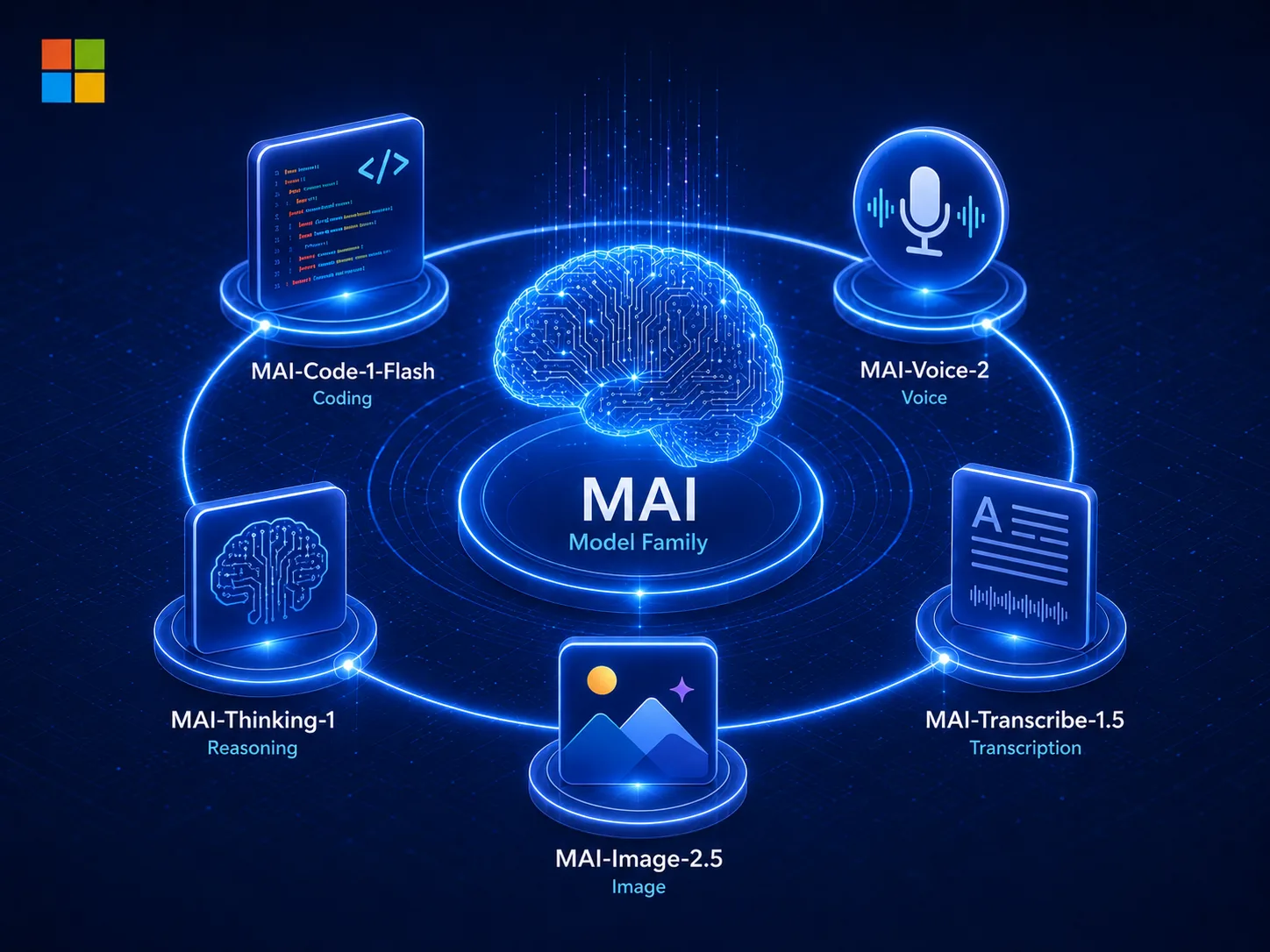
    – The model is part of a seven-model ecosystem covering reasoning, image, voice, transcription, and code.
    – “Frontier Tuning” allows models to be customized with a company’s own data and workflows in a secure environment.
    – A tuned MAI model for Excel matches GPT 5.4 and is up to 10 times more efficient.
    – Microsoft’s ultimate goal is “Humanist Superintelligence”—AI designed to serve, not replace, people.


    The Microsoft AI (MAI) team has just announced MAI-Thinking-1, its first advanced reasoning model developed in its own laboratories. Microsoft claims that the AI model possesses reasoning capabilities superior to those of Claude’s Sonnet 4.6, citing blind human side-by-side evaluations. However, this statement comes directly from Microsoft and not from an independent third-party tester, so some scepticism is warranted. MAI-Thinking-1 is part of a family of seven AI models, marking a milestone in Microsoft’s AI strategy.

    New Models and Ecosystem Features

    The new models not only cover reasoning, but also image, voice, transcription and code, forming an interconnected ecosystem designed to work on real-world tasks. These are:

    • MAI-Thinking-1 for advanced reasoning
    • Image generation and processing
    • Voice recognition and synthesis
    • Transcription capabilities
    • Code generation and analysis

    Frontier Tuning and Business Integration

    One of the most notable aspects of the announcement is the “Frontier Tuning”, through which AI models are adapted to the specific needs of each company, using their own information and workflows in a secure environment. This way, business data is incorporated into the model and remains under the customer’s control. As a preliminary result, Microsoft reports that the MAI model tuned for Excel matches GPT 5.4 and is up to 10 times more efficient.

    Vision for Humanist Superintelligence

    MAI concludes its announcement by indicating that the ultimate objective is to achieve “Humanist Superintelligence”, namely advanced AI systems designed to serve people and organizations, not to replace them. More information can be found in Microsoft’s announcement here. The company is clearly betting big on their own research and development, moving away from relying entirely on partnerships with other AI labs. This shift could change how businesses integrate artificial intelligence into there daily operations, though the actual performance of these models in real-world scenarios still remains to be fully validated by the broader tech community and independent researchers. The claim of superior reasoning to Claude’s Sonnet 4.6 is a bold one, but without third-party benchmarks, it is difficult to take at face value right now.

    Sources
  • Detailed Leak: Surface Laptop 8 Snapdragon X2 Specs & Release

    Detailed Leak: Surface Laptop 8 Snapdragon X2 Specs & Release

    Key Takeaway

    – ARM-based Surface Laptop 8 uses Qualcomm Snapdragon X2 chips with major AI gains and a new “Jade” color.
    – First OLED display option for the series, retaining 13.8-inch and 15-inch PixelSense touchscreens.
    – Processor choices: 12-core Snapdragon X2 Elite or 10-core Snapdragon X2 Plus, both up to 4.0 GHz.
    – No “Privacy Display” feature on consumer ARM models, unlike Intel enterprise versions.
    – Official launch on June 16, 2026, with a premium price expected.


    Microsoft is Finally Refreshing the Surface Lineup

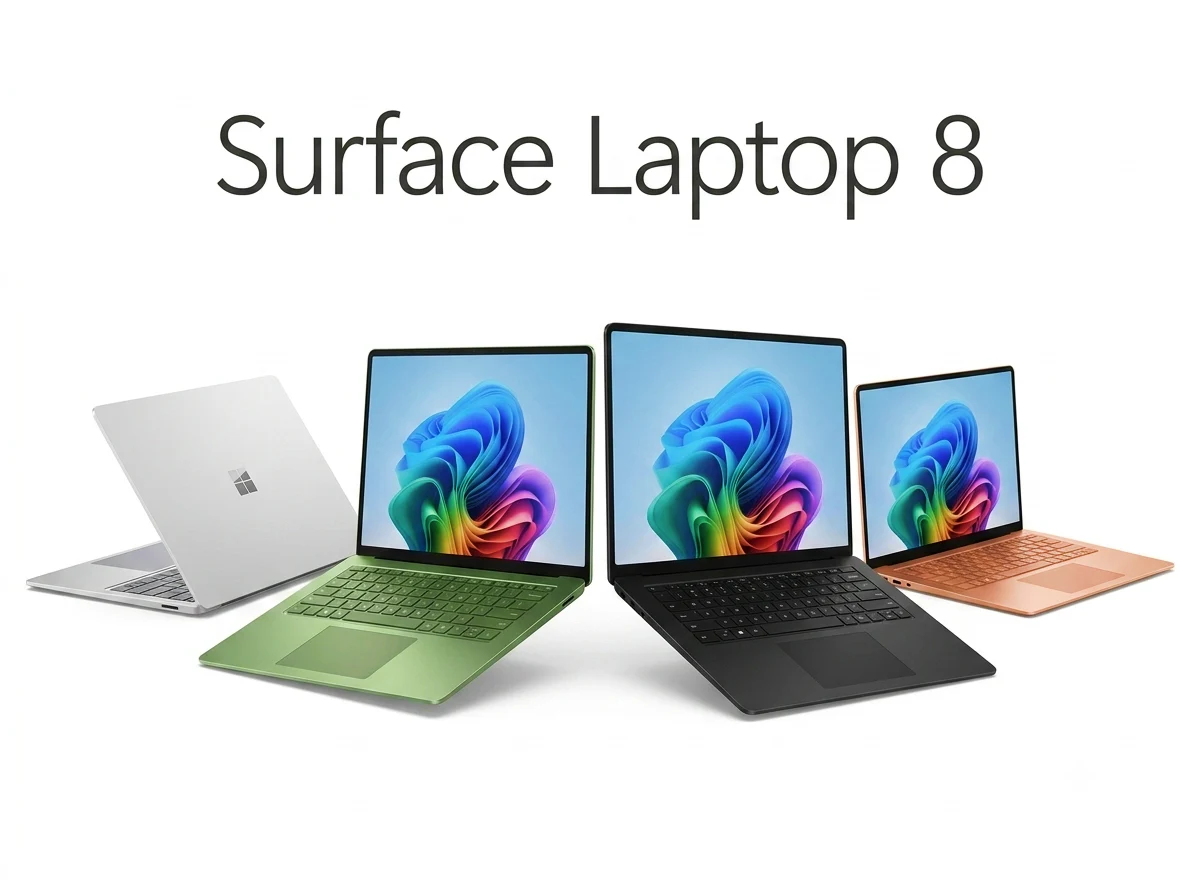
    After revealing the premium Surface Laptop Ultra, running on the Nvidia RTX Spark, its become clear that Microsoft is preparing to refresh its consumer-facing lineup with the Surface Pro 12 (which leaked hours ago) and the Surface Laptop 8 series. Thats right, we dont have to wait for the (now revealed) June 16 launch date to find out everything new about the Surface Laptop 8 series, thanks to a super-detailed leak, which includes the full specs and high-res marketing images. While the Intel-based versions of the Surface Laptop 8 have already hit the enterprise market, the highly anticipated ARM-based variants for private consumers are using Qualcomms Snapdragon X2 chips, with significant AI performance gains and a new colorway.

    Design Language and Display Advances

    Microsoft appears to be sticking to its established design language for the Surface Laptop 8th Edition. The laptops will retain there 13.8-inch and 15-inch PixelSense touchscreen form factors. However, there is a notable display upgrade on the horizon, with the leaked info pointing toward the introduction of an OLED-based panel for the first time in this series. And while the port selection and chassis remain largely unchanged, Microsoft is introducing a fresh “Jade” color. This light green hue will join the existing palette of Platinum, Gold/Dune, and Black.

    Processor Options and Pricing Details

    Depending on the configuration, users will be able to choose between the 12-core Snapdragon X2 Elite (X2E-78-100) or the 10-core Snapdragon X2 Plus (X2P-64-100). Both processors feature boost clock speeds of up to 4.0 GHz. Notably, the marketing materials for these consumer-facing ARM models do not mention the “Privacy Display” feature found in the corporate-focused Intel variants. Given the high-performance memory and storage configurations, consumers should expect a premium price tag when the device officially launches on June 16, 2026, says the leaked info.

    Sources
  • Amazon’s 007 First Light Sequel Raises James Bond Game Doubts

    Amazon’s 007 First Light Sequel Raises James Bond Game Doubts

    Key Takeaway

    – 007 First Light was a critical and sales success, but its sequel is now in doubt.
    – Amazon MGM became co-owner of the Bond IP in 2025, gaining creative control over future games.
    – IO Interactive’s role in future Bond titles is unclear after the rights change.
    – Amazon may develop future Bond games internally, raising concerns given its history of failed projects.
    – Unlike the films, there is no guaranteed continuity for the game franchise under Amazon’s control.


    007 First Light’s Release and Initial Success

    The 007 First Light release date saw positive reviews and benchmarks, along with strong sales. Many fans assumed that IO Interactive would build on that success with sequels. However, a Polygon interview with Amazon Game Studios GM Jeffrey Gattis has cast doubt on those plans.

    Ownership Shifts at Amazon MGM

    IO Interactive developed and published the recent spy thriller. Still, in 2025, Amazon MGM became a co-owner of the Bond IP and gained creative control over any games and movies. As Gattis explains, that wasn’t the case when the 007 First Light project began.

    The GM told Polygon that it “didn’t have the full rights to this First Light James Bond game.” Yet, with the change of ownership, future titles would be “done by MGM and, theoretically, by Amazon Game Studios.”

    Uncertain Future for IO Interactive

    It’s unclear what part, if any, the Copenhagen-based IO Interactive would play going forward. Amazon could assume a publishing role, while tasking the studio with creating 007 First Light sequels. On the other hand, the company may opt to abandon the franchise rather than take on a lesser role.

    Fan Concerns Over Amazon’s Track Record

    Other fans fear a scenario where Amazon Game Studios develops upcoming titles internally. Critics point to a string of failures involving controlled studios. One of the most obvious examples is a pair of Lord of the Rings MMOs, both of which were canceled. Other disappointments include the free-to-play shooter Crucible and the 4×4 brawler Breakaway.

    As a publisher, Jeff Bezos’ company has fared better with releases like Lost Ark. It could also find its partnership with Crystal Dynamics to produce Tomb Raider: Legacy of Atlantis and other Lara Croft adventures lucrative.

    Continuity vs. Creative Overhaul

    Even though James Bond movies regularly changed lead actors and directors, returning producers provided continuity. Despite the performance of the first entry, that may not be the case with any 007 First Light sequel.


    Sources
  • AMD Ryzen 7 5800X3D Relaunch Bundle: Noctua Cooler & Carbice Pads

    AMD Ryzen 7 5800X3D Relaunch Bundle: Noctua Cooler & Carbice Pads

    Key Takeaway

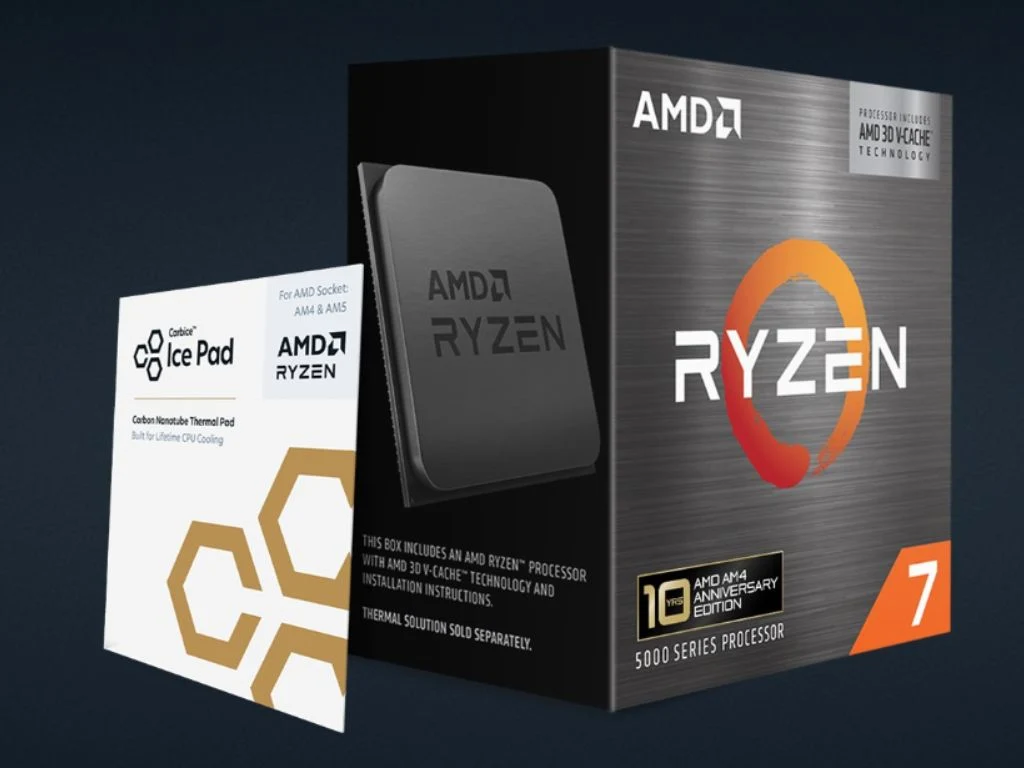
    – AMD re-releases Ryzen 7 5800X3D as a 10th Anniversary Edition at a lower price ($349).
    – Bundle includes Carbice carbon nanotube thermal pads and a Noctua cooler.
    – Carbice pads offer long-term reliability without needing to replace dried thermal paste.
    – Upgrade targets gamers on older AM4 platforms, avoiding costly DDR5 and AM5 upgrades.
    – Product launch scheduled for June 25, 2026.


    AMD Revives the Legendary 5800X3D

    After numerus visual leaks and rumors, AMD is finally bringing back the Ryzen 7 5800X3D, now bundled with Carbice Thermal Ice Pads and a Noctua cooler. To provide gamers with older systems a smart, inexpensive upgrade path, AMD has launched the Ryzen 7 5800X3D as a 10th Anniversary Edition. For context, the new carbon nanotube-based thermal pad promises stable temperatures and long-term reliability without the usual three to six months of maintenance required to scrape off old, dried-up thermal paste.

    A Unique Collaberation with Noctua

    At the same time, AMD and Carbice have also collaborated with industry-leading heatsink and PC fan manufacturer Noctua, allowing DIY PC builders to get their hands on Carbice’s thermal pads for the first time. So, what exactly are Carbice’s Ice Pads? Carbice’s thermal solution uses vertically aligned carbon nanotubes layed on an aluminum backbone and topped with a nanoscale polymer coating that helps it conform more closely to surfaces over time. The currently available consumer product is Carbice’s IP90 pads, starting with the NT-CP1 AM5/4 model, and is expected to hit shelves in September 2026.

    Improved Heat Dissapation

    Carbice’s thermal solution actually improves heat dissipation as the system continues to heat and cool, instead of breaking down and drying out over time. Applying Carbice Ice Pads is straightforward. PC builders simply have to peel and stick the easy-to-use thermal pad without creating a blotchy mess, and they can swap thermal pads easily if they need to switch heatsinks or coolers. Noctua CEO Roland Mossig described its solution, saying:

    “Carbice’s unique, innovative TIM technology has already proven to be a game changer in applications that demand ultimate reliability, such as satellites, aerospace, and critical infrastructure. We’re confident that the superior long-term performance, ease of use, and dependability of Carbice pads will be equally attractive to PC enthusiasts, so we’re excited to bring them to this market and to collaborate with Carbice on future R&D.”

    The Glorious Return of the CPU

    On the other end of the spectrum, we have the glorious return of the Ryzen 7 5800X3D, which couldn’t have arrived at a better time, as DDR5 memory prices have jumped to unprecedented levels, making an upgrade to AM5 less feasible. The Ryzen 7 5800X3D, still boasting strong gaming performance, ships with 8 Zen 3 cores and 96 MB of total V-Cache, making it a go-to solution for gamers still on AM4 motherboards. It’s now expected to be available at a more attractive $349 for the 10th anniversary edition starting 25th june 2026, down from its 2022 retail launch price of $449, even as current price tags for the older SKU on Amazon make it seem like a much less approachable play for users intending to stay on AM4.

    Sources