Author: GizNews

  • Deal: Open-World Action Under $3 on Steam

    Key Takeaway

    – Sleeping Dogs features intense martial arts combat with cinematic environmental attacks, distinguishing it from other open-world crime games like GTA.
    – The game holds strong review scores (84/100 from GameStar, 80 Metascore) and an overwhelmingly positive 94% Steam user rating.
    – On Steam, the game is currently 85% off at $2.99 until June 11, making it a budget-friendly alternative for players awaiting GTA VI.
    – The Steam Deck compatibility is listed as “Unsupported,” so handheld play may be problematic.


    Sleeping Dogs: A Deep Dive into Hong Kong’s Underworld

    In Sleeping Dogs, players take on the role of Wei Shen, an undercover police officer sent to infiltrate the Hong Kong Triads. Unlike many other open-world crime games, the focus is not only on shootouts and vehicle action but also on intense hand-to-hand combat. Players brawl there way through crowded street markets, neon-lit nightclubs and narrow alleyways, all while following a story about loyalty, betrayal and internal conflict. This game is often viewed as a cult classic.

    Comparisons and Combat Mechanics

    In many ways, Sleeping Dogs feels similar to the Grand Theft Auto series. Hong Kong can be explored freely, missions and side activities are spread across the city, and high-speed pursuits are as much a part of the experience as illegal street races. What sets the game apart, however, is its emphasis on martial arts combat. Wei Shen takes down enemies with fast combos, brutal counters and environmental attacks that give fights a distinct cinematic feel. Firearms are also part of the game, but for much of the experience, they take a back seat to fisticuffs.

    Critical Reception and Reviews

    German gaming magazine GameStar reviewed Sleeping Dogs when it was released in 2012 and praised its engaging story, atmospheric open world and combat system, which drew comparisons to the Batman: Arkham games. Criticism focused mainly on technical shortcomings, including muddy textures, occasional AI issues and driving physics that took some getting used to. Even so, the game earned a strong score of 84 out of 100, proving its worth among critics.

    Community Scores and Steam Ratings

    On Metacritic, Sleeping Dogs holds a Metascore of 80 and a User Score of 8.1. The Steam community has been even more enthusiastic: 94% of more than 17,000 user reviews are positive. On the Steam Deck, the game is currently listed as “Unsupported,” which may be a bumbmer for portable players. The high positive rating shows its lasting appeal among fans.

    Pricing and Discounts

    Sleeping Dogs normally sells for around $20 on Steam. Until June 11, an 85% discount brings the price down to just $2.99. According to SteamDB, 85% off has been the best regularly recurring offer in recent years. However, the game has gone even lower in the past, with a 90% discount recorded in 2019, which was a steal for anyone patient enough to wait.

    Final Thoughts and Value

    For anyone looking to pass the time until GTA VI, this deal might be worth considering. Sleeping Dogs never reached the popularity of Rockstar’s flagship franchise, but it remains one of the most distinctive and accomplished alternatives the genre has produced. The game offers a unique blend of action and story telling that still holds up today.

    • Price: $2.99 on Steam until June 11
    • 85% discount off the regular $20 price
    • Historical low at 90% off in 2019
    • Steam Deck status: Unsupported


    Sources

  • Steam Deck: Many Gamers Play Just One Game

    Key Takeaway

    – Many Steam Deck owners primarily play a single “comfort game” despite having large libraries.
    – The device is valued for convenience, portability, and quick resume rather than game variety.
    – Users do not view this as a failure; they see it as fulfilling a personalized purpose.
    – The phenomenon mirrors streaming habits, where people choose familiar favorites over vast options.
    – Usage patterns vary, including single-game focus, rotating favorites, or pairing the Deck with a gaming PC.


    The One-Game Wonder

    A user on the Steam Deck subreddit recently asked jokingly: “Has anyone else’s steam deck become a 1 game machine?” For them, the device had effectively become a “$300 Classic WoW machine.” AAA games, emulators and desktop mode apparently play little to no role in daily use.

    Community Confessions

    The question clearly struck a nerve within the community. Many users reported that, despite owning large game libraries, they spend most of their Steam Deck time with a single title. Interestingly, there is no universal favorite. The games mentioned range from Balatro and Slay the Spire to Vampire Survivors, Diablo IV, Football Manager and various MMORPGs. The pattern, however, is remarkably similar: even though hundreds of compatible games are available, many players keep returning to the same personal comfort game.

    Did Valve Fail?

    The Steam Deck was designed as a portable gateway to a player’s Steam library, providing access to thousands of games. Thanks to its desktop mode, it can even function as a compact Linux PC. So has it failed in its mission if many owners end up using it for just one game? To some extent, perhaps – especially from Valve’s perspective. After all, a device that keeps users focused on the same game is not necessarily encouraging them to buy new ones.

    But Most Users Dont Mind

    Most users, however, do not see this as a problem. Quite the opposite: if a device makes a favorite game easier, more flexible and more enjoyable to play, then it has arguably served its purpose – just not exactly in the way originally envisioned. The Steam Deck wakes from standby within seconds, works comfortably on the couch or in bed and is particularly well suited to games played in short sessions. Several users compared the phenomenon to streaming services. Despite having access to thousands of movies and TV shows, many people repeatedly return to the same familiar favorites. The Steam Deck appears to create a similar effect. Anyone who also uses their Steam Deck as a “one-game console” can share their personal favorite in the comments.

    Diverse Usage Patterns

    While many users in the thread mainly play one or two games on their Steam Deck, usage habits vary considerably. Some gamers report regularly playing a wide variety of titles on the handheld. Others describe a rotating pattern in which one game dominates for weeks or months before eventually being replaced by the next long-term favorite. Still others use the Steam Deck mainly as a companion device to their gaming PC, reserving smaller or less demanding games for the handheld while continuing to play larger, more technically demanding titles on a desktop system.

    Sources
  • Flagship RedMagic tablet with OLED nears launch

    Flagship RedMagic tablet with OLED nears launch

    Key Takeaway

    – RedMagic Gaming Tablet 5 Pro launching in China this June.
    – Features a 9-inch OLED display with a 185Hz refresh rate.
    – Powered by Snapdragon 8 Elite Gen 5 chipset.
    – Supports 80W fast charging with an ~8,300mAh battery.
    – Up to 24GB RAM and 1TB storage, global availability unconfirmed.


    RedMagic Confirms June Launch for Gaming Tablet 5 Pro

    RedMagic has officially confirmed that it will launch the Gaming Tablet 5 Pro in June in China. However, an exact launch date has not yet been reveled. For context, the Gaming Tablet 5 Pro will be positioned as a flagship gaming tablet, succeeding last years Gaming Tablet 3 Pro (also known as RedMagic Astra in global markets).

    3C Certification Reveals Key Specs

    Ahead of the release, the RedMagic Gaming Tablet 5 Pro has recieved the 3C certification in China. The tablet is listed with the model number “NP06J,” and the certification indicates support for 80W fast charging. So far, RedMagic has confirmed that the Gaming Tablet 5 Pro will feature an OLED display.

    Leaked Display and Processor Details

    Tipster Digital Chat Station on Weibo reveals that RedMagic’s new tablet will use a 9-inch OLED panel with a 185Hz refresh rate. It is tipped to be powered by the Snapdragon 8 Elite Gen 5. For context, the Snapdragon 8 Elite Gen 5 is a flagship chipset, also found in tablets such as the Legion Tab Gen 5 (curr. available for $699 on Lenovo’s US website).

    Cooling, Battery, and Storage Rumors

    Furthermore, the RedMagic Gaming Tablet 5 Pro is tipped to feature a liquid cooling system and a battery capacity of approximately 8,300mAh. The tablet may come with up to 24GB of RAM and up to 1TB of internal storage. So far, RedMagic has not confirmed global availability for the tablet.


  • Amazfit Helio Strap Back in Stock Worldwide

    Amazfit Helio Strap Back in Stock Worldwide

    Key Takeaway

    – The Amazfit Helio Strap has been restocked globally at $99.99/£99.90/€99.90 after being out of stock since late 2025.
    – It is a lightweight (20g) screenless fitness tracker that monitors heart rate, sleep, stress, and over 50 workout modes.
    – It supports BioCharge energy measurement and syncs data via the Zepp app, and works with Amazfit smartwatches and the Helio Ring.
    – Battery life is estimated at ten days, and it can be worn on the wrist or upper arm with the Helio Armband accessory.
    – The Helio Strap 2 has been spotted in an FCC filing, hinting at a possible release later in 2026.


    Amazfit Helio Strap Returns After Long Outage

    The Amazfit Helio Strap has been restocked in markets worldwide. Released in June 2025, this screenless wrist-worn wearable has been out of stock since late 2025, causing much frustration for potential customers.

    Availablity and Pricing Details

    Now, you can buy the Amazfit Helio Strap once more at the brand’s online stores in countries like the US, the UK and France for $99.99/£99.90/€99.90. However, stock has yet to reach the brand’s official Amazon storefront. It is also unclear how many units of the product are currently available.

    Features and Specifications

    Amazfit’s Helio Strap is a lightweight fitness tracker, weighing around 20 g (~0.71 oz). It can monitor health metrics like heart rate, sleep quality and stress levels, and track workouts across over 50 modes, including HYROX Race. On top of this, it supports the popular BioCharge energy level measurement. Data collected by the tracker can be viewed in the Zepp smartphone app, and the wearable can work alongside Amazfit’s other smartwatches and the Helio Ring.

    Battery Life and Accessories

    The Helio Strap has an estimated battery life of ten days, and can also be worn on the upper arm with the Helio Armband accessory. It is worth bearing in mind that the Amazfit Helio Strap 2 was recently spotted in an FCC filing, with rumors suggesting that this second generation wearable could be released later in 2026.

    Sources
  • Honor Developing New Compact OLED Tablets

    Honor Developing New Compact OLED Tablets

    Key Takeaway

    – Honor is developing new compact OLED tablets for the MagicPad series, set to debut in Q4.
    – These tablets will feature OLED screens and a “hole-free design” (possibly under-display camera).
    – A separate compact OLED tablet is planned under the Honor Win lineup, with a 185 Hz screen and potential 5G.
    – The MagicPad model will be premium, while the Win series model will be more cost-effective and performance-focused.


    New Honor Tablets with OLED Screens in Development

    The new Oppo Pad Mini and RedMagic Astra stand alone as the two compact OLED tablets on the market, with other tablets in the segment like the Redmi K Pad 2 and Lenovo Legion Tab Gen 5 opting for LCDs instead. According to new information, Honor is working on at least one new product to join the ranks of the former.

    Honor MagicPad Series to Feature Hole-Free OLED Displays

    As shared by Smart Pikachu, Honor is currently developing new tablets in its MagicPad series. These tablets, expected to debut in Q4, will come in a range of sizes, going down to the compact class, and with all of them featuring OLED screens. Reportedly, they will also feature “a hole-free design”. While Honor’s latest tablet, the MagicPad 4 (read our review), already incorporates a selfie camera in a hole-punch design within its bezels, the company’s next tablets could opt for an under-display setup or something similar.

    Compact OLED Tablet in Honor Win Lineup

    Interestingly, Honor could also have a different compact OLED tablet lined up as well. This one, however, looks set to be an offering in the company’s new Win lineup, with it rumored to feature the same 185 Hz OLED screen used on the Honor Win. It could potentially debut alongside the Honor Win 2, and could offer 5G connectivity. All considered, it’s likely that the first tablet arrives as a premium model in the MagicPad series, while the second one launches afterwards as a more performance-focused, cost-effective offering in the Honor Win series.

    Sources
    • Star Wars Zero Company: Release Date & Price Leak

      Star Wars Zero Company: Release Date & Price Leak

      Key Takeaway

      – Star Wars Zero Company launches August 27, 2026 on PC, PS5, and Xbox Series X/S.
      – Standard Edition costs $49.99 on PC, $59.99 on consoles; Deluxe Edition costs $59.99 (PC) and $69.99 (consoles).
      – Standard Edition is available physically and digitally; Deluxe Edition is digital-only with an upgrade option.
      – Deluxe Edition does not include early access, unlike recent EA releases.


      Respawn Entertainment officially announced Star Wars Zero Company around a year ago, and we’ll get a closer look at it tomorrow, during the Summer Game Fest. However, it seems some key details have leaked ahead of the event.

      Leak Information Credibility

      The leak comes from Billbil-kun, who has built a strong reputation over the years for accurately revealing information about upcoming games, hardware, and subscription services before official announcements are made. Their track record is pretty solid, having nailed previous predictions on several major titles.

      Release Date and Platforms

      Based on the leaked information, Star Wars Zero Company is reportedly scheduled to launch on August 27, 2026, for PC, PlayStation 5, and Xbox Series X/S. If accurate, the release would place the game just before the busy September release window, allowing it to avoid direct competition with many of the major titles expected later in the year.

      Pricing and Editions Revealed

      The leak also claims that the game will be available in two editions: Standard and Deluxe. For PC players, the Standard Edition is reportedly priced at $49.99, while the Deluxe Edition will cost $59.99. Console players may need to pay slightly more, with the Standard Edition reportedly priced at $59.99 and the Deluxe Edition at $69.99.

      Physical vs Digital Distribution

      Another interesting detail is that the Standard Edition is said to be available both physically and digitally, while the Deluxe Edition will reportedly be sold exclusively as a digital product. Players who purchase the Standard Edition will also have the option to upgrade later. This gives more flexibility for those who prefer a hard copy but might want the extra content down the line.

      Deluxe Edition and Early Access

      As for Deluxe Edition bonuses, those details have not leaked yet. However, Billbil-kun claims that the game will not offer early access for Deluxe Edition owners, which differs from the approach Electronic Arts has taken with several recent releases. This could be a sign that the developer wants everyone to start at the same time, rather than rewarding the premium buyers with a head start.


      Sources
    • B&W 805 D5 Flagship Speakers Diamond Tweeter $15,000

      B&W 805 D5 Flagship Speakers Diamond Tweeter $15,000

      Key Takeaway

      – New 805 D5 features aluminum reinforcement and top plate for reduced resonance and more spacious sound.
      – Price has nearly doubled to $15,000 per pair, up from $8,500 for the D4.
      – Maintains same signature diamond tweeter and Continuum Cone driver technology.
      – Speakers are slightly heavier (16.4 kg) but dimensions remain almost unchanged.
      – Frequency response and sensitivity (34 Hz–35 kHz, 88 dB) are unchanged from D4.


      After nearly half a decade

      The Bowers & Wilkins 805 D4 is getting a replacement. At first glance, the design has hardly been revised, but the British hi-fi specialists is continuing a trend that began with the D4. While the 805 D3s were still made almost entirely of wood, Bowers & Wilkins has reinforced the D4’s cabinet with aluminum. This sets the stage for the new model.

      New Aluminium Top and Matrix Wood

      In addition to the aluminum frame reinforcement, the 805 D5s also have a completely newly developed aluminum top, which, in conjunction with the improved matrix wood construction, should lead to even less resonance, which, according to B&W, enables a more spacious sound. The dimensions hardly change at 43.9 x 24.1 x 32.2 centimetres, but the speakers are almost a kilogram heavier at 16.4 kilograms. The weight increase is notable for a bookshelf speaker of this class.

      Diamond Tweeter and Continuum Driver

      The highlight of the speakers remains the 25 millimeter tweeter, whose driver is made from a synthetic diamond. The tweeter is mounted in a robust aluminum chassis at the top of the cabinet and thus decoupled from the bass-midrange driver. As with the previous model, B&W uses a 165 millimeter Continuum Cone bass-midrange driver. B&W again advertises a frequency range of 34 Hz to 35 kHz and a sensitivity of 88 dB. These are the core specifications.

      Pricing and Availability

      The Bowers & Wilkins 805 D5 compact loudspeakers are available for $15,000 per pair, with deliveries due to start in the next few months. This represents a significant price increase, as the B&W 805 D4 were launched in 2021 for $8,500. The price jump is substantial, reflecting the new materials and engineering.

      • Price: $15,000 per pair
      • Dimensions: 43.9 x 24.1 x 32.2 cm
      • Weight: 16.4 kg
      • Frequency Range: 34 Hz – 35 kHz
      • Sensitivity: 88 dB
      • Tweeter: 25 mm synthetic diamond
      • Driver: 165 mm Continuum Cone


      Sources

    • New Casio G-Shock GravityMaster Metal Bezel Watches Official

      New Casio G-Shock GravityMaster Metal Bezel Watches Official

      Key Takeaway

      – Three new G-Shock Master of G GravityMaster GWR-B3000 watches launched.
      – Features carbon fiber-reinforced resin case, sapphire crystal, and Tough Solar charging.
      – Includes Tough Mvt.2 with magnetic/shock detection, Multiband 6 radio control, and Bluetooth.
      – Offers flight log, automatic time adjustment, 38 time zones, and 200m water resistance.
      – Released in July 2026; Japan pricing starts at ¥110,000 (~$688).


      The new G-Shock Master of G GravityMaster watches have been launched by Casio in Japan. Leaked earlier in 2026 via certification databases and images, these models will be released across global markets too.

      Detailed Specifications and Dimensions

      These Casio G-Shock GWR-B3000 watches feature a casing made from carbon fiber-reinforced resin combined with stainless steel, measuring 56.7 x 47.3 x 14.1 mm (around 2.23 x 1.86 x 0.56 inches). Each timepiece has three analog hands plus several indicator dials. The model utilizes sapphire crystal glass for its display and is fitted with a soft urethane band. The GWR-B3000-1A variant offers a black dial and strap, paired with a silver colored metal bezel and a neon yellow accent. The GWR-B3000A-2A comes with a blue dial and strap, featuring a blue ion plated bezel. Meanwhile, the dark gray GWR-B3000B-8A is equipped with a matching dial, strap and bezel.

      Advanced Movement and Connectivity Features

      Casio equips the GWR-B3000 with the brands Tough Mvt.2 movement, which includes upgrades such as magnetic field detection and shock detection, plus auto hand home position correction. This timepiece is radio-controlled using Multiband 6 technology and supports Bluetooth connectivity. Through the Casio Watches app, users gain access to useful tools including a flight log and automatic time adjustments. There are 38 time zones available to select from. Its also packed with onboard features like a 1-second stopwatch, an up to 24-hour countdown timer, and a daily alarm. This Triple G Resist model offers resistance against shock, vibration, and centrifugal forces. Additionally, it is water resistant to depths of 200 meters. Tough Solar charging technology further extends its battery life significantly.

      Release Date and Pricing Information

      Casio will release the new G-Shock Master of G GravityMaster models – the GWR-B3000-1A, GWR-B3000A-2A, and GWR-B3000B-8A – in July 2026. In Japan, pricing starts from ¥110,000 (roughly $688) for the GWR-B3000-1A variant. A complete price list for all models is provided right below.

      • GWR-B3000-1A: ¥110,000 (~$688)
      • GWR-B3000A-2A: ¥115,500 (~$722)
      • GWR-B3000B-8A: ¥121,000 (~$756)
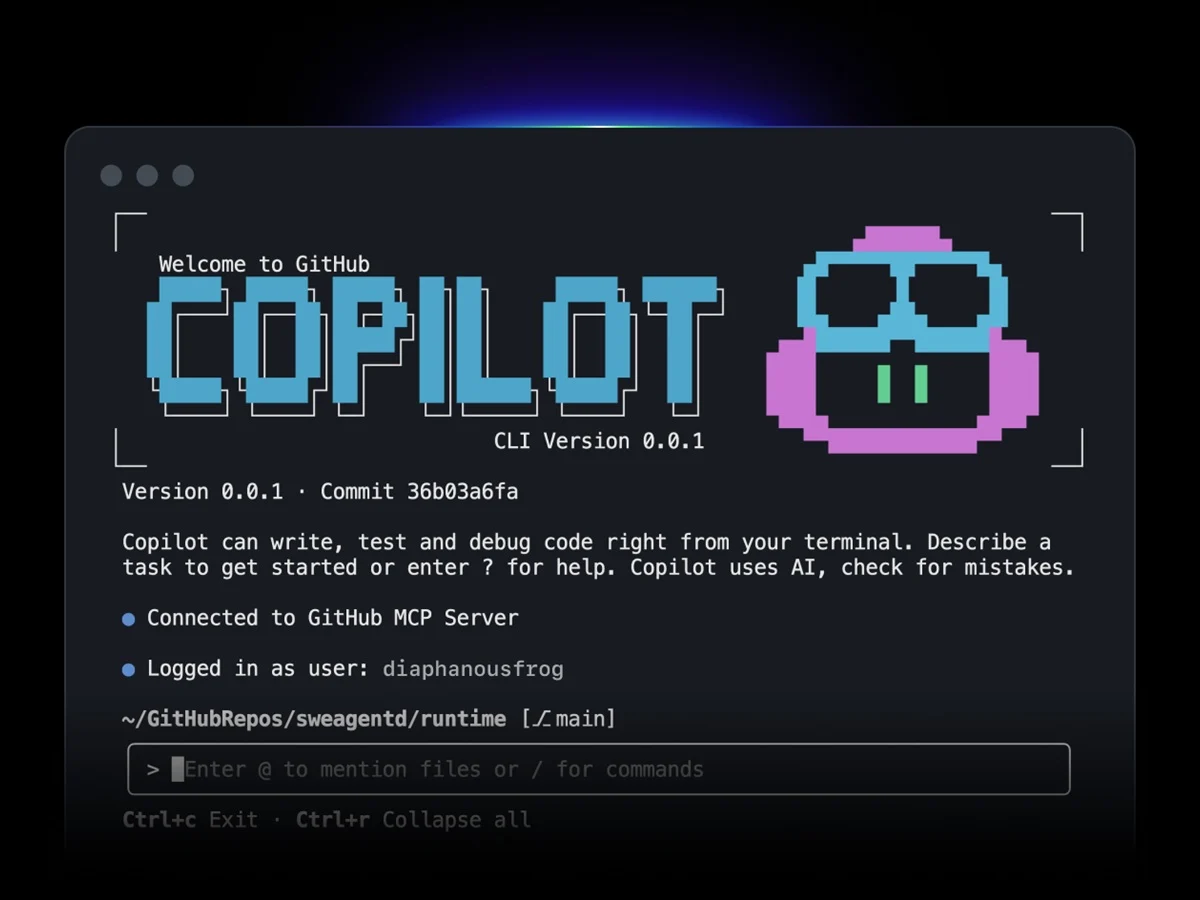
    • GitHub Copilot Credit Caps Cause Workspace Lockouts

      GitHub Copilot Credit Caps Cause Workspace Lockouts

      Key Takeaway

      – Annual subscribers face up to 4x faster quota depletion due to new hidden request multipliers.
      – Advanced reasoning models now consume 6x to 27x more requests per interaction than last month.
      – No warnings or transition buffers were provided before workspace lockouts occurred.
      – Emergency credit purchases are blocked for accounts with lower verification or age limits.
      – Teams must throttle usage, wait for resets, or accept forced enterprise upgrades.


      So, annual subscribers who thought they were shielded from Microsoft’s usage-based billing transition are now waking up to completely exhausted accounts—no joke. While monthly users face immediate out-of-pocket adjustments from the recent GitHub Copilot pricing change, developers on legacy annual contracts are hitting a hidden rate multiplier trap that drains their request quotas up to four times faster than last week. No warnings. No transitional buffers. Just sudden workspace lockouts.

      The Silent Policy Shift Behind the Quota Drain

      The friction actually stems from a quiet policy modification implemented alongside the June 1 system launch. Annual subscribers do not receive direct token bills, but the underlying weight of their remaining premium request limits has shifted drastically. Under the updated terms, selecting advanced reasoning models now consumes multiple requests from a user’s fixed monthly allotment simultaneously—essentially, a single interaction can eat up what used to be four or five.

      How the Multiplier Penalty Accelerates Burn Rates

      The mathematical shift is actually catching high-volume engineering teams completely off guard. In May, running a complex query through a frontier reasoning model like Claude Opus 4.7 consumed 7.5 premium requests per interaction. As of this week, that exact same single prompt carries a 27x multiplier penalty. OpenAI’s GPT-5.4 similarly jumped from a base value of 1x to a 6x penalty per request. These numbers are not typos—they are the new reality for anyone relying on Copilot’s advanced reasoning.

      • Claude Opus 4.7: 7.5 requests → 27x multiplier now
      • GPT-5.4: 1x base → 6x penalty now

      The real-world impact is immediate. Annual developers who typically spaced their quotas across a full billing cycle are burning through entire monthly limits within 72 hours of light usage. No massive codebase transfers took place. No platform abuse occurred. Just standard, daily development habits are wiping out allowances—leaving teams scrambling for answers.

      Secondary Safeguards Blocking Emergency Credit Purchases

      The crisis is compounded by a secondary safeguard buried deep within GitHub’s billing infrastructure. Independent developers attempting to buy emergency AI credits to unlock their environments are running into rigid spending limits tied to account age and verification history. Accounts bound by lower compliance thresholds cannot add manual funds without resetting entire organizational agreements—a process that can take days or weeks to complete.

      For these users, hitting the credit cap kills premium reasoning engine access instantly. Development teams now face a brutal operational choice: throttle daily workflows, wait for a monthly reset, or swallow a forced enterprise contract upgrade. None of these options are particularly palatable for small teams or solo developers.

      Microsoft’s Justification vs. Developer Reality

      Microsoft claims the structural change aligns costs with actual backend hardware computing power. However, the immediate execution is forcing engineers to treat tool interaction as a fluctuateing financial liability rather than a predictable utility. Teams that treat developer tools as static quarterly expenses are highly exposed right now—and many are only realizing this after their accounts have already been locked.


      Sources
    • Apple to Power Siri with Google Gemini on Nvidia B200 GPUs

      Apple to Power Siri with Google Gemini on Nvidia B200 GPUs

      Key Takeaway

      – Apple is partnering with Nvidia to use Blackwell Superchips via Google Cloud to upgrade Siri.
      – Siri queries will be processed using Google’s Gemini model on Nvidia hardware for enhanced capabilities.
      – Nvidia’s confidential computing feature encrypts data during processing, ensuring privacy from Apple, Google, and Nvidia.
      – The overhaul aims to add multi-step reasoning, deeper app integration, and better context understanding to Siri.
      – The updated Siri is scheduled to launch in September.


      Apple and Nvidia Team Up for a Smarter Siri

      In a recent report, Apple may be partnering with Nvidia to use its powerful Blackwell Superchips, which power Google Cloud, to give Siri a major overhaul, finally delivering a worthy upgrade that Apple’s long-time assistant deserves. According to a report by The Information, some iPhone users’ queries to the new Siri will be routed through Google Cloud and executed on a licensed version of Google’s Gemini model, using Nvidia’s Blackwell B200 data center GPUs. Apple has reportedly approved Nvidia’s computing technology, which encrypts data while it is actively being processed on those chips.

      Tri-Party Agreement for Enhanced AI

      This three-way setup is part of Apple’s broader agreement with Google to deliver a more capable Siri with new features and accessibility options, currently scheduled to launch in September. The Information stated that Apple “will tap into Google’s fleet of Nvidia Blackwell B200 data center chips and will enable Nvidia’s confidential computing feature, which encrypts data as it is being processed by the chips.” This should make the assistant much more useful for everyday tasks.

      Data Encryption as a Core Priority

      Data encryption is a priority for Nvidia, as it will “preserve the confidentiality and integrity of AI models on Rubin, Blackwell, and Hopper GPUs” to allow “sensitive AI workloads to run securely at scale with near-native performance, even in shared or cloud environments.” Nvidia’s flagship GPU family is Blackwell, designed for large-scale AI training even as it gears up for a next-generation Vera Rubin launch. The Blackwell B200 succeeded the Hopper architecture, delivering significant gains in inference performance, speed, and memory bandwidth, and enabling the linking of numerous GPUs.

      New Capabilities for iPhone Users

      This setup would allow Gemini’s more demanding models to run seamlessly via Siri, handling complex tasks on your iPhone with features such as multi-step reasoning, deeper app integration, and a stronger understanding of context. Apple’s focus seems centered on privacy: confidential computing creates a hardware-secure environment that encrypts both data and the model itself during processing. Therefor, even though search queries and prompts pass through Google’s infrastructure and Nvidia hardware, the data will remain protected from both companies, maintaining Apple’s long-term commitment to privacy on iOS. The Information (Paywall)

      Sources