Tag: Steam Machine

  • Valve Steam Machine Release Date Update After Memory Shortage Delay

    Valve Steam Machine Release Date Update After Memory Shortage Delay

    Key Takeaways

    1. The release date for the Steam Machine has been delayed from early 2026 due to storage and memory shortages.
    2. SteamDB has noted changes indicating potential updates for SteamOS, Steam Frame, and the controller, but the new hardware is still marked as “coming soon.”
    3. Valve’s vague wording about shipping in 2026 raises uncertainty about the actual release timeline.
    4. Rising component prices due to AI demand may impact the Steam Machine’s final pricing, particularly for memory and storage.
    5. The Steam Frame VR headset shows promise but depends on the availability of upgraded, pricier components, which could affect its launch.


    On February 4th, Valve made an announcement that the release date for the Steam Machine has been pushed back from early 2026. Concerns over a shortage in storage and memory have raised questions about the system’s future. Nevertheless, SteamDB has observed some potentially encouraging signs regarding the SteamOS cube, Steam Frame, and controller.

    Monitoring the Situation

    SteamDB keeps track of app and package IDs along with various data connected to Valve’s marketplace. On March 5th, it spotted altered assets ahead of more substantial updates the next day. The Store Release Date for all the new hardware is now labeled as “coming soon.” Prior to these updates, the pages had not seen any changes since November 18th, 2025.

    Uncertain Future

    It’s unclear if this “coming soon” label indicates that gamers will soon receive an official announcement regarding the Steam Machine release date. Many followers have noted that the company might have been compelled to modify its status. By certain standards, March has already moved beyond the initial early 2026 estimate.

    Historically, Valve has used the term “coming soon” pretty loosely. However, when they did confirm a delay in the past, they stayed focused on launching their new items in the first half of 2026. Fans are likely to keep a close watch on social media for more precise shipping information.

    Mixed Signals from Valve

    Another cautionary note arose from a Valve blog post dated March 6th. Discussing the new product lineup, the post stated, “We hope to ship in 2026.” This statement might not exactly boost confidence about a near launch.

    Another issue to consider is how the memory shortage could affect the pricing of the Steam Machine. The rising demand from AI data centers has led to soaring prices for many components essential to the system. Specifications include 16GB DDR5 RAM and either a 512GB or 2TB SSD. The final costs for consumers might hinge on how much storage and memory Valve was able to secure before the situation deteriorated.

    The Bigger Picture

    While there’s a lot of talk about how the mini PC might disrupt the console market, it’s easy to overlook the Steam Frame. This VR headset brings significant advancements compared to the Index, especially with its capability to function independently. Unfortunately, this independence relies partly on the now pricier upgraded memory and storage.

    Fans who are feeling frustrated have been asking why Valve can’t at least get its updated controller out the door. However, it seems likely that the company wants to coordinate its arrival with the launch of the Steam Machine.

    Source:
    Link
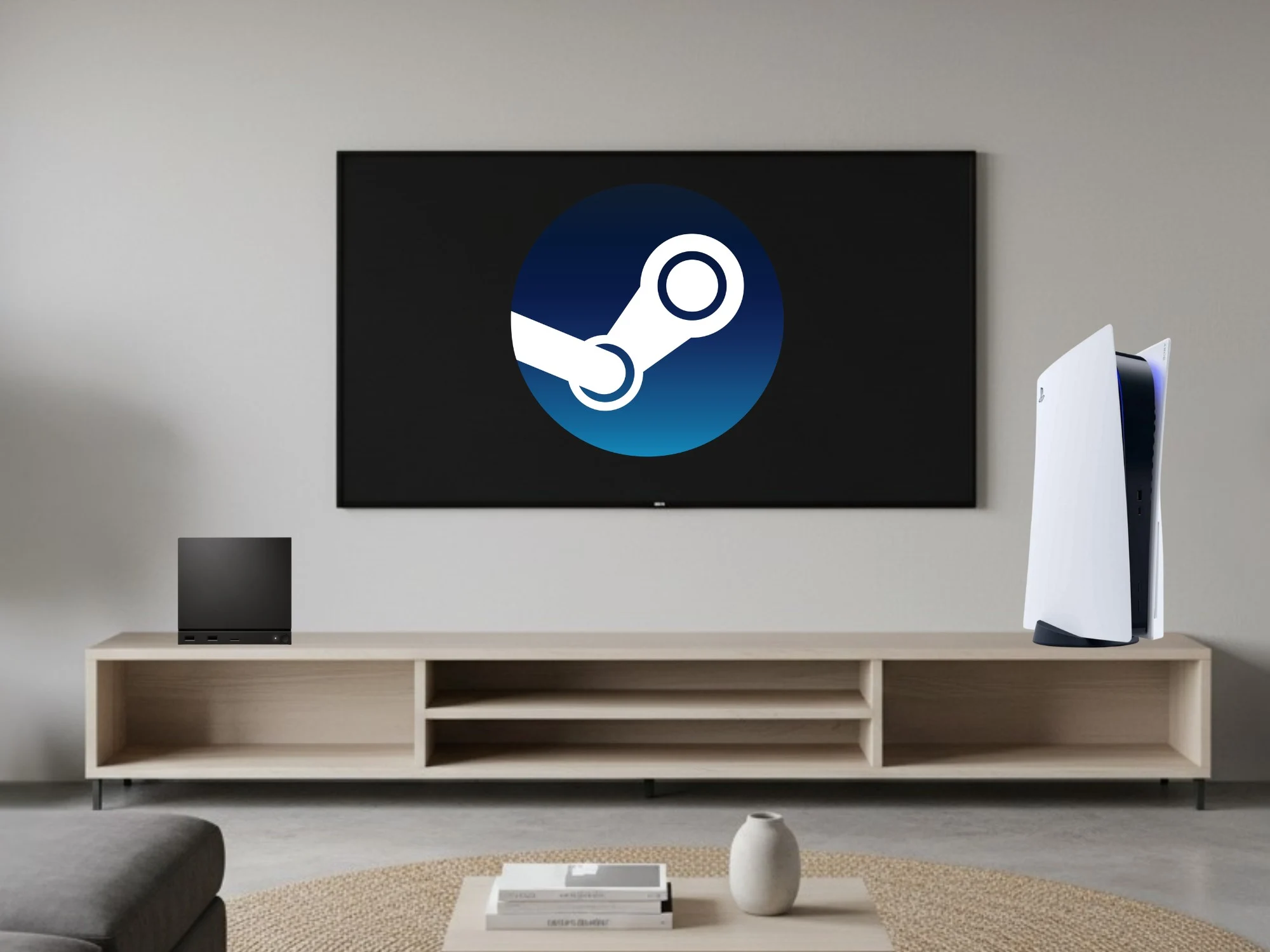


  • Steam Machine to Compete with PS5 and PS6, Not New Xbox Console

    Steam Machine to Compete with PS5 and PS6, Not New Xbox Console

    Key Takeaways

    1. Mike Ybarra doubts the future of the new Xbox console, suggesting Sony sees it as a significant threat.
    2. Ybarra believes Valve’s Steam Machine may become a major competitor for Sony’s PS5 and PS6.
    3. He predicts that Sony’s decision to cut back on single-player PC ports is influenced by Xbox’s uncertain future and Valve’s rising presence.
    4. Ybarra highlights the advantages of the Steam Machine, such as a large user base and appealing policies, despite concerns about pricing and storage costs.
    5. He warns that the shift away from Xbox-exclusive titles may reduce the new console’s appeal, impacting its adoption among fans.


    Mike Ybarra, a former Microsoft executive, has expressed doubt about the new Xbox console. He shared his thoughts on social media, suggesting that Sony perceives this as the “last nail in the coffin with Xbox.” He believes that the Valve Steam Machine may become the primary competition for the PS5 and PS6 in living rooms.

    Ybarra’s Insights on PlayStation

    Having previously held the position of President at Blizzard Entertainment, Ybarra commented on a recent report regarding PlayStation. Bloomberg’s Jason Schreier forecasts that Sony will likely cut back on the number of single-player PC ports available on Steam. Ybarra thinks that the uncertain future of Xbox consoles, alongside the anticipated Valve system, has played a role in this rumored decision.

    Valve’s Growing Competition

    According to Ybarra, Sony now views “Valve as a significant new competitor.” He addressed gamers who doubt the Steam Machine’s potential to attract a broad audience. He highlighted the vast number of Steam users and mentioned benefits such as a user-friendly return policy, family sharing options, and free multiplayer access.

    Ybarra does not believe the price of the Steam Machine will stop many from buying it. He predicts third-party OEMs will provide a variety of configurations priced between $500 and $5,000. However, he warned that rising costs for storage and memory could pose budget challenges.

    Shifting Market Dynamics

    Before Valve revealed its compact Linux cube, Sony might not have regarded the company as a serious console contender. Nonetheless, many more players might soon be enjoying PS5 games ported to PC and played on large 4K TVs. This situation suggests that PlayStation could be adjusting its strategy to safeguard its first-party hardware sales.

    The transition away from Xbox-exclusive games has been a critical issue for Ybarra. While he supports cross-platform publishing, he believes this could diminish the appeal of the new Xbox console. Without these unique incentives, he questions whether fans will truly adopt the Magnus-based system.

    Valve could find an opportunity in Microsoft’s difficulties to maintain a foothold in the hardware market. Nevertheless, some gamers are still not convinced that Sony should view Valve as a serious competitor. Many popular PC titles with anti-cheat measures are not supported on SteamOS. For instance, games like Valorant and Fortnite are available on the PS5, but it’s unlikely they will be accessible on the Steam Machine.

    Source:
    Link


  • Industry Analyst Discusses Steam Machine Pricing and New Xbox

    Industry Analyst Discusses Steam Machine Pricing and New Xbox

    Key Takeaways

    1. The tech sector, including gaming, is facing challenges due to AI developments and memory shortages affecting device production.
    2. Pricing for new hybrid devices like the Steam Machine is uncertain, with estimates around $1,000, depending on component availability and production strategies.
    3. The next Xbox is expected to share features with the Steam Machine, functioning as a PC while supporting console-specific games and applications.
    4. The lines between different gaming platforms—PCs, consoles, handhelds, and mobile devices—are becoming increasingly blurred.
    5. There are no confirmed release dates for the hybrid consoles, with Valve aiming for the first half of 2026 and Microsoft believing the current Xbox generation will remain relevant for a while.


    Not only the gaming world but the entire tech sector is experiencing a whirlwind due to swift AI developments. Memory shortages are impacting consoles, computers, and smartphones, and the role of AI in game creation is being hotly debated. Because of this situation, new hybrid devices like the Steam Machine and the upcoming Xbox may end up costing much more than anticipated. An industry expert has recently provided their thoughts on the current landscape.

    Industry Insights

    In an interview with GamesRadar+, Mat Piscatella, who serves as the Senior Director and Video Game Industry Advisor at Circana, noted that the present confusion and unpredictability are not helpful for planning. For companies such as Valve, setting a price is understandably difficult because of the instability in the US economy. Although the Steam Machine is seen as “super exciting” due to its hybrid nature, especially since a large library of games will be ready for players on day one, it wouldn’t be shocking if Valve sets its price at around $1,000.

    “I’m relieved I’m not the one making the decision,” Piscatella mentioned. “I could envision a price of $1,000. They could even go wild and price it under $700 if they want to absorb some costs,” he further explained. The analyst believes that the more significant questions revolve around where Valve will obtain the necessary components, how many Steam Machines will be produced, and the sales strategy they will adopt.

    Future of Gaming Consoles

    The Steam Machine is designed to connect easily to a TV, and it seems like the next Xbox might follow a similar path. “But I think whatever the next Xbox ends up being, it’s going to resemble the Steam Machine in many aspects. It will be a PC first, aiming to add console-friendly features on that PC framework.” Reports indicate that the new Xbox could run a modified version of Windows 11, while still being able to handle Xbox titles, older games, and various PC applications, including platforms like Steam.

    Piscatella highlighted that the blending of different gaming formats is a trend in the industry. “The distinctions between PCs, consoles, handhelds, and even mobile devices are becoming less clear, not just in how users interact with them but also in the games available that players can carry across platforms.”

    Uncertain Release Dates

    Despite all this, neither of the hybrid consoles has a confirmed launch date yet. Valve recently mentioned that it needs to reassess its launch schedules but remains dedicated to a timeline in the first half of 2026. Microsoft, on the other hand, reportedly believes that the current generation of Xbox will stay relevant for the foreseeable future, even after the introduction of the next-gen Xbox and PS6.

    GamesRadar+, Windows Central

    Source:
    Link


  • Valve Confirms Steam Machine Release on Track for Early 2026

    Valve Confirms Steam Machine Release on Track for Early 2026

    Key Takeaways

    1. The tech industry is experiencing a crisis in memory and storage due to high demand from artificial intelligence, leading to rising prices for PC hardware.
    2. Valve’s product release timeline for the Steam Machine, Steam Frame, and Steam Controller is still set for the first half of 2026, despite challenges.
    3. The company has not provided specific pricing or launch dates due to the unpredictable availability and costs of key components.
    4. Valve aims to avoid disadvantaging consumers by being cautious with pricing commitments amidst fluctuating memory and storage prices.
    5. The Steam community will receive regular updates as Valve continues to monitor the situation and develop its products.


    The tech industry is facing an increasing crisis related to memory and storage, which is largely fueled by the ongoing surge in artificial intelligence. The demand for memory chips and storage parts has caused prices to rise across the PC hardware sector, influencing everything from graphics cards to everyday gadgets. Despite these obstacles, Valve has announced that its objectives for the new devices, including the Steam Machine, Steam Frame, and Steam Controller, are still on track, a statement echoed by AMD’s CEO recently.

    Product Announcement Timeline

    Valve initially revealed these devices back in November of last year, but they did not disclose a specific date for their release. They mentioned that the products would be available sometime in the first half of 2026. While this timeline remains intact, Valve has shared the reasons behind the lack of specific pricing and launch information.

    In a recent update on Steam, the company acknowledged that it had hoped to finalize pricing and shipping timelines by now. However, the situation regarding the availability of memory and storage has deteriorated more quickly than anticipated.

    Challenges with Costs and Availability

    Valve clarified that the limited availability and rising prices for crucial components have complicated their ability to confirm exact pricing and launch dates, especially for the Steam Machine and Steam Frame. Nevertheless, the company emphasized that the overall release goal is still the same. They want to tread carefully when determining these specifics, particularly considering how swiftly memory and storage prices can fluctuate. Committing to prices too soon could potentially disadvantage consumers or necessitate future adjustments, which is something Valve aims to prevent.

    As per Valve’s statements, all three products are still set to be released in the first half of 2026. The company continues to work on establishing precise pricing and launch schedules and will provide updates when their plans are confirmed.

    Community Engagement

    Valve has reassured its community that they are actively monitoring the situation and will keep everyone informed. The Steam community can expect more news as the company moves forward with its product development.

    Source:
    Link


  • AMD CEO Tips for 2027 Xbox Release, Denies Steam Machine Delay

    AMD CEO Tips for 2027 Xbox Release, Denies Steam Machine Delay

    Key Takeaways

    1. AMD’s CEO Lisa Su confirmed that the development of Microsoft’s next-gen Xbox console is progressing well, aiming for a 2027 launch.
    2. Valve’s Steam Machine, powered by AMD technology, is on track to ship in early 2026, despite concerns over rising memory prices.
    3. The new Xbox is expected to feature a premium design, potentially leading to a high price point due to increased memory costs and advanced specifications.
    4. The Steam Machine will have less powerful specs, utilizing an AMD Zen 4 processor and RDNA 3 architecture, but may face delays due to rising DDR5 costs.
    5. Market reactions are mixed, with some questioning Microsoft’s strategy to continue selling hardware amid declining gaming revenue from the Xbox Series X|S.


    Despite some doubts about new gaming systems, AMD’s CEO Lisa Su has minimized the likelihood of delays. She gave updates on the future Xbox console and the Steam Machine, both of which depend on AMD’s technology. The Xbox is aiming for a launch in 2027, while Valve is set to roll out its SteamOS cube in early 2026.

    Updates from the Earnings Call

    On February 3rd, during an earnings call, Su shared her insights, which were later reported by Wario64 on social media and GamesBeat. She stated, “From a product standpoint, Valve is on-track to begin shipping its AMD-powered Steam Machine early this year, and development of Microsoft’s next-gen Xbox featuring an AMD semi-custom SoC is progressing well to support a launch in 2027.”

    Concerns Over Pricing

    There have been rumors suggesting that a new Xbox console might launch within the timeframe mentioned by Su. However, increasing memory prices have caused some insiders to question if Microsoft will adhere to this timeline. Xbox President Sarah Bond has described the upcoming device as “very premium,” which raises concerns about its price point.

    When it eventually launches, the system is expected to include an AMD Magnus APU, featuring an 11-core Zen 6 CPU and RDNA 5 support. This console/PC hybrid may require 36GB or more of GDDR7 RAM. Considering the memory shortage’s impact on the GPU market, the console could become quite expensive.

    Steam Machine Specifications

    On the other hand, the specs for the Steam Machine are less powerful, featuring an AMD Zen 4 processor. Even though this Linux-based console will support 4K connectivity, it uses the RDNA 3 architecture. Nonetheless, due to soaring DDR5 costs, some analysts believe Valve might postpone its release, originally set for Q1 2026.

    It’s crucial to mention that Su did not assure that the next Xbox console would be available in 2027. While the chipset development is moving swiftly, various factors could disrupt that schedule.

    Market Reactions

    Some critics are questioning whether Microsoft should keep selling hardware altogether. The decline in gaming revenue partly due to the performance of the Xbox Series X|S has raised doubts about the company’s decision to invest in a more costly system. Only time will tell if this strategy is truly beneficial.

    Source:
    Link


  • Dataminer: Half-Life 3 Release Not Linked to Steam Machine Launch

    Dataminer: Half-Life 3 Release Not Linked to Steam Machine Launch

    Key Takeaways

    1. Valve typically does not synchronize the release of hardware and software, meaning delays in the Steam Machine won’t necessarily delay Half-Life 3.
    2. The situation mirrors the launch of Half-Life: Alyx, which was delayed from 2019 to 2020 despite initial expectations.
    3. Speculations suggest that the SteamOS might be the last to launch, with some insiders doubting its scheduled release in Q1 2026.
    4. Rising memory prices could impact the budget for the Steam Machine, potentially causing Valve to consider delaying its release.
    5. Gabe Follower remains optimistic about Half-Life 3’s development, indicating it is nearing completion despite previous rumors of announcements not materializing.


    Insider Gaming’s Mike Straw has suggested that the anticipated Half-Life 3 may launch alongside the Steam Machine. Nevertheless, Gabe Follower, a dataminer and content creator within the Valve community, does not agree with this perspective. In a recent video, he elaborates on how delays in the system, attributed to high memory costs, are unlikely to affect the release of the beloved shooter.

    Valve’s Coordination on Releases

    Gabe Follower points out that Valve usually doesn’t synchronize hardware and software launches. Different teams are working separately on Half-Life 3 and the Steam Machine. Since these teams follow distinct schedules, a delay in the release of the Steam Machine would not automatically mean a delay for the game.

    Comparing to Half-Life: Alyx

    The dataminer draws parallels between the current situation and the launch of Half-Life: Alyx. Initially, gamers anticipated this title to arrive with the Index VR headset in 2019. Unfortunately, it didn’t come out until 2020, when it was offered free to those who owned the hardware.

    Future Speculations

    A similar scenario might occur with Half-Life 3 and the Steam Machine, although it’s possible that the SteamOS could be the last to launch. Scheduled to be released in Q1 2026, some insiders, including Moore’s Law is Dead, doubt these timelines.

    Impact of Rising Memory Prices

    Increasing memory prices have put pressure on the budgets of both desktop and laptop users. The escalating cost of DDR5 RAM poses a risk of increasing the MSRPs for consoles like the PS5 and Switch 2. With the Steam Machine already expected to be more expensive than these options, Valve might consider delaying its release.

    Optimism for Half-Life 3 Development

    Gabe Follower remains optimistic about the development of Half-Life 3, believing it is nearing completion. While rumors of an announcement in 2025 did not come to fruition, he likens last year to 2019. Similar to Alyx, updates on other Valve games have slowed down, indicating that the team’s focus is primarily on the shooter. Reports suggest that some developers have even started working on new projects.

    New Technological Developments

    The YouTube video also discusses exciting new technology that players might encounter in the game. Datamined code referring to “HLX” in other Valve software hints at a new gravity system that will change how bullets behave. Additionally, NPCs are expected to act more realistically, and real-time ray tracing could be an option for players.

    Source:
    Link


  • Steam Machine Launches Flexible Steam Deck Verification Program

    Steam Machine Launches Flexible Steam Deck Verification Program

    Key Takeaways

    1. The Steam Machine is more powerful than Valve’s handheld device, but some games may not run smoothly in a living room setting.
    2. Game compatibility will be assessed similarly to the Steam Deck verified program, with easier requirements for developers.
    3. Compatibility with input devices, especially Valve’s new game controller, is crucial, and Windows games must run on Proton or properly in Linux.
    4. The Steam Machine’s specs include a 6-core AMD Zen 4 processor and RDNA 3 graphics, but there are concerns about system and GPU memory affecting performance at higher resolutions.
    5. Game studios may face less strict standards for compatibility, and there are speculations about a potential delay in the Steam Machine’s launch due to rising storage and memory costs.


    The Steam Machine is much stronger than Valve’s handheld device. However, some games might not provide a smooth experience in the living room. In an interview with Game Developer, a designer from Valve explained how the company will assess game compatibility. This process is similar to the Steam Deck verified program, but developers should face easier requirements.

    Compatibility Considerations

    Lawrence Yang mentioned that most candidates with the Steam Deck verified badge are likely to get approved. Still, the company will evaluate each game’s performance on the compact gaming PC. For mobile devices that have 7 or 7.4-inch screens, text should be easy to read. Since the Steam Machine is made for larger TVs, this isn’t as big of a concern.

    Similar Requirements

    Many of the requirements for the Linux-based handheld and the soon-to-be-released cube will be alike. Being compatible with input devices, like Valve’s new game controller, is also very important. Even more crucial, Windows games will need to either run on Proton in SteamOS or function properly in Linux. Unfortunately, DRMs will still block popular games like Battlefield 6 and Black Ops 7.

    Specs and Concerns

    The specs for the Steam Machine, which include a 6-core AMD Zen 4 processor and RDNA 3 graphics, should be able to handle most games. However, there are concerns about the amount of system and GPU memory before it even launches. The 8GB of VRAM may create challenges for achieving 4K at 60fps.

    It’s uncertain if Valve will clarify when demanding games struggle with higher resolutions. Even for some games that are verified on Steam Deck, the company might recommend better settings. Players have noted that the green checkmark doesn’t always mean smooth gameplay without adjustments.

    Future Outlook

    Given Yang’s description of the process, it appears that game studios won’t need to meet very strict standards. Unfortunately, he did not share any updates on whether the mini PC is still expected to launch in early 2026. Some insiders have speculated that there could be a delay because of increasing prices for storage and memory. A delay would provide developers ample time to resolve any issues.

    Source:
    Link


  • Steam Machine Price Leak Disappoints Gamers Amid Release Date Uncertainty

    Steam Machine Price Leak Disappoints Gamers Amid Release Date Uncertainty

    Key Takeaways

    1. The Steam Machine’s price may be higher than popular consoles, potentially reaching around $950 for the 512GB version and $1,069 for the 2TB version according to a Czech retailer leak.
    2. A social media update suggests lower pricing projections, estimating $814 for the 512GB model and $916 for the 2TB variant if a 17% profit margin is applied.
    3. The price leak originated from source code on a Czech website, and potential buyers should wait for Valve’s official announcement before making assumptions.
    4. Concerns about rising memory prices may delay the Steam Machine’s release to Q1 2026, as competitive pricing relies on adequate supply of DDR5 RAM.
    5. Insiders speculate about a barebones version of the Steam Machine, allowing users to customize RAM and storage, but Valve likely prefers to offer a fully assembled version.


    After the Steam Machine was revealed in November, people quickly started guessing its price. A Valve engineer hinted that it might be priced similarly to a gaming PC with matching specs. Considering the rising costs of storage and memory, this could mean a suggested retail price (MSRP) significantly higher than popular consoles. According to a Czech retailer, the Steam Machine’s price could be even steeper than expected.

    Pricing Details

    It’s important for potential buyers not to take this recent leak too seriously until Valve officially announces anything. Nonetheless, Smarty.cz has posted the price for the 512GB version at 19,826 CZK, approximately $950. In contrast, the 2TB version would set buyers back 22,305 CZK, or around $1,069 when converted to USD.

    Alternative Projections

    In a new social media update, Clawsomegamer suggests lower figures. If the retailer aims for a 17% profit margin, the 512GB model might be priced at $814, while the 2TB variant could go for $916.

    The price leak for the Steam Machine originated from the source code on the Czech website, rather than being outright displayed. In various countries, Valve primarily sells hardware like the Steam Deck through its official store. However, in certain regions, third-party retailers do offer new devices.

    Speculations and Concerns

    There is a chance that Valve has finalized its pricing, and Smarty.cz accidentally made it public. Alternatively, Valve may have changed its plans and will provide an update in the future. Regardless, many gamers are pondering whether the compact PC will justify such a hefty price tag.

    As memory prices continue to soar, sources such as Insider Gaming have raised concerns about the Steam Machine’s release date being delayed to Q1 2026. The reasoning behind this is that without enough supply of DDR5 RAM, Valve wouldn’t be able to offer competitive pricing. Laptop manufacturers, who use similar components, have already raised their prices.

    Other insiders, including Moore’s Law Is Dead, have suggested a barebones version of the system. Users could look for affordable RAM and storage to install themselves. Nonetheless, Valve would probably prefer to provide a fully assembled version as well.

    Hopefully, the Czech pricing isn’t what most gamers will have to pay for the Steam Machine. Not only would it be more expensive than the PS5, but the PS5 Pro is also a better deal in comparison. Valve’s listed specs promise a faster processor and the potential for enhanced upscaling and ray tracing. Even so, it might be wise to wait for the AI-driven memory crisis to resolve.

    Source:
    Link


  • PS6 Release Date Confirmed by Insider Amid Rising Memory Prices

    PS6 Release Date Confirmed by Insider Amid Rising Memory Prices

    Key Takeaways

    1. Sony may consider delaying the PS6 launch due to inflated memory prices, but no final decision has been made yet.
    2. The production agreement with AMD for the Orion APU is still on track for mid-2027, allowing Sony time to adjust strategies.
    3. Both Sony and Microsoft are concerned about memory shortages affecting console releases, but DDR5 RAM prices could stabilize soon.
    4. A delay in console launches might not disappoint gamers, as analysts question consumer readiness for pricier consoles.
    5. Valve’s Steam Machine release is at risk due to its lack of flexibility compared to console makers.


    Inflated memory prices are posing a significant threat to the gaming industry for the foreseeable future. According to Tom Henderson from Insider Gaming, Sony is considering pushing back the PS6 launch date. Yet, during a recent podcast, Moore’s Law Is Dead clarified that “There has been no decision to delay any consoles.”

    Plans Remain Intact

    The often-reliable leaker mentioned that PlayStation still has time to adjust its strategies. He disclosed that the agreement with AMD to produce the anticipated Orion APU by mid-2027 is still on course. Moore’s Law Is Dead stated that Sony does not need to finalize the DRAM specifications for the system until later stages of its production.

    Social Media Reactions

    Interestingly, Tom Henderson reacted to a social media post concerning the latest information on the PS6 release. His response of “Lol” suggests he may disagree with the other insider, but MLID did not actually challenge Henderson’s report. The Editor-in-Chief merely noted that talks about postponing the console’s release have started.

    Industry Concerns

    MLID does acknowledge that both Sony and Microsoft are worried about the effects of the memory shortage on the PS6 and the next Xbox. However, he indicated that DDR5 RAM prices could stabilize in time to prevent any major disruptions. The companies have the option to monitor the situation for another year and potentially release the consoles by late 2027 or early 2028.

    Reactions from Gamers

    A delay in the console launches might not lead to widespread disappointment among gamers. Analysts have raised doubts about whether consumers are ready to invest in a pricier gaming console. Prior to the increase in memory prices, both the PS5 and Xbox Series X already experienced price hikes.

    Anticipated Specifications

    Rumors suggest that the PS6 will incorporate RDNA 5 architecture, which is expected to enhance ray tracing and upscaling efficiency. Despite this, it may not provide a sufficiently significant performance improvement to persuade gamers to make the switch.

    Valve’s Situation

    While console makers have some flexibility, Valve lacks that same freedom with the Steam Machine. Both Insider Gaming and MLID have pointed out that the mini PC’s anticipated Q1 release may be at risk.

    Source:
    Link


  • Analyst: PS6 and Steam Machine Release Delays Due to Memory Costs

    Analyst: PS6 and Steam Machine Release Delays Due to Memory Costs

    Key Takeaways

    1. Rising memory costs may lead Sony and Valve to reassess pricing or delay the launch of the PS6 and Steam Machine.
    2. Increased demand from the AI sector is reducing the availability of memory for consumers, causing price hikes in laptops and PCs.
    3. Valve may have secured LPDDR5 memory for the Steam Machine, but industry experts predict high prices for DRAM and storage to persist for several years.
    4. The PS6 is expected to launch in 2027 or 2028, influenced by rising GDDR7 VRAM costs and declining console sales.
    5. Manufacturers face pressures from declining sales and rising memory prices, potentially leading to postponed release dates for new consoles.


    As the cost of memory increases, the outlook for gaming hardware is becoming more and more unpredictable. This situation may compel Sony and Valve to reassess the prices for the upcoming PS6 and Steam Machine. Another option could be that the launch dates for these devices may be pushed back until prices stabilize. A recent article from Reuters cites an analyst who has made this concerning forecast.

    Impact of AI on Memory Market

    The piece by Zaheer Kachwala explains how the growing demand from the AI sector is influencing the memory market. With companies like Micron concentrating on business clients, there is a reduced amount of storage and memory accessible for regular consumers. Additionally, manufacturers of laptops and preassembled PCs have started to announce increases in their prices.

    Valve’s Strategy for Memory Supply

    Valve might have arranged to secure a stockpile of LPDDR5 memory ahead of the anticipated Steam Machine launch in early 2026. Nevertheless, some experts in the industry predict that the prices of DRAM and storage will not decrease for several years. This situation could force the company to either transfer these additional costs to gamers or to delay the release altogether.

    PS6 Launch Timeline

    The timing for the introduction of the PS6 is not as clear-cut, but many insiders expect it to arrive in 2027 or 2028. The rising costs of GDDR7 VRAM are putting pressure on the suggested retail prices of Nvidia RTX 50-series graphics cards and the next PlayStation console.

    Another challenge that both Valve and Sony face is the decline in console sales. Circana’s U.S. statistics for November 2025 indicated that hardware sales dipped by 27% when compared to the previous year. Due to tariffs and various economic hurdles, the Xbox Series X and PS5 have already seen price increases.

    Concerns for Manufacturers

    Both the warning signs related to retail performance and the escalating memory prices are factors that manufacturers must consider. The Reuters article quotes analyst Jacob Bourne from eMarketer, who expresses this concern. Bourne notes that, due to disappointing sales, “we could see console makers postpone their release dates.”

    Valve may still opt to move forward with the launch of its gaming system. One suggestion from the insider site Moore’s Law Is Dead is to provide a stripped-down version without memory and storage. This would keep the price of the Steam Machine reasonable, but would require gamers to finish the setup themselves. However, it seems quite unlikely that Sony would adopt a similar strategy for the PS6.

    Reuters, Valve YouTube

    Source:
    Link