Tag: Steam Machine

  • Steam Machine Hurts Indie Game Promotion After Valve’s Apology

    Steam Machine Hurts Indie Game Promotion After Valve’s Apology

    Key Takeaways

    1. Planet Centauri’s early access version gained interest, but the official launch faced issues due to a lack of communication from Valve regarding wishlist notifications.
    2. Despite 138,000 wishlists, the game only sold 581 copies in the first five days post-launch, highlighting significant promotional challenges.
    3. Valve attempted to help by featuring Planet Centauri in its Daily Deals, but the timing coincided with the major launch of the Steam Machine, limiting visibility.
    4. The competition from new hardware made it difficult for lesser-known games like Planet Centauri to gain attention in the market.
    5. The situation underscores the importance of Valve’s support for indie games, as many others struggle to recover their listing fees without adequate marketing.


    The creators of Planet Centauri are facing ongoing challenges while promoting their 2D sandbox indie game. The early access version gained traction prior to the official release set for December 2024. Sadly, Valve did not inform the gamers who had the game on their Steam Wishlist. This oversight led to a lackluster launch, and the debut of the Steam Machine overshadowed any chance for increased visibility.

    Wishlist Woes

    According to Polygon, Planet Centauri had 138,000 potential players add the game to their wishlists. However, after five days post-launch, the developers only saw 581 sales. At first, the French studio Permadeath was unaware that a technical problem contributed to the sluggish start.

    Once Valve identified the wishlist issue, they attempted to rectify the situation with the developers. The company offered Permadeath a prominent spot in its Daily Deals promotion. Games are chosen for this 24-hour feature based on solid sales or strong interest. Unfortunately, the selected date of November 12th coincided with the launch of the Steam Machine, Steam Frame VR headset, and new controller.

    Market Competition

    It’s no surprise that the new hardware took over the market, making it harder for lesser-known games to gain attention. Although the Daily Deal wasn’t a total failure for Planet Centauri, generating 5,000 sales, it fell short of the expectations of its fanbase following the wishlist mishap.

    In spite of these setbacks, developer Laurent Lechat expressed to Polygon that the studio holds no resentment toward Valve. Some critics believe Steam should have informed Permadeath about the timing of the Steam Machine’s announcement. Yet, given the company’s secretive approach regarding the cube, it’s possible that the person in charge of planning the event was unaware of the consequences.

    Media Attention

    Planet Centauri’s struggles have also caught the eye of the media, bringing in new players. Nevertheless, these issues highlight how crucial Valve is for the marketing of indie games. Without additional support, Games Radar pointed out that over 5,000 Steam games released within the last year did not manage to recover the $100 listing fee.

    Source:
    Link


  • YouTuber Tests Valve’s 4K 60 FPS Promise and PS3 Emulation

    YouTuber Tests Valve’s 4K 60 FPS Promise and PS3 Emulation

    Key Takeaways

    1. The Phawx created a custom PC to closely replicate Valve’s Steam Machine for performance testing.
    2. The CPU used in the test was matched to Valve’s semi-custom AMD Zen 4 processor, with similar core and thread counts and power constraints.
    3. The dedicated GPU chosen, Radeon 7600M XT, shares architecture with Valve’s expected GPU, though it has more compute units; performance is limited by bandwidth.
    4. Power management techniques like AMD Smart Access Memory and SmartShift were utilized to simulate the Steam Machine’s design, highlighting the need for efficient power distribution.
    5. Testing showed that achieving 4K 60 FPS gameplay is challenging, with reported frame rates often around 30-40 FPS in demanding games, despite claims of significant GPU performance improvement.


    Valve’s Steam Machine is still a few months away from being launched, yet the gaming community is already trying to estimate how well it will perform. The YouTube channel The Phawx took this concept to another level by constructing a small PC that mimics Valve’s upcoming hybrid console. Rather than just using similar components, they work to closely replicate the Steam Machine’s CPU performance, GPU limitations, power constraints, and overall system design.

    Testing Valve’s Claims

    The purpose of this effort was to test Valve’s significant performance assertions, including the anticipated six-fold GPU improvement over the Steam Deck and the capability to achieve 4K 60 FPS with FSR. They measured how closely their custom-built system could mirror these expectations.

    First, the creator matched the CPU setup of the Steam Machine. Valve’s device features a semi-custom AMD Zen 4 processor with 6 cores, 12 threads, a boost clock of up to 4.8 GHz, and a 30 W power cap. To imitate this, the creator utilized an AMD 8840U laptop CPU and turned off two of its eight cores, while also parking the related hyperthreads, resulting in exactly 6 cores and 12 threads being active.

    Simulating Power Constraints

    To simulate the 30 W CPU power limit from Valve, the processor is set to a maximum of about 4 GHz during workloads that use all cores. The creator’s tests show that achieving the advertised 4.8 GHz is only feasible during single-core tasks, mirroring the expected behavior of Valve’s chip.

    An earlier Geekbench entry for a device tagged “Val Fremont,” which many believe to be an initial Steam Machine model, shows cache configurations similar to the 8840U. This alignment allows the creator to not only match core counts but also replicate the L1, L2, and shared L3 cache setups by parking the appropriate cores.

    They also entirely disable the integrated GPU, suggesting that the Steam Machine’s custom APU will likely have its iGPU disabled.

    Matching the GPU

    For the dedicated GPU, they opted for a Radeon 7600M XT, which shares the same Navi 33 architecture as Valve’s GPU. The Steam Machine is expected to have 28 CUs, unlike the 7600M XT’s 32, so they limit the boost clocks to better align with the roughly 9 teraflops estimated for Valve’s hardware. The card usually operates at 2.3 GHz, in contrast to Valve’s leaked peak clock of 2.45 GHz. Both use 32 MB of Infinity Cache and roughly 288 GB/s of effective bandwidth, which they claim is more suited for 1080p and will depend heavily on FSR to achieve 4K 60 FPS targets.

    They also mention that the extra compute power of the 7600M XT doesn’t provide much actual benefit since bandwidth is the main limiting factor, suggesting that Valve’s lower-CU GPU might actually offer a more balanced performance despite being weaker on paper.

    Power Management Insights

    To further match the Steam Machine’s design, The Phawx enabled AMD Smart Access Memory and SmartShift, which they believe Valve might also use to unify power budgets between the CPU and GPU. In their tests, a limit of 28 W causes both components to downclock significantly, leading to a noticeable drop in performance. Raising the shared TDP back to 150 W restores normal functionality.

    They argue that this illustrates how much the Steam Machine might need to manage power distribution between its components within a small enclosure.

    For performance testing, The Phawx concentrates on how closely their setup can achieve Valve’s claim of 4K 60 FPS gameplay with upscaling and frame generation, even if it means keeping graphics settings at their lowest. Their aim, as they clarify, is not to maximize visual quality but to determine how far they can push resolution and frame rates on hardware designed to simulate the Steam Machine.

    Game Performance Analysis

    They start with God of War 3 in the RPCS3 emulator, running at 720p with recommended settings and speed patches turned off. Performance stays just below a locked 60 FPS, but remains relatively playable, providing a realistic view of CPU-bound emulation performance at a 4 GHz all-core cap.

    In Indiana Jones and the Great Circle, the system outputs at 4K, uses low settings, and relies on XeSS Performance mode to approach the 60 FPS target. Even with the heavy upscaling, the game typically runs closer to 30 FPS, with The Phawx pointing out that ray tracing is especially taxing for RDNA-based GPUs.

    For Starfield, they again aim for a baseline of 4K 60 FPS, using 4K output, a 50% render resolution, low graphics settings, and FSR 3 without frame generation. The outcome is generally around 30–40 FPS, dropping lower in densely populated areas like Akila City.

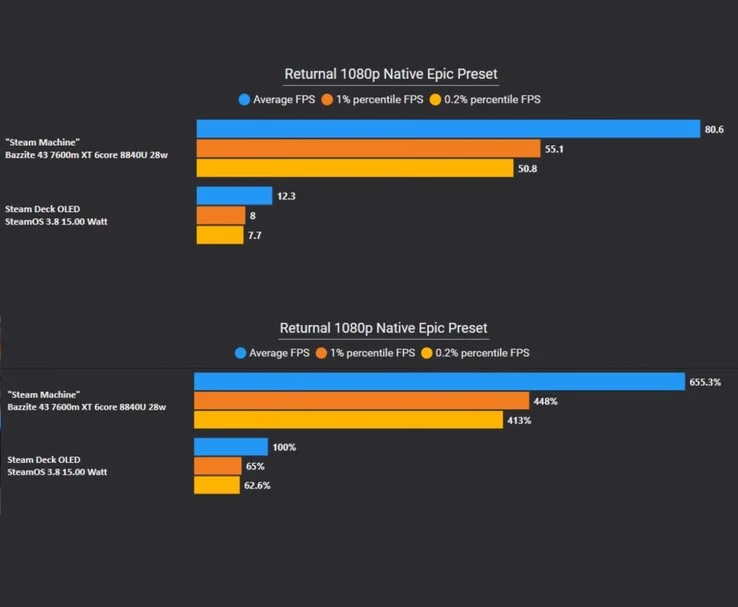
    The YouTuber also revisits Valve’s assertion of six times the GPU performance of the Steam Deck. They report that in GPU-bound tests like Returnal, their matched setup performs roughly 6.5 times faster, noting that their GPU is somewhat stronger than what is anticipated for Valve’s system, although both utilize Navi 33 silicon.

    In addition, The Phawx tests other games such as God of War Ragnarok, Warhammer 40,000: Space Marine 2, and Spider-Man: Miles Morales and shares their concluding thoughts while also speculating on the Steam Machine’s possible pricing. You should definitely check out the video below for the complete analysis.


    Source:
    Link



  • VKD3D-Proton 3.0 Launch Enables AMD FSR 4 on Steam Machines

    VKD3D-Proton 3.0 Launch Enables AMD FSR 4 on Steam Machines

    Key Takeaways

    1. VKD3D-Proton 3.0 introduces support for AMD FSR 4 upscaling, enhancing compatibility for Proton on Linux gaming platforms.
    2. FSR 4 can be simulated on older AMD RDNA 2 and RDNA 3 GPUs using INT8 and Float16 options, allowing more users to access this feature.
    3. Valve seeks official driver-level support from AMD for FSR 4 on Steam Machines to improve performance and visuals.
    4. The robust Zen 4 CPU in Steam Machines may help achieve higher framerates, but potential performance drops are a concern for 4K visuals at 60 FPS.
    5. Native driver support for FSR 4 could give Valve a competitive edge against consoles like the PlayStation 5, especially in ray tracing-enabled games.


    VKD3D-Proton, a key component for compatibility in Valve’s SteamOS and other Linux gaming projects, has been updated to version 3.0. This new version introduces support for AMD FSR 4 upscaling, aiming to implement FSR 4 more effectively in Proton.

    Interesting New Features

    What stands out about this update is that while the standard version only activates the feature on AMD RDNA 4 GPUs or newer, there are options to simulate AMD FSR 4 on graphics cards that support INT8 and Float16. This is similar to the FSR 4 mods previously available, which allowed AMD FSR 4 to work on RDNA 2 and RDNA 3 GPUs, relying on a leaked FSR 4 Int8 DLL. The patch notes mention that the choice not to make this emulation option standard is “over my pay grade.” However, it provides AMD RDNA 2 and RDNA 3 GPU users on SteamOS a way to enable FSR 4, which could have positive implications for both Steam Machines and Steam Decks.

    Valve’s Ambitions

    One comment that supports the notion that this could lead to AMD FSR 4 being supported on Steam Machines is Valve’s expression to Digital Foundry about wanting official driver-level support from AMD. The workaround for FSR 4 using INT8 on Windows and now Linux comes with a performance cost compared to FSR 3, which is necessary to produce better visuals on older RDNA GPUs.

    Performance Considerations

    The robust Zen 4 CPU in the Steam Machine should aid in achieving higher framerates with FSR upscaling. However, the potential performance drop may pose a challenge for Valve’s ambition of delivering 4K visuals at 60 FPS for all Steam games. To keep FSR 4 from taxing graphics performance excessively, some level of official support will likely be essential. This concern is magnified when considering the challenges posed by ray tracing in games like Indiana Jones and the Great Circle.

    As testing on a comparable Steam Machine PC build has shown, GPU performance is a significant worry ahead of the Steam Machine’s release. The advantages of SteamOS for gaming, along with the capabilities of Zen 4, could still position Valve to produce a genuine competitor to the PlayStation 5. Since PSSR is only functional on the PlayStation 5 Pro, having native driver support for FSR 4 on Steam Machines could provide Valve with a crucial advantage.


    Source:
    Link


  • CheckMag Steam Machine: Best Community Concept Designs

    CheckMag Steam Machine: Best Community Concept Designs

    Key Takeaways

    1. Valve’s Steam Machine features a cube-like design, runs on SteamOS, and supports Proton for game compatibility, with a price tag of $743.
    2. The device includes magnetic, interchangeable front panels, allowing for creative expression through custom designs, such as LED displays and popular franchise themes.
    3. Community members have shared humorous and nostalgic designs, like a GameCube-themed skin and a mockup resembling Marvel’s Kingpin, reflecting the desire for dynamic and recognizable aesthetics.
    4. Dbrand is set to release a premium Companion Cube skin, indicating potential for cohesive, collectible accessories that align with popular franchises.
    5. Challenges remain, including limitations on interactive front panels and potential legal barriers for official franchise skins, but there’s a clear demand for unique third-party accessories.


    Valve’s latest Steam Machine made its debut this week, sparking a flurry of online chatter. The cube-like design, emphasis on SteamOS, and the potential for interchangeable front panels have not only captured attention but also ignited a wave of humorous responses from the community. Artists and modders have taken to Reddit to share creative renderings and skin concepts, transforming what appears to be a simple black box into a vibrant expression of individuality.

    The Device Specs

    Diving deeper, the actual device is a compact cube aimed at living room use, operating on SteamOS and supporting Proton for game compatibility. It features microSD for easy library transfer with the Deck, which is currently priced at $743 on Amazon. The machine includes magnetic, interchangeable front panels, one of which displayed an e-ink test screen. This straightforward hardware setup provides a basic framework for creators to work with, allowing for either artistic designs or functional displays. Here’s a look at eight standout community designs and what they suggest about the Steam Machine’s potential future.

    Creative Expressions

    One imaginative concept transforms the machine’s front into a fully functional dot-matrix LED display, reacting to sound. This is a clever nod to early 2000s desktop visualizers and modern smart speakers. It shows that users desire more than just static skins—they want dynamic features that make the cube seem alive next to their TV.

    In another idea, a pixel-art Minecraft skin turns the cube into a block from the game. This design is both visually appealing and functional, as the low-resolution texture is easily recognizable from a distance. It indicates that popular franchises with iconic designs could inspire official skins that players would actually buy, rather than just create for fun. This could be a straightforward win for a skin manufacturer.

    Fun Concepts

    A design likening the Steam Machine to Marvel’s Kingpin is among the most amusing concepts. It’s simplistic yet incredibly funny, as it looks like Kingpin’s head was meant to be placed there. This version of Kingpin is inspired by his portrayal in “Spider-Man: Into the Spider-Verse,” and fans of the film will appreciate how comically true to the comic it is.

    Another mockup illustrates the front of the cube as an active Steam interface, showcasing the Store page and highlighting featured games and promotions. While it may not be feasible at this time, it demonstrates that users are eager for front panels that serve a purpose rather than remain idle. This design unintentionally affirms Valve’s choice to explore display-based fronts.

    Nostalgic Designs

    A purple GameCube-themed Steam Machine gained traction for its obvious appeal. The shape closely resembles that of the GameCube, and the design captures nostalgic elements beautifully, including controller ports, vents, and the signature purple color associated with Nintendo’s console. This illustrates how quickly fans connect new devices with classic designs that still hold significant cultural value.

    One user envisioned the iconic red Valve wheel on the front of the machine, and it actually looks appealing. This is a clever play on the company’s name and branding. While it’s unlikely to become a real accessory, it highlights the Steam Machine’s flat surfaces, making it easy to attach physical props. It wouldn’t be surprising if quirky front-panel knobs emerged as a new category on Etsy.

    More Polished Ideas

    In a more refined approach, Dbrand has teased a Companion Cube skin set to launch alongside the Steam Machine in 2026. This design reimagines the cube as a Portal-themed Companion Cube, complete with a coordinating controller in soft greys and pastel blues. Compared to more humorous designs, this concept showcases what a premium themed bundle could look like should Valve or a partner decide to create one. The polished execution demonstrates that the machine’s design can accommodate cohesive, franchise-aligned accessories that feel collectible instead of gimmicky.

    One design features the cube wrapped in a pink-and-black checkerboard pattern reminiscent of the missing texture from Source Engine games. Anyone who’s played a modded Source map would recognize this instantly. It’s a humorous nod to Valve’s engine history, and the simple geometric pattern fits the cube nicely. This skin manages to look bold while still being clean, and the joke would likely resonate with even casual gamers.

    The Challenges Ahead

    However, there are limitations to consider. Many designs envision interactive or high-refresh-rate front panels, but Valve’s current e-ink tests suggest low-power, low-refresh options are more realistic for launch. Although the company has confirmed that this add-on is only for internal testing and won’t be sold commercially, legal and licensing barriers could restrict many official franchise skins unless Valve collaborates with rights holders. Still, the demand for third-party skins and unique front covers is clearly evident, presenting a practical opportunity for accessory creators.

    This lively conversation is already happening on the r/Steam subreddit!

    Source:
    Link


  • Steam Machines Outperform 70% of PCs, Can Run All Games

    Steam Machines Outperform 70% of PCs, Can Run All Games

    Key Takeaways

    1. The Steam Machine’s specifications are reportedly better than 70% of current PCs, according to Valve engineer Yazan Aldehayyat.
    2. Concerns exist about the 8GB of VRAM in the Steam Machine’s AMD RDNA 3 GPU, but it aligns with the most common PC setups.
    3. Graphics comparisons show the Steam Machine’s capabilities are similar to a less powerful RX 7600 or slightly below the RTX 4060.
    4. The Steam Machine features an AMD Zen 4 CPU with 6 cores and 12 threads, providing competitive performance among popular processors.
    5. While Valve promotes the Steam Machine for high-tier performance, users may need to lower resolutions for demanding games due to limited VRAM.


    Some people have raised doubts about how the Steam Machine stacks up against the Xbox Series X or PS5. Early tests show that players might have to make some sacrifices when it comes to playing demanding games. However, Valve engineer Yazan Aldehayyat believes in the power of the cube. He claims that hardware surveys indicate the Steam Machine’s specifications are better than 70% of currently used PCs.

    Insights from the Podcast

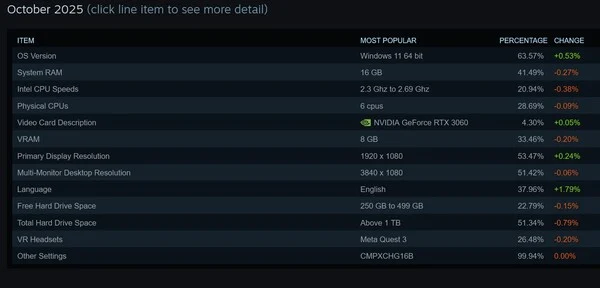
    Aldehayyat shared his thoughts on a recent episode of Adam Savage’s Tested podcast. The hardware data compiled by Valve appears to support his assertions. One concern potential buyers have is the 8GB of VRAM in the Steam Machine’s semi-custom AMD RDNA 3 GPU. Still, according to the October survey, that memory size aligns with the most common setup, sitting at 33.46%.

    Graphics Comparisons

    Analysts often compare the graphics capabilities of this compact PC to a less powerful RX 7600 or slightly below the RTX 4060. The RTX 3060 leads the survey, with both the desktop and mobile RTX 4060 following behind. Interestingly, many gamers still utilize older hardware, such as the GTX 1650.

    Processor and Performance

    The Steam Machine also holds its ground against the most popular processors. Its AMD Zen 4 CPU, which has 6 cores and 12 threads, is similar to the top chips on Steam’s list. Moreover, the Steam Machine’s FSR 3 upscaling might give it an advantage over lower-end PCs in terms of performance.

    Aldehayyat mentioned that when creating the Steam Machine, Valve aimed for a balance between performance and cost. They also considered power usage, making it more of an “entry-level device” rather than a top-of-the-line system. This may seem contradictory to their claims of offering 4K/60fps visuals.

    User Preferences

    According to the survey, around 53% of participants play games at 1920×1080 resolution, while only 4.65% use 4K. Nevertheless, Valve promotes the Steam Machine as capable of high-tier performance.

    In his interview, Aldehayyat reassured listeners that the system would support all Steam games. However, hands-on demos have shown that the GPU’s limited VRAM might require gamers to lower resolutions for demanding titles like Cyberpunk 2077.


    Source:
    Link


  • Valve Bets on Proton and Game Library for Steam Machine Success

    Valve Bets on Proton and Game Library for Steam Machine Success

    Key Takeaways

    1. Valve aims to succeed with the new Steam Machine by focusing on software improvements, learning from past failures.
    2. The introduction of Proton allows gamers to play Windows games on Linux, expanding the new Steam Machine’s game library.
    3. The first Steam Machine struggled due to a limited game selection, affecting both gamers and developers negatively.
    4. Valve is confident that Proton will enhance the appeal of the new Steam Machine, similar to the success of the Steam Deck.
    5. Enhancements to SteamOS, including ray tracing and 4K support, aim to provide a superior gaming experience and position the Steam Machine as a potential console alternative if priced attractively.


    Valve has great expectations for its upcoming Steam Machine and aims to achieve the success that the initial version failed to realize. Two of its senior engineers believe that the current model can provide a true living-room gaming PC experience, and it’s not just about the hardware.

    Software Makes the Difference

    Yazan Aldehayyat, in an interview with Rock Paper Shotgun, shared that the key factor is the software. He mentioned that the first Steam Machine struggled to gain popularity among gamers because there weren’t enough compatible games available for its Linux-based SteamOS. Aldehayyat stated, “We learned from the first Steam Machines that we needed to make our developers’ lives a lot easier.”

    A New Game Catalogue

    Things have improved significantly, thanks to Proton, which allows gamers to play Windows games on Linux systems. This development means that the new Steam Machine is launching with an extensive game library right from the start.

    Pierre-Loup Griffais, Aldehayyat’s teammate, pointed out that the first-generation Steam Machine did not succeed in attracting players or developers, primarily due to the limited number of games. This created a catch-22 scenario where developers hesitated to invest in the platform, while gamers stayed away because of the narrow game selection.

    Confidence in Proton

    Griffais is optimistic that Proton will change the game in Valve’s favor. He cites the success of the handheld Steam Deck, which operates on the same SteamOS.

    Valve has made several enhancements to SteamOS to improve performance in desktop settings, including features like ray tracing and improved responsiveness. The company claims that the Steam Machine can handle up to 4K resolution at 60 fps during gameplay.

    On another note, Valve acknowledges that other elements could contribute to the new Steam Machine’s success. The company suggests that it can be a viable console alternative if the pricing is attractive enough.

    Source:
    Link


  • Half-Life 3 Release Date Rumored for March with Steam Machine Launch

    Half-Life 3 Release Date Rumored for March with Steam Machine Launch

    Key Takeaways

    1. Valve has launched new devices, including the Steam Frame VR headset, Steam Machine, and Steam Controller, while fans await news on Half-Life 3.
    2. Speculation suggests Half-Life 3 might release alongside the Steam Machine in March 2026, according to insider Tom Henderson.
    3. There are no major announcements expected at The Game Awards on December 11th, but Valve’s next news may involve a significant launch title for the Steam Machine.
    4. The journey for Half-Life 3 has been difficult, with plans dating back to 2013 and recent developments hinting at a game referred to as HLX.
    5. While a new game may be exclusive to the Steam Machine, it is likely that Half-Life 3 will also be available on Steam, making it attractive to a wider audience.


    Valve has recently unveiled a set of new devices, which includes the Steam Frame VR headset, Steam Machine, and Steam Controller. At the same time, fans are eagerly awaiting news about the long-anticipated Half-Life 3. Tom Henderson from Insider Gaming has now suggested that this game might launch alongside the Steam Machine in March 2026.

    Podcast Predictions

    This speculation emerged during a podcast featuring Henderson and Mike Straw. One of Straw’s informants indicated that there won’t be a significant announcement at The Game Awards on December 11th. However, Henderson noted that the next big news from Valve will probably revolve around a launch title for the Steam Machine. He mentioned he “heard there’s a big game coming out in March” that fans are really looking forward to.

    Ongoing Rumors

    Even though there’s no confirmed game to go with Valve’s new hardware, rumors about a Half-Life 3 release keep circulating. Nick “Shpeshal Nick” Baker from XboxEra is among those who believe that more updates will be shared soon. The Game Awards now appear to be an unlikely venue for such news. Nevertheless, changes noted on the Steam website have gamers looking towards November 18th for possible announcements.

    A Rocky Journey

    The journey toward a potential Half-Life 3 has been quite challenging. A sequel to Half-Life 2 was planned back in 2013, but it never came to fruition. Half-Life: Alyx was released in 2020 as a virtual reality experience, initially set to launch with the Index VR headset in 2019, but it faced delays. Since that time, dataminers have discovered hints about another game in development, often referred to as HLX.

    Valve has stated that it does not have any other virtual reality projects in the pipeline. This increases the likelihood that HLX is a follow-up to Half-Life 2, intended specifically for the Steam Machine, rather than the Steam Frame.

    Future Exclusivity

    Henderson mentioned a game that might be exclusive to the Steam Machine. However, instead of being limited to just this console, it seems more plausible that Half-Life 3 would be accessible on Steam. In any case, as a title that PlayStation and Xbox would be eager to have, it could serve as a strong motivation for gamers to consider purchasing the new console.


    Source:
    Link


  • $600 Steam Machine PC Build: Great Performance for AAA Games

    $600 Steam Machine PC Build: Great Performance for AAA Games

    Key Takeaways

    1. Valve announced the Steam Machine’s specifications on November 12, but pricing details will be revealed closer to its 2024 release.
    2. The Steam Machine is designed for 4K 60 FPS gameplay, while a YouTuber built a similar PC for an estimated $600 to $650.
    3. The DIY build used a Ryzen 5 5600 CPU and a bios-flashed Radeon RX 6600M GPU, achieving strong performance in modern games at 1,440p.
    4. The Steam Machine features a newer Zen 4 CPU and a more powerful RDNA 3 GPU compared to the YouTuber’s build.
    5. If the Steam Machine can outperform the DIY build at a comparable price, it could be highly successful in the market.


    Valve made an announcement about the Steam Machine on November 12, and while its specifications are now known, the pricing remains a mystery. This hybrid PC is set to be available next year, with pricing details expected to be revealed closer to the release date. Nevertheless, Valve has managed to include a notable amount of power in a compact design, claiming it can achieve 4K 60 FPS gameplay with FSR. A YouTuber, however, built his own version of the Steam Machine that performs quite well, maintaining a similar size and a more affordable price tag.

    YouTuber’s Build

    The ETA Prime YouTube channel has shared a video (link below) where a mini-ITX PC build is created to closely match Valve’s specifications for the Steam Machine. The YouTuber sourced some second-hand components from eBay and a Radeon GPU from AliExpress, assembling everything inside the ASRock Deskmeet X300 Mini PC (available on Amazon) barebones kit. The dimensions of the case are 218.3 x 219.3 x 168 mm, making it somewhat larger than the Steam Machine, which measures 152 x 162.4 x 156 mm.

    Specifications Breakdown

    For the CPU, a Ryzen 5 5600 based on Zen 3 architecture was chosen. While it has the same core count as the Zen 4 CPU found in the Steam Machine, the latter utilizes the newer Zen 4 architecture. The Ryzen 5 5600 is a desktop CPU with a power consumption of up to 65W, compared to the Valve’s offering, which has a TDP of 30W.

    As for the GPU, ETA Prime aimed to acquire a desktop Radeon RX 6600 but ended up with a bios-flashed RX 6600M, which still comes with 8 GB of VRAM (matching the Steam Machine). This GPU is built on RDNA 2 architecture and can reach up to 100W, putting it at a slight disadvantage compared to the RDNA 3-based 28 CU GPU in the Steam Machine that can go up to 110W. The performance is akin to a Radeon RX 7600M-level GPU.

    Performance Results

    To complete the build, ETA Prime added 16 GB of DDR4 RAM (the same as the Steam Machine) and 1 TB of NVMe storage. He used the 500W PSU included with the barebones kit and installed the latest version of SteamOS.

    The DIY build kicked off with Elden Ring, running the game at 1,440p max settings and maintaining a locked 60 FPS. Spider-Man 2 was playable at 1,440p with medium settings using FSR (balanced) and achieved an average of 70 – 75 FPS. When FSR frame generation was enabled and settings upgraded to high, the FPS exceeded 100. Cyberpunk 2077 performed well at high settings (1,440p), staying above 60 FPS. Witcher 3 showed similar results, exceeding 60 FPS at ultra settings with FSR. Doom: The Dark Ages at 1,440p, medium settings, and FSR had a performance range of 60 to 70 FPS. Borderlands 4 did experience some ghosting with FSR frame generation but remained quite playable.

    Although ETA Prime did not disclose the exact costs for the components or the total build price, it is estimated to be around $600 to $650. At this price point, providing a complete Windows experience while running modern AAA titles at 1,440p offers great value. Of course, FSR and frame generation play a significant role in the final performance. Valve has indicated that the Steam Machine will be able to deliver 4K 60 FPS and will likely be priced similarly to a PC with the same specifications. Additionally, a known leaker recently suggested that the Steam Machine could be priced below $600 based on the Bill of Materials (BOM) estimate. If the Steam Machine can outperform this DIY build at a comparable price, it would surely be a big success.


  • AMD Strix Point Mini PC Inspired by Steam Machine Priced at $699

    AMD Strix Point Mini PC Inspired by Steam Machine Priced at $699

    Key Takeaways

    1. Valve’s Steam Machine, Steam Controller, and Steam Frame VR headset aim to revolutionize gaming, with mini PCs entering the market as competitors.
    2. The Ayaneo AM01S features an AMD Ryzen AI 9 HX 370, a compact design, and a 4-inch touchscreen display, offering modern capabilities in a retro look.
    3. Priced at $699, the Ayaneo AM01S includes flexible storage options, built-in Wi-Fi and Bluetooth, and AyaSpace software for enhanced functionality.
    4. Performance benchmarks show strong gaming capabilities, with smooth gameplay in titles like Cyberpunk 2077 and Forza Horizon 5 at 1080p settings.
    5. Power consumption ranges from 10 W at idle to 97 W during stress tests, all manageable with the included 120 W power adapter.


    Valve recently made a big splash in the tech world by introducing the Steam Machine, paired with the Steam Controller and the Steam Frame VR headset. While there’s not much concrete info about the pricing for the Steam Machine—most details come from speculation by Moore’s Law Is Dead—the exciting part is that various mini PCs are hitting the market with similar sizes and shapes, making them comparable to Valve’s latest offering.

    Ayaneo AM01S Overview

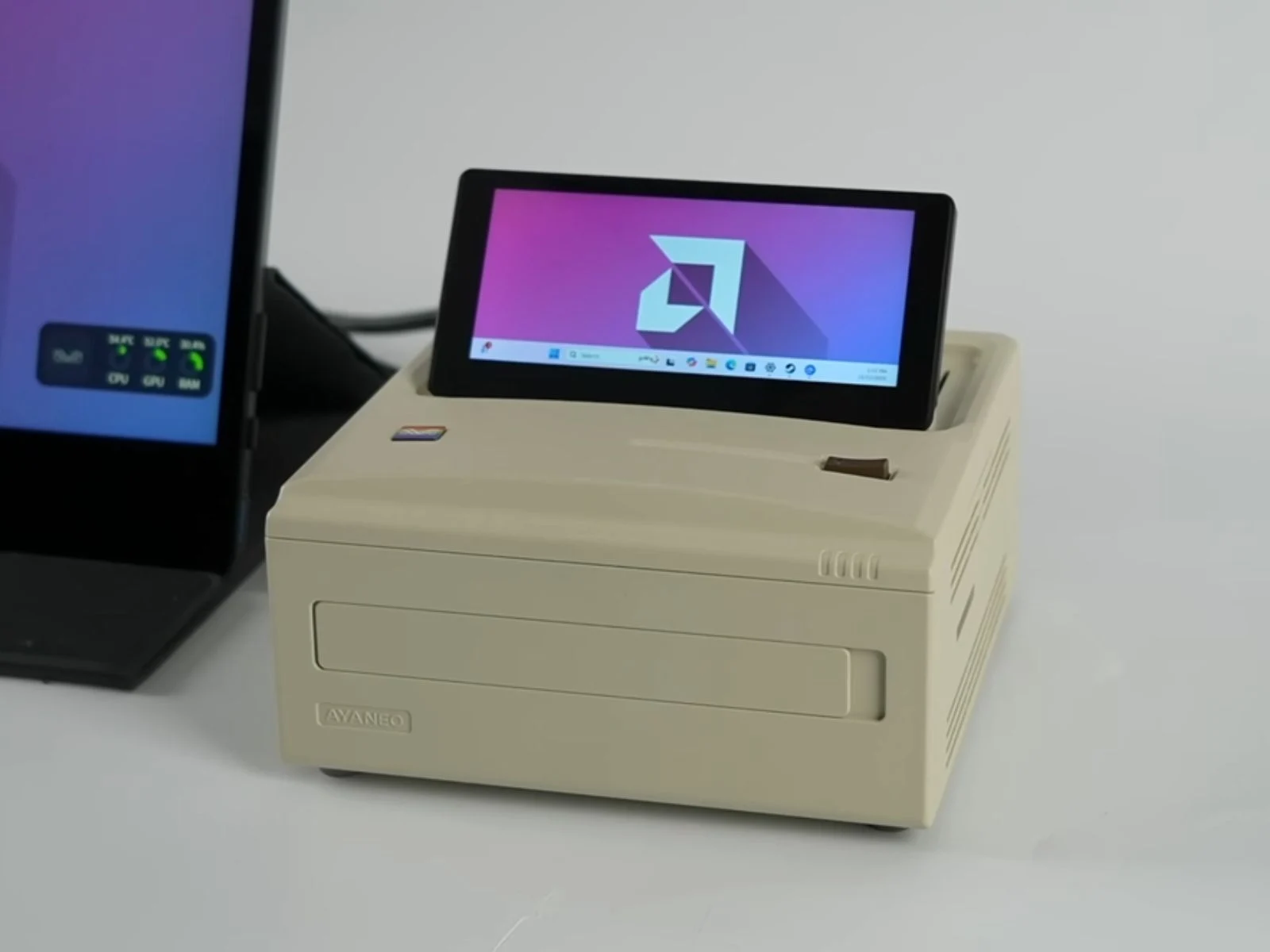
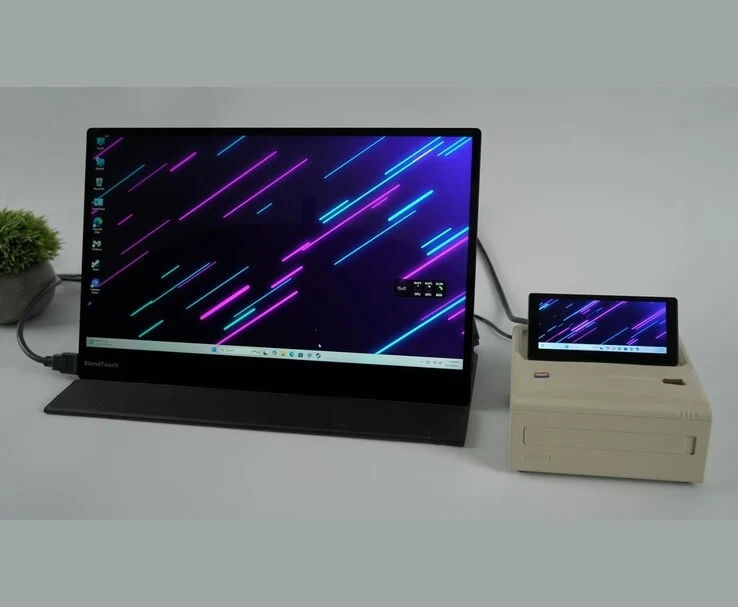
    YouTube channel ETA Prime has reviewed the Ayaneo AM01S, a mini PC powered by the AMD Ryzen AI 9 HX 370. This device features a compact 4-inch touchscreen display with a resolution of 960 × 400. Its design is somewhat retro, yet it boasts modern capabilities.

    The video reveals that the device has a flip-up screen that conceals the audio port and four USB 3.2 ports. The back of the unit includes a power connector, two full-size HDMI ports, one USB4 port (40 Gbps), a USB-C 3.2 port, dual 2.5 GbE Ethernet ports, a USB 2.0 port, and an extra USB 3.2 port. Ayaneo provides various APU choices for the AM01S, which you can explore here.

    Storage and Pricing

    Storage is flexible, featuring one M.2 slot that can hold up to an 8 TB drive, along with an additional 2230 M.2 slot. It also comes with built-in Wi-Fi and Bluetooth. Priced at $699, Ayaneo’s barebones AM01S with the HX 370 APU presents the most affordable option for those interested in that particular chip. The system comes with Windows 11 and includes AyaSpace, which is Ayaneo’s software for managing power modes, thermal design power (TDP), fan settings, and the secondary display, launching automatically when the system starts.

    AyaSpace turns the small screen into a second display, which allows you to move applications to it, adjust brightness, or show information like weather updates or performance metrics. The software also includes a game launcher and enables you to tweak power settings and TDP, which the video tests at a maximum of 65 W.

    Performance Insights

    The creator shared benchmark results showing a Geekbench 6 single-core score of 2,896 and a multi-core score of 14,915. For context, Notebookcheck lists average scores for the Ryzen AI 9 HX 370 at 2,889 and 14,700. In 3DMark Time Spy, the AM01S scored 3,753 overall, with a graphics score of 3,367 and a CPU score exceeding 10,000.

    In gaming tests, Cyberpunk 2077 ran smoothly at 1080p High with FSR Frame Generation, averaging over 80 FPS. Forza Horizon 5 performed even better, exceeding 100 FPS at 1080p Medium without FSR. Meanwhile, Marvel Rivals struggled slightly at 1080p Medium with FSR Balanced, dropping just below 60 FPS during heavy scenes. Borderlands 4 required 1080p Low with frame generation to get close to 60 FPS, but switching to a 900p resolution helped boost averages to over 70 FPS.

    Power Consumption

    In terms of power consumption, ETA Prime noted approximately 10 W at idle with the secondary screen on, increasing to 72 W during 1080p gaming sessions, and peaking at 97 W during stress tests—all staying within the capacity of the included 120 W power adapter.

    The reviewer highlighted that the HX 370 version offers the best GPU performance due to its 16-CU Radeon 890M integrated graphics. They also mentioned that while it’s feasible to install SteamOS 3.8, the current version of the operating system can’t support dual independent displays in Big Picture mode, which would render the small built-in screen inactive.

    Source:
    Link


  • Valve Unveils Steam Machine Featuring E-Ink Display

    Valve Unveils Steam Machine Featuring E-Ink Display

    Key Takeaways

    1. The Steam Machine is a small, cube-shaped device that functions as both a Linux desktop and a gaming console running on Steam OS.
    2. Its performance is lower than that of the Sony PlayStation 5, which is priced starting at $499.
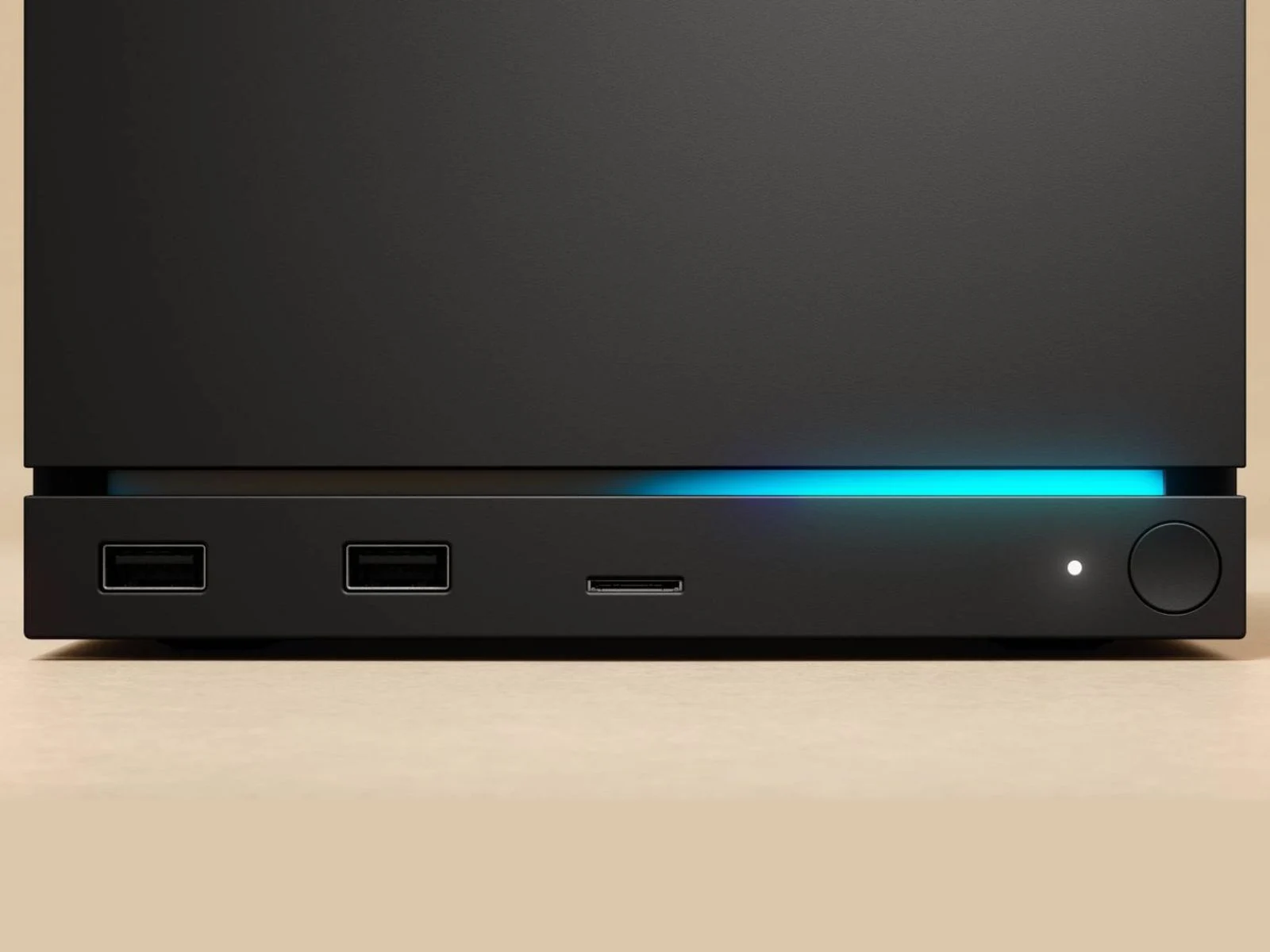
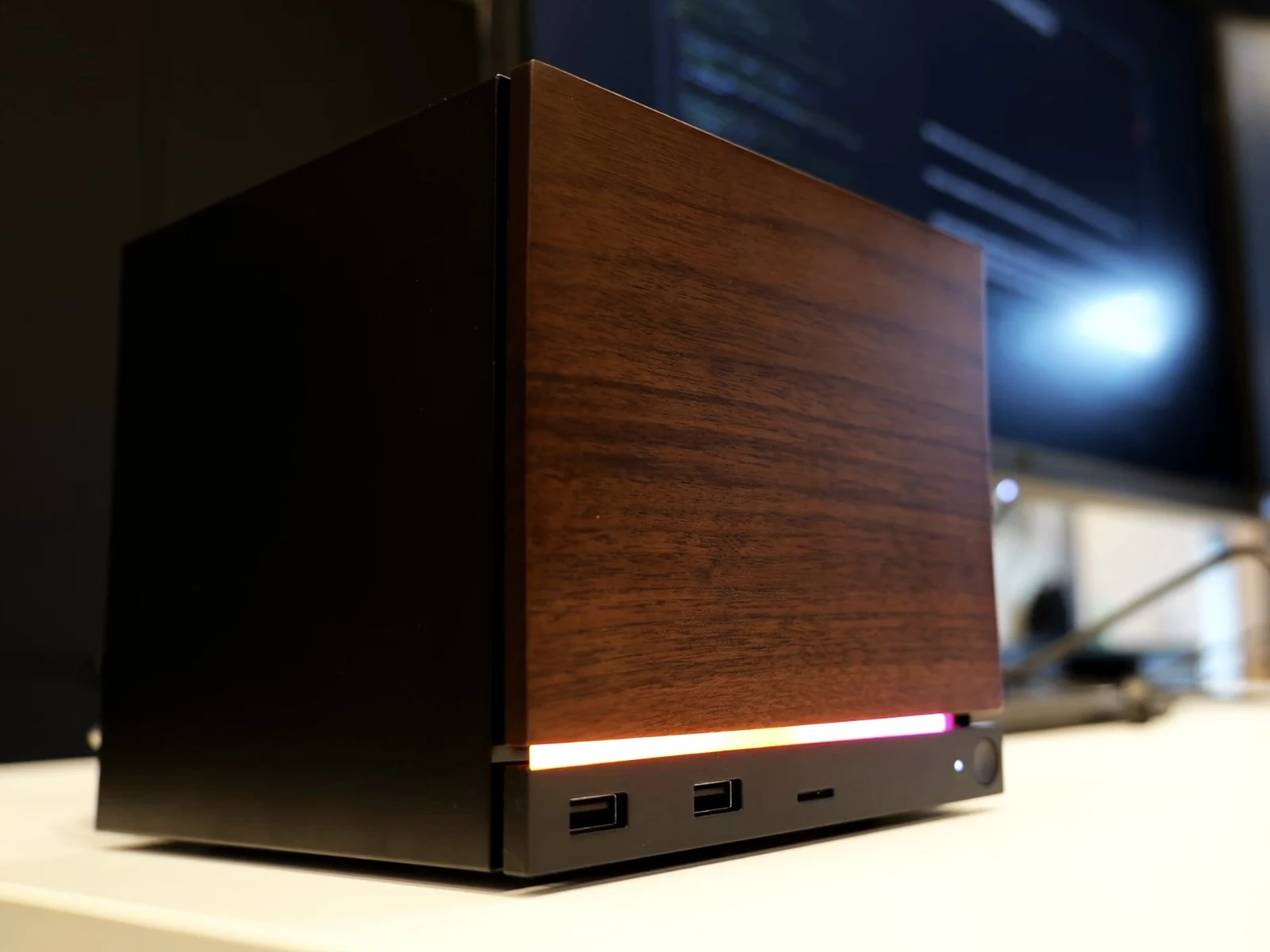
    3. The design features a sleek black casing with a front LED strip, and third-party accessories are expected to launch soon.
    4. Users can customize the Steam Machine with interchangeable front panels, including a unique e-ink display for real-time metrics (though not for sale).
    5. Steam OS allows for extensive hardware and software customization, enabling users to tailor their Steam Machine experience.


    The Steam Machine was finally revealed on Wednesday. This small, cube-shaped gadget acts as both a Linux desktop and a gaming console, operating on Steam OS. Its performance is a bit underwhelming when compared to the Sony PlayStation 5, which starts at $499 on Amazon. At first glance, the design seems quite basic.

    Design and Accessories

    Valve chose a sleek black casing with an LED strip located on the front. To help with what some might see as a “problem,” third-party accessories are anticipated to launch alongside the device early next year. Notably, dbrand has already shared plans for a skin inspired by the Companion Cube from Valve’s popular puzzle game, Portal, which we mentioned earlier today.

    Customization Options

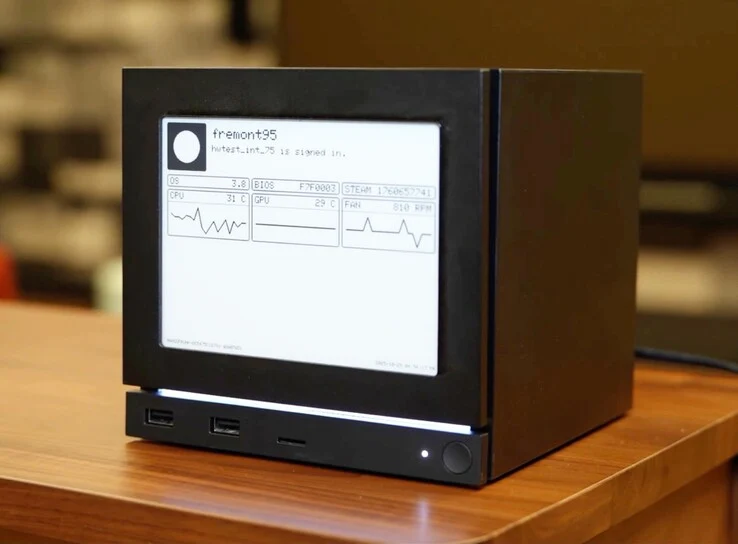
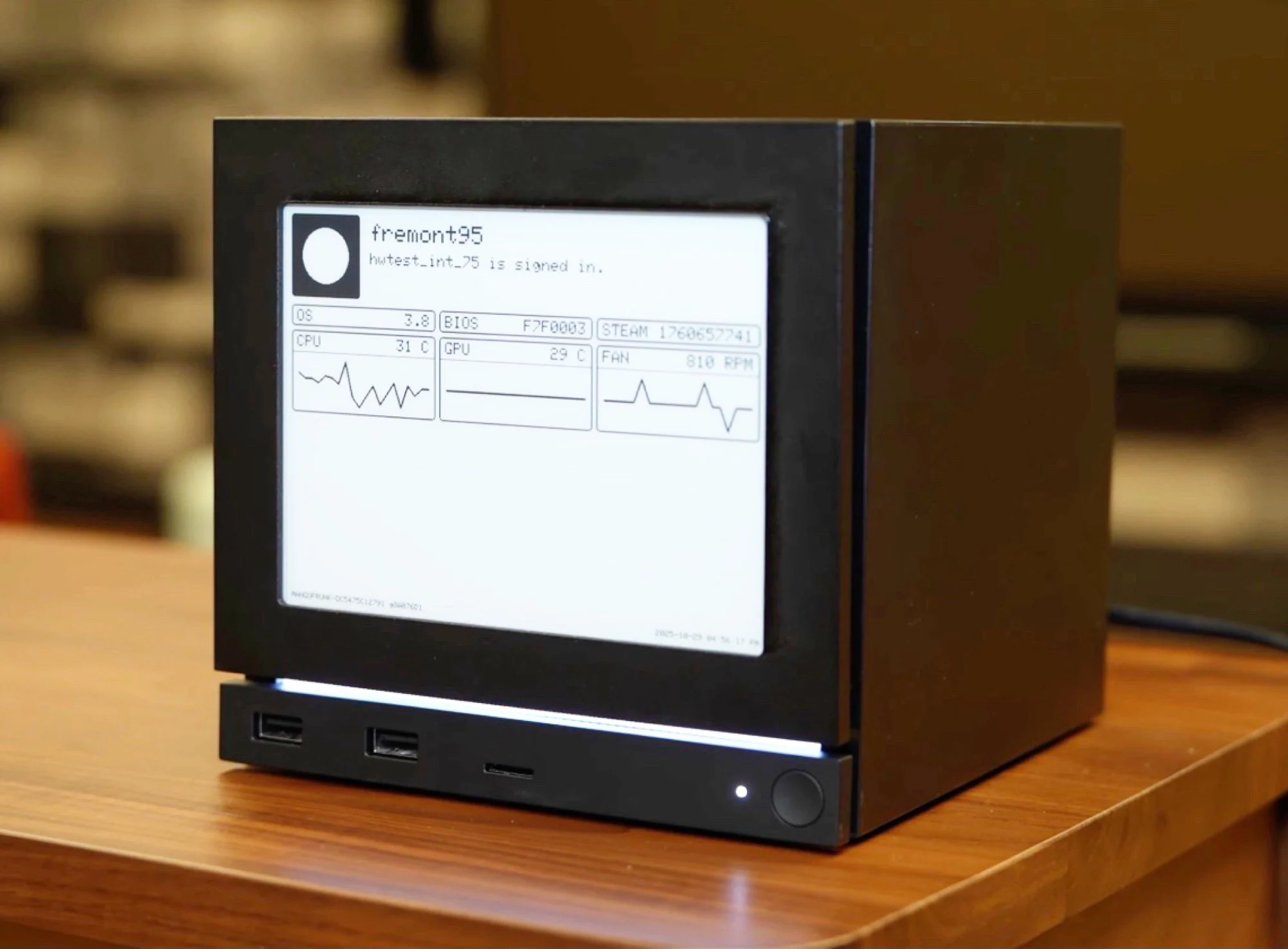
    In addition, Valve has introduced several printed front panels with various designs that users can easily change. The front cover of the Steam Machine attaches magnetically, making swaps simple. One of the most intriguing front panels showcased to select press includes an e-ink display capable of showing real-time metrics such as CPU and GPU load, along with fan speed.

    Sadly, this add-on is meant only for internal testing and won’t be available for purchase. Nevertheless, it’s likely that a third-party company will create something similar before long. Since Steam OS is built on Linux, users will have the ability to customize both the hardware and software, enabling them to modify their Steam Machine to fit their preferences. More information about Valve’s latest gaming console is available in our launch article.


    Source:
    Link