Tag: Starlink

  • Dish Offers Starlink Internet with Free Hardware and Installation

    Dish Offers Starlink Internet with Free Hardware and Installation

    Key Takeaways

    1. Dish acquired spectrum from Sprint to become a major mobile carrier but shifted strategy to sell off the spectrum instead.
    2. AT&T purchased $23 billion worth of spectrum from Dish, impacting Dish’s original 5G network plans.
    3. SpaceX invested $19 billion in EchoStar for spectrum and licenses to enhance its Starlink satellite services.
    4. Dish is now a hybrid MVNO, offering both AT&T and Starlink services, including installation assistance.
    5. Starlink plans to introduce a low-cost $40 per month plan, with potential discounts for Dish customers.


    When Sprint had to sell its Boost Mobile division to get the merger with T-Mobile approved, the assets were acquired by Dish, a satellite TV company.

    Dish’s Ambitious Goals

    Dish originally had grand ambitions to utilize the spectrum it gained and become the fourth largest mobile carrier in America by launching its own 5G network. However, T-Mobile’s merger with Sprint allowed it to advance so quickly in 5G deployment that traditional competitors like Verizon and AT&T found themselves lagging behind.

    A Shift in Strategy

    Instead of constructing a 5G network, EchoStar, Dish’s parent company, chose to sell off its spectrum. This decision led AT&T to purchase $23 billion worth of 50 MHz low-band, 600 MHz, and 3.45 GHz spectrum. Consequently, Dish transitioned into a hybrid MVNO and began shutting down its existing towers.

    SpaceX’s Major Investment

    In a significant move, SpaceX paid $19 billion to EchoStar for additional 50 MHz spectrum and MSS licenses. This investment aims to enhance the capacity and speed of its Starlink direct-to-cell satellite system by a factor of 100. With this, SpaceX can compete with major players like T-Mobile, Verizon, and AT&T by providing 5G services from space, especially when it rolls out its large V3 satellites in 2026.

    Dish’s New Offerings

    Although Dish’s vision of becoming a leading American mobile carrier didn’t materialize and it turned into a hybrid MVNO, its collaboration with spectrum licensees has enabled it to provide both AT&T and Starlink services.

    Dish is now offering Starlink Internet, which comes with no upfront hardware costs and assistance with installation from its satellite service technicians. The Starlink subscription fee starts at $80 per month for speeds of up to 200 Mbps, while SpaceX’s satellite Internet service provides speeds over 400 Mbps for an additional $40.

    Potential Discounts for Customers

    Starlink is considering introducing its most affordable $40 per month plan with the Mini dish, which is currently available at a 40% discount on Amazon. Dish customers might also have the chance to benefit from this promotion.

    Source:
    Link


  • Starlink $40 Promo for Mini Dish Owners: Cheapest Satellite Internet

    Starlink $40 Promo for Mini Dish Owners: Cheapest Satellite Internet

    Key Takeaways

    1. Starlink is planning to reintroduce its affordable Residential Lite plan at $40/month with 100 Mbps download speeds, previously removed from availability.
    2. The new Roam option for Mini dish users will allow access to the 100 Mbps plan, enhancing portability for satellite internet access.
    3. The current least expensive roaming plan for the Mini dish is $50/month with a 50GB data limit, while unlimited roaming costs $165/month.
    4. The new $40/month Roam plan will not be available for users who received the Mini dish for free with their Residential plan.
    5. The reintroduction of the Roam plan is expected to boost Mini dish adoption, with potential future promotions hinted at by Starlink.


    Starlink might soon present its most affordable Residential Lite plan to users of its Mini dish, designed for satellite Internet access while on the move.

    Return of the Residential Lite Plan

    The Residential Lite plan, which originally started at just $40/month, was briefly available from Starlink as a basic service in underprivileged areas, limited to download speeds of 100 Mbps. Recently, this plan was taken off the list of available options in the same areas where it was previously offered, and was substituted with the standard $80/month Residential Lite plan, which allows for 200 Mbps. This change explains the significant expansion in coverage area for that plan.

    New Roam Option for Mini Dish Users

    However, the 100 Mbps plan priced at $40/month is reportedly set to make a comeback, but as a Roam plan instead of a Residential option for the Mini dish, which is currently on sale at Amazon. At present, the least expensive roaming plan for the Starlink Mini dish is $50/month, with a data limit of 50GB, while the unlimited Starlink roaming option is a steep $165/month.

    By rolling out a more affordable Roam plan, Starlink may enhance the adoption of Mini dishes. The company is already taking steps to encourage this. For example, it has started giving out the Mini dish for free with a Residential plan in select locations, ensuring that customers stay connected while traveling.

    Restrictions on New Roam Plan

    Regrettably, it appears that the new, more affordable roaming plan won’t be available to those who received a Mini dish as a free rental with their Residential plan subscription. After all, these users were already given a 50% discount on their Roam plan fees for several months. The $40/month Starlink service plan will be ideal for paying Mini kit owners, as the download speeds supported by this dish max out at 100 Mbps in any case.

    “There’s a long boring technical explanation behind this,” says the original tipster with a solid track record, noting that the new plan won’t be “linked to the offer over coming weeks,” suggesting that there could be additional Starlink Mini dish promotions in the pipeline.

    Source:
    Link


  • Starlink Satellite Avoids ISS Collision Amid SpaceX’s 15,000 Network

    Starlink Satellite Avoids ISS Collision Amid SpaceX’s 15,000 Network

    Key Takeaways

    1. SpaceX’s Starlink network has experienced its first anomaly, causing a satellite to vent its propulsion tank and become uncontrollable space debris.
    2. The specific cause of the anomaly on satellite 35956 is still unknown, but it poses no immediate risk to the International Space Station (ISS).
    3. The uncontrollable satellite is expected to remain in its current state for several weeks before disintegrating in Earth’s atmosphere.
    4. SpaceX plans to launch even more satellites, aiming for a cellular network in space, which raises safety concerns about future incidents.
    5. The rapid expansion of Starlink, with plans for 15,000 additional satellites, may lead to more frequent and hazardous situations in space.


    With the Starlink satellite network now having over 9,000 units performing complex orbital dances in space, it was only a matter of time before something went wrong.

    SpaceX has announced the first “anomaly” involving a Starlink satellite, which caused it to vent its argon propulsion tank and spiral uncontrollably through the cosmos. This incident has transformed the satellite into space debris, or as Starlink describes it, “the release of a small number of trackable low relative velocity objects.” This situation may signal future challenges as SpaceX aims to launch even more satellites, aspiring to create a cellular network in space that offers true 5G connectivity with speeds reaching up to 100 Mbps for standard phones such as the Samsung Galaxy S25 Ultra.

    Cause of the Anomaly

    Currently, SpaceX has not determined what led to the “anomaly on satellite 35956,” which sounds like it could be a plot point from a science fiction story. However, they have reassured worried astronauts by mentioning that the satellite is on a course that won’t interfere with the International Space Station’s orbit.

    The statement that the “satellite’s current trajectory will place it below the ISS, posing no risk to the orbiting lab or its crew” seems purely coincidental. The satellite is expected to remain uncontrollable for several weeks before it descends into Earth’s atmosphere to disintegrate.

    Future Implications

    SpaceX engineers are looking into the issue, yet with the current administration’s plans to establish a new alternative to the ISS and Starlink seeking approval to deploy 15,000 V3 satellites—each the size of a Boeing 737 when fully deployed—such incidents are likely to become more frequent and potentially hazardous.

    Starlink’s rapid expansion continues, raising concerns about the safety of both the satellites and the missions that rely on them.

    Source:
    Link


  • SpaceX Offers Free Replacement for First-Gen Starlink Routers

    SpaceX Offers Free Replacement for First-Gen Starlink Routers

    Key Takeaways

    1. SpaceX is discontinuing support for the original Starlink Gen 1 router (UTR-201) to improve security and performance.
    2. Users will not receive software updates for the Gen 1 router, which may lead to security risks and slower performance.
    3. SpaceX is offering a free upgrade to the new Starlink Router Mini as a thank you to loyal customers.
    4. The Router Mini features dual-band capabilities, Wi-Fi 6 support, and is compact for easier placement compared to the Gen 1 router.
    5. The replacement process for the Router Mini is simple and aims to enhance Wi-Fi connectivity for users.


    If you’re one of the first people to use Starlink, SpaceX might give you a new Starlink Gen 1 router at no cost. Recently, the company has been emailing customers to inform them that the original Gen 1 router, known as UTR-201, will soon no longer be supported. These routers came with the initial Starlink kits back in 2020, before the switch to the flat-dish design and the introduction of the Gen 2 router the following year.

    Changes Coming Soon

    SpaceX has plans to stop providing software updates for these older routers soon as part of its efforts to enhance security, performance, and reliability. While the company mentions that you can still use the Gen 1 router even after updates stop, there are a few drawbacks. Sticking with unsupported hardware means you won’t receive security updates, which can expose your network to potential threats. In addition, SpaceX warns that users might end up experiencing slower performance or face issues with compatibility as Starlink services evolve.

    Free Upgrade for Users

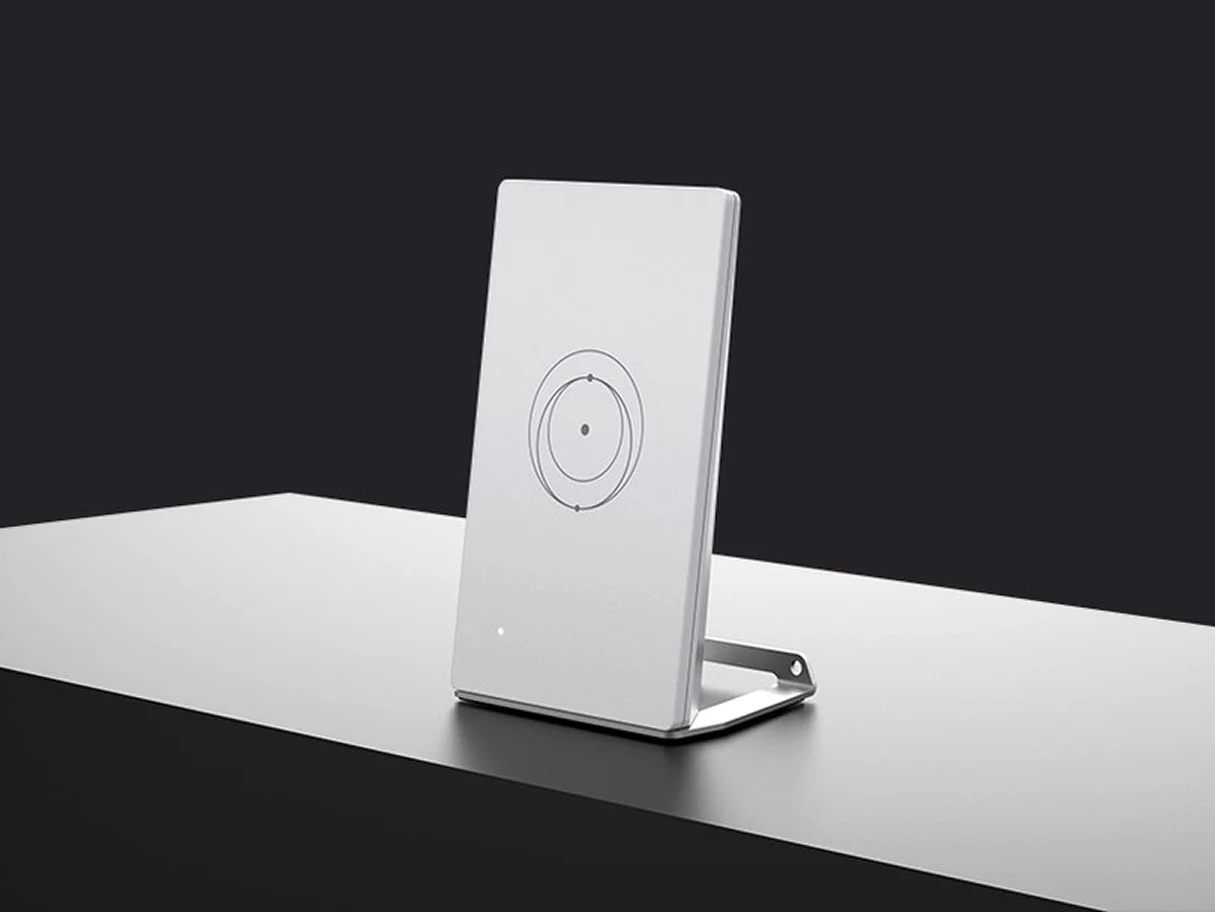
    To tackle this challenge and ensure loyal customers aren’t left in the lurch, SpaceX is giving away the Starlink Router Mini as a free replacement. The email to customers presents this offer as a way to thank them for their continued support of Starlink. Normally, the Router Mini costs $40 and has dual-band capabilities, along with support for Wi-Fi 6, which is a big improvement over the Wi-Fi 5 standard in the Gen 1 router. Plus, the Router Mini is compact, about the size of an iPhone 14, making it easier to find a good spot for it compared to the Gen 1. Also, the Router Mini allows for mesh networking, so you can easily add more units later to improve coverage in your home, which is something the Gen 1 router does not offer.

    Simple Replacement Process

    A support page that was quietly released a month ago goes into detail about this replacement program and mentions that notifications to users began back in November. The documentation states that swapping the routers is an easy process that should lead to better Wi-Fi connectivity once the new router is set up. The support page also includes specific instructions on how to connect the new Router Mini with the older first-generation Starlink dish.

    Source:
    Link


  • SpaceX Discontinues $40 Starlink Plan in the US

    SpaceX Discontinues $40 Starlink Plan in the US

    Key Takeaways

    1. SpaceX launched a $40/month Starlink plan offering 100Mbps speeds, but it has since disappeared from their website and app.
    2. Users reported the plan’s unavailability on Reddit, highlighting issues with reverting back to the cheaper option after upgrades.
    3. The plan had limited availability in select US areas, likely due to high demand exceeding network capacity.
    4. Customers are now required to choose the regular Residential plan at $120/month for speeds over 400Mbps, or the $80/month Residential Lite plan for up to 250Mbps.
    5. The $40 Residential plan is still available in Australia and Canada, and there is hope it may return to the US market.


    SpaceX recently introduced its most affordable Starlink plan in select areas of the US last month, but this offering has since vanished from both its website and app. Priced at $40 per month, this residential plan limited download speeds to 100Mbps and was notable for being cheaper compared to other plans.

    Disappearance of the Plan

    Starlink users in the US have reported on Reddit that the 100Mbps Residential option is no longer accessible on Starlink’s website or app. One user recounted their situation, saying, “I upgraded because I was having a lot of family over for Thanksgiving and now I can’t go back to the 40 dollar a month option.” We also observed earlier this week that the plan was no longer available for new customers in certain areas of Nebraska where it was previously on offer. Customers also noticed it was available in parts of Illinois and Nevada before it was withdrawn.

    Limited Availability

    The 100Mbps plan had limited reach, appearing only in a few locations where Starlink likely had extra network capacity. Some users think that the rush from both new and existing subscribers to grab the deal might have led to Starlink hitting capacity in those areas. The plan was appealing due to its low price while limiting speeds to 100Mbps.

    Now, US customers must opt for the regular Residential plan, which typically costs $120 a month and promises speeds exceeding 400Mbps. The Residential Lite plan is still available in most suburban and rural areas across the US for $80 per month, with download speeds of up to 250Mbps.

    International Offers

    Interestingly, Starlink continues to provide the $40 Residential plan for users in Australia and Canada. The official customer support site still references the 100Mbps option. If you were eager to try out the Residential 100Mbps plan, it might be wise to keep checking Starlink’s website, as it could potentially return.

    Source:
    Link


  • Amazon Leo Develops Ground Network to Compete with Starlink

    Amazon Leo Develops Ground Network to Compete with Starlink

    Key Takeaways

    1. Amazon Leo plans to establish over 300 ground stations to improve internet speeds globally, competing with Starlink.
    2. The ground stations will consist of five satellite dishes in remote areas, facilitating data exchange with fiber networks.
    3. Amazon Leo’s services will integrate with AWS, allowing users to access cloud environments and third-party providers.
    4. The service aims to offer internet speeds of 1Gbps, 400Mbps, and 100Mbps, with latency under 50 milliseconds.
    5. Currently, Amazon Leo has around 150 satellites and will face challenges in achieving global coverage, unlike SpaceX’s established Starlink network.


    Amazon Leo is getting ready to establish more than 300 ground stations to enhance internet speeds around the world, aiming to compete head-on with Starlink. This announcement was made during AWS re:Invent last week, where the company detailed its plans to produce millions of dishes for both consumers and businesses to access its satellite internet service.

    Gateway Stations Under Development

    The firm is focusing on the backend operations to create a network of gateway stations that will transmit data between the Leo satellites and local fiber networks. During a presentation at AWS re:Invent, networking engineer Nick Matthews mentioned that these ground stations will feature five satellite dishes located in remote regions. A slide he shared indicated that the company is planning over 300 such gateways, similar to Starlink’s ground stations that manage data flow between satellites in orbit. These ground stations will facilitate data exchange with a facility known as a Point of Presence, which is linked directly to fiber internet networks.

    Integration with AWS Services

    Amazon’s team highlighted that these ground facilities can integrate with the AWS service, which is a leading cloud provider serving major companies like Netflix and Twitch. This setup means that an Amazon Leo customer could utilize the satellite internet service to access an AWS cloud environment or connect to third-party cloud providers via a private network interconnect. This development is set to provide superior internet service for both individual consumers and business users of Amazon Leo, especially with the recent launch of a select beta program for enterprise clients.

    Internet Speed and Latency Plans

    The company plans to offer internet speeds of 1Gbps, 400Mbps, and 100Mbps through three different user terminal types. However, Matthews mentioned that Leo will feature a latency of under 50 milliseconds, which is slightly higher than Starlink’s latency of around 30ms. An Amazon executive had previously stated that Leo intends to launch in the first quarter, but the road ahead is challenging due to SpaceX’s established presence. Amazon must deploy hundreds more satellites before it can deliver a reliable internet service, and a slide from the presentation revealed that Leo won’t provide global coverage right away.

    At this time, Amazon Leo has a constellation of approximately 150 satellites, while SpaceX’s Starlink boasts over 9,000 satellites and serves more than 8 million customers worldwide. SpaceX also disclosed in July that it operates more than 100 gateway sites across the United States, which include a total of over 1,500 antennas catering to 2 million users in the country.

    Source:
    Link


  • Starlink Launches $89 Dish at Kiosk with $100 Service Credit

    Starlink Launches $89 Dish at Kiosk with $100 Service Credit

    Key Takeaways

    1. SpaceX is expanding Starlink satellite Internet availability through major retailers and online platforms like Amazon.
    2. Dedicated Starlink stores are being established in underserved areas, offering free satellite dishes and plans starting at $40 per month.
    3. Innovative self-service kiosks and vending machines are being introduced, selling discounted equipment and providing rental options.
    4. Customers can purchase Starlink equipment at a low price, with incentives like a $100 credit for activating service within a week.
    5. SpaceX aims to enhance its revenue from Starlink as it prepares for a major upgrade to gigabit speeds with new satellites.


    SpaceX is expanding its reach by offering its Starlink satellite Internet service wherever possible. Following the initial launch of the Starlink Standard Kit in major retailers like Home Depot, Best Buy, Costco, and Walmart, the company has also made it available online through Amazon.

    New Retail Strategies

    SpaceX is now establishing dedicated Starlink stores in areas that lack sufficient Internet service, where there is still a high demand. In these locations, SpaceX is giving away satellite dishes for free or providing Internet plans starting at just $40 per month. However, the sales team is not stopping there; they’ve introduced self-service kiosks to provide discounted equipment and subscription incentives.

    Innovative Vending Machines

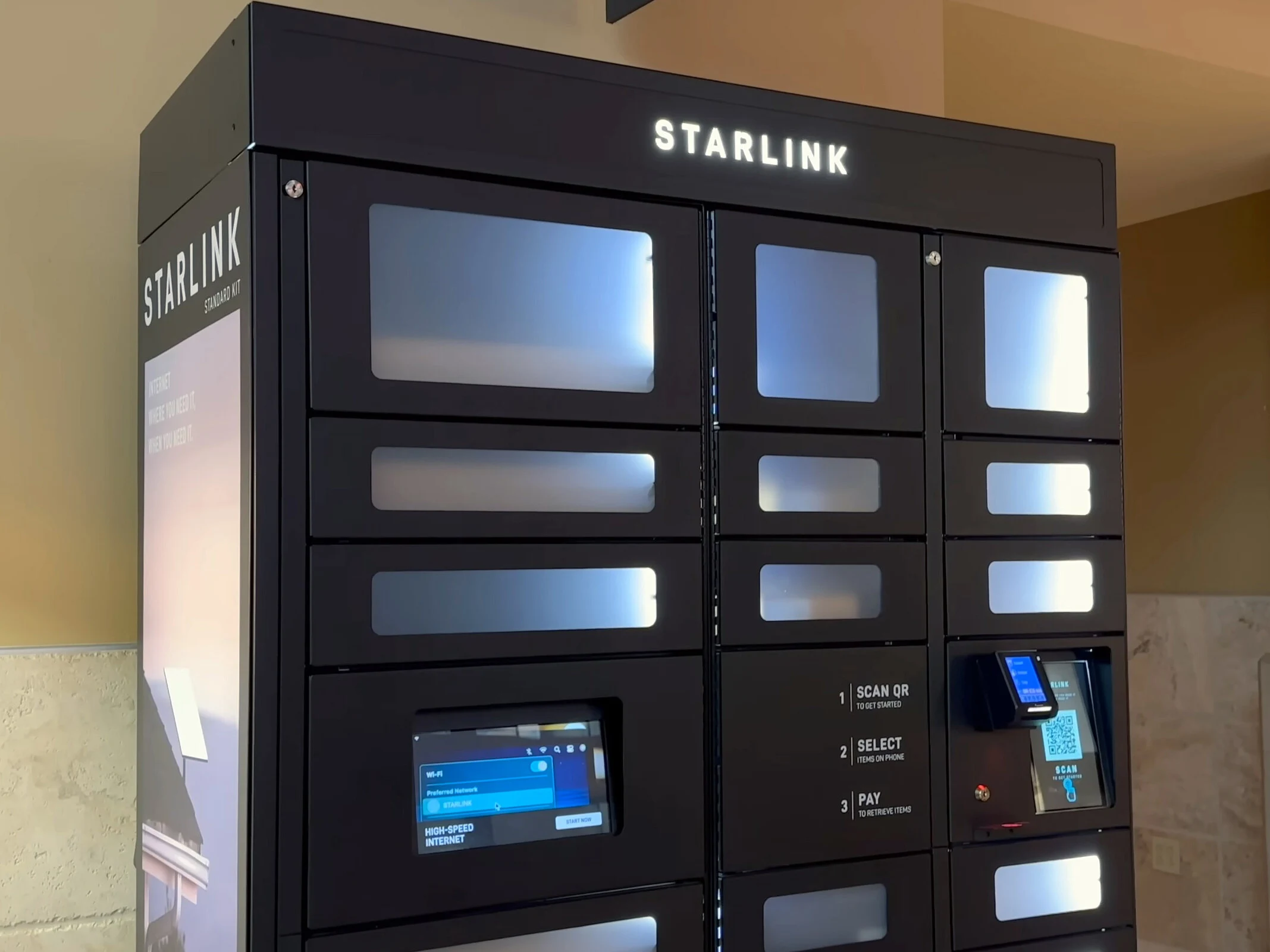
    Recently, a Starlink vending machine was discovered at the Jordan Creek Mall in Des Moines, Iowa. This location wasn’t listed in the recent store announcements from Starlink, but it’s in an area that benefits from their services, allowing free rental of the dish. The self-service kiosk sells a Standard Kit for only $89, which is the lowest price ever offered for the Starlink dish, and customers keep the equipment instead of renting it for free as the website suggests. Additionally, those who activate their Starlink satellite Internet equipment from the machine—which also sells mounts and routers—will earn a $100 credit towards their service if they do so within a week.

    The Customer Experience

    This effectively makes the Starlink dish essentially free, similar to how it would be if ordered from the website in the same area, but without the need to return it after the service ends, unlike the free rental option. Customers can enjoy the retail experience of seeing and handling the product without dealing with annoying sales questions. They simply purchase a dish and set it up to get it at no cost.

    It remains uncertain whether this new method of purchasing Starlink satellite Internet through retail and kiosks will appeal to consumers, but the sales team is clearly exploring all possible options. Elon Musk recently mentioned that a significant portion of SpaceX’s revenue is derived from the Starlink segment. The satellite Internet network is set to receive a major upgrade to gigabit speeds, contingent upon SpaceX successfully launching the massive Starship 3 rocket to position the new high-capacity V3 satellites into orbit.

    Source:
    Link


  • SpaceX Launches Starlink on Amazon Amid Musk-Bezos Rivalry

    SpaceX Launches Starlink on Amazon Amid Musk-Bezos Rivalry

    Key Takeaways

    1. SpaceX is now allowing Amazon to sell Starlink services, despite their rivalry.
    2. Amazon has launched Leo Ultra, a competing satellite service aimed at business customers.
    3. Customers can purchase Starlink accessories directly from the Starlink website, with Prime shipping options.
    4. The collaboration is notable given the ongoing public feud between Elon Musk and Jeff Bezos.
    5. SpaceX is shifting its sales strategy to include Amazon, expanding its reach to a larger customer base.


    In an unexpected decision, SpaceX is broadening its Starlink sales by including Amazon, even though there’s a well-known rivalry between the two firms. This development arrives just as Amazon has unveiled Leo Ultra, a new high-performance option for its rival satellite service aimed at business customers seeking gigabit internet speeds. While SpaceX initially remained silent regarding the new listings, an update on Starlink.com revealed that Amazon is now an authorized retailer for the satellite internet service in the US, joining major retailers like Best Buy, Home Depot, and Walmart.

    New Accessibility for Starlink Accessories

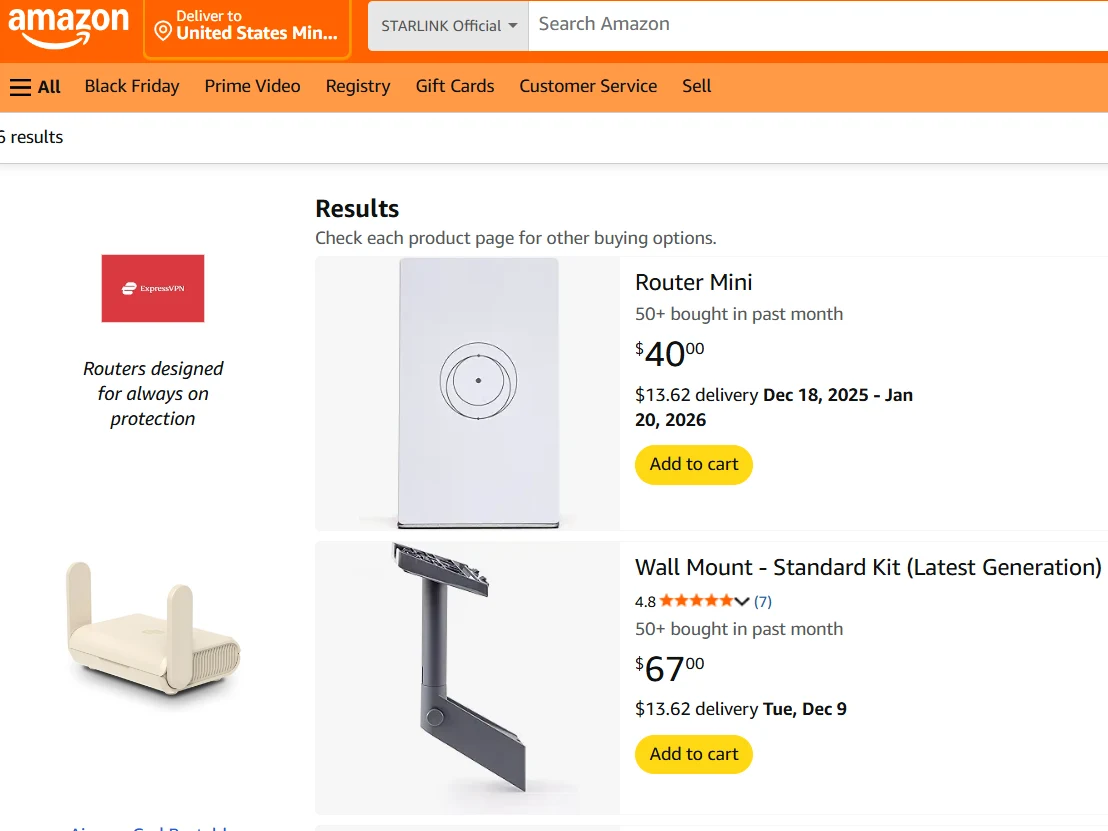
    Customers can now buy certain Starlink accessories, including the Wi-Fi router, directly from the site, with many items eligible for Prime overnight or one-day shipping. A review site called DISHYTech first discovered the official Starlink store earlier this month, indicating that it seems to function through Virtual Supply. This distributor, based in Oregon, offers a range of consumer electronics to large retailers and has previously sold the standard Starlink dish, which hints that additional inventory could be added in the future.

    Tensions Between Musk and Bezos

    This collaboration is particularly intriguing as SpaceX CEO Elon Musk has had a public feud with Amazon founder Jeff Bezos for several years. Back in 2019, Musk claimed that Bezos mimicked Starlink after Amazon sought FCC approval for its own competing satellite internet service, now known as Amazon Leo. The conflict intensified in 2021 during a regulatory disagreement over the second-generation Starlink network, when Musk ridiculed Bezos for resigning as CEO, tweeting, “Turns out Besos [sic] retired in order to pursue a full-time job filing lawsuits against SpaceX.”

    Shift in Sales Strategy

    Until recently, SpaceX had avoided using Amazon to market Starlink and preferred third-party sellers or its own website. The company has become increasingly aggressive in promoting its satellite internet service in the US with various discounts and lower monthly rates, and this new storefront now positions its products right in front of Amazon’s vast customer base.

    Starlink’s expansion into Amazon’s marketplace opens up new opportunities for both companies, despite the ongoing tensions.

    Source:
    Link


  • Starlink Launches Affordable 200 Mbps Internet Plan Nationwide

    Starlink Launches Affordable 200 Mbps Internet Plan Nationwide

    Key Takeaways

    1. Starlink launched a new $80/month Residential Lite satellite Internet plan across the United States, targeting several Eastern states.
    2. The Residential Lite plan is one-third cheaper than the standard Residential plan and offers typical peak speeds of 200 Mbps.
    3. Download speeds for the Residential Lite plan range from 80 to 200 Mbps, with upload speeds up to 35 Mbps, depending on network load.
    4. Coverage for the Residential Lite plan has expanded significantly, allowing more users in the US to access this affordable satellite Internet option.
    5. Current subscribers of the standard $120/month plan in newly added regions can switch to the Lite option if they do not need speeds over 400 Mbps.


    Starlink has recently launched its $80/month Residential Lite satellite Internet plan throughout the United States, extending its coverage to several Eastern states.

    Affordable Option

    This new plan is one-third less expensive than the standard Residential plan that comes with the same Standard Kit, and it boasts typical peak speeds of 200 Mbps. While Starlink does offer a cheaper $40 Internet plan, this option is restricted to certain areas without congestion fees, and it has a cap of 100 Mbps for downloads.

    Speed Capabilities

    According to Starlink, the Residential Lite plan can deliver typical download speeds ranging from 80 to 200 Mbps, depending on the network load, with upload speeds reaching up to 35 Mbps. Initially available only in the Western and Central regions of the US, a significant portion of the East was left out of this more affordable plan which still provides commendable Internet speeds.

    Greater Accessibility

    Now, however, the areas without Starlink’s Residential Lite coverage have significantly decreased, allowing most users in the US to benefit from this budget-friendly satellite Internet plan. Nonetheless, regions with high congestion fees remain off-limits for this plan, as Starlink has a surplus of customers in those areas, exceeding what their network can support.

    For those who are already subscribed to the standard $120/month Residential plan in the newly added Eastern regions, there is now an opportunity to switch to the more economical Lite option, provided they do not require the 400+ Mbps speeds that come with the more expensive Starlink Residential plan.

    Source:
    Link


  • Starlink Launches New Plan to Match Fiber Prices and Seek Funding

    Starlink Launches New Plan to Match Fiber Prices and Seek Funding

    Key Takeaways

    1. Starlink launched a new Residential plan at $40/month, offering speeds up to 100 Mbps with unlimited data.
    2. The new plan is aimed at competing for federal funding in rural areas against providers like AT&T and Comcast.
    3. Existing higher-tier subscribers can switch to the new 100 Mbps plan if available in their account.
    4. The BEAD program allows Starlink to compete for government funding, despite not covering monthly subscription fees.
    5. A 20% discount on the Starlink Standard Kit is available on Amazon.


    After offering the lowest price ever for a Standard or Mini dish through a Roam plan, Starlink has now rolled out its most affordable satellite Internet plan to date.

    New Residential Plan Details

    The new Residential plan starts at only $40 a month, providing speeds up to 100 Mbps. Starlink claims this is suitable for two or three users in a household that engages in regular browsing or streaming videos in up to HD quality. This plan comes with unlimited data and upload speeds as well.

    This is a significant reduction in Starlink’s subscription price, since the next tier, the Residential Lite plan, is priced at $80 a month and can reach speeds of 250 Mbps. It’s worth noting that there is also a $60/month plan available for two years, but that particular offer is aimed at returning customers who have previously canceled their service, enticing them back into the SpaceX satellite Internet network.

    Competitive Landscape

    The new $40 Starlink plan appears to be mainly offered in areas where SpaceX must compete for federal funding for rural connectivity against companies like AT&T, Spectrum, and Comcast. Earlier this year, when Elon Musk had some influence in the White House, the federal Broadband Equity Access and Deployment (BEAD) program changed its funding criteria for rural broadband to include satellite Internet providers.

    This move has annoyed broadband companies that have to invest in laying fiber, as Starlink can participate in state auctions for the $42 billion in government funding for rural Internet by merely providing a free dish and offering speeds up to 100 Mbps, which is exactly what the new basic Residential plan provides.

    Switching Plans

    Subscribers on higher tiers have the option to switch to the 100 Mbps plan if it’s available for them. Starlink advises, “Existing Residential customers may switch to the Residential 100 Mbps plan if it appears as an available option in their account.”

    However, the BEAD program does not cover the monthly fees for subscriptions, although some states may consider plan pricing as part of additional funding criteria. With Starlink now slashing the cost of its Residential plan to just $40 per month, it positions itself as competitive with fiber services in that arena as well. This strategy could help Starlink capture a larger share of the federal program aimed at providing affordable connectivity in “underserved” regions.

    Source:
    Link