Tag: Snapdragon 8 Elite Gen 5

  • Deal: OnePlus Flagship $100 Off, Free Nord Buds 3 Pro

    Deal: OnePlus Flagship $100 Off, Free Nord Buds 3 Pro

    Key Takeaway

    – OnePlus 15 launched globally in November 2025, priced at $899.99 (12GB/256GB) and $999.99 (16GB/512GB).
    – $100 discount on 12GB/256GB variant via promo code “EXTRA100” on OnePlus website, plus free OnePlus Nord Buds 3 Pro earbuds.
    – Features 6.78-inch 165Hz LTPO AMOLED display, Snapdragon 8 Elite Gen 5 chipset, and triple 50MP rear cameras.
    – Large 7,300mAh battery with 80W wired and 50W wireless charging support.


    OnePlus 15 Launched Globaly

    The OnePlus 15 was launched globaly in November 2025 as the companys flagship smartphone. In the US, it is available in two storage configurations: 12GB/256GB and 16GB/512GB. The variants retail for $899.99 and $999.99, respectively.

    Current Deal and Promo Code

    The company is currently offering a $100 discount on the 12GB/256GB variant. On the official OnePlus website, the promo code “EXTRA100” can be used at checkout to claim the discount. Notably, the company is also offering the OnePlus Nord Buds 3 Pro earbuds for free with the purchase. OnePlus has not confirmed an end date for the deal.

    Display and Performance Specs

    The OnePlus 15 sports a 6.78-inch LTPO AMOLED panel with a resolution of 1,272 x 2,772 pixels and a 165Hz refresh rate. It is powered by the Snapdragon 8 Elite Gen 5 chipset with UFS 4.1 storage. The phone features a triple 50MP rear camera setup and a 32MP front camera.

    Battery, Charging, and Colors

    It comes with a large 7,300mAh battery with 80W wired and 50W wireless charging. It is available in Infinite Black and Sand Storm colorways. More details are available in our review of the OnePlus 15.

    Pricing Disclaimer

    Disclaimer: We are not responsible for price changes carried out by retailers. The discounted price or deal mentioned in this item was available at the time of writing and may be subject to time restrictions and/or limited unit availability.


    Sources

  • Honor Launches Ultra-Slim Book-Style Foldable Phone Globally

    Honor Launches Ultra-Slim Book-Style Foldable Phone Globally

    Key Takeaway

    – Honor Magic V6 globally launches in Malaysia and Singapore, starting at MYR 7,699 (~$1,917)
    – Pre-order buyers (June 4–11) get free gifts worth up to MYR 3,797
    – Ultra-slim design (8.75 mm folded, 4 mm unfolded, 219g) with a 6,600 mAh battery and 80W wired/66W wireless charging
    – Powered by Snapdragon 8 Elite Gen 5, LPDDR5X RAM, and UFS 4.1 storage
    – Features a 7.95-inch main AMOLED display (5,000 nits peak) and a 6.52-inch cover display (6,000 nits peak)


    Honor Magic V6 Global Launch Begins

    Earlier this year, Honor showcased the Magic V6 foldable smartphone globally at MWC 2026. Now, the company has finally launched its next-generation Magic V6 book-style foldable smartphone in Malyasia and Singapore, marking the beginning of its global debut. As for price, the Honor Magic V6 starts at MYR 7,699 (~$1917.18). Currently, it’s available for pre-order in Malaysia.

    Exclusive Pre-Order Incentives & Availability

    Interestingly, Honor is also offering exclusive limited-time free gifts valued up to MYR 3,797 (~945.47) for those who pre-order the device between June 4 and June 11, 2026. Interested buyers can choose from gold, white, black, and red colorways. As far as the other regions’ availability is concerned, the company will also be launching the foldable smartphone in Europe, the Middle East, and additional markets in the coming weeks.

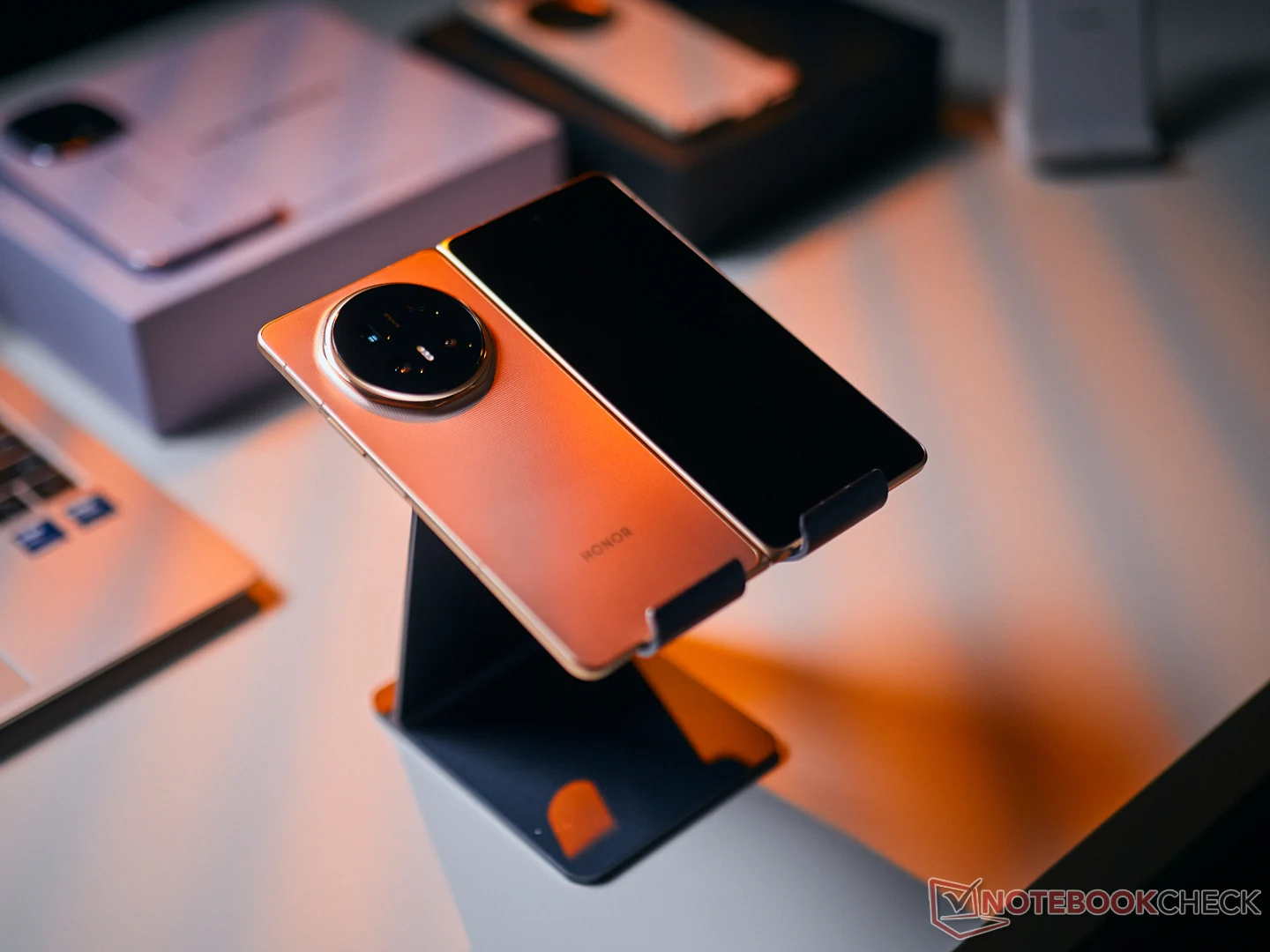
    Speaking of specs, the Magic V6 boasts an ultra-slim design, measuring just 8.75 mm (0.34 inch) when folded and 4 mm (0.15 inch) when unfolded and weighing around 219 grams (0.48 lbs). Honor’s latest book-style foldable smartphone comes as a direct successor to the Magic V5, which debuted last year. The smartphone brings notable upgrades over the last generation model. To be more precise, it is thinner, more powerful, and has a 13.4% bigger battery than the Magic V5.

    Battery, Processor & Camera Specifications

    Despite boasting a slim design, the company has managed to squeeze in a large 6,600 mAh silicon-carbon battery into the foldable, which supports 80 W wired and 66 W wireless charging. Under the hood, it is powered by the Qualcomm Snapdragon 8 Elite Gen 5 processor paired with LPDDR5X RAM and UFS 4.1 storage. For photography, you get a 50 MP main camera joined by a 64 MP periscope telephoto lens and a 50 MP ultra-wide camera. Moreover, it runs Android 16-based MagicOS 10 out of the box.

    Display Details

    Nevertheless, the Magic V6 boasts a 7.95-inch AMOLED main display that delivers 2172 x 2352 pixel resolution with a 1-120 Hz refresh rate and a peak brightness of 5,000 nits. It also features a 6.52-inch cover display, which is said to offer 6,000-nit peak brightness and a refresh rate of 120 Hz.

    Sources
    • Flagship RedMagic tablet with OLED nears launch

      Flagship RedMagic tablet with OLED nears launch

      Key Takeaway

      – RedMagic Gaming Tablet 5 Pro launching in China this June.
      – Features a 9-inch OLED display with a 185Hz refresh rate.
      – Powered by Snapdragon 8 Elite Gen 5 chipset.
      – Supports 80W fast charging with an ~8,300mAh battery.
      – Up to 24GB RAM and 1TB storage, global availability unconfirmed.


      RedMagic Confirms June Launch for Gaming Tablet 5 Pro

      RedMagic has officially confirmed that it will launch the Gaming Tablet 5 Pro in June in China. However, an exact launch date has not yet been reveled. For context, the Gaming Tablet 5 Pro will be positioned as a flagship gaming tablet, succeeding last years Gaming Tablet 3 Pro (also known as RedMagic Astra in global markets).

      3C Certification Reveals Key Specs

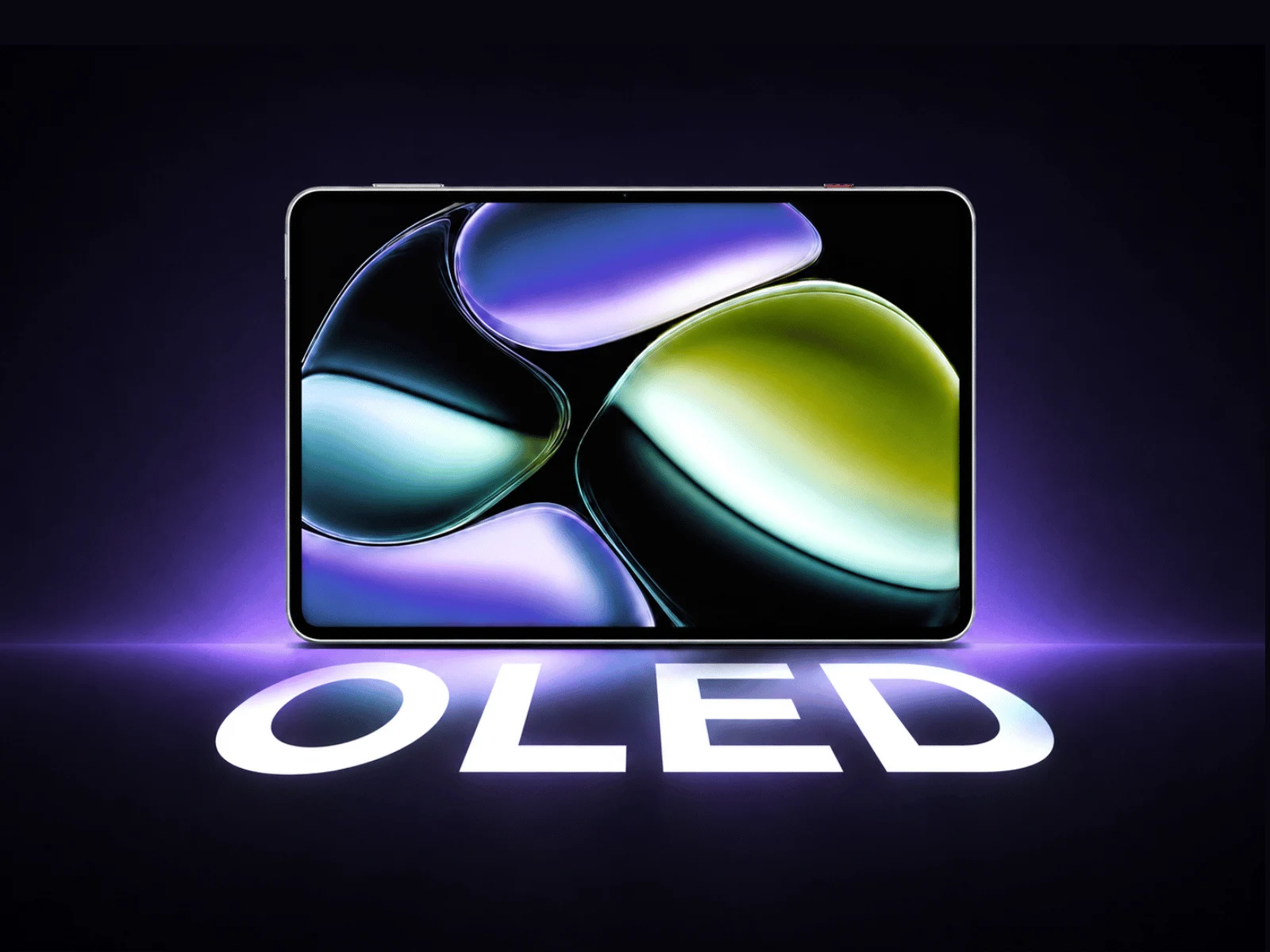
      Ahead of the release, the RedMagic Gaming Tablet 5 Pro has recieved the 3C certification in China. The tablet is listed with the model number “NP06J,” and the certification indicates support for 80W fast charging. So far, RedMagic has confirmed that the Gaming Tablet 5 Pro will feature an OLED display.

      Leaked Display and Processor Details

      Tipster Digital Chat Station on Weibo reveals that RedMagic’s new tablet will use a 9-inch OLED panel with a 185Hz refresh rate. It is tipped to be powered by the Snapdragon 8 Elite Gen 5. For context, the Snapdragon 8 Elite Gen 5 is a flagship chipset, also found in tablets such as the Legion Tab Gen 5 (curr. available for $699 on Lenovo’s US website).

      Cooling, Battery, and Storage Rumors

      Furthermore, the RedMagic Gaming Tablet 5 Pro is tipped to feature a liquid cooling system and a battery capacity of approximately 8,300mAh. The tablet may come with up to 24GB of RAM and up to 1TB of internal storage. So far, RedMagic has not confirmed global availability for the tablet.


    • Flagship Vivo Tablet with Snapdragon 8 Elite Gen 5 Tops AnTuTu

      Flagship Vivo Tablet with Snapdragon 8 Elite Gen 5 Tops AnTuTu

      Key Takeaway

      – Vivo Pad 6 Pro tops the May 2026 China rankings with a score of 4,132,697.
      – Snapdragon 8 Elite Gen 5 dominates the top six spots.
      – iQoo Pad 6 Pro and Lenovo Legion Y700 5th Gen take second and third.
      – Redmi K Pad 2 is the only top-ten tablet with a MediaTek Dimensity 9500.
      – Intel-powered H3C MegaBook ranks eighth with a score of 3,390,074.


      Tablet Rankings for May 2026

      AnTuTu has revealed the top-performing flagship tablet rankings for May 2026. The list is specific to the Chinese market, so some of the models may not be globally available.

      Top Three Performers With Snapdragon Power

      The top performer is the Vivo Pad 6 Pro (8/256GB curr. $822 on TradingShenzhen). It is powered by the Snapdragon 8 Elite Gen 5 and has an average score of 4,132,697 points. The iQoo Pad 6 Pro secured the second spot with the Snapdragon 8 Elite Gen 5 and an average score of 4,081,031 points. The Lenovo Legion Y700 5th Gen ranks third with the Snapdragon 8 Elite Gen 5 and an average score of 4,073,338 points.

      Mid-Range Contenders and MediaTek Entry

      The Oppo Pad 5 Pro, OnePlus Pad 3 Pro, and Honor MagicPad 3 Pro 13.3 take the fourth, fifth, and sixth spots, respectively, with all three tablets powered by the Snapdragon 8 Elite Gen 5. Notably, the Redmi K Pad 2 is the only tablet in the top ten with the MediaTek Dimensity 9500, scoring an average of 3,716,562 points.

      The H3C MegaBook is powered by the Intel Core Ultra 5 228V and takes the eigth spot, with an average score of 3,390,074 points. The list is rounded out by the Oppo Pad 4 Pro and OnePlus Pad 2 Pro, both powered by the Snapdragon 8 Elite.


      Sources

    • Oppo Find X9 Ultra vs Vivo X300 Ultra: Best Value

      Key Takeaway

      – Oppo Find X9 Ultra wins on battery life, audio quality, and connectivity speed.
      – Vivo X300 Ultra has a superior display, better cameras, and more powerful haptics.
      – Oppo runs cooler under load, while Vivo’s software and brightness control are more polished.
      – Vivo is significantly more expensive in Europe (€2,000 vs. €1,500), but prices drop as imports.
      – Choice depends on priorities: performance & endurance (Oppo) vs. display & photography (Vivo).


      Comparing the Oppo Find X9 Ultra and Vivo X300 Ultra

      In our reviews of the Oppo Find X9 Ultra and Vivo X300 Ultra, both smartphones, powered with the Snapdragon 8 Elite Gen 5, present themselves as strong companions for everyday use. However, a direct comparison between the Oppo and Vivo phones reveals that both flagships have different strengths and weaknesses and therefore appeal to different types of users. Their pricing also realy differs right from the start.

      Pricing and Storage Configurations

      There are already clear price differences. In Europe, the Find X9 Ultra is available for an RRP of just under €1,500, while the X300 Ultra is more expensive. The RRP for the only storage option with 16 GB of RAM and 1 TB of storage, is just under €2,000. As imports, however, the prices already start noticeably lower for both flagships (around $1,100). This makes the Oppo a considerably more affordable option, but the Vivo’s premium price tag may be justified by some high-end features.

      Audio and Battery Performance

      The difference between the Oppo Find X9 Ultra and Vivo X300 Ultra is clear when it comes to audio quality. The Oppo phone delivers more powerful and balanced speakers and the drivers offer more depth, more stable highs as well as a significantly more linear frequency response in our measurements. The SPL value is also around 4.5 dBA higher than that of the Vivo phone, which sounds flatter in direct comparison and drops more sharply at high frequencies. Another advantage of the Find X9 Ultra is its battery life.

      The 7,050 mAh silicon-carbon battery lasts over five hours longer in the Wi-Fi battery test than the 6,600 mAh battery of the Vivo X300 Ultra. This is a difference that is definitely noticeable in everyday use. The slightly lower temperature development also speaks in favor of the Oppo flagship. Both top phones struggle with the high heat output of the Snapdragon 8 Elite Gen 5 under continuous load, but the Vivo phone reaches almost 55 °C in our measurements, while the Find X9 Ultra’s case remains slightly cooler at around 50 °C.

      Connectivity and Storage Speed

      The Find X9 Ultra is also ahead in terms of connectivity and storage performance. It even sets new records in our Wi-Fi measurements, while the Vivo flagship only achieves around half the speed. However, the approximately 2,000 Mbit/s of the Vivo phone is more than sufficient in everyday use, so the Find X9 Ultra’s advantage is more theoretical. The situation is similar with UFS storage. Here, the Oppo flagship is almost twice as fast in our review but the practical added value is likely to be rather small. For most users, the Vivo’s slower speeds will not be a hinderance.

      Display and Camera Advantages of the Vivo

      On the other hand, the Vivo X300 Ultra has noticeable advantages when it comes to the display and cameras. The 6.82-inch OLED panel is significantly brighter in everyday use than the Oppo phone’s 144 Hz screen. While the Find X9 Ultra only achieves around half of the advertised maximum brightness and cannot maintain it for long, the Vivo phone remains stable in our measurements and impresses with better automatic brightness control. Oppo’s automatic brightness control often sets it too low in everyday use. The vibration motor also seems more powerful on the Vivo phone, a point that is often underestimated in everyday use.

      The Vivo X300 Ultra is also ahead in terms of camera quality. The ultra-wide-angle camera delivers visibly better results thanks to its larger sensor, and the main camera also benefits from Vivo’s truly excellent, probably industry-leading software. The Oppo Find X9 Ultra can keep up here, but in our opinion, it does not quite reach the level of the Vivo flagship. On the other hand, the Oppo flagship offers practical special buttons, including for camera functions, which the Vivo model completely lacks.


    • Bleak Future for Snapdragon 8 Elite Gen 6 Phones

      Key Takeaway

      – The Oppo Find X9 Ultra overheats and throttles severely under load, halving its performance in 3DMark stress tests.
      – Its predecessor, the Find X8 Ultra, handled heat better and sometimes outperformed the new model in sustained benchmarks.
      – The Snapdragon 8 Elite Gen 5 chip’s high clock speeds (up to 4.6 GHz) generate excessive waste heat that passive cooling cannot manage.
      – Passive cooling in thin flagship phones is reaching its limits, raising concerns for future chips like the Snapdragon 8 Elite Gen 6 (expected >5 GHz).
      – In everyday use the throttling may not be noticeable, but it shows that raw SoC gains are negated by thermal constraints.


      First Impressions of the Find X9 Ultra

      Our assessment of the Find X9 Ultra offers little to critisize about of the current flagship smartphone, as Oppo has put together a complete package that is hard to beat (prices start at around $1,300 as an import). However, compared with our last year’s review, it becomes clear that even the Find X9 Ultra, with its built-in Snapdragon 8 Elite Gen 5, has its problems with thermal output.

      Thermal Throttling Becomes a Problem

      In our review, the Oppo phone sometimes throttled massively due to the high waste heat resulting from the Qualcomm SoC’s high clock speed of up to 4.6 GHz. In the 3DMark stress tests, the performance of the Find X9 Ultra was halved. This means that the final big hope in the smartphone market for taming the Snapdragon 8 Elite Gen 5 has fizzled out.

      Comparing Heat Management With Last Year

      Last year, with the Find X8 Ultra, Oppo was one of the few manufacturers, if not the only one, to get the heat problem of modern Qualcomm SoCs well under control. This level of cooling performance is unfortunately no longer available in the current generation. This even means that the Find X9 Ultra can deliver less performance in the 3DMark stress tests than its predecessor. Due to the significant drop in performance after a short time, the increase in SoC power of the Snapdragon 8 Elite Gen 5 compared to the previous year’s Snapdragon 8 Elite has evaporated. In some cases, the Find X8 Ultra achieved 20 percent higher values in the Wild Life stress test than its successor.

      The Gap With Samsung Flagships

      The discrepancy with a Samsung Galaxy S26 Ultra is even more serious. Is this a problem in everyday use? Probably not, but it highlights the increasingly severe challenges smartphone manufacturers face when relying on passive cooling systems to dissipate the substantial heat generated, in this case by the Oryon CPU cores, within such thin chassis of flagship phones.

      What This Means for Future Chips

      Since the cooling performance of the successor to the Find X8 Ultra is now also reaching its limits, this does not bode well for the Snapdragon 8 Elite Gen 6, which is expected to clock well above 5 GHz. At the latest with our review of the Find X9 Ultra, it becomes clear that hopes for passively cooled smartphones are fading – they simply cannot cope with the massive heat output, let alone make the additional performance usable in everyday scenarios


    • Lenovo Gaming Tablet Gets Visual Refresh Months After Launch

      Lenovo Gaming Tablet Gets Visual Refresh Months After Launch

      Key Takeaway

      – Lenovo has announced a special “Warrior Edition” of the Legion Y700 Gen 5 tablet, themed after the game Dungeon Fighter Online.
      – The Warrior Edition is visually distinct with a black body and gold artwork, but has no hardware or performance differences from the standard model.
      – It comes in a single 12GB RAM / 512GB storage configuration, priced at ¥4799 (~$709), slightly more than the standard version.
      – The standard Legion Y700 Gen 5 features an 8.8-inch 165Hz display, Snapdragon 8 Elite Gen 5 processor, up to 24GB RAM, 1TB storage, and a 9,000mAh battery with 68W charging.
      – Pre-orders are open now, with the official release scheduled for June 9.


      New Lenovo Legion Y700 Variant Announced in China

      It has only been a few months since Lenovo released the Legion Y700 Gen 5 and released it in other regions as the Legion Tab Gen 5 which we reviewed. Now, it has announced a new version of the tablet in China. This new variant of the tablet is a special edition based on the MMORPG, Dungeon Fighter Online.

      Legion Y700 Warrior Edition Design and Pricing

      According to a Weibo post, this version of the Legion Y700 Gen 5 will be sold as the Legion Y700 Warrior Edition. Unlike the standard version that is available in Carbon Black, Ice White, Starlight Purple, and a Green FIFA Edition, the Legion Y700 Warrior Edition is black but with a gold artwork covering the back. It also has a gold Legion logo.

      The Legion Y700 Gen 5 Warrior Edition is available in a single configuration that has 12GB of RAM and 512GB of storage, and it is priced at ¥4799 (~$709/€608). The standard Carbon Black version with the same RAM and storage is slightly cheaper at ¥4699 (~$694/€595). Interested buyers can pre-order the tablet now ahead of its release on June 9.

      No Internal Changes, Just Cosmetic Differences

      Save for the cosmetic difference, Lenovo doesn’t mention any features that sets it apart from the standard version.

      Full Specifications of the Legion Y700 Gen 5

      The Legion Y700 Gen 5 has an 8.8-inch display with a 3040 × 1904 resolution and a 165Hz refresh rate. It is powered by the Snapdragon 8 Elite Gen 5 processor and is available with up to 24GB of RAM and 1TB of UFS 4.1 storage. It also has a microSD card slot for up to an additional 2TB of storage.

      There’s a 50MP camera on the back of the tablet and an 8MP camera in front for video calls. The Y700 Gen 5 has stereo speakers tuned by JBL, Wi-Fi 7, dual USB-C ports, a 9,000mAh battery, and support for 68W fast wired charging. It ships with Android 16 out of the box.


      Sources

    • RedMagic 11S Pro with Fan & Under-Display Camera $849 Global Launch

      RedMagic 11S Pro with Fan & Under-Display Camera $849 Global Launch

      Key Takeaway

      – Global launch and early-bird benefits: RedMagic 11S Pro released worldwide with Europe/UK Early Bird vouchers (€1/£1) to order a day earlier at a €30/£30 discount.
      – Core specs and price tiers: 12–16 GB RAM options with 256–512 GB storage; starting price $849/€799/£709, up to $949/€899/£799 for the 16/512 config.
      – High-performance cooling and power: Advanced cooling system (liquid cooling + 24,000 rpm fan + vapor chamber) plus a massive 7,500 mAh battery with 80W wired and wireless charging.
      – Gaming-focused hardware: Snapdragon 8 Elite Gen 5 (slightly faster in 11S Pro up to 4.74 GHz) and a 6.85″ 144 Hz AMOLED display with 1,800 nits brightness; IPX8 water resistance.
      – Camera and sensors: 50 MP main + 50 MP ultra-wide, 16 MP under-display selfie camera, in-display fingerprint sensor, plus touch-sensitive shoulder buttons.


      Overview

      The Nubia RedMagic 11S Pro was only announced in China in mid-May, and now already launches globally. The smartphone can be ordered from June 10, 2026 in the manufacturer’s online store. Customers in Europe and the UK can purchase an “Early Bird” voucher for €1 or £1 from June 3 to 9. This voucher allows customers to order the smartphone a day earlier and €30 or £30 cheaper.

      Pricing

      The base model with 12 GB RAM and 256 GB flash memory costs $849, €799 or £709, respectively. Although this makes the smartphone more expensive than the base model of the RedMagic 11 Pro, even the cheapest version of the RedMagic 11S Pro offers a sophisticated cooling system that combines liquid cooling with a 24,000 rpm fan and a vapor chamber to ensure high performance even during extended gaming sessions. The version with 16 GB RAM and 512 GB storage costs $949, €899 or £799.

      Specifications

      Apart from the cooling system of the base model, there is only one difference between the RedMagic 11 Pro and 11S Pro – the newer model uses a slightly faster variant of the Qualcomm Snapdragon 8 Elite Gen 5 which achieves boost clock rates of up to 4.74 GHz instead of 4.6 GHz. With a gigantic 7,500 mAh battery, which can be charged both via USB-C and wirelessly with 80 watts, as well as a 6.85-inch AMOLED display without a notch or punch hole, the RedMagic 11S Pro is aimed primarily at gaming enthusiasts.

      Display and Camera

      The display achieves a brightness of 1,800 nits and a frame rate of 144 Hz. The 16 MP f/2.0 selfie camera and the fingerprint sensor are invisibly integrated into the display. Despite the fan, the smartphone is IPX8-certified and therefore water-resistant. A 50 MP f/1.9 main camera with 1/1.55 inch sensor, a 50 MP f/2.0 ultra-wide-angle camera and touch-sensitive shoulder buttons complete the features. More details can be found in our detailed review of the almost identical RedMagic 11 Pro.


      Sources

    • iQoo launches flagship tablet with 4K display and powerful chipset

      iQoo launches flagship tablet with 4K display and powerful chipset

      Key Takeaway

      – High-end specifications: 13.2″ 4K+ LCD with 144Hz, Snapdragon 8 Elite Gen 5, up to 16GB RAM and 512GB storage, 13,000mAh battery, WiFi 7, and DC dimming.
      – Camera and video: 8 MP front camera and 13 MP rear camera; runs OriginOS 6 (Android-based).
      – Availability and pricing: launched in China with four memory variants ranging from CNY 4,499 to 6,699; global availability not yet confirmed.


      Overview

      iQoo has introduced a new tablet in China. The iQoo Pad 6 Pro is the company’s top-of-the-line Android tablet, succeeding last year’s Pad 5 Pro. There are certain pricing and specification details that are essential and must be kept intact as described here, even while we present this in a new format. The device aims to appeal to users seeking a high-performance slate with a large display and strong power metrics.

      Display and Build

      The iQoo Pad 6 Pro features a 13.2-inch LCD panel advertised with a “4K” resolution and a 144Hz refresh rate. The display supports 1,200 nits of peak brightness and DC dimming, which helps with comfortable viewing in bright environments and reduces flicker in dim settings. The tablet is 6.18mm thick and weighs 663 grams, offering a sturdy feel without being overly bulky for long sessions.

      Performance and Hardware

      Under the hood, the tablet is powered by the Snapdragon 8 Elite Gen 5 chipset with LPDDR5X RAM and UFS 4.1 storage. For context, the Snapdragon 8 Elite Gen 5 is Qualcomm’s flagship chipset based on a 3nm process, powering devices including the Lenovo Legion Tab Gen 5. This combination should deliver strong multitasking and gaming capabilities, with faster memory and storage access for demanding apps and titles.

      Camera, Battery, and Connectivity

      The iQoo Pad 6 Pro gets an 8 MP front camera and a 13 MP rear camera. The tablet houses a 13,000mAh battery. Connectivity features include WiFi 7 and Bluetooth 5.4, which promise improved wireless performance and potential stability for wireless peripherals and streaming. On the software side, the device runs OriginOS 6, based on Android, offering a customized experience alongside core Android features.

      Body, Color Options, and Availability

      The tablet is available in silver, gray, and green color options. More details are available on Vivo’s official website. In China, the iQoo Pad 6 Pro is available in four memory configurations: 8GB/256GB, 12GB/256GB, 12GB/512GB, and 16GB/512GB. These variants retail for CNY 4,499 (~$661), CNY 4,999 (~$734), CNY 5,799 (~$852), and CNY 6,699 (~$984), respectively. At the time of writing, the company has not confirmed global availability of the tablet.

      • Model: iQoo Pad 6 Pro
      • Display: 13.2-inch LCD, 4K resolution, 144Hz, 1,200 nits, DC dimming
      • SoC: Snapdragon 8 Elite Gen 5
      • RAM/Storage: up to 16GB/512GB, LPDDR5X and UFS 4.1
      • Camera: 8 MP front, 13 MP rear
      • Battery: 13,000mAh
      • Connectivity: WiFi 7, Bluetooth 5.4
      • OS: OriginOS 6 (Android-based)
      • Weight and thickness: 663 grams, 6.18 mm
      • Availability: China, four memory configurations with prices listed above


      Sources

    • Xiaomi Flagship Early Benchmark Scores Beat 17 Ultra Edge

      Xiaomi Flagship Early Benchmark Scores Beat 17 Ultra Edge

      Key Takeaway

      – Xiaomi 17 Max scores higher than the Redmi 17 Ultra on Geekbench, with 3,750 (single-core) and 11,674 (multi-core).
      – Powered by Snapdragon 8 Elite Gen 5 with 16GB RAM, running Android 16.
      – Key specs: 6.9-inch display, 8,000mAh battery, and a 200MP main camera, surpassing other models in the lineup for some sensors.


      Hey there, this piece talks ’bout the Xiaomi 17 Max as the firms upcoming flagship, and it notes its appearance ahead of launch in China. The report mentions Geekbench listing, hinting at performance vibes and some spec curiosities, plus a few numbers folks might care about if they chase benchmarks.

      Performance Snapshot

      The Xiaomi 17 Max is said to carry the model number 2605EPN8EC and appears on Geekbench with the Snapdragon 8 Elite Gen 5 chipset paired with a hefty 16GB RAM. The listing also claims the device runs Android 16, which, if true, would shake up expectations for the Android version on a flagship device. The single-core score clocks in at 3,750 and multi-core at 11,674, suggesting strong performance, with the 17 Max edging the 17 Ultra in those tests. The style here shifts to highlight comparative context against its sibling model.

      Benchmark Context

      In the same test camp, the Xiaomi 17 Ultra posted 3,722 in single-core and 11,411 in multi-core, placing the 17 Max just a tad ahead in CPU performance. The scores for the 8 Elite Gen 5 family generally hover around the 3,651 single-core and 11,188 multi-core benchmarks, which means the 17 Max sits above the average for its chipset cohort. The narrative keeps a curious eye on how new silicon models push the scoring envelope as vendors push more powerful cores and memory bandwidth.

      • Note the emphasis on performance metrics in the lead-into-launch chatter, linking benchmarks to product potential and real-world speed expectations.

      Camera, Battery, and Display

      Ahead of the May 21 launch, Xiaomi has teased several key facts about the 17 Max. The phone is said to feature a 200MP main camera, a dramatic step up when compared to the 50MP primary sensors used in the rest of the Xiaomi 17 lineup. This sensor bump hints at a camera emphasis that could translate into standout photo and video capabilities, though real-world results remain to be seen. The device is also noted to pack the largest battery in the lineup with an 8,000mAh capacity, suggesting extended endurance for heavy use cases. Display-wise, the 6.9-inch panel is expected to match the size of the 17 Ultra and Pro Max, keeping a large-screen experience in play. The narrative continues with the tidbit that a global launch for the new Xiaomi 17T series was confirmed, indicating broader availability beyond China.

      Rundown of Key Specs

      Spec fans should note the 6.9-inch display, 8,000mAh battery, and a camera setup leaning toward a 200MP primary sensor, a distinct departure from the rest of the line’s 50MP main camera. The link between performance benchmarks and camera ambitions makes the device feel like a multi-genre flagship—strong everyday speed, long-lasting power, and flagship photography ambitions all rolled into one.

      Sources