Tag: Samsung

  • Galaxy Z Fold 8 Wide Specs & Design: Camera, Battery, Crease-Free

    Galaxy Z Fold 8 Wide Specs & Design: Camera, Battery, Crease-Free

    Key Takeaway

    – Weight reduced to 201g and thickness to 4.5mm when unfolded
    – Crease improved to match or surpass the Oppo Find N6
    – 4800 mAh battery with 45W charging
    – New 50MP sensor capable of 24MP shooting mode
    – Expected unveiling at Galaxy Unpacked in London on July 22, 2026


    Specs Leak Reveals Galaxy Z Fold 8 Weight

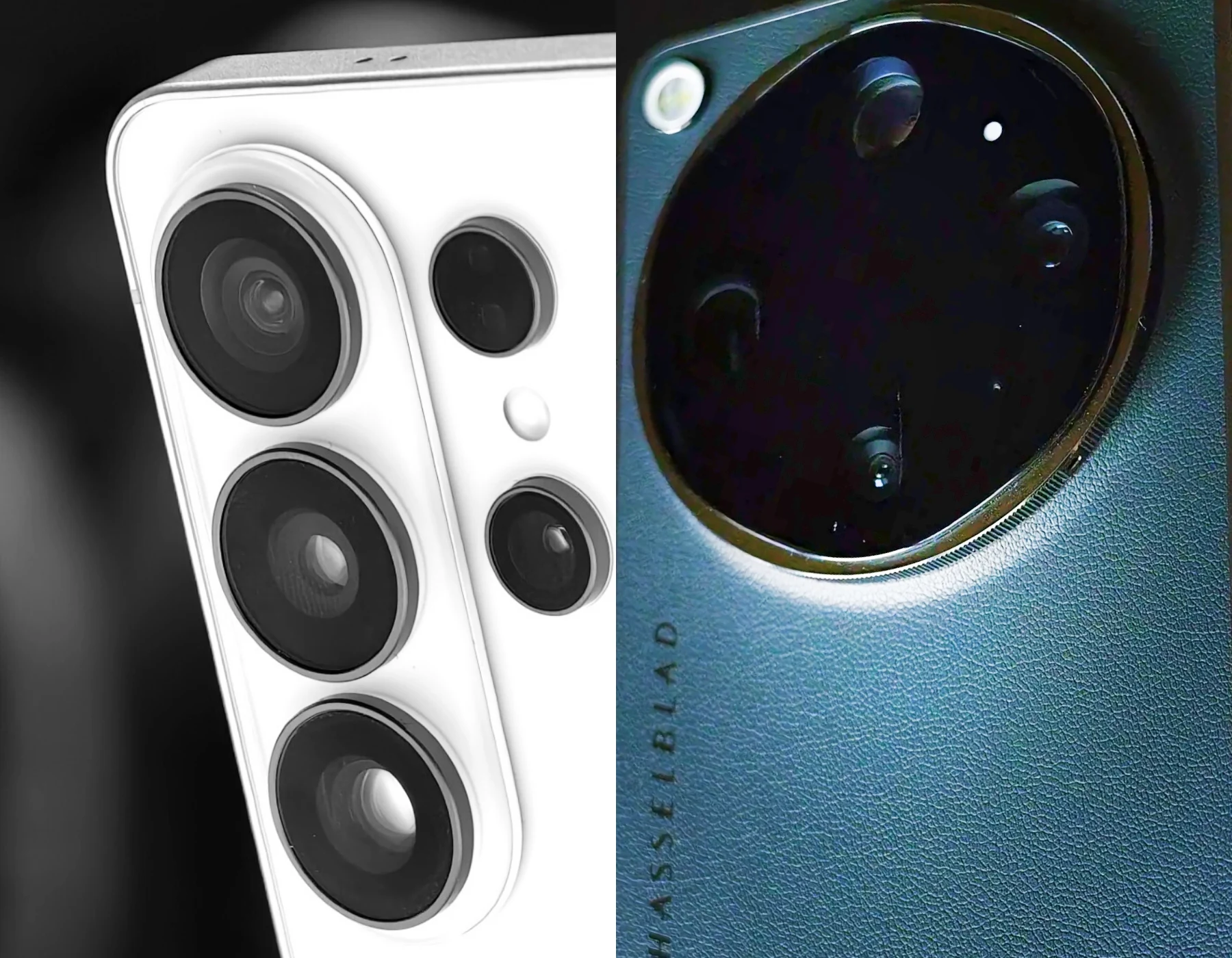
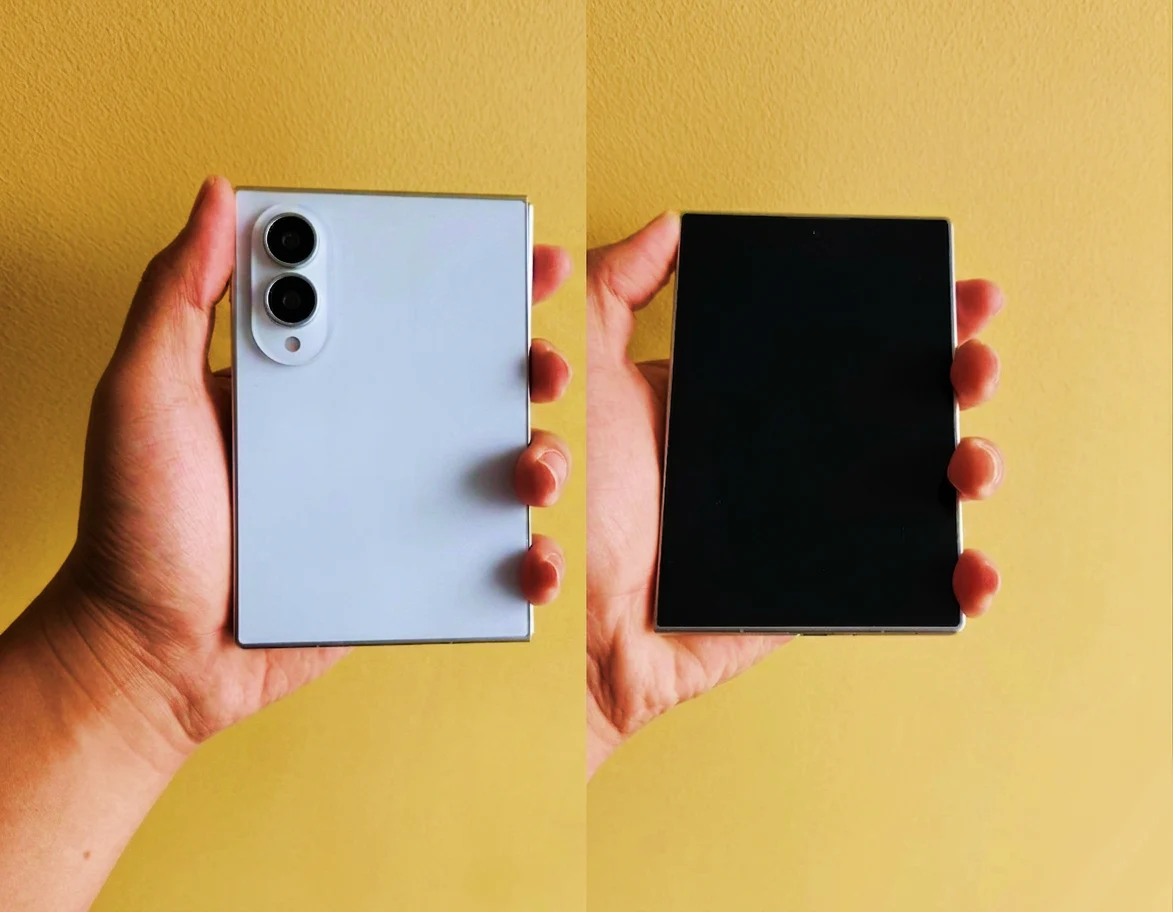
    A precise leak has just revelaed the key specs of the upcoming Galaxy Z Fold 8 (Wide). Leaked images of high-quality design models is giving us the best look at Samsung’s wider foldable next to the Galaxy Z Fold 8 Ultra, providing a clear visual comparision of the two devices for the first time.

    Weight Reduction and Thinness

    According to the new info shared by one of the top tipster, the standout upgrade is the weight. Samsung has reportedly managed to bring the weight of the Galaxy Z Fold 8 (that’s the name for the wider foldable) down to just 201g, while the phone is 4.5mm thin (when unfolded). For reference, the Galaxy Z Fold 7 weighs 215g and measures 4.2mm when opened. Meanwhile, the Galaxy S26+ and S26 Ultra weigh 190g and 214g respectively.

    Crease Improvement and Battery Specs

    But it gets even better as Samsung has reportedly improved its crease, with it now described as being on par with (or better than) the Oppo Find N6’s. While previous iterations saw only incremental changes, this development would mark a big shift for one of the Galaxy Z Fold design elements users often complain about, adressing a major pain point for foldable enthusiasts. Despite the lightweight design, the leak also says the wider Fold 8 model gets a 4800 mAh battery paired with 45W charging. These specs would indicate that despite the aggressive weight reduction, Samsung might not be compromising on power. For reference, the Galaxy Z Fold 7 has a 4,400 mAh battery.

    New Camera Sensor and Launch Date

    Finally, the leaked info points to a brand-new 50MP sensor, which can shoot in 24MP mode, similar to the iPhone 17 Pro, and (likely) the upcoming foldable iPhone Ultra, which might be heavier than the Fold 8 (Wide), as per the tipster. Samsung is widely expected to unveil this new hardware at its Galaxy Unpacked event in London on July 22, 2026.

    • Weight: 201g
    • Thickness: 4.5mm (unfolded)
    • Battery: 4800 mAh
    • Charging: 45W
    • Main camera: 50MP (24MP mode)


    Sources

  • New Samsung Flagship AI Leak: Liquid or Air Cooling to Prevent Overheating

    New Samsung Flagship AI Leak: Liquid or Air Cooling to Prevent Overheating

    Key Takeaway

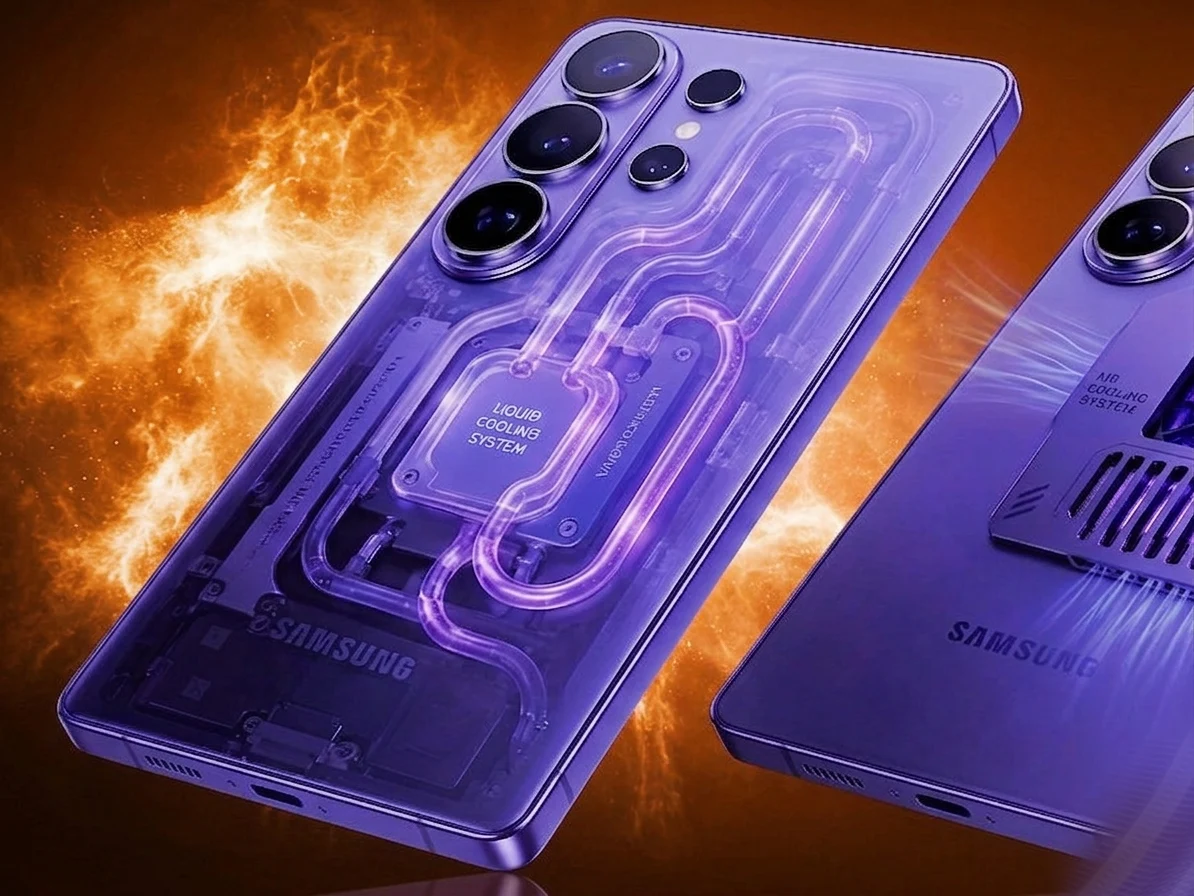
    – Samsung is developing active cooling (liquid and fan-based) to combat thermal throttling from intensive AI workloads.
    – Liquid cooling is favored over air cooling due to concerns about fan noise and increased device weight.
    – Current flagship SoCs use passive “Heat Pass Block” (HPB) technology, but future AI/high-performance chips will need active systems.
    – This approach mirrors gaming phones from Nubia that already use hybrid liquid and air cooling.
    – Active cooling could debut in the Galaxy S27 Ultra (reportedly launching July 22) or the Galaxy S28 Ultra to maintain peak performance.


    Samsung is reportedly developing advanced active cooling solutions to combat thermal throttling, a persistent bottleneck for flagship phones, particularly those running intensive AI workloads. It’s unclear whether the technology will be ready for the Galaxy S27 series, including the premium Galaxy S27 Ultra flagship.

    The Research Teams Focus

    A dedicated research team at Samsung’s Production Technology Research Institute is currently evaluating active liquid cooling and fan-based air cooling. According to lab director Park Min, the team is prioritizing a liquid-based system that uses a sealed, circulating loop connected directly to the chipset. While air cooling is being tested, Samsung notes that concerns regarding fan noise and increased device weight make liquid solutions more attractive.

    Exynos 2600 and Current Tech

    While Samsung’s latest flagship SoC, the Exynos 2600 utilizes (Galaxy S26, Galaxy S26+) innovative “Heat Pass Block” (HPB) technology, a copper heatsink placed directly on the chip die that has shown remarkable thermal stability in testing, the company recognizes that future on-device AI and high-performance silicon will require more robust active systems.

    Learning from Gaming Phones

    Samsung’s pivot mirrors methods already popularized by gaming-focused phones from Nubia, which utilizes hybrid liquid and air cooling. By moving toward active, internal cooling, Samsung could ensure its future flagships, like the Galaxy S27 Ultra (reportedly launching July 22) and/or Galaxy S28 Ultra, can maintain peak performance without relying on passive solutions. Sisajournal-e.com

    Sources
  • Samsung Galaxy S25 Ultra spotted in the wild

    Samsung Galaxy S25 Ultra spotted in the wild

    Key Takeaway

    – First real-world sighting of Galaxy Z Fold 8 in South Korea.
    – The “Wide” suffix is dropped; wider model is now just Z Fold 8, while narrower model becomes Z Fold 8 Ultra.
    – Expected to feature a near-square 4:3 inner display and be extremely thin at 4.3 mm.
    – Will reportedly lack S Pen support and have a dual 50 MP camera (no telephoto lens).
    – Rumored to launch July 22, 2026, at a Galaxy Unpacked event in London.


    Galaxy Z Fold 8 glimpsed in South Korea

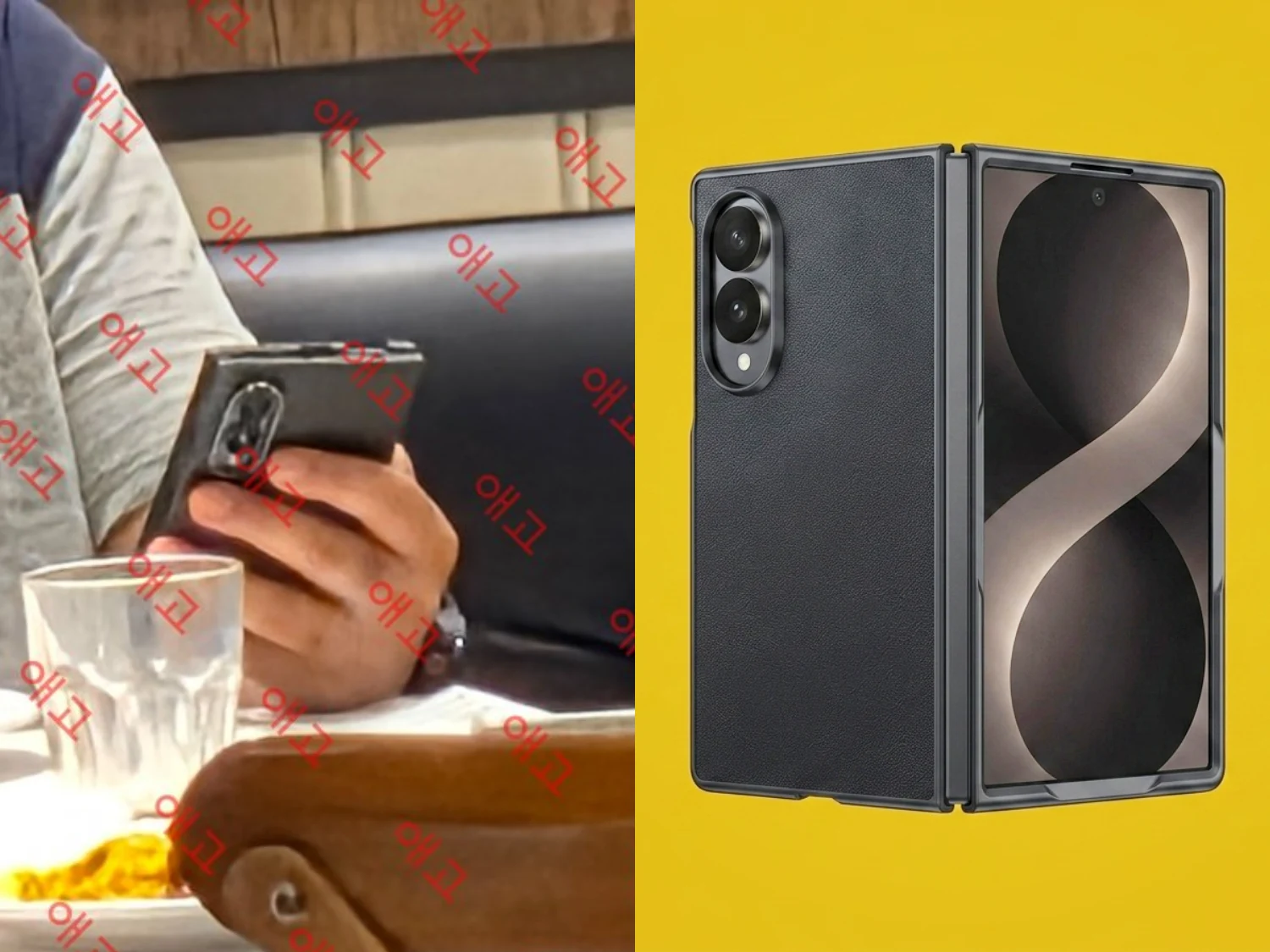
    A Samsung employee was snapped using what looks like the coming Galaxy Z Fold 8 at a restaraunt in South Korea. Because of these photos (see below), we now have the first potential real-world look at the thing ahead of it’s supposed July launch. The spotting was first posted early this morning on DCInside’s Galaxy Gallery forum by a user who took the pictures using 20x zoom. The phone was inside Samsung’s internal anti-leak protective case — a round cover often used on prototype units to keep final design secrets safe. Even with the cover, the device’s wide shape was easy to see. This probably led to its corelaton with the handset that has been heavily leaked through other channels in the last two months.

    Leaker confirms key details

    Leaker Ice Universe (@UniverseIce) found the post hours later. He confirmed the device is the Galaxy Z Fold 8, and added that the “Wide” suffix has apparently been droped. The wider shape is instead simply being called the Galaxy Z Fold 8, and the current skinny design will be renamed as the Galaxy Z Fold 8 Ultra (according to a past leak – read more about that here). This device has been no stranger to leaks. Screen protector leaks earlier this month pretty much confirmed the much wider aspect ratio and added more weight to the idea of a near-square 4:3 inner screen (for a more tablet-like feel when opened).

    Dimensions and expected specifications

    Leaked dimensions put it at 161.4 mm wide and just 4.3 mm thin when opened — again, wway slimmer than rivals. On specs, it is expected to give up S Pen support and have a dual 50 MP rear camera system with no telephoto, compared to the three-camera setup on the normal model. The Galaxy Z Fold 8 Wide is rumored to become official on July 22, 2026, at a Galaxy Unpacked event said to be held in London. DCInside, @UniverseIce on X (formerly Twitter)

    • First real-world photo of upcoming Galaxy Z Fold 8
    • Device encased in anti-leak protective casing
    • Wider form factor without “Wide” suffix
    • Expected near-square 4:3 inner display
    • Dimensions: 161.4 mm wide, 4.3 mm thin
    • No S Pen support, dual 50 MP rear cameras
    • Launch on July 22, 2026 in London


    Sources

  • Samsung’s iPhone Ultra rival spotted in wild first time

    Samsung’s iPhone Ultra rival spotted in wild first time

    Key Takeaway

    – First real-world photo of Galaxy Z Fold 8 appears, concealed in anti-leak casing
    – “Wide” suffix dropped; wider model becomes Z Fold 8, narrower model becomes Z Fold 8 Ultra
    – Near-square 4:3 inner display confirmed for more tablet-like unfolded experience
    – Expected to forgo S Pen support and telephoto camera, with dual 50 MP rear setup
    – Rumored July 22, 2026 launch at Galaxy Unpacked in London


    Samsung Employee Possibly Spotted Using the Galaxy Z Fold 8 in South Korea

    A Samsung employee was photographed using what seems to be the upcoming Galaxy Z Fold 8 at a restaurant in South Korea. Thanks to these images (see below), we get the first potential real-world glimpse of the device ahead of it’s expected July launch. The sighting was first posted early this morning on DCInside’s Galaxy Gallery forum by a user who photographed the device using 20x zoom. The phone was enclosed in Samsung’s internal anti-leak protective casing — a cylindrical enclosure commonly used on prototype units to keep final design details a secret. Despite the cover, the device’s wide form factor was clearly visible. This probably led to its corelaton with the handset that has been extensively leaked through other channels over the past two months.

    Leaker Confirms “Wide” Suffix is Dropped for the Standard Model

    Leaker Ice Universe (@UniverseIce) picked up the post hours later. He confirmed the device is the Galaxy Z Fold 8, specifically adding that the “Wide” suffix has apparently been dropped. The wider form factor is instead simply being called the Galaxy Z Fold 8, and the existing narrower design will be simply rebranded as the Galaxy Z Fold 8 Ultra (as per a past leak – read more about that here). This device has been no stranger to leaks. Screen protector leaks earlier this month practically confirmed the significantly wider aspect ratio and added more weight to the expectation of a near-square 4:3 inner display (for a more tablet-like experience when unfolded).

    Leaked Dimensions and Specifications for the Galaxy Z Fold 8

    Leaked dimensions place it at 161.4 mm wide and just 4.3 mm thin when unfolded — again, wway slimmer than competitors. On specs, it is expected to forgo S Pen support and pack a dual 50 MP rear camera system with no telephoto, compared to the triple-camera array on the standard model. The Galaxy Z Fold 8 Wide is rumored to go official on July 22, 2026, at a Galaxy Unpacked event said to be held in London. DCInside, @UniverseIce on X (formerly Twitter)

    • Dimensions: 161.4 mm wide, 4.3 mm thin when unfolded
    • Expected camera: Dual 50 MP rear system, no telephoto
    • No S Pen support
    • Launch date: July 22, 2026, at London Unpacked event


    Sources

  • Goodbye Hot Nights: Galaxy Ring & Watch Adjust AC While Sleeping

    Goodbye Hot Nights: Galaxy Ring & Watch Adjust AC While Sleeping

    Key Takeaway

    – Samsung’s new “WindFree Wearable Good Sleep” feature adjusts AC temperature based on detected sleep stages.
    – It activates automatically when the user falls asleep, switching to WindFree Cooling and Good Sleep modes.
    – The feature only works within Samsung’s ecosystem: Galaxy Watch/Ring, SmartThings app, Galaxy phone, and specific 2026 air conditioners.


    Keeping the Perfect Sleep Temperature

    Maintaining the ideal temperature for sleeping throughout the night is not always easy. To this end, Samsung has just added the new “WindFree Wearable Good Sleep” feature to its Galaxy Watch models and the Galaxy Ring. This detects when the user falls asleep and automatically adjusts the temperature of the air conditioner according to the stage of sleep.

    How the System Activates Automatically

    The moment the device detects the transition from the awake state to the sleep phase, it sends a signal to the air conditioner to activate “WindFree Cooling” and “Good Sleep” modes. From this point onwards, the unit gradually adjusts the temperature according to the different stages of sleep automatically, thereby avoiding the need for manual control.

    Ecosystem Requirements and Compatibility

    However, this feature only works within Samsung’s ecosystem. Users need a compatible Galaxy Watch or Galaxy Ring, the SmartThings app, a Galaxy smartphone, and one of the new Bespoke AI WindFree 2026 air conditioners. Interested readers can access more information on Samsung’s official website.

    • Compatible Galaxy Watch or Galaxy Ring required
    • SmartThings app must be installed on a Galaxy smartphone
    • One of the new Bespoke AI WindFree 2026 air conditioners is nessecery
    • Visit Samsung’s official website for full details on specifications and pricing
    Sources
  • Samsung sliding-rolling phone may feature unique camera for slimmer profile

    Samsung sliding-rolling phone may feature unique camera for slimmer profile

    Key Takeaway

    – Samsung is exploring a sliding/rollable phone concept where the display extends and the rear cameras move with the sliding portion to keep the camera module slim.
    – The patent sketches suggest cameras could be placed on the sliding edge rather than atop the rollable display, potentially reducing the device’s overall thickness.
    – There’s uncertainty about the product’s viability or readiness, with mentions of prototypes and ongoing interest but no confirmation of a public release.


    We’ve heard about rollable or sliding phones from Samsung before, and it’s hard to pin down exactly what stage of development this is in. It could be just an idea for now, and Samsung might never release it to the public. Still, a newly discovered patent hints at what the phone could look like, and it appears to be doing something interesting and unique with the cameras.

    Patent hints at a camera shift

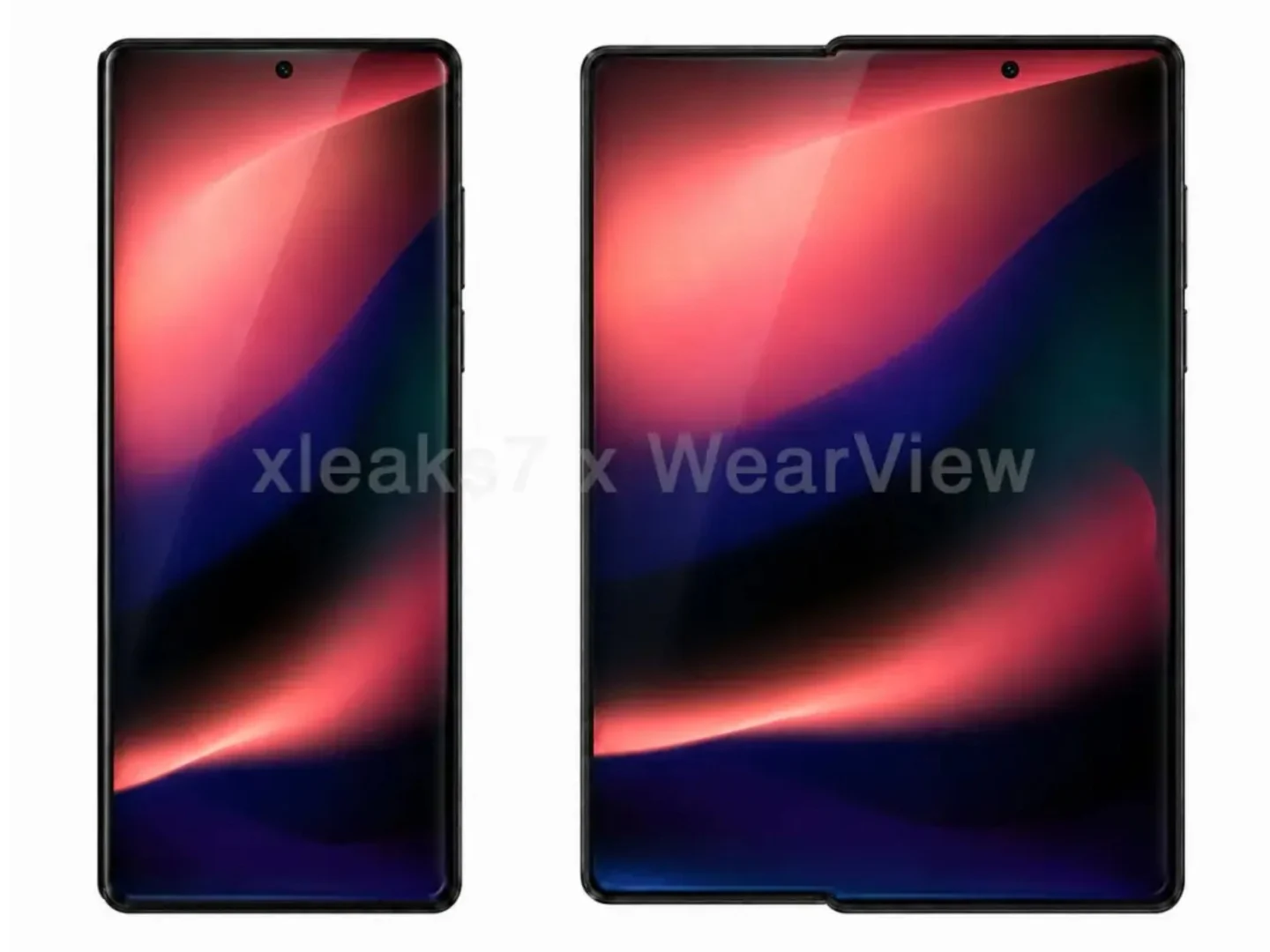
    The discovery by Wearview and xleaks7 shows a patent dated May 5, 2026, originally filed on June 2, 2023. It depicts a sliding phone that extends to the left, yet the notable point is that the rear cameras move along with the sliding display. In this design, Samsung seems to want to place the cameras on the sliding portion of the phone, potentially for a slimmer overall profile. The patent portrays a conventional bar phone silhouette from the back but includes a cutout for two cameras.

    Why this could slim the device

    Implementing the cameras on the sliding part would let the phone be thinner since camera modules wouldn’t need to sit atop the rollable display. Instead, they’d be positioned on the side, with a possible cutout. With sliding or extending displays, the screen rolls and unrolls within the phone’s body, but there’s another approach to this idea—the unreleased LG Rollable. That model had vertically oriented cameras along the edge of the stationary side and the screen extended to the back, coming to the front as the phone slid open.

    What the patent reveals and concept visuals

    That’s about all the information available in Samsung’s patent. Based on the filing, xleaks7 supplied concept images to illustrate how the actual phone might look in real life. This isn’t the first patent for a sliding or rolling display smartphone from the Korean giant. Last year in April, another patent surfaced showing a smaller Galaxy Z Flip-like device that wouldn’t flip open but would slide open. More recently, a credible leaker claimed that Samsung is prototyping a sliding phone. Whether these designs will ever become real phones remains to be seen, but Samsung clearly has interest in this concept.

    • Wearview and xleaks7 discussion on X
    • USPTO patent documentation references
    • Historical context with LG Rollable as a comparison


  • 007 First Light: Sony PSSR Implemented in One Day, Claims Developer

    007 First Light: Sony PSSR Implemented in One Day, Claims Developer

    Key Takeaway

    – PSSR 2 in 007 First Light is reportedly easy to implement, with no per-scene tuning needed and immediate, consistent results across the game.
    – The upgrade significantly improves image quality by resolving more details and reducing noise, per Digital Foundry.
    – PSSR 2 shares similarities with FSR 4, and AMD confirms FSR 4 will reach older RDNA 3 GPUs, suggesting comparable image gains on those cards.


    IO Interactive’s 007 First Light is a AAA James Bond spy action-adventure that many have been waiting for

    the game is scheduled to release on May 27 for the Xbox Series X | S, the Sony PlayStation 5 consoles, and Steam. 007 First Light will also be available on the PS5 Pro, where the game will utilize Sony’s upgraded PlayStation Spectral Super Resolution (PSSR).

    Image quality boosts and quick implementation

    while 007 First Light using the upgraded PSSR is a big deal for image quality, more on that later, it is the manner of the implementation that has piqued our interest. IO Interactive reports on the PlayStation Blog that implementing PSSR 2 in 007 First Light was a breeze.

    Developer notes on the ease of PSSR 2

    Jon Rocatis, Principal Render Engineer at IO Interactive, claims that it only took the developers about a day to implement the new PSSR, and developers “were essentially happy with what we saw straight away. No per-scene tuning, no special-case work — it just held up across the whole game”. Jon’s statement was backed by another IO Interactive developer on X who also claimed that PSSR 2 was super easy to implement and the results looked good right out of the box.

    Expectation of widespread adoption

    so, it seems like it doesn’t need a lot of work to get the upgraded PSSR working in a game. we can expect a lot of games to have the technology baked in, which will be very good news, as Digital Foundry has confirmed that PSSR 2 is a huge upgrade over the original.

    Digital Foundry and comparisons

    Digital Foundry’s analysis of the new PSSR (linked below) essentially backs what IO Interactive exclaims in their write-up on the PlayStation Blog. the upgraded PSSR resolves more details, improves noise, and outputs a much better image than the original.

    Relation to FSR 4 and hardware considerations

    interestingly, it looks like the upgraded PSSR shares a lot in common with FSR 4. some even consider it just an INT8 version of FSR 4. AMD has now confirmed that FSR 4 is coming to older RDNA 3 GPUs, which don’t have access to RDNA 4’s FP8 acceleration. so, when FSR 4 comes to RDNA 3 cards like the RX 7800 XT, we can expect image quality similar to that of the upgraded PSSR.

    Sources
  • Lenovo Legion Y70 (2026) Gaming Phone Launch

    Lenovo Legion Y70 (2026) Gaming Phone Launch

    Key Takeaway

    – Legion Y70 (2026) pairs a 6.8″ 144Hz LTPO OLED with a Snapdragon 8 Gen 5, up to 16GB RAM and 1TB storage, plus a massive 8,000mAh battery with 90W charging.
    – Notable gaming features include optimized antenna design for stable signal, a 500Hz gyroscope for precise aim, Legion Zone PC integration for cloud-accelerated PC graphics, and an AI game assistant that preloads games and records moments.
    – Durability and ruggedness are highlighted with a triple IP rating (IP66/68/69) and wide temperature tolerance (-20°C to 60°C), plus drop resistance up to 1.8 meters.


    Lenovo brings back the Legion line with the Y70 (2026)

    After a stretch of four years, the Legion name returns to the gaming smartphone arena with the Legion Y70 (2026). The model retains the general identity of its 2022 predecessor, yet for clarity it will be referred to as the Legion Y70 (2026) throughout this piece. The launch marks a deliberate revival rather than a mere refresh, and it sets expectations around performance and features that appeal to mobile gamers.

    Design cues and color options

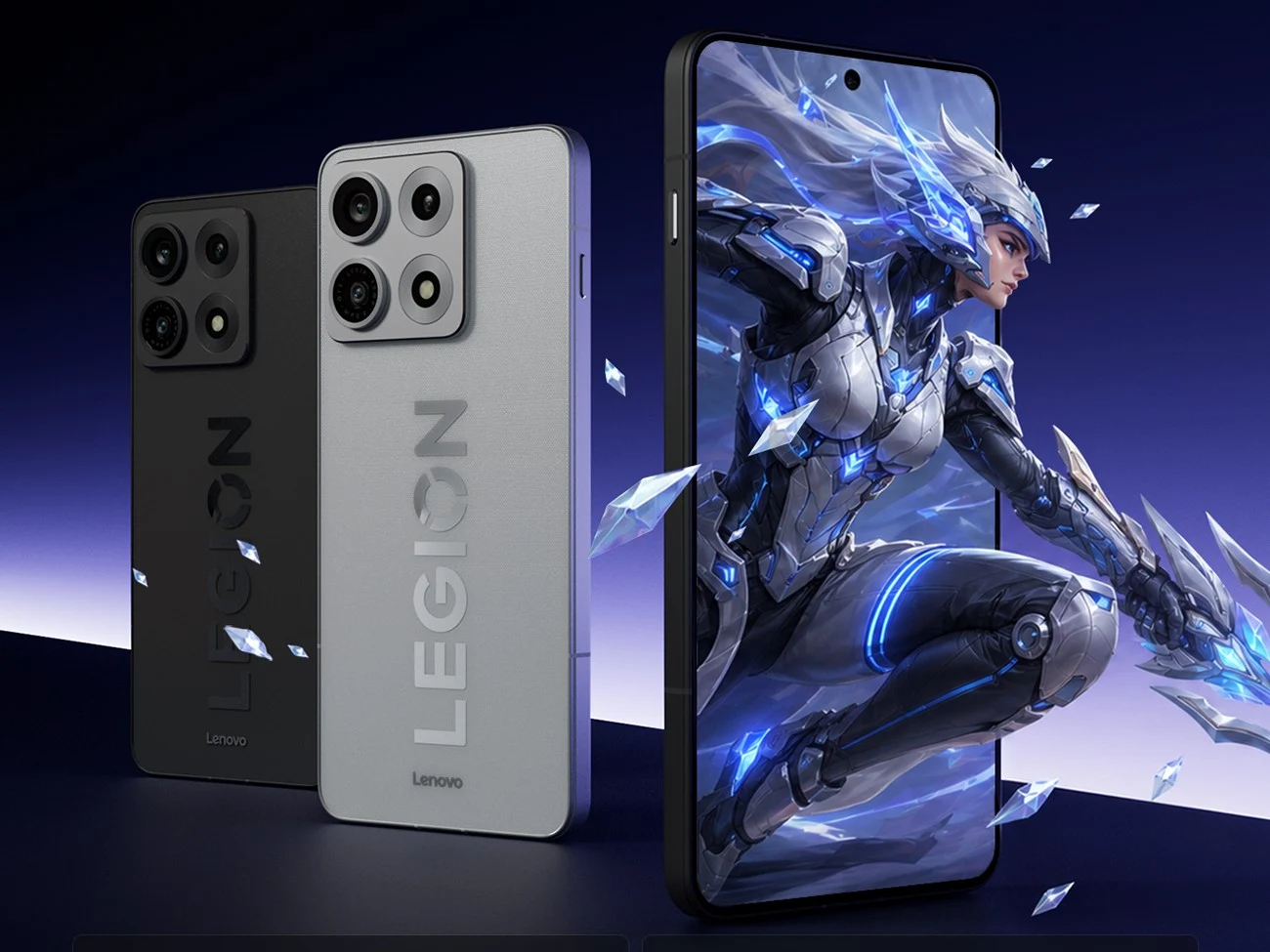
    The Y70 (2026) borrows design cues from current Motorola devices, presenting a looking that marries familiar silhouettes with Lenovo’s own flair. Not a perfect clone, but the squircle camera island and flat edges are noticeable touches. Availability is offered in Ice Soul White and Carbon Black, catering to two distinct aesthetics for collectors and daily users alike.

    Display, performance, and storage

    On the front, the phone sports a 6.8-inch LTPO AMOLED display from BOE (Q10) with a 144Hz refresh rate, a dense 510 PPI, and an impressive peak brightness of 7,000 nits. It also includes Dolby Vision, DC dimming, and SGS eye protection, aiming to balance vivid visuals with comfortable viewing over long sessions. Under the hood, the Snapdragon 8 Gen 5 chip is paired with up to 16GB of LPDDR5X RAM and up to 1TB UFS 4.1 storage for ample headroom and speedy loads.

    Battery life is central to gaming phones, and Lenovo equips the Y70 (2026) with a large 8,000mAh cell that supports 90W fast charging. Lenovo claims durability across up to 1,200 recharge cycles and notes strong endurance for more than two days with moderate use. Bypass charging is also supported, which is a niche that may appeal to power users who want uninterrupted gameplay.

    Cameras and imaging

    The camera setup includes a 32MP front-facing sensor with f/2.2, while the rear houses a 50MP f/1.8 Sony LYT-710 main camera with OIS and PDAF, complemented by an 8MP f/2.2 ultrawide unit. Additional modules include an anti-flicker sensor and the LED flash. These components are tuned to deliver solid daytime captures and reliable night performance, though the emphasis remains on gaming-centric features rather than photographic novelty.

    Gaming features and software enhancements

    Real-time gaming performance is aided by the antenna arrangement Lenovo claims maintains stable connectivity no matter how you hold the device or even when traveling in crowded spaces like subways. A gyroscope with a 500Hz sampling rate is included to ensure precise aiming in shooting titles, a detail that can translate to quicker and more accurate in-game movements.

    Additionally, when paired with a Legion PC via Legion Zone, the Y70 (2026) can leverage the PC’s graphics power to run AAA titles without relying on an emulator. Lenovo also introduces an AI game assistant that preloads games to cut waiting times and can automatically record up to 30 seconds of key moments during gameplay. The assistant helps keep games running in the background even when switching between apps, potentially smoothing multitasking during long sessions.

    Durability and specifications

    The Legion Y70 (2026) is not pitched as a rugged phone, yet it carries a triple IP protection rating (IP66 + IP68 + IP69) and is specified to withstand extreme temperatures from -20°C to 60°C. It can survive drops from up to 1.8 meters and includes dual-SIM support including eSIM, stereo speakers, and a cooling system built around VC for thermal management during extended gaming sessions.

    Pricing and configurations

    Pricing for the Legion Y70 (2026) begins at ¥3099 (roughly $456 or €393) for the base model with 12GB of RAM and 256GB of storage. The 12GB/512GB variant sits at ¥3699 (about $544 or €469), while the 16GB/512GB option is ¥4099 (around $603 or €519). The top configuration combines 16GB of RAM with 1TB of storage at ¥4899 (approximately $720 or €621).


    Sources
  • Galaxy S27 Ultra vs Oppo Find X10 Ultra: 200MP Sensor Specs Tip by LOFIC Samsung 1/1.2″ HPA

    Galaxy S27 Ultra vs Oppo Find X10 Ultra: 200MP Sensor Specs Tip by LOFIC Samsung 1/1.2″ HPA

    Key Takeaway

    – The 200MP HPA sensor, rumored to be the strongest main camera, may land in the Oppo Find X10 Ultra rather than the Galaxy S27 Ultra.
    – HPA reportedly uses a massive 1/1.12-inch sensor with LOFIC technology to greatly improve dynamic range by handling highlights and shadows at the hardware level.
    – Galaxy S27 Ultra may miss the HPA/LOFIC upgrade, potentially getting a different 200MP sensor (around 1/1.2-inch) with weaker dynamic range capabilities.
    – Galaxy S27 Ultra is expected to drop the 3x telephoto in favor of in-sensor zoom and a streamlined three-camera array focused on main, ultra-wide, and higher-quality zoom capabilities.


    Two Tipsters Drop Bombshell on 200MP Phone Camera for 2027

    Two well known tipsters have shared a hot leak about what could be the most advanced 200MP camera in any phone by 2027. The tone of the claims is bold, almost sensational, and it hints at a level of image capturing that might redefine phone photography as we know it today. The information feels like a tease, leaving readers curious and a bit anxious about the upcoming devices.

    Samsung’s 200MP HPA Sensor and LOFIC Tech

    Insiders say Samsung is developing a 200MP HPA sensor that could become the market’s strongest main camera. Yet, even if Samsung builds the sensor, the rumors claim Oppo Find X10 Ultra—not the Galaxy S27 Ultra—could be the first to use this top-tier snapper. The sensor is described as a 1/1.12-inch size—very close to 1-inch, which matters for light gathering and image quality in challenging lighting. A key mentioned feature is LOFIC technology, short for Lateral Overflow Integration Capacitor, a hardware level improvement that handles highlights and shadows with less clipping before any software processing starts.

    Impact on Dynamic Range and the Galaxy S27 Ultra

    The chatter suggests this HPA/LOFIC pairing might not debut in the Galaxy S27 Ultra, which could miss out on the exact upgrade. Instead, Samsung might introduce another 200MP sensor around 1/1.2-inch, but this alternative is said to lack the advanced dynamic range capabilities of the HPA. In other words, it could offer high resolution but not the same depth of tonal range when bright and dark areas collide in a single frame.

    In-Sensor Zoom and Camera Array Changes

    Beyond sensors, the rumors touch on a broader design shift for the Galaxy S27 Ultra. There is talk of dropping the tiny 3x sensor that appeared in the Galaxy S26 Ultra. Instead, the plan might be to lean into in-sensor zoom capabilities and a cleaner, three-camera array. This would allocate more space and resources to the main camera, an ultra-wide lens, and a stronger 5x zoom module, potentially improving overall image quality and usability in everyday shooting scenarios.

    Sources
  • Samsung Strike Could Cost Up to $66.7B

    Samsung Strike Could Cost Up to $66.7B

    Key Takeaway

    – DRAM crisis has driven record profits for memory makers, with Samsung’s memory division posting a 4,800% profit surge in Q1 2026.
    – Samsung restricts employee bonuses to 50% of regular annual income; union seeks a 15% operating-profit bonus pool and removal of the cap.
    – An 18-day strike (May 21–June 7) with >50,000 workers could cost Samsung production up to 3 trillion won per day, with total impact up to 100 trillion won due to pre-shutdown and delayed ramp-up.
    – The strike risks worsening the DRAM shortage by significantly reducing global DRAM and NAND production for several weeks.

    The DRAM crisis has unsurprisingly led to record profits for memory manufacturers such as Samsung Semiconductor. In the first quarter of 2026 alone, Samsung was able to increase profits in its memory division by 4,800 percent, a surge that has surprised many observers and investors alike. Yet the benefits of this extraordinary performance are not evenly shared within the company. Samsung restricts bonus payments to a maximum of 50 percent of regular annual income, a policy that has sparked discontent among rank-and-file employees who feel the windfall is skewed toward executives and shareholders rather than the workforce.

    Industry profits vs worker bonuses

    To address what it calls persistent inequities, the union is pressing Samsung to set aside 15 percent of operating profits to be paid out to employees as part of a bonus pool. It also demands that the current maximum limit on bonus payments be abolished altogether, arguing that workers deserve a fair share of the profits generated by the company’s recent success. In response, the union has announced plans for a prolonged strike, an 18-day strike from May 21 to June 7, with more than 50,000 employees expected to participate.

    Strike timeline and scale

    Analysts warn that this strike could be costly for Samsung, as downtime mounts and supply chains strain. Every day of production downtime is expected to result in a loss of up to 3 trillion won (approx. $2 billion). However, production will be interrupted for much longer than three weeks, as Samsung will have to shut down production almost a week in advance and it will take two to three weeks before production can be resumed at full capacity. For this reason, the total cost of this strike is estimated at up to 100 trillion won (approx. $66.7 billion). This strike could also further exacerbate the DRAM crisis, as global DRAM and NAND production will be significantly reduced for several weeks.

    Projected economic toll

    Beyond the immediate financial implications, the strike threatens to deepen the global DRAM shortages that have already unsettled manufacturers and customers alike. If production remains curtailed for weeks, suppliers may scramble for alternative memory sources, and prices could swing unpredictably. Stakeholders should watch how the company balances incentives for its workers with its long‑term strategy in a market still dominated by supply constraints and volatile demand.