Tag: NVIDIA

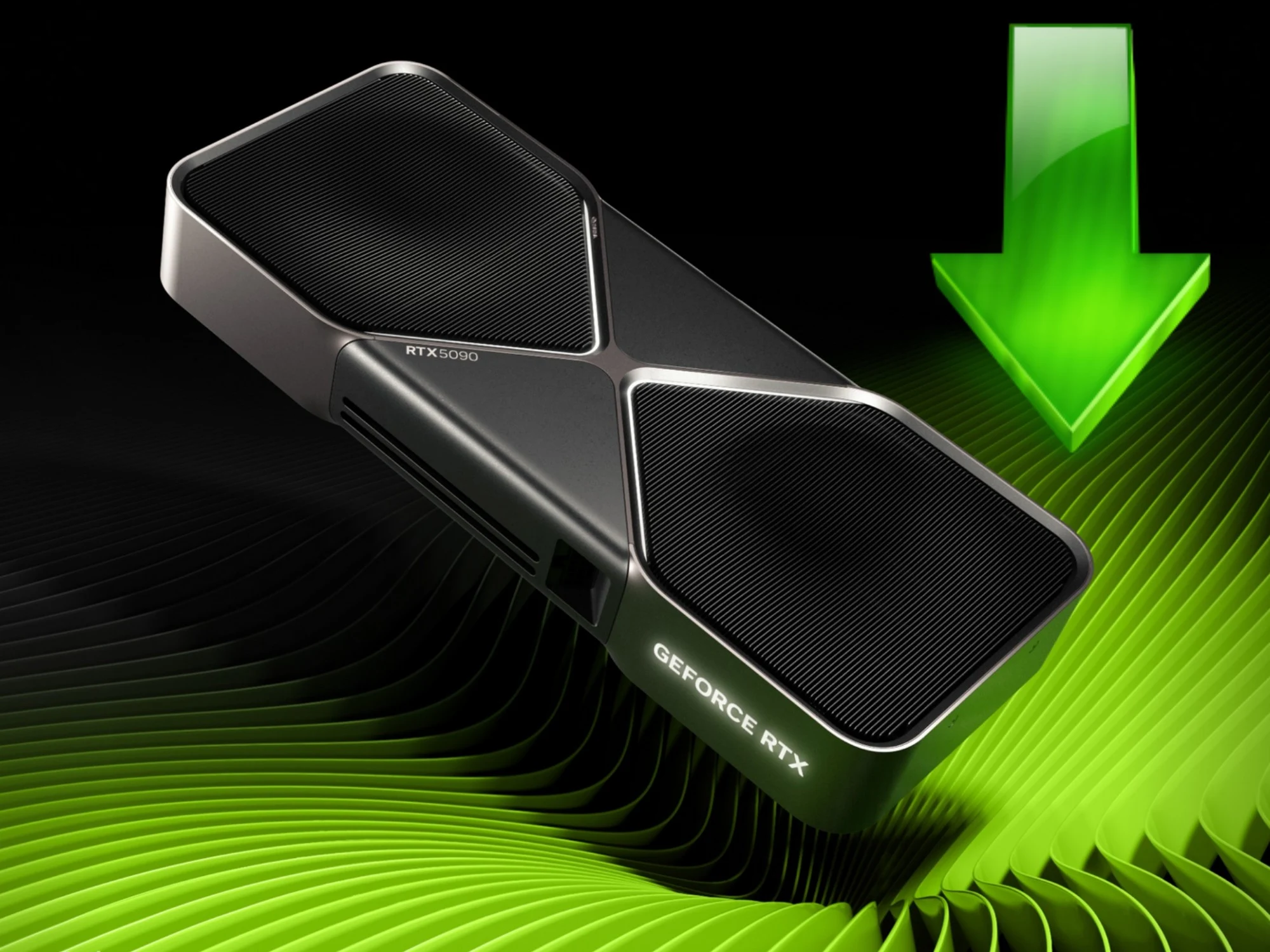
  • RTX 5060 Ti and RTX 5060 GPU Launch Delayed Again

    RTX 5060 Ti and RTX 5060 GPU Launch Delayed Again

    Key Takeaways

    1. The RTX 5060 Ti is expected to be unveiled in mid-April, with the RTX 5060 following in May.
    2. The delays are likely due to Nvidia’s inventory challenges and the need for additional validation.
    3. Nvidia’s Blackwell launch is not going as planned, affecting the release of the RTX 5060 series.
    4. AMD may benefit from the delays, allowing them time to launch their Radeon RX 9060 XT series.
    5. The RTX 5050, initially set for an April release, may also experience a delay of about a month.


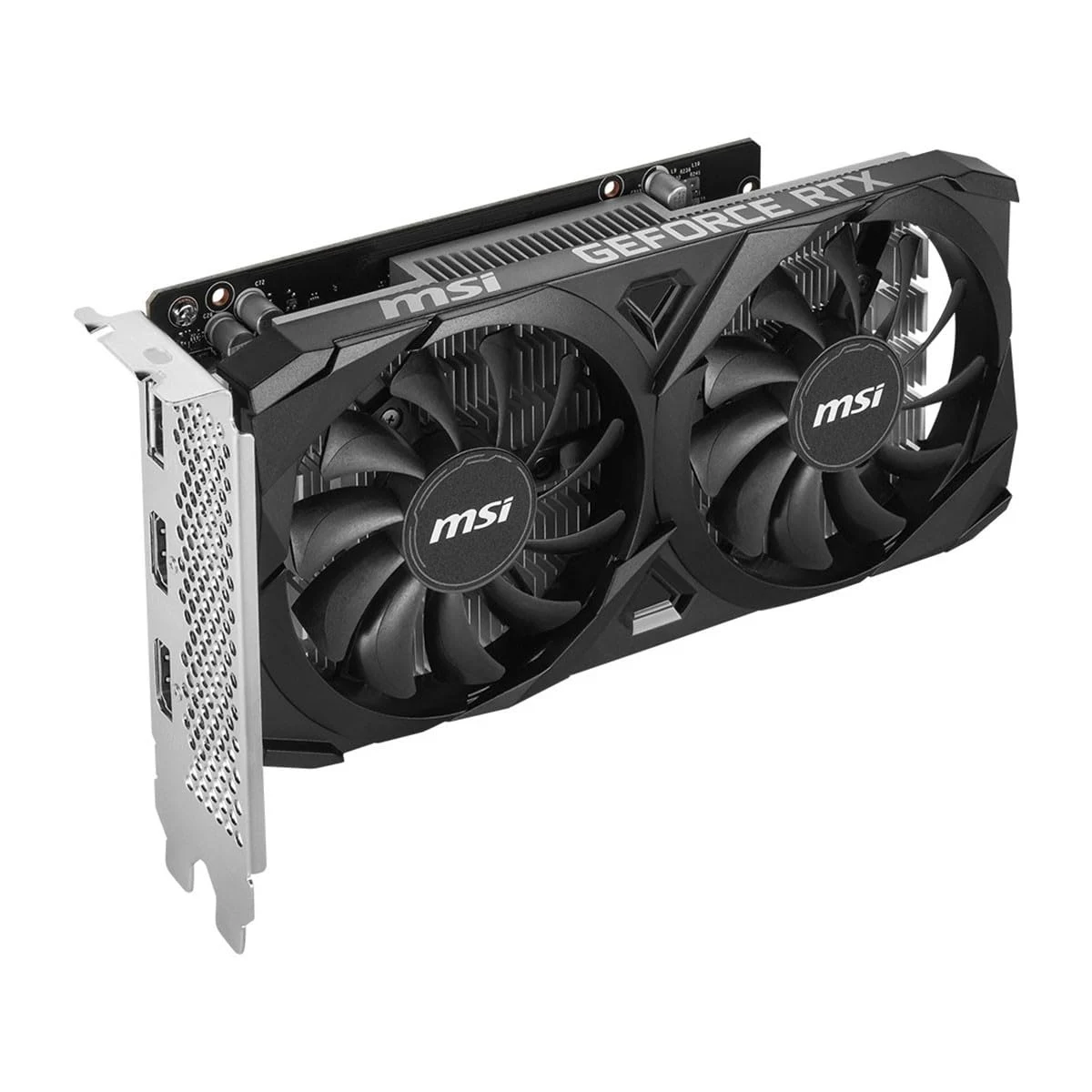
    A previous rumor suggested that Nvidia was set to unveil the RTX 5060 Ti in the near future. However, its laptop versions were not expected until May. A fresh update from Board Channels now indicates that both the desktop RTX 5060 and RTX 5060 Ti have also been postponed to around that same time.

    New Unveiling Dates

    The RTX 5060 Ti is now anticipated to be revealed in mid-April, while the RTX 5060 will follow a month later. Although the specific reasons for the delay have not been disclosed, it seems quite likely that Nvidia is still facing challenges with inventory. In contrast to the RTX 5090 and RTX 5080, which target a small group of high-end computer builders, the xx60 series cards are more in demand from a wider audience with limited budgets.

    Launch Issues

    Additionally, it seems Nvidia’s Blackwell launch is not proceeding as expected. The postponement of the RTX 5060 Ti and RTX 5060 might be partly due to extra validation efforts to ensure every SKU is equipped with all of its ROPs. Considering their place in Nvidia’s lineup and their low TDP, burnt power connectors shouldn’t be a major worry. However, there have been whispers about potential software problems affecting their laptop counterparts during the manufacturing process.

    Impact on Competitors

    The delay of the RTX 5060 and RTX 5060 Ti will offer AMD additional time to roll out its matching Radeon RX 9060 XT series, which is reportedly set to be available in both 8 and 16 GB options. This situation leaves us with the RTX 5050, the sole SKU in this lineup utilizing GDDR6. Initially planned for release at the end of April, it too might face a month-long delay.
  • Nvidia RTX 50 Series Price Cuts in Europe Amid Weak USD, Low Stock

    Nvidia RTX 50 Series Price Cuts in Europe Amid Weak USD, Low Stock

    Key Takeaways

    1. Nvidia has reduced prices for select RTX 50-series models in various European countries, including Germany and the UK.
    2. The price drop in Germany for the RTX 5090 is over 4%, while the UK sees smaller reductions, such as £50 off the RTX 5090 Founders Edition.
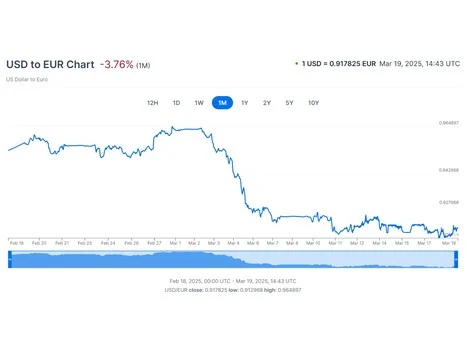
    3. The price adjustments are influenced by the declining value of the USD compared to the Euro and British Pound.
    4. Availability of MSRP cards is limited, making the price cuts less beneficial for most consumers.
    5. Third-party manufacturers are not obligated to follow Nvidia’s price changes, leading to higher prices for many overclocked variants.


    It’s quite rare for consumers to witness price reductions on newly launched GPUs. Recently, Nvidia has decided to reduce the prices of select models from the RTX 50-series across various European nations. VideoCardz received tips from readers who spotted these changes on Nvidia’s website. Unfortunately, only a handful of gamers will gain from these price cuts, as the availability of MSRP cards is nearly non-existent.

    Price Changes Across Europe

    Countries experiencing price reductions for the RTX 50-series include Germany and the UK. In Germany, the MSRP for the RTX 5090 has dropped more than 4%, going from €2329 to €2229. Discounts have also been noted for the RTX 5070 and RTX 5080. However, the RTX 5070 Ti, which does not have a Founders Edition, has seen no changes in its price. Meanwhile, a report from Poland indicated a small decrease in the GPU’s price.

    UK Price Adjustments

    In the UK, while the discounts are present, they aren’t as significant. The RTX 5090 Founders Edition debuted at £1,939, and Nvidia currently lists it at £1,889. As consumers look at lower models in the Blackwell lineup, they find price drops as small as £10 on the RTX 5070.

    The primary factor behind the changes in RTX 50-series pricing is the declining value of the USD compared to the Euro and British Pound. These currency shifts have influenced Nvidia’s pricing strategies in Europe. Typically, prices for European consumers are higher due to VAT inclusion. Naturally, without sufficient supply, the savings for buyers remain purely theoretical.

    The Challenge with Third-Party Manufacturers

    Third-party manufacturers are not required to follow Nvidia’s pricing adjustments. Even when Blackwell graphics cards are available, many overclocked variants are priced considerably above the MSRP. In the United States, brands like Asus and MSI continue to hike the prices of the RTX 50 series. For buyers, the best strategy may be to wait for a Founders Edition, but these cards are often targeted by scalpers due to their higher profit margins.

    Source:
    Link


  • Nvidia RTX Pro 6000 GPU: 96GB VRAM for Desktops, 24GB for Laptops

    Nvidia RTX Pro 6000 GPU: 96GB VRAM for Desktops, 24GB for Laptops

    Key Takeaways

    1. The RTX Pro 6000 is designed for professionals, featuring 96GB of GDDR7 VRAM and a bandwidth of 1.6 TB/s, surpassing the GeForce RTX 5090’s 32GB VRAM.
    2. It excels in AI workloads, rivaling AMD’s Ryzen Strix Halo, and is built for managing large AI models efficiently.
    3. The GPU has a thermal design power (TDP) of 400 to 600 watts and supports advanced technologies like PCIe 5.0 and DisplayPort 2.1.
    4. A laptop version of the RTX Pro 6000 is available with 24GB of VRAM, while Nvidia offers budget-friendly options with the RTX Pro 3000, 2000, 1000, and 500 series.
    5. The RTX Pro 6000 is expected to start shipping in April, with pre-built systems available from Dell, HP, and Lenovo in May, but pricing details have not yet been revealed.


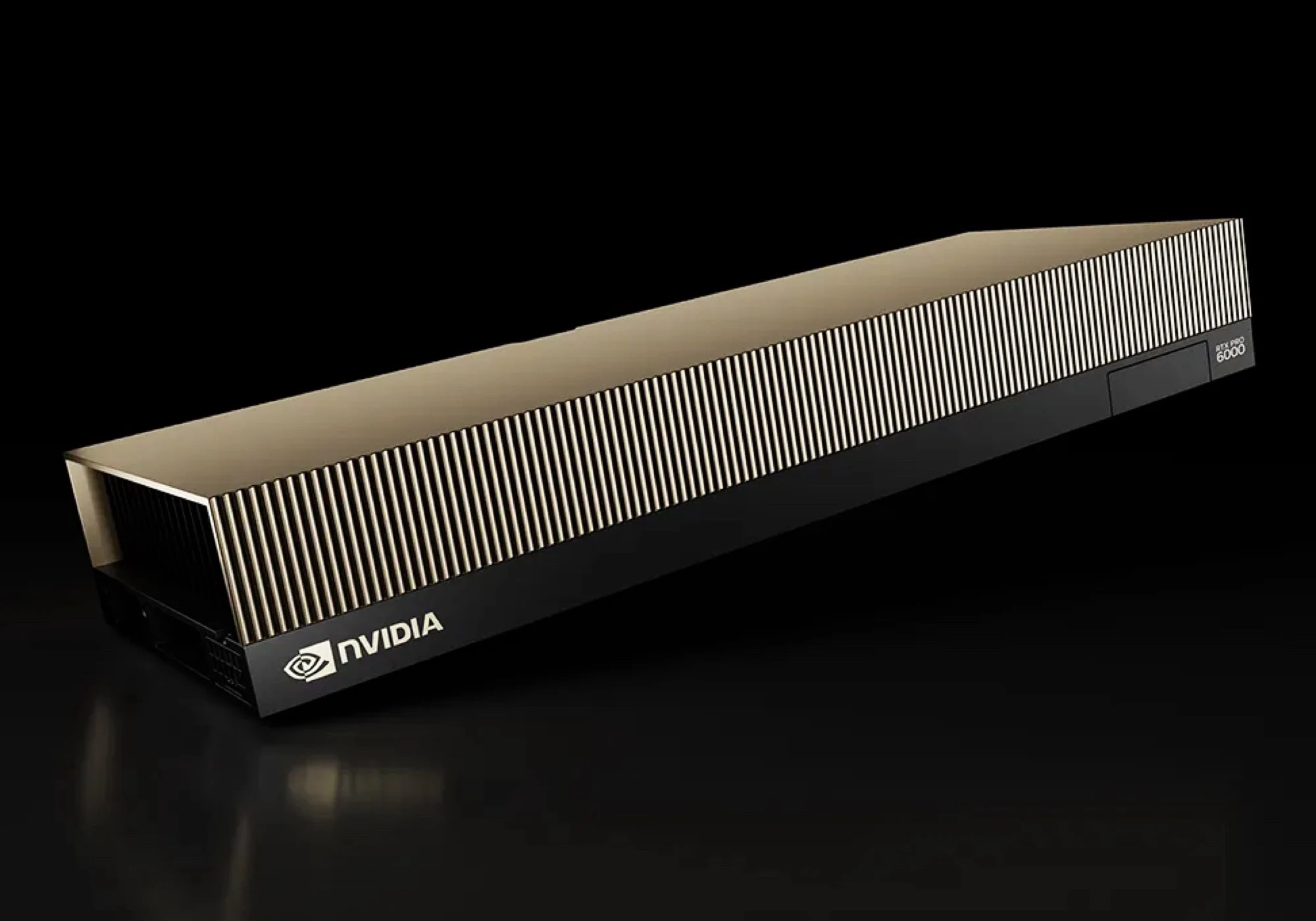
    The RTX Pro 6000 marks a new high point for Nvidia’s graphics cards aimed at professionals. This GPU is mainly made for AI tasks, game creators, and other expert users who require a substantial amount of video memory. In comparison, the Nvidia GeForce RTX 5090 has “only” 32GB of GDDR7 VRAM, whereas the desktop and server editions of the RTX Pro 6000 boast an impressive 96GB of GDDR7 along with a bandwidth of 1.6 TB/s.

    Competing in AI Workloads

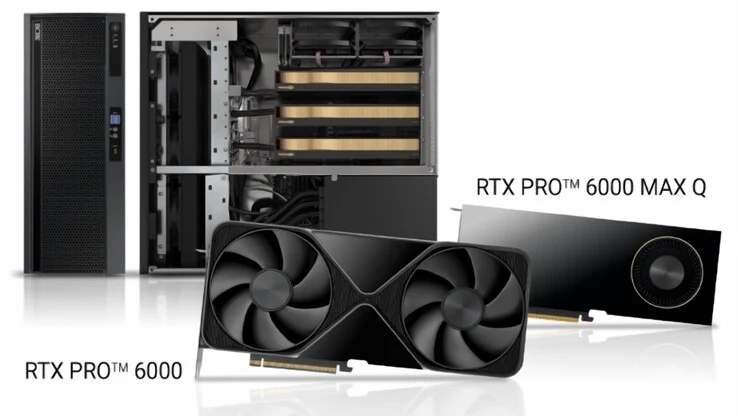
    With its 96GB of VRAM, the RTX Pro 6000 rivals AMD’s Ryzen Strix Halo when it comes to handling AI jobs, and this graphics card is expected to manage large AI models at a significantly quicker pace. The GPU operates with a thermal design power (TDP) ranging from 400 to 600 watts, and it supports modern technologies like PCIe 5.0 and DisplayPort 2.1. The sleeker Max-Q version may catch the eye of those looking to install multiple graphics cards within the same PC case.

    Laptop and Other Options

    Nvidia also provides a laptop version of the RTX Pro 6000, although this variant is capped at 24GB of VRAM, similar to the GeForce RTX 5090 for laptops. Additionally, Nvidia offers a range of more budget-friendly professional GPUs, like the RTX Pro 3000, 2000, 1000, and 500, which are built on the Blackwell architecture. However, Nvidia has not yet disclosed specifics about the CUDA core count or clock speeds for these new RTX Pro graphics cards.

    Release Timeline

    As of now, Nvidia has not announced the official pricing for its latest professional graphics cards. The RTX Pro 6000 is anticipated to begin shipping in April, while pre-built systems from Dell, HP, and Lenovo are expected to be available starting in May.

    Source:
    Link


  • Nvidia Zorah Tech Demo: The Future of Near-Photorealistic Game Graphics

    Nvidia Zorah Tech Demo: The Future of Near-Photorealistic Game Graphics

    Key Takeaways

    1. Nvidia’s “Zorah” tech demo showcases neural rendering to improve graphics efficiency by replacing traditional shaders with AI-based neural networks.
    2. The demo runs on Unreal Engine 5 and utilizes Nvidia’s RTX 5090 to achieve nearly photorealistic visuals with realistic lighting and shadows.
    3. An updated version of the demo was released on March 13, receiving praise for its artistic quality, though concerns about its practical application in gaming remain.
    4. A preview of the DirectX 12 Agility SDK supporting neural rendering will be available in April through a partnership with Microsoft.
    5. Nvidia plans to release Unreal Engine 5 plugins for developers, but the timeline for implementing this technology in game development is still uncertain.


    Nvidia has introduced an innovative tech demo named “Zorah,” which highlights the power of neural rendering. This AI-based technology is designed to boost efficiency in handling complex graphics by substituting traditional shaders with trained neural networks. The aim is to enhance image quality while simultaneously improving performance. Additional insights can be found in a blog post from Nvidia.

    Tech Demo Features

    The Zorah tech demo operates on Unreal Engine 5 and has been specifically crafted utilizing Nvidia’s unique RTX branch (NvRTX), a specialized version of the engine. It is powered by the latest RTX 5090, which is the flagship model in the 5000 series, striving to provide visuals that are nearly photorealistic, complete with authentic lighting and shadow effects. Nvidia first demonstrated this technology back in January:

    Recent Updates

    On March 13, an updated iteration of the tech demo was unveiled, showcasing even greater detail:

    YouTube users have lauded the artistic quality and visual excellence of the tech demo. Nonetheless, its stationary nature has led to questions about whether these advancements are truly ready for integration into game development. Some commenters have humorously noted potential low frame rates, making remarks like ‘RTX 5090: 17 FPS’ or ‘Without DLSS: 4 FPS.’

    Future Collaborations

    In partnership with Microsoft, a preview edition of the DirectX 12 Agility SDK that supports neural rendering will be launched in April. Nvidia also plans to provide various Unreal Engine 5 plugins for developers. However, it is yet unclear when and how this cutting-edge technology will be utilized in the realm of game development.

    YouTube / Nvidia GeForce

    Image source: Nvidia

    Source:
    Link


  • Nvidia RTX 50 Series Prices Expected to Stabilize Soon

    Nvidia RTX 50 Series Prices Expected to Stabilize Soon

    Key Takeaways

    1. Nvidia is collaborating with retailers and partners to improve supply and stabilize pricing for RTX 50 series GPUs.
    2. The company aims to sell existing inventory at the manufacturer’s suggested retail price (MSRP) as supply catches up to demand.
    3. Shipments of RTX 50 series GPUs have already increased since their launch in late January.
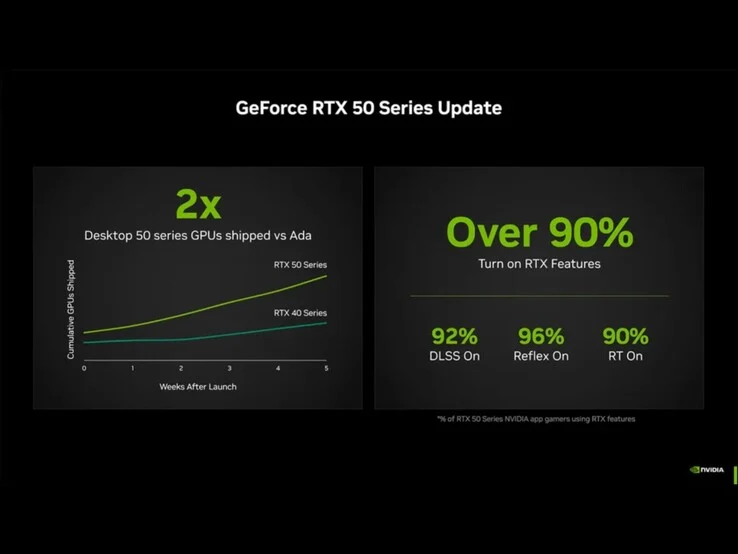
    4. Nvidia reported shipping double the number of RTX 50 series GPUs in the first five weeks compared to the RTX 40 series, though the comparison may be misleading.
    5. The timeline for when supply and pricing issues will fully resolve remains uncertain.


    Looks like Team Green supporters got some good news as Nvidia is reportedly teaming up with partners to enhance supply and stabilize pricing for the RTX 50 series GPUs. Since the RTX 5080 and RTX 5090 were launched for sale at the end of January, the stock situation has been terrible, and prices have been fluctuating wildly. The same issue was seen with the RTX 5070 Ti and RTX 5070, where only a handful of fortunate buyers managed to acquire them.

    Nvidia’s Efforts to Stabilize Supply

    In a report by Tweak Town, which references a chat with Nvidia’s Justin Walker, the firm is collaborating with retailers and AIB partners to make sure that the existing supply is sold at the manufacturer’s suggested retail price (MSRP). Walker mentioned, “the best way to do that is get more supply onto a shelf. As soon as supply catches up to demand, we expect prices to stabilize.” He also noted that shipments for the GPUs have already increased, and the company is working hard to ensure that supply meets the demand.

    Future Outlook

    When these promises will come to fruition is still uncertain, but at least Nvidia seems to be taking steps to tackle the supply challenges that consumers have faced for several months now.

    With GDC 2025 just around the corner, Nvidia has shared some sales data for its RTX 50 series. The company claims it shipped twice as many RTX 50 series GPUs in the first five weeks following the launch compared to the RTX 40 series in the same timeframe. Curiously, all four cards in the RTX 50 series were released within five weeks of each other, starting with the RTX 5080 and RTX 5090 on January 30 and culminating with the RTX 5070 on March 5. In contrast, only the RTX 4090, which launched on October 12, 2022, was available for most of the first five weeks, while the RTX 4080 showed up on November 16. This implies that Nvidia is making a comparison between the entire RTX 50 series lineup and just the RTX 4090, which might make their claim of shipping double the units appear somewhat misleading.

    Source:
    Link


  • Nvidia GeForce RTX 5060 and Ti Announcement Imminent

    Nvidia GeForce RTX 5060 and Ti Announcement Imminent

    Key Takeaways

    1. Nvidia will announce the GeForce RTX 5060 series desktop graphics cards soon.
    2. The announcement is specifically for desktop versions, with laptop versions coming later.
    3. The official reveal of the RTX 5060 cards is scheduled for tomorrow.
    4. The actual launch of the RTX 5060 series will occur next month.
    5. The series will include the GeForce RTX 5060, RTX 5060 Ti 8 GB, and RTX 5060 Ti 16 GB models.


    Plenty of news have been floating around about Nvidia’s upcoming desktop graphics cards aimed at consumers in recent days. To summarize, details about the specifications and supposed prices for the GeForce RTX 5060 and two variants of the GeForce RTX 5060 Ti have leaked, followed by the sighting of a GeForce RTX 5060 pre-built system on a French retailer’s site.

    Nvidia’s Announcement

    According to VideoCardz, Nvidia has shared the date for the announcement of all GeForce RTX 5060 series graphics cards. It’s important to mention that this announcement is specifically for desktop versions. Similar to the other RTX 50 family members, laptop versions of the GeForce RTX 5060 will be launched at a later date in a different event.

    Release Timeline

    The website states that Nvidia will ‘officially reveal’ the RTX 5060 desktop cards tomorrow. However, it also mentions that the actual launch for these cards will not happen until next month. In short, the GeForce RTX 5060 series is expected to include the following models to take the place of the GeForce RTX 4060 Ti and the more affordable RTX 4060 (currently priced at $309.99 on Amazon):

    Source:
    Link

  • RTX 5050 Specs Leak: Bigger Bus & Higher TDP vs RTX 4050

    RTX 5050 Specs Leak: Bigger Bus & Higher TDP vs RTX 4050

    Key Takeaways

    1. The RTX 3050 was the last x50 class GPU for desktops, with Nvidia now limiting the RTX 4050 to laptops.
    2. The upcoming RTX 5050 will be a budget-friendly GPU priced under $300, confirmed through an ECC filing.
    3. The RTX 5050 features a GB207-300 GPU with 2,560 CUDA cores, 8 GB of GDDR6 VRAM, and a 128-bit bus.
    4. It has a TDP of 130 W, identical to the RTX 3050 and slightly higher than the RTX 4060.
    5. Performance of the RTX 5050 is expected to be better than the mobile RTX 4050, potentially approaching RTX 4060 levels, but without an increase in CUDA cores, significant gains may be limited.


    The RTX 3050 was the last GPU in the x50 class to be released for desktops, as Nvidia decided to limit the RTX 4050 to laptops only. This decision was quite strange, especially since there wasn’t a desktop RTX 40 model priced under $300, with the RTX 4060 launching at $299. Consequently, those looking for budget-friendly options had no choice but to look for older models like the RTX 30 or RX 6000 series.

    Introduction of the RTX 5050

    In a change of pace, Nvidia is set to offer gamers a budget-friendly option with the RTX 5050, which will be priced under $300. The confirmation of this GPU’s existence came from an ECC filing. Additionally, some specifications and pricing details have also been revealed. Thanks to leaker kopite7kimi on X, we now have some important information regarding the RTX 5050’s specs.

    Specifications Overview

    From the very beginning, it’s evident that the RTX 5050 is aimed at budget-conscious gamers, so there’s not much in the way of pleasant surprises. The card is expected to feature a GB207-300 GPU that includes 2,560 CUDA cores. This setup is matched with a 128-bit bus and 8 GB of GDDR6 VRAM. Unfortunately, the leaker did not provide any details about clock speeds.

    The RTX 5050 is said to have a TDP of 130 W, which is the same as the desktop RTX 3050 and 15 W higher than the RTX 4060 (which is available on Amazon). Interestingly, this TDP is actually 5 W lower than the figure recently reported by Wccftech.

    Performance Expectations

    Since there is no desktop RTX 4050 for comparison, we’ll have to look at the mobile version of the RTX 4050 to make some educated guesses about performance.

    Initially, both GPUs share the same CUDA core count, but the RTX 5050 has a wider memory bus (128-bit compared to 96-bit). Furthermore, the RTX 5050 is likely to have a maximum TDP that is 15 W higher. While the number of CUDA cores may be identical, Nvidia can leverage this extra power to enhance the clock speeds of the RTX 5050 significantly compared to the RTX 4050’s boost clock, which can reach 2,370 MHz.

    In light of this information, we can anticipate that the RTX 5050 will offer a noticeable, though not extraordinary, performance improvement over the RTX 4050 mobile GPU. In the best-case scenario, it may even get close to the RTX 4060, which is about 25% faster than the RTX 4050 laptop in our tests. Nonetheless, without an increase in CUDA cores, such an outcome seems improbable.

    Source:
    Link

  • RTX 5050 Desktop GPU Price and Release Date Leaked

    RTX 5050 Desktop GPU Price and Release Date Leaked

    Key Takeaways

    1. The GeForce RTX 5050 is expected to feature 8 GB of VRAM and a total board power of 135 Watts, with a potential release date in late April 2025.
    2. The RTX 5050 may debut alongside the RTX 5050 Ti, possibly utilizing GDDR6 or GDDR7 memory.
    3. The RTX 5050 and RTX 5050 Ti are aimed at a price range of $200 to $250, targeting competition with Intel’s Arc B570/B580 GPUs.
    4. The introduction of the RTX 5050 is beneficial for budget PC builders, suitable for 1080p gaming with 8 GB of VRAM.
    5. There are currently no AMD graphics cards announced in this price range, but a corresponding RX 9050 may follow the RX 9060 XT release.


    With the GeForce RTX 5070 now officially announced (at least on paper), the only remaining Nvidia GPUs in this generation are the RTX 5060 and RTX 5060 Ti, based on Nvidia’s earlier launch patterns. Nonetheless, an EEC listing has revealed the presence of a GeForce RTX 5050, while HP has provided details about its laptop version. A recent report from Wccftech gives us further insights into this entry-level graphics card.

    Specifications and Release Date

    The RTX 5050 is expected to utilize a PG162 SKU 25 board and will feature 8 GB of VRAM along with a total board power (TBP) of 135 Watts. Nvidia might unveil this model around late April 2025. It remains unclear whether it will use GDDR6 or GDDR7 memory, but considering Nvidia’s track record, it’s possible they opt for the latter to save on costs. The RTX 5050 might also debut as the RTX 5050 Ti. Launching both models at the same time seems illogical unless one has less VRAM, similar to the RTX 3050 6 GB.

    Competition and Pricing

    If this information holds true, the RTX 5050 and RTX 5050 Ti will be the third Nvidia desktop GPU of this generation to offer 8 GB of VRAM, joining the RTX 5060 Ti 8 GB and RTX 5060. Nvidia is aiming to position the RTX 5050 as a competitor to the Arc B570/B580, with a targeted price range of $200 to $250. However, for those who can spend an additional $50, the RTX 5060 is likely to provide significantly better performance than an xx50 class card.

    Implications for Budget Builders

    Regardless, the introduction of the RTX 5050 for desktops is promising news for budget-conscious PC builders. Having 8 GB of VRAM is suitable for 1080p gaming, especially when combined with Nvidia’s clever software enhancements. Currently, no AMD graphics cards have been announced in this price bracket, but if the RTX 5050 comes to fruition, it’s reasonable to expect a corresponding RX 9050 to follow, after the RX 9060 XT is released in Q2 this year.

    Source:
    Link

  • New Lossless Scaling Update: Adaptive Frame Generation Added

    New Lossless Scaling Update: Adaptive Frame Generation Added

    Key Takeaways

    1. New Feature: Lossless Scaling 3.1 introduces Adaptive Frame Generation (AFG) for smoother performance in games with frame rate limits.
    2. Dynamic Adjustments: AFG allows for fractional multipliers, improving frame rate consistency compared to fixed settings.
    3. GPU Load: AFG increases GPU load as it generates most frames, potentially impacting performance.
    4. Latency Increase: Users may experience higher latency, which can be twice as much when frame generation is active.
    5. Comparison to Competitors: Lossless Scaling is an alternative to AMD and Nvidia’s native features, but may not enhance gameplay as effectively.


    The paid upscaling and frame generation software Lossless Scaling has been updated to version 3.1. This latest version introduces a feature called Adaptive Frame Generation (AFG). The developers say this will be especially useful for games that have either soft or hard frame rate limits.

    Dynamic Adjustments

    With AFG, Lossless Scaling can now modify its settings to fit fractional multipliers, which helps games with frame rate caps to keep a desired frame rate. The developers claim that this feature delivers a smoother experience compared to the previous fixed frame multiplier setting.

    Potential Drawbacks

    Though this new addition sounds promising, there are some disadvantages. When Adaptive Frame Generation is active, Lossless Scaling will create the majority of the frames shown on screen. This can increase the load on the GPU. The developers also mention that image quality might see a slight decline, particularly when you compare it to the fixed multiplier mode.

    Latency Issues

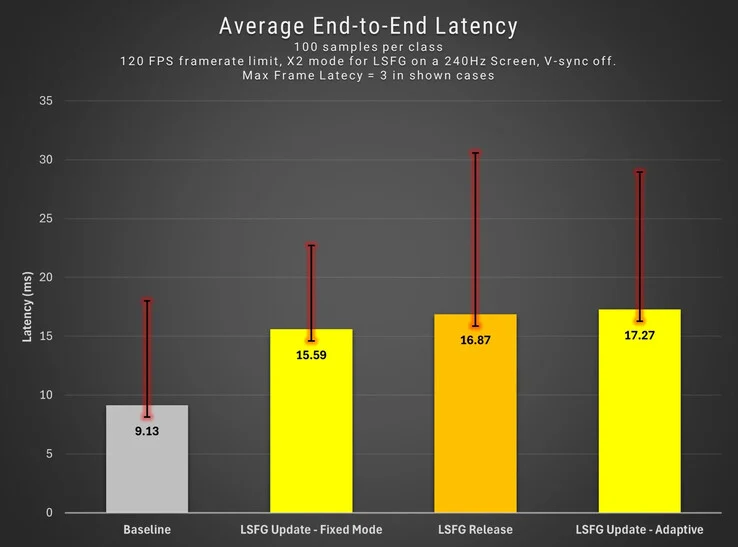
    Moreover, users may experience a small rise in latency. As per the comparison provided by the developers, this could be twice as high as it is without any frame generation technology active. It’s important to note that the software will turn off frame generation if the base frame rate drops below 10 FPS. This is to minimize unnecessary GPU strain and to avoid excessive visual artifacts during loading screens.

    For those unfamiliar with Lossless Scaling, it serves as an alternative to the native upscaling and frame generation features offered by AMD and Nvidia. However, since this is not a feature at the driver level, it might not enhance gameplay as much as Nvidia’s Smooth Motion or AMD’s Fluid Motion Frames. For more information, check out the video linked below.

    Source:
    Link


  • GeForce RTX 50 Laptops Lack ROPs Found in Desktop Models

    GeForce RTX 50 Laptops Lack ROPs Found in Desktop Models

    Key Takeaways

    1. Nvidia’s Blackwell-based RTX 50 graphics cards may have a small portion lacking Render Output Units (ROPs), potentially affecting both desktop and laptop models.
    2. Manufacturing defects are usually caught before shipping, but some issues may slip through, raising concerns about Nvidia’s RMA plan.
    3. The GeForce RTX 5090 and RTX 5080 are likely candidates for the ROP issue due to their use of the GB203 GPU.
    4. The recent earthquake in Taiwan might have damaged up to 20,000 wafers, impacting the supply of RTX 50 laptop variants.
    5. The RTX 50 series is facing supply chain challenges, including scarcity of RTX 5070 cards and performance-related issues, as reported by DigiTimes.


    Even though Nvidia mentioned that only a “small portion” of its Blackwell-based RTX 50 graphics cards are lacking ROPs (Render Output Units), the issue could possibly go beyond just its desktop products. Reports from Heise.de and Hardwareluxx indicate that certain laptop models may also be impacted.

    Production Concerns

    Typically, most defects like these are expected to be caught and fixed during the manufacturing process before the products are shipped. However, it’s possible for some issues to get missed, and we can only hope that Nvidia has a solid RMA plan ready for such situations.

    Potentially Affected Models

    It is still unclear which specific models are impacted, but the GeForce RTX 5090 and RTX 5080 might be likely suspects, as they utilize the same GB203 GPU found in the desktop RTX 5080 and 5070 Ti. Even if all ROPs are intact, the RTX 50 laptop variants face additional challenges. Reports say that the recent earthquake in Taiwan could have damaged as many as 20,000 wafers.

    Supply Chain Issues

    The exact number of these wafers belonging to Nvidia remains uncertain, but the current scarcity of RTX 5070 cards and the delayed launch of RTX 50 laptop variants imply that the company may have experienced some loss in stock. Additionally, a report from DigiTimes reveals that the RTX 50 series is facing some performance and driver-related issues.

    Source:
    Link