Tag: AI applications

  • Lenovo Yoga Pro 16 Laptop: RTX 5070, 64GB RAM, Double Price

    Lenovo Yoga Pro 16 Laptop: RTX 5070, 64GB RAM, Double Price

    Key Takeaway

    – Lenovo released a high-end Yoga Pro 16 variant with RTX 5070 (12GB VRAM), 64GB RAM, and 2TB storage.
    – Priced at ~$4,865 in China (~$4,350 with subsidy), it costs about double the US Yoga Pro 9i with RTX 5060.
    – The 12GB RTX 5070 offers significantly more graphics power than the 8GB versions, targeting creatives.
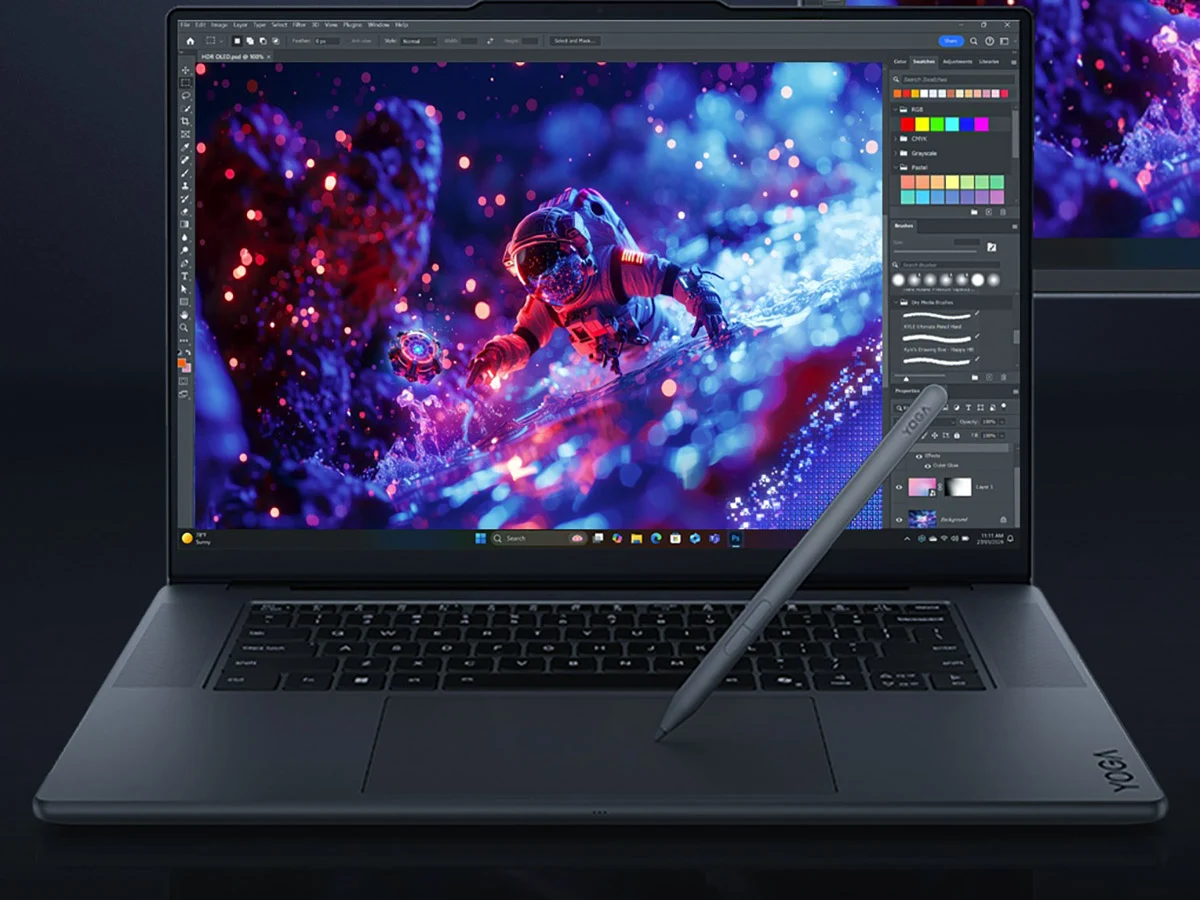
    – Features include Core Ultra 9 386H, 16-inch tandem OLED touchscreen (1600 nits, 120Hz), and enhanced cooling.
    – It has a 92.5Wh battery, rich port selection, six-speaker Dolby Atmos audio, and a Wacom-powered 7-inch pen tablet touchpad.


    Yoga Pro Hits New Heights

    Lenovo has maxed out its venerable Yoga Pro convertible line of laptops with a new variant that boasts a more powerful Nvidia RTX 5070 graphics subsystem, 64 GB of RAM, and 2 TB of storage. As can be expected in this day and age when AI computing infrastructure gobbles up all the world’s chip supply at an increasing pace, the newest Yoga Pro 16 version that just got released in China is not cheap.

    Price and Config Breakdown

    The beefier 16-inch Yoga Pro convertible laptop trim, combining a 12 GB RTX 5070 GPU with 64 GB RAM and a 2 TB SSD, can be bought directly from Lenovo at a $4,865 equivalent (32,999 yuan). Lenovo seems to have chosen this moment to release such a pricey variant because it can still capitalize on the local government’s “digital device” national subsidy campaign that brings down the price to $4,350 (24,999 yuan).

    • RTX 5070 GPU with 12 GB GDDR7 VRAM and 115W TDP
    • 64 GB LPDDR5X RAM
    • 2 TB PCIe 4.0 SSD in dual-bay M.2 2280 config
    • Core Ultra 9 386H processor

    Comparing US and China Trims

    Compared to the same Yoga Pro 9i that Lenovo sells on Amazon in the US for just $2,230 with an RTX 5060 GPU, however, that is still double the money difference for doubling the memory amount and shoehorning the beefier RTX 5070 laptop GPU version with 12 GB GDDR7 VRAM and 115W TDP that Nvidia just started shipping in it. Still, Lenovo obviously thinks that there would be a market for those creatives who need to squeeze more graphics power out of their Yoga Pro convertible.

    GPU Performance Nuances

    Heretofore, both the RTX 5060 and 5070 laptop GPUs were available with 8 GB of video RAM, so the actual performance difference in benchmarks would barely hit 20%, but the 12 GB RTX 5070 is a different ballgame for those who need it. Other than the graphics power upgrade, the new Yoga Pro 16 comes with the same great specs that the US-available trims offer, namely a Core Ultra 9 386H processor, LPDDR5X memory, and a PCIe 4.0 SSD in a standard M.2 2280 dual-bay configuration.

    Cooling and Display Design

    Lenovo, however, treated this one as a gaming laptop when it comes to cooling with more openings and an increase of the effective dissipation area of the island and square heat pipe. The display is the same 16-inch tandem OLED touchscreen with top-shelf characteristics such as 1600 nits HDR peak brightness, 100% wide color gamut coverage, a 120 Hz dynamic refresh rate, and ten-point touch sensitivity.

    • 16-inch tandem OLED touchscreen
    • 1600 nits HDR peak brightness
    • 120 Hz dynamic refresh rate
    • 100% wide color gamut coverage

    Dimensions and Battery Life

    The aluminum chassis weighs a little over four pounds (1.9 kg), and the whole Yoga Pro 15 with a 12 GB RTX 5070 GPU measures just 0.68 inches (17.3 mm) thin despite also housing a large 92.5 Wh battery promising up to 18.5 hours of endurance and a smorgasbord of ports and slots: 2x Thunderbolt 4, 2x USB-A, an HDMI 2.1, a 3.5 mm headphone jack, and an SD card reader.

    Multimedia and Pen Input

    Since the Yoga Pro Aura edition laptops are billed for creatives, Lenovo payed attention to the multimedia chops of the new RTX 5070 edition by providing a rich sound subsystem supporting Dolby Atmos and Smart AMP with six speakers in a dual tweeter and four woofer crossover design as well as four surround-sound mics. Last but not least, the Wacom-powered touchpad can be used as a 7-inch writing tablet, complete with 4096 levels of pen pressure sensitivity and linear motor feedback to simulate realistic writing or drawing strokes.

    Global Availabilty Outlook

    This makes the new Yoga Pro SKU with a 12 GB 5070 GPU a well-rounded and futureproof convertible for creatives, but it remains to be seen if Lenovo will release it globally at some point, as its price seems posed to top four grand if and when it lands in the US.
    Sources
  • Aaeon Boxer 8651AI Plus: Fanless PC with Nvidia Jetson Orin NX

    Aaeon Boxer 8651AI Plus: Fanless PC with Nvidia Jetson Orin NX

    Key Takeaways

    1. Aaeon launched the Boxer 8651AI Plus, a compact computer system based on the Orin NX platform, available in 8GB and 16GB versions.
    2. The system features impressive performance, delivering up to 100 TOPS of INT8 performance, with a “Super Mode” pushing it to 157 TOPS, suitable for intensive AI tasks.
    3. Potential applications include AI-aided product quality checks using cameras for real-time monitoring on production lines.
    4. The device has limitations for standard use, such as outdated HDMI 1.2 output and reliance on an M.2 2242 SSD for storage.
    5. The starting price is $1,341, positioning it as a high-performance option for specific industrial applications rather than a conventional mini PC.


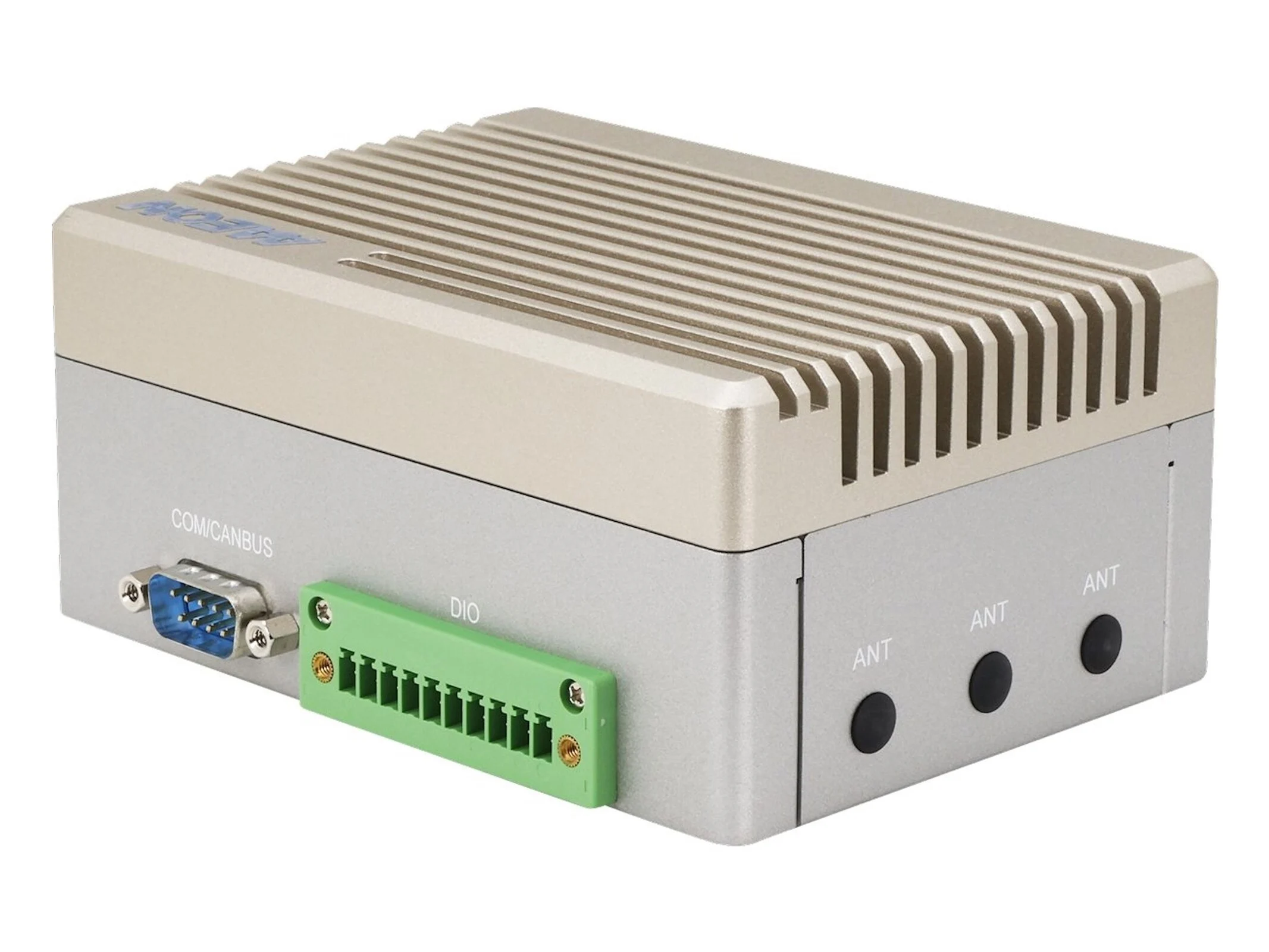
    Aaeon has launched a new compact computer system known as the Boxer 8651AI Plus. This device is built on the Orin NX platform and comes in two versions: 8GB and 16GB. The model with the increased LPDDR5 memory is equipped with eight Cortex-A78AE cores instead of six. Although the ARM chipset is impressive, the standout feature is likely the Nvidia Ampere GPU.

    High Performance for AI Applications

    Depending on how its configured, the system can deliver as much as 100 TOPS of INT8 performance, enabling it to handle more intensive AI tasks locally. Aaeon claims that the “Super Mode” can push this performance to a maximum of 157 TOPS and also supports Nvidia Jetpack 6.2. Potential applications for this device include AI-aided product quality checks, such as using cameras to scrutinize packaging as it moves down a conveyor belt.

    Practical Use Cases

    While one could theoretically use the Aaeon Boxer 8651AI Plus like a standard mini PC, it may not be the most practical choice. For example, this device is limited to an outdated HDMI 1.2 output for 1080p displays. It utilizes an M.2 2242 SSD for storing the operating system and additional data. There are two USB 3.2 Gen 2 ports available, and network access is provided through Gigabit Ethernet. Power requirements range from 12 to 24 volts, and it includes a DB9 connector. The official starting price from Aaeon for this device is $1,341.

    Conclusion

    Overall, the Aaeon Boxer 8651AI Plus presents a compact and high-performance option for AI applications. With its unique features and specifications, it is suited for specific industrial use cases, though it may not serve well as a conventional mini PC. The combination of power and versatility makes this system a noteworthy addition to the market.

    Source:
    Link


  • Orange Pi 6 Plus vs Raspberry Pi 5: 64GB RAM and AI Power

    Orange Pi 6 Plus vs Raspberry Pi 5: 64GB RAM and AI Power

    Key Takeaways

    1. The Orange Pi 6 Plus is a powerful single-board computer designed for AI tasks, featuring an NPU with up to 45 TOPS performance.
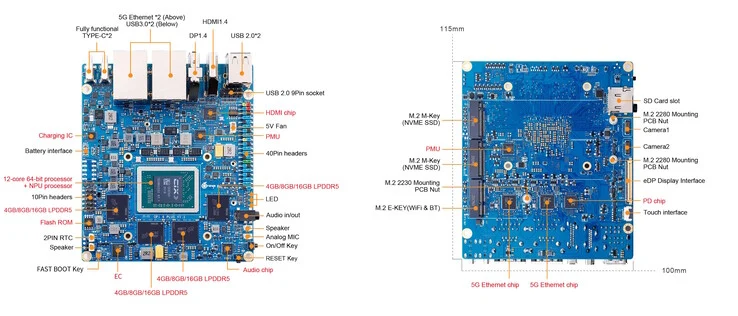
    2. It has a 12-core SoC and offers LPDDR5 memory options of 16, 32, or 64GB, along with M.2 slots for SSD and WiFi/Bluetooth connectivity.
    3. The SBC includes dual Ethernet ports with 5 Gbps bandwidth and multiple video output options (DisplayPort, USB Type C, HDMI, eDP).
    4. It supports camera connections via MIPI CSI and has two USB 3.0 and two USB 2.0 Type A ports.
    5. The dimensions of the Orange Pi 6 Plus are approximately 4.5 by 3.9 inches, and it includes a 40-pin GPIO header; pricing and release dates are not yet available.


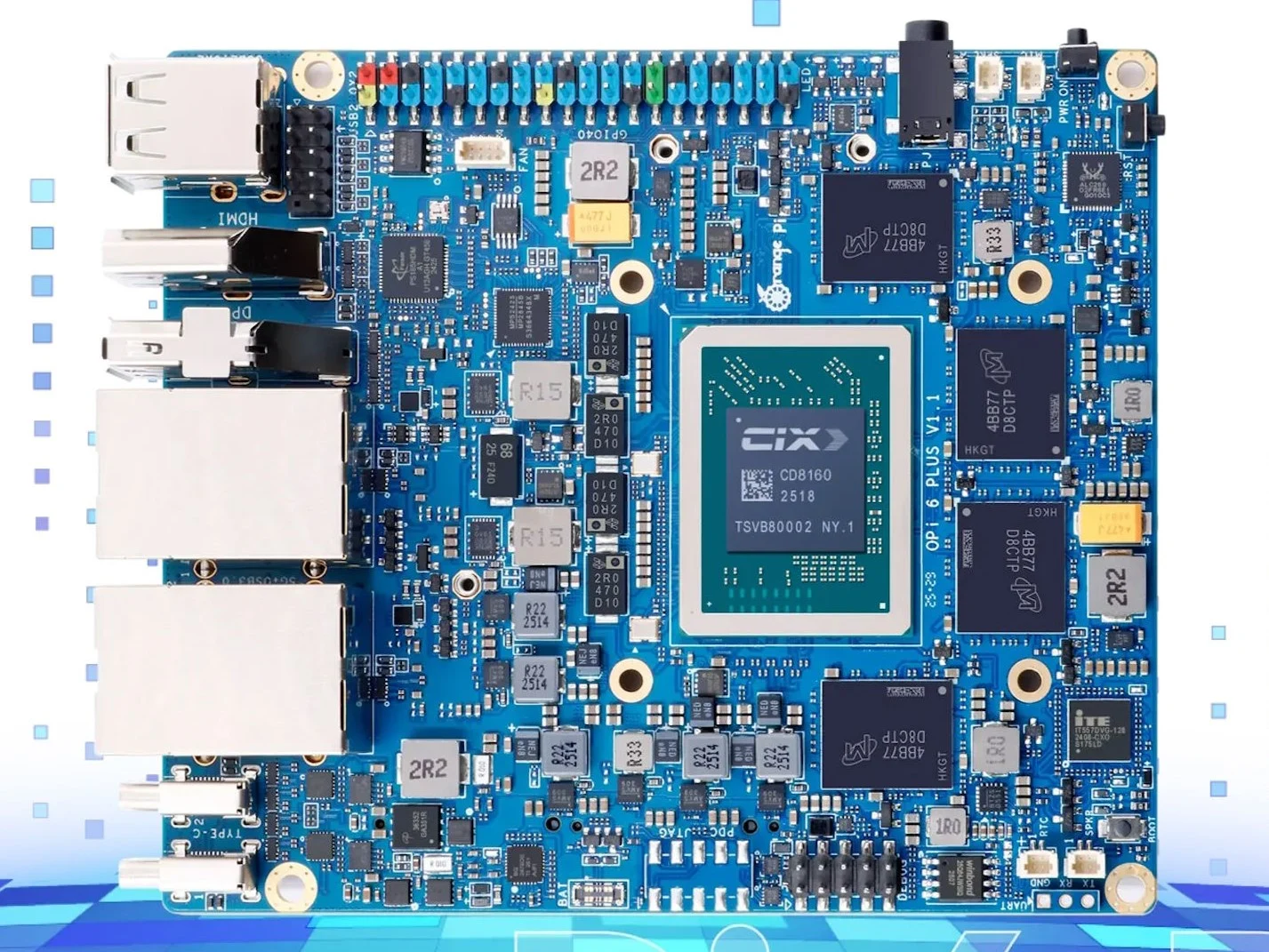
    The Orange Pi 6 Plus is a recently introduced single-board computer that boasts impressive performance specifically designed for AI tasks. It includes an NPU capable of reaching up to 45 TOPS, positioning it alongside contemporary AMD and Intel chipsets in terms of NPU efficiency. For context, the AMD Ryzen AI 9 HX 370 achieves an AI performance of 40 TOPS. Such elevated AI capabilities make it feasible to operate various AI models directly on the SBC. For instance, monitoring a live camera feed for potential fire hazards in remote areas could be one of the applications.

    Impressive Specifications

    Equipped with an SoC featuring twelve cores, the Orange Pi 6 Plus offers LPDDR5 memory options of 16, 32, or 64GB, depending on the chosen setup. It comes with several M.2 2280 slots for SSD connections, while an additional M.2 Key E card can be used for WiFi and Bluetooth functionality. As is customary with single-board computers, it also includes an SD card reader.

    Connectivity and Features

    Moreover, this SBC is outfitted with two Ethernet ports capable of delivering a bandwidth of 5 Gbps. Users can connect multiple monitors through DisplayPort, USB Type C, HDMI, and eDP. Hobbyists have the option to attach cameras via MIPI CSI, and it features two USB 3.0 and two USB 2.0 Type A ports. The dimensions of this alternative to Raspberry Pi 5 are approximately 4.5 by 3.9 inches, and it includes a 40-pin GPIO header. However, details regarding pricing and release dates for the Orange Pi 6 Plus have yet to be disclosed.

    Source:
    http://www.orangepi.org/html/hardWare/computerAndMicrocontrollers/details/Orange-Pi-6-Plus.html)


  • Nvidia RTX Pro 6000 GPU: 96GB VRAM for Desktops, 24GB for Laptops

    Nvidia RTX Pro 6000 GPU: 96GB VRAM for Desktops, 24GB for Laptops

    Key Takeaways

    1. The RTX Pro 6000 is designed for professionals, featuring 96GB of GDDR7 VRAM and a bandwidth of 1.6 TB/s, surpassing the GeForce RTX 5090’s 32GB VRAM.
    2. It excels in AI workloads, rivaling AMD’s Ryzen Strix Halo, and is built for managing large AI models efficiently.
    3. The GPU has a thermal design power (TDP) of 400 to 600 watts and supports advanced technologies like PCIe 5.0 and DisplayPort 2.1.
    4. A laptop version of the RTX Pro 6000 is available with 24GB of VRAM, while Nvidia offers budget-friendly options with the RTX Pro 3000, 2000, 1000, and 500 series.
    5. The RTX Pro 6000 is expected to start shipping in April, with pre-built systems available from Dell, HP, and Lenovo in May, but pricing details have not yet been revealed.


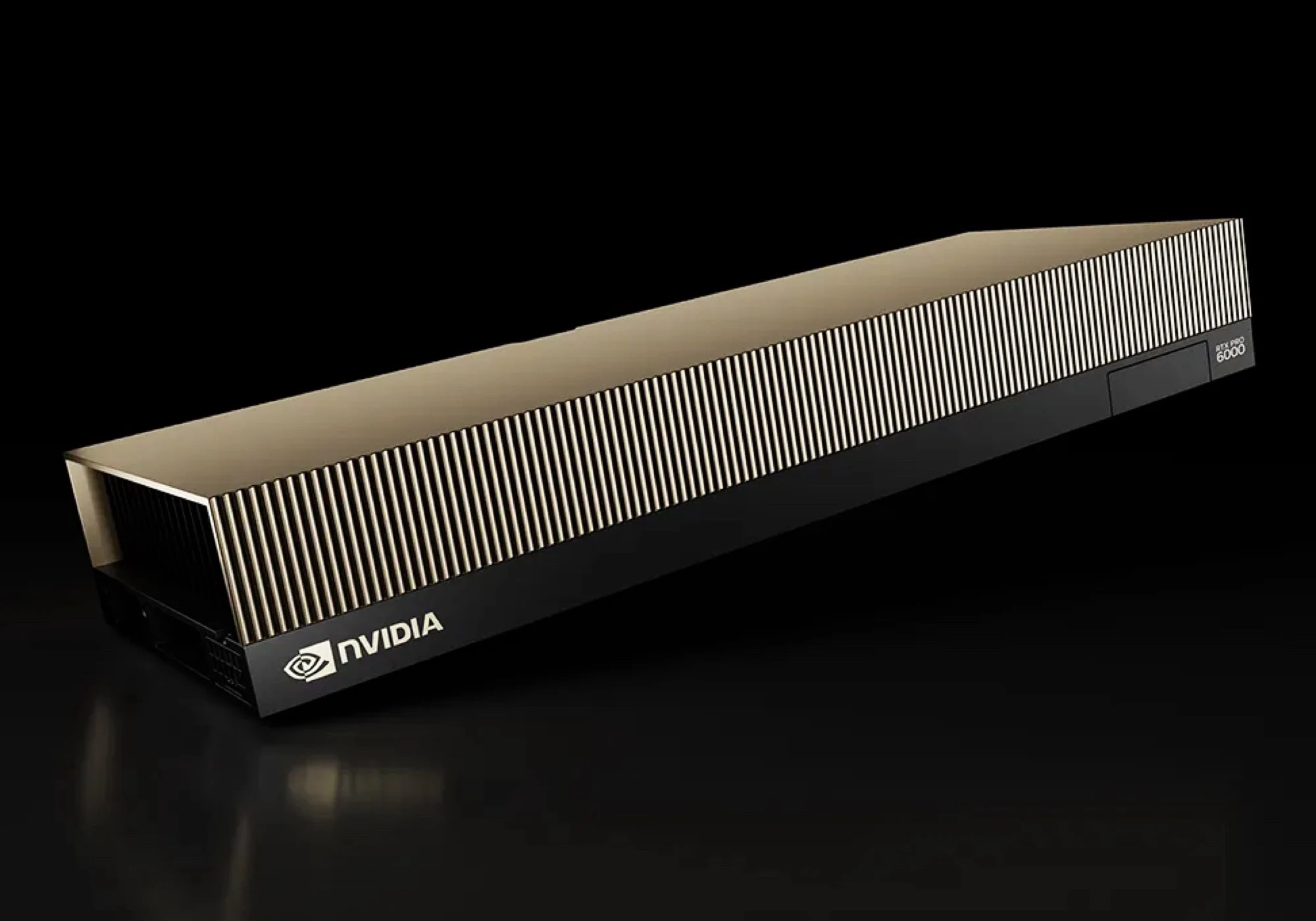
    The RTX Pro 6000 marks a new high point for Nvidia’s graphics cards aimed at professionals. This GPU is mainly made for AI tasks, game creators, and other expert users who require a substantial amount of video memory. In comparison, the Nvidia GeForce RTX 5090 has “only” 32GB of GDDR7 VRAM, whereas the desktop and server editions of the RTX Pro 6000 boast an impressive 96GB of GDDR7 along with a bandwidth of 1.6 TB/s.

    Competing in AI Workloads

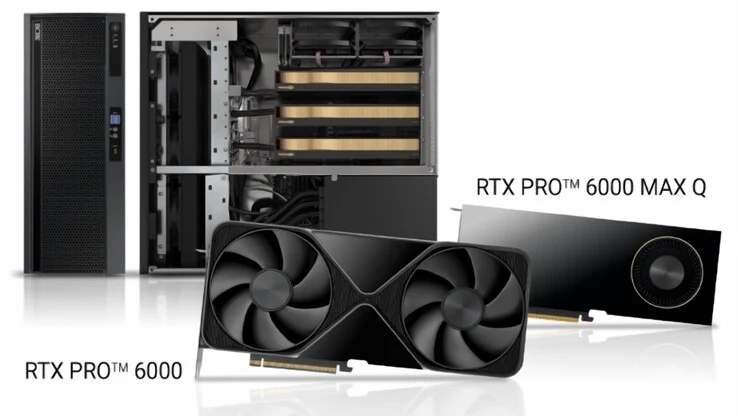
    With its 96GB of VRAM, the RTX Pro 6000 rivals AMD’s Ryzen Strix Halo when it comes to handling AI jobs, and this graphics card is expected to manage large AI models at a significantly quicker pace. The GPU operates with a thermal design power (TDP) ranging from 400 to 600 watts, and it supports modern technologies like PCIe 5.0 and DisplayPort 2.1. The sleeker Max-Q version may catch the eye of those looking to install multiple graphics cards within the same PC case.

    Laptop and Other Options

    Nvidia also provides a laptop version of the RTX Pro 6000, although this variant is capped at 24GB of VRAM, similar to the GeForce RTX 5090 for laptops. Additionally, Nvidia offers a range of more budget-friendly professional GPUs, like the RTX Pro 3000, 2000, 1000, and 500, which are built on the Blackwell architecture. However, Nvidia has not yet disclosed specifics about the CUDA core count or clock speeds for these new RTX Pro graphics cards.

    Release Timeline

    As of now, Nvidia has not announced the official pricing for its latest professional graphics cards. The RTX Pro 6000 is anticipated to begin shipping in April, while pre-built systems from Dell, HP, and Lenovo are expected to be available starting in May.

    Source:
    Link


  • CEO of Baidu Cautions Against Overemphasizing Launching New LLMs Exclusively in China

    CEO of Baidu Cautions Against Overemphasizing Launching New LLMs Exclusively in China

    Baidu CEO Robin Li Yanhong has raised concerns about the current focus on creating large language models (LLMs) in China's tech industry. Li argues that this trend not only drains resources but also misses the opportunity to advance practical AI applications.

    The Value of AI Lies in Its Application

    Speaking at the X-Lake Forum in Shenzhen, Li highlighted the surge in AI model development in China, with 238 models launched as of October 2023. However, he noted a lack of AI-native applications that fully utilize the unique capabilities of AI, similar to how mobile-native apps revolutionized smartphone usage.

    Li believes that the true value of AI lies in its application, rather than just the development of foundational models. He suggests a shift in focus towards creating a wide range of AI-native applications, comparable to the era that saw the rise of popular apps like WeChat, Douyin, and Uber, which were specifically designed for mobile usage.

    Balancing Foundational Research and Application Development

    Li's remarks also address a broader issue within the industry – the balance between foundational research and application development. While foundational models are crucial for advancing AI technology, their full potential is only realized when applied in practical, everyday scenarios.

    Li further criticizes the trend of hoarding advanced semiconductors and building intelligent computing centers, which he deems an inefficient approach to AI development. He emphasizes the importance of having the right scale and training datasets to yield models with emergent abilities – the ability to perform complex tasks with minimal input.

    Baidu's Role in AI Application Development

    Baidu, the company led by Li himself, is actively engaged in developing AI applications. One example is Comate, a code-writing assistant. However, Li believes that the best AI-native applications, both in China and globally, are yet to come.

    In conclusion, Li Yanhong, the CEO of Baidu, highlights the need to shift the focus from solely creating large language models to developing a wide range of AI-native applications. He emphasizes that the value of AI lies in its application and urges the industry to strike a balance between foundational research and practical development. Baidu itself is involved in AI application development, but according to Li, there is still much more potential to be unlocked in this field.