Tag: Model Y

  • Tesla Delivery Miss Challenges Musk’s 2025 Model Y Sales Claim

    Tesla Delivery Miss Challenges Musk’s 2025 Model Y Sales Claim

    Key Takeaways

    1. Tesla sold 418,227 cars in Q4, below Wall Street’s expectation of 422,850.
    2. Tesla produced over 16,000 more vehicles than sold, leading to potential discounts to clear excess inventory.
    3. The shortfall was expected due to the end of the federal tax credit, which had previously boosted sales.
    4. Elon Musk claims the Model Y is the best-selling car globally, but this statement may lack solid data backing.
    5. Despite promotions for the Model Y, Tesla still did not meet delivery targets, raising doubts about Musk’s optimistic forecasts.


    Tesla has revealed its Q4 delivery figures, and they’re not great. The electric vehicle manufacturer sold 418,227 cars, falling short of Wall Street’s expectations of 422,850. Even worse, Tesla produced over 16,000 more vehicles than it managed to sell, which means they’ll need to offer discounts to get rid of their excess inventory in the first quarter of 2026.

    Delivery Expectations

    The shortfall in Tesla’s deliveries was somewhat anticipated, especially since this was the first quarter following the end of the federal tax credit. The $7,500 government incentive was a significant attraction for buyers of the Model Y and Model 3. Although Tesla’s Q4 delivery numbers were underwhelming, Elon Musk still asserted that the Model Y continues to be the best-selling car in the world.

    Sales Trends and Market Position

    This statement was certainly valid in 2023, as EV sales, particularly of the Model Y, reached their highest levels. Tesla made a similar announcement for 2024, indicating that the Model Y was slightly outpacing the RAV4, despite later figures showing Toyota’s SUV in the lead.

    To claim that the Model Y has remained the top-selling passenger vehicle in 2025, when Elon Musk’s political activities and the overall decline in the EV market led to reduced deliveries, is quite questionable. Musk’s assertion likely relies on some internal data that hasn’t yet been shared, as it is still early in the year to accurately assess all production and delivery statistics.

    Promotions and Predictions

    It’s worth noting that Tesla went all out with promotions for the Model Y in Q4, offering 0% APR financing and free option upgrades, yet still fell short of their delivery targets. Therefore, Elon Musk’s optimistic forecasts should be viewed with skepticism, at least until more comprehensive third-party data is released.

    Source:
    Link


  • Tesla Launches Steering-Free Cybercab for City Streets

    Tesla Launches Steering-Free Cybercab for City Streets

    Key Takeaways

    1. Tesla is testing its driverless Cybercab, which has no pedals or steering wheel, on public roads in Austin.
    2. The Robotaxi ride-share service began with the Model Y using a specialized FSD 14 (Unsupervised) software version.
    3. Tesla plans to include owner vehicles in its Robotaxi platform by 2026, but older HW3 vehicles will not qualify.
    4. The Cybercab has been evaluated at Tesla’s factory and is now deemed ready for public road testing.
    5. The Cybercab operates autonomously and lacks human intervention options, raising questions about its performance in busy traffic.


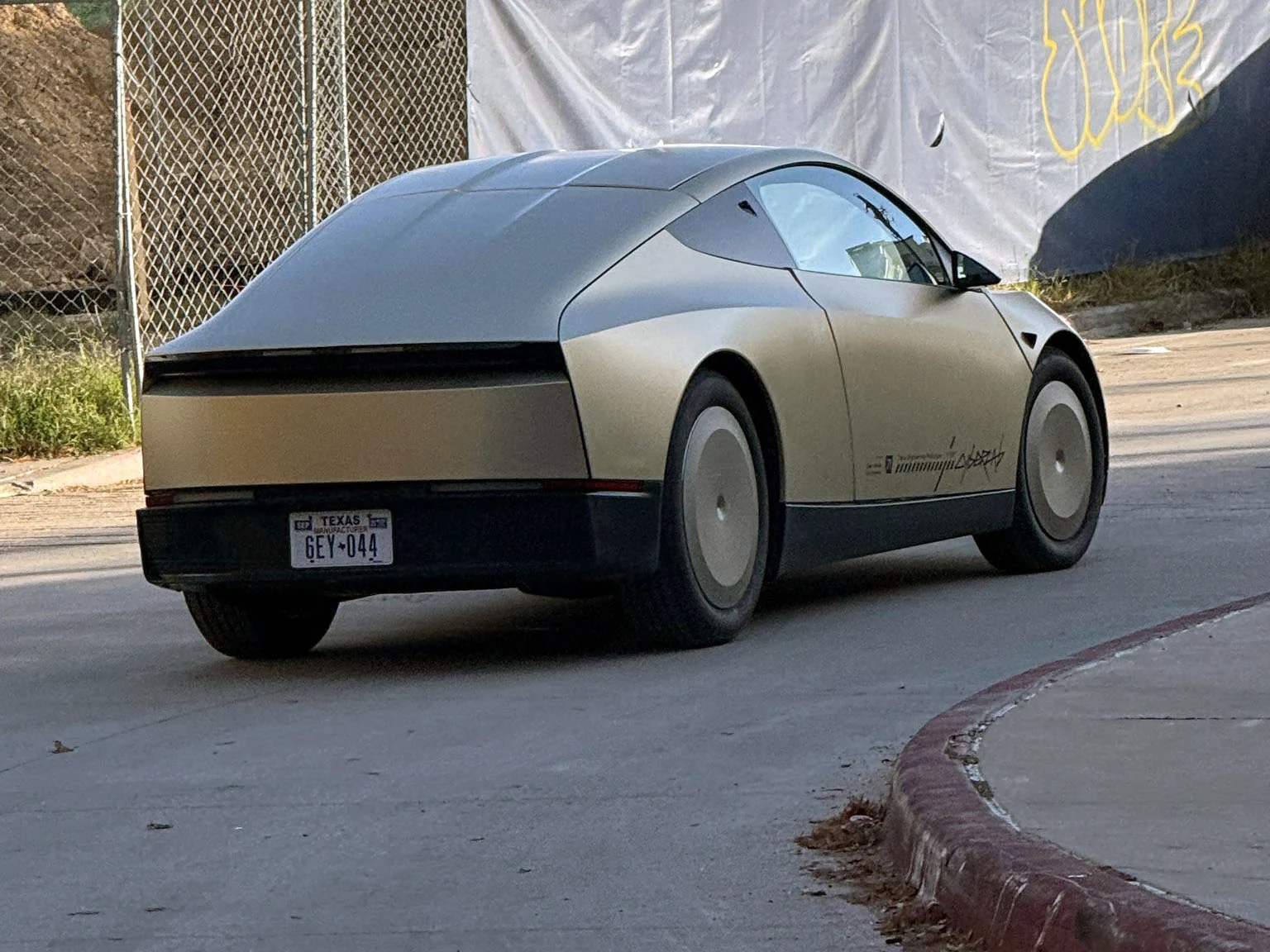
    Tesla is testing its driverless Cybercab, which lacks pedals and a steering wheel, on public roads for the very first time.

    The two-seater has been seen cruising in downtown Austin, where Tesla first initiated its Robotaxi ride-share service focused on driverless cars. The service started with the new Model Y, utilizing a specialized FSD 14 (Unsupervised) software version, as this was the first permit Tesla could obtain. The aim was to map out the area and try out the ride-share payment application using a vehicle that drivers were already familiar with.

    Plans for Expansion

    Elon Musk mentioned that Tesla intends to incorporate owner vehicles into its Robotaxi platform in 2026, likely including the new 2026 Model Y models as well as the Cybercab. Unfortunately, owners of older HW3 vehicles won’t be able to include their cars in the fleet due to limitations of their FSD computer and camera equipment, which cannot support unsupervised FSD. Their best bet is a restricted version of FSD 14 Lite, but the Cybercab won’t face this issue since it operates on Tesla’s advanced AI4 hardware.

    Testing and Confidence

    Tesla has been evaluating the self-driving Cybercab at its factory for some time now, even equipping standard Model 3 cars with a special Cybercab FSD kit to assess how it performs outside of factory limits.

    Now, Tesla feels secure enough in the Cybercab’s ability to navigate autonomously to take it onto public roads for the first time. It’s unclear whether the self-driving, self-cleaning, and self-charging Cybercab had someone observing it from inside, but since this was its initial public appearance, it’s likely that a Tesla engineer was present in the driver’s seat.

    Unique Driving Experience

    “Driver” isn’t quite the right term, as the Cybercab doesn’t have pedals or a steering wheel. It will be intriguing to see how the Cybercab manages in busy traffic without the ability for human intervention in emergencies. While it has been seen operated manually with a gaming controller, that was solely for moving it within expo centers, and such actions won’t be feasible during rides for the Robotaxi service.

    Source:
    Link


  • Tesla Launches 10-Year Model Y Battery Warranty with $500 Deductible

    Tesla Launches 10-Year Model Y Battery Warranty with $500 Deductible

    Key Takeaways

    1. Tesla is now offering a paid option for a longer warranty on high-voltage batteries and drive units for Model 3 and Model Y, extending coverage by two years for $2,000 (CA$2,800).

    2. The standard warranty for Tesla’s high-voltage battery is 8 years with a 70% capacity retention, while competitors like Hyundai-Kia provide a 10-year warranty at no extra charge.

    3. The extended warranty must be paid upfront and is not available on a subscription basis, differing from earlier reports.

    4. The Extended Service Agreement (ESA) for out-of-warranty battery replacements is transferable to new owners, potentially increasing resale value.

    5. Tesla’s new warranty options respond to pressure from competitors offering longer warranties, as the market trends towards 15-year warranties with higher capacity retention.


    After expanding its coverage on other pricey parts, Tesla is now offering a longer warranty option for high-voltage batteries and drive units in both the US and Canada.

    Though it’s not the anticipated 12-year battery warranty for the Model Y, this new choice does provide owners a bit more comfort regarding the costly battery replacements once the warranty period ends.

    Competition in the Market

    Tesla’s primary competitors in the electric vehicle market within the US and Canada are the Hyundai-Kia group, which provides a 10-year battery warranty. This is especially notable given that their EVs utilize modern 800V powertrains that enable faster charging.

    As is typical for Tesla, they’ve managed to create a longer battery warranty for both the Model 3 and Model Y as a paid option, unlike Hyundai and Kia, who offer theirs at no extra charge.

    Warranty Details

    At present, Tesla provides an 8-year warranty for the high-voltage battery and drive unit, ensuring a 70% retention of capacity during that time.

    For those interested in adding two more years of warranty coverage for their Model Y or Model 3, they can pay $2,000 (CA$2,800) for the opportunity, but there’s also a $500 deductible if a battery replacement is needed during the additional 24 months.

    Subscription Misunderstandings

    Earlier reports hinted that Tesla would roll out an extended warranty for the high-voltage battery on a subscription basis, starting at $100 per month. However, the reality is that Tesla requires payment upfront, regardless of when the battery fails—whether it happens early in the coverage or later, or even if it doesn’t fail at all.

    The extended battery warranty for the Model 3 and Model Y will only appear for the vehicle owner in the app before their original factory warranty expires. Luckily, what Tesla refers to as the Extended Service Agreement (ESA) for out-of-warranty battery replacements after the initial eight years is transferable to new owners as well.

    Impact on the Used Market

    This setup means that a Model Y can be sold in its seventh year of ownership while still having three additional years left on the battery warranty, which could enhance the used EV market. Tesla might be feeling pressure from longer battery warranties offered by competitors in both the US and China, where there’s a movement towards a standardized 15-year EV battery warranty with an 85% capacity retention.

    Modern EV battery technologies are capable of supporting these longer warranties as the norm. However, Tesla has calculated that it can charge as much as $2,500 for a replacement or repair at cost. In many situations, Tesla will simply keep the one-time ESA payment since they are well aware that the Model 3 or Model Y battery packs typically last longer than their standard 8-year warranty.

    Source:
    Link


  • Tesla Launches Paid Robotaxi for HW4 Model Y Owners

    Tesla Launches Paid Robotaxi for HW4 Model Y Owners

    Key Takeaways

    1. Tesla has launched its Robotaxi service in Austin using Model Y cars that can now drive themselves without any human inside.
    2. The vehicles operate on a unique “unsupervised” version of Full Self-Driving (FSD) software, which differs from the standard FSD available to regular users.
    3. Previously, safety operators were required in the vehicles, but they have now been removed for public road testing.
    4. Tesla plans to merge the unsupervised FSD branch with the public version, allowing private Model Y owners to access this feature through an OTA update.
    5. Tesla owners will be able to add their Model Y to the Robotaxi fleet to earn income when not in use, with a 20% fee for the management of the ride-share service.


    The Model Y cars that Tesla began using for its Robotaxi service have now gained sentience and are driving by themselves without any person inside.

    New Developments in Robotaxi Pilot

    Tesla kicked off its Robotaxi ride-share program in Austin utilizing owned Model Y units that operate on a unique FSD 14 branch labeled “unsupervised.” Initially, a safety operator was always present in the vehicle, either sitting in the passenger seat in Texas or in the driver’s seat without using the controls in California due to local laws.

    Now, Tesla has eliminated the safety monitor from the cars, and Model Y robotaxi vehicles have been spotted performing test drives on public roads in Austin with no one onboard, fully executing unsupervised FSD.

    Unique Features of Tesla’s FSD

    From the beginning, Tesla has clarified that the vehicles in its Robotaxi ride-share initiative function on a special FSD branch that differs from the standard version available to regular Model Y owners.

    Until recently, Tesla had only conducted truly unsupervised Model Y FSD test drives within its manufacturing facilities, allowing newly built cars to navigate from the assembly line to the delivery area. They also performed a self-delivery test, where a recently purchased Model Y reached its new owner autonomously.

    Future of Unsupervised FSD

    However, the company now feels it has gathered enough data from the Robotaxi pilot to safely test unsupervised FSD on crowded public roads with no one inside the vehicle.

    In addition, the unsupervised FSD branch is expected to merge with the version accessible to the public soon. Tesla suggested that this feature will be available to privately owned vehicles through an OTA update, which will come “first slowly, and then all at once,” indicating a promising future for the Robotaxi service. For owners of AI4/HW4 vehicles, that is. Those with older HW3 Model Ys might only receive FSD 14 Lite, which could have fewer capabilities than needed for unsupervised FSD.

    Tesla owners will eventually have the opportunity to add their Model Y to the Robotaxi fleet and start earning when they aren’t using their cars, with a 20% fee for managing the Tesla ride-share app and payment system. Elon Musk previously mentioned that the rollout of unsupervised FSD for Tesla owners is expected in 2026, coinciding with the introduction of Cybercab two-seaters as part of the Robotaxi fleet.

    Source:
    Link


  • Tesla Cuts Model 3 and Model Y Lease Prices by Up to 67% for 2026

    Tesla Cuts Model 3 and Model Y Lease Prices by Up to 67% for 2026

    Key Takeaways

    1. Tesla is facing declines in Q4 shipment figures across multiple markets, including the U.S., due to the end of the federal EV tax credit.
    2. To boost sales, Tesla is offering zero percent APR financing on the Model Y and Model 3, along with discounts and complimentary upgrades.
    3. Tesla is urging customers to buy quickly by warning of a significant increase in lease payments for the Model 3 and Model Y.
    4. New lease prices will take effect after December 26, leading to higher costs for customers starting in 2026.
    5. The increase in lease payments will require a $3,000 down payment, affecting affordability for many customers.


    Tesla is making every effort to boost its Q4 shipment figures, which have seen declines not just in countries like China and Europe, but also in the United States. This drop comes after the Trump administration ended the federal EV tax credit earlier than expected at the close of September.

    Attractive Financing Offers

    To combat the downturn, Tesla has rolled out a stunning promotional offer of zero percent APR financing for the Model Y and Model 3. In addition, they are providing discounts on inventory and complimentary upgrade options. The company has also adjusted lease pricing, making significant reductions at the start of the quarter, aware that many individual customers and businesses prefer leasing their vehicles.

    Urging Customers to Act Fast

    Following the introduction of the 0% APR financing, Tesla is now using a strategy to motivate buyers by warning that lease payments for the Model 3 and Model Y will rise dramatically—by as much as 67%. Here’s a detailed overview of the upcoming changes to Tesla’s lease prices:

    The increase in lease payments will be particularly tough due to a required down payment of $3,000, whereas most trims currently allow for a lower monthly cost without any down payment upfront.

    Coming Changes to Lease Prices

    The new lease prices for the Tesla Model 3 and Model Y will take effect after December 26 and will apply to deliveries made after December 31. This means that Tesla will kick off the first quarter of 2026 facing a significant increase in lease payments for its best-selling vehicle, the Model Y.

    Source:
    Link


  • Tesla Model Y Discounts: APR Financing & Free Options Available

    Tesla Model Y Discounts: APR Financing & Free Options Available

    Key Takeaways

    1. Tesla is offering 0% APR financing for the RWD Model Y standard and reducing interest rates for Premium versions to attract buyers.
    2. Customers can select one free options upgrade due to increased inventory levels, including choices like larger wheels and complimentary color options.
    3. Tesla has reduced the price of Model Y Premium units by $2,000 to boost inventory turnover and Q4 shipments.
    4. Additional price adjustments have made Model Y deals more attractive, with discounts also available for Model Y Standard.
    5. The Tesla Universal Wall Connector with a 24′ cable is available for purchase on Amazon.


    Tesla is gearing up for the holiday season by rolling out various deals and incentives, hoping to counteract the dip in sales that followed the end of the federal tax credit in late September.

    New Financing Options

    Recently, the company unveiled a popular 0% APR financing offer for the RWD Model Y standard. They also reduced the interest rates for the Premium versions, making them more appealing to buyers.

    Inventory Boost

    In response to increasing inventory levels, Tesla is giving customers a chance to select one free options upgrade. This could include larger wheels, a white interior, a complimentary color choice, a tow hitch, or any other add-ons available for vehicles currently in stock.

    Price Reductions

    To accelerate inventory turnover and boost Q4 shipment figures, Tesla has slashed $2,000 off the price of Model Y Premium units in their inventory. For instance, there’s a Model Y in Ultra Red with 19-inch Crossflow wheels and a black interior, originally priced at $44,990, now available at a $2,000 discount due to the red paint option being included for free.

    In addition to the $2,000 reduction, Tesla has now applied another $2,000 as a “price adjustment,” making this one of the most attractive Model Y inventory deals seen in some time. Discounts are not only limited to Premium trims; the Model Y Standard is also included, which is currently benefiting from the 0% APR financing offer.

    Source:
    Link


  • Tesla Launches 0% APR Financing on Model Y for Holiday Sales

    Tesla Launches 0% APR Financing on Model Y for Holiday Sales

    Key Takeaways

    1. Tesla has reintroduced a 0% APR financing option for the Model Y Standard version to boost sales.
    2. The Model Y can be leased for $529 per month with a $3,300 down payment over 72 months.
    3. Tesla is offering free interior or exterior upgrades and has reduced financing rates for Premium Model Y trims.
    4. The introduction of the 0% APR financing aims to maintain demand after the $7,500 federal tax credit expiration.
    5. The lower-priced Standard trim has fewer features but may attract buyers due to the financing offer, potentially shifting consumer interest.


    Tesla has reintroduced its highly sought-after Model Y offer, presenting a 0% APR financing option for the Standard version that just hit the market in the US.

    Monthly Payment and Down Payment Details

    Currently, the Model Y can be leased starting at $529 per month, which requires a down payment of $3,300 over a 72-month term. Furthermore, Tesla has also reduced the APR financing rates for the Premium Model Y variants.

    This strategy appears to be aimed at boosting shipment figures as the first quarter wraps up, especially since Tesla’s sales have not been supported by the $7,500 federal tax credit that ended in September.

    Financing Offers and Demand

    This is the first time in a while that Tesla is offering a zero-interest financing option for the Model Y, marking a significant deal for the newly introduced cheaper Standard RWD trim that debuted in October. The introduction of both the least expensive and the priciest Model Y Performance trims aimed to maintain demand in light of the federal tax credit’s expiration; however, it seems sales may still require some encouragement through zero-interest financing.

    In the arsenal of Tesla’s Model Y deals, this 0% APR is considered a powerful tool, as it has consistently resonated with consumers whenever it has been presented to stimulate sales. In addition, Tesla is continuing its offer of free interior or exterior upgrade options for available Model Y inventory and has reduced the financing rates for the Model Y Premium RWD and AWD versions by one percentage point.

    Impact on Sales

    It remains unknown if the 0% APR financing for the Model Y Standard will significantly impact sales figures. The Standard trim lacks over 20 features in design and specifications that the Premium models include, yet it is only priced $5,000 lower.

    Tesla attempted a similar strategy with the RWD Cybertruck, but the cheaper trim saw little interest and was quickly phased out. With the current 0% APR financing for the base Model Y, however, the gap in monthly payments compared to the Premium trims, which are available at a 2.99% APR, has widened considerably. This could potentially lead to a shift in consumer interest as the holiday quarter approaches.

    Source:
    Link


  • Tesla Offers Zero Down Payment and Free Upgrade on Model Y Lease

    Tesla Offers Zero Down Payment and Free Upgrade on Model Y Lease

    Key Takeaways

    1. Tesla’s new Model Y lease offer features no initial down payment, making it more attractive for potential lessees.
    2. The monthly lease for the Premium RWD Model Y starts at $479, while the all-wheel drive version is available for $569.
    3. Leases are for 36 months with a mileage limit of 10,000 miles per year and no down payment required.
    4. The reduced lease price includes a $6,500 credit, introduced after the government tax credit expired.
    5. Free upgrade options for the Model Y include interior and exterior enhancements, which are deducted from the final lease contracts before delivery.


    The majority of people who own Tesla cars choose to lease them, so any steps the company takes to make leasing cheaper will surely have a big effect.

    Tesla is fully aware of this and is rolling out what could be the most attractive Model Y lease offer in a long time, featuring no initial down payment.

    Great Lease Offer

    This new Model Y leasing option can be combined with free upgrades for both the interior and exterior, including complimentary wheels, white leather seats, or even a tow hitch, which Tesla recently shared.

    The monthly lease for the Model Y now starts at $479, with the previous mandatory $3,000 down payment now set to $0 for a limited time. This pricing applies to the Premium RWD model, while the all-wheel drive version can be leased for $569 each month.

    Lease Details

    These 36-month leases do not require any down payment and allow for an annual limit of 10,000 miles. Tesla managed to bring the monthly lease payment for the RWD Model Y down to $479 by reducing the lease price and including a $6,500 credit that was introduced shortly after the expiration of the government tax credit.

    This offer includes the zero down payment and comes with a note that the lease credit may “change or end at any time.” The cost for the free upgrade options is deducted from the final lease contracts before delivery and covers several items.


    Source:
    Link


  • Tesla Increases Model 3 and Model Y Lease Prices by Up to $100

    Tesla Increases Model 3 and Model Y Lease Prices by Up to $100

    Key Takeaways

    1. Tesla will increase lease payments for the Model 3 and Model Y starting November 4.
    2. The lease for the Model Y Premium RWD will rise to $529/month, while the Model 3 will increase to $429/month.
    3. The $6,500 lease credit will remain in place despite the increase in monthly payments.
    4. The price gap between leasing a Model Y and Model 3 is now just $100, complicating customer choices.
    5. Tesla aims to protect profit margins after a record number of deliveries, amid rising expenses and declining sales expectations.


    Tesla is set to raise lease payments for the Model 3 and Model Y starting on November 4, as previously warned.

    This adjustment appears to follow a temporary reduction in monthly costs aimed at attracting customers after the federal tax credit expired, with final deliveries pushed to mid-October.

    Updated Lease Costs

    From November 4, the lease for the Model Y Premium RWD will increase to $529/month, up from the current $449. The price hike for the Model 3 is even steeper, rising by $100, from $329 to $429 for a 3-year lease that includes a $3,000 down payment.

    With the gap between leasing a Model Y and a Model 3 narrowing to just $100, Tesla enthusiasts will face some difficult decisions on which model to choose.

    Lease Credit and Financial Outlook

    Fortunately, Tesla is maintaining the $6,500 lease credit that was introduced right after the federal one ended. However, the increase in monthly lease payments appears to be a strategy to recover losses from its own credit program to some extent.

    Despite achieving a record number of vehicle deliveries last quarter, Tesla’s financial situation wasn’t very bright. The surge in revenue from customers racing to take advantage of the $7,500 federal tax credit was countered by higher expenses. Now, Tesla is looking to protect its profit margins during a fourth quarter that could experience a significant decline in sales.

    Source:
    Link


  • Tesla Recalls 13,000 Model 3 and Y for Drive Power Loss Risk

    Tesla Recalls 13,000 Model 3 and Y for Drive Power Loss Risk

    Key Takeaways

    1. Tesla is recalling 12,963 Model 3 and Model Y cars due to a battery component defect that may cause unexpected power loss while driving.
    2. The recall affects specific 2025 Model 3 and 2026 Model Y vehicles produced from March to August 2025.
    3. The issue is linked to a faulty battery pack contactor made with a weak connection, leading to potential loss of acceleration.
    4. Vehicle owners can check if their car is affected using the Tesla or NHTSA VIN Recall Search.
    5. Owners can request repairs through the Tesla app by navigating to the service section and describing the recall concern.


    Tesla, the electric vehicle company, has announced a voluntary safety recall impacting 12,963 Model 3 and Model Y cars because of a battery component defect that might cause unexpected loss of power while driving. This recall has been formally reported to NHTSA under the reference number 25V690. It addresses the concern that vehicles could suddenly be unable to accelerate while they’re in motion.

    Specific Models Affected

    This recall affects certain 2025 Model 3 and 2026 Model Y vehicles that were produced from March to August 2025. Below are the models that are specifically affected:

    The problem is related to the battery pack contactor. The defective contactors were made with an InTiCa solenoid that has a weak coil termination connection. This faulty connection could lead to the contactor unexpectedly opening without any warning. If this occurs while the vehicle is being operated, the driver would abruptly lose the ability to use the accelerator pedal, leading to a loss of movement, while also receiving a visual signal prompting them to safely pull over.

    How to Check if Your Vehicle is Impacted

    Owners of possibly affected vehicles can verify if their vehicle is involved through either the Tesla VIN Recall Search or the NHTSA VIN Recall Search. For the repairs, vehicle owners should open the Tesla app and navigate to Service > Request Service > Other > Something Else, then type “Open Recall Repair – Battery Pack Contactors” into the Describe Concern field.

    Source:
    Link