Key Takeaways
1. The US government, under President Trump, has used trade tariffs inconsistently to address the trade deficit, significantly impacting Taiwan as a trading partner.
2. Taiwan faces a 20% tariff on exports to the US, higher than Japan’s 15%, prompting negotiations for potential tariff reductions.
3. TSMC is under pressure from Trump to meet two strict conditions for tariff relief, which includes a substantial financial investment and a stake in Intel.
4. Intel is struggling financially, with a 33% revenue drop from 2021 to 2024, raising concerns about its ability to meet the US’s semiconductor manufacturing goals.
5. TSMC’s potential reluctance to comply with US demands regarding Intel could affect the future of both companies and the US chip supply chain.
The US government, under President Donald Trump, has primarily utilized trade tariffs to tackle the nation’s trade deficit with its partners. However, this tariff strategy has been inconsistent and often unexpected. Taiwan, a significant trading ally of the US, has also felt the impact of these tariffs.
Tariff Rates and Their Implications
With tariffs set at 20%, Taiwan faces a higher rate than nations like Japan, which has a baseline of 15%. Unsurprisingly, this 20% tax on Taiwanese exports to the US can severely impact Taiwanese companies. Therefore, Taiwan is negotiating with the US to lower these tariffs or potentially remove them completely. Nevertheless, a recent report from Taiwan indicates that President Trump has laid down two tough conditions for any tariff relief.
According to mnews.tw, an industry insider revealed that Trump has required TSMC to meet these two strict conditions in exchange for tariff reductions. Ignoring the implications of TSMC owning 49% of Intel, these requirements are significant financial obligations. TSMC is already pouring a considerable amount into the US, with one of its fabrication plants expected to begin volume production by 2024. The company is also in the process of constructing two additional fabs in Arizona, along with an R&D center and a packaging facility. In total, TSMC has committed to investing $165 billion in the US.
Financial Challenges Ahead
Trump’s supposed requirement for TSMC to invest an additional $400 billion in the US while acquiring a share in Intel appears unrealistic from a financial perspective. Intel is experiencing a downward trend. All its sectors, from fabrication to consumer goods, are facing challenges. This decline is reflected in its reported annual revenue, which has dropped dramatically from $79 billion in 2021 to $53 billion in 2024, marking a 33% decrease.
Intel plays a crucial role in the US strategy for domestic semiconductor manufacturing. The company has already secured billions in federal funding. However, this financial aid hasn’t resolved Intel’s issues, as the timeline for its Ohio fab has been pushed back from 2025 to between 2030 and 2031. This delay appears to be tied to Intel’s attempts to conserve capital in light of insufficient support from the US CHIPS Act and external partners.
The Future of TSMC and Intel
In summary, it seems that the US administration is pressuring TSMC to take a significant stake in Intel to provide much-needed capital and sustain the US’s domestic chip supply chain ambitions. However, TSMC might not agree to this condition.
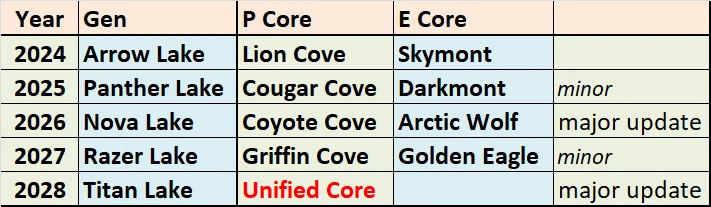
It will be interesting to watch Intel in the next few months. There are some promising products in development, like the Panther Lake and Nova Lake CPUs. If these products perform well, it could lead to improvements for Team Blue.
Source:
Link