Tag: Huawei

  • Apple Slips in China, Drops from Top Five Smartphone Vendors

    Apple Slips in China, Drops from Top Five Smartphone Vendors

    Apple has slipped from the ranks of the top five smartphone vendors in China for the first time since it surged in popularity there. According to Canalys, a market research firm, iPhone shipments in China saw a 6.7% year-on-year decline in the second quarter of 2024.

    Rise of Domestic Brands

    Analysts credit this decline to the resurgence of domestic brands. Leveraging advanced, locally manufactured components, Chinese companies such as Huawei, Vivo, Oppo, Honor, and Xiaomi have experienced substantial growth. Notably, Huawei has made a robust return to the high-end market, challenging Apple's premium market position.

    Market Growth and Competition

    The Chinese smartphone market grew by 10% year-on-year, with over 70 million units shipped in Q2. Vivo led the market with a 19% share, equivalent to 13.1 million units shipped. Oppo, Honor, and Huawei followed, each shipping around 10 million units. Xiaomi, which had been facing difficulties, saw a 17% year-on-year increase, re-entering the top five with 10 million units shipped.

    Conversely, Apple's shipments fell to 9.7 million units, resulting in a reduced market share of 14%. Despite offering discounts of up to 23%, the company struggled to maintain its position. Domestic competitors capitalized on localized supply chains and strong brand loyalty among Chinese consumers.

    Strategic Moves

    In light of this decline, Apple’s Chief Operating Officer Jeff Williams recently visited China to meet with officials and reiterate the company’s commitment to the market. Analysts, including Lucas Zhong of Canalys, suggest that Apple needs to localize its “Apple Intelligence” platform for China within the next year to recapture market share. The forthcoming iPhone 16 lineup also offers an opportunity to stimulate demand and improve Apple's market position.

    Nevertheless, the competition remains intense. Domestic brands offer appealing features at competitive prices, and it remains uncertain whether Apple can adapt and regain its former dominance in China.
  • Huawei’s First Gaming Laptop Leaked in Real-Life Images

    Huawei’s First Gaming Laptop Leaked in Real-Life Images

    The 2024 ChinaJoy expo is currently in full swing with various brands announcing several new products — Lenovo Xiaoxin 12.5 tablet for instance.

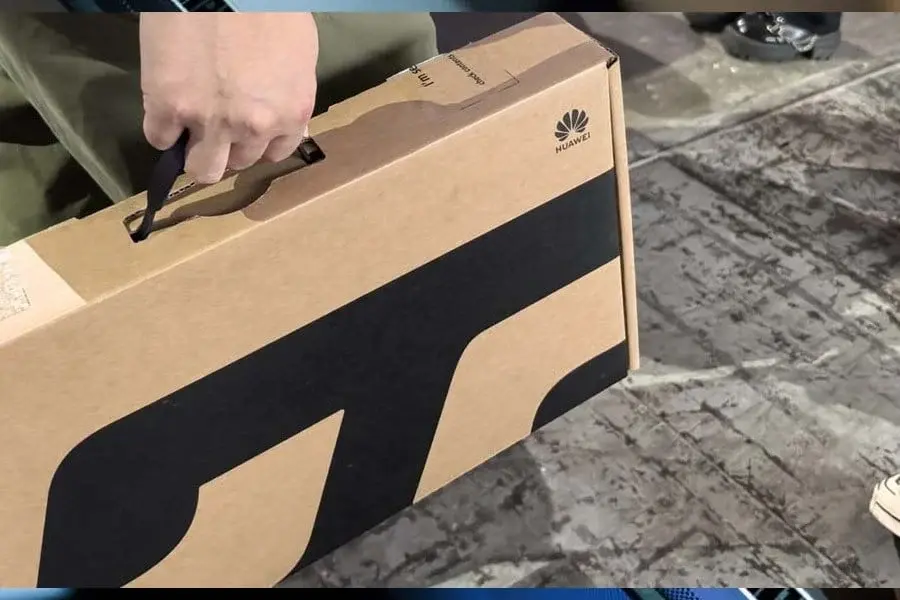
    Huawei is one of the participants who made a surprise reveal of a new, yet-to-be-announced notebook at the event. Although the company hasn’t shared any details yet, the laptop features a “GT” logo on both the chassis and packaging.

    Historical Context

    Historically, Huawei has reserved the “GT” designation for high-performance products, such as the outdoors-oriented WATCH GT smartwatch and the feature-rich MateView GT monitor. Given this pattern, it is rumored that this “GT” branded laptop might be Huawei’s first gaming laptop.

    Visually, the leaked images reveal a couple of interesting details. The notebook sports a glowing Huawei logo on the lid and a rear-mounted air vent design for efficient heat dissipation. These gaming-centric design choices further support the theory of a Huawei gaming laptop in the works.

    Potential Specifications

    As expected, the specifications haven’t been revealed yet. However, a Chinese media report suggests that Huawei’s gaming laptop might be equipped with an Intel Core Ultra processor and 140W charging support, similar to the Huawei MateBook X Pro.

    Currently, Huawei’s laptop portfolio includes the sleek MateBook X series, the versatile MateBook series, the budget-friendly MateBook D series, and the business-oriented MateBook E series.

    Entering the Gaming Market

    However, the company has yet to launch a dedicated gaming laptop. The recent reveal suggests Huawei is finally entering the gaming market. And according to several Chinese tech publications, the device will be possibly named “MateBook GT.”

    The launch date remains a mystery. Based on Huawei’s previous launch cycles, we might expect to see the “MateBook GT” unveiled at their upcoming autumn product launch event. Until then, we can only speculate and keep an eye out for further developments.


  • Huawei Confirms Development of Tri-Folding Smartphone

    Huawei Confirms Development of Tri-Folding Smartphone

    Huawei is reportedly developing a tri-folding smartphone set for release within the next two months. Recently, the company has begun promoting the device, which is expected to introduce several industry firsts.

    Innovative Design and Features

    A source close to Huawei has confirmed that the company has initiated research and development on projects related to a tri-folding smartphone. This new device is said to incorporate the latest AI technology and is progressing well.

    During a live broadcast earlier this week, Richard Yu, Huawei’s executive director and chairman of the Terminal BG and Intelligent Automotive Solutions BU, was asked about the tri-folding phone. While he did not deny its development, he mentioned that specific progress details are not convenient to disclose at this time.

    Rumored Specifications

    The tri-folding phone is rumored to feature a unique inward and outward folding design, equipped with a dual hinge system. This design is expected to result in a significantly larger display, approximately 10 inches in size. For comparison, the Huawei Mate X5 has a 7.85-inch inner display. There is also speculation that Huawei might launch this device in September, coinciding with the Mate X5’s release last year.

    At the end of March, the State Intellectual Property Office announced a Huawei patent for a "Folding Screen Device." According to Huawei, the prototype is nearly complete.

    Today, Weibo tipster Digital Chat Station speculated that the tri-folding device will be powered by a Kirin 9 series chip and will introduce a couple of industry firsts.


    Huawei Confirms Development of Tri-Folding Smartphone
  • Huawei Sues MediaTek for Patent Infringement Over Chip Technology

    Huawei Sues MediaTek for Patent Infringement Over Chip Technology

    Huawei, the Chinese technology conglomerate, has initiated a patent infringement lawsuit against MediaTek, a prominent chip manufacturer, in a Chinese local court. The lawsuit alleges that MediaTek's technologies infringe upon Huawei's network communication patents, which encompass 5G, 4G, and possibly 3G.

    MediaTek acknowledged the lawsuit in a statement released this morning, recognizing Huawei's accusations of patent infringement. Nevertheless, MediaTek minimized the impact, mentioning that it is presently navigating the judicial process and chose not to provide additional comments.

    MediaTek's Role and Impact

    As a leading chipmaker, MediaTek supplies components to significant smartphone and tablet manufacturers, such as Samsung, Amazon, Oppo, Sony, Vivo, and Xiaomi. MediaTek was also a crucial supplier for Huawei's smartphone division until stricter US export controls were enforced in 2020.

    Sources close to the case indicate that Huawei's lawsuit against MediaTek is mainly driven by the desire to secure licensing fees to support its ongoing research and development (R&D) endeavors. Such lawsuits also enable Huawei to diversify its revenue streams, particularly after US sanctions heavily affected its previously dominant smartphone business.

    Huawei's Patent Portfolio and Licensing Efforts

    Huawei holds an extensive collection of standard-essential patents (SEPs) crucial for wireless communication technologies, including around 20% of the world's 5G-related patents.

    Since 2021, in response to intensified US restrictions, Huawei has increased its patent licensing activities. The company has obtained licensing and cross-licensing agreements with major European automakers, including Volkswagen, Mercedes-Benz, Audi, BMW, and Porsche.

    Additionally, in 2023, Huawei signed 5G technology agreements with Oppo and Samsung. The previous year, Huawei sought licensing fees from several Japanese companies, claiming that their technologies infringed its patents.

    Revenue from Patent Royalties

    In 2022, Huawei reported $560 million in revenue from patent royalties, with approximately 200 companies holding licensing agreements with the tech giant, as reported by Nikkei Asia. With the lawsuit against MediaTek, Huawei seems committed to enhancing its revenue streams through assertive patent enforcement and licensing strategies.

  • Huawei Unveils Processor Details for Popular Smartphone Lineups

    Huawei Unveils Processor Details for Popular Smartphone Lineups

    In a surprising development, Huawei has lifted its embargo on chipset information for its latest phones. This change allows consumers to finally discover the processors powering the Mate 60, Mate X5, and Pura 70 series devices.

    Previously, Huawei had kept the specific chipsets used in these phones under wraps. However, tipster “Adak is a wolf” announced on Weibo that Huawei’s frontline sales staff are now permitted to share processor details.

    Huawei Lifts Chip Embargo, Now Discloses Processor Details

    A visit by Chinese media outlet IT Home to a Huawei flagship store confirmed that the Mate 60 and Mate X5 series are equipped with Kirin 9000S series processors, while the Pura 70 Pro/Ultra features the Kirin 9010 chip.

    Interestingly, Huawei’s recently launched international products, such as the MatePad SE 11", MatePad Pro 13.2", and Nova Y62/Plus phones, already reveal their processor models on the official website.

    The previous secrecy was likely due to ongoing US sanctions, which scrutinize Huawei’s advanced chip manufacturing capabilities. Keeping chip details under wraps might have been a strategy to reduce pressure.

    Shift in Sales Strategy

    This new transparency signals a shift in Huawei’s sales strategy, potentially resulting in clearer communication in future product releases. While specific processor models are now disclosed, the details remain limited. In-store staff can only provide basic information about the chipset family and generation. Furthermore, the phone settings themselves will not display the specific processor model.

    Future Prospects

    Huawei is currently developing its next flagship model, which is expected to compete with the forthcoming iPhone 16 series. The Mate 70 series, anticipated in Q4 2024, will feature an upgraded Kirin chipset with AI-based capabilities, enhanced imaging, and support for satellite communication. This series will run on the HarmonyOS Next operating system and maintain 1.5K resolution displays.

  • Huawei Launches Phase 2 of HarmonyOS NEXT Developer Beta

    Huawei Launches Phase 2 of HarmonyOS NEXT Developer Beta

    Huawei has launched the second phase of its HarmonyOS NEXT developer beta program, presenting another opportunity for developers and early adopters to test the forthcoming operating system on specific Huawei devices.

    Applications for this phase are open until July 26th, 2024, at 3:00 PM PST. Submissions made during this period will be evaluated between July 13th and August 5th, with a processing time ranging from 3 to 7 business days.

    Eligible Devices

    This round includes the same devices as the initial phase: Mate 60 series smartphones, Mate X5 foldable phones, and MatePad Pro 13.2 tablets. Interested participants, whether they are developers or regular users, must satisfy certain criteria.

    First, users need to possess a compatible device with the latest baseline build installed. Developers must be registered with the Huawei Developer Alliance and complete the real-name verification process. Moreover, all participants are required to sign a confidentiality agreement and pass a registration questionnaire before submitting their details.

    Limited Slots Available

    This phase offers 5,000 tester slots, so early registration is advised to improve chances of selection. Selection criteria will consider the details provided in the application.

    Interested parties can find the registration links below. It is crucial to remember that this is a beta program. Beta versions can be unstable, might lead to data loss, and may not be fully compatible with all existing apps. Therefore, it is important to back up all essential data before installing the beta update, using a PC, cloud storage, or another external device.

  • Huawei’s Patent Images Reveal 5 Innovative Flip Phone Designs

    Huawei’s Patent Images Reveal 5 Innovative Flip Phone Designs

    Huawei has been a reliable contender in the foldable phone arena, recently unveiling the Pocket 2, notable for its clamshell design and a unique quad-camera setup on the exterior. Fresh patents filed with China’s CNIPA have surfaced, giving us a peek into the potential future of Huawei’s flip phones.

    Although patents don’t necessarily confirm final product designs, they can hint at a company’s design intentions. Discovered by 91mobiles, these patents reveal five different configurations that Huawei might be considering for their upcoming clamshell foldable phones. The primary folding mechanism remains the same across all models, with the main variations focusing on camera placement.

    Future Design Possibilities

    Huawei’s existing Pocket 2 has a vertically stacked quad-camera module and a separate circular cutout for the cover display. The new patents suggest several possible future designs:

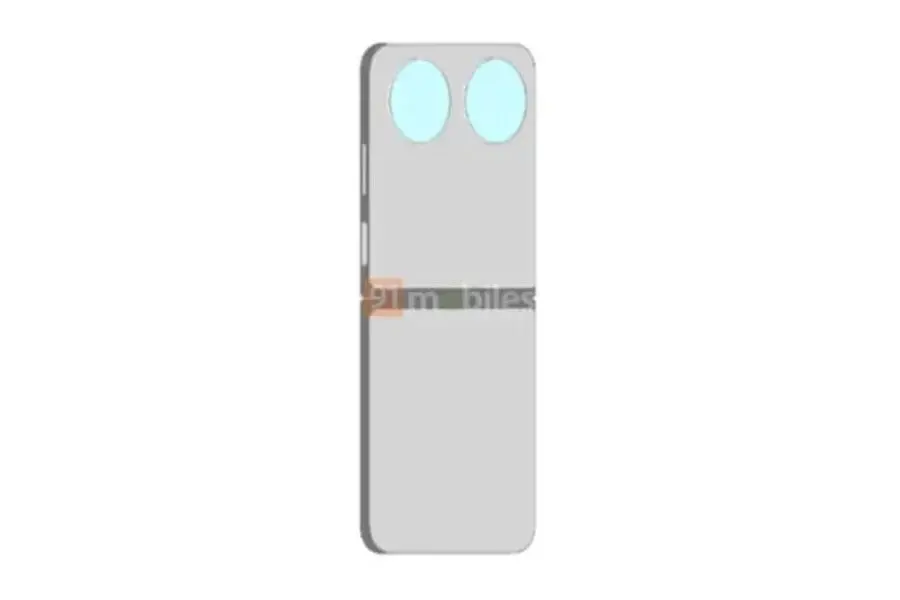
    One design proposes two horizontally aligned circular rings on the phone’s exterior, unlike the vertically stacked rings on the Pocket 2. Another patent showcases the same circular format but with a strip around the upper rear section of the phone.

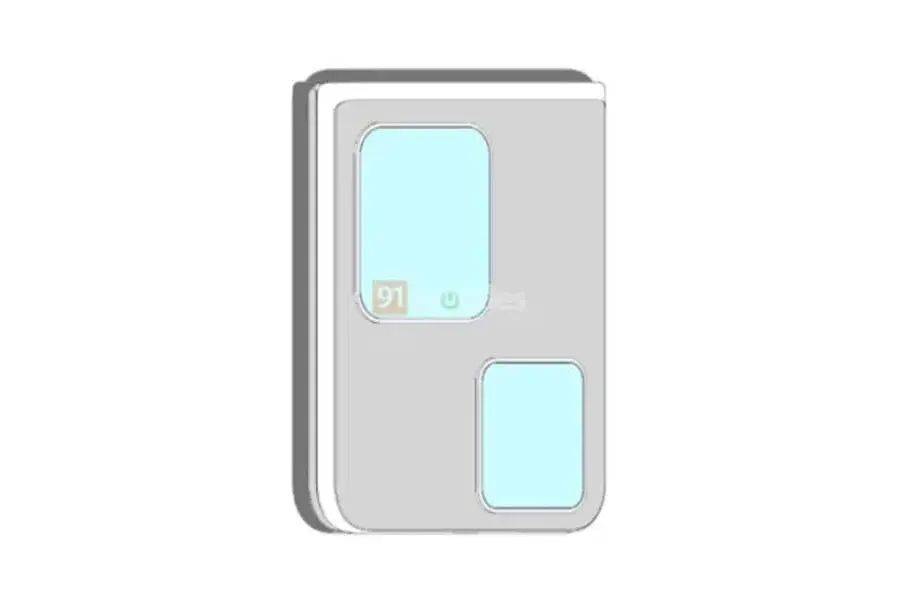
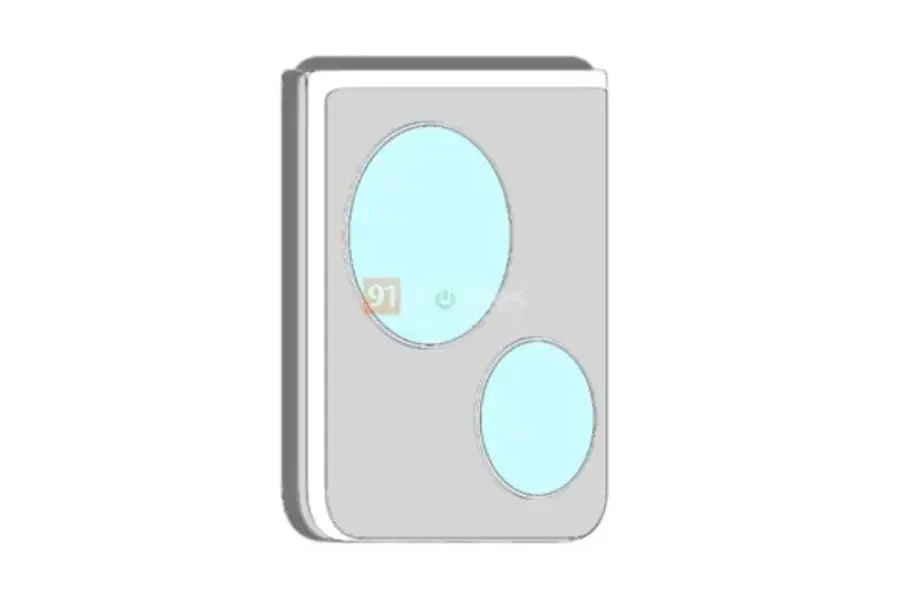
    An intriguing third design features a clamshell phone with two different-sized cutouts placed diagonally. The larger cutout is likely intended for the cover display, while the smaller ring might accommodate the cameras.

    Square Camera Modules

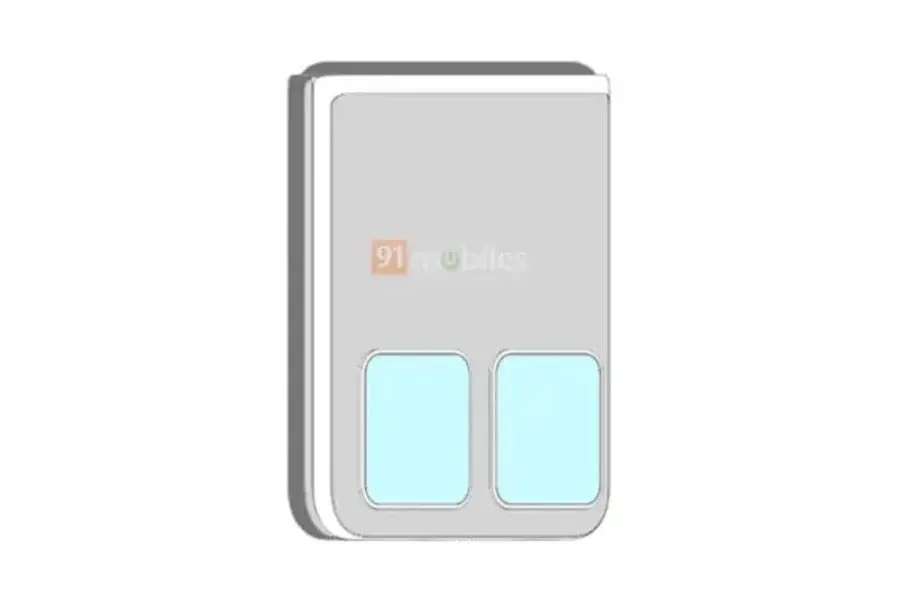
    Additionally, Huawei seems to be exploring square camera modules instead of circular ones. One patent depicts a flip phone with two horizontally arranged square frames on the rear, replacing the circular configuration.

    Another design shows these square frames arranged diagonally in a larger and smaller layout, mirroring the circular design but with square frames.

    These patents indicate that Huawei may be moving away from the dual-ring design of the Pocket 2. Whether these designs will make it to production remains uncertain, but they offer a fascinating glimpse into Huawei’s foldable phone innovations.


  • Free 1-Year Satellite Service for Huawei, Honor, Xiaomi, Oppo, Vivo

    Free 1-Year Satellite Service for Huawei, Honor, Xiaomi, Oppo, Vivo

    China Telecom has introduced a new initiative, offering a one-year complimentary trial of its satellite service to users of certain smartphone models. This program is aimed at owners of Huawei, Honor, Xiaomi, OPPO, and Vivo devices.

    According to reports from users (via Huawei Central), China Telecom is informing customers about the offer through SMS. The message states, “Experience satellite calls, free for a whole year!”

    Details of the Free Plan

    The free plan grants users 2 minutes of satellite talk time each month without charge. Normally, standard satellite calls on China Telecom cost 9 yuan per month.

    To subscribe to this 12-month free plan, users need to respond to the SMS with a specific code. This triggers a process to gather user information and activate the service.

    Eligible Smartphones

    Here are the smartphones currently eligible for the free satellite service trial:

    • Huawei Pura 70 Ultra
    • Huawei Pura 70 Pro+
    • Huawei Mate 60 Pro
    • Honor Magic 6 Ultimate
    • Honor Magic 6 Pro
    • Xiaomi 14 Ultra
    • OPPO Find X7 Ultra
    • Vivo X100 Ultra

    This free trial enables users to make or receive satellite calls in areas with poor or no cellular network coverage.

    Additional Service Information

    While the trial includes voice calls, it’s important to remember that text messaging is a separate service with a monthly fee of 10 yuan. Users who do not wish to continue the text messaging service after the trial period ends will need to cancel it manually.

    China Telecom launched its direct smartphone-to-satellite service in September 2023. This service allows users with compatible phones and a China Telecom SIM card to activate satellite features for SMS and voice calls, even without cellular network access.

    The standard service is priced at 10 yuan per month, but there are tiered packages offering various call minutes. For 200 yuan, users get 50 minutes; 300 yuan provides 100 minutes; and 500 yuan allows for 200 minutes of satellite talk time.

  • Huawei Developing Energy-Efficient Taishan Cores for Kirin Chips

    Huawei Developing Energy-Efficient Taishan Cores for Kirin Chips

    A recent leak indicates that Huawei is developing next-generation Taishan cores, which are expected to deliver substantial enhancements in performance and energy efficiency compared to the existing Kirin 9000s cores. This advancement could significantly elevate the capabilities of future Kirin processors.

    Tipster Jasonwhoill on X (formerly Twitter) has revealed that Huawei is currently testing new Taishan cores that outshine the performance of the Kirin 9000s processor. These cores, which are akin to Apple’s small cores in design, are said to achieve remarkably low power consumption.

    Performance Benchmarks

    The leak states that the new cores achieved a score of 350 points in single-core Geekbench 5 testing, in contrast to the Kirin 9000s cores, which scored 200 points. Presently, the Kirin 9000s employs Cortex-A510 low-energy cores, the first ARMv9 ‘LITTLE’ CPU cores, which were also featured in Qualcomm’s Snapdragon 8 Gen 1 chip in 2022.

    Potential Rival to Apple’s M3

    There is also speculation that Huawei is working on a Kirin PC chip with the Taishan V130 architecture, potentially positioning it as a competitor to Apple’s M3.

    An earlier report suggested that a new CPU architecture might be incorporated into the upcoming Mate 70 series, potentially featuring a robust 5nm chipset, indicating a significant step forward in Huawei’s smartphone technology.

    Unconfirmed Developments

    However, Huawei has not validated any of these claims, so it is prudent to approach this information with skepticism.

    Discussions are ongoing regarding a new Kirin chipset and its CPU architecture, with some claims suggesting it could exceed the performance of the Kirin 9000s. These rumors, however, conflict with Huawei’s previous statements.

    Constraints and Challenges

    The company has focused on enhancing existing 7nm chips rather than developing entirely new technologies. Additionally, US sanctions restrict Huawei’s access to advanced chip-making equipment, impeding its ability to compete at the cutting edge of technology.

    For now, the situation surrounding these rumors is uncertain. Hopefully, more details will surface in the coming days to clarify this evolving narrative.

  • Huawei’s Growth Highlighted in New Counterpoint Report

    Huawei’s Growth Highlighted in New Counterpoint Report

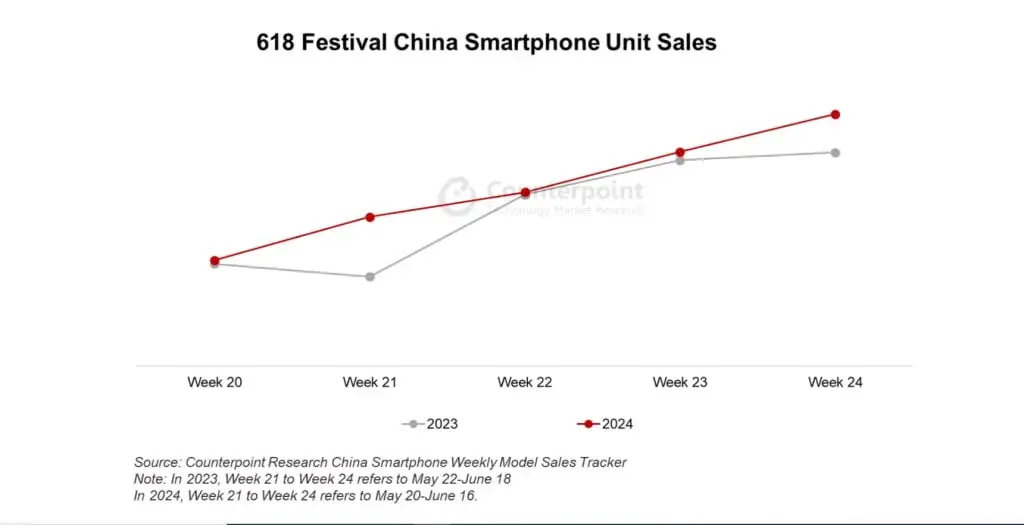
    Huawei emerged as the top smartphone manufacturer during China's 618 Shopping Festival, as reported by Counterpoint. Despite challenges from a US embargo, the Chinese tech giant showed resilience by leading in smartphone sales during the festival. With an impressive 42.4% growth, Huawei continues to strengthen its position in the Chinese market.

    Counterpoint’s Smartphone Sales Report

    Huawei’s minimal discounting strategy did not hinder its success, thanks to the high sales of the Mate 60 and Pura 70 series smartphones. This impressive performance allowed the brand to achieve a significant growth rate of 42.4%. Following closely, Vivo secured the second spot. The launch of the Vivo X100S series ahead of the 618 Shopping Festival significantly boosted its sales.

    Additionally, the introduction of smartphones like the Y200 and IQOO Neo 9S Pro further contributed to Vivo’s increased sales, helping the brand achieve a growth rate of 12.6%. Xiaomi, often referred to as the Apple of China, also performed well. The company offered discounts up to 1000 yuan, which led to a rise in sales of their mid-to-high-end smartphones, resulting in a growth rate of 12%, closely trailing Vivo.

    One notable highlight was that the best-selling smartphone for Xiaomi was the Redmi K70. Furthermore, the Redmi K80 and Redmi K80 Pro are officially under development, with more updates on the new Redmi K80 series expected soon. Lastly, other brands like Honor and Apple also saw moderate increases in sales, with growth rates of 4.3% and 2.7%, respectively.