Tag: Geekbench

  • Nvidia RTX 5060 Laptop Beats Apple M5 Pro in OpenCL Benchmark

    Nvidia RTX 5060 Laptop Beats Apple M5 Pro in OpenCL Benchmark

    Key Takeaways

    1. The Apple M5 Max shows exceptional CPU performance, outpacing competitors and nearing the RTX 5070 Laptop in OpenCL performance.
    2. The M5 Pro achieved a score of 141,000 in the Metal test and 87,155 in OpenCL, aligning with its half GPU core count compared to the M5 Max.
    3. The entry-level Apple M5 with a 10-core GPU scores around 48,000 in OpenCL, making the M5 Pro approximately 81% better.
    4. The M5 Pro demonstrates a 24.3% improvement in OpenCL and a 26% boost in the Metal benchmark compared to its predecessor, the M4 Pro.
    5. Real-world performance varies by workload, and comparing Apple GPUs to Nvidia GPUs in OpenCL may be misleading due to API neglect on macOS.


    Apple’s M5 Max recently appeared on Geekbench, showcasing its outstanding CPU performance and leaving its rivals behind. The 40-core GPU also performed remarkably well, coming close to the RTX 5070 Laptop in OpenCL (which is outdated on macOS) and achieving 88% of the M3 Ultra’s performance in the Metal test.

    M5 Pro Performance

    Now, the M5 Pro has also surfaced in the same benchmark, achieving an impressive score of 141,000 points in the Metal test. In the OpenCL test, which was deprecated on macOS over six years ago, the M5 Pro earned about 87,155 points. Given that this system-on-chip (SoC) has half the GPU cores of the M5 Max, these results align with expectations.

    Comparison with Entry-Level Models

    Additionally, the basic Apple M5 with a 10-core GPU, found in the entry-level MacBook Pro (currently priced at $1,449 on Amazon), scores roughly 48,000 points in the OpenCL test. This means the M5 Pro with its 20-core GPU is approximately 81% better.

    In comparison to its earlier version, the M4 Pro, the M5 Pro shows a remarkable 24.3% improvement in the OpenCL benchmark and an outstanding 26% boost in the Metal benchmark. However, it’s important to point out that Nvidia’s GeForce RTX 5060 Laptop has a significant advantage in the OpenCL test, where the GeForce GPU leads the M5 Pro by about 13%.

    Real-World Performance Factors

    It’s essential to remember that actual performance can differ significantly based on the workload. Comparing an Apple GPU with an Nvidia one in terms of OpenCL performance isn’t entirely fair, as the API has been neglected on the Mac platform. Similarly, comparing Metal scores is also not equitable since it’s a graphics API exclusive to Apple.

    At this moment, we lack 3DMark or GFXBench numbers, but those should be available shortly. For now, it’s clear that Apple’s M5 Pro is poised to deliver impressive performance enhancements over the previous generation.

    Source:
    Link


  • Apple M5 Max 20-Core GPU Impresses in Geekbench Launch

    Apple M5 Max 20-Core GPU Impresses in Geekbench Launch

    Key Takeaways

    1. The Apple M5 Max outperforms nearly all consumer-grade x86 and Arm processors, thanks to its revamped cores and increased core count.
    2. It scored 232,718 points on Geekbench, making it almost as powerful as the M3 Ultra, despite having half the GPU cores.
    3. The M5 Max’s graphics capabilities are strong, with impressive results in OpenCL and Metal tests.
    4. In the OpenCL benchmark, it scored 145,412, comparable to the GeForce RTX 5070 laptop edition, which has higher power requirements.
    5. The M5 Max could potentially rival Nvidia GPUs in gaming performance, particularly in raytracing.


    Apple’s M5 Max has created a buzz on Geekbench, showcasing impressive performance that surpasses nearly every consumer-grade x86 and Arm processor available today. The revamped Super and Middle cores, along with an increased core count, have pushed it beyond the offerings from Intel, AMD, and Qualcomm. Its graphics capabilities are equally strong, as indicated by its results on Geekbench’s OpenCL and Metal tests.

    Performance Highlights

    The M5 Max discussed here is a top-tier model equipped with 20 GPU cores. It achieved a remarkable score of 232,718 points in the benchmark, making it almost as powerful as a fully loaded M3 Ultra, which has double the GPU cores. However, comparing it directly to Nvidia or AMD GPUs wouldn’t be entirely accurate because Metal workloads aren’t fine-tuned for them.

    Competitive Edge

    Fortunately, an OpenCL benchmark provides insight into how the M5 Max stacks up against its competitors, Team Green and Team Red. It scored 145,412 in this test, aligning its performance with that of a GeForce RTX 5070 laptop edition. This performance is commendable, especially considering the RTX 5070 has 36 SMs and requires significantly more power. Moreover, the M5 Max could potentially challenge Nvidia GPUs in gaming due to enhancements in raytracing performance.

    Source:
    Link


  • Apple iPhone 17e Benchmark Shows Minor Upgrades from Previous Model

    Apple iPhone 17e Benchmark Shows Minor Upgrades from Previous Model

    Key Takeaways

    1. The iPhone 17e offers a more affordable Apple phone experience but has notable cutbacks, such as a lower quality display and fewer camera features.
    2. It is powered by the A19 SoC, similar to the standard iPhone 17, with only one less GPU core.
    3. Benchmark scores show the iPhone 17e has a minor performance gap of about 4-5% compared to the iPhone 17, achieving scores of 3,459 (single-core) and 8,811 (multi-core).
    4. The iPhone 17e has weaker GPU performance, with a 4-core GPU resulting in approximately 20% less graphics performance than the higher-end A19 SoC.
    5. Compared to the iPhone 16e, the 17e shows a slight improvement, being about 10.4% faster in multi-core tasks and 6% faster in single-core operations.


    Apple’s new iPhone 17e continues the legacy of the previous iPhone 16e, providing a more affordable Apple phone experience. However, it comes with several notable cutbacks, including a lower quality display, absence of an ultra-wide camera, and no 18 MP selfie camera, among other things.

    Performance That Stands Out

    On the bright side, the iPhone 17e won’t be lacking in performance. The device is powered by the A19 SoC, which is quite similar to the one used in the regular iPhone 17. Specifically, the A19 chip in the 17e has one less GPU core, but retains the same CPU configuration.

    Benchmark Results

    Leaked Geekbench scores reinforce this perspective, showing the iPhone 17e achieving 3,459 and 8,811 points in single-core and multi-core tests respectively. In comparison, the standard iPhone 17 achieves 3,627 and 9,249 points in the same tests, indicating that the performance gap between the two devices is merely around 4-5%.

    Although, it’s worth noting that the iPhone 17e will exhibit significantly weaker GPU performance, as it contains a 4-core GPU versus the 5-core GPU of the higher-end A19 SoC. Purely from a numerical standpoint, the graphics performance should be about 20% less.

    Comparison with Previous Model

    Relative to the iPhone 16e, the 17e shows a minor improvement, being approximately 10.4% quicker in multi-core tasks and 6% faster in single-core operations. These differences are quite minimal. Meanwhile, the Galaxy S25 FE is often available on Amazon for just a bit more (currently priced at $612) and offers many additional features, even if its performance is not as strong.

    Source:
    Link


  • Apple MacBook Neo Benchmarks Show M3 Chip Outperforming Rivals

    Apple MacBook Neo Benchmarks Show M3 Chip Outperforming Rivals

    Key Takeaways

    1. The MacBook Neo will start shipping on March 11 and is available for pre-order at $599.
    2. It features the new A18 Pro chip, improving performance in CPU and GPU tasks compared to the M1 MacBook Air.
    3. The MacBook Neo scored 31,178 in the Geekbench 6.5 Metal test, slightly outperforming the M1 MacBook Air’s score of 30,112.
    4. Its single-core performance averages 3,530, nearly 50% higher than the M1 MacBook’s score of 2,363.
    5. The MacBook Neo performs about 12.7% better than the actively-cooled MacBook Pro 14 M3 and is close to Apple’s M4 generation devices.


    Apple has announced that the MacBook Neo will start shipping on March 11. This new 13-inch model can be pre-ordered for $599 through various sellers like Amazon, following its introduction on March 4. While we wait for independent reviews to come out, Geekbench has shared some early information regarding the performance of Apple’s first laptop powered by the A18 Pro chip, particularly in CPU and GPU demanding tasks.

    Performance Comparison

    In terms of GPU capabilities, it looks like the MacBook Neo is slightly better than the M1 MacBook Air that we tested back in 2020. At that time, the M1 model scored an average of 30,112 in the Geekbench 6.5 Metal test. The new MacBook Neo, however, achieved a score of 31,178 in the benchmarks released so far. This score is about 5.7% lower than the iPhone 16 Pro Max, which has 16.6% more GPU cores.

    CPU Insights

    Similarly, when it comes to multi-core CPU performance, the MacBook Neo shows a small edge over the M1 MacBook Air. The single-core performance is particularly impressive, with an average score of 3,530, which is nearly 50% greater than the M1 MacBook’s score of 2,363 points. The A18 Pro enables the MacBook Neo to perform around 12.7% better than the actively-cooled MacBook Pro 14 M3. In fact, it ranks just behind devices from Apple’s M4 generation. For further details about the $599 MacBook Neo, check out our launch article.

    Source:
    Link


  • Snapdragon X2E-96-100 CPU & GPU Shine in Geekbench with Asus Laptop

    Snapdragon X2E-96-100 CPU & GPU Shine in Geekbench with Asus Laptop

    Key Takeaways

    1. Asus, HP, and other brands showcased laptops with Snapdragon X2 Elite at CES 2026, but they are not yet available globally.
    2. Snapdragon X2 Elite shows strong single-core performance (4,033) surpassing Apple’s M4 Max, but trails in multi-core performance (23,198).
    3. The Snapdragon X2 Elite outperforms AMD’s Strix Halo and Intel’s Core Ultra X9 in various benchmarks.
    4. The Adreno X2-90 GPU scores 44,786 in OpenCL, nearly doubling the performance of the previous Adreno X1-85 GPU.
    5. Qualcomm’s promises on GPU performance are notable, but gaming benchmarks are needed for a complete assessment, highlighting a potential impact in the Windows-on-Arm market.


    Even though Asus, HP, and several other brands presented a variety of laptops powered by the Snapdragon X2 Elite at CES 2026, they have not yet become available in global markets. Qualcomm made some bold assertions regarding the CPU and GPU capabilities of the Snapdragon X2 Elite, but the absence of devices ready for production has made it a bit tricky to confirm those claims. Now, we can check out the Snapdragon X2 Elite Extreme X2E-96-100 on Geekbench.

    Performance Insights

    It achieves scores of 4,033 in single-core and 23,198 in multi-core tests on Geekbench 6.5. These figures are consistent with Qualcomm’s previous first-party data, which indicated that it surpasses Apple’s M4 Max in single-core performance (3,880) but falls behind in multi-core performance (25,760). Additionally, it leaves AMD’s Strix Halo flagship chip (2,947/18,481) and the Ryzen AI Max+ 395 far behind. As expected, Intel’s top-tier Core Ultra X9 388H (3,066/17,809) Panther Lake also does not measure up.

    GPU Performance Overview

    Another listing offers a look into the Snapdragon X2 Elite Extreme X2E-96-100’s GPU capabilities. The Adreno X2-90 GPU records a score of 44,786 in Geekbench’s OpenCL benchmark. Although Geekbench states that it has 16 CUs, the score might not be reliable due to the reported clock speed being only 1 MHz. Still, it nearly doubles the performance of the previous-gen Adreno X1-85 GPU, which only managed 23,854 points in the same benchmark.

    Future Outlook

    Qualcomm has made significant promises regarding the GPU performance of the Snapdragon X2 Elite, and it’s still too soon to draw firm conclusions, especially without gaming benchmarks available. However, its CPU strength appears to be impressive, giving Qualcomm a real opportunity to make its mark in the Windows-on-Arm space. This development comes at just the right time, as Nvidia’s N1X chips are also expected to be released sometime in 2026.

    Source:
    Link


  • MagicPad 4 Beats Galaxy Tab S11 Ultra in Early Benchmarks

    MagicPad 4 Beats Galaxy Tab S11 Ultra in Early Benchmarks

    Key Takeaways

    1. Honor confirmed the global release date for the MagicPad 4, set for March 2.
    2. The MagicPad 4 model number is ‘YLE-W09’, as revealed through Geekbench listings.
    3. The tablet features Qualcomm’s Snapdragon 8 Gen 5 chipset, offering performance on par with Snapdragon 8 Elite devices.
    4. The MagicPad 4 outperforms Samsung’s Galaxy Tab S11 and S11 Ultra in CPU tests.
    5. Graphics performance from the Adreno 829 GPU falls short of expectations compared to other high-end chipsets.


    Earlier today, Honor confirmed several details about its upcoming premium Android tablet. At the same time, the company announced the global release date for the MagicPad 4. Performance expectations have surfaced due to more than a dozen Geekbench listings.

    Model Number Clarification

    As is typical with Geekbench, a model number is provided instead of a retail name. However, Honor has already stated that the MagicPad 4 corresponds to the model number ‘YLE-W09’. This suggests that the results shown below were likely gathered by reviewers before the tablet’s official launch on March 2.

    Performance Insights

    To sum it up, the CPU performance from Qualcomm’s Snapdragon 8 Gen 5 chipset is about equal to that of devices powered by the Snapdragon 8 Elite that we have looked at so far. Therefore, the MagicPad 4 surpasses the Samsung Galaxy Tab S11 and Galaxy Tab S11 Ultra (currently priced at $994 on Amazon) in both single and multi-core tests, although it does not quite match the performance of devices using the Snapdragon 8 Elite Gen 5.

    Graphics Performance Evaluation

    The performance with the integrated Adreno 829 GPU does not meet expectations, however. While the dataset is limited right now, all OpenCL and Vulkan scores recorded thus far are at the lower end of what we generally expect from top-tier chipsets such as the Dimensity 9400+, Snapdragon 8 Elite, or Snapdragon 8 Elite Gen 5. For additional information about the MagicPad 4, please refer to our previous article.

    Source:
    Link


  • Xiaomi Leica Edition Flagship Set for Global Release

    Xiaomi Leica Edition Flagship Set for Global Release

    Key Takeaways

    1. The Xiaomi 17 Ultra Leica Edition is set for a global launch alongside the standard Xiaomi 17 and Xiaomi 17 Ultra models.
    2. The global versions are expected to be priced similarly to the Xiaomi 15 Ultra, which is currently around $809.
    3. There is a possibility that the global version may be named ‘Leica Leitzphone powered by Xiaomi’ instead of Xiaomi 17 Ultra Leica Edition.
    4. The global version has appeared on Geekbench, indicating that testing is underway before the official launch.
    5. The release date for the Leica Leitzphone remains uncertain, with potential alignment with the February 28 launch of the other models.


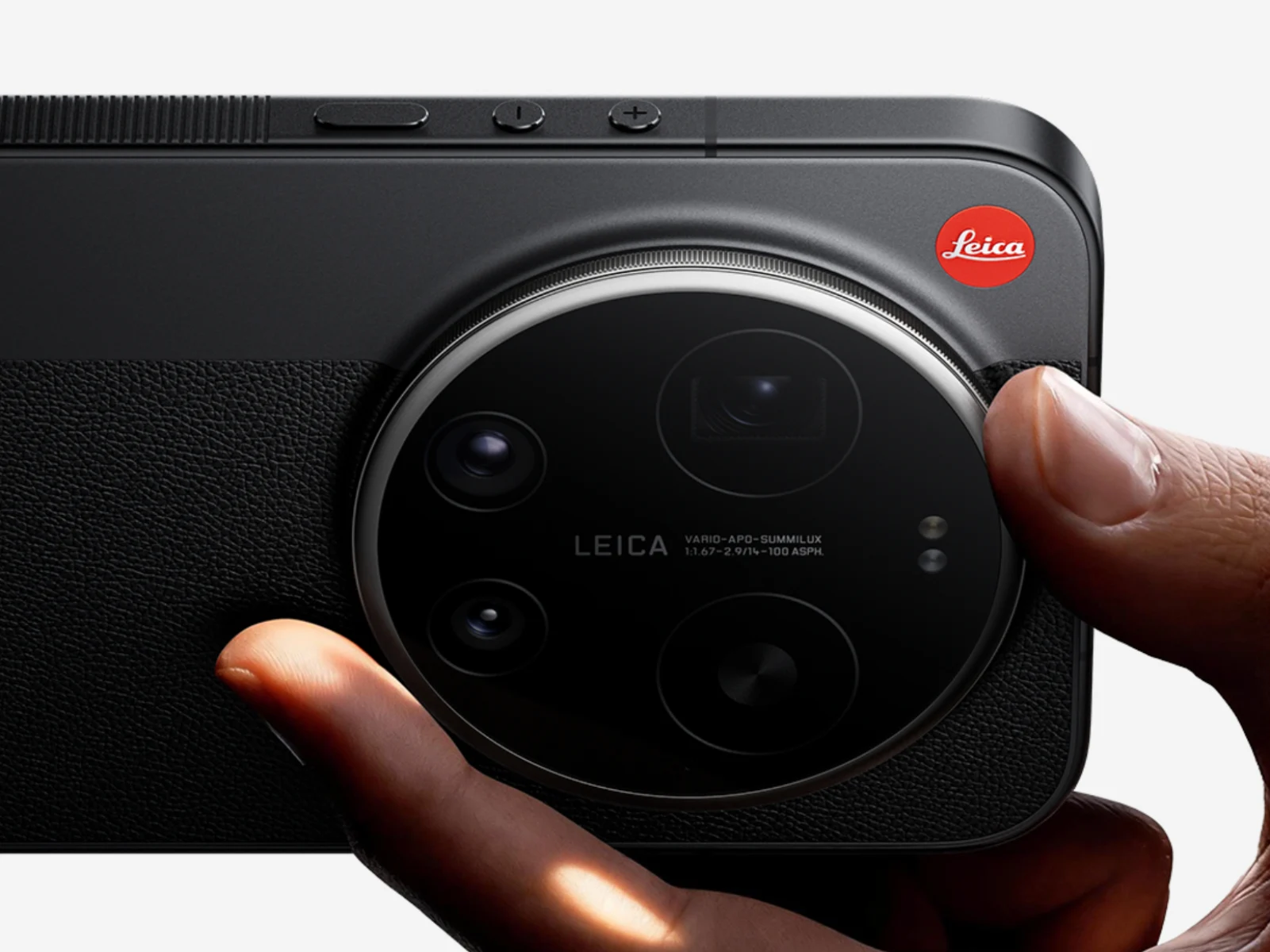
    Xiaomi’s flagship phone is getting ready for a worldwide launch. As a reminder, the brand introduced the Xiaomi 17 Ultra Leica Edition at the same time as the standard Xiaomi 17 and Xiaomi 17 Ultra, which has the model number 25128PNA1C and features new zoom controls.

    Global Release Information

    Recent leaks have been highlighting the global release of the Xiaomi 17 and Xiaomi 17 Ultra. In brief, many sources are predicting that these models will be priced similar to the Xiaomi 15 Ultra and its smaller counterpart, which is currently listed at $809 on Amazon. While we still don’t have specific details regarding the price of the Leica Edition, the global version has shown up on Geekbench with the model number 25128PNA1G.

    Possible Name Change

    According to a recent certification from a regulatory body, Xiaomi might launch this global version under the name ‘Leica Leitzphone powered by Xiaomi’ instead of calling it just the Xiaomi 17 Ultra Leica Edition. No matter what they decide to name it, the Geekbench leak indicates that testing is taking place for this global version prior to its official launch.

    Release Date Uncertainty

    It’s still unclear if the Leica Leitzphone will be released alongside the Xiaomi 17 and Xiaomi 17 Ultra on February 28. For more information, you can check out our launch article, which provides detailed insights on how the Leica Edition is different from the standard Xiaomi 17 Ultra.

    Geekbench via XpertPick

    Source:
    Link


  • Poco X8 Pro Leak Reveals New Details Ahead of Global Release

    Poco X8 Pro Leak Reveals New Details Ahead of Global Release

    Key Takeaways

    1. The Poco X8 series is likely replacing the Poco X7 and X7 Pro, with the Poco X8 Pro expected to launch soon.
    2. The Poco X8 Pro features a Dimensity 8500 series chipset, offering a 7% improvement in single-core performance compared to its predecessor.
    3. The device is equipped with one main core, three performance cores, three energy-efficient cores, and a Mali-G720 MP8 GPU.
    4. Pricing for the Poco X8 Pro starts at €399 (~$475) for 8 GB of RAM and 256 GB of storage, with a higher configuration of 12 GB of RAM and 512 GB priced at €479 (~$569).
    5. The global launch date for the Poco X8 Pro is still uncertain.


    The Poco X8 series isn’t here yet, but it looks like the Poco X7 and Poco X7 Pro are about to be replaced. Recently, the Poco X8 series showed up in global regulatory bodies and has now appeared on Geekbench. As is typical, the benchmarking site does not use the retail name for the device.

    Model Details

    Instead, Geekbench lists it as 2511FPC34G, with the G at the end indicating it will be available globally. Based on earlier leaks, it is more likely that this device is the Poco X8 Pro instead of the rumored Poco X8 Pro Max. Additionally, Geekbench reveals that the 2511FPC34G is powered by a Dimensity 8500 series chipset, unlike the Dimensity 9500s that the Poco X8 Pro Max is expected to use.

    Performance Specs

    The smartphone comes equipped with one main core, three performance cores, and three energy-efficient cores, along with a Mali-G720 MP8 GPU. The Poco X8 Pro aligns with the typical performance we anticipate from the Dimensity 8500. As a result, the Poco X8 Pro offers about a 7% improvement in single-core performance compared to the previous model. However, its multi-core performance is on par with last year’s Poco X7 Pro.

    Pricing and Launch

    According to the screenshots below, Xiaomi is set to provide the Poco X8 Pro with 12 GB of RAM and Android 16 right out of the box. This version is expected to be priced at €479 (~$569) with 512 GB of storage. On the other hand, the Poco X8 Pro is likely to begin with 8 GB of RAM and 256 GB of storage for €399 (~$475). As of now, it’s still uncertain when the Poco X8 Pro will make its global launch.

    Geekbench via XpertPick

    Source:
    Link


  • Qualcomm Snapdragon 8 Elite Gen 5 to Launch with Reduced Speed

    Qualcomm Snapdragon 8 Elite Gen 5 to Launch with Reduced Speed

    Key Takeaways

    1. Qualcomm’s new 7-core Snapdragon 8 Elite Gen 5 chipset is hinted to launch soon, with March 17 as the anticipated date.
    2. The 7-core model features a reduction in one performance core, maintaining clock speeds at 3.6 GHz and prime cores at 4.6 GHz.
    3. Single-core performance aligns with expectations, but the 7-core variant scores lower than the 8-core Snapdragon 8 Elite Gen 5 in benchmarks.
    4. GPU performance remains strong, with an OpenCL score of 24,103, placing it among the top performers.
    5. Multi-core performance is about 17% lower than the 8-core version, yet it surpasses its 7-core predecessor by approximately 10%.


    The new 7-core Snapdragon 8 series chipset is on its way. Qualcomm hasn’t officially confirmed anything yet, but early hints on Geekbench suggest that a toned-down version of the Snapdragon 8 Elite Gen 5 is in the works.

    Previous Releases

    Last year, Qualcomm also introduced a similar version of the Snapdragon 8 Elite. This 7-core model performed admirably, enabling the Find N5 to achieve impressive runtimes during testing. However, only Oppo utilized this variant, while the Galaxy Z Fold7 opted for an 8-core version branded as the Snapdragon 8 Elite for Galaxy, which is currently priced at $1,050 for a refurbished unit on Amazon. Now, the Find N6 has become the first device featuring the 7-core Snapdragon 8 Elite Gen 5.

    Performance Overview

    This new Snapdragon 8 Elite Gen 5 variant, like its successful predecessor, reduces one performance core, resulting in a total of 7 cores while keeping clock speeds at 3.6 GHz. The Prime cores still maintain a speed of 4.6 GHz. Consequently, the single-core performance aligns with what we typically expect from the Snapdragon 8 Elite Gen 5. However, a score of 3,524 places this 7-core variant near the bottom of the Snapdragon 8 Elite Gen 5 database, just above the OnePlus 15.

    Graphics and Multi-Core Results

    The GPU performance remains stable, with an OpenCL score of 24,103. This score positions the 7-core variant close to the top alongside the Poco F8 Ultra and RedMagic 11 Pro. On the downside, the multi-core performance lags behind. Benchmarks indicate that this 7-core variant is about 17% lower than its 8-core counterpart in the Geekbench 6.5 multi-core tests.

    In conclusion, the performance of this 7-core variant is roughly on par with the 8-core version of the Snapdragon 8 Elite. However, it does surpass its 7-core predecessor by approximately 10%. The anticipated launch date for the Snapdragon 8 Elite Gen 5 7-core variant is March 17, when Oppo will unveil the Find N6 globally. It remains uncertain whether other Android manufacturers will choose this variant over the 8-core option for their devices.

    Source:
    Link


  • Oppo Find N6 Foldable vs. Samsung Galaxy Z Fold7: 16GB RAM Boost

    Oppo Find N6 Foldable vs. Samsung Galaxy Z Fold7: 16GB RAM Boost

    Key Takeaways

    1. The Oppo Find N6 is expected to launch globally next month, replacing both the Find N5 and OnePlus Open in various regions of Europe and South Asia.
    2. The device is likely to have high performance, with 16 GB of RAM, outperforming competitors like the Pixel 10 Pro Fold and Galaxy Z Fold7.
    3. An entry-level model with 12 GB of RAM is anticipated for the Find N6, potentially making it more affordable.
    4. The Find N6 shows significant performance improvements in Geekbench tests, exceeding the Galaxy Z Fold7 by about 30% in single-core CPU performance.
    5. The Find N6 has fewer CPU cores compared to other devices using Snapdragon 8 Elite Gen 5, according to benchmark comparisons.


    Oppo’s upcoming foldable phone is making its way onto benchmarking sites. To summarize, the Find N6 is anticipated to have a global launch next month. Although it seems there won’t be an immediate release in India, the Find N6 is set to arrive in various regions of Europe and South Asia, taking the place of not only the Find N5 but also the OnePlus Open.

    Performance Expectations

    As per Geekbench, the Oppo Find N6 is likely to outperform other foldables such as the Pixel 10 Pro Fold and Galaxy Z Fold7 (currently priced at $1,050 for refurbished models on Amazon) thanks to its 16 GB of RAM. If we look at past releases from the Find N series, it’s probable that Oppo will offer a more affordable 12 GB RAM model as the entry-level option for the Find N6.

    Benchmark Results

    The Find N6 is also set to provide a significant boost in performance compared to the Pixel 10 Pro Fold, Magic V5, and Galaxy Z Fold7 in Geekbench’s single-core CPU and OpenCL GPU tests. For example, the Find N6 reportedly outperforms the Galaxy Z Fold7 by roughly 30% in single-core CPU evaluations. Similarly, there is a comparable performance difference in GPU tests between the Magic V5 and the Find N6. Nevertheless, it’s worth noting that the Find N6 will have fewer CPU cores compared to other devices powered by Snapdragon 8 Elite Gen 5, which we’ve detailed in another article.

    Source:
    Link