Tag: Geekbench

  • Vivo V70 Elite Leaks on Geekbench with Zeiss Cameras and Snapdragon 8

    Vivo V70 Elite Leaks on Geekbench with Zeiss Cameras and Snapdragon 8

    Key Takeaways

    1. The Vivo V70 series will launch with two models: the standard V70 and the V70 Elite, focusing on mid-range camera capabilities.
    2. The V70 Elite features the Snapdragon 8s Gen 3 processor, marking the first use of a Snapdragon 8-series chip in the V series.
    3. Benchmark scores for the V70 Elite are 1,973 in single-core and 4,863 in multi-core tests, with 12GB of RAM and running on Android 16.
    4. The V70 Elite has a 6.59-inch OLED display with a 1.5K resolution and 120Hz refresh rate, along with a Zeiss-tuned triple rear camera setup and a 50MP front camera.
    5. It is powered by a 6,500mAh battery with 90W wired charging and will be available in three colors: Passion Red, Sand Beige, and Authentic Black, expected to launch later this month.


    The Vivo V70 series is about to make its debut, featuring two models: the standard V70 and the V70 Elite. Vivo’s V series is known for its focus on the mid-range segment, especially highlighting camera capabilities. The new V70 Elite is notable as it will be the first in the V series to incorporate a Snapdragon 8-series processor. Recently, it has been spotted on Geekbench, showcasing its benchmark results.

    Benchmark Results

    According to @ZionsAnvin on X, the Geekbench listing for the Vivo V70 Elite carries the model number “V2548.” This device is equipped with the Snapdragon 8s Gen 3, a premium Qualcomm chip that debuted in 2024, and has powered devices like the Poco F6 and Motorola Edge 50 Ultra.

    The benchmark scores indicate performance levels of 1,973 in single-core and 4,863 in multi-core tests. Additionally, the listing confirms that the device will include 12GB of RAM and run on Android 16.

    Display and Camera Features

    The official webpage for the V70 Elite reveals that it sports a 6.59-inch OLED display with a resolution of 1.5K and a refresh rate of 120Hz. The phone boasts a Zeiss-tuned triple rear camera setup that features a 50MP primary sensor, a 50MP telephoto lens, and an unnamed ultrawide camera. Moreover, it is equipped with a 50MP front-facing camera.

    The Vivo V70 Elite is powered by a substantial 6,500mAh battery and supports 90W wired charging (with a 10K Iniu powerbank currently priced at $20 on Amazon). It will be available in three colors: Passion Red, Sand Beige, and Authentic Black. While the exact launch date remains undisclosed, the phone is anticipated to be released later this month.

    Source:
    Link


  • Xiaomi Pad 8 Launches on Geekbench: Performance Insights

    Xiaomi Pad 8 Launches on Geekbench: Performance Insights

    Key Takeaways

    1. The Xiaomi Pad 8 series includes two models: the standard Pad 8 and the Pad 8 Pro, launched in September 2025 in China.
    2. The global version of the Xiaomi Pad 8 features the Snapdragon 8s Gen 4 chip, 8GB of RAM, and shows improved performance over its predecessor, with an 8% boost in single-core and a 20% rise in multi-core scores.
    3. It runs on Android 16 and is expected to have similar specifications to the Chinese version, which includes an 11.2-inch LCD display and a 144Hz refresh rate.
    4. The tablet has a 9,200mAh battery with 45W charging capability and cameras with 13MP (rear) and 8MP (front).
    5. A global launch for the Xiaomi Pad 8 series is anticipated in early March 2026, alongside the Xiaomi 17 and Xiaomi 17 Ultra.


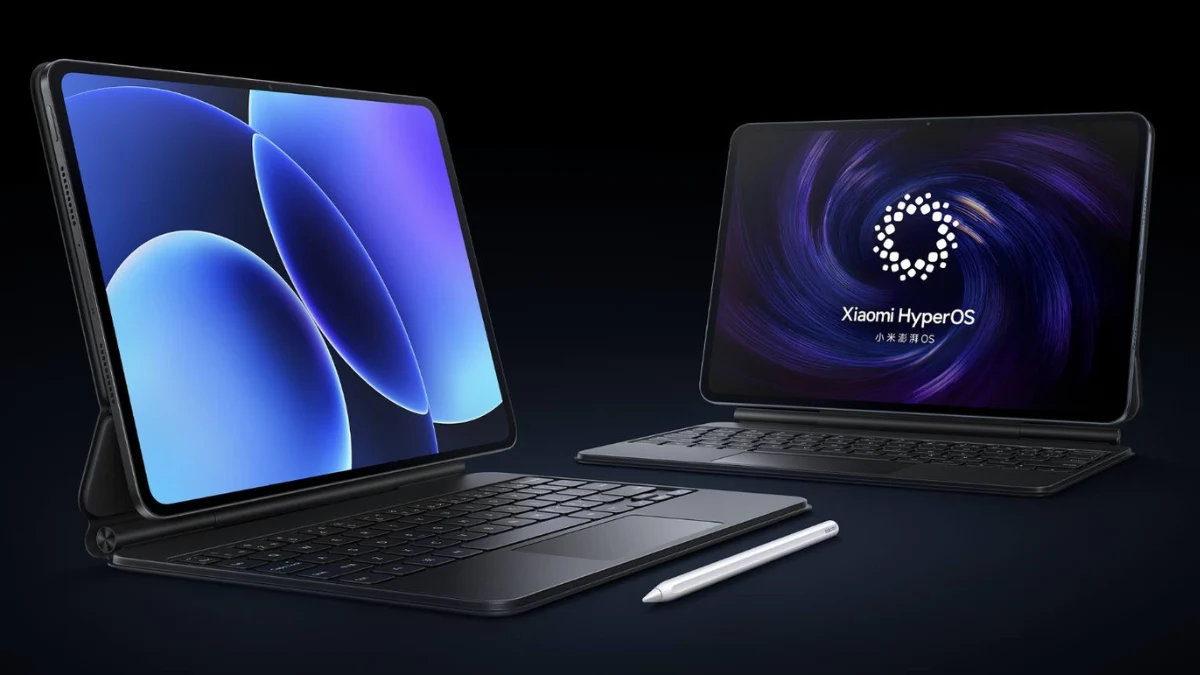
    The Xiaomi Pad 8 series stands out as a top-tier Android tablet collection, comprising two versions: the standard Pad 8 and the Pad 8 Pro. Launched in September 2025 in China, it has yet to make its debut internationally. However, a worldwide release is anticipated shortly. The Pad 8 Pro was previously spotted on Geekbench, and now the standard Pad 8 has also appeared.

    Performance Insights

    The global Xiaomi Pad 8’s Geekbench entry shows the model number “25097RP43G.” It is equipped with the Snapdragon 8s Gen 4 chip and 8GB of RAM. In performance tests, it achieved scores of 2,042 for single-core and 6,145 for multi-core.

    To put this into perspective, the Xiaomi Pad 7 that has the Snapdragon 8s Gen 3 recorded scores of 1,893 and 5,089 in single-core and multi-core tests. This indicates an approximate boost of 8% in single-core performance and a 20% rise in multi-core performance.

    Software and Specs

    Moreover, the Geekbench listing indicates that the global Xiaomi Pad 8 is running on Android 16. Other specifications remain unverified but are expected to be quite alike those of the Chinese version.

    The Xiaomi Pad 8 (Chinese model) boasts an 11.2-inch LCD display with a resolution of 3200×2136 pixels, along with a 144Hz refresh rate. It is powered by a 9,200mAh battery that supports 45W charging (20K Ugreen powerbank currently priced at $70 on Amazon). Furthermore, the tablet includes a 13MP rear camera and an 8MP front-facing camera.

    Launch Expectations

    Tipster Abhishek Yadav on X has hinted that the Xiaomi Pad 8 series might launch globally in early March, alongside the Xiaomi 17 and Xiaomi 17 Ultra.

    Source:
    Link


  • Samsung Tests Exynos 2700 for Galaxy S26 Successor

    Samsung Tests Exynos 2700 for Galaxy S26 Successor

    Key Takeaways

    1. Skepticism Over Legitimacy: The initial Geekbench test results for the Exynos 2700 raise doubts about their authenticity despite being listed in the Geekbench database.

    2. Underwhelming GPU Performance: The Exynos 2700’s GPU, using a Samsung Xclipse 970, shows significantly lower performance compared to its predecessor, the Exynos 2600.

    3. Distinctive CPU Configuration: The Exynos 2700 features an unusual deca-core CPU setup with a 1-4-1-4 cluster arrangement and relatively low clock speeds.

    4. Awaiting ARM Core Details: The specific ARM cores for the Exynos 2700 are yet to be confirmed, but it is expected to use an updated version of the ARM Lumex architecture.

    5. Targeted Devices: The Exynos 2700 may be designed for the Galaxy S27 and Galaxy S27+ models, continuing the trend of using a 2nm process similar to the Exynos 2600.


    The initial response to a Geekbench test of the Exynos 2700 in early 2026 may trigger skepticism about its legitimacy. The screenshot showcasing a purported Samsung Exynos 2700 test device, first posted by Abhishek Yadav on X, seems to be genuine, or at least not obviously fake. This test is officially listed in the Geekbench database, showing no irregularities. Still, based on past incidents, this doesn’t guarantee authenticity; it’s possible that it could be a modified smartphone with altered configuration files.

    Performance Assessment

    If the device labeled S5E9975 ERD is indeed a Samsung test unit for the successor to the Exynos 2600, its performance is currently lacking. The GPU performance was evaluated, revealing that it uses a Samsung Xclipse 970, which, according to Geekbench, consists of 4 compute units running at 555 MHz. This is roughly half the capability and speed of the Exynos 2600 test unit, which has previously achieved notable results on Geekbench. Given that the GPU’s power is significantly reduced, the OpenCL score of 15,618 points is not entirely disappointing, but it still falls short compared to the Exynos 2600 test results.

    Unusual Configuration

    Not only does this potential Exynos 2700 prototype feature an atypical GPU setup, but its CPU configuration is also distinctive. It is a deca-core design, yet it has a rare 1-4-1-4 cluster arrangement. The clock speeds of 2.3 GHz, 2.4 GHz, 2.78 GHz, and 2.88 GHz seem rather preliminary and relatively low. In contrast, the Exynos 2600’s prime core operates at 3.8 GHz (with the aforementioned test device running at 3.55 GHz). We still await clarity on which ARM cores will be incorporated; it is likely that it will utilize an updated version of the ARM Lumex architecture launched last year, which is currently implemented in the Exynos 2600 for the Galaxy S26 and Galaxy S26+. Similar to the Exynos 2600, the Exynos 2700 is likely to be built on a 2nm process and may be aimed at the Galaxy S27 and Galaxy S27+ in select markets.


  • Samsung Galaxy S26 Plus: Xclipse 960 GPU Shines in Benchmarks

    Samsung Galaxy S26 Plus: Xclipse 960 GPU Shines in Benchmarks

    Key Takeaways

    1. Samsung will not officially unveil the Galaxy S25 series until the end of the upcoming month, despite ongoing leaks and speculations.
    2. The Galaxy S26 Plus has been spotted on Geekbench, confirming it will feature 12 GB of RAM.
    3. The Galaxy S26 Plus is expected to launch with the Exynos 2600 chipset in select regions like South Korea and Europe, while other markets will get the Snapdragon 8 Elite Gen 5.
    4. The Exynos 2600 in the Galaxy S26 Plus shows benchmark scores comparable to the Snapdragon 8 Elite Gen 5, indicating strong performance.
    5. Real-world performance assessments for the Exynos 2600 will be clearer after independent reviews are available in late February or early March.


    Samsung is set to not officially unveil the Galaxy S25, Galaxy S25 Plus, or the Galaxy S25 Ultra (currently priced at $1,049 on Amazon) until the end of the upcoming month. Despite this, many leaks and speculations keep emerging, shedding light on what Samsung’s next flagship phones may look like. One exciting upgrade expected is the next-gen Corning Gorilla Glass, which is likely to be featured on the Galaxy S26 Ultra, along with other enhancements.

    Galaxy S26 Plus Leaks

    Recently, the Galaxy S26 Plus has been spotted on Geekbench, revealing more information about its capabilities. This variant, specifically for South Korea, is identified by the ‘N’ in its SM-S947N model number. If there were any uncertainties, it’s now clear that the Galaxy S26 Plus will come equipped with 12 GB of RAM, setting it apart from some other flagship devices and modern gaming phones.

    Exynos 2600 Chipset Insights

    Moreover, the Geekbench listings indicate that Samsung plans to launch the Galaxy S26 Plus in select regions with the Exynos 2600 chipset. Following the trend from previous models, it’s expected that Exynos 2600 versions will be available in South Korea and Europe, while other markets will receive variants powered by the Snapdragon 8 Elite Gen 5 instead.

    In any case, the Exynos 2600 inside the Galaxy S26 Plus is said to outperform similar benchmarks for the Galaxy S26. The results show scores of 24,964 and 25,791, placing the Exynos 2600 and its Xclipse 960 GPU on par with the Snapdragon 8 Elite Gen 5 in the Geekbench 6 OpenCL tests. However, whether these results will reflect real-world performance remains uncertain until independent reviews start appearing in late February or early March.

    Geekbench via Abhishek Yadav

    Source:
    Link


  • OnePlus Nord 6 Leaks on Geekbench with Snapdragon and Android 16

    OnePlus Nord 6 Leaks on Geekbench with Snapdragon and Android 16

    Key Takeaways

    1. The OnePlus Nord 6 is set to replace the Nord 5 and is expected to launch soon, as it has received multiple certifications and appeared on Geekbench.
    2. The smartphone features the Qualcomm Snapdragon 8s Gen 4 processor and comes with 12GB of RAM.
    3. In performance tests, the Nord 6 scored 2,019 in single-core and 6,503 in multi-core, improving on the Nord 5’s scores.
    4. The device runs on Android 16 and may be a relabeled version of the OnePlus Ace 6, which was launched in China.
    5. Key features of the OnePlus Ace 6 include a 6.83-inch AMOLED display, 50MP dual rear camera, 16MP selfie camera, and a 7,800mAh battery with 120W fast charging.


    The mid-range OnePlus Nord series is set to introduce a new member in the global market: the Nord 6. This new model will take the place of the Nord 5, which hit the shelves in July 2025. Recently, the OnePlus Nord 6 has gained multiple certifications, indicating that its launch is imminent. Additionally, the smartphone has surfaced on Geekbench.

    Specifications Unveiled

    The model number for the OnePlus Nord 6 is “CPH2795.” According to the Geekbench listing, it features the Qualcomm Snapdragon 8s Gen 4 processor and comes with 12GB of RAM. The Snapdragon 8s Gen 4 has previously powered devices like the Nothing Phone (3) and the Xiaomi Poco F7.

    Performance Details

    In terms of performance, the OnePlus Nord 6 achieved a score of 2,019 in single-core tests and 6,503 in multi-core tests. For context, the Nord 5, equipped with the Snapdragon 8s Gen 3, scored 2,002 in single-core and 5,160 in multi-core tests during our evaluation.

    The Geekbench listing also indicates that the device runs on Android 16. There are speculations that the OnePlus Nord 6 might actually be a relabeled version of the OnePlus Ace 6, which was launched in China in October 2025.

    Key Features

    To provide some context, the OnePlus Ace 6 boasts a 6.83-inch AMOLED display with a 1.5K resolution and a refresh rate of 165Hz. It includes a dual rear camera configuration, featuring a main camera of 50MP and an 8MP ultrawide lens. For taking selfies, it has a 16MP camera. Importantly, it also packs a massive 7,800mAh battery that supports 120W fast charging (20K Ugreen powerbank currently priced at $35 on Amazon).

    Geekbench via GSMArena

    Source:
    Link


  • Xiaomi 17 Ultra Global Model Leak Suggests Early Release

    Xiaomi 17 Ultra Global Model Leak Suggests Early Release

    Key Takeaways

    1. The Xiaomi 17 Ultra is nearing a global release, following its initial launch in China.
    2. The global version has been spotted on Geekbench with the model number 2512BPNDAG.
    3. It will feature a Qualcomm Snapdragon 8 Elite Gen 5 chipset and come pre-installed with Android 16.
    4. The highest RAM configuration of 16 GB is expected, with uncertainty about a potential 12 GB version.
    5. An official global launch is anticipated in mid to late February, with limited battery capacity for this release.


    The Xiaomi 17 Ultra is getting closer to a worldwide release. This smartphone made its first appearance at the end of last year, intended to be an upgrade over the Xiaomi 17 Pro Max in the flagship series. However, this was only applicable in China, as the Xiaomi 15 and Xiaomi 15 Ultra are currently the models available for consumers globally.

    Global Variant Emerges

    Recently, the global version of the Xiaomi 17 Ultra has appeared on Geekbench, identified by its model number 2512BPNDAG. It is anticipated that the Xiaomi 17 will also be released outside of China alongside this model. The Xiaomi 17 Ultra continues to feature a Qualcomm Snapdragon 8 Elite Gen 5 chipset for its global version. Furthermore, this device will come pre-installed with Android 16, which is different from the Xiaomi 15T Pro (currently priced at $844.50 on Amazon).

    RAM and Availability

    The Geekbench listing has revealed that Xiaomi intends to offer its new flagship device with its highest RAM configuration worldwide, which is not always the case. While the 16 GB RAM option seems guaranteed, it’s still unclear if a more affordable 12 GB version will be available outside of its home country. However, such leaks typically suggest that a launch is approaching. As such, it wouldn’t be a shock if the Xiaomi 17 Ultra officially launched globally in mid to late February, rather than waiting until MWC 2026 in early March. Unfortunately, it appears that the battery capacity will be limited for its global launch.

    Geekbench via Abhishek Yadav

    Source:
    Link


  • Galaxy S26 Ultra Beats S25 Ultra on Geekbench with Underclocked Chipset

    Galaxy S26 Ultra Beats S25 Ultra on Geekbench with Underclocked Chipset

    Key Takeaways

    1. The Samsung Galaxy S26 series is expected to launch in late February 2026, featuring three models: S26, S26 Plus, and S26 Ultra.
    2. The Galaxy S26 Ultra will have a Snapdragon 8 Elite Gen 5 chip and a model number of SM-S948U, with 12GB of RAM and Android 16.
    3. Initial benchmark scores show the S26 Ultra with a single-core score of 3,466 and a multi-core score of 11,035, but performance is below its potential.
    4. Rumors suggest the S26 Ultra could also use the Exynos 2600 chipset in some regions, while most will get the Snapdragon variant.
    5. The S26 Ultra may feature a redesigned camera module and improved charging speed of 60W, up from the previous model’s 45W.


    The Samsung Galaxy S26 series, which is set to be the flagship lineup, is anticipated to be revealed in late February 2026. In the lead-up to the official launch, various leaks and speculation have emerged. This series is likely to include three different models: the standard S26, the S26 Plus, and the S26 Ultra.

    Benchmark Scores

    A recent Geekbench listing shared by leaker Ice Universe on X has uncovered the initial benchmark results for the Galaxy S26 Ultra. This specific listing is for the US variant of the device, identified by the model number SM-S948U. It is equipped with 12GB of RAM and operates on the Android 16 platform.

    The smartphone features a slightly slower version of the Snapdragon 8 Elite Gen 5 chip, which has six cores running at 3.63 GHz and two cores at 4.19 GHz. The listing indicates a single-core score of 3,466 and a multi-core score of 11,035.

    Projected Performance

    As per the leaker’s insights, the processor was performing at a level below its full potential during the tests. With the larger cores functioning at a mere 4.19 GHz instead of the maximum 4.74 GHz, the tipster estimates that the single-core score could potentially reach around 3,920 points when operating at its highest frequency. Even with less than optimal performance, the S26 Ultra outperforms the S25 Ultra, which recorded 3,200 in single-core and 10,020 in multi-core during testing.

    Rumors suggest that the S26 Ultra might utilize the Exynos 2600 chipset in select regions. Nonetheless, most areas are still expected to receive the Snapdragon 8 Elite Gen 5. In addition to the processor, the Galaxy S26 Ultra is rumored to feature a redesigned camera module. Additionally, reports indicate that the charging speed may be boosted to 60W, an upgrade from the 45W offered by the previous model.

    Geekbench via @UniverseIce on X

    Source:
    Link


  • MediaTek Dimensity 8500 Leaks on Geekbench with Minor Upgrades

    MediaTek Dimensity 8500 Leaks on Geekbench with Minor Upgrades

    Key Takeaways

    1. The Honor Power 2 features a MediaTek Dimensity 8500 chipset, succeeding the earlier Honor Power model from 2025.
    2. The device has 12 GB of RAM and shows a modest performance increase of about 7% over the Dimensity 8400 in benchmark tests.
    3. The Dimensity 8500 achieves a single-core score of 1,728 and a multi-core score of 6,762, compared to the Dimensity 8400’s scores of 1,621 and 6,208.
    4. The chipset’s core configuration is similar to the Dimensity 8400, with slightly higher clock speeds for each core type.
    5. The GPU for the Dimensity 8500 is the ARM Mali-G720 MC8, which does not show significant improvements over the Mali-G720 MC7 used in the Dimensity 8400.


    Honor has a number of new gadgets ready for launch. Among these is the Honor Power 2, which follows the Honor Power that was introduced earlier in 2025. This new device seems to have appeared on Geekbench, showcasing its MediaTek Dimensity 8500 chipset, along with its specifications and performance capabilities.

    Device Specifications

    The tested device is recognized by the identifier “Honor SER-AN00” and comes with 12 GB of RAM. In terms of performance, the Dimensity 8500 does not seem to be a major upgrade over the Dimensity 8400. The chipset achieves a single-core score of 1,728 in its best test, while the multi-core score stands at 6,762. In contrast, the Dimensity 8400 typically scores 1,621 and 6,208 in the same benchmarks.

    Performance Insights

    These figures indicate a roughly 7% increase in performance, but it’s important to stress that this is only a preliminary benchmark and not definitive. Moreover, the chipset’s core configuration mirrors that of the Dimensity 8400, although with slightly elevated clock speeds: a prime core at 3.40 GHz compared to the 3.25 GHz of the Dimensity 8400, three cores at 3.20 GHz instead of 3.0 GHz on the previous model, and four efficiency cores running at 2.20 GHz, a minor rise from the predecessor’s 2.10 GHz. It remains uncertain if the cores themselves are identical.

    GPU Details

    Finally, the listing discloses the GPU, which is ARM’s Mali-G720 MC8. Since the Dimensity 8400 uses a Mali-G720 MC7, it appears there won’t be notable enhancements on the GPU front either.

    Source:
    Link


  • Core Ultra 7 365 Performance Issues: Intel Panther Lake 10% Slower

    Core Ultra 7 365 Performance Issues: Intel Panther Lake 10% Slower

    Key Takeaways

    1. Intel will unveil its Panther Lake CPU series at CES 2026, featuring advanced 18A manufacturing technology.
    2. The lineup includes a range of models, from the entry-level Core Ultra 5 322 with six cores to the high-end Core Ultra X9 388H with 16 cores.
    3. The Core Ultra 7 365 model has 4 performance cores and 4 efficient cores, with a maximum boost clock of 4.8 GHz, achieving notable Geekbench scores.
    4. The Core Ultra 7 365 shows slightly lower performance compared to its predecessor, the Core Ultra 7 258V, and also lags behind AMD’s Ryzen 7 260 in benchmarks.
    5. The performance of the Core Ultra 7 365 may improve with final drivers, and laptops featuring the Panther Lake series will soon be available for testing.


    Intel is gearing up to unveil its Panther Lake CPU series at CES 2026. Built using the advanced Intel 18A manufacturing process, this new lineup features a range of options, starting with the entry-level Core Ultra 5 322, which includes six cores, all the way up to the top-tier Core Ultra X9 388H that boasts 16 cores. However, most multimedia and everyday laptops from brands like Lenovo are expected to be equipped with mid-tier Panther Lake CPUs that balance efficiency with performance.

    Performance Insights

    One notable model in the Panther Lake lineup is the Core Ultra 7 365, which features 4 performance (P) cores and 4 efficient (LP-E) cores, reaching a maximum boost clock of 4.8 GHz. This CPU has been spotted in the Geekbench database within a “Lenovo 4810X90100” system. It achieved a single-core score of 2,451 and a multi-core score of 9,714 on Geekbench 6.

    Comparison with Other CPUs

    When we compare this latest Core Ultra 7 365 to other similar Intel processors, it appears to be about 11% slower than the Core Ultra 7 258V Lunar Lake CPU in single-core tasks and 10% behind in multi-core performance. The Core Ultra 7 365 seems to deliver results comparable to Intel’s 12th generation, with chips like the Core i7-1270P falling within the same performance tier.

    On the AMD front, the Core Ultra 7 365 does not quite hold up against the 8-core Ryzen 7 260, based on the latest Geekbench findings. The Intel chip lags behind by 8% in single-core performance and 23% in multi-core benchmarks. This underwhelming performance from the Core Ultra 7 365 is surprising, especially considering that the Ryzen 7 260 is built on the older Zen 4 architecture.

    Future Testing and Availability

    It’s important to note that the Core Ultra 7 365 was likely running on pre-release drivers, so its performance might not be fully indicative of its capabilities. Thankfully, laptops featuring the Panther Lake series are on the horizon. We won’t have to wait long to conduct comprehensive performance evaluations of the Panther Lake CPUs, including the Core Ultra 7 365.

    Source:
    Link


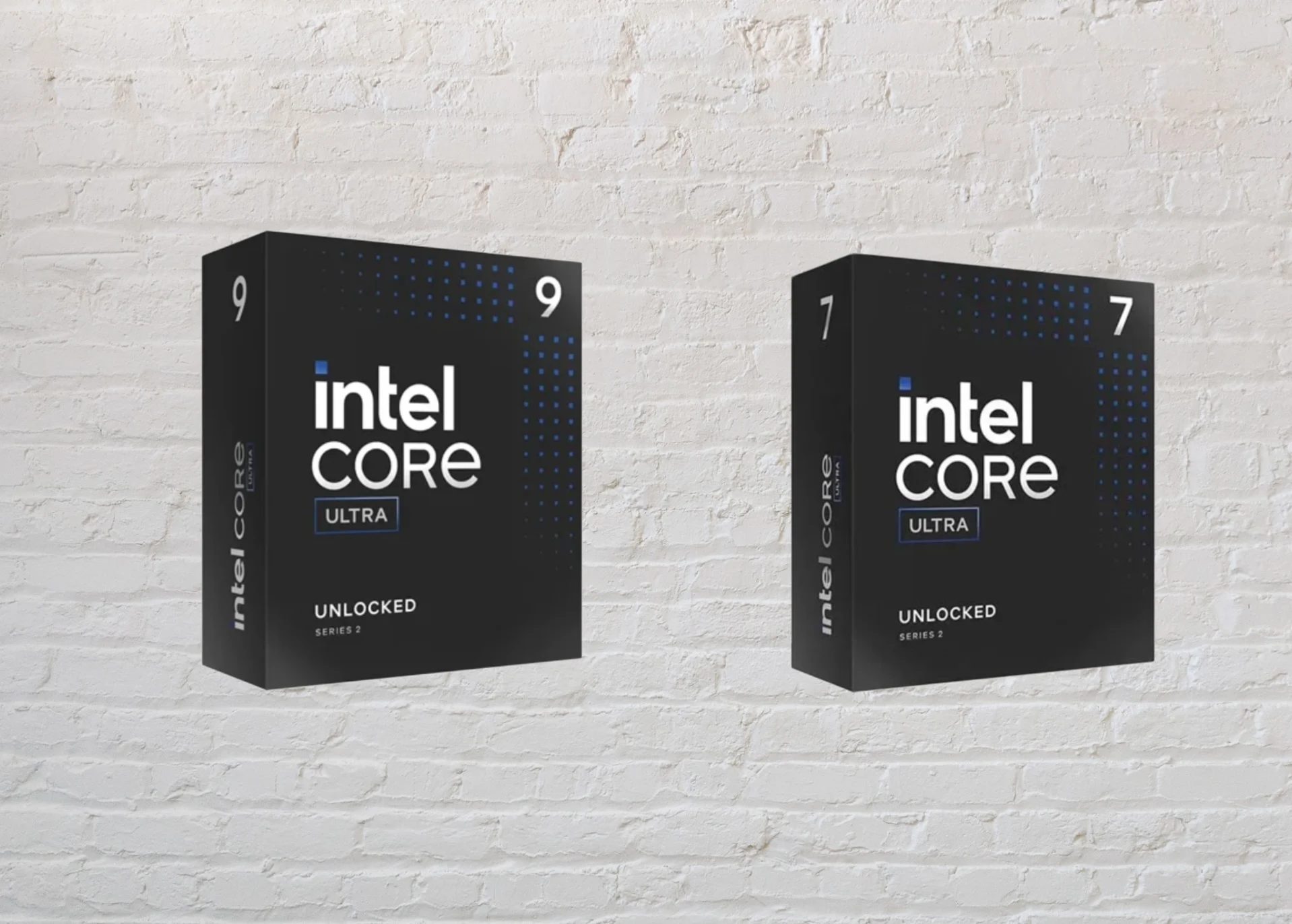
  • Intel Core Ultra 9 290K Plus and 7 270K Plus CPUs Leaked Before CES 2026

    Intel Core Ultra 9 290K Plus and 7 270K Plus CPUs Leaked Before CES 2026

    Key Takeaways

    1. The Intel Core Ultra 7 270K Plus and Core Ultra 9 290K Plus have been listed by Indian retailer PrimeABGB, suggesting an upcoming release.
    2. The Core Ultra 7 270K Plus is expected to have four additional efficiency cores compared to its predecessor, totaling 24 cores.
    3. Clock speeds for the new CPUs are predicted to remain the same, with a potential 100 MHz increase for the E-cores of the Core Ultra 7 270K Plus.
    4. The Core Ultra 9 290K is expected to maintain its core configuration but will see a 100 MHz increase in P-core clock speeds, reaching up to 5.6 GHz.
    5. Pricing details for the new CPUs are not provided, and the retailer is inviting customers to call for pricing, indicating the CPUs may already be in stock.


    Just a few days ago, we shared news about a leak related to the forthcoming Intel Core Ultra 7 270K Plus gaming CPU, which recently appeared again on Geekbench. The performance boosts shown in the listing were quite small, as is typical for a mid-cycle refresh.

    Retailer Listings

    A tipster named @momomo_us found that Indian PC retailer PrimeABGB has put both the Core Ultra 9 290K Plus and the Core Ultra 7 270K Plus on their site, complete with specs for each processor. It’s hard to confirm if the details are accurate, as they could just be temporary entries for these soon-to-be-released desktop gaming CPUs.

    Specifications Overview

    The Core Ultra 7 270K Plus is rumored to replace the Core Ultra 7 265K, featuring four additional efficiency cores while keeping the same number of performance cores. This results in a combined core total of 24, which is equivalent to the Core Ultra 9 285K. Clock speeds are predicted to stay the same, but there could be a 100 MHz increase for the E-cores. The listing provides these points, which adds some trustworthiness. More specifics are outlined below:

    Core Comparisons

    In contrast to the more affordable Core Ultra 7 270K Plus, the Core Ultra 9 290K gaming CPU won’t have any extra cores, sticking with the configuration of 8 P-cores and 16 E-cores for a total of 24 cores, similar to the Core Ultra 9 285K. Nonetheless, the P-cores will see a clock speed increase of 100 MHz, reaching up to 5.6 GHz. The precise details from the listing are as follows:

    The prices for the newly listed Core Ultra 200K Plus gaming CPUs aren’t provided. Interestingly, PrimeABGB invites customers to call for pricing information, which suggests they might already have the CPUs ready in stock. However, there’s certainly a chance that these listings are merely placeholders with details already circulating online.

    Source:
    Link