Tag: Geekbench

  • Sony Walkman NW-ZX900: Major Upgrades in New Audio Player

    Sony Walkman NW-ZX900: Major Upgrades in New Audio Player

    Key Takeaways

    1. Sony’s NW-A306 and NW-ZX707 models are nearing their third anniversary, with a new version for the NW-ZX707 expected soon.
    2. Geekbench listings suggest the upcoming NW-ZX900 series will replace the NW-ZX707, bypassing the ZX800 model.
    3. The new Walkman models will feature Android 16, while current models support only up to Android 14.
    4. Upgrades will include an increase in RAM from 4 GB to 8 GB and a new octa-core processor.
    5. Potential chipsets for the NW-ZX900 series include Snapdragon 6 Gen 4 or Snapdragon 7s Gen 3, with speculation of collaboration with Qualcomm’s Dragonwing division.


    The Sony Walkman NW-A306 and NW-ZX707, currently priced at $648 on Amazon, are nearing their third anniversary since their release in January 2023. Historically, Sony has usually waited about four years before introducing new models of its Android-based Walkmans. However, early signs suggest that a new version, at least for the NW-ZX707, might be just around the corner.

    New Models on the Horizon

    At present, we have access to a handful of Geekbench listings that provide some insight. These listings indicate that Sony is likely to introduce the NW-ZX900 series to replace the NW-ZX707, bypassing the ZX800 model in the process, similar to what happened with the ZX600 series. Additionally, it appears there will be significant improvements in both hardware and software for the Walkman ZX lineup.

    Upgrades and Features

    Interestingly, all Geekbench results show that the upcoming devices will come with Android 16, while the current NW-A306 and NW-ZX707 only support up to Android 14. Moreover, these listings hint at an upgrade in RAM from 4 GB to 8 GB. They also mention an octa-core processor known as ‘volcano,’ which is identified as ARM implementer 65 architecture 8 variant 0 part 3457 revision 1.

    Potential Chipset Choices

    Reports suggest that with an Adreno 810 GPU, Sony may have opted for either the Snapdragon 6 Gen 4 or the Snapdragon 7s Gen 3 for the NW-ZX900 series. Nevertheless, the clock speeds indicated do not align with those of the mentioned chipsets. This leads us to believe that Sony might once again be collaborating with Qualcomm’s Dragonwing division, similar to how it did with the NW-A306 and NW-ZX707 through the QCS4290. However, Qualcomm has yet to provide information about any related chipsets on its website.

    Source:
    Link


  • Intel Core Ultra 7 270K Plus Tops Geekbench 6 Multi-Core Test

    Intel Core Ultra 7 270K Plus Tops Geekbench 6 Multi-Core Test

    Key Takeaways

    1. The Intel Core Ultra 7 270K Plus features a 24-core configuration with 8 performance cores and 16 efficiency cores, increasing efficiency cores from the 265K model.
    2. It has a base and boost clock speed that is 100 MHz faster than the Core Ultra 7 265K.
    3. In Geekbench 5 tests, the 270K Plus scored 21,368 in multi-core performance and 3,235 in single-core performance, showing slight improvements over the 265K.
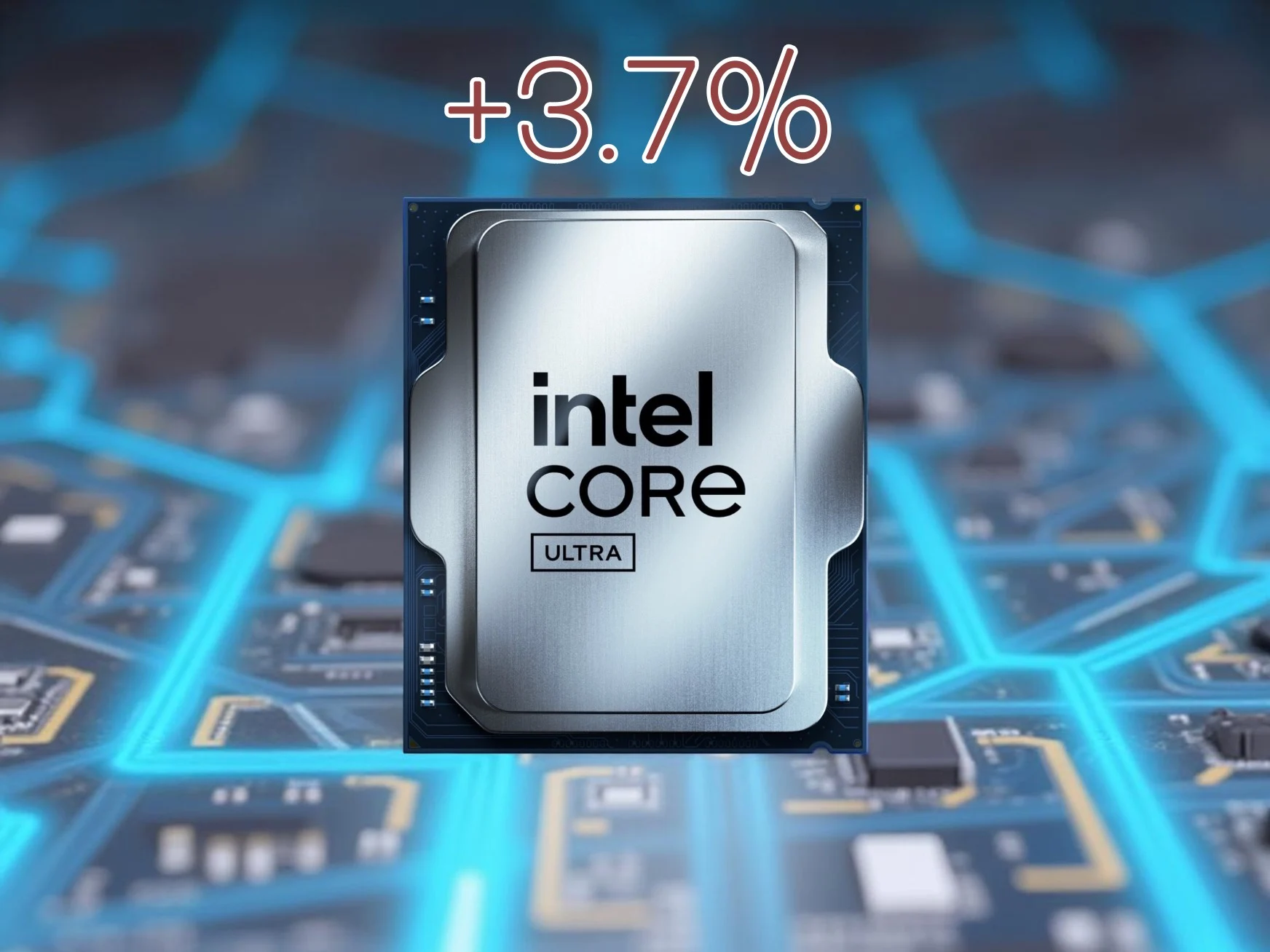
    4. The performance increase from the 265K to the 270K Plus is modest, with about 5.5% improvement in single-core and 3.7% in multi-core performance.
    5. Future Intel Nova Lake desktop CPUs are not expected soon, making the Arrow Lake Refresh the main option for new Intel-based builds in the near future.


    Intel’s new Core Ultra 7 270K Plus “Arrow Lake Refresh” has made another appearance on Geekbench, showing results that align closely with earlier leaks. The performance increase from the Core Ultra 7 265K to the 270K Plus is not much, thanks to higher clock speeds and more efficiency cores.

    Specifications of the 270K Plus

    The Intel Core Ultra 7 270K Plus is set to have a 24-core configuration, which includes 8 performance cores and 16 efficiency cores. This new model will have 4 more efficiency cores than its predecessor, the 265K, and features a base and boost clock that is 100 MHz faster, as per industry chatter. The test setup used a Gigabyte Z890 Eagle motherboard, which is currently priced at $210 on Amazon, along with 64 GB of DDR5-4800 RAM.

    Performance Insights

    In the Geekbench 5 test, the 24-core Core Ultra 7 270K Plus achieved a score of 21,368 in multi-core performance and 3,235 in single-core performance. For context, the 20-core Core Ultra 7 265K recorded scores of approximately 3,065 for single-core and 20,613 for multi-core, showcasing a slight yet noticeable improvement – about 5.5% in single-core and 3.7% in multi-core performance. With quicker memory and additional tuning, the Arrow Lake Refresh processors may offer even better performance enhancements.

    Future Considerations

    Given that new Nova Lake desktop CPUs from Intel are not anticipated in the near future, anyone wanting to create a new Intel-based computer will have to make do with the small upgrades that come with the Arrow Lake Refresh. Also, due to the soaring DRAM prices, putting together a new PC in 2026 might turn out to be quite a hefty investment.

    Geekbench, noted by TechPowerUp.

    Source:
    Link


  • AMD Ryzen 7 9850X3D Boost Clock Revealed in Geekbench Data

    AMD Ryzen 7 9850X3D Boost Clock Revealed in Geekbench Data

    Key Takeaways

    1. The Ryzen 7 9850X3D features eight Zen 5 CPU cores and sixteen threads.
    2. Boost clock speeds for the processor vary between listings, showing 5.6 GHz and 5.4 GHz.
    3. Performance tests reveal the Ryzen 7 9850X3D currently lags behind the Ryzen 7 9800X3D.
    4. The processor was tested with DDR5-4800 RAM, with potential for faster memory compatibility.
    5. The Ryzen 7 9850X3D is anticipated to be unveiled at CES 2026, alongside the Ryzen 9 9950X3D2.


    A recent listing on Geekbench has revealed important details about AMD’s forthcoming Ryzen 7 9850X3D processor. As expected, this model features eight Zen 5 CPU cores and sixteen threads. However, there is some inconsistency in its boost clock speed, which varies between different listings.

    Varying Clock Speeds

    One listing shows a boost clock of 5.6 GHz, while another lists it at 5.4 GHz. This discrepancy could be due to the fact that the chip was evaluated on different motherboards, which might have affected the performance outcomes. In its initial test with the Colorful B850M motherboard, the Ryzen 7 9850X3D achieved scores of 3,439 and 17,530 points. In a second test using the Maxsun B850ITX motherboard, it managed scores of 3,260 and 16,149.

    Performance Expectations

    In terms of performance, the Ryzen 7 9850X3D still trails behind the Ryzen 7 9800X3D, but this is not surprising since the new board has not been officially launched yet. Furthermore, both samples of the Ryzen 7 9850X3D were tested with DDR5-4800 RAM, while the B850 and AM5 platforms are compatible with much faster memory types.

    Anticipated Release

    Although not confirmed, the frequent sightings of this processor suggest that AMD may unveil the Ryzen 7 9850X3D at CES 2026. It is also expected that the Ryzen 9 9950X3D2 will be introduced at the same time. This would mark AMD’s first consumer-grade gaming CPU to feature a 3D V-cache tile on both of its CCDs.

    Geekbench (1)

    Source:
    Link


  • OnePlus 15R Beats 13R and 13 in Benchmarks with Snapdragon 8 Gen 5

    OnePlus 15R Beats 13R and 13 in Benchmarks with Snapdragon 8 Gen 5

    Key Takeaways

    1. OnePlus will launch the OnePlus 15R globally on December 17, with early performance insights from a Geekbench listing.
    2. The device is expected to run on Android 16 and feature 12 GB of RAM, likely with 256 GB of storage.
    3. Key features include a 165 Hz AMOLED display, IP69K dust and water resistance, and a G2 Wi-Fi chip for improved reliability.
    4. The Snapdragon 8 Gen 5 processor allows the OnePlus 15R to achieve impressive benchmark scores of 2,815 (single-core) and 9,552 (multi-core).
    5. The OnePlus 15R shows a significant performance increase over the 13R, with a 27% boost in single-core and 45% in multi-core benchmarks.


    OnePlus is set to reveal the OnePlus 15R worldwide on December 17. Even so, a recent Geekbench listing has given us an early glimpse of its expected performance. The device, recognized by the model number CPH2767, is thought to be the global version of the Ace 6T, which OnePlus will probably only market in China.

    Performance and Specifications

    The benchmark data indicates that the OnePlus 15R operates on Android 16 and is equipped with 12 GB of RAM. If we look back at the OnePlus 13R, it’s likely that 12 GB of RAM will be the default memory setup, probably accompanied by 256 GB of storage. Furthermore, OnePlus has already disclosed several important features such as a 165 Hz AMOLED display, IP69K dust and water resistance, and a proprietary G2 Wi-Fi chip to enhance Wi-Fi reliability.

    Benchmark Scores

    On the other hand, the Snapdragon 8 Gen 5 enables the OnePlus 15R to score an average of 2,815 in single-core and 9,552 in multi-core benchmarks. Though these synthetic results do not fully reflect real-world usage, they reveal a noteworthy increase in performance compared to the OnePlus 13R, showing boosts of 27% in single-core and 45% in multi-core benchmarks. Consequently, the OnePlus 15R is nearly matching the performance of the OnePlus 13 (curr. $899 on Amazon), falling short by 9% in single-core and having a 2% advantage in multi-core performance at this point.

    Source:
    Link


  • Samsung Exynos 1680 Unveiled: Galaxy A57 with Xclipse 550 GPU, 12GB RAM

    Samsung Exynos 1680 Unveiled: Galaxy A57 with Xclipse 550 GPU, 12GB RAM

    Key Takeaways

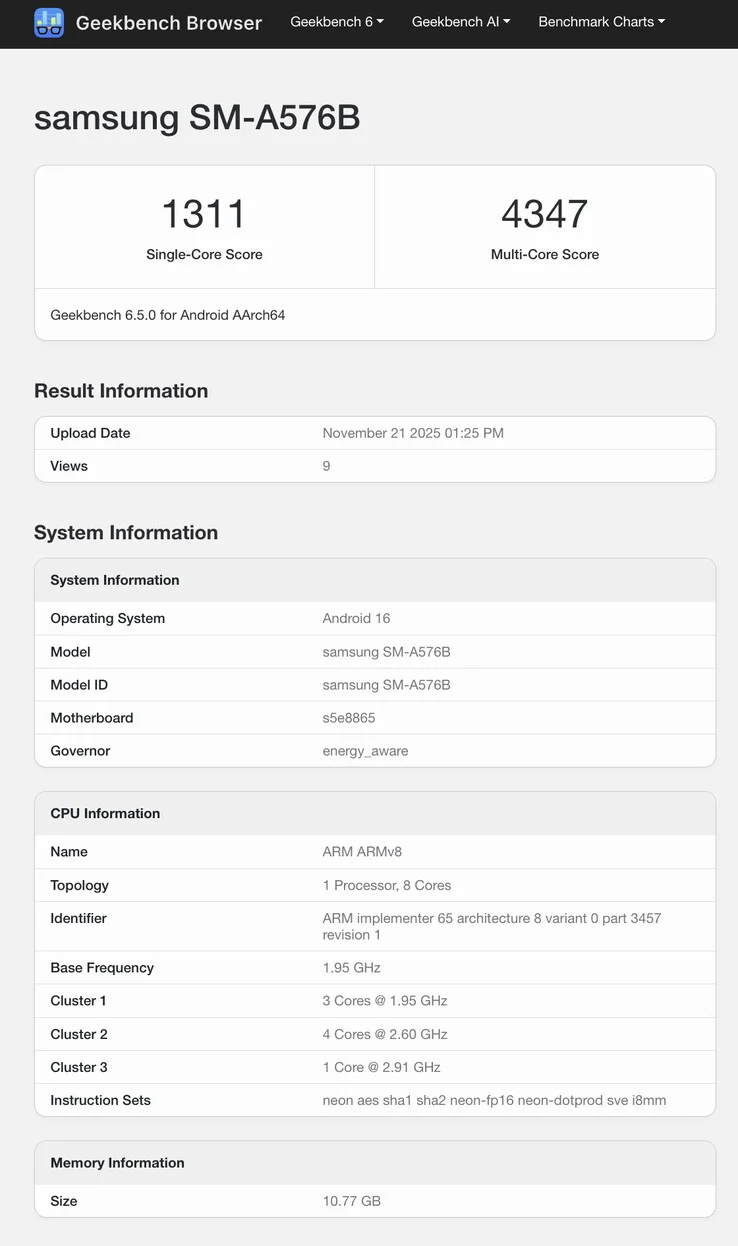
    1. The Galaxy A57, identified as SM-A576B, has appeared on Geekbench ahead of its expected release in early 2026.
    2. The device is expected to feature the Exynos 1680 chip and 12 GB of RAM.
    3. The Exynos 1680 chip has similar core architecture to its predecessor with peak clock speeds of 1.9 GHz, 2.6 GHz, and 2.91 GHz.
    4. The Galaxy A57 shows a 10% multi-core performance increase compared to its predecessor in Geekbench 6.5.
    5. The single-core performance of the Galaxy A57 is about 4% lower than its predecessor, but this may not represent the final performance.


    Samsung isn’t likely to launch the Galaxy A56 replacement for a few more months (currently priced at $359 on Amazon). However, a device believed to be the Samsung SM-A576B has surfaced on Geekbench, just two days post the CCC certification of a gadget sharing the same model number in China.

    Galaxy A57 Emerges Early

    As we mentioned earlier, the model number SM-A576B aligns with Samsung’s historical naming patterns for the Galaxy A series. Therefore, it appears that the Galaxy A57 has shown up on Geekbench ahead of its expected release alongside the Galaxy A27 and Galaxy A37, which are anticipated to debut in early 2026. Interestingly, these two models have also been in the spotlight of recent speculations.

    Specifications and Performance Insights

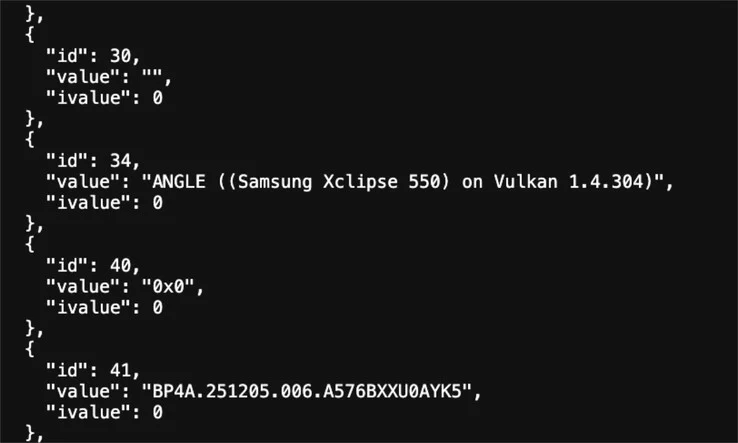
    From the screenshot provided, it is evident that the Galaxy A57 utilizes the ‘S5E8865’ chip and comes with 12 GB of RAM. While the Geekbench listing doesn’t explicitly confirm this, ‘S5E8865’ is believed to be the codename for the Exynos 1680, following its appearance in a previously leaked Geekbench OpenCL benchmark earlier this year.

    It seems that the Exynos 1680 shares the same core architecture with its predecessor, featuring three ARM v8 clusters that provide peak clock speeds of 1.9 GHz, 2.6 GHz, and 2.91 GHz across Efficient, Performance, and Prime cores, respectively. Although the Galaxy A57 is operating on pre-release software, it boasts a 10% multi-core performance boost over its predecessor in Geekbench 6.5. However, the single-core score of the former is about 4% lower than that of the latter, which we believe does not reflect the final performance figures.


    Source:
    Link


  • Samsung Galaxy A77 Appears on Geekbench with Strong GPU Specs

    Samsung Galaxy A77 Appears on Geekbench with Strong GPU Specs

    Key Takeaways

    1. The Galaxy A7x line, last seen in 2022 with the A73, is likely returning with the upcoming Galaxy A77 (model number SM-A776B).

    2. The Galaxy A77 features a new Samsung Exynos SoC with a deca-core CPU and an Xclipse 940 GPU, promising strong graphic performance for a mid-range phone.

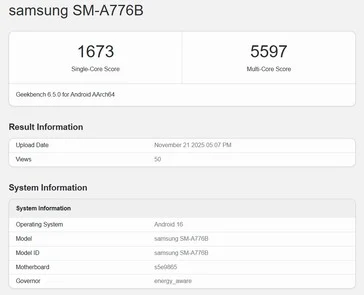
    3. In Geekbench tests, the A77 scored 1,673 in single-core and 5,697 in multi-core, showing a significant performance boost compared to the Galaxy A56.

    4. The A77 aims to compete with high-performance devices at a lower price point than Galaxy S FE models, such as the Galaxy S25 FE.

    5. An official launch date for the Galaxy A77 is still unknown, but more details are expected in the coming weeks.


    The Samsung Galaxy A7x line, which has been absent since the Galaxy A73 in 2022, seems to be making a comeback. New information from Geekbench indicates that a Samsung device, likely the Galaxy A77, is on the way, as suggested by its model number.

    Device Model Details

    The device has been identified with the model number SM-A776B, which aligns with Samsung’s typical naming convention for its mid-range and budget-friendly “Galaxy A” models. For instance, the Galaxy A56 5G is identified as SM-A566x, making it easy to understand the product lineup.

    Performance Specs

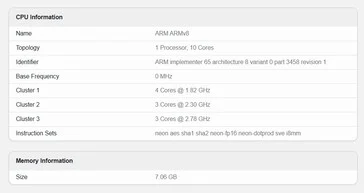
    The likely Galaxy A77 was benchmarked using a new, yet-to-be-announced Samsung Exynos System on Chip (SoC). This chip includes a deca-core CPU, which has 3 cores operating at 2.78GHz, another 3 at 2.30GHz, and a final 3 at 1.82GHz.

    Another important aspect is the GPU, which is the Xclipse 940. This GPU is also found in Samsung’s previous high-end Exynos 2400/2400e models. Thus, the A77 might deliver strong graphic performance within the mid-range segment.

    Geekbench Performance

    The device, as tested on Geekbench, runs Android 16 and comes with 8GB of RAM, emphasizing its mid-range classification. The combined hardware achieved scores of 1,673 in single-core and 5,697 in multi-core tests using Geekbench 6.

    This multi-core score marks nearly a 45% improvement over the Exynos 1580 in the current Galaxy A56, bringing the new chip’s performance nearer to that of the Exynos 2400/Exynos 2400e. Although the results are similar to the Exynos 2400, the motherboard model differs (s5e9865 versus s5e9945).

    It looks like the Galaxy A77 is aiming for a market of high-performance devices priced lower than the Galaxy S FE models. For reference, the latest Galaxy S25 FE is equipped with the Exynos 2400 chip.

    Launch Timeline

    While this initial leak suggests a robust hardware configuration for its class, we still lack information on when the official launch will take place. Hopefully, further details will surface in the upcoming weeks.

    In other news, the anticipated Galaxy A57 has also appeared on Geekbench, providing some intriguing insights into its specifications, including the introduction of yet another new Exynos chip.

    Geekbench, as reported by Abhishek Yadav on X/Twitter.

    Source:
    Link


  • Redmi Note 15 Pro Plus Leak: Surprising Downgrade Revealed

    Redmi Note 15 Pro Plus Leak: Surprising Downgrade Revealed

    Key Takeaways

    1. The Redmi Note 15 series is expected to launch in India in September, with sales starting on January 9, 2026.
    2. The global version of the Redmi Note 15 Pro Plus will feature 8 GB of RAM, unlike the 12 GB in the Chinese model.
    3. The Snapdragon 7s Gen 4 processor will provide only a slight performance boost compared to its predecessor.
    4. Geekbench scores indicate modest performance improvements of 6% in single-core and 3% in multi-core tests.
    5. The global variant may have a smaller 6,500 mAh battery and lack the 50 MP telephoto lens found in the Chinese version.


    Early signs of the Redmi Note 15 Pro Plus’ global launch have appeared online. Just a few days ago, tipster Abhishek Yadav mentioned that the Redmi Note 15 series is set to debut in India in September. However, the ‘first sales’ are reportedly not going to start until January 9, 2026. It’s still a mystery when Xiaomi plans to roll out the Redmi Note 15 series to other regions like Europe, Africa, or the Middle East.

    Performance Insights

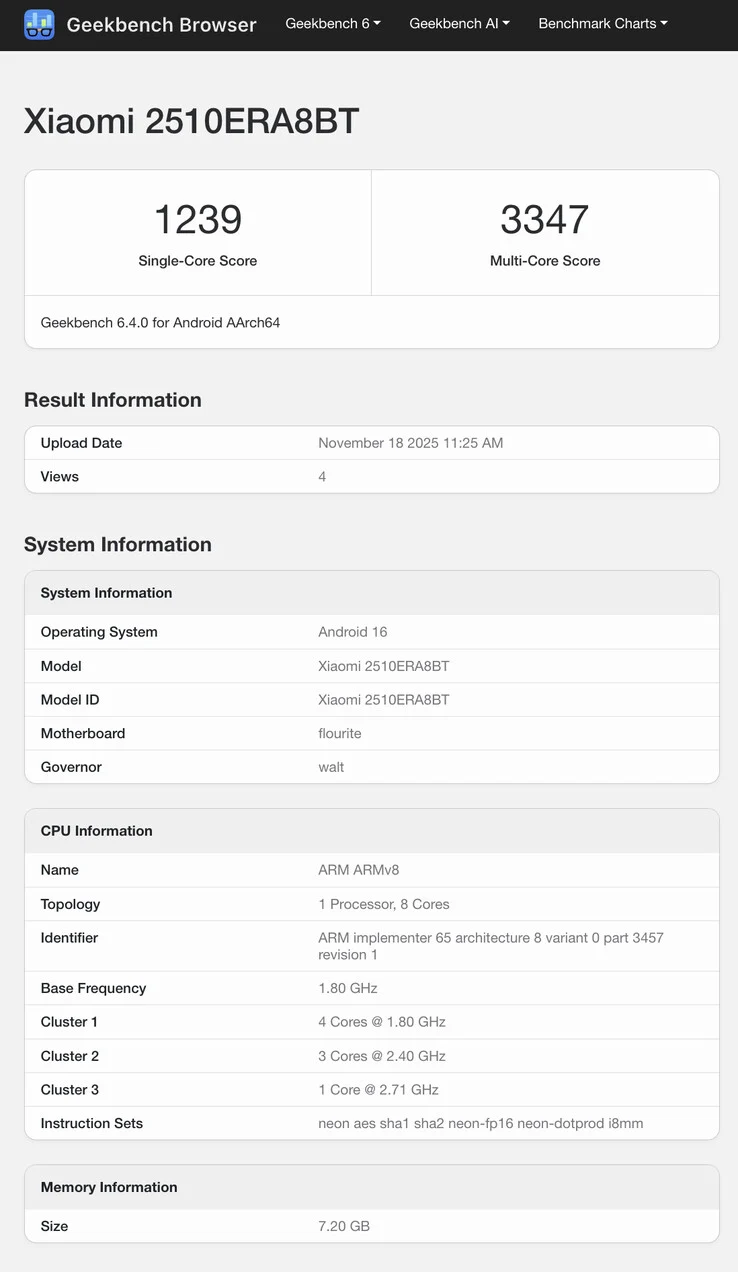
    In the meantime, an early Geekbench listing has provided some information about Xiaomi’s strategy for the Redmi Note 15 Pro Plus on a global scale. Interestingly, the global version of the Redmi Note 15 Pro Plus will come with 8 GB of RAM, similar to its predecessor (currently priced at $352 on Amazon), instead of the 12 GB offered in China. Furthermore, the Snapdragon 7s Gen 4 is expected to deliver only a slight performance improvement over the previous model.

    Benchmark Results

    With scores of 1,239 and 3,347, the Redmi Note 15 Pro Plus achieves just 6% and 3% performance enhancements in the Geekbench 6 single-core and multi-core tests, respectively. Earlier leaks suggest that the global variant of the Redmi Note 15 Pro Plus will not include the 50 MP telephoto lens found in the Chinese model nor its impressive 7,000 mAh battery. Instead, Xiaomi is likely to outfit the international version with a smaller 6,500 mAh battery and similar camera features as its predecessor. We will have to wait and see if this is also true for the Indian launch.

    Geekbench via Abhishek Yadav

    Source:
    Link


  • OnePlus Ace 6T on Geekbench: First Snapdragon 8 Gen 5 Device

    OnePlus Ace 6T on Geekbench: First Snapdragon 8 Gen 5 Device

    Key Takeaways

    1. OnePlus is set to launch the OnePlus Ace 6T, following the OnePlus 15, aiming for the performance smartphone market.
    2. The Ace 6T will be the first phone globally to feature the Snapdragon 8 Gen 5 chip, designed for budget-friendly performance.
    3. The Snapdragon 8 Gen 5 differs from the Snapdragon 8 Elite Gen 5, focusing on high power at a lower price point.
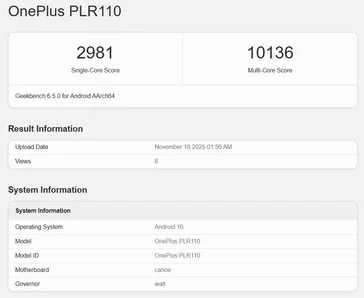
    4. The Ace 6T achieved impressive Geekbench scores: 2,981 (single-core) and 10,136 (multi-core) with its Snapdragon and 16GB RAM.
    5. The global availability of the Ace 6T is uncertain, and its launch may follow a similar pattern to the OnePlus Ace 5, which was released as the OnePlus 13R internationally.


    The release schedule for OnePlus is showing no signs of slowing down. Just after the global debut of the flagship OnePlus 15, the company is preparing to introduce the OnePlus Ace 6T, which aims to make a strong impact in the performance smartphone segment. Following a recent teaser from OnePlus, the Ace 6T has been spotted on the well-known benchmarking site Geekbench, indicating that an official launch is just around the corner.

    Hardware Details Confirmed

    This listing on Geekbench highlights important hardware specifications. Some of these details were already confirmed by OnePlus not long ago. The standout feature is the Snapdragon 8 Gen 5 chip. The company hinted that the Ace 6T is likely to be the first phone globally to debut with this Qualcomm chipset.

    Chip Confusion Cleared Up

    The naming of the chip might confuse some people. The Snapdragon 8 Gen 5 is different from the Snapdragon 8 Elite Gen 5 that you find in devices like the OnePlus 15. The 8 Gen 5 is created specifically for more budget-friendly performance phones—focusing on providing high raw power without the very high price tag. Although its performance is a bit below that of the Snapdragon 8 Elite SoC, it still guarantees impressive power.

    When we look back at the OnePlus Ace 6T (model PLR110), the device’s performance scores showcase the capabilities of the chip. With the combination of Snapdragon hardware and 16GB of RAM, it achieved a single-core score of 2,981 and a multi-core score of 10,136 in the Geekbench 6 CPU tests. These results position the 8 Gen 5 very favorably.

    Future Expectations

    We anticipate that more powerful devices will start using the Snapdragon 8 Gen 5 soon. Nevertheless, the OnePlus Ace 6T is leading the way.

    However, the availability of this device outside of China is still unclear. This model marks the first “T” variant in the OnePlus Ace lineup. While the previous version, the OnePlus Ace 5, eventually reached international markets as the OnePlus 13R (with some camera modifications), we will need to wait for an official statement to determine if the Ace 6T will have a similar global launch. In fact, we already have some info about this year’s OnePlus 15R, which will feature different specifications compared to the Ace 6T.

    Source:
    Link


  • Xiaomi Poco F8 Pro Surpasses Poco F7 Ultra in Snapdragon Benchmarks

    Xiaomi Poco F8 Pro Surpasses Poco F7 Ultra in Snapdragon Benchmarks

    Key Takeaways

    1. The Poco F8 Pro and Poco F8 Ultra are expected to be international versions of the Redmi K90 and K90 Pro Max, respectively.
    2. The Poco F8 Pro shows a 10% improvement in single-core performance and over a 38% increase in multi-core performance compared to its predecessor.
    3. The Poco F8 Pro is currently slower than other smartphones using the Snapdragon 8 Elite due to pre-release firmware.
    4. Despite the performance discrepancy, the Poco F8 Pro still outperforms the Poco F7 Ultra and Oppo Find N5 in multi-core tests.
    5. The Geekbench listing may lead to more significant leaks about the Poco F8 Pro ahead of its launch early next year.


    Xiaomi’s Poco F8 series is expected to debut in a few months, but there’s already a lot of buzz surrounding two devices called the Poco F8 Pro and Poco F8 Ultra. These gadgets follow the Poco F7 Pro and Poco F7 Ultra, which is currently priced at $735 on Amazon.

    Global Variants of Redmi K90

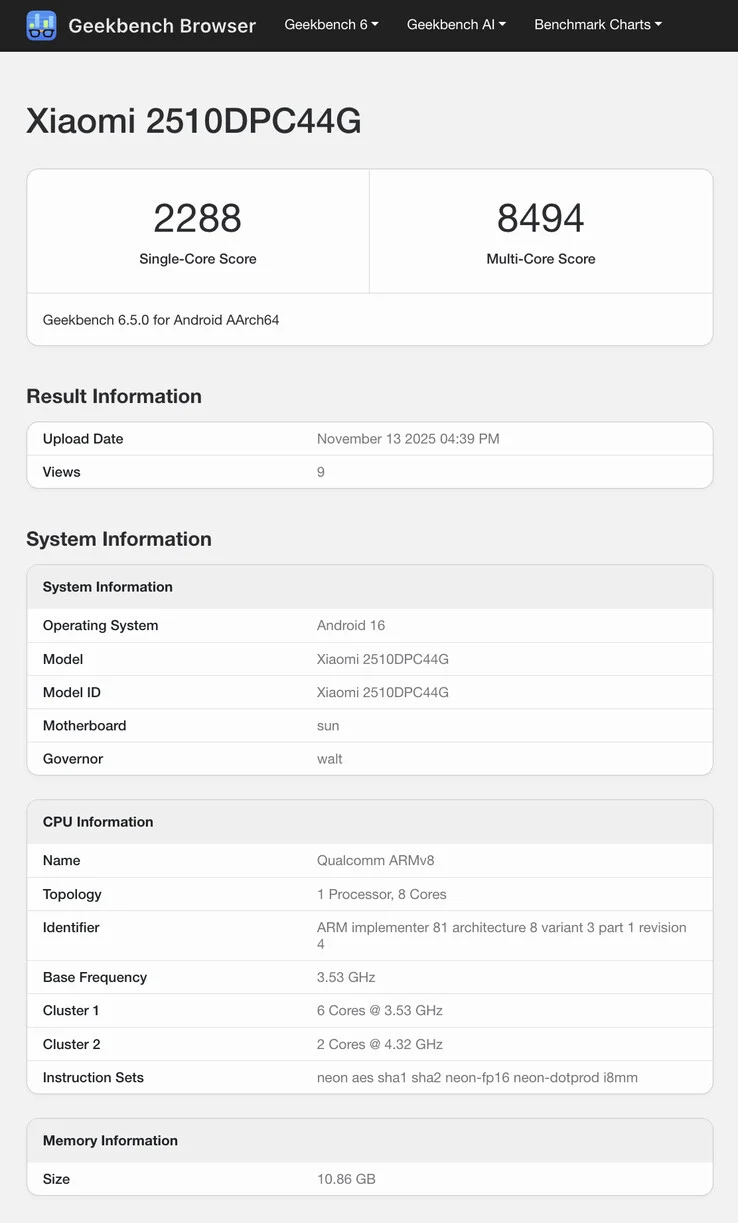
    Current speculation suggests that the Poco F8 Pro and Poco F8 Ultra will be the international versions of the Redmi K90 and K90 Pro Max, respectively. Recently, a listing on Geekbench confirmed some earlier predictions about the Poco F8 Ultra. Now, it appears that the Poco F8 Pro is also making its appearance on the same benchmarking site, showing the model number Xiaomi 2510DPC44G.

    Performance Insights

    Right now, the Poco F8 Pro shows about a 10% improvement in single-core performance compared to its predecessor, which is powered by the Snapdragon 8 Gen 3. However, its multi-core performance is significantly better, boasting over a 38% increase thanks to the Qualcomm Oryon Gen 2 GPU cores found in the Snapdragon 8 Elite. It’s important to mention that, at this moment, the Poco F8 Pro is still slower than any other smartphone we’ve tested that uses the Snapdragon 8 Elite, showing a slight lag compared to the Poco F7 Ultra, which reached an average score of 2,309 in the same tests without activating its performance mode.

    Future Expectations

    We can likely attribute this performance discrepancy to the fact that the Poco F8 Pro is currently running on pre-release firmware that might not be fully optimized like Xiaomi’s final software. Nevertheless, the Poco F8 Pro achieves around 10% better performance than other Snapdragon 8 Elite devices like the RedMagic Astra and Razr 60 Ultra in Geekbench’s multi-core tests, even at this early phase. Additionally, it outperforms the Poco F7 Ultra and Oppo Find N5 by margins of 4% and 3%, respectively. This Geekbench listing could be just the beginning of more significant leaks leading up to the Poco F8 Pro’s launch early next year.

    Geekbench via Abhishek Yadav

    Source:
    Link


  • Motorola Edge 70 Ultra Surfaces on Geekbench with Snapdragon Chip

    Motorola Edge 70 Ultra Surfaces on Geekbench with Snapdragon Chip

    Key Takeaways

    1. Motorola is preparing to launch the Edge 70 Ultra after recently releasing the Edge 70.
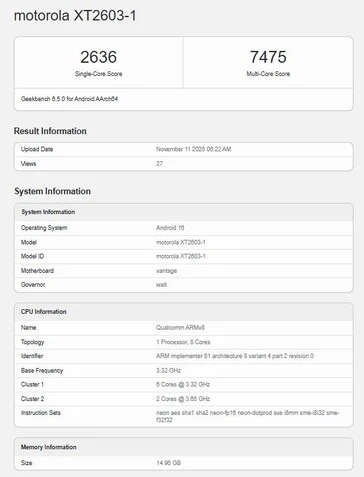
    2. The Edge 70 Ultra features 16 GB of RAM and impressive Geekbench scores: 2,636 (single-core) and 7,475 (multi-core).
    3. Its performance slightly exceeds current top Snapdragon 8 Gen 3 devices but is not as powerful as the Snapdragon 8 Elite.
    4. There is speculation that the device may be powered by the Snapdragon 8 Gen 5 or a unique variant like the Snapdragon 8s Gen 5.
    5. The Motorola Edge 2025 will be available for purchase on Amazon.


    As reported recently, Motorola is gearing up to unveil the Edge 70 Ultra. After launching the Edge 70 just last week, the company seems poised to showcase its more high-end models, with the Edge 70 Ultra appearing to make its first appearance on Geekbench.

    Performance Details

    In the Geekbench database, the device is identified by the model number “Motorola XT2603-1,” and it boasts an impressive 16 GB of RAM. In terms of performance, the phone achieves a single-core score of 2,636 and a multi-core score of 7,475. These figures indicate a computing performance that slightly surpasses that of the top Snapdragon 8 Gen 3 devices tested so far.

    Chipset Speculations

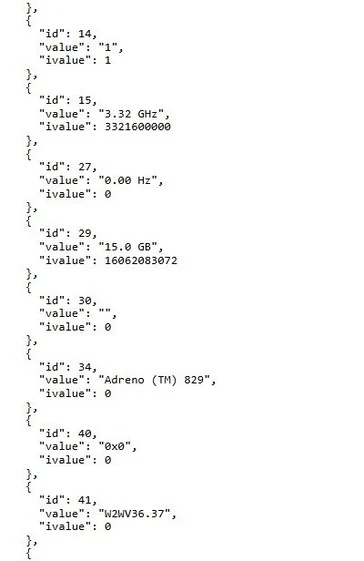
    However, it remains uncertain which chipset is actually powering this phone, as its performance is better than the Snapdragon 8 Gen 3 but not as strong as the Snapdragon 8 Elite. Rumors suggest that it might be the upcoming Snapdragon 8 Gen 5, yet the reported clock speeds and GPU—an Adreno 829—do not align with the leaked information regarding that chipset. While these leaks could be wrong, there’s also a possibility that this SoC might be a unique addition to the Snapdragon 8 series, possibly something like a Snapdragon 8s Gen 5. We will keep you posted on any developments.


    Source:
    Link