

Key Takeaways
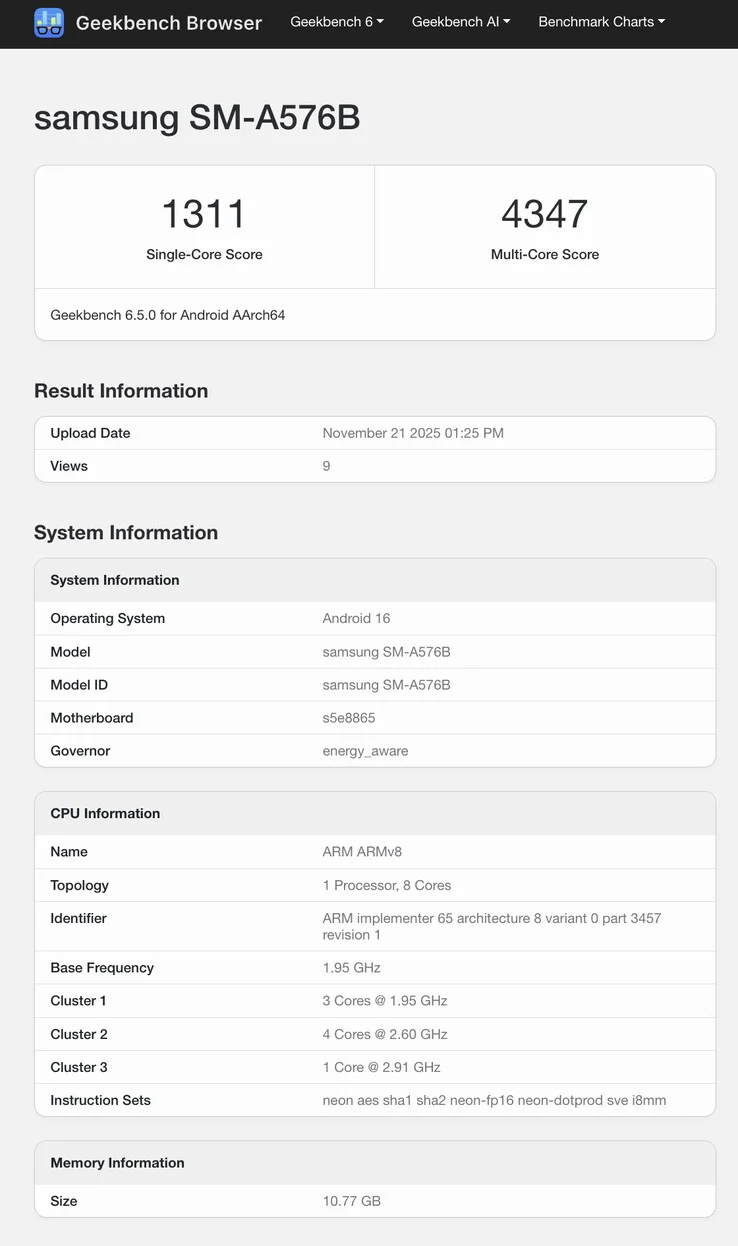
1. The Galaxy A57, identified as SM-A576B, has appeared on Geekbench ahead of its expected release in early 2026.
2. The device is expected to feature the Exynos 1680 chip and 12 GB of RAM.
3. The Exynos 1680 chip has similar core architecture to its predecessor with peak clock speeds of 1.9 GHz, 2.6 GHz, and 2.91 GHz.
4. The Galaxy A57 shows a 10% multi-core performance increase compared to its predecessor in Geekbench 6.5.
5. The single-core performance of the Galaxy A57 is about 4% lower than its predecessor, but this may not represent the final performance.
Samsung isn’t likely to launch the Galaxy A56 replacement for a few more months (currently priced at $359 on Amazon). However, a device believed to be the Samsung SM-A576B has surfaced on Geekbench, just two days post the CCC certification of a gadget sharing the same model number in China.
Galaxy A57 Emerges Early
As we mentioned earlier, the model number SM-A576B aligns with Samsung’s historical naming patterns for the Galaxy A series. Therefore, it appears that the Galaxy A57 has shown up on Geekbench ahead of its expected release alongside the Galaxy A27 and Galaxy A37, which are anticipated to debut in early 2026. Interestingly, these two models have also been in the spotlight of recent speculations.
Specifications and Performance Insights
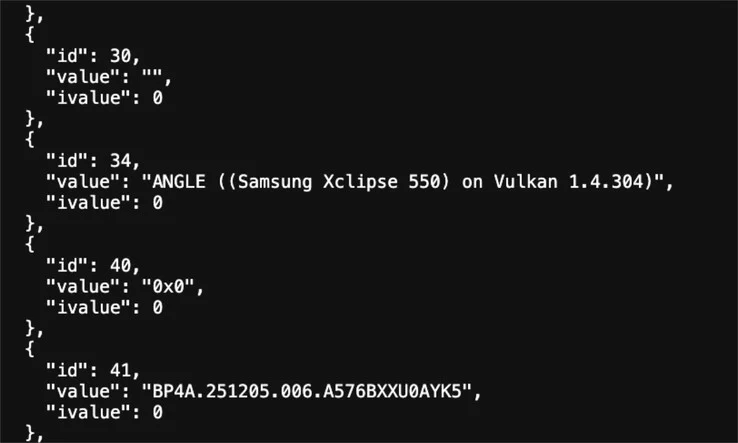
From the screenshot provided, it is evident that the Galaxy A57 utilizes the ‘S5E8865’ chip and comes with 12 GB of RAM. While the Geekbench listing doesn’t explicitly confirm this, ‘S5E8865’ is believed to be the codename for the Exynos 1680, following its appearance in a previously leaked Geekbench OpenCL benchmark earlier this year.
It seems that the Exynos 1680 shares the same core architecture with its predecessor, featuring three ARM v8 clusters that provide peak clock speeds of 1.9 GHz, 2.6 GHz, and 2.91 GHz across Efficient, Performance, and Prime cores, respectively. Although the Galaxy A57 is operating on pre-release software, it boasts a 10% multi-core performance boost over its predecessor in Geekbench 6.5. However, the single-core score of the former is about 4% lower than that of the latter, which we believe does not reflect the final performance figures.
Source:
Link

Leave a Reply