Tag: battery longevity

  • Dell XPS Offers More Battery Charging Options Than Most Laptops

    Dell XPS Offers More Battery Charging Options Than Most Laptops

    Key Takeaway

    1. Laptop batteries, including those in EVs and laptops, degrade over time, reducing battery life.
    2. Manufacturers like Dell offer advanced settings via BIOS or software to optimize battery longevity, such as adaptive charging or peak shift options.
    3. Fine-tuned battery management, available on Dell XPS and certain HP models, helps extend battery health by adjusting charging behaviors based on user needs and time of day.
    4. Default “Adaptive mode” prioritizes maximum capacity, but alternative modes can enhance battery lifespan depending on usage patterns.
    5. Battery runtime on Dell XPS 16 can vary significantly, from around 10 hours to over 20 hours, based on configuration and settings.

    Understanding Laptop Battery Degradation and Manufacturer Efforts

    Similar too electric vehicles, the Lithium-ion batteries housed inside laptops naturally tend to degrade after some time, which results in shorter runtimes as the battery ages. Unluckily, most of the time this issue is somewhat unavoidable, but few brands like Asus and LG try to mitigate this by providing built-in options that limit battery charging to 80 percent or less. Meanwhile, Dell pushes this further with more detailed options that can help sustain the battery’s health over a longer period.

    Battery Management in XPS Models

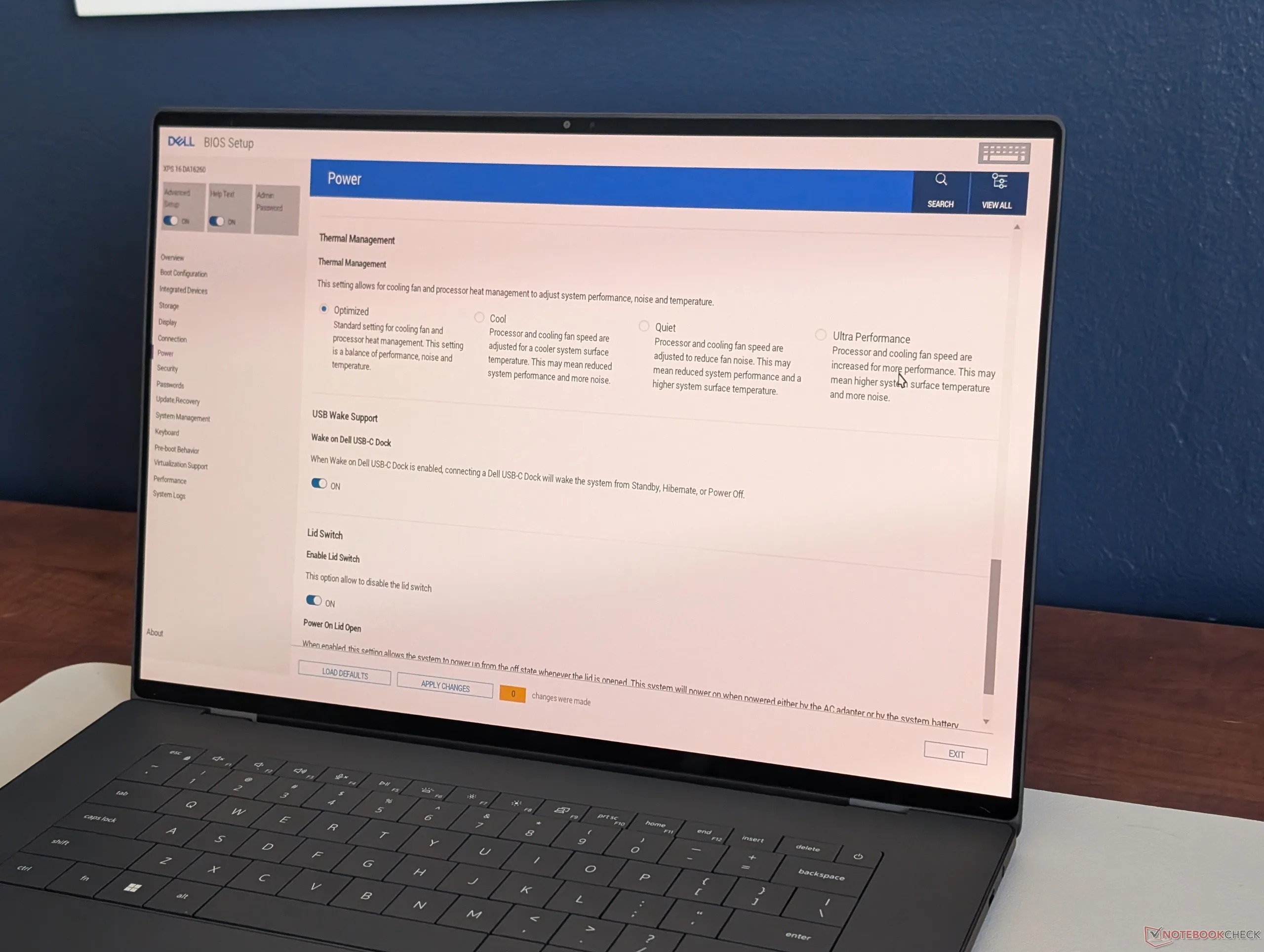
    Particularly in Dell’s XPS series, managing your battery’s health is easier thanks to either the pre-installed Optimizer software or the BIOS settings. This gives users some control over how their batteries are charged and maintained, which can directly influence long-term performance. Specifically, these settings include the default “Adaptive mode,” optimized for maximum capacity and charging speed, but you also have the options of switching to “Primary AC mode” or “Standard mode” if you want to prioritize battery longevity instead of immediate performance.

    Fine Tuning Battery Settings for Better Longevity

    Additionally, for those who want finer control, enabling the “Advanced Setup” in BIOS opens a range of more detailed options. These pertain mainly to peak shift and charging behaviors that are designed to be responsive to the time of day, thus more align with the user’s daily routine and demands. Some premium HP models, particularly certain Elite laptops, offer similar precise adjustments, although mainly at higher price points.

    Battery Life Expectations

    Depending on the specifications, the XPS 16 can last somewhere between 10 hours to well over 20 hours on a full charge, as shown in our recent reviews of their IPS and OLED options. This wide range illustrates how different configurations and settings can dramatically influence how long a laptop can operate before needing a recharge.

    Sources

    • Kia Surpasses Tesla in EV Battery Capacity Longevity

      Kia Surpasses Tesla in EV Battery Capacity Longevity

      Key Takeaways

      1. Nearly 80% of used electric vehicles retain over 90% of their original battery capacity after several years.
      2. Kia is recognized for having the most durable batteries, with models like the EV6 and Sportage SUV leading in battery longevity.
      3. Tesla ranks second for battery health, despite slower charging rates and a decline in European sales this year.
      4. Battery State of Health (SoH) is crucial for used EV buyers, with Kia offering a comprehensive 7-year/150,000 km warranty.
      5. Current EV batteries are estimated to be suitable for at least 15 years, indicating a need for extended warranties to boost the used EV market.


      With the rise in sales of used electric vehicles, a recent test on their battery capacity retention over time has shown some truly impressive results regarding longevity.

      Battery Retention Findings

      Almost 80% of the 723 electric cars and 643 plug-in hybrids evaluated were able to keep over 90% of their original battery capacity after several years, once factors like charging levels, weather conditions, vehicle age, and mileage were averaged out.

      Yet, certain EV brands utilize more robust battery cells equipped with advanced cooling and energy management systems, which excelled in the study that involved KVD’s three-star testing system to assess their batteries’ State of Health (SoH).

      Top Brands for Battery Longevity

      Kia stands out as the manufacturer of the most durable, long-lasting batteries with the highest capacity retention over time, applicable to their electric vehicles such as the EV6 and plug-in hybrids like the Sportage SUV. Another Kia model claimed the second position in the battery capacity retention ranking, closely followed by the Model Y, despite Tesla vehicles having considerably slower charging rates compared to those from Kia or Hyundai.

      Tesla’s ranking as second best among EV brands for battery health is noteworthy, particularly since the Model Y is sold in much larger numbers than models from other brands in Europe, where the battery longevity assessment was conducted. This is despite a significant decline in Tesla’s sales in Europe this year, influenced by Elon Musk’s political actions and the growing presence of BYD and other Chinese brands.

      Key Insights on Battery Longevity

      There are several key insights regarding the potential longevity of EV batteries, according to KVD’s Martin Reinholdsson:

      The used EV market has become more dynamic and diverse than ever, with the battery SoH of second-hand vehicles now being a critical factor for buyers. Kia provides a 7-year or 150,000 km warranty in Europe, covering both the battery and drivetrain, while Tesla offers a basic vehicle warranty of four years and 80,000 km, with an 8-year warranty specifically for the battery. In the US, Kia’s battery warranty leads the industry with a ten-year coverage.

      Both manufacturers guarantee that the battery will maintain at least 70% of its original capacity during this period, while Chinese brands are aiming to standardize 15-year warranties with an 85% capacity retention. The world’s largest battery producer, CATL, is already issuing a 12-year warranty for NIO’s battery swap stations and 20 years for some LFP energy storage units, indicating the chemistry advancements are well-established.

      The largest EV battery recycler in the US, Redwood Materials, has indicated that current EV batteries are suitable for at least 15 years, so the longevity potential revealed in the recent study isn’t particularly surprising. However, for the used EV market to become as vibrant as that of internal combustion engine vehicles, official battery warranties will need to be significantly extended.

      Source:
      Link


    • Tesla Reveals Electric Vehicle Battery Lifespan: Time and Mileage

      Tesla Reveals Electric Vehicle Battery Lifespan: Time and Mileage

      Key Takeaways

      1. Tesla’s batteries typically maintain 80% capacity after 200,000 miles, demonstrating their longevity.
      2. In Europe, batteries show a 20% capacity decline at around 150,000 miles, indicating regional differences in battery performance.
      3. The potential for batteries to outlast the vehicle’s practical life may impact the second-hand market for Teslas.
      4. The average age of vehicles in the US is rising, prompting Tesla to improve battery lifespan and warranty options.
      5. Collaborations with battery manufacturers like CATL may lead to longer warranty periods for Tesla batteries in the future.


      Tesla has shared some captivating new data regarding the lifespan of its car batteries, outlining the longevity of its vehicles irrespective of battery chemistry.

      Battery Lifespan Insights

      Over the past ten years, Tesla has sold a significant number of electric vehicles and found that 200,000 miles is the average distance driven before the battery capacity drops to 80% of its original state. This figure has been mentioned previously, and it now appears to be a reliable estimate for how long its electric cars can perform.

      Regional Variations

      In Europe, where driving habits differ from those in the US, Tesla’s battery experiences a 20% decline in capacity at an average of 150,000 miles. Although this is still a commendable number, it highlights that the age of the battery plays a crucial role in its deterioration, even more so than the mileage accumulated by electric vehicles. So, whether an American drives 20,000 miles annually and their Tesla lasts for ten years before reaching 80% battery capacity, or a European drives 15,000 miles in the same timeframe, the outcome is still a 20% reduction.

      Market Challenges

      Tesla emphasizes that the battery could potentially outlast the practical life of its cars since, after over a decade and 200,000 miles, many owners might consider upgrading. Nevertheless, the second-hand electric vehicle market might struggle to thrive if the benchmark is set at 200,000 miles for an 80% battery capacity. After the 8-year battery warranty expires, potential buyers might be wary of purchasing a pre-owned Tesla.

      The average age of vehicles on the road in the US is nearing a record high of 13 years, which means Tesla must enhance battery lifespan and warranty options. This is an area where Chinese manufacturers are making significant progress.

      Future Developments

      CATL, the largest battery manufacturer globally, is collaborating with NIO, an electric vehicle maker, to establish a 15-year warranty on batteries with a maximum 15% capacity decline. Some of CATL’s latest battery technologies already come with warranties ranging from 12 to 20 years for energy storage products, so achieving a 15-year warranty for electric vehicles seems feasible.

      It’s uncertain whether Tesla will adopt similar measures. The company is close to finishing its own LFP battery factory in the US, utilizing equipment from CATL. Alongside lower costs, Tesla could also extend the warranty on its future vehicles equipped with LFP cells for the US market.


    • Tesla Model Y Juniper: 20-Year Lifespan Outshines Diesel Cars

      Tesla Model Y Juniper: 20-Year Lifespan Outshines Diesel Cars

      A recent study from the UK titled “the closing longevity gap between battery electric and internal combustion vehicles” suggests that concerns regarding the lifespan of electric vehicles (EVs) may be exaggerated.

      Improved Lifespan of Modern EVs

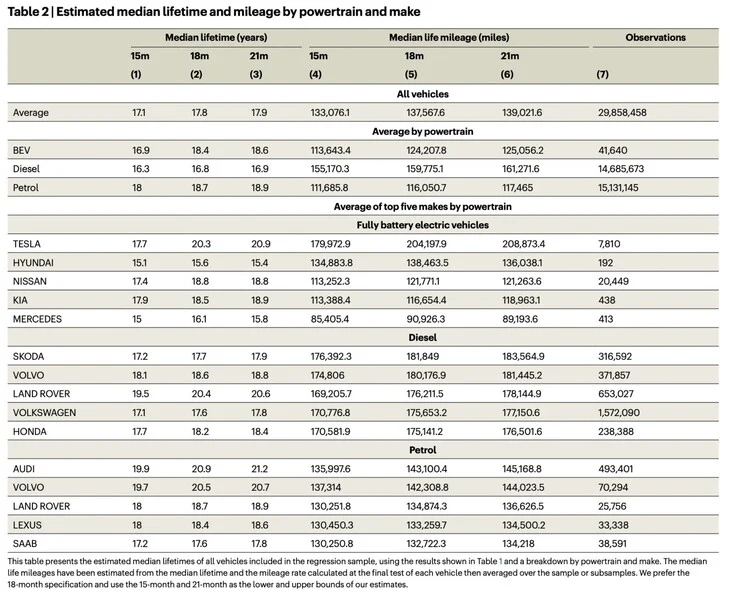
      The research indicates that earlier issues with electric cars, which led to more frequent repairs and shorter lifespans, have been largely resolved in today’s EVs. Their lifespans are now similar to those of gasoline cars, even when used more heavily. This is particularly evident for Tesla vehicles, with some models having already reached over 400,000 miles. Researchers noted, “Tesla’s EVs are expected to cover an average of 204,000 miles over their lifetime, surpassing all other brands regardless of powertrain.”

      Tesla vs. Other Brands

      When calculating the average expected lifespan of Tesla cars, the study found it to be 20.3 years, which is longer than both petrol and diesel vehicles. Among diesel cars, VW’s Skodas are predicted to last the longest at 17.4 years, but they will cover less distance than Teslas. For gasoline vehicles, Audis might last 20.9 years, slightly exceeding Tesla’s lifespan, though they typically have much lower usage, about 143,100 miles.

      Future Considerations for EV Longevity

      However, researchers warn that the electric vehicle sector is still quite new, and the costs of battery replacements need to decrease to truly take advantage of their extended technological lifespan. They stated, “To fully realize the benefits of a longer BEV lifespan, replacement batteries, if necessary, must be affordable relative to the residual value of BEVs without their original batteries.” As of 2020, the price for battery replacement ranged from US$4,000 for a 30 kWh Nissan battery to US$10,275 for a 75 kWh Tesla Model 3. In contrast, ICE vehicle transmission replacements cost between US$1,100 and US$3,400. If battery prices do not decline in a timely manner, owners may decide to dispose of their BEVs prematurely, which could distort comparisons of longevity with ICE vehicles.

      Advancements in EV Warranties

      Taking this into account, both electric vehicle and battery manufacturers are pushing for longer warranties to enhance the second-hand market. Companies like NIO and CATL are striving to establish a standard 15-year battery warranty, increasing from the current average of eight years.

      The technology behind battery cell chemistry has matured to the point where CATL can provide such warranties for swap stations or commercial batteries. If a 15-year warranty for EVs becomes common, the findings of this vehicle longevity study—suggesting that new Teslas, including the forthcoming Model Y Juniper, could last for 20 years—might signal a promising trend for the future.

      Source:
      Link


    • Chargie: Boost Your Laptop Battery Lifespan Efficiently

      Chargie: Boost Your Laptop Battery Lifespan Efficiently

      Batteries naturally decline in their ability to hold a charge as they age. Operating systems like Windows and macOS already include various tools designed to help prolong battery life. Chargie aims to simplify the process of safeguarding laptop batteries. This compact device plugs into the USB-C charging port and connects to the laptop’s charging cable. There are also adapters for Dell, HP, and Lenovo laptops that use a traditional hollow plug rather than USB-C.

      Features and Functionality

      Chargie works with chargers that have an output of up to 100 watts. Once it’s connected, the device must be paired with the laptop via Bluetooth to set it up using its dedicated software. The application is compatible with Windows, macOS, and Chrome OS, allowing users to limit the maximum battery charge to a specific percentage, such as 80%. This helps to extend battery life, as fully charging or depleting a battery can cause additional strain.

      While it’s possible to achieve similar results through software alone, Chargie provides extra functionalities. It enables users to set charging schedules and monitor as well as limit the current charge rate. The concept is that slower charging generates less heat, which in turn protects the battery cells. As a result, charging may take a longer time. An update anticipated in the second quarter of 2025 will allow Chargie to also be used with smartphones.

      Pricing and Risks

      At present, Chargie is being funded through a Kickstarter campaign, where it can be pre-ordered under the “Early Bird” deal for $40. After this initial offer, the price will increase to $49. The expected delivery date is February 2025, with the prices not covering shipping and import taxes. As is common with crowdfunding initiatives, there are inherent risks: products may not arrive, or they might be of subpar quality if issues arise during production.


      Image 1