Tag: Apple

  • Apple Analyst Reveals Insights on iPhone 20th Anniversary Releases

    Apple Analyst Reveals Insights on iPhone 20th Anniversary Releases

    Key Takeaways

    1. Apple plans to introduce a major iPhone redesign in 2027, potentially called iPhone 19 Pro, featuring an all-glass body and no visible Face ID or front camera components.

    2. The company is expected to launch its first foldable smartphone in 2027.

    3. Other product innovations include new smartwatches with integrated cameras and enhanced AirPods.

    4. Apple is developing smart glasses that could compete with existing products like Amazon Echo Frames.

    5. The company is also working on an AI-driven tabletop robot and new chipsets for its silicon division, although not all plans may be realized by 2027.


    Apple is nearing the 20th year since the introduction of the iPhone. Just as well, it’s been almost ten years since the iPhone X created a new standard in smartphone aesthetics. Mark Gurman reports that Apple aims to unveil what it believes will be another series of innovative devices in 2027.

    Potential iPhone Redesign

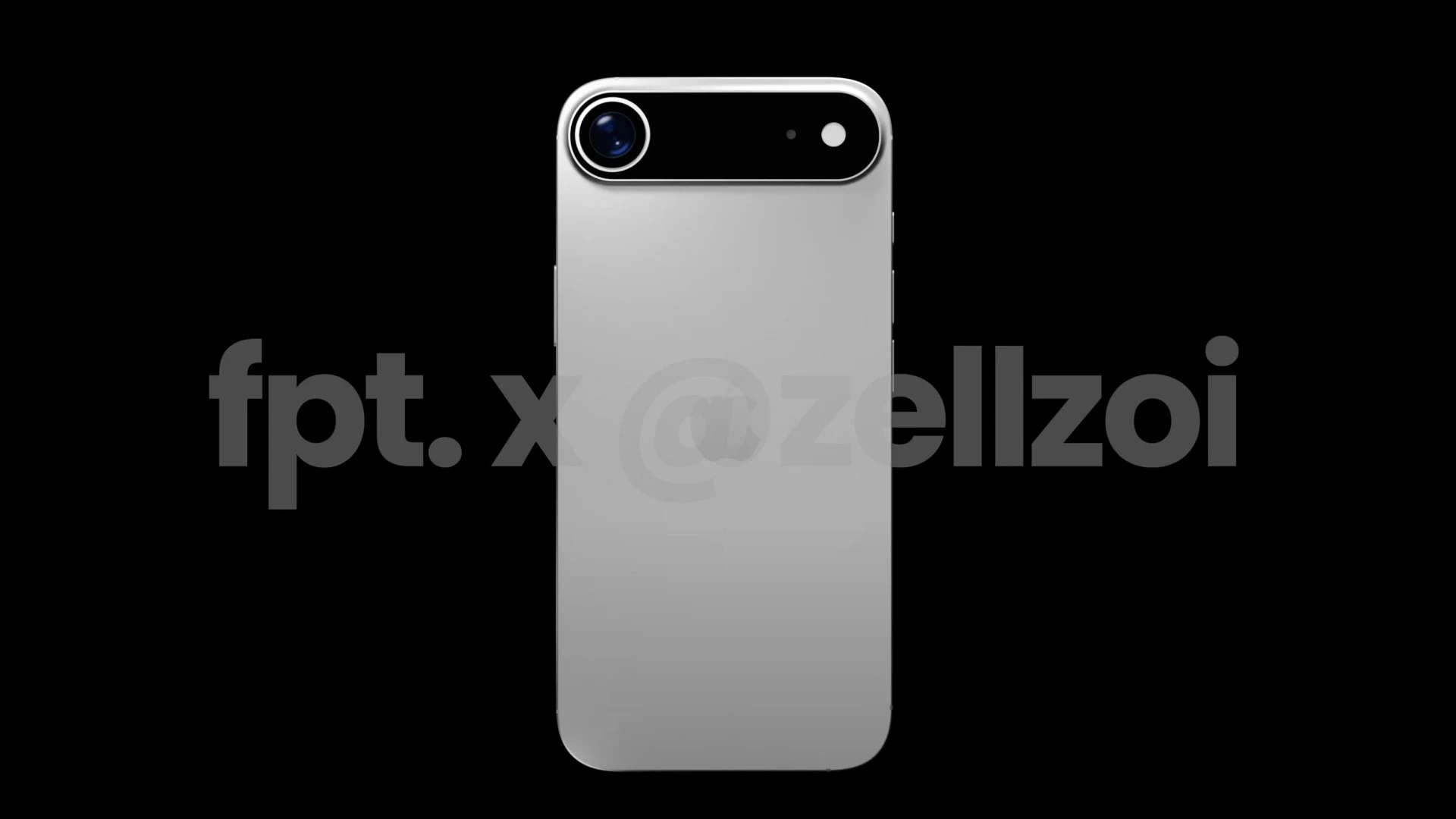
    Gurman anticipates that a significant redesign of the iPhone will debut in 2027, likely under the name iPhone 19 Pro. He envisions a device featuring an all-glass body, extremely thin bezels, and a complete removal of the visible Face ID or front camera components. Additionally, Gurman expects that 2027 will also mark the launch of Apple’s inaugural foldable smartphone.

    Other Product Innovations

    Moreover, Gurman highlights substantial updates coming to Apple’s other product lines, including new smartwatches equipped with integrated cameras, enhanced AirPods, and smart glasses that could outshine existing products like the Amazon Echo Frames, which are currently priced at $179.99 on Amazon. It seems that Apple is also working on an AI-driven tabletop robot and developing chipsets intended to propel its silicon division into the server market. However, it remains uncertain if all these plans will come to fruition by 2027.

    Source:
    Link
  • Apple to Raise Prices for New iPhone Lineup, Report Says

    Apple to Raise Prices for New iPhone Lineup, Report Says

    Key Takeaways

    1. Apple is considering raising prices for upcoming iPhone models, focusing on new features rather than tariffs as justification.
    2. A new tariff agreement between the US and China reduces tariffs to 10%, but a 20% tariff on China remains in place.
    3. Apple’s most profitable iPhone models, the Pro and Pro Max, will continue to be produced in China, affecting profit margins.
    4. Apple is exploring production in India but lacks the necessary infrastructure for mass iPhone manufacturing.
    5. Price increases may be linked to new camera technologies and larger batteries, with executives avoiding direct mentions of tariffs as the reason.


    Apple is said to be thinking about raising prices for its upcoming iPhone models, expected to launch later this year. Instead of pointing to the ongoing trade conflict between the US and China as the cause, the company plans to focus on new features or design changes as justification for the increases.

    Tariff Agreement

    On Monday, May 12th, 2025, the US and China came to an agreement to cut their reciprocal tariffs to 10%, down from an outrageous 125%. However, a different 20% tariff on China will still be in place. These new tariffs will stay in effect for 90 days, during which both countries aim to finalize a deal.

    Manufacturing Insights

    According to The Wall Street Journal, Apple’s most lucrative iPhone versions, the Pro and Pro Max, will still be produced in China. Insiders from the supply chain informed the publication that Apple may face reduced profit margins unless it opts to raise prices.

    Apple had been mulling over a significant overhaul of its supply chain, with a goal to produce 60 million iPhones every year in India. Yet, currently, the necessary infrastructure and technology aren’t sufficient for mass production.

    Price Justifications

    The sources from WSJ pointed out that new camera technologies and larger batteries might create challenges. The report also indicated that Apple executives are cautious about attributing the price increases to tariffs. Instead, they will likely frame the hike as a result of new features or design improvements in the soon-to-be-released iPhones.

    Apple’s CEO Tim Cook has mentioned in the past that the new tariffs could lead to an extra $900 million in costs for the quarter. He also highlighted that major iPhone models sold outside the US would continue to be sourced from China.

    Source:
    Link

  • Minimal Demand for Slim Phones: Poll Results and Industry Trends

    Minimal Demand for Slim Phones: Poll Results and Industry Trends

    Key Takeaways

    1. Most users prefer thicker smartphones that offer bigger batteries and extra features over ultra-slim models.
    2. Poll results show 42% of participants favor thicker phones, while only 18% prefer slimmer designs.
    3. On YouTube, only 10% of respondents want thinner phones, with 50% favoring thicker models for better battery life.
    4. Upcoming models like the Samsung Galaxy S25 Edge and iPhone 17 Air will be very thin but have smaller batteries and fewer features.
    5. The preference for thicker devices also applies to foldable phones, where users appreciate a balance between thickness and battery capacity.


    With big companies like Apple and Samsung getting ready to launch extremely thin smartphones, it might seem like other brands will want to do the same. But do users really prefer slimmer devices? It appears not. Recent surveys by a tech news site reveal that most people actually prefer thicker phones that come with bigger batteries and extra features, instead of thinner and possibly more delicate devices.

    Poll Results Show Preferences

    The surveys were carried out by Android Authority, one on their site and another on their YouTube channel. Both polls produced similar outcomes. A significant portion of the respondents favored thicker smartphones with enhanced features, or preferred phones to maintain their current thickness, as opposed to ultra-slim models that come with drawbacks. The website poll had 1,431 participants, with around 42% choosing thicker options, 40% wanting the same thickness, and merely 18% expressing a preference for slimmer smartphones, accepting the trade-offs.

    YouTube Insights

    In the YouTube poll, the difference is even more pronounced, with just 10% wishing for thinner phones, while 50% preferred thicker models offering more battery life and features. The rest were satisfied with the current phone designs.

    This survey comes at a time when Samsung is on the verge of revealing its Galaxy S25 Edge, which is anticipated to be only 5.8mm thick but will feature a smaller 3,900 mAh battery and a dual-camera system. Likewise, the rumored iPhone 17 Air is expected to measure just 5.5mm thick, but with significant battery sacrifices, featuring only one rear camera and a single speaker.

    Foldable Phones Are Not Exempt

    This preference isn’t just for regular smartphones; it extends to foldable devices as well, where reducing thickness makes more sense. The first versions of foldable phones were quite bulky, so a trend towards slimmer designs is welcomed. The Oppo Find N5, for instance, is only 8.93mm thick when folded yet still boasts a 5,600 mAh battery. The upcoming Galaxy Z Fold 7 is rumored to match this thickness but will only have a 4,400 mAh battery, similar to its predecessor.

    Source:
    Link

  • Apple Exec Warns: iPhone May Become Obsolete Due to AI

    Apple Exec Warns: iPhone May Become Obsolete Due to AI

    Key Takeaways

    1. Eddy Cue’s remark about a drop in search volume on Safari indicates a potential shift in how iPhone users will engage with web search.
    2. Apple plans to integrate generative AI search tools into Safari, moving away from traditional Google search interfaces.
    3. Google’s dominance in search is being challenged by AI platforms like ChatGPT, impacting its market value.
    4. The iPhone’s role as a primary access point for search is changing, potentially affecting Google’s advertising revenue.
    5. The rise of AI may disrupt Google’s search monopoly more effectively than legal actions from regulators.


    At a pivotal moment in an important antitrust trial in Washington, D.C., Eddy Cue, Apple’s Senior Vice President of Services, shared a remark that could signal a significant change in the iPhone’s usual function in web search. “For the first time in 22 years, we’ve seen search volume drop on Safari,” he declared. Cue’s testimony aimed to support Apple’s multi-billion-dollar agreement with Google, but it also suggested a larger transition that might alter how users engage with the iPhone. The main catalyst behind this change is artificial intelligence.

    AI Integration in Safari

    Reports indicate that Apple is looking to incorporate generative AI search tools such as OpenAI and Perplexity into Safari. This move could fundamentally transform how iPhone users search for information, shifting from the conventional Google search box to interfaces powered by AI. This trend has already begun influencing the market, as shares of Google’s parent company Alphabet fell by more than 7% this week, wiping out about $150 billion in market capitalization.

    Changes in Revenue Dynamics

    Cue remarked in court, “It just seems crazy to me,” in reference to potential revenue losses linked to Google’s antitrust challenges, acknowledging that the true disruption may arise more from AI than from legal decisions. His statements mirror a rising sentiment within the industry. Google’s long-held supremacy in search is now being challenged by generative AI platforms. With ChatGPT reportedly managing over 1 billion search queries each week and Apple working on redesigning Safari with AI capabilities, the iPhone’s role as a gateway to Google’s ecosystem might be fading.

    The Redefinition of the iPhone

    “The iPhone’s role as the portal to search is being redefined,” stated Yory Wurmser, an analyst at eMarketer. “When your default gateway no longer leads to Google but to AI, the device becomes less of a command centre and more of a conduit.” This strategic shift by Apple could have extensive implications for the smartphone and advertising sectors. Analysts caution that changing Google’s default search position on iOS could destabilize Google’s advertising revenue and redirect billions in global advertising expenditure. As U.S. regulators deliberate on actions regarding default search engine agreements, Apple seems to be gearing up its platform for a future dominated by AI.

    At this moment, the iPhone continues to hold a dominant position. However, as Cue pointed out, the emergence of AI may achieve what courts cannot — diminish Google’s search monopoly and, in doing so, reshape the iPhone itself.

    Source:
    Link

  • Apple Predicts Most Customers Won’t Buy iPhone 17 Air

    Apple Predicts Most Customers Won’t Buy iPhone 17 Air

    Key Takeaways

    1. Apple will unveil four new iPhone models this September, including the new iPhone 17 Air, replacing the Plus model.
    2. Production focus is heavily weighted towards the iPhone 17 Pro Max and Pro models, with only 10% allocated for the iPhone 17 Air due to uncertain demand.
    3. The iPhone 17 Air is expected to have a thinner design, leading to trade-offs like a smaller battery that may not last a full day.
    4. To compensate for the battery limitations, Apple plans to offer a phone case with an additional battery pack for the iPhone 17 Air.
    5. No official information has been released by Apple regarding the iPhone 17 lineup or its launch date, but more details may surface before the release.


    Apple is set to unveil four new iPhone models this September, continuing its annual tradition, but with a new twist. This time, the Plus model will be swapped out for the thinner and lighter iPhone 17 Air. However, a recent report suggests that Apple is unsure about the demand for this new model and is focusing its production on the other three versions.

    Production Focus

    A report from The Information, shared by Spyglass and supported by analyst Ming-Chi Kuo, indicates that Apple is planning to make changes to its iPhone release schedule. The report highlights that the company is uncertain about how well the iPhone 17 Air will perform in the market. Consequently, only 10% of the production capacity in Asia will be allocated to this model. In contrast, the iPhone 17 Pro Max and Pro models will receive approximately 40% and 25% of production capacity, respectively.

    Expected Features and Limitations

    This uncertainty arises from several trade-offs that the iPhone 17 Air is anticipated to have due to its slim design. The device is rumored to feature a smaller battery, which may not last a full day for many users, especially when compared to its counterparts. To address this issue, Apple is reportedly planning to launch a phone case with an additional battery pack alongside the iPhone 17 Air. Furthermore, the device is expected to come equipped with a single rear camera and only one speaker.

    Future Information

    So far, these are the expected trade-offs associated with the iPhone 17 Air, but additional details may emerge as the launch date approaches. It’s worth mentioning that Apple has yet to release any official information regarding the iPhone 17 lineup or the date of its debut.

    The trend of creating slimmer phones isn’t exclusive to Apple; Samsung is also preparing to launch its Galaxy S25 Edge, a sleek flagship device anticipated to be released on May 13.

    Source:
    Link

  • iPhone 18 Release Delayed to 2027: New Schedule Leaked

    iPhone 18 Release Delayed to 2027: New Schedule Leaked

    Key Takeaways

    1. Apple is expected to introduce a new model, the iPhone 17 Slim, alongside the iPhone 17 series this year.
    2. Starting next year, Apple may switch to a bi-annual release schedule for its smartphones.
    3. The standard iPhone 18 release might be delayed until early 2027, while the iPhone 18 Slim and other models could launch in September 2026.
    4. This new strategy aims to keep Apple competitive by releasing models at different times of the year.
    5. Introducing new iPhone models in early and late parts of the year could potentially increase sales for Apple.


    Big shifts might be coming for Apple. The company based in Cupertino is likely to introduce a completely new model this year in response to Samsung’s upcoming Galaxy S25 Edge. This new device, reportedly named the iPhone 17 Slim, is set to launch alongside other models in the iPhone 17 series later this year, possibly indicating a change in how Apple schedules its smartphone releases.

    New Release Schedule

    A fresh report from industry expert Ming-Chi Kuo suggests that Apple will switch to a bi-annual release timetable starting next year. Although all four iPhone 17 variants are scheduled to release this year as intended, it seems that the standard iPhone 18 might be pushed back to 2027.

    In light of this newly disclosed timeline, the iPhone 17e could be unveiled early next year, similar to how the 16e was revealed this year. The main launch event in September might then showcase the iPhone 18 Slim, iPhone 18 Pro, iPhone 18 Pro Max, and Apple’s very first foldable iPhone all at once. The standard iPhone 18 would, however, be postponed to an early 2027 release, alongside the iPhone 18e.

    Competing Effectively

    Ming-Chi Kuo mentions that this adjustment aims to help Apple remain competitive throughout the year by rolling out new models both at the beginning and the end of the year. Currently, most Original Equipment Manufacturers (OEMs) launch their flagship devices in the first few months of the year, leaving Apple without a direct competitor. Introducing two iPhone models during that time could, in theory, boost sales.

    Source:
    Link

  • Xiaomi Tops China’s Smartphone Market Again After 10 Years

    Xiaomi Tops China’s Smartphone Market Again After 10 Years

    Key Takeaways

    1. Xiaomi regained the leading position in the Chinese smartphone market with 13.3 million shipments and a 19% market share.
    2. The company’s success is linked to the synergy between its smartphone division and ecosystem products, along with a unified pricing strategy leveraging government subsidies.
    3. Huawei closely follows Xiaomi with 13 million shipments and an 18% market share, supported by investments in foldable devices and its HarmonyOS Next.
    4. Oppo and Vivo shipped 10.6 million and 10.4 million units, respectively, while Apple dropped to fifth place with 9.2 million iPhones shipped.
    5. The total smartphone shipments in mainland China reached 70.9 million units, showing a 5% increase, influenced by national subsidies and a rebound in consumer sentiment.


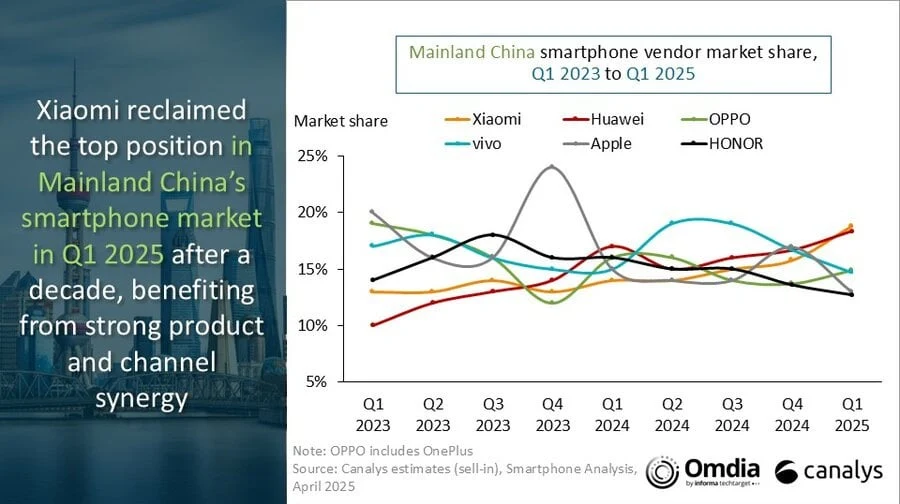
    For the first time in a decade, Xiaomi has claimed the leading position in the Chinese smartphone market, based on Canalys’ Q1 2025 report. The company shipped 13.3 million smartphones, securing a 19% market share.

    Xiaomi’s Strategy

    According to Canalys, Xiaomi’s success can be attributed to the synergy between its smartphone division and its broader ecosystem, which includes wearables, personal computers, and even electric vehicles. The company’s unified pricing strategy across both online and offline sales channels has reportedly enabled it to better utilize government subsidies. This approach encourages bundled purchases and makes it easier for consumers to make decisions.

    Huawei’s Strong Performance

    Huawei was not far behind, managing to ship 13 million smartphones and holding an 18% market share, while also maintaining double-digit growth. The company’s success has been supported by continued investments in foldable devices like the Mate XT and the Pura X, as well as a stronger focus on its HarmonyOS Next. By the end of 2025, this in-house operating system is projected to make up 3% of China’s smartphone install base.

    Competitors in the Market

    Oppo and Vivo followed, shipping 10.6 million and 10.4 million units, respectively, each capturing a 15% market share. However, only Vivo experienced a slight year-on-year increase in shipments, while Oppo saw a 3% decline in sales. Interestingly, Apple has slipped to fifth place in this ranking, shipping 9.2 million iPhones, which marks an 8% drop compared to the previous year. This decline comes after a seasonal high in Q4 2024 and reveals ongoing difficulties for the brand as the market shifts towards domestic options and budget-friendly strategies.

    To sum up, the smartphone market in mainland China showed a modest recovery in Q1 2025, with total shipments reaching 70.9 million units, reflecting a 5% increase from the same time last year. Canalys attributes this growth to national subsidy initiatives and a rebound in consumer sentiment, although analysts believe that much of this increase was artificially accelerated rather than truly organic.

    Source:
    Link


  • Apple Requires Apps to Include External Payment Links

    Apple Requires Apps to Include External Payment Links

    Key Takeaways

    1. Ruling Against Apple: A US judge has ruled that Apple cannot charge or block external payment links in iOS apps, marking a win for developers like Epic Games.

    2. Developer Freedom: Developers can now direct users to payment websites outside of Apple’s system, avoiding the 27-30% fees imposed by Apple on in-app purchases.

    3. Background of the Case: The ruling is part of a long-standing legal battle between Epic Games and Apple, influenced by misleading testimonies from Apple executives.

    4. Impact on App Store: Developers are expected to update their apps immediately to take advantage of this ruling, which could lead to lower costs for users and higher profits for developers.

    5. Broader Implications: While the ruling currently applies only in the US, it may affect other platforms like Google Play Store, depending on the outcome of Apple’s planned appeal.


    A US judge has decided against Apple, stopping the company from charging or blocking external payment links in iOS applications, starting right away. This is a win for Epic Games and other developers, marking a significant change in a four-year legal fight, and allowing US App Store apps to avoid Apple’s 30% fees for in-app payments, disrupting the iPhone ecosystem.

    Developers Gain More Freedom

    Now, developers can direct users to payment websites that are not part of Apple’s system. Apple can no longer impose fees of 27-30% on outside purchases, nor can it prevent developers from designing or positioning payment links. The company is also prohibited from using fear tactics—like warning messages—to dissuade users from leaving an app to buy elsewhere. Developers can simply provide neutral alerts, which is a big win for Epic and Spotify, who have had similar confrontations with Apple.

    Background of the Ruling

    This decision, linked to the ongoing Epic vs. Apple drama since 2020, was complicated by Apple VP Alex Roman’s misleading testimony and CEO Tim Cook’s attempts to ignore a ruling from 2021, despite warnings from Phil Schiller, according to TechCrunch. Previously, Apple compelled developers to utilize its payment system, taking a 30% cut from in-app transactions and banning any external links or suggestions of alternatives while employing scare tactics against outside payments.

    Future Implications for the App Store

    Apple plans to appeal while still following the ruling. This could lead to a change as developers, like Epic and Spotify, are set to update their apps right away. The table below outlines the specifics. This could lead to lower costs for users and higher profits for developers, particularly for free-to-play games such as Fortnite, but this change is currently limited to the US. With Google’s Play Store facing similar issues, this ruling could have wider effects across different platforms. Will Apple’s appeal change this decision, or is it the start of a new chapter in app freedom? Only time will tell.

    Source:
    Link


  • Fortnite Returns to iOS in the US After Epic Games’ Legal Win

    Fortnite Returns to iOS in the US After Epic Games’ Legal Win

    Key Takeaways

    1. Epic Games and Apple have been in a legal dispute since 2020 over Fortnite’s removal from the App Store due to direct payment options.
    2. A recent ruling allows Fortnite to return to iOS after Apple was found in “willful violation” of a 2021 injunction.
    3. Epic Games’ CEO, Tim Sweeney, proposed a deal to drop litigation if Apple extends its new payment framework globally.
    4. The ruling may impact how developers handle in-app purchases and their relationship with Apple in the future.
    5. The conflict has lasted over four years, marking a significant development in the ongoing struggle against Apple’s App Store policies.


    Epic Games and Apple have been engaged in a court dispute since 2020, when Apple took down the Epic Games store from its App Store. This action also removed the widely played battle royale game, Fortnite, from iPhone and iPad users. However, in a ruling on April 30, it has been decided that Fortnite can come back to iOS, as the judge overseeing the case has ruled in favor of Epic Games. Tim Sweeney, the head of Epic Games, shared insights on X, referencing the Digital Markets Act.

    Background of the Dispute

    Fortnite’s removal from the App Store resulted from Epic Games implementing direct payment options for in-app purchases, which would allow them to avoid paying Apple’s 30% commission. The game store then sued the company from Cupertino, claiming that Apple was unfairly forcing developers to adhere strictly to the App Store’s guidelines when sharing content with iOS users. In 2021, Judge Yvonne Gonzalez Rogers sided with Epic Games, stating that Apple couldn’t stop developers from including external links; however, Fortnite still didn’t make its way back to the platform.

    Recent Legal Developments

    According to the ruling on April 30, Apple is found to be in “willful violation” of the 2021 injunction, and the court will not accept such defiance. “For this Court, there is no second bite at the apple,” Judge Rogers remarked.

    Sweeney took to X to share the news that following this ruling, Fortnite will reappear on the App Store next week, along with a proposal for peace. He stated, “If Apple extends the court’s friction-free, Apple-tax-free framework worldwide, we’ll return Fortnite to the App Store worldwide and drop current and future litigation on the topic.” After four years, four months, and 17 days, it seems that it’s “Game over for the Apple tax,” Sweeney declared.

    Conclusion

    In summary, the long-standing conflict between Epic Games and Apple has taken a significant turn, with the return of Fortnite to iOS on the horizon. The developments could change how developers approach in-app purchases and their relationship with Apple moving forward.

    Source:
    Link

  • Apple iPhone 17e May Be Canceled, Budget iPhones in Doubt

    Apple iPhone 17e May Be Canceled, Budget iPhones in Doubt

    Key Takeaways

    1. The iPhone 16e is the next generation of the third-generation iPhone SE, suggesting a shift towards annual budget models by Apple.
    2. The potential launch of an iPhone 17e in 2026 is uncertain, as Apple is still deciding on its future release strategy.
    3. Apple’s traditional release cycle for budget iPhones has been every two to four years, making annual releases a notable change.
    4. Competitors are updating their smartphones more frequently, indicating a need for Apple to increase the pace of its budget phone releases.
    5. Possible enhancements for the iPhone 17e may include a newer processor and features like full MagSafe support or a design upgrade with Dynamic Island.


    The Apple iPhone 16e serves as the next generation of the third-generation iPhone SE. By placing this “budget” variant within the iPhone 16 collection, Apple has stirred up rumors that the company may launch an economical model annually, similar to how Google does with its Pixel A series. Nevertheless, a recent article from Bloomberg indicates that the arrival of an iPhone 17e in 2026 is not assured.

    Future of the iPhone 17e

    Apple is anticipated to make a decision about the iPhone 17e in the near future. Since creating a simplified iPhone model likely won’t require a lot of time, Apple has plenty of opportunity to reflect on its choice. Traditionally, iPhone SE versions have come out every two to four years, so introducing a new budget iPhone each year would mark a significant change in Apple’s approach.

    Competitive Landscape

    However, journalist Mark Gurman from Bloomberg noted that several of Apple’s rivals are updating their smartphone lines more than once a year. This implies that it would be logical for the e-series phones to debut at a quicker rate. Information regarding possible enhancements for the iPhone 17e is still vague, apart from the expected addition of a newer processor. It’s possible that Apple might finally provide full MagSafe support for its most affordable iPhone model or further develop its design, possibly swapping the large notch for a Dynamic Island, a feature that was first unveiled with the iPhone 14 Pro.

    Source:
    Link