Tag: Apple

  • Apple Offers Spare Parts for iPad, iPad Pro, and iPad Mini

    Apple Offers Spare Parts for iPad, iPad Pro, and iPad Mini

    Key Takeaways

    1. Apple has been providing spare parts for iPhones and Macs since 2022 through the Self Service Repair Store.
    2. The repair program is expanding to include iPad models, starting with the iPad Air, iPad Pro, iPad mini, and iPad with Apple A16.
    3. Key components like batteries, displays, cameras, and USB-C ports will be available for the new iPads.
    4. Repairing newer iPad models may be easier, but detaching the glued display can still risk damage.
    5. Prices for replacement parts in the Self Service Repair Store are typically high, often exceeding repair costs at Apple Stores.


    Apple has been providing spare parts for its iPhone and Mac devices since 2022. Customers can order these parts directly from the Apple Self Service Repair Store. The online platform also offers necessary tools for repairs, which can either be bought or rented based on the specific tool needed. Additionally, repair manuals and diagnostic tools are available to make the repair process easier.

    Expansion to iPad Models

    Now, Apple is broadening its repair program to include the iPad, starting with the iPad Air featuring the Apple M2 chip, the latest iPad Pro with the Apple M4 chip, the iPad mini equipped with the A17 Pro, and the iPad using the Apple A16. Key components like the battery, display, cameras, and USB-C ports are expected to be available when it launches. Although these iPad replacement parts are not yet in the Self Service Repair Store, an expansion is anticipated soon as announced.

    Repair Challenges and Costs

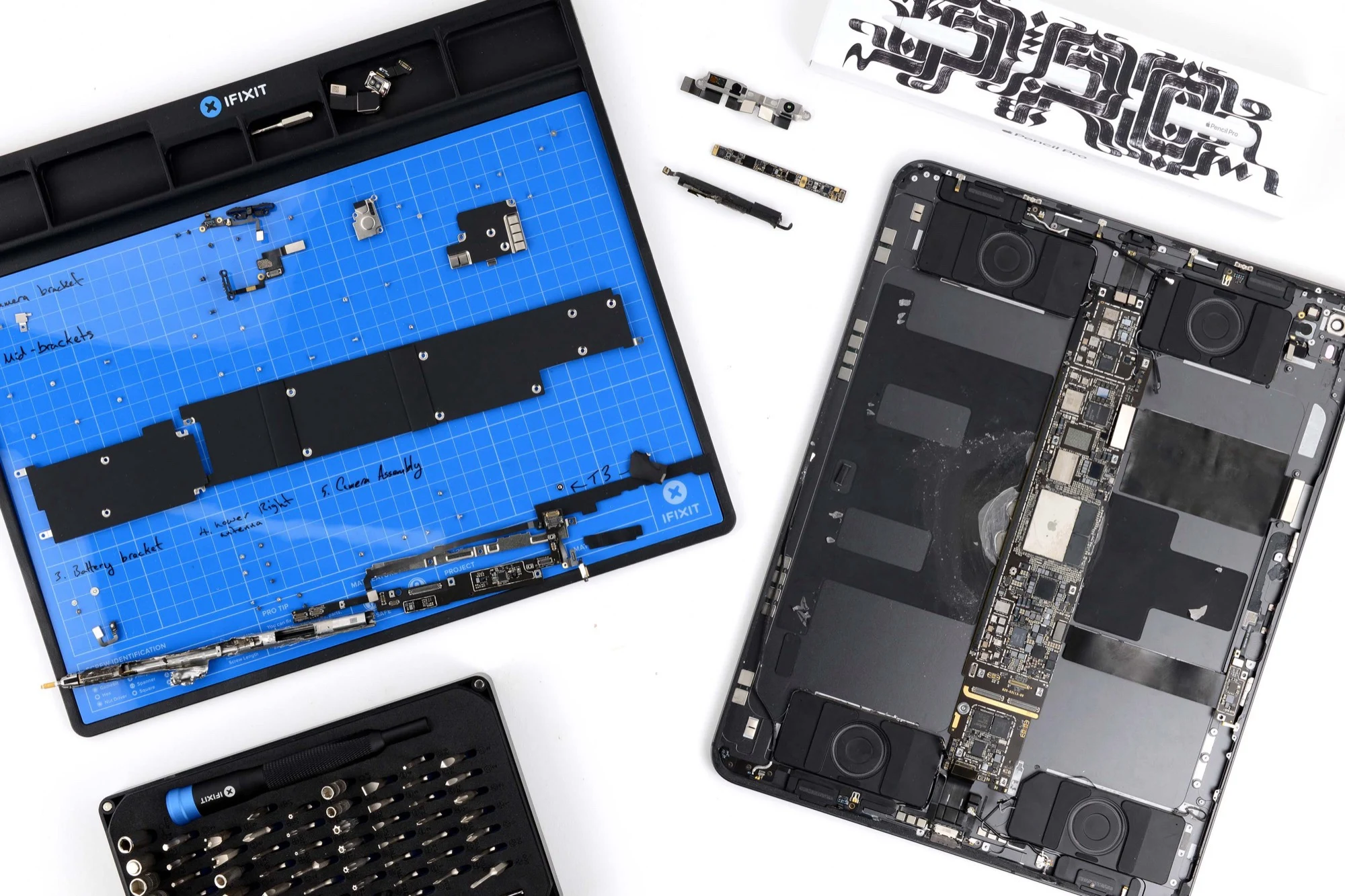
    A teardown video from iFixit (linked below) shows that Apple has made some enhancements to the newer iPad Pro with the Apple M4, making repairs somewhat simpler. Nonetheless, it’s still required to detach the display, which is glued to the housing, from the frame, and this process can easily damage the screen. Besides the challenge and risk of harming parts, there’s a significant downside to Apple’s Self Service Repair Store: the high prices. Although the costs for the new iPad replacement parts remain unclear, Apple often sets prices for iPhone spare parts that exceed the actual repair cost at an Apple Store.

    Source:
    Link

  • Apple to Replace Game Center with New Unified Gaming App

    Apple to Replace Game Center with New Unified Gaming App

    Key Takeaways

    1. Apple is set to launch a new gaming app at WWDC to replace Game Center, enhancing its gaming platform.
    2. The app will allow users to manage gaming activities across iPhone, iPad, Mac, and Apple TV, similar to the Xbox app.
    3. It may support games downloaded from outside the App Store on macOS, changing Apple’s usual software distribution model.
    4. Apple has acquired RAC7 Studio, known for Sneaky Sasquatch, to focus on exclusive gaming content for Apple Arcade.
    5. The new app aims to compete with platforms like Xbox Game Pass by offering unique content and a seamless user experience.


    Apple is likely to introduce a fresh gaming application at the forthcoming Worldwide Developers Conference (WWDC), which could greatly improve its gaming platform. The Verge reports, referencing a Bloomberg article, that the app is set to launch in September and aims to take the place of the existing Game Center. It is expected that this app will serve as a central point for starting games, tracking player achievements, checking leaderboards, and viewing editorial content on iPhone, iPad, Mac, and Apple TV.

    New Features for Users

    This application is thought to allow users to oversee their gaming activities across various Apple devices, much like the Xbox app across different platforms. A major aspect of this app might be its ability to support games that are downloaded from outside the App Store on macOS, which would mark a shift from Apple’s usual method of distributing software.

    Acquisition of RAC7 Studio

    In another related move, Apple has taken over RAC7, the studio known for the well-loved Sneaky Sasquatch game on Apple Arcade. Digital Trends reported that a spokesperson for Apple stated, “We adore Sneaky Sasquatch and are thrilled that the small RAC7 team has joined Apple to keep working on it with us. We will keep providing an excellent experience for Apple Arcade players with hundreds of games from some of the finest game developers around the world.” Even after the acquisition, RAC7 is likely to keep functioning independently, highlighting Apple’s increasing concentration on exclusive gaming content and its persistent commitment to broadening its gaming ecosystem.

    Competing with Established Services

    This upcoming app, which seeks to weave gaming into Apple’s larger ecosystem, could emerge as a rival to established platforms such as Xbox Game Pass, with a focus on unique content and a seamless user experience across all Apple devices.

    Source:
    Link

  • Apple to Unveil visionOS Redesign for iOS and macOS at WWDC 2025

    Apple to Unveil visionOS Redesign for iOS and macOS at WWDC 2025

    Key Takeaways

    1. Apple is redesigning its software ecosystem, including iOS 19, iPadOS 19, macOS 16, watchOS 12, and tvOS 18, under the codename “Solarium” for a unified look.
    2. The new design is inspired by visionOS, featuring semi-transparent elements, cleaner fonts, updated icons, and subtle animations.
    3. The update will not significantly change the core app layouts or functions, keeping familiar user experiences while modernizing the interface.
    4. AI-driven features, branded as “Apple Intelligence,” will be introduced, enhancing Siri and improving writing support and search capabilities.
    5. Public beta is expected by July 2025, with a global rollout anticipated in September or October 2025, compatible with devices from previous OS versions, but some older models may not be supported.


    Apple is working on a major redesign of its software ecosystem, which includes iOS 19, iPadOS 19, macOS 16, watchOS 12, and tvOS 18. Mark Gurman from Bloomberg reports that this project, codenamed “Solarium,” aims to create a unified, modern look across all key Apple platforms.

    Inspired by visionOS

    This redesign draws heavily from visionOS, the system used in Apple’s Vision Pro headset. The new look features semi-transparent user interface elements, cleaner fonts, updated icons, and subtle animations that react as you use your device. These updates reflect the design elements seen in the Vision Pro, extending that aesthetic to iPhones, iPads, and Macs.

    No Major Changes to Functionality

    Crucially, this update is not likely to greatly alter the basic layouts or functions of core apps, ensuring that long-time users find it familiar while also modernizing the interface. This overhaul shows Apple’s intention to integrate visionOS design traits across its platforms and might set the stage for better harmony between future software and hardware releases.

    Apple is planning to reveal these updates at its annual Worldwide Developers Conference (WWDC), which will take place from June 10 to 14, 2025. Alongside the visual changes, Apple is also set to introduce a range of AI-driven features branded under “Apple Intelligence.” These new features could include a more intuitive Siri, better writing support, summarization tools, and improved Spotlight search capabilities, among others.

    Release Timeline and Device Compatibility

    Although Apple hasn’t confirmed specific release dates, the new operating systems are anticipated to go into public beta by July, with a global rollout expected in September or October 2025. Devices running iOS 18, macOS 15, watchOS 10, and tvOS 17 are likely to receive these updates; however, some older models may not be compatible due to hardware limitations.

    Apple has revamped its platforms in the past, but this time it seems different. Meanwhile, Google is also working on a refresh of Android with version 16, which will implement its new Material 3 Expressive design system. This update focuses on fluid visuals, enhanced personalization options, and deeper integrations with its Gemini AI. Together with Apple’s initiatives, it’s evident that both companies are advancing toward more adaptive and intelligent operating systems.

    Source:
    Link

  • Huawei and Xiaomi Lead Smartphone Shipments in China Q1 2025

    Huawei and Xiaomi Lead Smartphone Shipments in China Q1 2025

    Key Takeaways

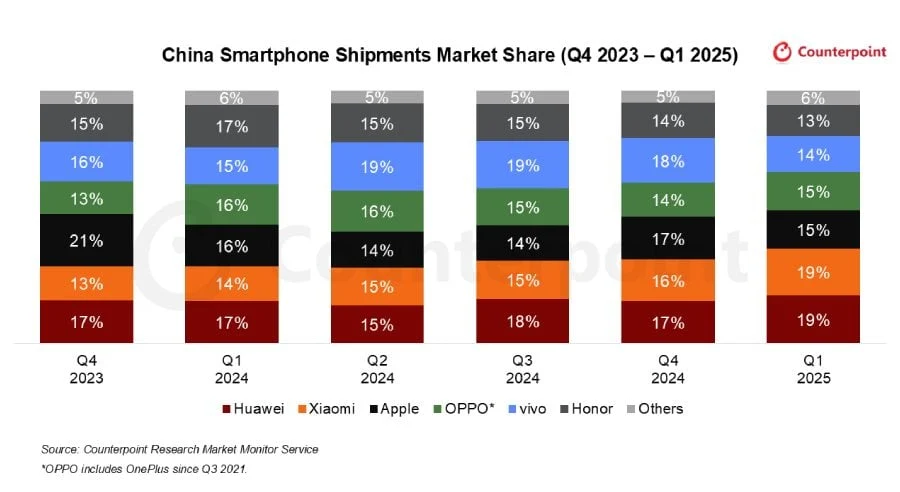
    1. Huawei leads the Chinese smartphone market with a 19% share in Q1 2025, surpassing competitors.
    2. China’s smartphone market grew by 5% year over year, driven by a government subsidy initiative, but growth slowed post-holiday.
    3. Xiaomi matched Huawei’s market share at 19%, with a 3% quarter-over-quarter increase.
    4. Apple fell to third place with a decline in market share from 17% to 15%, affected by the subsidy program’s price limitations.
    5. Oppo and Honor ranked fourth and sixth, with market shares of 15% and 13%, respectively; growth in the market is expected to continue but at a slower pace in 2025.


    Counterpoint has released its newest report on smartphone shipments in China, revealing that Huawei has secured the top position, surpassing all competitors to achieve the No. 1 rank in Q1 2025.

    Market Growth Insights

    China’s smartphone market experienced a 5 percent increase year over year, largely due to a government subsidy initiative that started in January. However, this initial surge in demand didn’t persist. Counterpoint notes that interest waned after the holiday period, leading to growth that still fell below what was anticipated.

    Huawei’s Performance

    Huawei managed to capture a 19 percent share of the market this quarter, marking a 2 percent rise from Q4 2024. Xiaomi matched Huawei’s share at 19 percent but recorded a slightly higher quarter-over-quarter increase of 3 percent.

    Apple dropped to third place, with its shipments declining by 2 percent, which reduced its share from 17 percent to 15 percent. Counterpoint suggests that this decrease is linked to the nature of the government subsidy program, which only applies to phones priced over CNY 6,000 (around $820). Many iPhones, especially the popular Pro models, are priced well above this limit, making them ineligible for discounts.

    Other Brands in the Market

    Oppo secured the fourth position with a 15 percent market share and a modest growth of 1 percent. Vivo experienced a notable decrease, dropping from 18 percent to 14 percent compared to the previous quarter. Honor followed closely behind in sixth place, holding a 13 percent share.

    Looking forward, Counterpoint anticipates that the Chinese smartphone market will keep growing year over year in 2025, albeit at a slower rate. The upcoming launches of new devices in Q2 and mid-year sales events are expected to provide a temporary uplift in shipments.

  • Fortnite Returns to Apple’s App Store After Five-Year Absence

    Fortnite Returns to Apple’s App Store After Five-Year Absence

    Key Takeaways

    1. Fortnite has returned to the US App Store after a lengthy legal battle between Apple and Epic.
    2. The game was removed in August 2020 for breaching App Store rules related to payment processing.
    3. Epic achieved a partial victory, with Fortnite reinstated in the EU App Store due to new regulations.
    4. Epic plans to launch an official Epic Store app in the EU Play Store by 2025.
    5. Currently, Fortnite is available in the US App Store and EU via the Epic Store, with global availability still uncertain.


    After a long legal fight that lasted several years between Apple and Epic, Fortnite has made its comeback on the US App Store. This follows its return to the EU App Store last year due to new regulations that compelled Apple to change its approach.

    The Reason for Removal

    The well-known battle royale game was taken off the App Store in August 2020 after Apple alleged that Epic had breached store rules by allowing players to buy in-game currency directly through them. The main issue was Apple’s 30% cut on transactions made via the App Store, which Epic argued was not fair. Google also reacted negatively when Epic circumvented their 30% charge, leading to the game’s removal from the Android Play Store.

    A Step Forward

    In a partial win for Epic, the game was reinstated in the EU App Store last year, thanks to changes in the EU Digital Markets Act. This legislation required Apple to accept third-party app stores and different payment methods. Epic has declared plans to launch an official Epic Store app in the EU Play Store by 2025. In the meantime, players can download the game on Android by sideloading the Epic Store app.

    Global Availability of Fortnite

    Currently, the game is only accessible in the US App Store and can be found in the EU region via the Epic Store. Likewise, Google permits sideloading the app through the Epic Store. Fortnite’s official account on X stated that the game will be available in the US App Store and the Epic Games Store and AltStore in the EU. However, it remains uncertain when the game will be available to players across the globe.

    Source:
    Link

  • iPhone 17 Air vs 16 Plus: Hands-On Leak Comparison

    iPhone 17 Air vs 16 Plus: Hands-On Leak Comparison

    Key Takeaways

    1. Online users are already familiar with the “iPhone 17 Air” and its features before launch.
    2. The “iPhone 17 Air” is designed to be super-thin, but it appears thicker than the 2024 model.
    3. Recent leaks indicate the “iPhone 17 Air” may have a smaller battery than the Samsung Galaxy S25 Edge.
    4. The camera bump on the “iPhone 17 Air” looks more prominent compared to the 16 Plus.
    5. Apple might release a battery case for the “iPhone 17 Air,” which could weaken the device’s main appeal.


    If Apple was hoping to impress people with the launch of its competitor to the Samsung Galaxy S25 Edge, those hopes might be fading quickly. Many online users seem to already have the “iPhone 17 Air” or its dummies, ready to check out its new features ahead of time.

    Comparing Designs

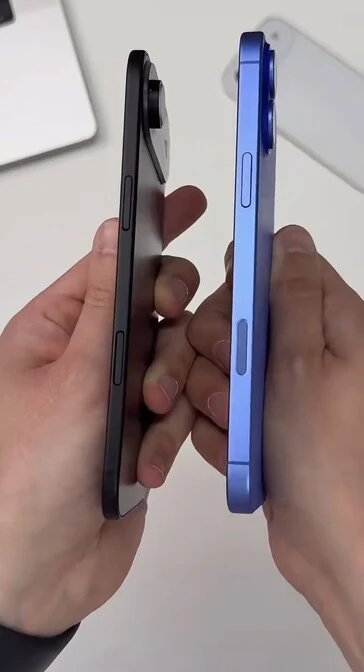
    A recent post claims to show how the main feature of the 17 Air—its supposedly super-thin design—compares to another iPhone, likely the 16 Plus. This assumption is based on the dual rear camera setup, similar size, and Ultramarine color, which looks just like a unit available in Renewed condition on Amazon. It appears that the 2024 model is indeed thicker than the “17 Air” (shown here in black), although both iPhones have their volume controls, power button, Action Button, and Camera Control in nearly the same spots.

    New Leak and Battery Concerns

    If this leak is true, it supports the idea that the “17 Air” will have a smaller battery than the S25 Edge, making the claims more believable. Furthermore, it might suggest that Apple faced difficulties managing the camera bump in this new model. The single lens ring looks to be more prominent compared to the 16 Plus in one of the recent images.

    Possible Solutions from Apple

    To address these challenges, Apple may consider releasing a specialized iPhone 17 Air Battery Case. However, this accessory could undermine the main selling point of the new device, raising questions about its necessity.

    Source:
    Link


  • China’s Non-Chinese Smartphone Shipments Drop to 1.85 Million

    China’s Non-Chinese Smartphone Shipments Drop to 1.85 Million

    Key Takeaways

    1. Apple’s share in China’s smartphone market is declining, with local brands capturing 92% of the market.
    2. Total smartphone shipments increased by 6.5% in March 2025, but foreign brands, including Apple, saw a decline of over 25%.
    3. The Chinese government’s subsidy policies disadvantage Apple, as its Pro models exceed the price limit for subsidies.
    4. Apple’s revenue from Greater China has decreased for seven consecutive quarters, indicating growing pressure in the market.
    5. Despite a strong manufacturing and retail presence, local brands like Huawei, Vivo, Xiaomi, and Oppo are becoming more popular than Apple.


    Apple’s share in China’s smartphone industry is diminishing as local rivals continue to advance. Recent shipment figures from the China Academy of Information and Communications Technology (CAICT) for March 2025 indicate that total smartphone deliveries have increased by 6.5 percent compared to the previous year, reaching 22.73 million units. Chinese brands have taken 92 percent of this market share, leaving non-Chinese companies—primarily Apple—with only 1.85 million units, which is about half of what they sold last year.

    Quarterly Trends

    The quarterly results show a similar trend. From January to March, total shipments rose by 3.3 percent to 69.67 million units. However, Chinese manufacturers saw a growth of 9 percent, while foreign brands faced a decline of over 25 percent. Foreign companies made up about 8 percent of the total shipments—1.85 million units—with Apple holding a significant portion of that share, yet Counterpoint Research ranks Huawei, Vivo, Xiaomi, and Oppo as more popular than the iPhone maker.

    Impact of Policies

    Policies from the government have further increased the challenges for Apple. The 15 percent “buy-new” subsidy from Beijing is only applicable to devices priced under 6,000 yuan (roughly $832). While Apple’s standard iPhone 16 starts at 5,999 yuan (about $832), its Pro models exceed this price limit. To stay competitive ahead of the 618 shopping festival, Apple is reportedly considering offering larger discounts on its Pro models.

    Apple’s financial data indicates that the pressure is mounting. Greater China accounted for 16.8 percent of Apple’s global revenue in its fiscal second quarter, but this figure has been on a downward trend for seven consecutive quarters. The last significant growth occurred in early 2022, when sales were still increasing by double digits.

    Although Apple has a large manufacturing network and retail presence in China, the market’s current energy is increasingly leaning towards local brands.

    Source:
    Link

  • Trump urges Apple to produce more iPhones in the US instead of India

    Trump urges Apple to produce more iPhones in the US instead of India

    Key Takeaways

    1. Trump expressed concerns about Apple increasing iPhone production in India, preferring that devices for the US be made domestically.
    2. He reinforced expectations for Apple to invest $500 billion in US operations, with assurances from Tim Cook for increased domestic production.
    3. Trump highlighted the Mac Pro assembly in Texas as an example of Apple’s domestic production, though it is an extension of existing operations.
    4. Experts warn that relocating iPhone production to the US could raise costs significantly, potentially increasing prices by 25% or more.
    5. Following Trump’s comments, Apple’s stock saw a minor decline, and the company’s manufacturing strategies remain under scrutiny amid global trade tensions.


    US President Donald Trump, during a state visit to Qatar, shared details of a recent discussion with Apple CEO Tim Cook. In this conversation, he expressed his worries about the company’s rising iPhone production in India. Trump mentioned, “I had a little problem with Tim Cook yesterday… I don’t want you building in India.” He indicated that while Apple could still produce iPhones for the Indian market in India, devices meant for the US should be manufactured domestically.

    Trump’s Investment Expectations

    Trump reinforced his desire for Apple to stick to its previous promise of investing $500 billion into US operations. He asserted that Cook assured him of an increase in production within the United States, although no specifics or timelines were disclosed.

    Manufacturing Concerns

    Previously, Donald Trump has shown apprehensions about Apple’s manufacturing in the US, especially beyond just iPhones. He pointed out the Mac Pro, which Apple assembles in Austin, Texas, as a significant example. In November 2019, Trump visited the facility with Tim Cook, commending the company’s efforts in domestic production. However, this was more of an extension of ongoing operations rather than a brand-new project.

    Challenges of Relocation

    Experts note that shifting iPhone production entirely to the US would be a tough task due to Apple’s well-established supply chains in Asia. Moving manufacturing operations could lead to a steep increase in production costs because of higher labor expenses and an underdeveloped electronics manufacturing environment. Analysts predict this shift could raise iPhone prices by 25% or even more.

    After Trump’s comments, Apple’s stock experienced a minor decline, closing at $211.46 in the latest trading session.

    Praise for Leadership

    Trump has previously complimented Cook’s leadership, stating in 2024, “If Tim Cook didn’t run Apple, and Steve Jobs did, it wouldn’t be nearly as successful.” He also reminisced about Cook reaching out to him directly in 2019 concerning tariff matters, contrasting that with the actions of typical lobbyists.

    As global trade tensions persist, Apple’s manufacturing strategies are closely monitored by investors and policymakers alike.

    Source:
    Link

  • Apple’s Anniversary iPhone: No Bezels, No Punch-Hole, New Battery

    Apple’s Anniversary iPhone: No Bezels, No Punch-Hole, New Battery

    Key Takeaways

    1. The iPhone 16 Pro shows minor changes from the iPhone 15 Pro, with the iPhone 17 Pro expected to have similar minimal differences except for a larger camera module.
    2. The iPhone 18 Pro is rumored to feature a smaller punch-hole design, hiding Face ID sensors beneath the AMOLED display.
    3. A major redesign is planned for the iPhone 20th anniversary in 2027, as supported by reports from ET News and Bloomberg.
    4. The anticipated iPhone 19 Pro may have a completely bezel-less screen with the selfie camera and Face ID components positioned invisibly beneath the display.
    5. Advances in battery technology are expected, with the upcoming model potentially featuring a silicon battery that eliminates carbon, offering higher energy density for improved battery life and design.


    The Apple iPhone 16 Pro shows only minor changes from its predecessor, the iPhone 15 Pro. It’s predicted that the iPhone 17 Pro will not vary much either, except for a bigger camera module. Looking ahead, the iPhone 18 Pro is rumored to feature a smaller punch-hole, as the Face ID sensors are said to be hidden beneath the AMOLED display. A report from the Korean publication ET News backs up previous claims from Bloomberg, indicating that Apple is gearing up for a major redesign to celebrate the 20th anniversary of the iPhone in 2027.

    New Features on the Horizon

    The anticipated iPhone 19 Pro is expected to sport a completely bezel-less screen. This innovation will be achieved by slightly rounding the AMOLED display and the glass cover at all four corners, resulting in an almost perfect screen-to-body ratio of nearly 100%. The selfie camera will also contribute to this design, as it’s planned to be positioned invisibly beneath the display for the first time on an iPhone. The rest of the Face ID components will also be placed underneath the screen next year if the speculations are accurate.

    Battery Technology Advancements

    In another exciting development, the upcoming model may feature a silicon battery that eliminates carbon entirely from its cathode. Achieving 100% silicon content would mark a major step forward, as today’s silicon-carbon batteries in smartphones typically contain less than 20% silicon. Such a battery could potentially offer higher energy density, allowing for either much longer battery life or a sleeker design without sacrificing battery capacity.

    Source:
    Link

  • Apple Developing Brain Implants for Disability Device Control

    Apple Developing Brain Implants for Disability Device Control

    Key Takeaways

    1. Apple is collaborating with start-up Synchron to develop brain-computer interface (BCI) technology using thought signals.
    2. The Stentrode implant, created by Synchron, can detect neuronal activities and control devices like the iPhone via 16 electrodes.
    3. Users, like Mark Jackson with ALS, can operate devices using the Stentrode implant, but navigation speed is currently limited compared to traditional methods.
    4. Tom Oxley, CEO of Synchron, emphasizes the need for a standardized approach for BCI devices, which Apple plans to introduce by the end of 2025.
    5. A dedicated standard from Apple could significantly enhance BCI accessibility and impact how individuals with disabilities interact with technology.


    According to the Wall Street Journal (WSJ), Apple is working together with a start-up called Synchron to explore new ways for controlling devices using thought signals, which are basically neural impulses. Synchron has created the Stentrode implant, a brain-computer interface (BCI) that is inserted like a stent into a vein located above the motor cortex in the brain. This device has 16 electrodes that can detect delicate neuronal activities related to movement and turn these signals into commands to control devices like the iPhone. Since 2019, ten individuals have received the Stentrode implant.

    User Experience

    One individual using the Stentrode implant is Mark Jackson, who suffers from amyotrophic lateral sclerosis (ALS). He shared that he can operate an Apple Vision Pro headset with assistance from his implant and special software designed by Apple. The signals from the implant are managed through existing alternative device control options in Apple’s operating systems. However, Jackson notes that the current method of navigation is not as fast as traditional ways because direct cursor control through thought is still not possible.

    Future Plans

    According to Tom Oxley, CEO of Synchron, a standardized approach specifically designed for BCI devices from companies like Apple would greatly enhance the potential of these technologies. Reportedly, Apple intends to roll out such a standard for developers by the end of 2025, making it easier to incorporate brain implant inputs into software.

    Broader Impact

    The creation of a dedicated standard by Apple could be a major advancement in making BCIs more accessible and influencing the future of how humans interact with computers. Morgan Stanley estimates that approximately 150,000 individuals in the United States with severe upper extremity disabilities could be potential early users of BCI devices.

    Source:
    Link