Category: Video / Photo

  • DJI RS 4 Mini Launches at $369, Beats RS 4 and RS 4 Pro Pricing

    DJI RS 4 Mini Launches at $369, Beats RS 4 and RS 4 Pro Pricing

    Key Takeaways

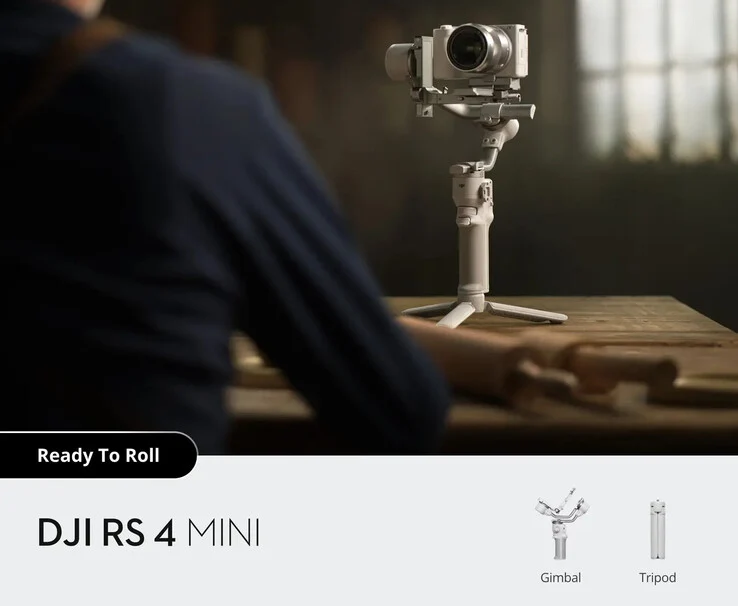
    1. DJI has launched the Ronin Series 4 Mini (RS 4 Mini) as an affordable alternative to the RS 4 and RS 4 Pro, designed primarily for traditional cameras.
    2. The RS 4 Mini supports payloads up to 2 kg, weighs 890 g, and boasts a battery life of up to 13 hours, exceeding the previous model by 30%.
    3. It features DJI’s 4th generation stabilization technology and a magnetic quick-release mounting system for ease of use.
    4. The RS Intelligent Tracking Module, available in the Combo package, allows for tracking subjects up to 10 meters away, with hand gesture controls included.
    5. Pricing for the RS 4 Mini starts at $369, with additional bundle options available, including the RS Mini 4 Combo at $459 and the ‘Creator Combo’ at $478.


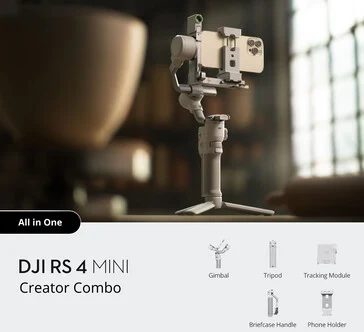
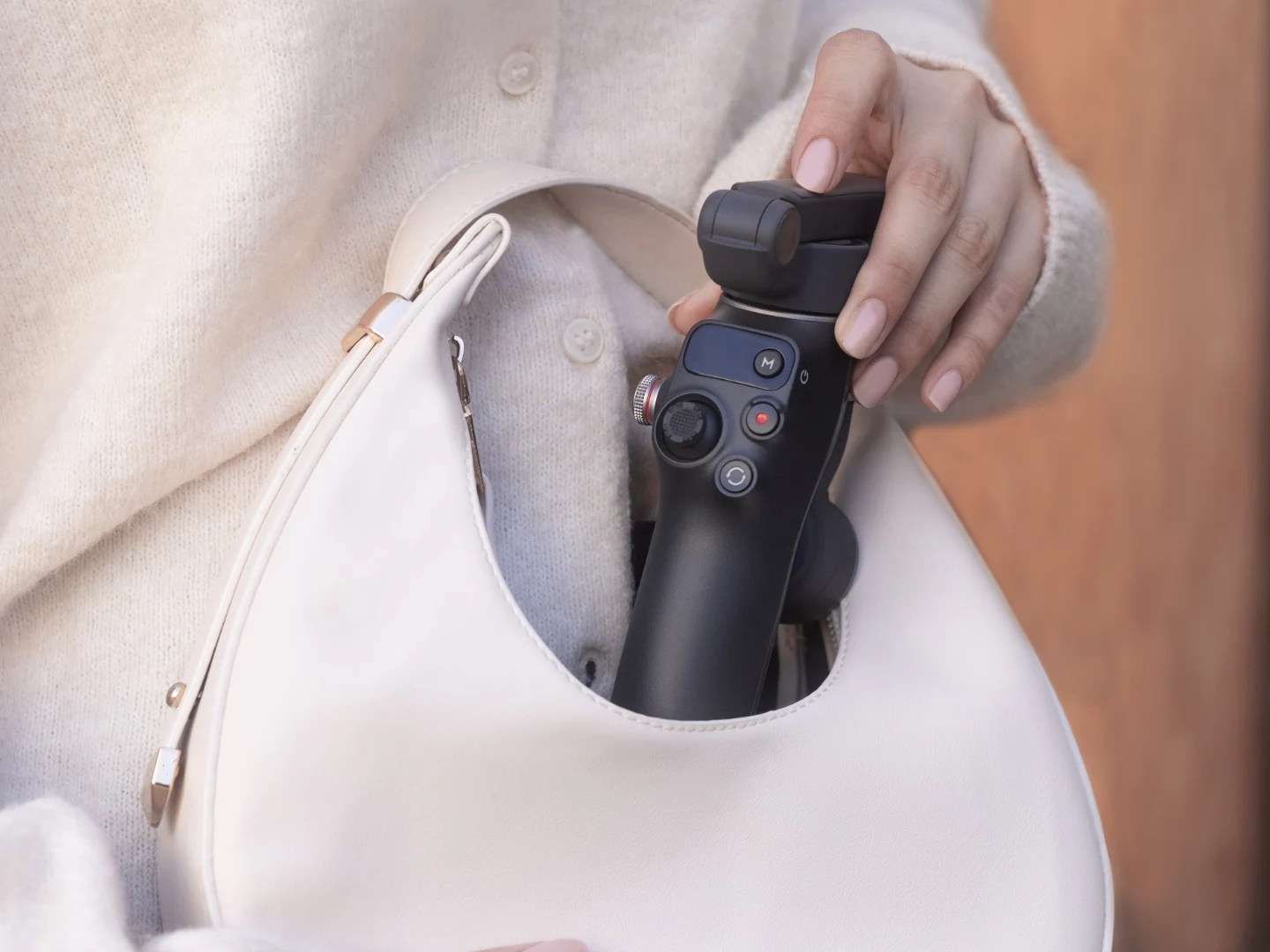
    Only a few days have gone by since DJI launched the Osmo Mobile 7 and Osmo Mobile 7P. Yet, the company has now unveiled the Ronin Series 4 Mini (RS 4 Mini), offering a more affordable option compared to the RS 4 and RS 4 Pro. This means that the RS 4 Mini is made specifically for traditional cameras, unlike the Osmo Mobile 7 and Osmo Mobile 7P, which are designed for smartphones (currently priced at $149 on Amazon).

    Compatibility and Features

    DJI emphasizes that the RS 4 Mini can work with smartphones too, but only when it’s used with the phone holder accessory. For context, this gimbal can handle payloads of up to 2 kg, all while weighing just 890 g. Furthermore, DJI highlights that this compact gimbal provides up to 13 hours of battery life, which is 30% more than its immediate predecessor.

    Advanced Stabilization Technology

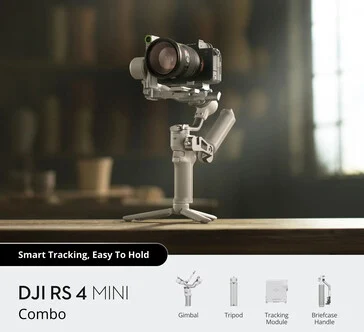
    The RS 4 Mini utilizes DJI’s 4th generation stabilization tech, enhanced by a magnetic quick-release mount. Another highlight is the new RS Intelligent Tracking Module, which is exclusive to the RS 4 Mini Combo package. DJI claims that this tracking module can monitor a subject from as far as 10 meters away, thanks to its ActiveTrack technology. It also includes hand gesture support along with standard button controls.

    Pricing Options

    The RS 4 Mini is available starting at $369, which includes the gimbal, a quick-release plate, and a mini tripod. Alternatively, you can get it for $459 with a briefcase handle and the RS Intelligent Tracking Module, referred to as the RS Mini 4 Combo, or for $478 in the ‘Creator Combo,’ which adds a smartphone holder.

    Source:
    Link

  • Canon PowerShot V1: Compact Vlogging Camera with 4K 60fps Video

    Canon PowerShot V1: Compact Vlogging Camera with 4K 60fps Video

    Key Takeaways

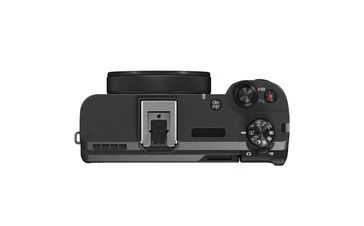
    1. High-Quality Sensor: The PowerShot V1 features a 1.4-inch CMOS sensor, the largest in a Canon compact camera, offering enhanced low light performance and image quality.

    2. Advanced Video Features: It includes a built-in cooling fan for extended 4K recording, capable of shooting at 60 fps with 5.7K oversampling and supports Canon Log 3 for better post-production flexibility.

    3. Improved Autofocus: The Dual Pixel CMOS AF II system provides fast and precise autofocus with eye detection for both humans and pets, along with burst shooting at 30 fps.

    4. Connectivity Options: The camera offers USB and wireless connectivity for easy image transfers and can be used as a webcam for live streaming and video calls.

    5. Price and Release Date: The PowerShot V1 is priced at 148,500 yen (approximately $990) and is set to launch in late April 2025.


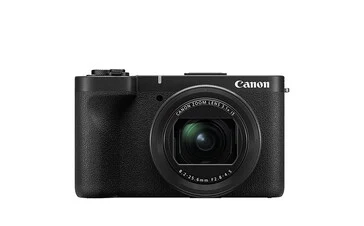
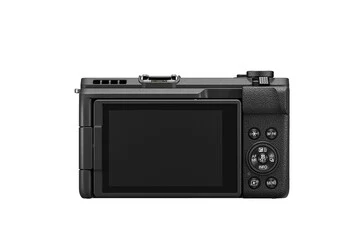
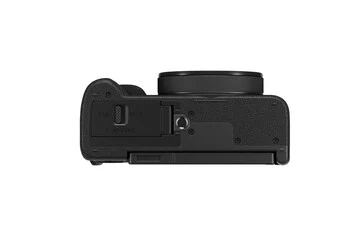
    After some recent leaks stirred up excitement, Canon has officially unveiled the PowerShot V1. This new compact camera seems aimed at creators who are in need of top-notch video and photography capabilities in a small, portable design. Set to launch in late April 2025, it features an unusually large sensor, integrated cooling for extended recording, and professional-grade color grading support.

    High-Quality Sensor

    The 1.4-inch CMOS sensor, which is certainly the highlight of the camera, is the biggest ever seen in a Canon compact device. It provides double the surface area compared to typical 1.0-inch sensors. This enhancement leads to better performance in low light, greater dynamic range, and clearer image quality. When combined with the DIGIC X processor, the camera can handle ISO settings up to 32,000 for still images and features a zoom range equivalent to 16mm to 50mm for photos (17mm to 52mm for video). These specs make it ideal for vlogging, travel photography, and daily use.

    Advanced Video Features

    For video recording, the PowerShot V1 is equipped with a built-in cooling fan, a feature that is uncommon in compact cameras. This design helps to avoid overheating during lengthy 4K recording periods. It can shoot in 4K at 60 fps with 5.7K oversampling. Moreover, Canon Log 3 with 10-bit color depth will provide users with greater flexibility during post-production processes.

    Improved Autofocus and Connectivity

    The camera utilizes a Dual Pixel CMOS AF II system which enhances autofocus speed and precision, now featuring eye detection for both humans and pets (like dogs and cats). It also supports burst shooting at 30 fps with an electronic shutter and has features such as subject-tracking IS for smooth video stabilization.

    In terms of connectivity, it offers USB and wireless options for easy image transfers, and it can also function as a webcam for live streaming and video calls.

    Canon has set the price of the PowerShot V1 at 148,500 yen (including tax) in Japan, roughly around $990. While the exact pricing for other countries hasn’t been finalized, it’s anticipated to be in line with other high-end compact cameras when it releases in April.

    Source:
    Link


  • X8 Tele Max: DJI Alternative with Dual Cameras & 47 Min Flight Time

    X8 Tele Max: DJI Alternative with Dual Cameras & 47 Min Flight Time

    Key Takeaways

    1. The Fimi X8 Tele Max is not officially released but is available for direct import at nearly $525, with free shipping and included import costs.
    2. Warranty support may be difficult to obtain, and shipping from China can take up to two months.
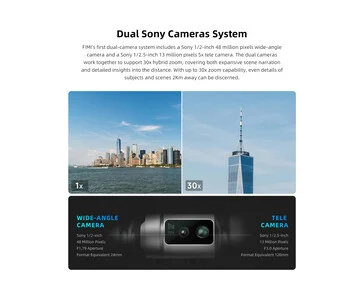
    3. The drone features two cameras: a 48 MP main camera and a telephoto camera with a 30x digital zoom.
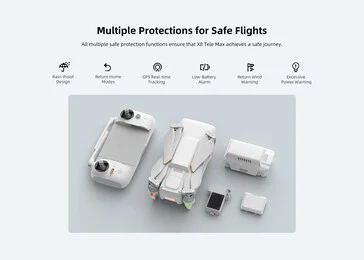
    4. It has a maximum battery life of 38 to 47 minutes, can withstand wind speeds of up to 12 m/s, and has impressive flight speeds.
    5. The drone includes additional features like a gimbal for smooth footage, GPS support, time-lapse recording, and the ability to add extra modules.


    Although Fimi isn’t as famous as DJI, it still has some recognition, having launched models like the Fimi Mini 3 earlier. The latest Fimi X8 Tele Max isn’t officially released yet, but it’s available for direct import for nearly $525. Shipping is free, and import costs are included; however, buyers should be aware that getting warranty support could be very tricky, and shipping from China might take up to two months. As always, it’s important for users to know the recreational drone regulations in their country (see here for USA rules and here for Australia’s rules) before buying, not only about what’s allowed but also regarding no-fly zones.

    Camera Capabilities

    The Fimi X8 Tele Max features two cameras: a F/1.6 main camera with an impressive 48 MP and a telephoto camera with a focal length of 120 millimeters (equivalent to 35 mm). The telephoto lens allows for a digital zoom of up to 30x. Depending on the battery used, the drone is said to weigh around 760 or 832 grams, which is above the 250-gram limit for micro drones. It has a maximum ascent speed of 5 m/s and can reach a vertical flight speed of up to 18 m/s. The drone can withstand wind speeds of up to 12 m/s, and its battery life can last between 38 to 47 minutes, depending on various conditions.

    Additional Features

    Equipped with a gimbal, the drone is designed to capture smooth footage even during movement or in windy weather. It can record time-lapse videos and 4K footage at 60 frames per second. GPS support allows for tracking and flight planning. Users can also add extra modules, like a speaker and a 4G modem. The RokLink 5.0 system is claimed to offer a range of up to 12.4 miles or about 20 kilometers.

    Source:
    Link


  • Tecno Launches Upgraded Universal Tone with Camon 40 Series

    Tecno Launches Upgraded Universal Tone with Camon 40 Series

    Key Takeaways

    1. Tecno launched Universal Tone technology in 2023 to enhance skin tone accuracy in photographs for all skin hues.
    2. The updated Universal Tone features a new Multi-Skin Tone color card with 372 patches, up from 268, for improved color representation.
    3. A specialized regional color card for Saudi Arabia was developed, containing 187 distinct skin tone patches.
    4. Enhancements include a refined CCM Skin Tone Calibration Algorithm and an updated Spectrum-Based Automatic White Balance (AWB) Algorithm, improving skin tone precision by over 50%.
    5. The revamped Universal Tone will debut in the upcoming Tecno Camon 40 series at MWC 2025.


    Back in 2023, Tecno unveiled an innovative imaging technology known as Universal Tone to enhance the accuracy of skin tones in photographs. This initiative aims to ensure that individuals of all skin hues are depicted in a more authentic way. Since its launch, Tecno has partnered with various universities to refine this technology and even created a web platform that allows users to identify their true skin tone with a single click.

    Tecno’s New Developments

    Now, Tecno is taking a big step forward. Today, they have announced an enhanced version of Universal Tone that broadens its skin tone database and improves its Multi-Skin Tone Color Restoration Engine for even more precise color representation.

    What are the Upgrades?

    The most recent update to Universal Tone introduces a more sophisticated Multi-Skin Tone color card containing 372 patches, an increase from the previous 268. Essentially, this means that Universal Tone now has a richer dataset to draw from, so when you take a picture, your skin tone should appear more natural and realistic.

    Tecno has also tailored a regional color card specifically for Saudi Arabia. This special card was developed in collaboration with the University of Leeds (UK) and Dar Al-Hekma University (Saudi Arabia) in late 2024 and includes 187 distinct Saudi skin tone patches to more accurately reflect the country’s diverse skin tones.

    Enhanced Technology

    In addition to the expanded database, Tecno has refined its Multi-Skin Tone Color Restoration Engine with an improved CCM Skin Tone Calibration Algorithm and an updated Spectrum-Based Automatic White Balance (AWB) Algorithm. The new CCM algorithm, which is now trained on the updated Multi-Skin Tone color card dataset, aims to achieve more precise color calibration. Likewise, the AWB Algorithm addresses color shift challenges in monochromatic photo scenarios to enhance exposure and white balance when capturing various skin tones in the same image.

    According to Tecno, these enhancements boost skin tone precision by over 50%, making Universal Tone their most advanced model for skin tone aesthetics. The revamped Universal Tone is set to debut in the forthcoming Tecno Camon 40 series, which is expected to launch at MWC 2025.


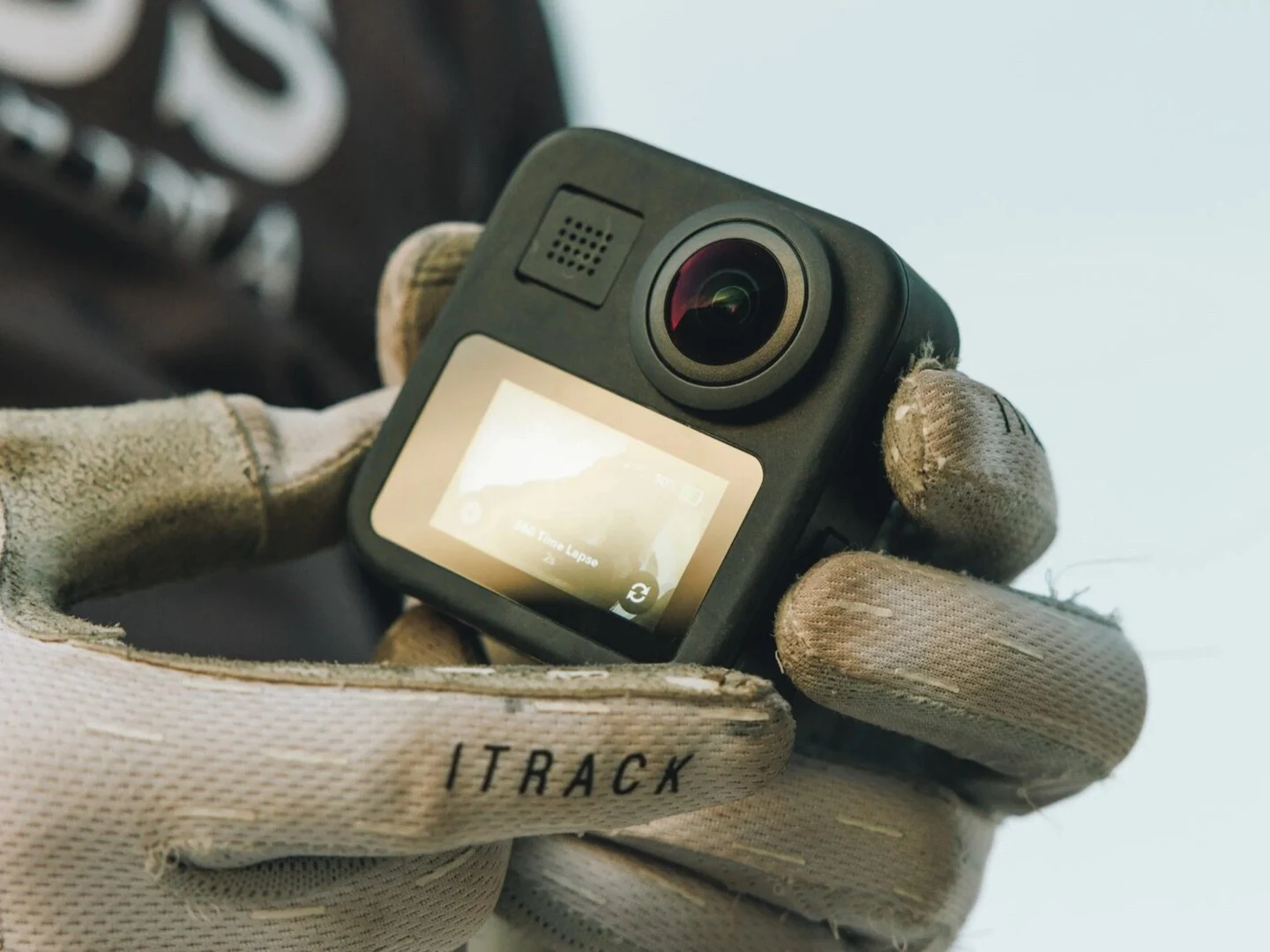
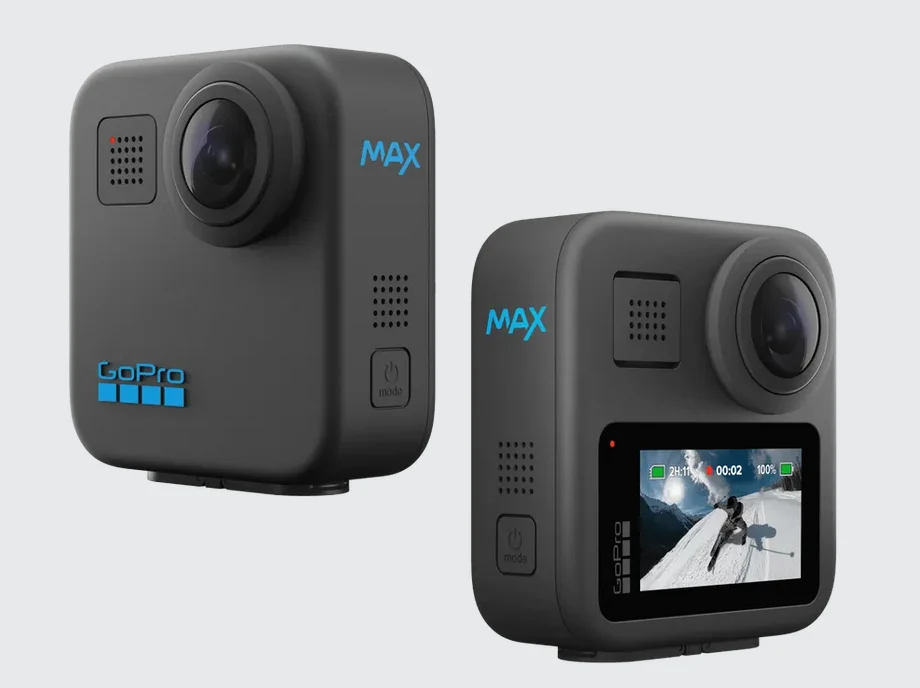
  • GoPro Max 2025: New 360-Degree Action Camera Priced at $349

    GoPro Max 2025: New 360-Degree Action Camera Priced at $349

    Key Takeaways

    1. GoPro has launched the Max (2025) 360-degree action camera, five years after the original model.
    2. The Max (2025) features a 22.5% larger battery (1,960 mAh) compared to the original Max (1,600 mAh).
    3. The new model includes a 1/4-inch thread for compatibility with standard gimbals, selfie sticks, and tripods.
    4. Exciting software features include AI object tracking and ‘CameraFX’ for dynamic movements.
    5. The Max (2025) is priced lower at $349, compared to the original Max’s launch price of $499.99.


    GoPro has at last refreshed its 360-degree action camera, more than five years after the first version came out. To give some context, the Max (2025) is being launched about five months after GoPro released the Hero and Hero 13 Black (currently priced at $388.95 on Amazon). While the Hero and Hero 13 Black received quite a bit of attention, the Max (2025) was announced alongside a range of new editing tools designed for 360-degree footage in the Quick app.

    Hardware Improvements

    It seems that the absence of a standalone release might hint at the differences between the Max (2025) and its earlier model. As per GoPro, the new version comes with a battery that’s 22.5% larger, boasting a capacity of 1,960 mAh, compared to the 1,600 mAh found in the original Max. Additionally, the Max (2025) now includes a 1/4-inch thread, enabling compatibility with standard gimbals, selfie sticks, and tripods.

    Software Features

    From what can be seen, those appear to be the main hardware enhancements. GoPro has also introduced some exciting software features such as AI object tracking and ‘CameraFX’, which they explain can perform backflips, barrel rolls, and other ‘dynamic movements’ instantaneously. Furthermore, the new GoPro Max starts at a lower price point. For comparison, the original Max was priced at $499.99 when it first launched. In contrast, the Max (2025) is now available for order at a price of $349.

    Source:
    Link

  • GoPro MAX 360 Camera Launches in India with 5.6K Recording

    GoPro MAX 360 Camera Launches in India with 5.6K Recording

    Key Takeaways

    1. The GoPro MAX 360 offers 360-degree recording with dual cameras, capturing video at resolutions up to 5.6K.
    2. It features advanced AI capabilities, including automatic object tracking and various editing tools.
    3. The camera is designed to be durable and waterproof up to 5 meters, making it suitable for adventurous use.
    4. It includes six microphones for enhanced audio quality and has wind noise reduction and RAW audio capture.
    5. The GoPro MAX 360 is priced at 38,500 INR and will be available in India from April 2025 through online and offline retailers.


    GoPro has recently introduced an exciting new camera to the Indian market, showcasing advanced technology. The model is the GoPro MAX 360, which is part of its new 360 range. Below is all the important information you need about its specifications, AI capabilities, and pricing.

    GoPro MAX 360 Features

    As implied by its name, the GoPro MAX 360 provides 360-degree recording due to its dual camera arrangement. In 360 mode, users can capture video at a resolution of 16.6MP, while in HERO mode, it records at 5.5MP, and PowerPano offers 6.2MP. Additionally, single lens recording allows for 1440p video, and the 360-degree stitched footage can reach up to 5.6K resolution, giving you complete coverage in 4K.

    Design and AI Capabilities

    The GoPro MAX 360 features six microphones, along with wind noise reduction and RAW audio capture. Its durable and waterproof design (up to 5 meters) makes it suitable for challenging environments. One of the standout features is the AI-powered tools that facilitate automatic object tracking, CameraFX for cinematic shots, keyframing, and various AI editing tools. Furthermore, it supports live streaming, includes a removable Enduro 1960mAh battery pack, and offers many more functionalities.

    The GoPro MAX 360 has been launched in India with a price of 38,500 INR. It will be available for consumers starting in April 2025. Buyers can find it at offline retailers as well as online platforms like Amazon India and Flipkart. Earlier, the company also released the GoPro Hero 13 Black and Hero Action cameras.

  • Insta360 Flow 2 Pro AI Tracker: Gimbal for Android & Apps

    Insta360 Flow 2 Pro AI Tracker: Gimbal for Android & Apps

    Key Takeaways

    1. DJI launched the Osmo 7, intensifying competition in the smartphone gimbal market alongside Insta360’s new Flow 2 Pro AI Tracker.
    2. The Flow 2 Pro AI Tracker enables Android users to access features previously limited to iPhone users, including tracking multiple subjects and using third-party apps.
    3. Android users can now utilize Insta360’s AI tracking algorithms with their native camera apps, enhancing photography flexibility.
    4. The benefits of the AI Tracker for iPhone users remain unclear, as it’s uncertain if it will improve tracking compared to Apple’s DockKit.
    5. The Flow 2 Pro AI Tracker is priced at $40 separately or bundled with the Flow 2 Pro for $179, offering a significant discount.


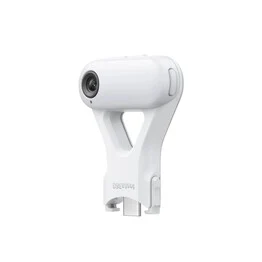
    The battle for the top spot in the smartphone gimbal market is heating up right now. Just hours ago, DJI unveiled the Osmo 7, while Insta360 continues to apply pressure. Yesterday, it rolled out the Flow 2 Pro AI Tracker, a device that lets Android users take full advantage of the Flow 2 Pro gimbal without any app restrictions.

    New Features for Android Users

    The Insta360 Flow 2 Pro (currently $160 on Amazon) was introduced last month as a device primarily for iPhone users, designed to work with DockKit, which is Apple’s technology for tracking subjects. Features such as tracking multiple people or zooming in actively were not accessible to Android users, nor could they use third-party applications. However, the AI Tracker changes that. With its dedicated camera for tracking subjects, it makes the Flow 2 Pro compatible with any platform.

    Freedom for Android Photography

    Furthermore, this allows Android users to move away from using Insta360’s app, similar to how DockKit integration provided freedom for iPhone users. Now, the impressive AI tracking algorithms from Insta360 can function on the native camera app as well as on other third-party applications. The Insta360 app is still necessary to activate gesture controls, which can start or stop recording and switch AI tracking on or off. The tracking system is capable of managing obstacles, animals, and multiple subjects in a shot.

    Unclear Benefits for iPhone Users

    While this is beneficial for Android users, it remains uncertain what advantages it might offer to iPhone users. It could be that connecting the AI Tracker will activate Insta360’s tracking algorithm instead of relying on Apple’s DockKit, but this would require a comprehensive review to confirm. The company has not detailed any additional third-party applications that are now supported on iOS.

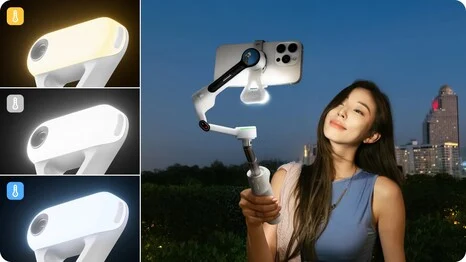
    The accessory connects through the Flow 2 Pro’s USB-C port and can be oriented in either direction, depending on how you want to capture your shots. A notable feature is the included ‘spotlight,’ which has three brightness levels and three color temperature settings. Since the Flow 2 Pro Spotlight (which offers the same adjustable features) is available separately, the AI Tracker essentially serves as a two-in-one device.

    Pricing and Availability

    The Flow 2 Pro AI Tracker can be purchased from Insta360’s website, with Amazon availability anticipated soon. It retails for $40 when bought separately, but it will also come bundled with the Flow 2 Pro for $179 in the upcoming AI Tracker Bundle. This offer presents an appealing deal—a 50% discount—especially since the Insta360 Flow 2 Pro is currently listed at $160 on its own.

    Source:
    Link


  • DJI Osmo Mobile 7 & 7P Gimbals Launch from $89

    DJI Osmo Mobile 7 & 7P Gimbals Launch from $89

    Key Takeaways

    1. DJI is known for its drones, including the premium Mavic 3 series and budget-friendly models like the Neo ($199).
    2. The company is expanding into action cameras with the upcoming Osmo 360.
    3. DJI’s new gimbals include the Osmo Mobile 7 and Osmo Mobile 7P, featuring built-in tripods and 10-hour battery life.
    4. Both gimbals support DJI’s editing software and ActiveTrack 7.0 tracking system.
    5. The Osmo Mobile 7P has a unique three-axis stabilizer and a magnetic tracking module, while the Osmo Mobile 7 is the lightest gimbal at 300 grams.


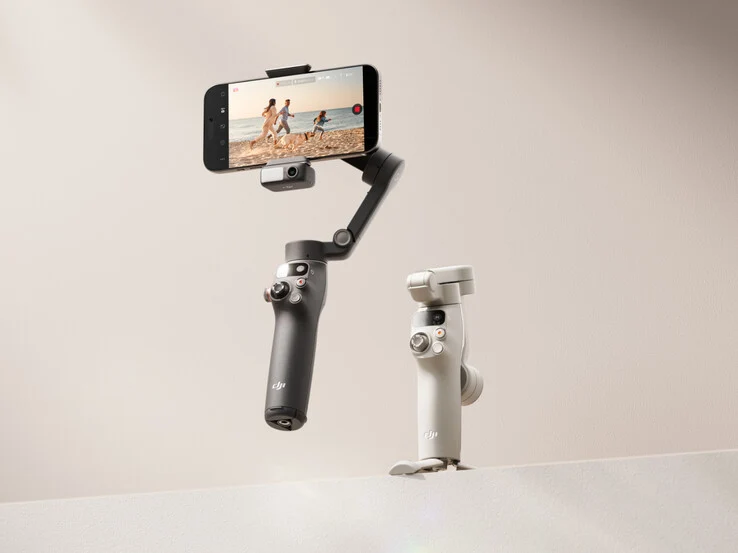
    DJI is widely recognized for its drones, including the premium Mavic 3 series and more affordable models like the Neo (currently priced at $199 on Amazon). However, the company also explores different product types, such as action cameras like the soon-to-be-released Osmo 360. Additionally, DJI provides a variety of camera gimbals, recently adding the Osmo Mobile 7 and Osmo Mobile 7P to its lineup.

    Features of the Gimbals

    Both of these devices share similar core features, including a built-in tripod and a battery that can last up to 10 hours. They also come with adjustable arms and a grip that can accommodate nearly all contemporary smartphones. Furthermore, both models utilize DJI’s editing software and tutorials, as well as the ActiveTrack 7.0 tracking system.

    Unique Aspects of the Osmo Mobile 7P

    The Osmo Mobile 7P stands out as the only model with a three-axis stabilizer, which DJI enhances with a new subject tracking module that attaches magnetically. This module includes a built-in light and a microphone receiver. While the Osmo Mobile 7 lacks these specific features, it is touted as the lightest gimbal in its category, weighing in at just 300 grams. The Osmo Mobile 7 and Osmo Mobile 7P are now available for purchase at $89 and $149, respectively.

    Source:
    Link


  • DJI Osmo 360 Hands-On Leak: A Rival to Insta360 X4 and GoPro Max

    DJI Osmo 360 Hands-On Leak: A Rival to Insta360 X4 and GoPro Max

    Key Takeaways

    1. The DJI Osmo 360 camera has not been officially announced despite months of speculation.
    2. An initial image of the Osmo 360 has surfaced online, believed to be authentic by several sources.
    3. The design of the Osmo 360 is wider and shorter compared to the Insta360 X4.
    4. The Osmo 360 appears slimmer than the upcoming Osmo Action 5 Pro.
    5. The appearance of the hands-on photo suggests that an announcement for the Osmo 360 may be imminent.


    Months have gone by since news about the DJI Osmo 360 first appeared on the internet. In that time, DJI has launched several new items, like the Mic Mini and the Flip drone. Yet, there has been no official word about a 360-degree action camera being developed.

    First Glimpse of the Camera

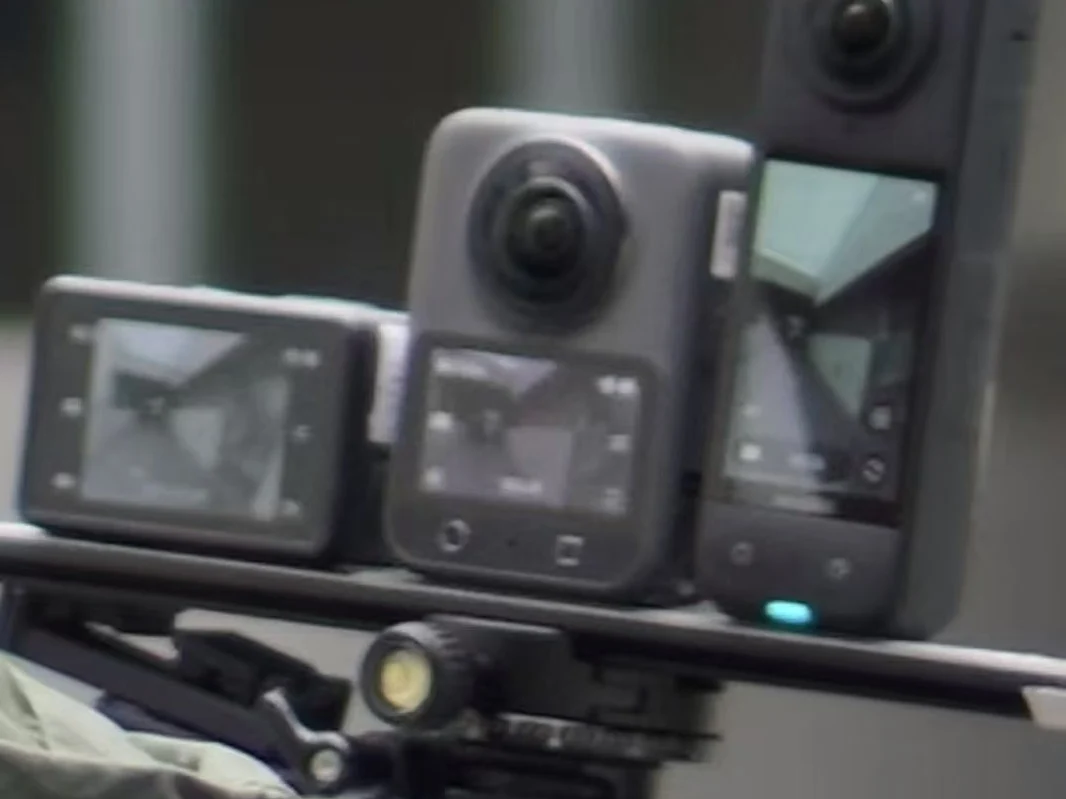
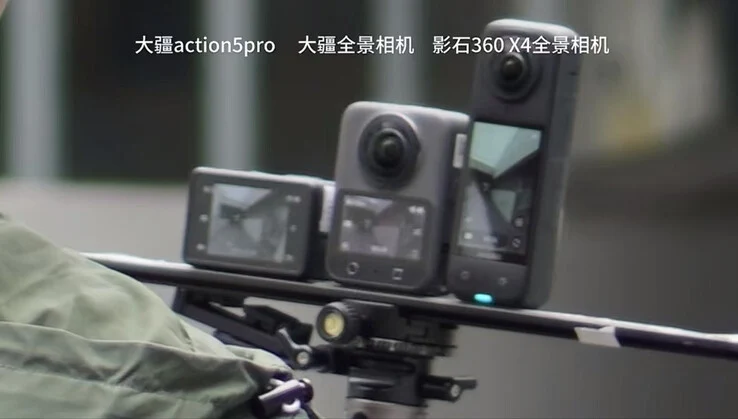
    Recently, the initial image of DJI’s first 360-degree camera has shown up online. It looks like the photo was shared on Chinese social media before it ended up on X. There are no clear indications that the image has been edited, leading us to think it could be genuine. According to sources like Jasper Ellens, OsitaLV, and Quadro News, they all believe the image is authentic.

    Design Comparison

    Furthermore, the design seen in the photo aligns with sketches of the Osmo 360 released by the FCC last October. The Osmo 360 is broader but shorter compared to the Insta360 X4, which is currently priced at $499.99 on Amazon and has dimensions of 46 x 123.6 x 37.6 mm. In contrast, the Osmo 360 seems to be a bit slimmer than the Osmo Action 5 Pro, which DJI is likely to release alongside the Osmo Action 6 later this year. While we don’t have the specifications for the Osmo 360 just yet, the emergence of a hands-on photo hints that the action camera might be announced sooner than we think.

    Source:
    Link


  • Canon PowerShot V1 Leak: $899 Price and Unique 1.4-Inch Sensor

    Canon PowerShot V1 Leak: $899 Price and Unique 1.4-Inch Sensor

    Key Takeaways

    1. The Canon PowerShot V1 will feature a custom 24 MP, 1.4-inch sensor with a 3:2 aspect ratio, providing a slight advantage over Micro Four Thirds sensors.
    2. The expected price for the PowerShot V1 is around $899, making it more affordable than many compact cameras with larger sensors.
    3. The camera will support C-Log3 video recording in up to 4K at 60 fps and will include a multi-function hot shoe and a 3-inch touch screen.
    4. The PowerShot V1 is rumored to have a 35 mm-equivalent focal length of 16–50 mm, though aperture details are not yet available.
    5. This camera aims to attract users looking to upgrade from smartphones to a compact option that offers enhanced image quality and versatility.


    The Canon PowerShot V1 is said to be just around the corner, with an announcement expected in February before the CP+ show. Earlier speculation suggested the camera would feature a Micro Four Thirds sensor, but new details about its sensor and potential price have emerged.

    Sensor Specifications

    Recent leaks from Canon Rumors indicate that the Canon PowerShot V1 will come with a custom 24 MP, 1.4-inch sensor, boasting a 3:2 aspect ratio. This configuration offers a slight advantage over a Micro Four Thirds sensor in terms of size. However, this new sensor may limit some flexibility and features, like the ability to switch aspect ratios.

    Pricing Information

    The anticipated price for the PowerShot V1 is around $899, which is certainly on the pricier side but still more affordable than many compact cameras with larger than 1-inch sensors. For instance, the Ricoh GR III retails for $1,159.95, while Sony’s RX100 VII, featuring a 1-inch sensor, is priced at an eye-watering $1,298 on Amazon. This indicates a strong demand that Canon may encounter with the upcoming PowerShot V1.

    Additional Features

    Other key features of the PowerShot V1 include the ability to record C-Log3 video in up to 4K at 60 fps, a multi-function hot shoe, and a 3-inch touch screen. It’s rumored that the camera will have a 35 mm-equivalent focal length ranging from 16–50 mm, although details about the aperture remain under wraps.

    All these specifications suggest that the PowerShot V1 could be a powerful compact camera suitable for both photography and videography. This aligns well with Canon’s likely target audience, which seems to be users looking to upgrade from smartphones to a more versatile option that offers enhanced image quality while still being portable.

    Source:
    Link