Category: Video / Photo

  • Panasonic LUMIX S1RII: $3,299 Full-Frame Mirrorless Camera at 40fps

    Panasonic LUMIX S1RII: $3,299 Full-Frame Mirrorless Camera at 40fps

    Key Takeaways

    1. The Panasonic LUMIX S1RII features a 44.3MP BSI CMOS sensor and L2 Technology engine, enabling sharp still images and 8K video with a dynamic range of 14 stops.

    2. It supports 8K video recording at 30p and includes an improved Open Gate feature for enhanced recording options, along with AI-powered Phase Hybrid AF for face and eye tracking.

    3. Enhanced in-body image stabilization offers 8.0-stop compensation, while the Dual I.S. 2 system provides 7.0 stops for telephoto shooting.

    4. The camera supports various apps for creators, including LUMIX Lab for LUT uploads and LUMIX Flow for production assistance, along with tethering capabilities with Capture One and Frame.io.

    5. The LUMIX S1RII will be available by late March at a price of $3299.99, and it includes the DMW-BG2 battery grip for extended shooting capabilities.


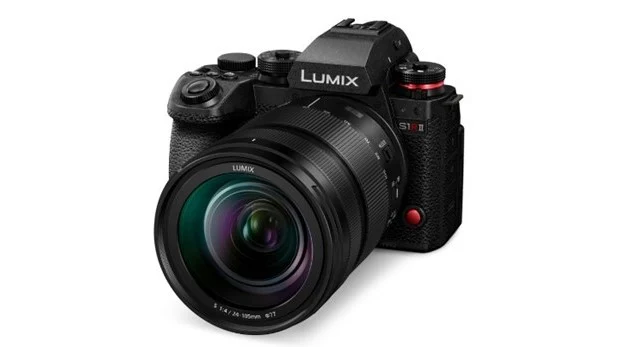
    Panasonic has launched the LUMIX S1RII, a brand-new full-frame mirrorless camera that boasts a 44.3MP BSI CMOS sensor and L2 Technology engine. This camera is capable of delivering sharp still images and 8K video with an impressive dynamic range of 14 stops. It features a 177MP handheld high-resolution mode that allows for capturing intricate details without the use of a tripod, making it ideal for those who require precision in their work.

    Video Capabilities and Features

    When it comes to video recording, the camera is compatible with Apple ProRes RAW HQ or ProRes RAW directly onto a CFexpress Type B card, which cuts down on the necessity for external devices. This model is the first in the LUMIX series to support 8K recording at 30p and comes with an improved Open Gate feature that will allow for 6.4K recording and potentially up to 8.1K or 7.2K with a future firmware update. The AI-powered Phase Hybrid AF system is designed to detect and track human faces and eyes, and it works seamlessly with high-speed continuous burst shooting of up to 40 fps, along with an SH pre-burst function that captures images just before the shutter is fully pressed.

    Image Stabilization and Design

    Panasonic has enhanced the in-body image stabilization to offer 8.0-stop compensation, while the Dual I.S. 2 system provides 7.0 stops of stabilization for telephoto shooting. The Cropless E.I.S. video distortion correction maintains the original angle of view for wide-angle shots, ensuring that the composition remains intact. A tilt and free-angle monitor allows for various shooting angles, contributing to the flexibility of the camera’s compact design.

    Support for Creators

    To support creators, Panasonic has developed various apps that enhance workflow. The S1RII is compatible with the LUMIX Lab smartphone app, which allows users to upload LUTs directly to the camera. Additionally, the new LUMIX Flow app aids in the production process from storyboarding to organizing files. The camera also features tethering capabilities with Capture One and integration with Frame.io, both of which are new for LUMIX cameras.

    Along with the camera, Panasonic is also introducing the DMW-BG2 battery grip that allows for continuous power exchange and provides extended shooting capabilities in certain modes. The LUMIX S1RII is set to be available by late March for a price of $3299.99.

    Source:
    Link

  • Xiaomi 15 Ultra Photography Kit Features and Details Revealed

    Xiaomi 15 Ultra Photography Kit Features and Details Revealed

    Key Takeaways

    1. Modular Design: The new Photography Kit for the Xiaomi 15 Ultra is more modular and customizable, available in two versions including a Legendary Collector’s Edition.

    2. Core Features: Both versions of the Photography Kit share essential features like a detachable finger grip and a changeable shutter button.

    3. Enhanced Battery Capacity: The kit’s battery capacity has increased from 1,800 mAh to 2,000 mAh, contributing to a total phone capacity of 8,000 mAh.

    4. Pricing: The Photography Kit is priced at CNY 999 (approximately $137) in China, with expected global pricing around €199 (around $209).

    5. Global Launch: Xiaomi will announce global availability of the Xiaomi 15 Ultra and its Photography Kit at the MWC 2025 event in Barcelona next week.


    Xiaomi has unveiled the Xiaomi 15 Ultra in China, with detailed information shared in a separate report. During a live presentation, the company briefly mentioned the new Photography Kit, and now CEO Lei Jun has highlighted the differences between this kit and the one designed for the Xiaomi 14 Ultra (currently priced at $1,049 on Amazon) beyond just its appearance.

    Modular Design

    To summarize, the Photography Kit has evolved to be more modular and customizable with the introduction of the Xiaomi 15 Ultra. This year, Xiaomi is offering the kit in two versions, including a special Legendary Collector’s Edition. Despite the different designs, both variants share the same core features, such as a detachable finger grip and a changeable shutter button.

    Enhanced Battery Capacity

    In addition to these upgrades, the kit features a larger battery that has increased from 1,800 mAh to 2,000 mAh. This enhancement allows Xiaomi to promote the total battery capacity for the Xiaomi 15 Ultra as 8,000 mAh, which primarily comes from the smartphone’s built-in 6,000 mAh battery.

    The pricing for the Xiaomi 15 Ultra Photography Kit is CNY 999 (approximately $137) in China. Xiaomi is expected to announce global availability next week during the MWC 2025 event in Barcelona, where the Xiaomi 15 Ultra will be featured. Based on last year’s launch, it is likely that the Photography Kit will be priced at €199 (around $209) for markets outside of China.

    Source:
    Link


  • ZEISS Introduces Premium Otus ML Lenses for Mirrorless Cameras

    ZEISS Introduces Premium Otus ML Lenses for Mirrorless Cameras

    Key Takeaways

    1. ZEISS has re-entered the consumer photography market with two new Otus ML f/1.4 lenses (50mm and 85mm) designed for mirrorless cameras.
    2. The lenses offer exceptional low-light performance and shallow depth-of-field with their wide maximum aperture and advanced optical design.
    3. Built entirely of metal with weather-sealing, the Otus ML lenses provide superior build quality and durability for outdoor use.
    4. Both lenses are manual focus with no autofocus motors, maintaining the Otus brand’s tradition but adding weight to camera setups.
    5. The Otus ML lenses are suitable for both still photography and cinematography, featuring a de-clicked aperture control and a focus throw designed for videographers.


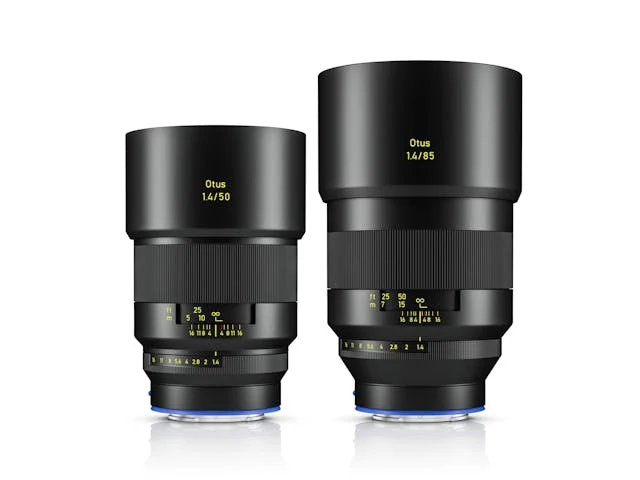
    After being absent from the consumer photography scene for five years, ZEISS, a top-tier lens maker, has introduced two f/1.4 lenses designed specifically for mirrorless cameras. The new Otus ML f/1.4 50mm and 85mm lenses mark a shift from the DSLR-centric Otus family, reflecting that mirrorless technology is now the norm in the industry.

    Exceptional Low-Light Performance

    These lenses are perfect for low-light photography and achieving a shallow depth-of-field due to their wide maximum aperture. The 50mm lens is composed of 14 optical elements arranged in 11 groups, while the 85mm lens features one additional element. Each Otus ML lens is equipped with ten diaphragm blades, which create a smooth bokeh effect and provide natural rendering, enhancing the isolation of the subject.

    Superior Build Quality

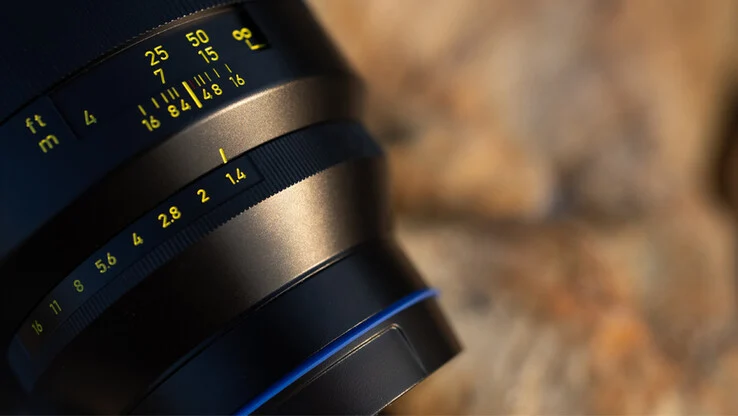
    All Otus lenses exemplify the high precision engineering and exceptional build quality associated with ZEISS products, and the ML series maintains this reputation. Made entirely of metal, with a blue seal at the bottom to shield the camera interface from harsh weather, landscape photographers can confidently use these shock-resistant Otus ML lenses in outdoor environments.

    Manual Focus and Weight Considerations

    As expected, the Otus ML lenses lack autofocus motors, remaining true to the Otus brand’s manual-focus tradition. While the mirrorless design allows them to be more compact and portable, both lenses weigh in at 1.5 lb (677 g), which can significantly increase the overall weight of the camera setup. For serious photographers or professionals, this added weight is likely a small compromise for the sharpness, tonal accuracy, and optical excellence that ZEISS lenses are renowned for.

    Though the ZEISS Otus lenses are primarily designed for still photography, they are also well-suited for cinematography, featuring a 259.5° focus throw and a large rotation angle. Additionally, the de-clicked aperture control on the lens barrel enables videographers to achieve quiet, smooth transitions. The versatile Otus ML f/1.4 50mm lens is set to be available for pre-order at $2499, while the more portrait-oriented Otus ML f/1.4 85mm is priced at $2999, with both expected to launch in late Spring 2025.

    Source:
    Link


  • LG Announces Pricing for New CineBeam M and S Projectors in Europe

    LG Announces Pricing for New CineBeam M and S Projectors in Europe

    Key Takeaways

    1. LG will launch the CineBeam M (PF600U) and CineBeam S (PU615U) projectors in Germany in the latter half of 2025.
    2. The CineBeam M is priced at €999 and features a 1080p resolution, Bluetooth speaker, and LED mood lighting.
    3. The CineBeam S is priced at €1,299 and is LG’s most compact 4K UST model, capable of projecting images up to 100 inches wide.
    4. Both projectors include LG’s webOS platform for streaming and advanced image quality adjustment tools.
    5. Details on the release in other European markets and the United States are not yet available.


    LG has disclosed additional details regarding the upcoming European release of its CineBeam M (PF600U) and CineBeam S (PU615U) projectors. These two models were showcased at CES 2025 and are now part of the LG CineBeam Q series projectors. Recently, they were also highlighted during the LG Convention held in Mainz, Germany.

    Launch and Pricing

    During the event, LG announced that both the CineBeam M and CineBeam S projectors are set to debut in Germany sometime in the latter half of 2025. As per a recent press announcement, the CineBeam M (PF600U) will have a retail price of €999, while the CineBeam S (PU615U) will be offered at €1,299. For context, the CineBeam Q has a recommended retail price of €749 but can currently be found on Amazon for €738.92.

    Product Features

    The CineBeam M, known as PF600U, merges a projector, floor lamp, and Bluetooth speaker within a single unit. It boasts a native 1080p resolution with brightness reaching up to 300 ANSI lumens, and its WebOS system allows streaming from different platforms. The device features a tilting head along with an automatic screen adjustment tool to help create an ideal setup for any environment. Additionally, it can function as an LED mood light, featuring nine color options and five brightness settings.

    Compact Design and Functionality

    On the other hand, the CineBeam S, or PU615U, represents the most compact 4K UST model from the brand. It can project images measuring up to 100 inches wide and offers a brightness level of 500 ANSI lumens. Notable features comprise 154% coverage of the DCI-P3 color gamut, integrated speakers that support Dolby Atmos, and LG’s webOS platform. Moreover, users can easily enhance the image quality using Auto Screen Adjustment, Wall Color Adjustment, and Screen Scaling/Shifting tools.

    It is expected that the release date and pricing in Germany will likely reflect a broader rollout across Europe for these new LG CineBeam projectors. Nevertheless, information regarding launches in other markets, such as the United States, remains undisclosed.

    Source:
    Link

  • Fimi X8T: DJI Drone Alternative with 3 Cameras, Including Thermal

    Fimi X8T: DJI Drone Alternative with 3 Cameras, Including Thermal

    Key Takeaways

    1. The Fimi X8T drone features a unique triple-camera setup, including a 48MP wide-angle camera, a 13MP telephoto camera, and a thermal vision camera with 640 x 480 resolution.

    2. It weighs 373 grams and offers flight times between 38 to 47 minutes, depending on the battery setup.

    3. The drone can handle winds up to 27 mph and has a maximum speed of 27 mph, with a climb rate of 11 mph.

    4. It uses ReokLink 5.0 for video transmission, with a range of up to 12.4 miles and a latency of 120 milliseconds.

    5. A smartphone app is available for drone management, and there is an option to add a 4G module, but pricing and release date details are currently unknown.


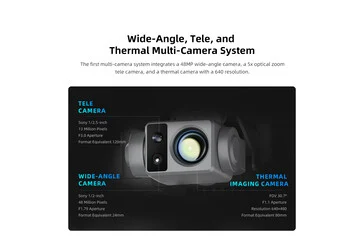
    The brand Fimi is likely familiar to those who love drones. They are now introducing the new X8T, which boasts a unique feature. Rather than just having one camera on a gimbal, this drone comes with three cameras straight from the package. It includes a wide-angle camera featuring a 1/2-inch Sony sensor, offering a resolution of 48MP.

    Unique Camera Setup

    The telephoto camera, with a focal length of 120 instead of the usual 24 millimeters, has 13 megapixels for zooming capabilities. Additionally, the integrated thermal vision camera has a resolution of 640 x 480 pixels, making it ideal for spotting hotspots, thermal bridges, or even tracking wildlife during hunts. A picture-in-picture function allows users to view images from the drone’s different sensors simultaneously.

    Specifications and Performance

    Weighing in at 373 grams (0.82 lbs), the Fimi X8T does not fit into the sub-250g category. Depending on the battery setup, it can fly for 38 to 47 minutes on a single charge. Moreover, the X8T can handle winds up to 27 miles per hour and can reach a maximum speed of 27 mph, while climbing at 11 mph.

    The drone uses ReokLink 5.0 for video transmission, offering a range of up to 12.4 miles with a latency of 120 milliseconds. Thanks to GNSS, the drone can follow pre-set paths, so manual control isn’t necessary.

    Additional Features and Availability

    Lastly, the company mentions the option to add a 4G module, but buyers should verify local laws before proceeding. Users can manage the drone using a specific smartphone app, however, Fimi has yet to share any information regarding pricing or a release date for the X8T.

    Source:
    Link


  • Panasonic Lumix S1RII Launches with 8K and 177MP Handheld Mode

    Panasonic Lumix S1RII Launches with 8K and 177MP Handheld Mode

    Key Takeaways

    1. The Lumix S1RII features 8K recording at 30fps and 14 stops of dynamic range, making it highly optimized for video and photography.
    2. It has a 44.3MP sensor that can enhance to approximately 177MP in handheld high-resolution mode, providing exceptional detail.
    3. The camera includes advanced AI technology for Phase Hybrid AF, with improved eye and face detection for better subject tracking.
    4. Speed features include mechanical and electronic shutter modes, allowing for ~10fps High Speed Plus and 40fps shooting, ideal for fast-moving subjects.
    5. Future-proof capabilities include support for up to 6.4K recording out of the box, with firmware updates planned for 7.2K and 8.1K, plus professional formats like ProRes RAW.


    Panasonic is excited to present its newest full-frame camera, claiming it’s the most optimized Lumix ever. This model offers 8K recording at 30 frames per second (fps) and boasts an impressive 14 stops of dynamic range.

    Impressive Specifications

    The Lumix S1RII, also known as the S1R Mark 2, comes equipped with a fresh sensor that has a resolution of 44.3MP. Notably, it can be enhanced to around 177MP in its handheld high-resolution mode, providing remarkable immersion and detail.

    Panasonic states that they’ve “redefined” Phase Hybrid AF for the S1RII using AI technology for tracking people, which includes advanced eye and face detection. The camera features in-body image stabilization (IBIS) that offers 8.0-stop shutter speed compensation, alongside electronic image stabilization (EIS) to ensure steady images without cropping.

    Speed and Precision

    Moreover, the S1RII incorporates both mechanical and electronic shutter modes, enabling ~10fps High Speed Plus and 40fps shooting modes. This is particularly useful for capturing fast-moving subjects in sports and wildlife photography.

    In addition, Panasonic’s Open Gate functionality returns with the S1RII, allowing users to record in a 3:2 aspect ratio at high resolution. This feature enhances the ability to crop images to 6:19 with greater detail than typically possible.

    Future-proof Features

    Out of the box, Open Gate on the S1RII will support up to 6.4K recording, with plans for future firmware updates to elevate this to 7.2K or even 8.1K. Furthermore, the camera will support professional-grade formats such as ProRes RAW and 5.8K Apple ProRes RAW HQ recording directly onto a CFExpress type-B card. It also features Lumix’s first Capture One tethering and Frame.io support, emphasizing Panasonic’s commitment to making the S1RII the most versatile camera in its lineup.

    Additionally, the S1RII can utilize an owner’s smartphone as an external monitor, enhancing workflow and storyboard monitoring while in the field.

    The camera is now available for pre-order on platforms like Amazon, with a suggested retail price of $3,299.99. It is expected to ship starting March 17, 2025.

    Source:
    Link

  • Black Warrior 4K Laser Projector: 3D, 3000 ANSI Lumens, 55% Off

    Black Warrior 4K Laser Projector: 3D, 3000 ANSI Lumens, 55% Off

    Key Takeaways

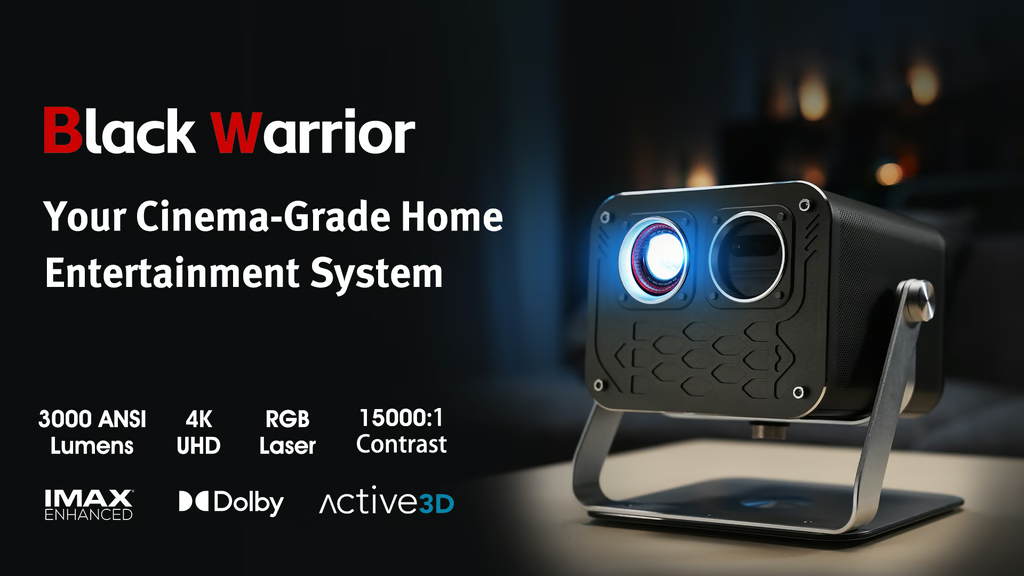
    1. The Black Warrior Cinematic 4K RGB 3D GTV & KTV laser projector is available at a discounted price of $899, which is 55% off the planned retail price of $1,999.
    2. The Kickstarter campaign has raised $130,000 and has 30 days remaining, with projected shipping starting in May 2025.
    3. The projector features a 4K image capability, a brightness level of 3,000 ANSI lumens, and a contrast ratio of 15,000:1.
    4. It supports 3D playback in both “Naked-eye 3D” mode and traditional 3D mode with glasses, along with built-in 10-watt speakers.
    5. Connectivity options include HDMI 2.0, USB 2.0, Ethernet, WiFi ac, Bluetooth 5, and voice control compatibility with Google Chromecast.


    A crowdfunding campaign for a new laser projector has kicked off on Kickstarter. Potential backers should keep in mind the typical risks associated with such projects. The Black Warrior Cinematic 4K RGB 3D GTV & KTV laser projector is now available at significant discounts compared to its planned retail price.

    Pricing and Availability

    To be more specific, the 4K projector is currently available starting at only $899, which is an impressive 55% off the expected MSRP of $1,999. Backers who choose to reserve multiple units can enjoy even greater savings. The Black Warrior is projected to begin shipping in May 2025. The Kickstarter campaign has 30 more days to go and has already gathered $130,000 as of this writing.

    Features and Specifications

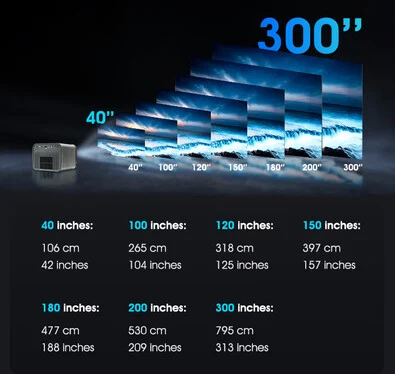
    This portable laser projector boasts a range of impressive features. It is driven by an Amlogic S905Y4 QuadA35 processor paired with a 0.47-inch DLP chip made by Texas Instruments. The projector produces a 4K image through pixel shifting and can project onto a screen size of up to 300 inches with a 1.2:1 throw ratio.

    The Osram RGB laser provides a brightness level of 3,000 ANSI lumens, complemented by a contrast ratio of 15,000:1. This combination is expected to yield a bright, clear image that is automatically fine-tuned using autofocus and auto-keystone correction.

    3D Capabilities and Sound

    The manufacturer claims that the Black Warrior laser projector supports 3D playback in two distinct modes. The “Naked-eye 3D” mode is designed to deliver an immersive three-dimensional viewing experience without the need for glasses, while a second mode allows for traditional 3D viewing with glasses.

    In terms of audio, the projector features two built-in 10-watt speakers. For connectivity, the 4K laser projector includes HDMI 2.0, USB 2.0, a 3.5mm headphone jack, S/PDIF, Ethernet, WiFi ac, and Bluetooth 5. Finally, the Black Warrior can also be controlled via voice commands and is compatible with Google Chromecast.

    Source:
    Link


  • Xiaomi 15 Ultra Photography Kit Revealed with New Name Update

    Xiaomi 15 Ultra Photography Kit Revealed with New Name Update

    Key Takeaways

    1. Launch Date: The Xiaomi 15 Ultra will be released on February 27 in China.
    2. Accessory Name Change: The updated accessory will be called the Pro Kit grip case instead of the Xiaomi 15 Ultra Photography Kit.
    3. Similar Functionality: The new accessory retains key features from the previous version, including a zoom lever and a button for video recording.
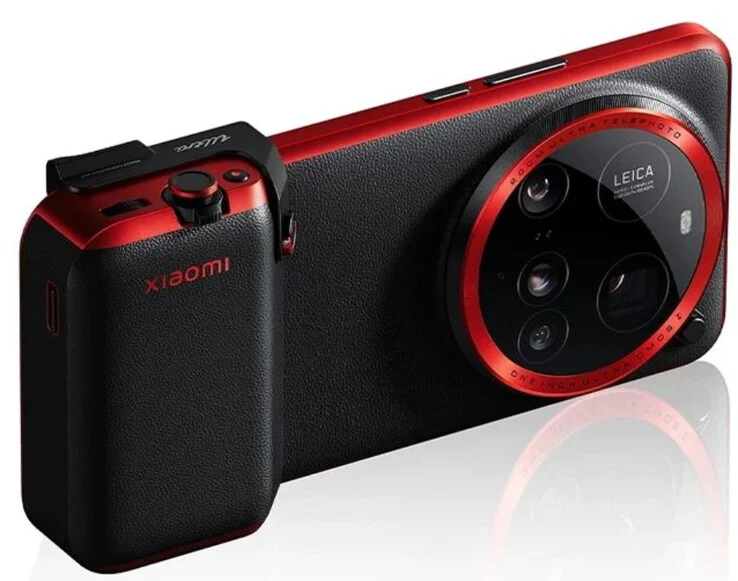
    4. Design Updates: The new design includes a leather-like finish and red accents, moving away from traditional Leica aesthetics.
    5. Pricing Information: The price for the new accessory has not been announced, but the previous model is priced at €199 (~$209).


    Subsequent images have emerged on Weibo, revealing the accessory branded as the ‘Xiaomi 15 Ultra Photography Kit.’

    Upcoming Release

    The Xiaomi 15 Ultra is set to launch soon, with a confirmed release date of February 27 in China. In an interesting twist, Evan Blass has managed to obtain promotional materials ahead of the official announcement, sharing them on X. One of the images features just the device, while another highlights a revamped accessory previously known as the Photography Kit.

    Accessory Updates

    Xiaomi has not only updated this accessory for the Xiaomi 15 Ultra’s launch but has also given it a fresh name. As per Blass, the accessory will be introduced as the Pro Kit grip case, rather than the expected Xiaomi 15 Ultra Photography Kit.

    Features and Design

    In terms of functionality, not much seems to have changed from the version created for the Xiaomi 14 Ultra (currently priced at 1,029 on Amazon). A zoom lever is still present, along with a button to start video recordings and an adjustable wheel, similar to last year’s Photography Kit. There might be an added fourth button, located at the end of a metallic-looking guard that covers the case’s comfort grip.

    This new design element features a leather-like finish with various red accents. It appears that Xiaomi has taken cues from its SU7 Ultra EV for this year’s camera accessory, moving away from traditional Leica camera aesthetics. The pricing has yet to be revealed; for reference, Xiaomi currently lists the Xiaomi 14 Ultra Photography Kit at €199 (~$209).

    Source:
    Link


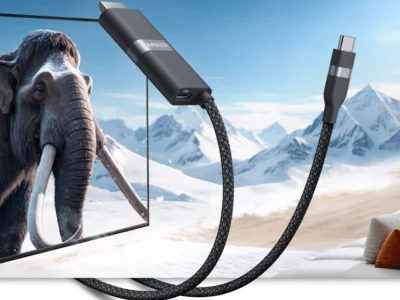
  • Anker Unveils 140W USB-C to HDMI Cable for Fast Charging

    Anker Unveils 140W USB-C to HDMI Cable for Fast Charging

    Key Takeaways

    1. Anker’s new HDMI cable supports 4K@60Hz resolution and has a 140W USB-C input port for charging.
    2. The cable is 3 ft long, made with an upcycled-braided design, and is aimed at reducing workspace clutter.
    3. It is compatible with Thunderbolt 3, 4, and 5 devices but does not work with the Nintendo Switch.
    4. The cable may have compatibility issues with certain monitors, including some models from Dell, ASUS, and AOC.
    5. The price is $28.99 in the US and €29.99 in Germany, with a potential 6 ft version planned for future release.


    Anker has introduced a fresh HDMI cable available on Amazon in both the US and Germany. The Nano USB-C to HDMI Cable with 140W Input Port (3 ft, 4K, Upcycled-Braided) is intended to enable streaming content and charging your device through one single port. This product is promoted as a cleaner option for your workspace.

    Features and Specifications

    This 90 cm long Anker cable is capable of supporting 4K@60Hz resolution when connected via the HDMI port to your television or monitor. At one end, it features a USB-C input port that can deliver up to 140W of power to your primary device, necessitating a separate charging cable and wall charger. Anker highlights that devices utilizing the PPS fast charging protocol may face slower charging rates.

    Compatibility and Limitations

    On the opposite end, the cable is equipped with a USB-C connector for both video output and power input to the host device. It’s advertised as compatible with Thunderbolt 3, 4, and 5 ports and works with a variety of gadgets such as the MacBook Air, Steam Deck, or Google Pixel 9. However, it’s important to mention that Anker clarifies this cable doesn’t work with the Nintendo Switch. The HDMI connector size may also restrict its compatibility with certain monitors, including the Dell S3321QS, ASUS VA24EHF, and AOC Q32E2N (you can find the complete list in the image below).

    Design and Pricing

    The cable is crafted to be flexible, featuring a braided exterior and nickel-plated connectors. The product listing on Amazon US suggests a longer 6 ft/180 cm version may be released in the future. Currently, the Anker Nano USB-C to HDMI Cable with 140W Input Port (3 ft, 4K, Upcycled-Braided) is priced at $28.99 in the US and €29.99 in Germany. It is still unclear when this accessory might be available in other regions.

  • Reviving Old Manchester United Photos with AI Upscaling Technology

    Reviving Old Manchester United Photos with AI Upscaling Technology

    Key Takeaways

    1. AI technology in smartphones is primarily used for photo editing, including object removal and image enhancement.
    2. Honor utilized AI upscaling to revive historic Manchester United images, showcasing it with the Honor Magic 7 Pro.
    3. The Honor Magic 7 Pro features Qualcomm’s Snapdragon 8 Elite chipset, enhancing AI photography capabilities.
    4. The smartphone includes advanced camera specifications, such as a 50MP main camera and a 200MP periscope telephoto lens.
    5. The device is priced at $999.00 and offers fast charging, water resistance, and a large display.


    One of the main uses of AI in today’s smartphones is for editing photos. Besides removing objects, enhancing and upscaling images is another key application of AI technology. Even though our smartphones are equipped with high-resolution cameras, this feature can improve any picture you find online or store on your computer, making it a valuable addition.

    Honor Revives Historic Manchester United Photos

    Recently, Honor has revived historic Manchester United images through its AI upscaling technology. This initiative was highlighted with the Honor Magic 7 Pro, as part of the celebration for the 115th anniversary of Old Trafford, the famous home ground of the English football team. By working alongside Qualcomm, Honor showcased how its Photo Upscale feature can rejuvenate old photos, revealing details that were previously almost impossible to see.

    Advanced Technology at Work

    The Magic 7 Pro operates with Qualcomm’s Snapdragon 8 Elite chipset and utilizes its sophisticated AI Image Signal Processor (ISP) to enhance aged images. Judd Heape, who is Qualcomm’s Vice President, stressed the importance of the chipset in making these powerful AI photography functions possible. On the other hand, Honor’s Chief Imaging Architect, Wei Luo, pointed out that the technology does more than just improve images—it helps link people to significant moments from their past, preserving historical events with remarkable clarity.

    Pricing and Specifications

    For those who might be interested, the Honor Magic 7 Pro is available for $999.00 at Geekwills. This smartphone features a large display with a pill-shaped cutout and a rounded camera module on the back, which includes a 50MP main camera, a 200MP periscope telephoto lens, and a 50MP ultrawide lens. It houses a 5850mAh Si/C battery (although in European markets, there is a slightly smaller 5270mAh battery). The device supports 100W wired and 80W wireless charging and has an IP68/IP69 rating for dust and water resistance. If you want more details, you can check out our comprehensive review here.

    The demonstration included side-by-side comparisons of well-known Manchester United moments, such as Mark Hughes’ famous goal against Norwich City during the club’s inaugural Premier League-winning season. Jason Leach, the club historian, shared his personal anecdotes related to these photos, highlighting elements like construction beams and cranes that were once hidden but are now clear thanks to AI upscaling.

    Source:
    Link