Tag: 8K Video

  • Vivo X300 Ultra: 2026’s Best Videography Phone

    Vivo X300 Ultra: 2026’s Best Videography Phone

    Key Takeaway

    – Robust video capabilities: up to 8K, 4K120 across all focal lengths, plus 120fps in Dolby Vision with 10-bit Log.
    – Pro video suite and cinematic presets: Pro Video controls with white balance/ISO and Film Look/Film Style profiles.
    – Strong stabilization: excellent OIS + EIS, comparable to the 2025 Galaxy flagships in motion testing.
    – Autofocus caveat and versatile zoom: autofocus can struggle during fast movement; 14mm–230mm range with multiple zoom levels tested.

    In our Vivo X300 Ultra review, we’ve already discussed the flagship phone’s excellent camera capabilities – setting aside its weaknesses in color reproduction for the moment. Nevertheles, for a high-end device to claim an outstanding camera system, the ability to capture high-quality video remains essential, not optional. The X300 Ultra leans into this expectation with a refined approach to motion recording, promising that the best moments can be preserved with pleasn detail, stability, and nuance even in challenging lighting.

    Video capabilities and format

    On the video front, the X300 Ultra doesn’t disappoint. It offers a 4K120 option across all focal lengths, and it can also record at 120 fps in Dolby Vision and 10-bit Log. As any flagship expected, the ability to capture video up to 8K is also supported, though real-world workflows may vary. Pricing details are not provided in this extract.

    Pro Video features and modes

    Vivo has equipped the X300 Ultra with a new Pro Video mode that offers comprehensive control over parameters such as white balance and ISO. Other additions highlighted by Vivo include Film Look and Film Style modes, which use film-inspired color profiles to help create professional-looking cinematic footage.

    Stability and testing setup

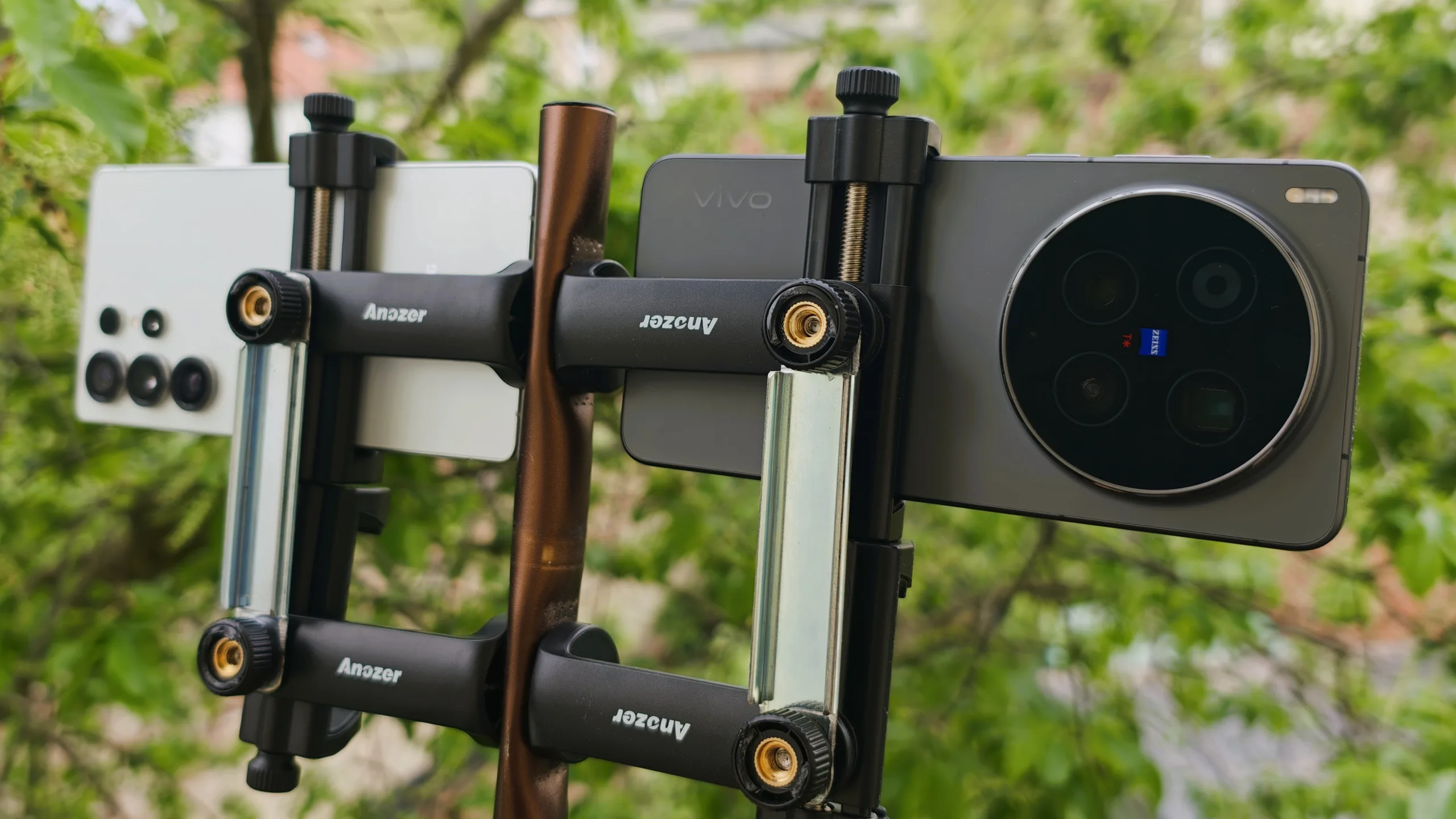
    In the video below, we set out to evaluate the Vivo X300 Ultra’s image quality and stabilization (OIS + EIS) in motion by subjecting the phone to a very challenging scenario involving rapid pans and shakes. For this test, we used the 4K30 option with Dolby Vision, which is supported by all sensors. For a more complete picture, we also compared the main camera’s image stabilization with what the Samsung Galaxy S25 Ultra offers.

    Footage context

    Check out our full review of the Vivo X300 Ultra for more details and access to all the footage we captured with the Zeiss camera system. The combination of these tests and the accompanying clips provide a broad view of how the device handles real-world video tasks, from steady family moments to fast-paced action scenes, all while maintaining a premium feel that elevates mobile videography.

    Zoom range and focus issues

    With the Vivo X300 Ultra, videography enthusiasts can look forward to highly detailed footage across a range of 14 mm to 230 mm. In our test videos, we used zoom levels of 0.6x, 1.5x, 3.7x, 7.4x and 10x. Image stabilization is excellent and roughly on par with the 2025 Galaxy flagship. However, the X300 Ultra’s autofocus exhibited noticeable issues during fast movements, which we demonstrated by running in the second video. The second clip was captured in Film Look.

    Final thoughts and test note

    Test Vivo X300 Ultra. To wrap up, the final evaluation reflects a blend of strengths and caveats that videographers will weigh against their needs. The 4K120 across focal lengths, 120 fps Dolby Vision, 10-bit Log, and the Pro Video options offer meaningful creative leverage, even if autofocus can stumble during rapid motion. In controlled scenarios, the X300 Ultra proves itself as a capable tool for cinematic ambitions.

    Sources

  • GoPro Hero 14 Black Unveiled with Major Camera Upgrades

    GoPro Hero 14 Black Unveiled with Major Camera Upgrades

    Key Takeaway

    1. The upcoming GoPro Hero 14 Black is confirmed to feature 8K/30 FPS video recording and a larger size compared to previous models.
    2. It is equipped with an ambient light sensor and two front-facing microphones.
    3. The release is anticipated to be announced soon, potentially at the NAB Show 2026, and will utilize GoPro’s new GP3 imaging processor.

    New developments in GoPro’s lineup hints at upcoming innovation

    Since the release of their last hero camera, GoPro has been famously quiet, but recent leaks suggest they are working on new models. The last time they launched the Hero 13 Black, it kept similar hardware features, just a bit upgraded from the previous version. But now, there are signs that this pattern might be changing. A recent video from a popular tech influencer hints at some exciting new features for the next hero camera, possibly called the Hero 14 Black. In that video, the person didn’t really name the product, but he showed clear footage captured with some unreleased device. This footage indicates that the new camera is capable of shooting in 8K resolution at 30 frames per second, with different aspect ratios like 4:3, 9:16, or 16:9, which is just fantastic for videographers and content creators alike. As for its size, the new model looks larger than the current Hero 13 Black, especially in the front, where the housing stands out more prominently. It appears that GoPro has added an ambient light sensor and two microphones on the front, although the display remains about the same size as before, keeping it familiar but perhaps a little more functional. The confident words from the influencer suggest that this new piece of tech is ready for a debut soon.

    Specifications and Design Changes

    • 8K/30 FPS video recording in multiple aspect ratios
    • Bigger front housing with additional sensors and microphones
    • Same size display as Hero 13 Black, but possibly with enhanced features
    • Expected to include a new GP3 imaging processor

    Industry Hints and Future Announcements

    In late March, GoPro announced they will be attending the NAB Show 2026, scheduled from April 18 to April 22, with a declaration of a ‘new generation of GoPro’ products being unveiled. The company also mentioned that this will be their first hardware equipped with their new GP3 imaging chip, promising some major performance improvements. Despite all these hints, whether the company will actually launch the Hero 14 Black this month is still uncertain. Speculation continues about what new features they might bring, but the anticipation among fans and industry insiders is definitely high. So, the coming months could be quite exciting for those eager to see what GoPro’s next big thing will be, especially if they’re into capturing high-quality videos or adventurous footage.

    Sources
  • Fujifilm X-H3 Upgrades Rumored for Video Enthusiasts

    Fujifilm X-H3 Upgrades Rumored for Video Enthusiasts

    Key Takeaways

    1. Fujifilm currently offers two models in the X-H series: X-H2 with a 40.2 MP sensor and X-H2s with a 26.2 MP sensor that supports 4K slow motion.
    2. The upcoming Fujifilm X-H3 will merge features from both current models, appealing to both photographers and videographers.
    3. The X-H3 will feature a new, partially stacked X-Trans sensor in APS-C format, although its resolution is not yet revealed.
    4. Enhanced video capabilities are expected in the X-H3, supported by a more powerful processor, though specific details are not available.
    5. The Fujifilm X-H3 is anticipated to launch in 2027, along with new accessories for video creators.


    Fujifilm currently has two models in the X-H series. There’s the Fujifilm X-H2 priced at $2,299 on Amazon, which features a 40.2 megapixel CMOS sensor. Then, there’s the Fujifilm X-H2s, which comes with a lower-resolution 26.2 megapixel APS-C sensor and doesn’t support 8K video recording. However, this model does handle 4K slow motion, achieving up to 120 frames per second, unlike the 60 frames per second of its counterpart.

    New Developments in the X-H Series

    Recent updates from FujiRumors reveal that customers will no longer need to pick and choose between two separate models with the upcoming Fujifilm X-H3. This new camera will combine features from both series, aiming to cater to both still photographers and videographers alike. Fujifilm plans to incorporate a new, partially stacked X-Trans sensor in APS-C format, although the exact resolution of this sensor has yet to be disclosed.

    Enhanced Features for Creators

    With a more powerful processor, the Fujifilm X-H3 is set to introduce numerous video enhancements. However, FujiRumors hasn’t shared specific information regarding these innovations just yet. The Fujifilm X-H2 already has an optional fan accessory available to combat overheating in high-temperature conditions, and its built-in cooling system allows for 160 minutes of continuous 8K recording. It can also record video in Apple ProRes and oversample 8K footage to 4K resolution for improved image quality. The Fujifilm X-H3 is anticipated to debut in 2027, accompanied by new accessories targeted at video enthusiasts.

    Source:
    Link


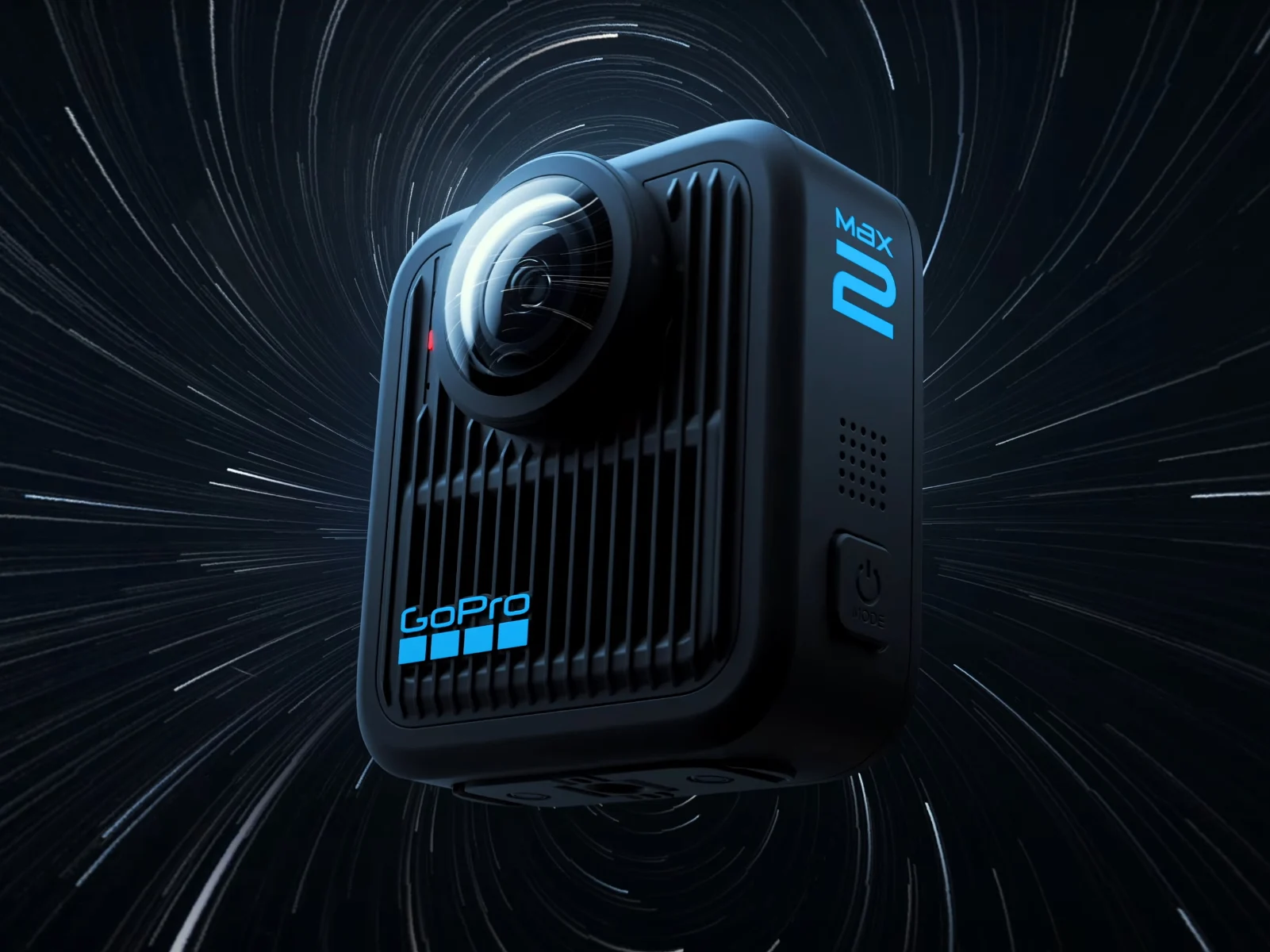
  • GoPro Max 2 Launch: The Only True 8K 360° Action Camera

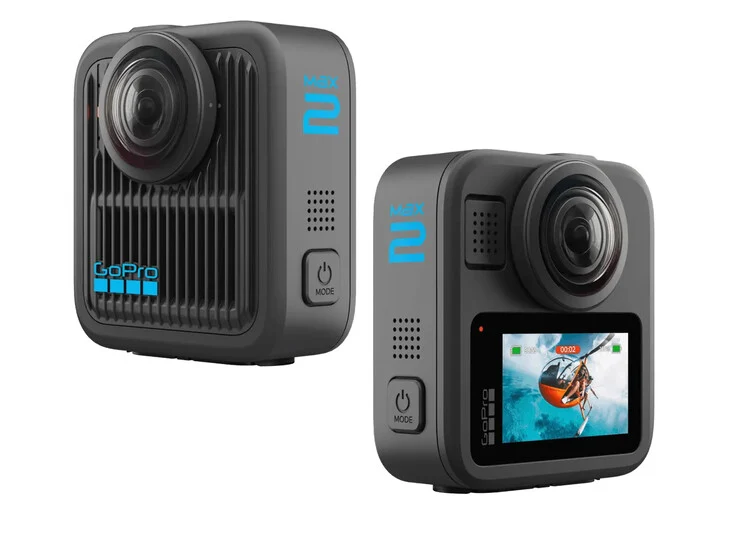
    GoPro Max 2 Launch: The Only True 8K 360° Action Camera

    Key Takeaways

    1. GoPro has released the Max 2, seven months after the Max 2025, with a retail version matching previous leaks.
    2. The Max 2 features a larger 1,960 mAh battery, waterproofing up to 5 meters, and operates in temperatures from -10º C to +35º C.
    3. It has a 1/2.3-inch sensor and f/1.8 aperture, capable of taking 29 MP images and recording 360° videos in resolutions up to 8K at 30 FPS.
    4. The camera includes six built-in microphones, supports 10-bit color, and allows for lens replacements.
    5. The Max 2 is priced at $499.99 in the US, undercutting competitors DJI Osmo 360 and Insta360 X5 by $50, with pre-orders starting September 30.


    GoPro has at last introduced the Max 2, seven months after the debut of the Max 2025 (currently priced at $2499 on Amazon) and more than a year since a photo of the Max 2 first appeared online. Interestingly, the retail version of the Max 2 looks exactly like the one that leaked last July, raising questions about why it has taken so long to hit store shelves.

    Specs and Features

    The Max 2 measures 69.7 x 64 x 48.7 mm, not including its Folding Fingers. It comes equipped with a 1,960 mAh battery, which GoPro claims is 23% bigger than batteries in earlier models. The device is designed to function in temperatures ranging from -10º C to +35º C and boasts waterproofing up to 5 meters. Additionally, the camera supports Bluetooth Low Energy 5.3 and Wi-Fi 6, all within its 195 g casing.

    Performance

    Moreover, the Max 2 is fitted with a 1/2.3-inch sensor and an f/1.8 aperture, enabling it to take 29 MP images and record 360° videos in 8K at 30 FPS, 5.6K at 60 FPS, or 4K at 100 FPS for slow-motion effects. GoPro is clearly targeting competitors like DJI and Insta360 with its advertising, which includes statements such as:

    The only true 8K 360 camera. No misleading upscaling, no useless black pixels, no AI-generated content.

    Pricing and Availability

    In addition to these features, the Max 2 includes six built-in microphones, supports 10-bit color, and allows for lens replacements. The GoPro Max 2 can be ordered today for $499.99 in the US, underpricing the DJI Osmo 360 and Insta360 X5 by $50 in the US market. GoPro anticipates that it will start fulfilling pre-orders on September 30.

    Source:
    Link


  • Insta360 X5 Unboxing: Detailed Look at the New Action Camera

    Insta360 X5 Unboxing: Detailed Look at the New Action Camera

    Key Takeaways

    1. The Insta360 X5 will be announced soon, following various leaks and a brief appearance on Amazon Canada.
    2. An unboxing video has surfaced, showcasing the accessories included in the X5 Standard Bundle.
    3. The X5 is marketed as an action camera with 8K resolution at 30 FPS capabilities.
    4. Additional recording options include 5.7K at 60 FPS and 4K/360-degree at 120 FPS.
    5. The X5 will feature a larger battery and improved camera sensor, with a price increase to $549.99.


    The Insta360 X5 is set to be announced in just a few hours, as Insta360 has planned a launch event for later today. Meanwhile, the new action camera has been spotted online multiple times recently due to various leaks. Most notably, the successor to the Insta360 X4 (currently priced at $424.99 on Amazon) briefly showed up on Amazon Canada before it was removed.

    Unboxing Video Surfaces

    In addition, a complete unboxing video has been uploaded ahead of time. The 1 minute and 19 seconds clip, which is included below, showcases all the accessories that will come with the X5 Standard Bundle from Insta360, such as a small carrying case. This video also confirms the design updates seen in earlier leaks.

    Impressive Features

    Furthermore, the video reveals that Insta360 plans to market the X5 as an action camera capable of 8K resolution at 30 FPS. If the recent leaks hold true, the camera will also be able to record 5.7K video at 60 FPS and 4K/360-degree footage at 120 FPS. The Insta360 X5 is anticipated to launch with a bigger battery and a better camera sensor compared to its predecessor, although it will come with a 10% price increase to $549.99.

    Source:
    Link

  • Panasonic LUMIX S1RII: $3,299 Full-Frame Mirrorless Camera at 40fps

    Panasonic LUMIX S1RII: $3,299 Full-Frame Mirrorless Camera at 40fps

    Key Takeaways

    1. The Panasonic LUMIX S1RII features a 44.3MP BSI CMOS sensor and L2 Technology engine, enabling sharp still images and 8K video with a dynamic range of 14 stops.

    2. It supports 8K video recording at 30p and includes an improved Open Gate feature for enhanced recording options, along with AI-powered Phase Hybrid AF for face and eye tracking.

    3. Enhanced in-body image stabilization offers 8.0-stop compensation, while the Dual I.S. 2 system provides 7.0 stops for telephoto shooting.

    4. The camera supports various apps for creators, including LUMIX Lab for LUT uploads and LUMIX Flow for production assistance, along with tethering capabilities with Capture One and Frame.io.

    5. The LUMIX S1RII will be available by late March at a price of $3299.99, and it includes the DMW-BG2 battery grip for extended shooting capabilities.


    Panasonic has launched the LUMIX S1RII, a brand-new full-frame mirrorless camera that boasts a 44.3MP BSI CMOS sensor and L2 Technology engine. This camera is capable of delivering sharp still images and 8K video with an impressive dynamic range of 14 stops. It features a 177MP handheld high-resolution mode that allows for capturing intricate details without the use of a tripod, making it ideal for those who require precision in their work.

    Video Capabilities and Features

    When it comes to video recording, the camera is compatible with Apple ProRes RAW HQ or ProRes RAW directly onto a CFexpress Type B card, which cuts down on the necessity for external devices. This model is the first in the LUMIX series to support 8K recording at 30p and comes with an improved Open Gate feature that will allow for 6.4K recording and potentially up to 8.1K or 7.2K with a future firmware update. The AI-powered Phase Hybrid AF system is designed to detect and track human faces and eyes, and it works seamlessly with high-speed continuous burst shooting of up to 40 fps, along with an SH pre-burst function that captures images just before the shutter is fully pressed.

    Image Stabilization and Design

    Panasonic has enhanced the in-body image stabilization to offer 8.0-stop compensation, while the Dual I.S. 2 system provides 7.0 stops of stabilization for telephoto shooting. The Cropless E.I.S. video distortion correction maintains the original angle of view for wide-angle shots, ensuring that the composition remains intact. A tilt and free-angle monitor allows for various shooting angles, contributing to the flexibility of the camera’s compact design.

    Support for Creators

    To support creators, Panasonic has developed various apps that enhance workflow. The S1RII is compatible with the LUMIX Lab smartphone app, which allows users to upload LUTs directly to the camera. Additionally, the new LUMIX Flow app aids in the production process from storyboarding to organizing files. The camera also features tethering capabilities with Capture One and integration with Frame.io, both of which are new for LUMIX cameras.

    Along with the camera, Panasonic is also introducing the DMW-BG2 battery grip that allows for continuous power exchange and provides extended shooting capabilities in certain modes. The LUMIX S1RII is set to be available by late March for a price of $3299.99.

    Source:
    Link

  • HDMI 2.2 Release: Should You Be Concerned About It?

    HDMI 2.2 Release: Should You Be Concerned About It?

    At CES 2025 in Las Vegas, the HDMI Forum introduced HDMI 2.2, the newest version of the widely used video and audio standard. It promises to be twice as fast as the previous version and improves the synchronization of audio and video. On the surface, HDMI 2.2 appears to offer significant advantages. But what does this mean for regular consumers? Let’s explore further.

    Doubling the Bandwidth

    To begin with, the standout feature of HDMI 2.2 is its increased bandwidth. It jumps from 48 Gbit/s in HDMI 2.1 to an impressive 96 Gbit/s. To put this in perspective, HDMI 2.1 already allows for 4K resolution at 144 frames per second (fps), which is more than sufficient for most gamers and movie enthusiasts.

    Now with HDMI 2.2, users can expect support for 8K resolution at 240 fps and 4K at an astonishing 480 fps. Additionally, while it’s technically feasible to support even 12K and 16K resolutions, these features seem more geared towards future marketing than anything immediately useful.

    Enhanced Applications

    The HDMI Forum states that this increased bandwidth will lead to enhancements in data-heavy applications like augmented reality (AR) and virtual reality (VR), plus commercial uses such as large illuminated signage, medical imaging, and machine vision. These improvements could have significant impacts on various industries, making HDMI 2.2 a noteworthy advancement.

    In conclusion, while HDMI 2.2 brings exciting upgrades in speed and capability, it remains to see how much of an effect it will have on everyday consumers and their devices. The potential is certainly there, but practicality may take time to catch up.

  • Canon EOS R5 Mark II High-Res Renders, $3,999 Price Expected

    Canon EOS R5 Mark II High-Res Renders, $3,999 Price Expected

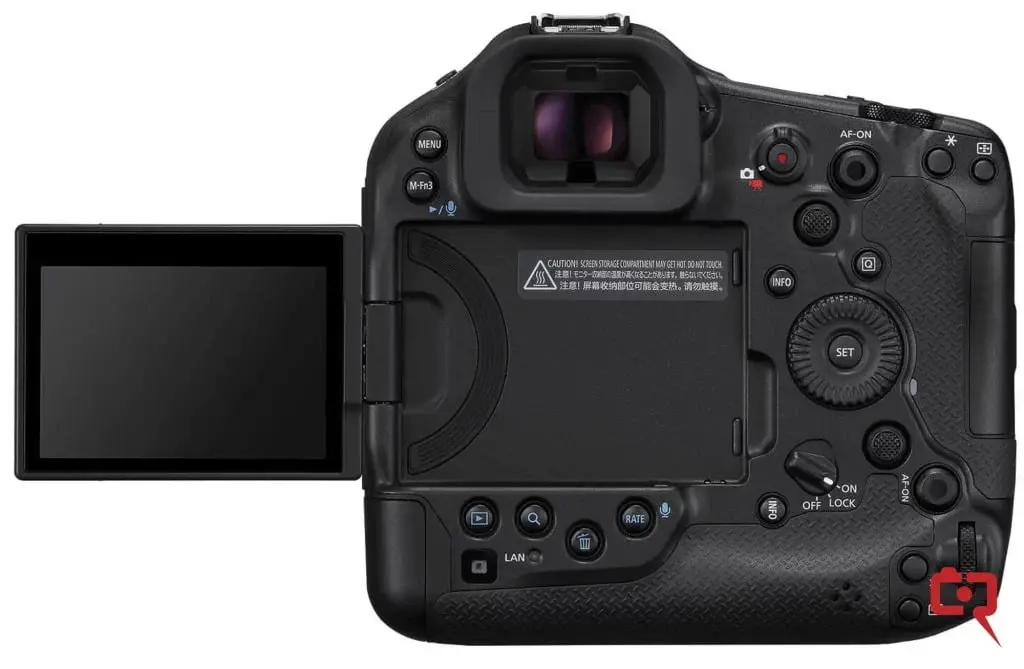
    Canon Rumors has shared high-resolution images of the anticipated Canon EOS R5 Mark II just ahead of its official release. These visuals offer a preview of the camera’s design and features.


    Canon EOS R5 Mark II High-Res Renders, ,999 Price Expected

    The camera promises to capture up to 30 frames per second using the electronic shutter. The EOS R5 Mark II is set to be a robust tool for photographers, equipped with a 45-megapixel image sensor and an upgraded electronic viewfinder for a superior visual experience. For those who need to capture fast-moving subjects, it offers continuous shooting speeds of up to 12 frames per second with the mechanical shutter and 30 frames per second with the electronic shutter. The leaked images indicate that the camera will maintain the original battery grip design but will include significant enhancements in heat management. This is made possible by a dedicated heat sink and the option to use an active cooling fan, ensuring optimal performance even during long shooting sessions.

    Videography Capabilities

    Videographers will find the EOS R5 Mark II particularly appealing due to its rumored 8K 60P recording capability, enabling smooth and detailed high-resolution video. The camera is also expected to feature a dual card slot design compatible with CFexpress Type B and SD cards, offering flexibility in storage and workflow. Priced at approximately $3,999 (roughly RMB 29,072), the Canon EOS R5 Mark II is poised to be a strong contender in the high-end mirrorless camera market.