Tag: Augmented Reality

  • Luna Glass Provides Night Vision Solutions for the Visually Impaired

    Luna Glass Provides Night Vision Solutions for the Visually Impaired

    Key Takeaways

    1. The waitlist for Luna Glass AR glasses is now open, with 500 spots available for the first batch shipping in Q1 2026.
    2. The glasses enhance brightness and contrast of images in real-time, helping visually impaired individuals see better in dark environments.
    3. Users with as little as 10% vision may experience improved night visibility, allowing them to navigate safely outdoors.
    4. The battery life is between 1.0 to 1.5 hours, with USB-C charging for extended use.
    5. The glasses utilize LentinAR’s PinTILT optical module, similar to that in other AR glasses.


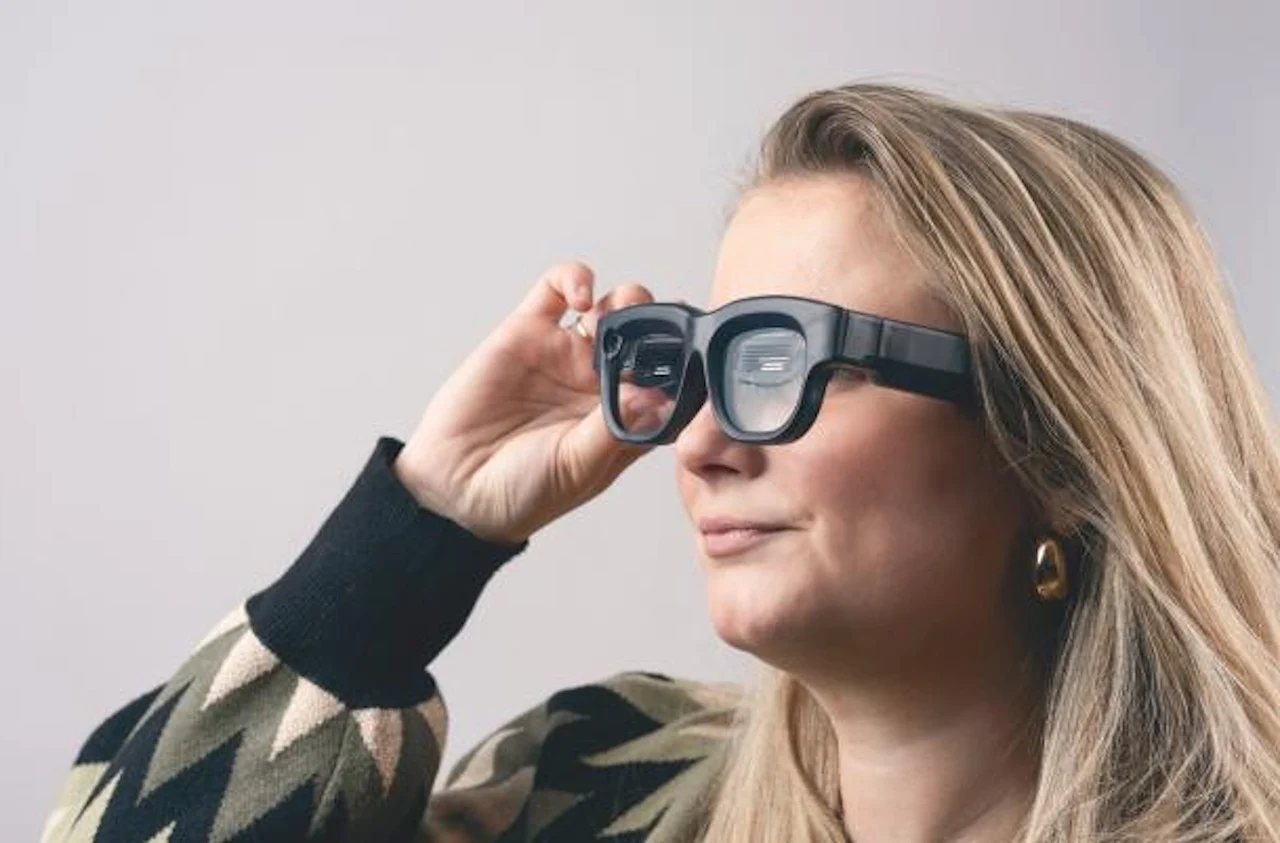
    The waitlist for the Luna Glass AR glasses is now opened, offering 500 spots for the next batch that is set to ship in the first quarter of 2026. These glasses are designed to help visually impaired people have a better view of their surroundings during nighttime and in dark settings, enabling them to see and move around safely.

    Enhanced Vision Technology

    The Luna Glass improves brightness and contrast of images that its built-in camera captures in real-time. By utilizing standard augmented reality technology, it projects these enhanced images directly in front of the wearer’s eyes via half mirrors. This setup allows individuals with limited night vision, due to conditions like glaucoma or macular degeneration, to perceive both the actual environment and the improved image at the same time.

    Range of Improvement

    While the degree of improvement at night can differ based on each person’s specific condition, the CEO mentioned that these glasses may assist those who have as little as 10% of their vision left to see better after dark. This innovation extends the time they can safely venture outside alone and helps them notice details they typically miss. The Luna Glass provides a battery life of 1.0 to 1.5 hours and can be charged using a USB-C power bank for longer use.

    Optical Module Insight

    The glasses seemingly incorporate LentinAR’s PinTILT optical module, which is also featured in the Dynabook and NTT AR glasses.

    Source:
    Link


  • Oura Develops Smart AR Glasses Controlled by Smart Ring

    Oura Develops Smart AR Glasses Controlled by Smart Ring

    Key Takeaways

    1. Oura’s new patent (20260023426) outlines how wearable devices, like a smart ring and smart glasses, could connect and work together.
    2. The smart ring can collect heart rate data, which can be displayed instantly on the smart glasses, helping users adjust workout intensity.
    3. Users can manipulate the display on the smart glasses through hand gestures using the linked smart ring.
    4. The patent mentions potential applications in augmented reality (AR), mixed reality (MR), and virtual reality (VR), but clarifies that displaying heart rate data is not the same as full visual overlays.
    5. The technology is still in the patent stage, and it is uncertain if it will become a marketable product by mid-2025.


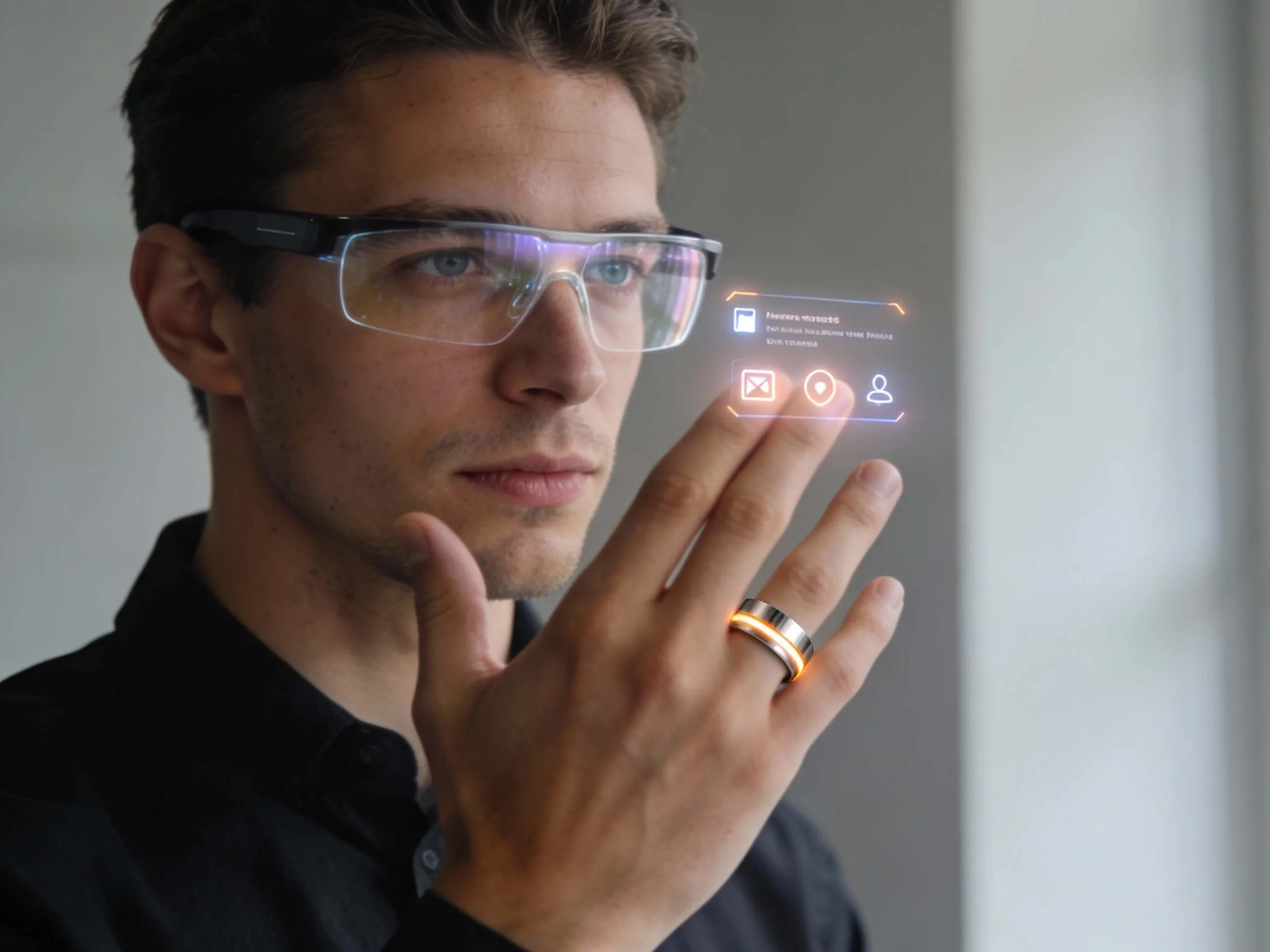
    In a newly released patent numbered 20260023426, Oura shows how various wearable devices could connect and work together. The company specifically mentions a smart ring and smart glasses in their plans. While this idea isn’t exactly revolutionary, the patent explains how heart rate data collected by the smart ring could be shown instantly on the smart glasses. This feature could help users adjust their workout intensity easily. Moreover, the display can be manipulated through hand gestures, thanks to the linked smart ring.

    XR Applications Mentioned

    The patent also touches on XR applications, which may include augmented reality, mixed reality, and virtual reality. This could mean adding virtual elements to real-world settings, although these terms are sometimes misused in practice. Simply put, displaying heart rate information is an extension of reality, but it doesn’t equate to visual overlays seen in real life, like translating a menu in a restaurant.

    Future of the Patent

    At this moment, it’s just a patent. It suggests that Oura has been developing this type of technology at least until mid-2025. As is often the case, it’s uncertain whether this idea and patent will eventually become a product that can be bought.

    Source:
    Link


  • Google’s AR Smart Glasses Launching in 2026 with Impressive Demos

    Google’s AR Smart Glasses Launching in 2026 with Impressive Demos

    Key Takeaways

    1. Google is developing two pairs of smart glasses with significant AI features, set to release next year.
    2. The glasses are a collaboration between Google, Samsung, Gentle Monster, and Warby Parker, with one model having no screen and another featuring an in-lens display for AR.
    3. The first model will include multiple microphones and cameras for voice commands and visual information, while the second will show navigation instructions and live translations.
    4. Initial media impressions from Bloomberg and CNN indicate that the binocular model offers a wider virtual display and integrates well with Google applications.
    5. The effectiveness of these smart glasses will be evaluated once they are widely available, facing competition from Meta and Apple.


    According to a recent announcement from Google, the tech giant is putting significant effort into developing two pairs of smart glasses that are expected to be released next year. Both models will boast a large array of AI features, which isn’t surprising at all.

    Collaboration with Partners

    Google isn’t going to create these smart glasses on its own. Instead, the glasses will be the result of a partnership involving Samsung, Gentle Monster, Warby Parker, and of course, Google. Currently, there are two types of smart glasses in the pipeline – one that doesn’t have a screen and another that includes an in-lens display for augmented reality (AR) functionalities.

    Features of the Smart Glasses

    The first model of smart glasses will come equipped with multiple microphones to capture voice commands and cameras to gather visual information. This data will be processed and delivered back to the user through speakers. The second model, as previously noted, will feature an in-lens display, enabling users to see navigation instructions, live translations, and more. Naturally, these smart glasses will run on the Android XR operating system, with all computing taking place on the user’s smartphone.

    Early Impressions from the Media

    Some reporters from Bloomberg and CNN got the chance to try out these smart glasses from Google, with Bloomberg specifically testing two AR models – one monocular and the other binocular. According to their initial feedback, the binocular model provided a wider virtual display, although both versions showcased a wealth of useful information from Google applications like Maps and Meet.

    As always, the real test of how effective these tech demos will be in everyday life can only be determined when the glasses are in more people’s hands. Based on the first impressions shared by Bloomberg, it appears that Google’s AI smart glasses have a bright future ahead, and they may also face stiff competition from Meta and possibly Apple.

    Source:
    Link


  • picoRing: Rechargeable Ring Mouse Lasts Over a Month on One Charge

    picoRing: Rechargeable Ring Mouse Lasts Over a Month on One Charge

    Key Takeaways

    1. The picoRing is a new wireless mouse designed for wearable tech, offering precise interactions for AR and VR devices.
    2. It features a two-component system: a lightweight ring and a wristband that acts as a signal relay, significantly improving battery life.
    3. The ring operates with ultra-low power consumption (30-500 microwatts), allowing for 600 to 1,000 hours of use on a single charge.
    4. Communication uses semi-passive inductive telemetry, enabling the ring to transmit data by altering its frequency response.
    5. The picoRing is still in prototype phase, with potential future enhancements for health monitoring and improved functionality in wireless environments.


    A group of researchers, mainly from the University of Tokyo, has created a new wireless mouse called picoRing that uses ultra-low power and a ring design. This innovative device aims to provide precise and dependable pointing interactions for wearable technologies like augmented reality (AR) glasses and virtual reality (VR) headsets, all while boasting an impressive battery longevity.

    Battery Life Breakthrough

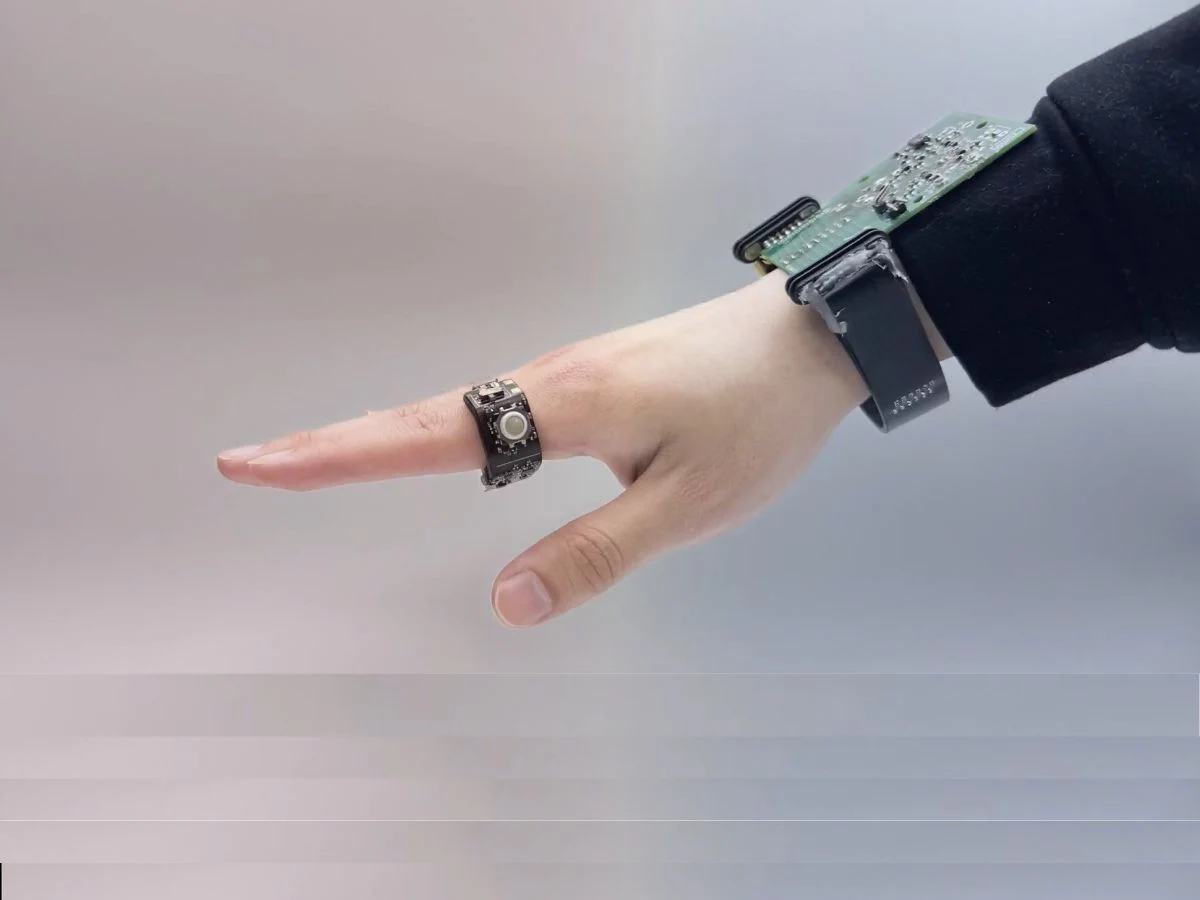
    Previous smart rings faced challenges with their battery life, usually only lasting between 1 and 10 hours due to the high energy demands of wireless communication systems like Bluetooth Low Energy (BLE). To tackle this issue, the scientists implemented a two-component system: a lightweight ring (only 5 grams) worn on the finger and a wristband that acts as a signal relay. This clever configuration enables the ring to function at an energy consumption of only 30-500 microwatts.

    Communication Technology

    The communication between the ring and wristband relies on semi-passive inductive telemetry (semi-PIT). The wristband creates and maintains a weak inductive field, while the ring transmits sensor data back to the wristband by simply altering its unique frequency response based on inputs from the thumb and index finger. The researchers assert that this arrangement allows the picoRing to last for approximately 600 hours (with 8 hours of active use daily) to 1,000 hours (with 4 hours of active use daily) on a single charge, utilizing a 27 mAh battery. This amounts to over a month of use with regular daily activities.

    Future Potential

    Though still in the prototype phase, the picoRing mouse has significant possibilities, particularly in AR/VR settings where conventional mice can be cumbersome. Its functionality might also be enhanced with health monitoring sensors. The research team is currently focused on expanding its input features and improving comfort and dependability in environments with significant wireless interference.

    Source:
    Link


  • HTC Vive Eagle Smart Glasses: Zeiss Lenses, 12MP Camera, ChatGPT

    HTC Vive Eagle Smart Glasses: Zeiss Lenses, 12MP Camera, ChatGPT

    Key Takeaways

    1. HTC Vive Eagle is a new competitor to Ray-Ban Meta Smart Glasses, featuring a semi-transparent frame in four colors.
    2. The smart glasses have built-in speakers, four microphones, and a 12-MP ultra-wide-angle camera for communication, music, and photo/video capture.
    3. The device runs on Qualcomm Snapdragon AR1 Gen 1, with 4 GB RAM, 32 GB storage, and supports Wi-Fi 6E and Bluetooth 5.3.
    4. Battery life is approximately three hours for calls, 4.5 hours for video, and up to 36 hours on standby, with an IP54 rating for water resistance.
    5. Priced at 15,600 TWD (about $520) in Taiwan, availability details for international markets are still pending.


    The HTC Vive Eagle: A New Player in Smart Glasses

    HTC has recently introduced the Vive Eagle, challenging the popular Ray-Ban Meta Smart Glasses. This new pair of smart glasses features a semi-transparent plastic frame that comes in four colors: red, brown, gray, and black. The lenses are made by Zeiss, but at first, the Vive Eagle will only be offered as sunglasses with UV protection. Other models with optical lenses are expected to arrive in the future.

    Communication and Features

    Equipped with four microphones and built-in speakers, these glasses allow users to communicate seamlessly. They can connect to Google Gemini or ChatGPT as an option. Users can listen to music and capture photos and videos with the 12-MP ultra-wide-angle camera. Notably, the camera is designed to help the AI chatbot engage with the real world, enabling text translations and providing information about visible objects. Besides using voice commands, there’s also a physical shutter button to take photos.

    Specifications and Battery Life

    The Vive Eagle runs on a Qualcomm Snapdragon AR1 Gen 1 processor, with 4 GB of RAM and 32 GB of flash storage. It supports Wi-Fi 6E and Bluetooth 5.3. Thanks to its energy-efficient AR chip and a 235 mAh battery, it boasts a battery life of three hours for calls, 4.5 hours for video viewing, and up to 36 hours while in standby. With an IP54 rating, the glasses are safeguarded against light rain. Weighing only 48.8 grams, they are designed for comfort during use.

    The HTC Vive Eagle AR headset will be priced at 15,600 TWD (about $520) in Taiwan. Information on when it will be available internationally is still awaited. More details can be found on the official product website.

    Source:
    Link


  • TCL RayNeo X3 Pro: Next-Gen MicroLED AR Glasses Launch

    TCL RayNeo X3 Pro: Next-Gen MicroLED AR Glasses Launch

    Key Takeaways

    1. The TCL X3 Pro features advanced microLED technology for a high-quality AR experience, comparable to the Apple Vision Pro.

    2. Weighing only 76 grams and offering peak brightness of 6,000 nits, these lightweight glasses are designed for daily use and quick charging.

    3. Powered by Qualcomm’s Snapdragon AR1 platform, the X3 Pro includes dual cameras and multiple microphones and speakers for enhanced AI functionalities.

    4. The device operates on Android, ensuring compatibility with popular apps like Douyin and Bilibili, addressing AR software fragmentation.

    5. Currently available only in China, the X3 Pro retails for approximately $1,250, with potential subsidies lowering the price to about $1,063.


    The newest member of TCL’s RayNeo series, also referred to as ‘Thunderbird’ in China, is being promoted as the epitome of high-end smart glasses.

    Advanced Technology

    This device features lenses built on cutting-edge microLED tech that TCL created in-house, aiming to offer a “full-color” AR experience that rivals the quality, immersion, and usability seen in the Apple Vision Pro. The display visible through the glasses is designed to replicate the feel of using a real monitor as closely as possible through TCL’s innovative waveguide.

    Bright and Lightweight

    The X3 Pro is said to deliver a peak brightness of 6,000 nits, with an average of 3,500 nits. With a weight of only 76 grams, these IP52-rated glasses are made for daily wear, and they come with a 245mAh battery that charges fully in just 40 minutes. The glasses provide a 30° field of view and feature 3 degrees-of-freedom (3DOF) head-tracking, contrasting to the 6DOF found in certain other devices.

    Powerful Features

    Equipped with Qualcomm’s Snapdragon AR1 platform, the X3 Pro includes dual cameras using sensors from Sony and OmniVision, which are essential for various AI functionalities like virtual assistance, real-time translation, and object identification. Additionally, they boast triple microphones and dual speakers, enhancing these capabilities. The device aims to tackle the issue of AR software fragmentation by operating on Android, making it compatible with popular apps like Douyin and Bilibili.

    However, one significant limitation of the X3 Pro is that it is currently only available for consumers in China.

    Their suggested retail price is 8,999 yuan (about $1,250), but it drops to 7,649 yuan (~$1,063) when considering available subsidies.

    There hasn’t been any announcement regarding a global version of the X3 Pro yet; however, the RayNeo Air 2s OLED glasses are available bundled with a JoyDock Nintendo Switch adapter for $417 on Amazon at this moment.

    Digital Chat Station via Weibo.

    Source:
    Link


  • Apple Developing Two New Vision Pro Headsets: Latest Update

    Apple Developing Two New Vision Pro Headsets: Latest Update

    Key Takeaways

    1. Apple is developing two new versions of the Vision Pro headset: a lighter, more affordable model and one that enhances connectivity with Macs.

    2. The original Vision Pro, launched in 2024, has struggled in the market due to its high price of $3,500 and bulky design.

    3. The upcoming lighter model aims to address pricing concerns and compete with budget alternatives like Meta’s Quest headsets.

    4. The second new model will focus on improving functionality through low-latency connections to Macs, offering features like screen mirroring.

    5. Tim Cook is committed to creating advanced, comfortable Augmented Reality glasses and exploring AI-enhanced features for other Apple products.


    Apple is said to be working on two new versions of its Vision Pro headset. One of these will be lighter and less expensive, while the other will aim to enhance tethered experiences when connected to a Mac.

    Vision Pro’s Launch Challenges

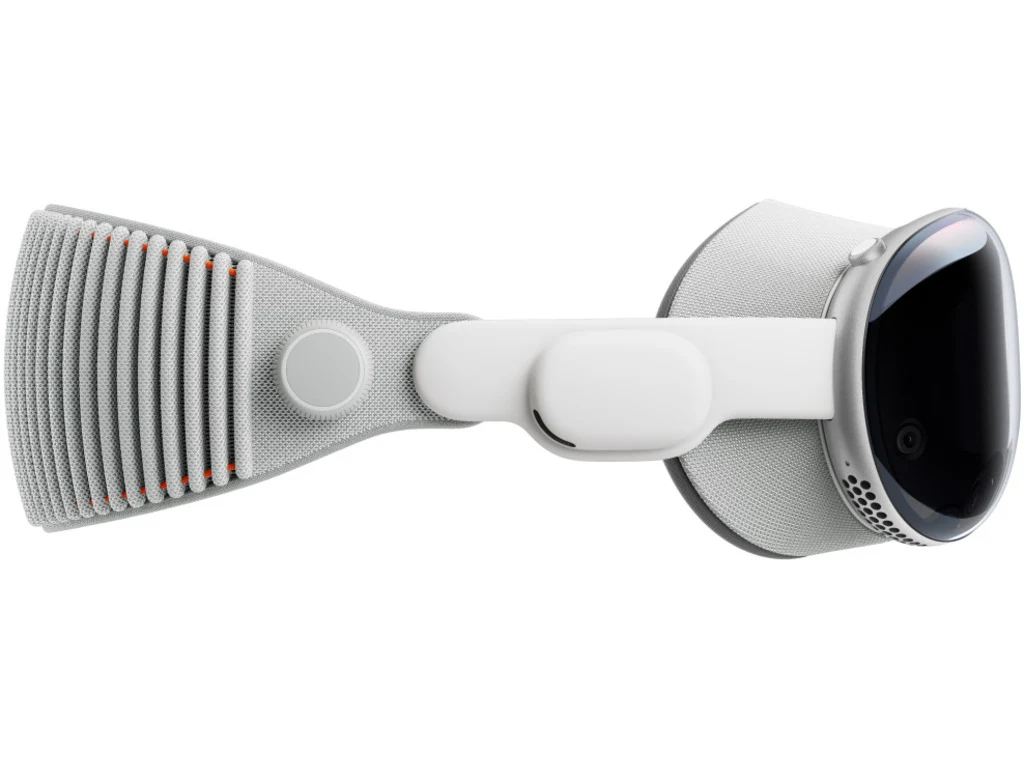
    Released in 2024, the Vision Pro has faced difficulties in the market and has been labeled a commercial flop for Apple. Despite its impressive technology, the hefty price of $3,500 has made it unaffordable for many potential buyers, leading to complaints about its limited practical uses. The device’s bulky design and weight of 650 grams have also contributed to its negative reception.

    New Variants in Development

    As reported by Bloomberg, Apple is actively working on solutions to these problems with two new models. One significant challenge for Apple has been persuading consumers to pay the high price, especially with budget-friendly alternatives like Meta’s Quest headsets available. The upcoming lighter design aims to tackle this pricing issue by being more wallet-friendly.

    The second model will seek to broaden the Vision Pro’s applications through a low-latency connection to a Mac, providing features such as screen mirroring and seamless integration with business software.

    Tim Cook’s Vision for AR

    Insiders from Bloomberg indicate that Apple’s CEO, Tim Cook, is determined to outpace Meta by developing top-of-the-line Augmented Reality (AR) glasses that are both lightweight and comfortable enough for all-day wear. It seems Cook is “not interested in anything else” and is “totally focused” on this development effort.

    In addition, Apple is exploring short-term solutions. Similar to Meta, which has found success with features for photography and AI, Apple is considering the introduction of AI-enhanced cameras on the Apple Watch and AirPods in the near future.

    Source:
    Link

  • HDMI 2.2 Release: Should You Be Concerned About It?

    HDMI 2.2 Release: Should You Be Concerned About It?

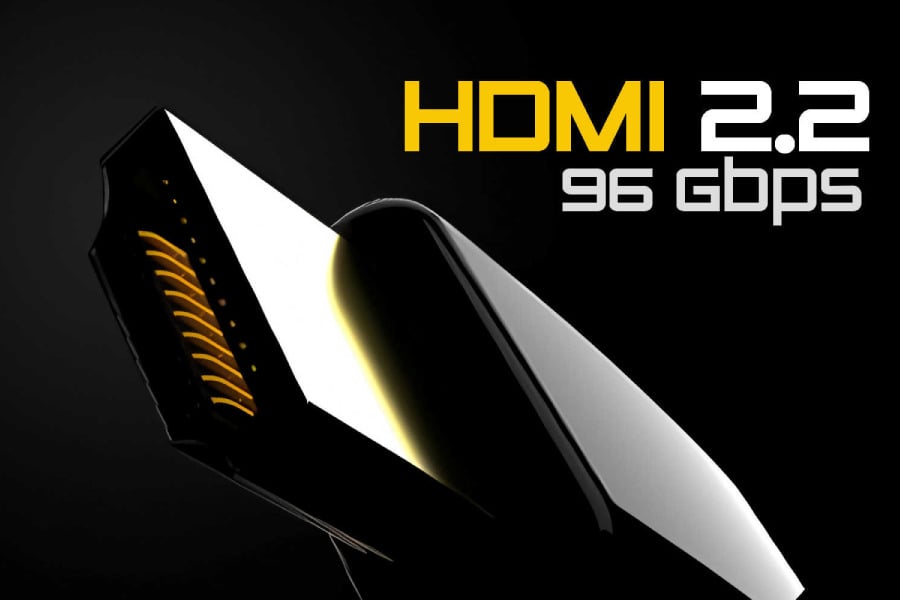
    At CES 2025 in Las Vegas, the HDMI Forum introduced HDMI 2.2, the newest version of the widely used video and audio standard. It promises to be twice as fast as the previous version and improves the synchronization of audio and video. On the surface, HDMI 2.2 appears to offer significant advantages. But what does this mean for regular consumers? Let’s explore further.

    Doubling the Bandwidth

    To begin with, the standout feature of HDMI 2.2 is its increased bandwidth. It jumps from 48 Gbit/s in HDMI 2.1 to an impressive 96 Gbit/s. To put this in perspective, HDMI 2.1 already allows for 4K resolution at 144 frames per second (fps), which is more than sufficient for most gamers and movie enthusiasts.

    Now with HDMI 2.2, users can expect support for 8K resolution at 240 fps and 4K at an astonishing 480 fps. Additionally, while it’s technically feasible to support even 12K and 16K resolutions, these features seem more geared towards future marketing than anything immediately useful.

    Enhanced Applications

    The HDMI Forum states that this increased bandwidth will lead to enhancements in data-heavy applications like augmented reality (AR) and virtual reality (VR), plus commercial uses such as large illuminated signage, medical imaging, and machine vision. These improvements could have significant impacts on various industries, making HDMI 2.2 a noteworthy advancement.

    In conclusion, while HDMI 2.2 brings exciting upgrades in speed and capability, it remains to see how much of an effect it will have on everyday consumers and their devices. The potential is certainly there, but practicality may take time to catch up.

  • Meta Plans On-Screen Display for Ray-Ban Smart Glasses

    Meta Plans On-Screen Display for Ray-Ban Smart Glasses

    Meta is working on enhancing its Ray-Ban smart glasses by integrating a display, as reported by the Financial Times (via Engadget). These glasses have unexpectedly become popular among users and continue to receive updates that introduce additional functionalities.

    Recent Updates

    In April, Meta incorporated the Meta AI assistant into the glasses for users in the US and Canada. Just recently, an update brought features like Live Translations, allowing the Meta AI to view what the users are observing, and integration with the Shazam music recognition app.

    Future Enhancements

    Looking ahead, Meta intends to revamp the glasses by adding a display that will allow users to see notifications or messages directly. Previously, users depended on voice commands to send messages or manage other features of the device through the assistant.

    New Design and Features

    The new displays are expected to be smaller, with Meta aiming to launch the updated glasses in the latter half of 2025. In September, Meta unveiled a concept for Augmented Reality (AR) glasses named Orion, which features micro LED projectors. This design includes seven cameras to monitor hand and eye movements and can project images onto the lenses with a field of view measuring 70 degrees.

    Engadget | Financial Times

    Source: Link

  • Rokid Launches Smart Glasses with MicroLED and Garmin Integration

    Rokid Launches Smart Glasses with MicroLED and Garmin Integration

    The Rokid Glasses have been unveiled during the Rokid Jungle 2024 event in China. Earlier this year, the brand introduced several AR wearable devices, including the Rokid AR Lite, which was funded through Kickstarter.

    Features and Functionality

    This new offering from Rokid features smart glasses that boast a display and frames crafted by the eyewear label Bolon. These glasses merge augmented reality with artificial intelligence. As per the company, users can take advantage of the device for tasks like recognizing objects, translating text, and estimating calorie counts in food. Furthermore, Rokid has partnered with Garmin, suggesting that cyclists can utilize the glasses to see directions and health stats such as heart rate while they ride.

    Specifications and Performance

    The device comes with a 12MP camera, built-in speakers, and utilizes the Snapdragon Qualcomm AR1 chipset, similar to the Ray-Ban Meta Smart Glasses (current price: $289.00 on Amazon). It features a 0.13” JBD MicroLED display, 2GB of RAM, 32GB of internal storage, and supports Bluetooth 5.3. Rokid claims that the device can last up to four hours on a single charge and can fully recharge in just 20 minutes. Additionally, the included wireless charging case can provide up to ten complete charges.

    Design and Availability

    Weighing in at 49 grams (about 0.11 lbs), these glasses come in various frame colors. They are also adaptable for custom lenses, catering to those with myopia or astigmatism. The retail price for the Rokid Glasses is set at 2,499 yuan (around $345) in China, with expectations for sales to begin between April and June. Although the company has hinted at a potential international release, the exact timing remains uncertain.

    Source: Link,Link


    Image 1