Category: Video / Photo

  • Xiaomi Smart Camera 4: Affordable Security Camera with Dual Sensors

    Xiaomi Smart Camera 4: Affordable Security Camera with Dual Sensors

    Key Takeaways

    1. Dual Sensors: The Xiaomi Smart Camera 4 features two 5 MP cameras, offering enhanced resolution of 2960 x 1666 pixels.

    2. 360° Pan-Tilt Coverage: The camera provides comprehensive viewing angles with 360° horizontal and 152° vertical coverage, reducing blind spots.

    3. Night Vision: Equipped with a 940 mm infrared fill light, the camera offers night vision capabilities up to 10 meters, producing clear images in low light.

    4. AI Detection: The camera includes AI-driven detection to distinguish between pets and humans, sending alerts for unusual activity with local processing via a 1 TOPS chip.

    5. Connectivity and Storage: It supports dual-band WiFi 6, two-way voice communication, and can accommodate a 256 GB SD card, all priced at approximately $42 in China.


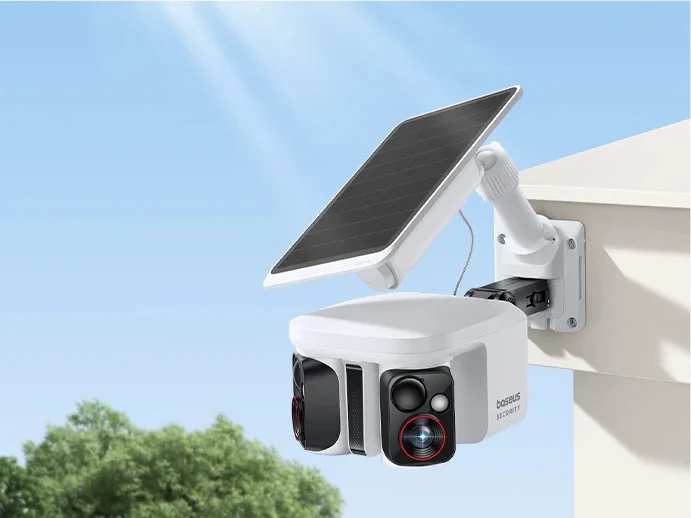
    The Xiaomi Smart Camera 4 Dual Camera Edition has been introduced in China as an upgraded version of the standard security camera. As indicated by its name, this model features dual sensors, with two 5 MP cameras that can record at a resolution of 2960 x 1666 pixels.

    Enhanced Viewing Experience

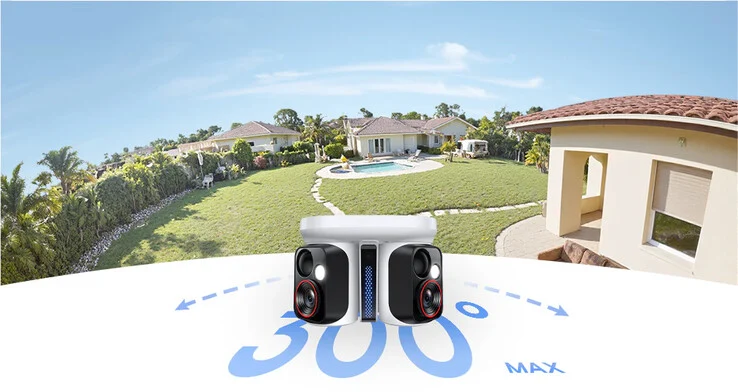
    Xiaomi points out that the new pan-tilt security camera provides greater flexibility regarding viewing angles, effectively minimizing blind spots typically found in smart cameras with a single sensor. Specifically, this PTZ camera boasts a horizontal coverage of 360° and a vertical coverage of 152°.

    Night Vision Capabilities

    One of the standout features of the Smart Camera 4 Dual Camera Edition is its integrated 940 mm infrared fill light. This, combined with several imaging algorithms, enables the camera to achieve a night vision range of up to 10 meters. Xiaomi also asserts that the sensors are capable of producing bright and detailed images even in difficult lighting situations.

    Intelligent Detection Features

    In addition, this new budget-friendly security camera includes an AI-driven detection capability that allows it to differentiate between pets and humans. It can send notifications when it detects unusual activity, and all AI processing is managed locally, thanks to the 1 TOPS chip embedded inside.

    Connectivity and Storage Options

    Additional features include dual-band WiFi 6, two-way voice communication, compatibility with a 256 GB SD card (SanDisk 256 GB Ultra microSDXC currently priced at $19.99 on Amazon), and various privacy options. The Xiaomi Smart Camera 4 Dual Camera Edition is priced at CNY 299 in China, which is approximately $42, and the company has not yet disclosed when it will be available on the international market.

    Source:
    Link


  • 35.3 Million Pounds Displaced: Spacecraft-Asteroid Collision Data

    35.3 Million Pounds Displaced: Spacecraft-Asteroid Collision Data

    Key Takeaways

    1. NASA’s DART mission successfully impacted the asteroid Dimorphos in 2022 to test asteroid path alteration.
    2. LICIACube, a satellite from the Italian Space Agency, captured images of the impact just minutes after the collision.
    3. The DART impact ejected approximately 35.3 million pounds of debris, significantly altering Dimorphos’s path.
    4. LICIACube provided the closest images of Dimorphos, capturing them from just 53 miles away.
    5. Ongoing research is crucial as many near-Earth asteroids may have similar structures, with ESA’s Hera mission planned for late 2026 to further study the impact.


    NASA’s DART (Double Asteroid Redirection Test) was a mission set up to see if a spacecraft could change an asteroid’s path. In 2022, DART hit its target, the asteroid Dimorphos, successfully. Alongside DART was a small satellite named LICIACube (Light Italian CubeSat for Imaging Asteroids), provided by the Italian Space Agency (ASI) to take pictures of the asteroid post-collision.

    LICIACube’s Mission

    On September 11, 2022, just fifteen days before DART crashed into Dimorphos, LICIACube separated from the main spacecraft. It was ready to take photos of the impact about two minutes and 40 seconds after the collision occurred. Traveling at an astonishing speed of 15,000 mph (24,000 km/h), LICIACube had only a minute to capture images of the asteroid, snapping approximately one photo every three seconds as it flew by.

    Findings From the Impact

    Scientists shared their discoveries in the Planetary Science Journal on August 21 after looking over the series of images gathered. They found that the impact caused Dimorphos to eject roughly 35.3 million pounds (16 million kilograms) of debris, which is nearly 30,000 times heavier than the spacecraft itself.

    The debris created a dense cloud with darker inner sections, indicating it primarily consisted of larger particles. Research indicated that this debris altered the asteroid’s path more significantly than DART’s collision did.

    Close Observations of Dimorphos

    While earlier observations of the aftermath from Earth and space were conducted from millions of miles away, LICIACube provided the closest images thus far. The satellite managed to snap a picture just 53 miles (85.3 kilometers) from the asteroid.

    Scientists believe that many asteroids near Earth share a similar “rubble-pile” structure as Dimorphos. Therefore, continuing this research is vital for developing spacecraft capable of diverting asteroids from colliding with our planet. ESA’s Hera is expected to arrive at the site in late 2026 to further investigate the DART-Dimorphos impact.

    Source:
    Link


  • Next-Gen Dual Rear Camera Smartphones: Accessories for Flagships

    Next-Gen Dual Rear Camera Smartphones: Accessories for Flagships

    Key Takeaways

    1. Custom external lens kits for smartphones like Oppo Find X9 Ultra, Vivo X300 Ultra, and Xiaomi 16 Ultra are being developed to enhance photography.
    2. The lenses will attach to the back of devices, avoiding bulky camera bumps and complicated designs.
    3. These lenses are lightweight and feature magnetic attachments, allowing for easy upgrades in mobile photography.
    4. Well-known camera brands like Leica, Zeiss, and Hasselblad may produce these external lenses.
    5. Initially targeting flagship models, these accessories may also be available for premium mid-range devices with dual-camera systems.


    Earlier rumors had hinted at the idea of custom external lens kits designed for smartphones like the Oppo Find X9 Ultra, Vivo X300 Ultra, and Xiaomi 16 Ultra, along with their future versions. A recent tip has elaborated on this concept further.

    New Accessories for Smartphones

    This information suggests that these new attachments could enable mobile manufacturers to move away from overly complicated designs that struggle to fit numerous lenses. This trend has led to bulky camera bumps in models such as the Xiaomi 15 Ultra and Nubia Z70 Ultra.

    Rather than changing the design of the phone itself, these external lenses might simply attach to the back of the device, enhancing it to a flagship level of photography.

    Lightweight and Magnetic Design

    These lenses are said to be “lightweight” and incorporate magnetic features, similar to the MagSafe system, making it easy to upgrade mobile photography instantly whenever needed.

    Well-known camera brands like Leica, Zeiss, and Hasselblad, which already collaborate with some Android camera flagships, might be the ones producing these accessories.

    Targeting Flagship and Mid-range Phones

    Initially, these external lenses could be aimed at high-end models like the Xiaomi 17 Ultra or Oppo Find X10 Ultra, but they may eventually become available for premium mid-range devices that have adopted dual-camera systems.

    Potential candidates for these optional enhancements may include successors to the Honor 400 series, Oppo Reno14, or Vivo V50 models.

    The Vivo V50 Rose Red is currently available starting at INR 32,999 on Amazon.in.

    Source:
    Link


  • NASA’s Psyche Takes Stunning Earth and Moon Images from 180M Miles

    NASA’s Psyche Takes Stunning Earth and Moon Images from 180M Miles

    Key Takeaways

    1. NASA’s Psyche spacecraft is on a mission to study asteroid Psyche, which may contain a mix of rock and metal similar to Earth’s composition.
    2. Calibration of the spacecraft’s imaging instrument is essential for mission success, requiring tests with objects that reflect sunlight.
    3. Psyche has successfully captured images of Jupiter and Mars to test its imaging capabilities.
    4. Recent imaging tests included capturing images of Earth and its moon using twin cameras with advanced filters and lenses.
    5. The spacecraft plans a flyby of Mars next year to gain speed for its journey to asteroid Psyche, expected to arrive by 2029.


    Since its debut in October 2023, NASA’s Psyche spacecraft has been heading towards asteroid Psyche. This asteroid is believed to consist of a blend of rock and metal, closely resembling Earth’s composition. By examining this asteroid, researchers aim to gain insights into the formation of planets like Earth.

    Importance of Calibration

    For the success of the Psyche mission, it is vital to test and calibrate its imaging instrument. Since asteroid Psyche reflects sunlight, the spacecraft needed to capture images of another object that also reflects the Sun’s rays. Previously, Psyche had successfully taken pictures of Jupiter and Mars, both appearing redder than Earth.

    Recent Imaging Tests

    On July 20 and 23, Psyche tested its imaging instrument by capturing images of Earth and its moon. The imager on the spacecraft features twin cameras equipped with filters and telescopic lenses, enabling it to capture images of faraway objects in various light spectra.

    The team will keep on testing the imagers, with Saturn or Vesta likely being the next targets. However, the significant milestone for the Psyche mission is the planned flyby of Mars next year. The gravity of Mars will serve as a slingshot, giving the spacecraft the necessary boost to reach asteroid Psyche by 2029.

    Source:
    Link


  • DJI Mini 5 Pro Pricing Details Leak: Standard & Fly More Combos

    DJI Mini 5 Pro Pricing Details Leak: Standard & Fly More Combos

    Key Takeaways

    1. DJI may unveil its next mini-drone, the Mini 5 Pro, sooner than expected.
    2. Ellens has seen pricing for Mini 5 Pro accessories, suggesting continuity with Mini 4 Pro prices.
    3. The Mini 5 Pro is rumored to have a launch price of approximately $759.
    4. The Mini 5 Pro will be available in Standard Combo and Fly More Combo packages.
    5. A potential release date for the Mini 5 Pro is rumored to be September 16, 2025, but this is not confirmed.


    Leaker Jasper Ellens has discovered new hints suggesting that DJI is set to unveil its next mini-drone sooner than expected. For some background, HoverAir has recently launched its new 249 g drone on Indiegogo, featuring some unique functions. On the other hand, Insta360 has made it clear that its Antigravity A1 drone won’t be available until early next year.

    DJI’s Upcoming Focus

    In contrast, DJI is prioritizing the release of its Mic Mini and Mic 2 (currently priced at $314 on Amazon) wireless microphones until next Thursday. During this time, Ellens claims to have seen pricing for all of DJI’s Mini 5 Pro accessories. Specifically, the leaker states that DJI plans to set the following prices for key accessories and services:

    Pricing Insights

    According to Ellens, these price points align with what DJI charges for the Mini 4 Pro. Hence, it’s not too farfetched to think that the Mini 5 Pro might also debut at its predecessor’s launch price of $759. Sadly, Ellens hasn’t yet been able to verify this information. Instead, he reports that the Mini 5 Pro will come in Standard Combo and Fly More Combo packages. While rumors suggest a release date of September 16, 2025, no solid information has surfaced as of yet.

    Source:
    Link


  • HoverAir Aqua: New Waterproof Drone with Limited-Time Offer

    HoverAir Aqua: New Waterproof Drone with Limited-Time Offer

    Key Takeaways

    1. Waterproof Design: The HoverAir Aqua can take off and land on water and self-right if tipped over.

    2. High-Quality Camera: It features a 1/1.28-inch CMOS sensor for 4K video at 100 FPS and 12 MP HDR photos.

    3. Flight Performance: The drone offers up to 23 minutes of flight time, can reach speeds of 55 km/h, and withstand winds up to 18.3 m/s.

    4. Pricing: The HoverAir Aqua is currently available for $999 through a special Fly More Combo package, down from an expected MSRP of $1,676.

    5. Shipping Timeline: Shipping to Indiegogo supporters is expected to start in December 2025.


    HoverAir has just unveiled its newest drone following a lengthy promotional campaign. For those unfamiliar, HoverAir is recognized for competing against DJI with models like the HoverAir X1, which is currently priced at $439 on Amazon. In contrast to Insta360’s attempt to enter DJI’s territory with the Antigravity A1, HoverAir has opted for a unique design with the Aqua.

    Waterproof Features

    As showcased in the video below, the HoverAir Aqua is engineered to be waterproof, allowing it to both land on and take off from water surfaces. Additionally, HoverAir asserts that this drone can self-right if it gets tipped over by wind or waves. On the technical side, the HoverAir Aqua is equipped with a 1/1.28-inch CMOS sensor that captures 10-bit H-log footage in 4K at a maximum of 100 FPS. Alternatively, it can take 12 MP photos using an f/2.55 aperture lens with HDR capabilities.

    Flight and Design Specifications

    Furthermore, the HoverAir Aqua is powered by a 2,013 mAh battery, providing flight times of up to 23 minutes on a single charge. The drone also includes Real-Time Kinematic (RTK) positioning along with a 1.6-inch AMOLED display that acts as a viewfinder. Additionally, the Aqua can reach speeds of up to 55 km/h and withstand winds of 18.3 m/s, all packaged within dimensions of 202 x 206 x 64 mm, weighing 249 g to meet C0 drone certification standards.

    Pricing and Availability

    At present, the HoverAir Aqua is available for $999 through its Fly More Combo package, a stark contrast to its expected MSRP of $1,676. However, this special offer is only valid until August 22. After that, HoverAir will transition to the Aqua Standard Combo while maintaining the $999 pricing on Indiegogo. As of now, HoverAir is aiming to commence shipping to Indiegogo supporters by December 2025. For further information, check out the HoverAir Aqua Indiegogo campaign.

    Source:
    Link


  • Insta360 Go Ultra: New Release in Popular Action Camera Series

    Insta360 Go Ultra: New Release in Popular Action Camera Series

    Key Takeaways

    1. Insta360 launched the new Go Ultra action camera, replacing the Go 3S.
    2. The Go Ultra features a 1/1.28-inch sensor that is 221% larger than the Go 3S’s sensor.
    3. It can record video at 4K resolution and 60 FPS, powered by a 5 nm chipset.
    4. The camera has an IPX8 waterproof rating, allowing submersion up to 10 meters, and offers 70 minutes of battery life (200 minutes with Action Pad).
    5. The Go Ultra is priced at $449.99 for the Standard Bundle and $499.99 for the Creator Bundle, available directly from Insta360 and other retailers.


    Insta360 has officially launched a new action camera, replacing the Go 3S (currently priced at $344 on Amazon) after several leaks hinted at its arrival. As many expected, the new model is named the Go Ultra, diverging from the anticipated Go 4 or Go 4S monikers.

    Significant Upgrades

    To mark this new generation, Insta360 has introduced a 1/1.28-inch sensor that is said to be ‘221% larger’ than the one in the Go 3S. With the help of a more robust 5 nm chipset, this 50 MP sensor is capable of recording video at up to 4K resolution and 60 FPS. The camera itself weighs 53 g and has dimensions of 46 x 45.6 x 18.3 mm, not including the Lens Guard and Action Pod, which adds a touchscreen viewfinder.

    Waterproof and Long-lasting

    The Go Ultra boasts an IPX8 waterproof rating, allowing it to be submerged up to 10 metres. Additionally, Insta360 claims that this compact action camera can operate for about 70 minutes on its 500 mAh battery, or up to 200 minutes when used with the Action Pad, which provides an extra 1,450 mAh battery.

    The Insta360 Go Ultra is now available for purchase directly from Insta360 or through other retailers like Amazon. The Standard Bundle, which includes the Action Pad and several accessories, costs $449.99 at launch. For those interested in more accessories, the Creator Bundle is offered at $499.99, which includes a mini 2-in-1 tripod among other items. For further information, check out Insta360’s website.

    Source:
    Link


  • ESA Reveals Stunning Image of Eye of the Serpent Galaxy

    ESA Reveals Stunning Image of Eye of the Serpent Galaxy

    Key Takeaways

    1. NGC 2835 is a small spiral galaxy located in the constellation Hydra, resembling an eye due to its spiral arms.
    2. The Hubble Space Telescope used H-alpha wavelength to capture bright nebulae within NGC 2835, highlighting areas rich in hydrogen.
    3. The latest image from Hubble displays clusters of young blue stars and a supermassive black hole at the galaxy’s center.
    4. The image features dark dust strands along the spiral arms, adding to the galaxy’s unique appearance.
    5. NGC 2835 has been featured twice in Hubble’s Picture of the Week due to its captivating characteristics.


    Researchers have been utilizing the Hubble Space Telescope to investigate nebulae, which are regions of star formation made up of gas and dust. This time, the attention was directed towards NGC 2835, a spiral galaxy found in the constellation Hydra, also known as The Water Snake.

    The Characteristics of NGC 2835

    NGC 2835 is considered a relatively small galaxy, measuring approximately half the width of the Milky Way. The swirling design of its spiral arms gives NGC 2835 a notable likeness to an eye. This unique shape, along with its location near the head of the Hydra constellation, has led to it being affectionately called the Eye of the Serpent.

    Hubble’s Captivating Image

    By employing the H-alpha wavelength, the latest image from Hubble revealed multiple bright nebulae within NGC 2835. H-alpha represents a specific wavelength of red light produced by hydrogen. Since many nebulae are rich in hydrogen, they emit light at this wavelength, making them more easily observable.

    The recent photograph taken by Hubble shows a direct view of the galaxy, showcasing clusters of young, luminous blue stars scattered throughout its spiral arms. The center, known to contain a supermassive black hole that is millions of times heavier than our sun, emits a yellow glow. Additionally, the image highlights dark strands of dust tracing along the spiral arms. This galaxy has been a focal point in various observations and has now appeared twice in the Hubble Space Telescope’s Picture of the Week.

    Source:
    Link


  • Sharge Grip Power Bank with Tactile Shutter Now in Stock

    Sharge Grip Power Bank with Tactile Shutter Now in Stock

    Key Takeaways

    1. The Sharge Grip Power Bank combines a power bank with smartphone camera controls, featuring a clamp that attaches to your phone via Bluetooth.
    2. It includes a shutter button for taking pictures, a zoom scroll wheel, and options to switch between cameras and modes.
    3. The device has a 5,000 mAh battery with a 22.5W output and an 18W recharge capability via USB-C.
    4. The compact size is 88 x 38 x 30 mm and it weighs approximately 120 g.
    5. Introductory price is $35.90/£26.62/€36.69, with a future price of $39.90/£29.59/€40.78; availability on retail platforms is currently unclear.


    The Sharge Grip Power Bank has just been launched globally. This innovative gadget cleverly merges a power bank with physical controls for your smartphone’s camera. It features a reliable clamp that securely attaches to your phone and connects through Bluetooth.

    Camera Controls and Functionality

    On one side of the Sharge Grip, there’s a responsive shutter button designed for capturing photos on your phone. You can press it while holding the phone or use it remotely for group shots. Beneath this button, there’s a scroll wheel that lets you zoom in and out; it appears to also allow switching between the front and back cameras, as well as toggling between photo and video modes.

    Battery Specifications and Size

    The Grip boasts a robust 5,000 mAh battery, providing an impressive output of up to 22.5W to your device through the built-in red coiled USB-C cable. Additionally, it has a USB-C port that allows users to recharge the battery at 18W, whether through the port itself or the integrated cable. This compact gadget is just 88 x 38 x 30 mm (approximately 3.5 x 1.5 x 1.2 inches) and weighs around 120 g (about 4.23 oz).

    Pricing and Availability

    Currently, you can purchase the Sharge Grip for $35.90/£26.62/€36.69 from the brand’s official online store due to a special introductory promotion. In the future, it will be priced at $39.90/£29.59/€40.78; however, it remains uncertain when it will be offered by retail platforms like Amazon.

    Source:
    Link


  • Insta360 Go Ultra Launch Pricing Leaked Before Official Release

    Insta360 Go Ultra Launch Pricing Leaked Before Official Release

    Key Takeaways

    1. Insta360 is set to unveil the Go Ultra on August 21, following the release of the X5 Satin White Limited Edition camera.
    2. The expected retail price for the Go Ultra is between $420 and $470, which is viewed as competitive compared to rivals like GoPro and DJI.
    3. The Go Ultra’s pricing represents a 13% increase from last year’s Go 3S model.
    4. It features a new 1/1.28-inch camera sensor capable of capturing video at 4K/60 FPS with a bitrate of 180 Mbps.
    5. The camera is powered by a 5 nm chipset, enhancing its performance and capabilities.


    The Go Ultra appears to be Insta360’s second launch this month, following the release of the X5 Satin White Limited Edition, which is currently priced at $549 on Amazon and came out nearly two weeks ago. For now, the company is being quite secretive about what it plans to reveal on August 21.

    Upcoming Release

    What we’ve seen from Insta360 so far indicates that the Go Ultra will be unveiled on Thursday. Meanwhile, leaker Igor Bogdanov claims to have insider pricing info ahead of the camera’s official debut.

    Pricing Insights

    The Go Ultra is expected to retail between $420 and $470. Although Bogdanov hasn’t pinpointed an exact figure, he believes this range is “not bad” considering what competitors like GoPro and DJI are currently offering or will be offering soon.

    Specifications

    If we take $445 as the average price, this would represent a 13% increase compared to last year’s Go 3S. To justify this price hike, Insta360 is said to have included a new 1/1.28-inch camera sensor that can capture video at 4K/60 FPS with a bitrate of 180 Mbps, all powered by a 5 nm chipset. For more rumored technical details about the Go Ultra, refer to our earlier article.

    Source:
    Link