Category: Video / Photo

  • 70mai Launches 4K T800 Dash Cam with Night Vision and ADAS

    70mai Launches 4K T800 Dash Cam with Night Vision and ADAS

    Key Takeaways

    1. Industry First: The 70mai 4K T800 is the first three-channel HDR dash cam, featuring a Sony IMX678 sensor with Starvis 2 technology and a 146° field of view.

    2. High Resolution: It captures video at 4K resolution up to 30 fps, designed to clearly record details such as license plates and road signs, even in low-light conditions.

    3. Three Cameras for Coverage: The dash cam includes a 4K front camera, a 1080p rear camera, and a 1080p cabin camera, all supporting HDR recording for enhanced visibility around the vehicle.

    4. Advanced Features: It offers GPS, voice commands, smart parking mode, AI motion detection, 24-hour surveillance, and buffered emergency recording.

    5. Pricing and Availability: The 70mai 4K T800 is priced at $399, with a limited-time discount bringing the price down to $339, available in black through 70mai’s online shop and Amazon.


    70mai has broadened its dash cam lineup with the launch of the new 4K T800 dash cam in both Europe and North America. Marketed as the first three-channel HDR dash cam in the industry, the 4K T800 is equipped with a Sony IMX678 sensor that utilizes Sony’s latest Starvis 2 technology, boasting a 146° field of view. This sensor is the same one used in their 4K Omni 360° rotating dash cam, which was revealed earlier this year.

    Impressive Resolution

    This dash cam is capable of achieving a resolution of up to 4K at 30 fps. According to 70mai, it can capture important details like license plate numbers and road signs, even in dim lighting. The brand has integrated its proprietary night owl vision tech into the 4K T800, claiming it provides enhanced clarity at night while minimizing noise, balancing exposure, and improving glare management.

    Multiple Cameras for Enhanced Coverage

    In addition to the 4K front camera, the dash cam features a Sony IMX678 rear sensor and a 1080p cabin camera, which can record at 4K/30 fps and 1080/30 fps, respectively. All three cameras support HDR recording and include 70mai Lumi Vision, which guarantees clear visibility around the vehicle even in almost complete darkness, as stated by 70mai in their press release. The device also includes a built-in super-sensing ADAS for constant monitoring, capable of detecting surroundings and providing real-time vocal alerts.

    Additional Features

    Other notable features include GPS functionality, multi-language voice command, a smart parking guardian mode, AI motion detection, time-lapse recording, 24-hour parking surveillance, and buffered emergency recording (3 minutes before and 30 seconds after a collision). Additionally, it offers WiFi 6 5 GHz connectivity for fast data transfers of up to 40 MB/s. The dash cam is also equipped with a 3-inch IPS LCD screen and app-based controls for user convenience.

    The price for the 70mai 4K T800 dash cam is set at $399, available in a single black color option. To celebrate its launch, the company is presenting a 15% discount off the original MSRP for a limited period, allowing customers to purchase the dash cam for only $339 through 70mai’s online shop and on Amazon.

    Source:
    Link



  • Insta360 Go Ultra: Compact Action Camera Launching This Week

    Insta360 Go Ultra: Compact Action Camera Launching This Week

    Key Takeaways

    1. The action camera market is becoming competitive again with new releases from major brands.
    2. DJI has launched the Osmo 360, competing with the anticipated GoPro Max 2.
    3. Insta360 updated its X5 model with a new Satin White color, priced at $549.99.
    4. A new smaller action camera from Insta360 is set to launch on August 21, possibly named the Go Ultra.
    5. The Go Ultra is expected to compete with DJI’s Osmo Action 6 and the next GoPro Hero camera.


    The action camera market is becoming exciting once more after a lull. As we wait for the much-anticipated GoPro Max 2 to be released, DJI has already launched its competitor, called the Osmo 360. To keep up with the competition in the 360-degree action camera segment, Insta360 has updated the current X5 model with a new Satin White color, which is currently priced at $549.99 on Amazon.

    New Release on the Horizon

    Insta360 has also confirmed that a smaller action camera will be hitting the market soon. At this point, the company has not disclosed the name of this upcoming camera. Instead, they have shared a sneak peek of the device in their initial promotional video, which we’ve included below.

    Launch Details

    The camera is set to make its debut this Thursday, August 21. Additionally, Insta360 has announced that the launch event will start at 13:00 UTC, after which we anticipate that pre-orders will begin. According to recent leaks, the new camera is likely to be the Insta360 Go Ultra, which is said to be a successor to the Go 3S and will be just a tad larger than the DJI Action 2. This Go Ultra is expected to compete with the upcoming DJI Osmo Action 6 and the next Hero action camera from GoPro. For more details, check out the video below and Insta360’s teaser website for additional information.

    Source:
    Link


  • NASA Invites Public Submissions After Astronaut’s Spectacular Capture

    NASA Invites Public Submissions After Astronaut’s Spectacular Capture

    Key Takeaways

    1. Nicole Ayers spotted a rare atmospheric phenomenon called a gigantic jet while on the ISS over a thunderstorm.
    2. Gigantic jets are different from sprites; they occur at about 20 km above the storm, unlike sprites which form around 50 miles (80 km) above.
    3. Both gigantic jets and sprites are types of transient luminous events (TLEs) caused by strong electrical activity in thunderstorms.
    4. Other TLEs include blue jets, halos, and ELVEs, which can also offer insights into thunderstorm behavior.
    5. NASA encourages the public to share photos of TLEs to help scientists study these phenomena.


    On July 3, Nicole Ayers, while she was on the ISS, caught an incredible sight as the space station flew over a thunderstorm in Mexico and the Southern United States. At first, she thought what she saw was a sprite. She shared her excitement in an X post, saying, “Just. Wow. As we went over Mexico and the U.S. this morning, I caught this sprite.”

    Understanding Sprites and Gigantic Jets

    Sprites, know also as red sprites, are transient luminous events (TLEs) that take place high above thunderstorm clouds or cumulonimbus. They are caused by strong electrical activity within the storms. Although sprites are not seen every day, further examination of Ayers’ image showed that what she saw wasn’t a sprite, but a rarer TLE called a gigantic jet.

    A gigantic jet occurs above thunderstorms, sending out strong electrical discharges from the top of the storm, around 20 km above ground, to the upper atmosphere, which is about 100 km above the Earth. The upper part of gigantic jets gives off red light, similar to sprites. However, gigantic jets burst out directly from the thunderstorm tops, while sprites form much higher, at about 50 miles (80 km) above the Earth’s surface.

    Other Types of TLEs

    In addition to gigantic jets and sprites, there are other types of TLEs, including blue jets, halos, and ELVEs, which stands for Emissions of Light and Very Low Frequency perturbations due to Electromagnetic Pulse Sources. Halos and ELVEs can occur alongside or even before sprites. Captured images of TLEs provide scientists with valuable insights into their formation, features, and connections to thunderstorms. Therefore, NASA is inviting the public to share their photos. If you’ve ever taken a picture of a similar phenomenon, visit Spritacular to submit your photo(s).

    Source:
    Link


  • Fujifilm X-E5 Launch Date: 40.2MP Photos & 6.2K Video Specs

    Fujifilm X-E5 Launch Date: 40.2MP Photos & 6.2K Video Specs

    Key Takeaways

    1. The Fujifilm X-E5 mirrorless camera will be released on August 28, 2025, with a price of $1699.95.
    2. It features a 40.2MP X-Trans sensor, capturing images at 20 frames per second and recording videos up to 6.2K.
    3. The camera includes a Film Simulation dial for various Fujifilm color filters, mimicking classic 35mm film styles.
    4. It has advanced autofocus with Intelligent Hybrid AF and a built-in stabilizer rated at 7.0 stops.
    5. The X-E5 measures 4.92 x 2.87 x 1.54 inches and weighs 15.7 ounces, available for purchase on Amazon.


    Fujifilm has announced that the much-anticipated X-E5 mirrorless APS-C digital camera will hit the market on August 28, 2025. This model features a retro 35mm film camera design and allows for interchangeable lenses. It will be available in black or silver with a suggested retail price of $1699.95.

    Advanced Features

    This camera boasts a 40.2MP X-Trans sensor, enabling users to capture images at speeds up to 20 frames per second and record videos in stunning resolutions of up to 6.2K. It also includes a 3.5mm mic-in jack for connecting an external microphone. The built-in stabilizer has a rating of 7.0 stops at the center and 6.0 stops at the edges, according to CIPA standards. Accurate focusing is provided by the Intelligent Hybrid AF, which merges contrast detection and phase detection autofocus techniques.

    Unique Film Simulations

    The X-E5 includes a Film Simulation dial that lets users access various Fujifilm color filters, imitating popular 35mm film styles like Velvia, in addition to customizable looks. Users can observe the effects of these filters through a 0.39-inch OLED viewfinder and a tilting 3.0-inch LCD display. The camera saves 16-bit RAW images and All-Intra/Long-GOP videos at 200 Mbps onto SDXC cards.

    Specifications and Availability

    In terms of size, the Fujifilm X-E5 measures 4.92 x 2.87 x 1.54 inches (124.9 x 72.9 x 39.1 mm) and weighs 15.7 ounces (445 grams) with the battery and SD card included.

    Those interested can find the X-E5 available for purchase at the Fujifilm store on Amazon in the US.

    Source:
    Link


  • ESA Unveils Stunning Image of Rare Galaxy in Cetus Constellation

    ESA Unveils Stunning Image of Rare Galaxy in Cetus Constellation

    Key Takeaways

    1. NGC 45 is a low surface brightness galaxy, making it faint and difficult to see against the night sky.
    2. The galaxy has fewer stars compared to the amount of gas and dark matter it contains.
    3. A recent image from the Hubble Space Telescope reveals its spiral arms, star formation areas (nebulae), and data from two observation projects.
    4. NGC 45 was discovered by John Herschel in 1835, and low surface brightness galaxies may make up 30 to 60% of all galaxies in the universe.
    5. NGC 45 can be observed with a mid-sized telescope in the Whale constellation under the right conditions.


    NGC 45 is a galaxy with low surface brightness, which makes it hard to see since it is fainter than the surrounding night sky. The number of stars in these kinds of galaxies is quite limited when compared to the amount of gas and dark matter they contain. This is the reason they don’t shine very brightly, leading to their specific name. Thus, the recent close-up image of NGC 45 taken by the Hubble Space Telescope is quite fascinating.

    Stunning Imagery

    The photograph reveals the spiral arms of NGC 45, which are dotted with stars (seen as small blue points) along with glowing pink clouds, which are areas where stars are being born, referred to as nebulae. The picture is a mix of data from two different observation projects; the first one looked at 50 galaxies nearby, utilizing ultraviolet and near-infrared wavelengths. The second focused specifically on H-alpha light, which is a particular red light emitted from hydrogen.

    Historical Context

    Though NGC 45 was originally discovered by the English astronomer John Herschel back in 1835, the first large low surface brightness galaxy recognized was Malin 1, found in 1986. Studies indicate that these hard-to-find galaxies might constitute about 30 to 60% of all galaxies found throughout the universe.

    Observing NGC 45

    If you have a mid-sized telescope, you can point it towards the Whale constellation, and with the right conditions, you may be able to see NGC 45.

    Source:
    Link


  • Oppo Find X9 Ultra: Dual 200 MP Hasselblad Camera & Accurate Colors

    Oppo Find X9 Ultra: Dual 200 MP Hasselblad Camera & Accurate Colors

    Key Takeaways

    1. The Xiaomi 16 Ultra is predicted to be the only flagship with a 1-inch sensor and a 200-MP telephoto lens by 2026.
    2. Vivo has moved away from oversized sensors in its X200 series, and Oppo may follow suit with its Find X8 Ultra.
    3. The Find X9 Ultra is expected to feature a large 200-MP sensor, marking a significant upgrade from previous models.
    4. Upcoming telephoto technology may replace dual periscope lenses with a new 200-MP sensor, similar to other flagship models.
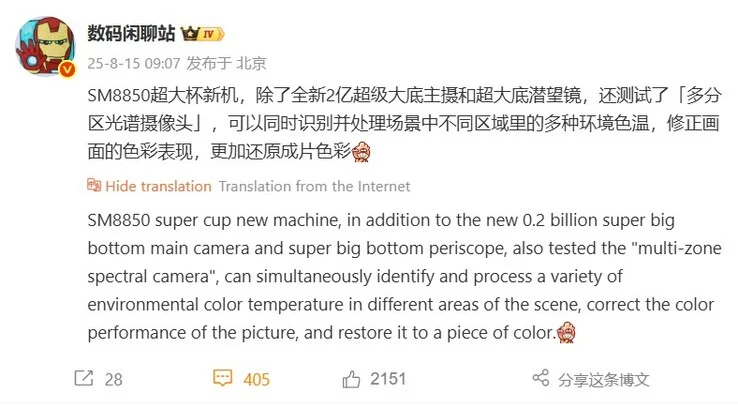
    5. The Hasselblad camera in 2026 might introduce a “multi-zone” spectral sensor for improved color accuracy, with other brands likely to adopt similar technology.


    The Xiaomi 16 Ultra is expected to be the sole flagship camera featuring a 1-inch sensor alongside a 200-MP telephoto lens by 2026, according to a prediction made by a leaker a few weeks back, and he might actually be correct. Vivo has stepped away from the oversized sensor for its main camera in the X200 series released in 2025, and Oppo users are facing a similar situation next year. It’s not entirely clear if this will be a step back for the Oppo Find X8 Ultra as it might seem at first. The Hasselblad flagship for 2026 could potentially be the first smartphone to offer a dual 200-MP setup, as previously theorized.

    Speculation and Confirmation

    Recent testing devices appear to support these claims, as Digital Chat Station highlighted on Weibo. The Find X9 Ultra, powered by the Snapdragon 8 Elite 2, is reportedly going to feature a notably large 200-MP sensor for its main camera, likely referring to Sony’s new 1/1.1-inch 200-MP sensor. This would serve as a strong upgrade compared to the previous maximum of 1/1.3-inch sensors from Samsung, like the ISOCELL HP2 found in the Galaxy S25 Ultra, marking a significant replacement for the current LYT-900 sensor.

    Changes in Telephoto Technology

    There are probably going to be significant updates to the telephoto lens as well. Instead of the previously specialized dual periscope telephoto lens, a 200-MP sensor might be used, similar to the setup in the Vivo X200 Ultra and Xiaomi 15 Ultra. Additionally, there could be another alteration for the Hasselblad camera in 2026, specifically a new “multi-zone” spectral sensor to enhance color accuracy in images. In another update, the leaker suggested that other Chinese brands like Xiaomi, Vivo, Honor, or Huawei could also adopt this technology in their upcoming camera flagships.

    Source:
    Link


  • Students Create 3D-Printed Drone for Underwater and Aerial Use

    Students Create 3D-Printed Drone for Underwater and Aerial Use

    Key Takeaways

    1. Four students from Aalborg University Esbjerg created a versatile drone prototype capable of flying and underwater navigation.
    2. The drone uses a variable-pitch propeller system, allowing the blades to adjust for different environments.
    3. A demonstration video showcased the drone’s ability to take off, fly, dive into water, and surface seamlessly.
    4. The drone features an ergonomic design with a circular body and four symmetrically arranged two-blade rotors.
    5. Recent advancements in drone technology include a 3D-printed drone that can walk, fly, and swim on water.


    These four students from Aalborg University Esbjerg have successfully designed, constructed, and thoroughly tested a prototype drone over the course of two semesters. This innovative robot is not just limited to flying but can also navigate underwater.

    Unique Propeller System

    To achieve this remarkable feat, the team implemented a variable-pitch propeller system. This system permits the blades to rotate along their axis, enabling a change in the angle of the blades. When it comes to underwater navigation, the blades are set to a lower pitch, while they adjust for flight mode accordingly.

    Impressive Demonstration

    In a two-minute demonstration video shared on YouTube by Andrei Copaci, the drone can be seen taking off from the ground, flying around, diving into a pool, moving a short distance underwater, and then surfacing again, all seamlessly.

    The drone features an ergonomic design, with a circular body that contains the battery and control unit. It is equipped with four symmetrically arranged two-blade rotors. This design resembles an enhanced version of a 2015 drone created by a team from Rutgers University, which utilized four coaxial rotors but was restricted to wired control. At this moment, it’s not clear if the students took any inspiration from that earlier project.

    Recent Innovations in Drone Technology

    In a related story, just ten days ago, we covered a DIY engineer who created a 3D-printed drone that could walk, fly, and swim on the water’s surface.

    Petar Durdevic and Andrei Copaci are the primary individuals linked to this project.

    Source:
    Link


  • Insta360 Antigravity A1: First 8K 360 Drone Ahead of DJI Mini 5 Pro

    Insta360 Antigravity A1: First 8K 360 Drone Ahead of DJI Mini 5 Pro

    Key Takeaways

    1. Antigravity has launched its first drone, the Antigravity A1, in collaboration with Insta360.
    2. The A1 features a dual-lens camera capable of recording 8K and 360-degree videos simultaneously.
    3. The drone captures its surroundings without blind spots using image stitching technology.
    4. The A1 is compatible with Antigravity Vision FPV goggles, offering real-time 360-degree video and head tracking.
    5. Weighing 249 grams, the A1 meets C0 drone classification standards, but will not be available until January 2026.


    Antigravity, a brand new drone company that worked together with Insta360, has finally revealed its first product after teasing it at the end of last month. This official launch comes a little while after some footage of the drone leaked online, showing the device with a see-through shell.

    New Drone Specs

    The recently announced Antigravity A1 will compete with the DJI Mini 4 Pro (curr. $1,008 on Amazon) and the speculated Mini 5 Pro, featuring a more standard white or beige exterior instead. However, the Antigravity A1 is touted as the first drone able to record 8K and 360-degree videos at the same time thanks to its dual-lens camera setup.

    Innovative Technology

    In theory, this camera setup lets the drone capture its surroundings without any blind spots, but this is only achievable with image stitching technology. Nevertheless, Insta360 has confirmed that the A1 can work with Antigravity Vision first-person view (FPV) goggles, which we have included images of below.

    These FPV goggles supposedly provide real-time 360-degree videos and even support head tracking. At the same time, Insta360 has developed a Grip controller that enables users to fly the A1 in one direction while looking the other way, if necessary. Furthermore, the Antigravity A1 will weigh 249 grams to comply with C0 drone classification standards. Sadly, the Antigravity A1 won’t be available until January 2026, which is after DJI is anticipated to release the Mini 5 Pro.

    Source:
    Link


  • Xiaomi Unveils Affordable 4K Smart Security Camera with 9x Zoom

    Xiaomi Unveils Affordable 4K Smart Security Camera with 9x Zoom

    Key Takeaways

    1. Product Launch: Xiaomi has introduced the Smart Camera 4 Zoom Edition in China, priced at CNY 399 (approximately $55.5), and it will start crowdfunding on the Youpin platform.

    2. Camera Features: The Zoom Edition includes two cameras: an 8 MP ultra-wide-angle sensor and a 5 MP telephoto lens, enabling 4K video recording with 3x optical zoom and 9x hybrid zoom.

    3. Viewing Angles and Connectivity: It offers a 360° horizontal and 180° vertical viewing angle, enhanced by the Mijia 1T chip and dual-band WiFi 6 for reliable connectivity.

    4. Night Vision and Smart Features: Equipped with 10 infrared fill lights for night vision up to 10 meters, it also features smart tracking for individuals and pets, plus two-way voice communication.

    5. Privacy and Installation: Users can set privacy boundaries with a virtual fence and benefit from financial-grade data protection, alongside a clean installation with a Type-C port and microSD card support.


    Xiaomi has launched a new budget-friendly security camera in China, named the Smart Camera 4 Zoom Edition. This device will soon begin its crowdfunding journey on the company’s Youpin platform, priced at CNY 399, which translates to roughly $55.5.

    Enhanced Features

    Unlike the standard Smart Camera 4, the Zoom Edition comes equipped with two separate cameras. One features an 8 MP ultra-wide-angle sensor, while the other has a 5 MP telephoto lens. According to Xiaomi, this configuration enables the camera to deliver 4K video recordings with a 3x optical zoom and a 9x hybrid zoom.

    Impressive Viewing Angles

    The Smart Camera 4 Zoom Edition boasts a horizontal viewing angle of 360° and a vertical angle of 180°. Thanks to the Mijia 1T chip, it also offers enhanced protection against tampering, while the dual-band WiFi 6 support ensures a reliable and smooth wireless connectivity experience.

    Night Vision Capabilities

    For nighttime clarity, the camera is equipped with 10 infrared fill lights, which are claimed to extend the night vision range up to 10 meters. Xiaomi further mentions that the ISP can restore video details even in difficult lighting situations.

    This camera comes packed with several smart tracking and identification capabilities. Specifically, Xiaomi emphasizes that the Smart Camera 4 Zoom Edition can recognize and follow both individuals and pets. Additionally, it features a calling system that facilitates two-way voice communication through the camera.

    Privacy Features and Installation

    Users can set privacy boundaries using the virtual fence function, while the integrated security chip is designed to provide financial-grade data protection. Another key feature is a discreet Type-C port for a tidy installation, along with a microSD card slot that supports cards up to 256 GB (currently, a SanDisk microSDXC UHS-I is priced at $24.99 on Amazon).

    As for availability, the crowdfunding campaign is set to kick off in China on August 20, 2025. Xiaomi has not yet disclosed when this security camera will be available for purchase in other markets. For more information, take a look at the images included below regarding the Smart Camera 4 Zoom Edition.

    Source:
    Link


  • Epson Launches Brighter Home Cinema 980 Projector for 2023

    Epson Launches Brighter Home Cinema 980 Projector for 2023

    Key Takeaways

    1. The Epson Home Cinema 980 features a native 1080p resolution and uses 3LCD technology for brightness up to 4,000 lumens.
    2. The projector has a lamp lifespan of 6,000 hours, extendable to 12,000 hours in Eco mode.
    3. It can project images up to 337 inches with a dynamic contrast ratio of 16,000:1 and offers keystone correction tools.
    4. Connectivity options include HDMI, USB-A, and a 3.5mm audio jack, but it lacks support for wireless screen sharing.
    5. The Home Cinema 980 is priced at $799 and is available in the US, with uncertain availability in other markets.


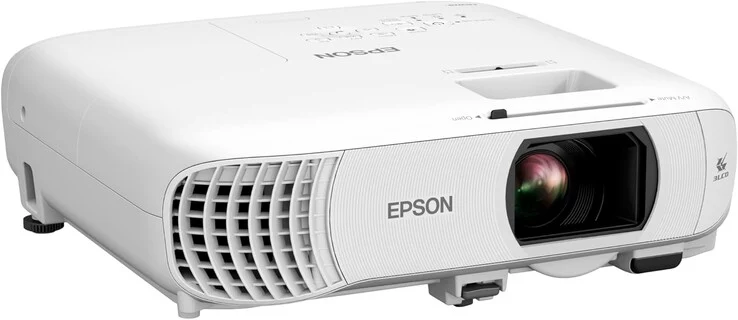
    Epson has introduced the Home Cinema 980 3LCD 1080p Projector in the United States. This new product comes out alongside the Home Cinema 1100, and both models share several similarities.

    Specifications and Features

    The Home Cinema 980 boasts a native 1080p resolution (1,920 x 1,080 px). It utilizes 3LCD technology, claiming to offer brightness levels of up to 4,000 lumens (color brightness rated by IDMS and white brightness rated by ISO). It’s important to mention that the 230W UHE lamp has a shorter average lifespan of 6,000 hours, which can extend to 12,000 hours when in Eco mode. The projector has a native aspect ratio of 16:9, but users can change it to 16:10 or 4:3, with a dynamic contrast ratio of 16,000:1.

    Image Quality and Connectivity

    Epson states that the largest projected image size can reach 337 inches, with a throw ratio ranging from 1.21 to 1.45. To enhance image quality, it features automatic vertical and manual horizontal keystone correction tools. Additionally, there’s a built-in 2W speaker and connection options including HDMI, USB-A, and a 3.5mm audio jack. While this model is nearly 20% brighter compared to the Home Cinema 1100, it does not support wireless screen sharing with Miracast or Apple AirPlay.

    Pricing and Availability

    You can purchase the Epson Home Cinema 980 3LCD 1080p Projector in the US at various retailers such as Amazon for a price of $799. It remains uncertain if or when it will be available in other markets like Europe.

    Source:
    Link