Category: Phones

Stay updated with the latest phone news, reviews, and trends. Discover cutting-edge smartphones, features, and innovations in our Phones category at GizNewsDaily

  • iPhone Fold Dimensions Leak Reveals Surprising First-Gen Shape

    iPhone Fold Dimensions Leak Reveals Surprising First-Gen Shape

    Key Takeaways

    1. Huawei has pioneered the ’16:10 foldable’ smartphone design, influencing Apple’s upcoming “iPhone Fold.”
    2. The “iPhone Fold” is expected to have a larger main display of 7.7 inches, potentially resembling other foldable devices.
    3. The Google Pixel Fold had a unique wide form-factor, but its design changed for the Pixel 9 Pro Fold to a more traditional 20:9 display.
    4. Apple is planning a distinct design for the “iPhone Fold,” with an outer display aspect ratio of ~14:1 and an inner screen closer to 4:3.
    5. The “iPhone Fold” may introduce new features from iOS 26 and bring back Touch ID to iPhones after several years.


    Huawei has lead the way in creating the ’16:10 foldable’ smartphone in 2025, and this design is believed to be influencing Apple’s upcoming first-generation foldable device.

    Bigger Screen Expected

    According to well-known leaker Digital Chat Station, the “iPhone Fold” will likely have a larger screen than the Pura X, with a main display that measures 7.7 inches diagonally. This suggests that the design of the iPhone Fold could resemble that of another foldable device more than others on the market.

    Unique Design Elements

    The Google Pixel Fold, which launched with its own unique wide form-factor, featured a cover display measuring 5.8 inches with a 17.4:9 aspect ratio. However, this design was changed for the Pixel 9 Pro Fold, which now sports a more traditional 20:9 display.

    It seems Apple is aiming for something quite different, as reports indicate that the “iPhone Fold” might have an outer display with an aspect ratio of around ~14:1, while the inner screen is expected to be closer to 4:3.

    Innovative Features

    This new device is also anticipated to be the first to introduce certain features from iOS 26 and will bring back Touch ID to iPhones after many years.

    Source:
    Link
  • Oppo A6 GT: Budget Android with Dual 50MP Cameras & Big Battery

    Oppo A6 GT: Budget Android with Dual 50MP Cameras & Big Battery

    Key Takeaways

    1. The Oppo A series in 2025 shows improved durability, comparable to flagship models, while retaining a mid-range look and 120Hz screens.
    2. The global variant of the A5 Pro is priced at INR 17,998 (approximately $208) on Amazon.in.
    3. Upcoming models may include a GT version of the A6 and an A6 Max with a larger 1.5K LTPS display and Qualcomm Snapdragon 7-series chipset.
    4. The A6 GT and Max are expected to have dual 50MP cameras and larger battery capacities than the current 6,000mAh in the A5 Pro.
    5. New models in the Oppo A6 series may launch at around 999 yuan (approximately $139) or lower in China.


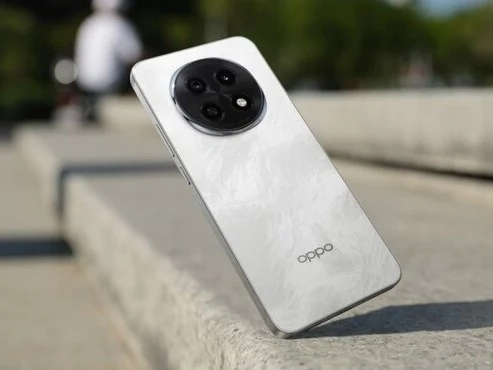
    The Oppo A series has made notable progress in 2025, showcasing enhancements in durability that rival flagship models, all while maintaining a mid-range appearance and featuring 120Hz screens. The global variant of the A5 Pro is currently priced at INR 17,998 (approximately $208) on Amazon.in.

    Upcoming Models

    There are whispers about some exciting successors that could be both interesting and budget-friendly. One of these might be a GT version of the A6, making its debut for the first time.

    Display and Performance

    Additionally, the A6 Max could offer an even larger 1.5K LTPS display, likely powered by Qualcomm’s Snapdragon 7-series chipset. In contrast, both versions of the A5 Pro utilize MediaTek processors.

    Camera and Battery Life

    The A6 GT and Max may feature dual 50MP cameras, which would represent an upgrade from the current 50+2MP setup seen in the A5 series. These new models are also expected to be marketed as “large battery” smartphones, suggesting advancements over the 6,000mAh battery found in the Chinese A5 Pro.

    It is anticipated that the fresh additions to the Oppo A6 series could be priced around 999 yuan (approximately $139) or even lower upon their release in China.

    Source:
    Link

  • Samsung Galaxy Z Fold7: World’s Thinnest Foldable Smartphone Again

    Samsung Galaxy Z Fold7: World’s Thinnest Foldable Smartphone Again

    Key Takeaways

    1. Honor denied allegations that the Magic V5 is thicker than advertised, stating critics didn’t account for included screen protectors.
    2. The Magic V5 has been measured at 9.34 mm, thicker than the 8.95 mm previously reported by Ice Universe.
    3. Competing foldable models like the X Fold5 and Mate X6 are also found to be over 0.5 mm thicker than claimed.
    4. The Mix Fold 4 is only 0.14 mm thicker than Xiaomi’s advertised measurement of 9.47 mm.
    5. The Galaxy Z Fold7 is reported at 8.82 mm, which is less than Samsung’s stated dimensions, highlighting discrepancies in foldable phone measurements.


    A few weeks ago, several influencers showed that the Magic V5 and Find N5 aren’t as slim as Honor and Oppo claim. It’s not surprising that Honor denied these allegations completely.

    Honor’s Response

    In their official statement, the company pointed out that critics, like Ice Universe, didn’t consider the inner and outer screen protectors included with the Magic V5 in their measurements. It’s important to mention that foldable phone makers, including Honor, emphasize that users shouldn’t take off the inner screen protectors.

    New Findings on Thickness

    Despite this, new information has surfaced revealing that the Magic V5 is actually thicker than the 8.95 mm reported by Ice Universe when the pre-installed screen protectors are factored in. A study by the Korean Consumer-Centered Enterprise Association (KCEA) and reported by Business Korea found that the Magic V5 measures 9.34 mm, even for its thinnest Ivory White model.

    Competing Models Also Thicker

    Similarly, the X Fold5 and Mate X6 are both over 0.5 mm thicker than what was advertised. Additionally, the Mix Fold 4 has been tested and found to be just 0.14 mm thicker than Xiaomi’s official claim of 9.47 mm. Meanwhile, the Galaxy Z Fold7, currently priced at $1,999.99 on Amazon, measures 8.82 mm, which is again less than Samsung’s stated dimensions. It’s worth noting, as mentioned by Android Authority, that Samsung is a member of KCEA. However, there’s no indication that the company influenced any of KCEA’s results. This article will be updated if any of the involved companies give an official comment on the situation.

    Source:
    Link


  • Oppo Find N5 Beats Honor Magic V5 and Galaxy Z Fold7 in Battery Tests

    Oppo Find N5 Beats Honor Magic V5 and Galaxy Z Fold7 in Battery Tests

    Key Takeaways

    1. The Oppo Find N5 has superior battery life, lasting over 30% longer than its predecessor and outperforming competitors like Pixel 9 Pro Fold and Galaxy Z Fold6.
    2. It features a robust battery capacity of 5,600 mAh and was the only foldable device tested with the Snapdragon 8 Elite chipset at the time.
    3. Initial comparisons show the Find N5 leading in battery performance, significantly outperforming the Galaxy Z Fold7 and Magic V5.
    4. The Magic V5, despite having a slightly larger battery capacity, drains faster than the Find N5, especially in standard and performance modes.
    5. The Galaxy Z Fold7 has a 21% reduction in battery capacity compared to the Find N5, contributing to its underwhelming performance.


    The Oppo Find N5 has set a new standard for battery life in foldable phones, outperforming all its competitors in our review from earlier this year. It lasted over 30% longer than its predecessor and even surpassed other notable devices like the Pixel 9 Pro Fold, Magic V3, and the Galaxy Z Fold6 (currently priced at $1,000 – renewed on Amazon).

    Superior Battery Capacity

    One of the key reasons for its impressive battery longevity is the Find N5’s robust battery capacity, rated at 5,600 mAh. At the time, it was the only foldable device with the Snapdragon 8 Elite chipset that we had tested. Recently, two other devices have launched, but they utilize the 8-core versions of Qualcomm’s Snapdragon 8 Elite, unlike the 7-core variant in the Oppo.

    Early Comparisons

    Initial evaluations suggest that the Find N5 continues to lead the pack regarding battery performance. As demonstrated in the images below, it significantly outperforms both the Galaxy Z Fold7 and the Magic V5. The underwhelming performance of the Galaxy Z Fold7 against the Find N5 is not surprising, given its 21% reduction in battery capacity.

    On the other hand, the Magic V5 comes with a battery of 5,820 mAh, but only if you choose the Chinese model that includes 16 GB of RAM and 1 TB of storage. Even though Honor’s newest foldable has a slight 4% edge in battery capacity over the Find N5, it still lags behind the Magic V3 and Galaxy Z Fold6, according to early findings from Hardware Zone. Specifically, the Magic V5 drains its battery 13% faster than its predecessor in the PCMark for Android’s Work 3.0 Battery Life test, and 10% faster than the Galaxy Z Fold6.

    Performance Mode Drawbacks

    Even more troubling is that the Magic V5 consumes its larger battery 21% quicker than the Find N5 in standard mode. Switching to performance mode further reduces battery life by an additional 15%, resulting in a staggering 33% difference compared to the Find N5. For more details, please refer to the data presented above and below.

    Source:
    Link


  • Cheaper Phone 3a Pro vs Flagship Phone 3: Camera Test Results

    Cheaper Phone 3a Pro vs Flagship Phone 3: Camera Test Results

    Key Takeaways

    1. The Nothing Phone (3) excelled in main camera performance, consistently ranking high in the evaluation.
    2. The Nothing Phone (3a) Pro performed well, particularly in selfie images, low-light conditions, and audio quality.
    3. In video performance, the Nothing Phone (3) was the clear leader, especially in stabilization and zoom capabilities.
    4. Both the Nothing Phone (3a) and (3a) Pro underperformed in macro and tele-macro photography, while the Phone (3) and CMF Phone 2 Pro delivered better results.
    5. Despite the Nothing Phone (3) being a flagship device priced at nearly double the (3a) Pro, the performance difference was found to be disappointing.


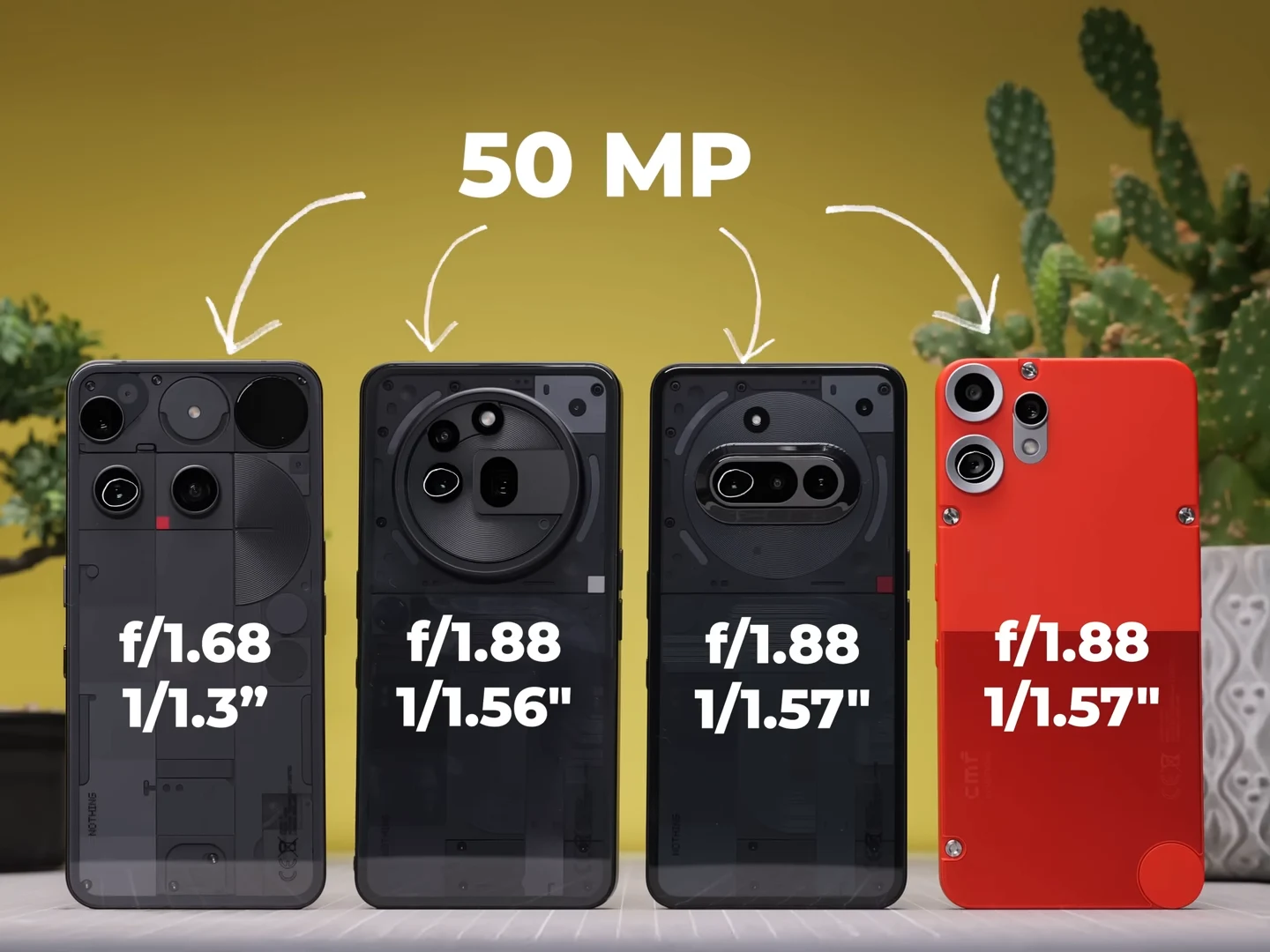
    In a recent camera comparison video released two days ago, Versus conducted a thorough evaluation of various devices. The assessment included different categories such as main camera, ultra-wide camera, portrait, video, audio, slow motion, zoom, macro, low light, selfie, and more.

    Main Camera Showdown

    When it came to main camera photos, the Nothing Phone (3) emerged as the frontrunner and kept its position throughout the evaluation. Nevertheless, it faced some tough competition from the Nothing Phone (3a) Pro, which was not far behind and even surpassed the Phone (3) in several categories. The (3a) Pro excelled in capturing selfie images, low-light scenarios, and audio quality.

    Video Performance

    In the video categories, which included outdoor and indoor testing as well as stabilization and slow-motion capabilities, the Nothing Phone (3) clearly stood out as the top performer. For zoom photography, it outperformed the competition by a significant margin, thanks to its advanced AI-powered image processing.

    Macro and Tele-Macro Results

    Surprisingly, the macro and tele-macro performance was a letdown for both the Nothing Phone (3a) and the (3a) Pro. On the other hand, the flagship Phone (3) and the budget-friendly CMF Phone 2 Pro (currently priced at $299 on Amazon) delivered satisfactory results. The CMF Phone 2 Pro produced well-colored images, while the Phone (3) captured finer details in its pictures.

    In conclusion, the rankings showed that the Phone (3) claimed the top position. However, the difference in performance was rather disappointing, especially considering it is marketed as a flagship device and was priced at nearly twice that of the Phone (3a) Pro, which retails for $799.

  • Samsung Galaxy S26 Ultra Design Render Revealed in New Image

    Samsung Galaxy S26 Ultra Design Render Revealed in New Image

    Key Takeaways

    1. The Galaxy S26 is expected to feature quicker charging and a larger battery than anticipated.
    2. The Exynos processor may be used in the Galaxy S26 series, but its performance in benchmarks has not been impressive.
    3. The Galaxy S26 Ultra is set to debut in January 2026, succeeding the Galaxy S25 Ultra.
    4. Camera enhancements include upgraded lenses and a larger aperture, improving low-light zoom shots.
    5. The slimmer design of the Galaxy S26 Ultra will result in a larger camera bump, estimated to be about 3mm thick.


    The past few days have seen a flurry of news about the Galaxy S26. Many early clues from trusted sources suggest that it will have quicker charging and a bigger battery, which many didn’t expect from Samsung just yet. The Exynos processor, which Bloomberg says is set to be used again in the Galaxy S26 series, was spotted in a benchmark database for the first time, but its performance numbers were not very impressive. It’s still unclear if the Exynos 2600 will actually be featured in the Galaxy S26, Galaxy S26 Edge, and Galaxy S26 Ultra.

    Design and Camera Features

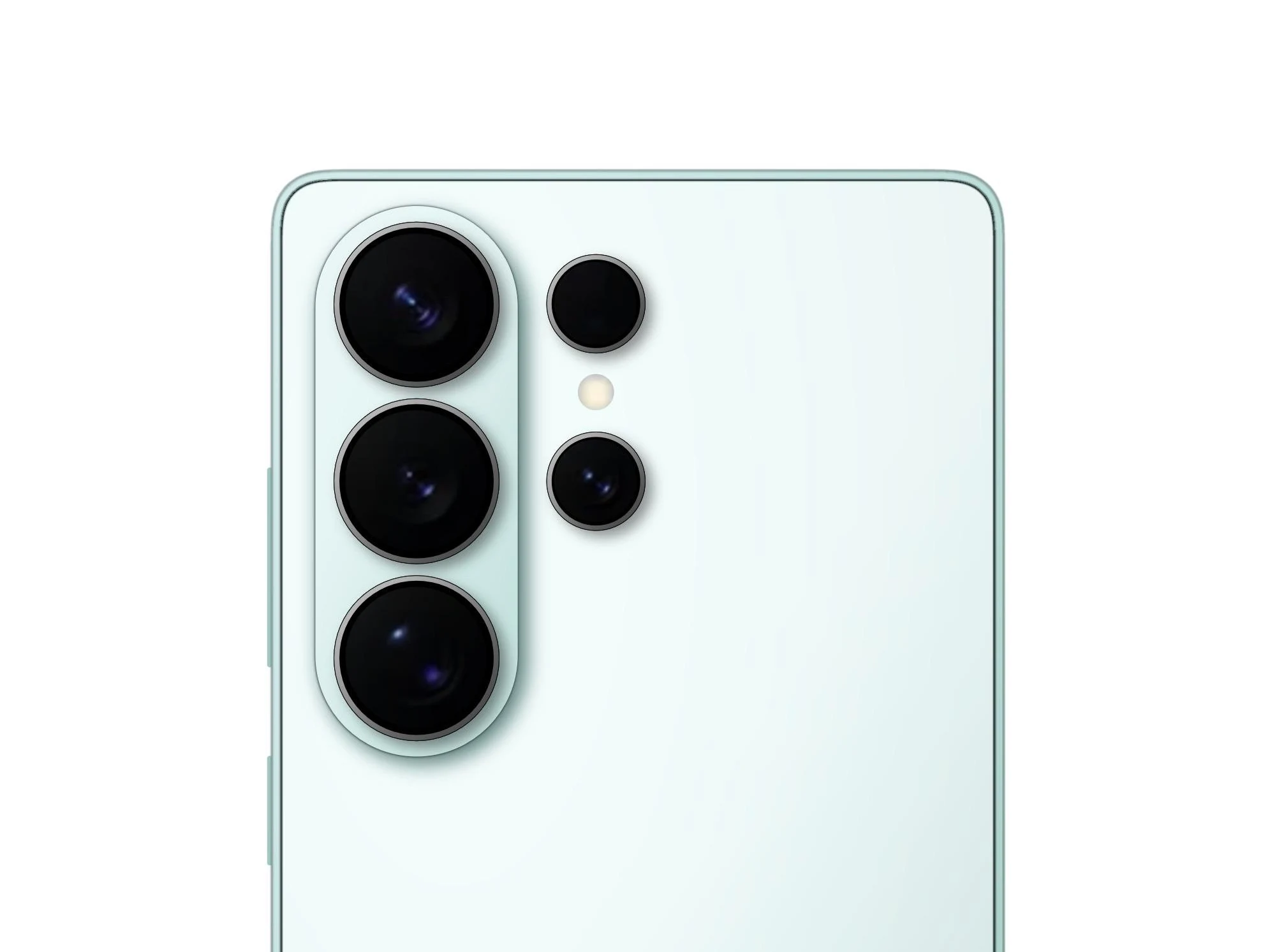
    Samsung fans are likely most curious about the design and camera capabilities of the Galaxy S26 Ultra, which we anticipate will debut in January 2026 as the successor to the Galaxy S25 Ultra (available here on Amazon). Recent developments have brought forth some new details on this front. Just yesterday, leaker Ice Universe pointed out that the primary camera will see significant enhancements thanks to upgraded lenses and a bigger aperture. He has not only confirmed this speculation but has also mentioned that the 5x periscope telephoto lens will benefit from the larger aperture, improving zoom shots in low-light conditions.

    Camera Bump Concerns

    However, with a slimmer body, this leads to the camera bump being larger once again. Ice Universe claims that a render image from a Samsung fan originally posted on Reddit gives us an idea of what to expect as the “final design” for the Galaxy S26 Ultra’s camera. Of course, this is still far from any officially verified final design. Since the camera rings from the predecessor have been phased out since the Galaxy Z Fold 7, a camera bump of about 3mm thick for the main camera, ultra-wide-angle lens, and 5x telephoto lens seems realistic, according to the leaker.

    Source:
    Link

  • iQoo Z10 Turbo+ Launch: 8000mAh Battery & Dimensity 9400+ Chipset

    iQoo Z10 Turbo+ Launch: 8000mAh Battery & Dimensity 9400+ Chipset

    Key Takeaways

    1. The iQoo Z10 Turbo+ will feature a massive 8,000mAh battery, surpassing competitors like the Redmi Turbo 4 Pro and Oppo K13 Turbo Pro.
    2. It will be powered by the Dimensity 9400+ chipset, known for its high performance and achieving around 2.8 million points on the AnTuTu v10 benchmark.
    3. The Z10 Turbo+ may share specifications with the Z10 Turbo Pro, including a 6.78-inch AMOLED display and a dual rear camera system.
    4. The Z10 Turbo Pro had a starting price of 1,999 yuan (about 279 USD) in China, suggesting a similar price range for the Turbo+.
    5. Detailed specifications for the Z10 Turbo+ are not yet available, leaving some features still unclear.


    Back in April, iQoo launched the Z10 Turbo series which included two models: the Z10 Turbo and the Z10 Turbo Pro. A standout feature of this series was the Z10 Turbo’s impressive 7,620mAh battery. Now, the Chinese brand is getting ready to unveil the Z10 Turbo+, which will boast an even bigger battery.

    Exciting New Battery Capacity

    The product manager of iQoo’s Z series recently shared the exciting news on Weibo about the new phone. The Z10 Turbo+ will have a massive 8,000mAh battery. For reference, the Redmi Turbo 4 Pro, known for its performance, has a 7,550mAh battery, while the new Oppo K13 Turbo Pro offers a 7,000mAh battery. Thus, the increase to 8,000mAh is a significant upgrade for the Z10 Turbo+.

    Powerful Chipset Included

    iQoo also confirmed that this phone will come equipped with the Dimensity 9400+ chipset. This is MediaTek’s latest flagship SoC, manufactured using TSMC’s N3E process. As per NanoReview, the processor achieves around 2.8 million points on the AnTuTu v10 benchmark. Other devices that utilize the Dimensity 9400+ include the OnePlus Ace 5 Ultra, the Redmi K80 Ultra, and the Vivo X200s, showcasing its robust performance.

    Other Specs Remain Unclear

    While the detailed specifications of the Z10 Turbo+ are yet to be revealed, it might share some features with the Z10 Turbo Pro. To give some background, the Z10 Turbo Pro had a 6.78-inch AMOLED display with a 144Hz refresh rate and a resolution of 1260 x 2800 pixels. It was equipped with a dual rear camera system that included a 50MP main sensor and an 8MP ultra-wide lens. For selfies, it utilized a 16MP front camera. In China, the phone was launched with a starting price of 1,999 yuan, which is about 279 USD.

    Source:
    Link


  • Exynos 2600: Galaxy S26 SoC’s Weak Geekbench Performance

    Exynos 2600: Galaxy S26 SoC’s Weak Geekbench Performance

    Key Takeaways

    1. The Exynos 2600, an upcoming SoC, scored 2,155 in single-core and 7,788 in multi-core tests on Geekbench 6.4, which is lower than its predecessor, the Exynos 2500.

    2. This chipset features a 10-core architecture with one Cortex-X930 core at 3.55 GHz, three Cortex-A730 cores at 2.96 GHz, and six Cortex-A730 cores at 2.46 GHz.

    3. The Exynos 2600 includes an Xclipse 960 GPU, which may be developed in-house by Samsung rather than based on AMD’s RDNA architecture.

    4. It introduces Scalable Matrix Extension (SME) instructions, aimed at improving performance in AI tasks.

    5. The early appearance of the Exynos 2600 on Geekbench suggests advancements in Samsung’s production capabilities, but its use in the Galaxy S26 series remains uncertain.


    Although the future of Samsung’s upcoming SoC, the Exynos 2600, is still unclear, it has made its way onto Geekbench. While the performance isn’t particularly impressive, it’s important to remember that this is just an engineering sample that’s still some time from being officially released. We also have confirmation of its specifications.

    Performance Metrics

    The Exynos 2600, which has the model number S5E9965, achieved scores of 2,155 in single-core and 7,788 in multi-core tests on Geekbench 6.4. These results are a bit lower than those of the Exynos 2500 found in the Galaxy Z Flip 7 and are significantly behind its projected scores of 2,950 and 10,200 points. Since this is a pre-production model, there is room for enhancement, but it is doubtful that it will match the performance of the Snapdragon 8 Elite 2 or Dimensity 9500.

    Specifications Overview

    In terms of specifications, the Exynos 2600 follows Samsung’s established 10-core architecture, featuring one core clocked at 3.55 GHz, three cores at 2.96 GHz, and six cores running at 2.46 GHz. According to a leak from the South Korean forum DCinside, Samsung appears to have adopted MediaTek’s approach with an all-P-core configuration. The main CPU core is identified as a Cortex-X930, while the other nine cores are Cortex-A730.

    GPU and Features

    The back-end info from Geekbench indicates that the Exynos 2600 is equipped with an Xclipse 960 GPU. Although the name suggests it draws from AMD’s RDNA architecture, a recent leak hinted that it might actually be developed in-house by Samsung. A significant update for the Exynos 2600 includes the introduction of SME (Scalable Matrix Extension) instructions, which should enhance performance in AI-related tasks.

    The early appearance of the Exynos 2600 on Geekbench doesn’t guarantee that it will be the chipset for the Galaxy S26 series next year. We’ve seen similar situations unfold previously with the Exynos 2500 and a Galaxy S25 prototype. However, the fact that the Exynos 2600 has surfaced much earlier indicates that Samsung has managed to stabilize SF2 production enough to begin prototype manufacturing.

    Source:
    Link


  • Huawei and Samsung Set to Compete with New Tri-Fold Smartphones

    Huawei and Samsung Set to Compete with New Tri-Fold Smartphones

    Key Takeaways

    1. Samsung has launched three new foldable phones: Galaxy Z Flip7 FE, Galaxy Z Flip7, and Galaxy Z Fold7, priced at $1,999.99 on Amazon.
    2. Samsung is expected to unveil its first tri-fold device, rumored to be called Galaxy Z TriFold, in early Q4 2025.
    3. The Galaxy Z TriFold may feature the Snapdragon 8 Elite for Galaxy and could launch in October, targeting China and South Korea.
    4. Huawei plans to release its second-generation tri-fold device, named ‘Mate XTs,’ a month before Samsung, with expected color options like crimson purple and dark black.
    5. The Mate XTs will have slight upgrades in performance and photography, initially launching in China with no current details on other regions.


    Samsung has recently begun the distribution of three new foldable phones, which are being launched worldwide as the Galaxy Z Flip7 FE, Galaxy Z Flip7, and Galaxy Z Fold7, priced at $1,999.99 on Amazon. Additionally, the company is anticipated to unveil its first tri-fold device before the year wraps up.

    Upcoming Galaxy Z TriFold

    Rumored to be named the Galaxy Z TriFold, this device will reportedly be powered by the Snapdragon 8 Elite for Galaxy. The official release is expected to happen in early Q4 2025. Observing the launch pattern from last year’s Galaxy Z Fold Special Edition, Samsung might choose to debut the Galaxy Z TriFold in October, targeting markets in China and South Korea.

    Huawei’s Competitive Edge

    In a twist, it seems Huawei will launch its second-generation tri-fold a month earlier than Samsung. According to a post by Digital Chat Station on Weibo, Huawei is planning to introduce the device under the name ‘Mate XTs,’ offering colors like crimson purple, dark black, red, and white, instead of the expected Mate XT 2.

    Improvements and Release Plans

    Although the new name suggests it will have only slight upgrades from the current Mate XT, Digital Chat Station claims that Huawei will still bring some enhancements in performance, photography, and more. Initially, the Mate XTs are expected to be available in China, but there is currently no information regarding its release in other regions.

    Source:
    Link

  • Xiaomi 16 Ultra: New Flagship to Compete with Vivo X200 Ultra

    Xiaomi 16 Ultra: New Flagship to Compete with Vivo X200 Ultra

    Key Takeaways

    1. The Xiaomi 16 Ultra is expected to release in about seven to eight months, with new specifications starting to emerge.
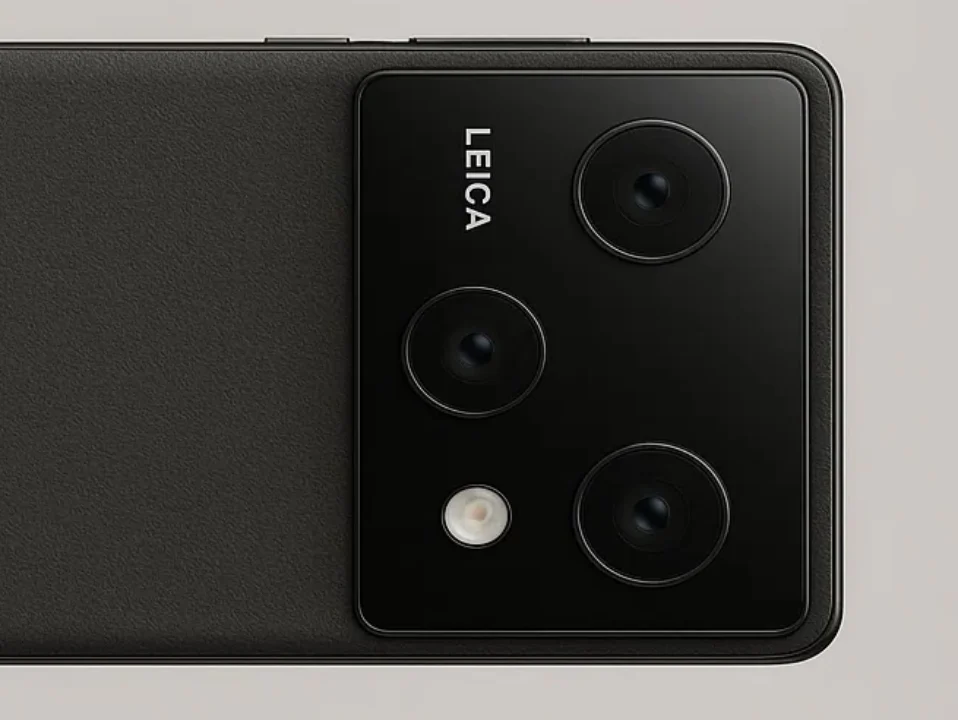
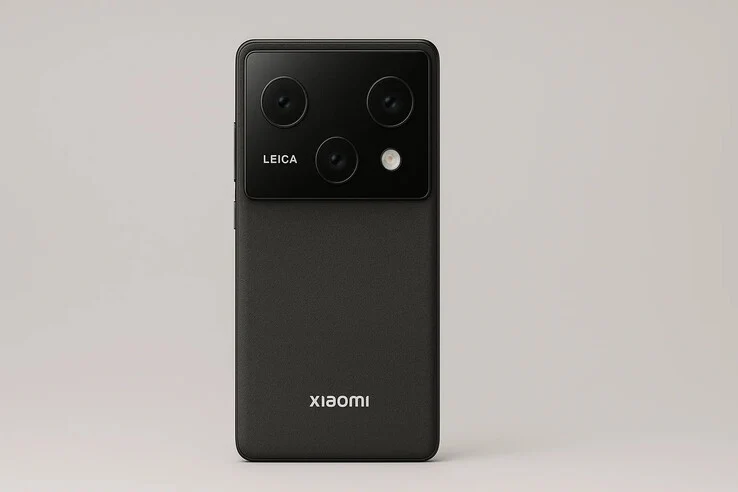
    2. The design will shift from a quad-camera setup to a three-camera layout, featuring a new telephoto sensor.
    3. Xiaomi is adopting a similar approach to Vivo’s X200 Ultra by moving away from the quad-camera trend seen in other flagship models.
    4. The Xiaomi 16 Ultra will reportedly include a 1-inch main camera and a 50 MP ultra-wide-angle camera supported by a Sony LYT-600 sensor.
    5. Xiaomi aims to innovate and streamline its camera technology, setting new standards for future models.


    The anticipated release of Xiaomi’s upcoming Ultra-branded smartphone is presumably still about seven to eight months away. However, various details are starting to surface online regarding Xiaomi’s aim to make the Xiaomi 16 Ultra stand out from its earlier models. For example, comprehensive specifications were revealed through different sources just this week.

    Design Insights

    Recently, Kartikey Singh has collaborated with SmartPrix to give an initial glimpse of what the Xiaomi 16 Ultra might look like. The duo suggests that Xiaomi plans to shift from the quad rear camera setup that has been a signature feature of its Ultra models since the Xiaomi 13 Ultra in 2023. Instead, it seems the brand will return to a three-camera layout, featuring a new telephoto sensor that would replace the 3x and 4.3 optical zoom cameras seen in the Xiaomi 15 Ultra.

    Strategic Shift

    In this regard, it looks like Xiaomi is taking a page from Vivo’s book with its X200 Ultra, choosing not to follow the quad-camera trend also adopted by Samsung in its Ultra flagship series (currently priced at $1,106 on Amazon). Reportedly, the 1-inch type main camera will make a comeback in the Xiaomi 16 Ultra. On the other hand, a Sony LYT-600 is said to support the device’s 50 MP ultra-wide-angle camera. Furthermore, a new S5KHHE telephoto sensor might replace the ISOCELL HP9 utilized in both the X200 Ultra and the Xiaomi 15 Ultra, as per insights from Digital Chat Station.

    Future Expectations

    With these updates, it appears that Xiaomi is aiming to innovate while also streamlining its camera technology. This may set a new standard for its future models, ensuring they remain competitive in the market. As we await the official launch, more details will likely emerge that will shed light on the Xiaomi 16 Ultra’s capabilities and features.

    Source:
    Link