Category: Phones

Stay updated with the latest phone news, reviews, and trends. Discover cutting-edge smartphones, features, and innovations in our Phones category at GizNewsDaily

  • Xiaomi Offers 6 Years of Updates for Budget Smartphones like Samsung

    Xiaomi Offers 6 Years of Updates for Budget Smartphones like Samsung

    Key Takeaways

    1. The EU requires smartphone makers to provide software updates for all devices, even those no longer sold.
    2. Creating software updates is a lengthy process, particularly challenging for budget-friendly smartphones priced under $200.
    3. Compatibility issues between Android and chip manufacturers have mostly been resolved, allowing for better update support.
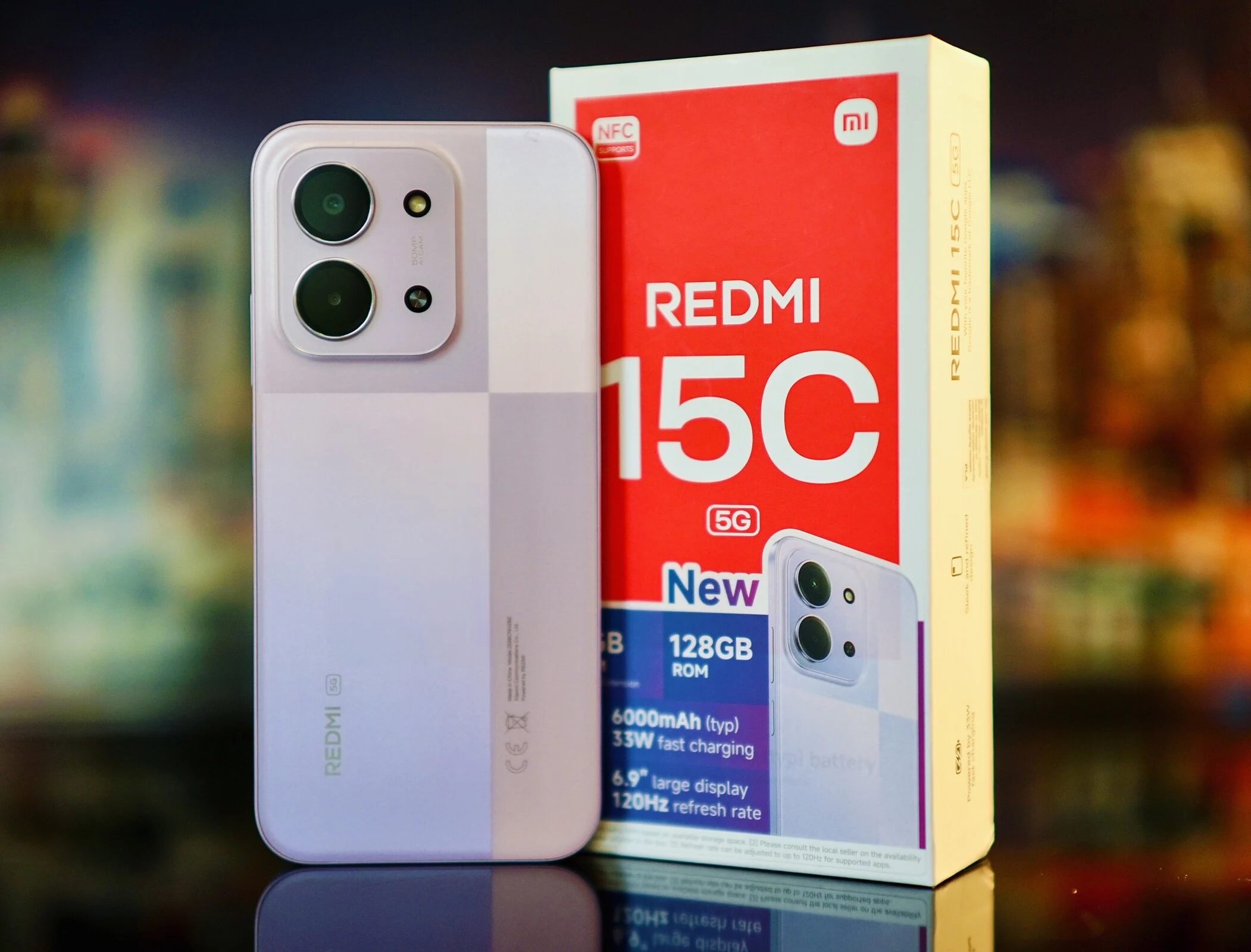
    4. Xiaomi’s Redmi 15C 5G offers six years of security updates, showcasing a strong long-term commitment to software support.
    5. Samsung claims similar update promises for its budget models, but reliability may vary, unlike Xiaomi’s more straightforward commitment.


    The EU has been enforcing a new rule for several months: all smartphone makers must provide software updates, even for phones no longer sold in stores. However, many brands are finding this challenging, especially when it comes to budget-friendly models.

    Reasons Behind the Struggle

    One main reason is that creating these updates is a lengthy process. Each update must be tailored to fit the specific hardware of each device, ensuring that drivers work properly. This becomes an issue for smartphones priced below $200, as manufacturers often find it not worth the effort.

    Concerns About Compatibility

    For a long time, there was uncertainty about whether Google’s Android and certain chip manufacturers could maintain compatibility over the years. However, many of these issues seem to have been addressed, and Xiaomi is making a significant move with an affordable smartphone that promises six years of security updates, extending until 2031. The device in question is the Xiaomi Redmi 15C 5G, which retails for just under $200 in various regions.

    Update Promises and Reliability

    While it’s true that Samsung also claims to offer six years of security and OS updates for its budget models, our review of the Galaxy A17 5G highlights why this claim might not be as solid as it seems. Xiaomi, on the other hand, makes no limitations on its update promise, which gives users confidence in the long-term update commitment. Other brands like Fairphone have shown that long-term support is indeed achievable.

    Source:
    Link


  • Global Poco F8 Ultra Expected to Have Flagship Camera Setup

    Global Poco F8 Ultra Expected to Have Flagship Camera Setup

    Key Takeaways

    1. Xiaomi has launched its first Snapdragon 8 Elite Gen 5 smartphone series, the Xiaomi 17 lineup, and is also set to introduce the budget-friendly Redmi K90 series.
    2. The Redmi K90 Pro will be released globally as the Poco F8 Ultra, featuring advanced camera specifications.
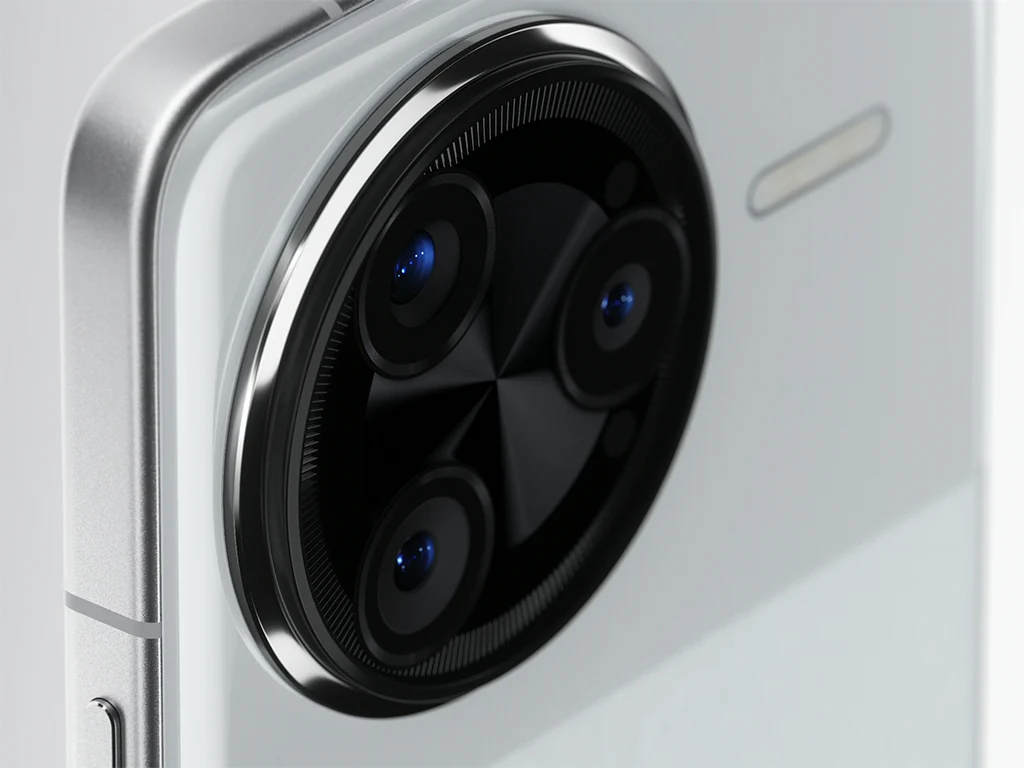
    3. The Poco F8 Ultra will include a 50 MP periscope telephoto lens, offering improved optical zoom capabilities.
    4. The main camera is expected to be a 50 MP OVX9500 sensor with a larger sensor size compared to its predecessor.
    5. Additional features may include telephoto macro capabilities for close-up photography, with the launch anticipated in October 2025.


    Xiaomi has introduced its first Snapdragon 8 Elite Gen 5 smartphone series, known as the Xiaomi 17 lineup. Now, the company is preparing to unveil a budget-friendly flagship series, the Redmi K90. Notably, the Redmi K90 Pro is anticipated to hit the global market under the name Poco F8 Ultra, with leaks indicating it will boast an advanced rear camera configuration.

    Camera Specs Leak

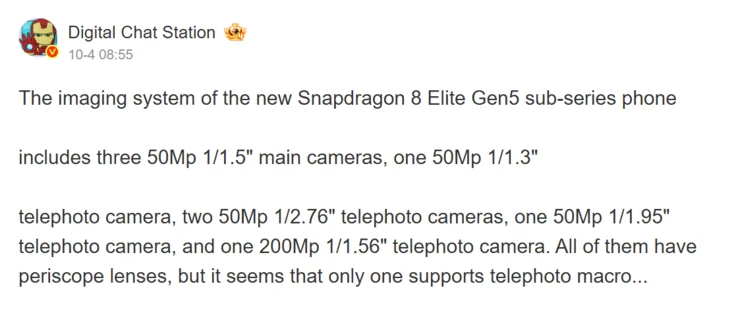
    Digital Chat Station, a trusted leaker on Weibo, has confirmed the camera specifications for the Redmi K90 Pro. According to the information shared, the global version, Poco F8 Ultra, is set to include a periscope telephoto lens, which was earlier identified as the Samsung Isocell JN5 sensor. This camera has a 1/2.76-inch size and a resolution of 50 MP, similar to what was found in the F7 Ultra (currently priced at $762.50 on Amazon for the 256 GB version).

    Enhanced Features Expected

    Rumors suggest that the Poco F8 Ultra will use this sensor alongside a periscope lens, allowing for a greater optical zoom capability compared to the 2.5x zoom of its predecessor. Digital Chat Station has implied that this telephoto sensor will work with a 50 MP main camera that has a larger sensor size of 1/1.3 inches, surpassing the primary sensor in the previous model. This main camera was reported to be the OVX9500 sensor.

    In relation to the ultrawide camera, XiaomiTime previously mentioned that it could include the OV50M sensor. This is also a 50 MP camera, featuring a 1/2.88-inch sensor size, which represents a significant upgrade from the 32 MP ultrawide camera with a 1/3.42-inch sensor used in the Poco F7 Ultra.

    Additional Features on the Horizon

    Digital Chat Station has also suggested that the Poco F8 Ultra may incorporate telephoto macro capabilities, enabling users to take close-up photos of objects without having to be physically near them. While Xiaomi has not released any official information about this upcoming Snapdragon 8 Elite Gen 5 flagship, the Redmi K90 Pro is projected to be launched later in October 2025.

    Source:
    Link


  • Doogee Fire 5 Ultra and Pro Leak: 13,000mAh Battery, IP69K

    Doogee Fire 5 Ultra and Pro Leak: 13,000mAh Battery, IP69K

    Key Takeaways

    1. Doogee is expanding its rugged smartphone line with two new models: Fire 5 Ultra and Fire 5 Pro, known for their durability and outdoor features.
    2. The Fire 5 Ultra features Android 15, a MediaTek Helio G81 chip, a 6.6-inch HD+ LCD screen, and a massive 13,000 mAh battery, ideal for extended use.
    3. It includes innovative features like dual camping lights that emit up to 1,200 lumens, making it useful for outdoor activities.
    4. The Fire 5 Pro shares a similar design but has lower specs, including a 13 MP camera, 4 GB RAM, and 128 GB storage, while maintaining rugged features.
    5. Pricing for the Fire 5 Pro is expected around $170, while the Fire 5 Ultra will be about $200, with both models available in outdoor-friendly colors.


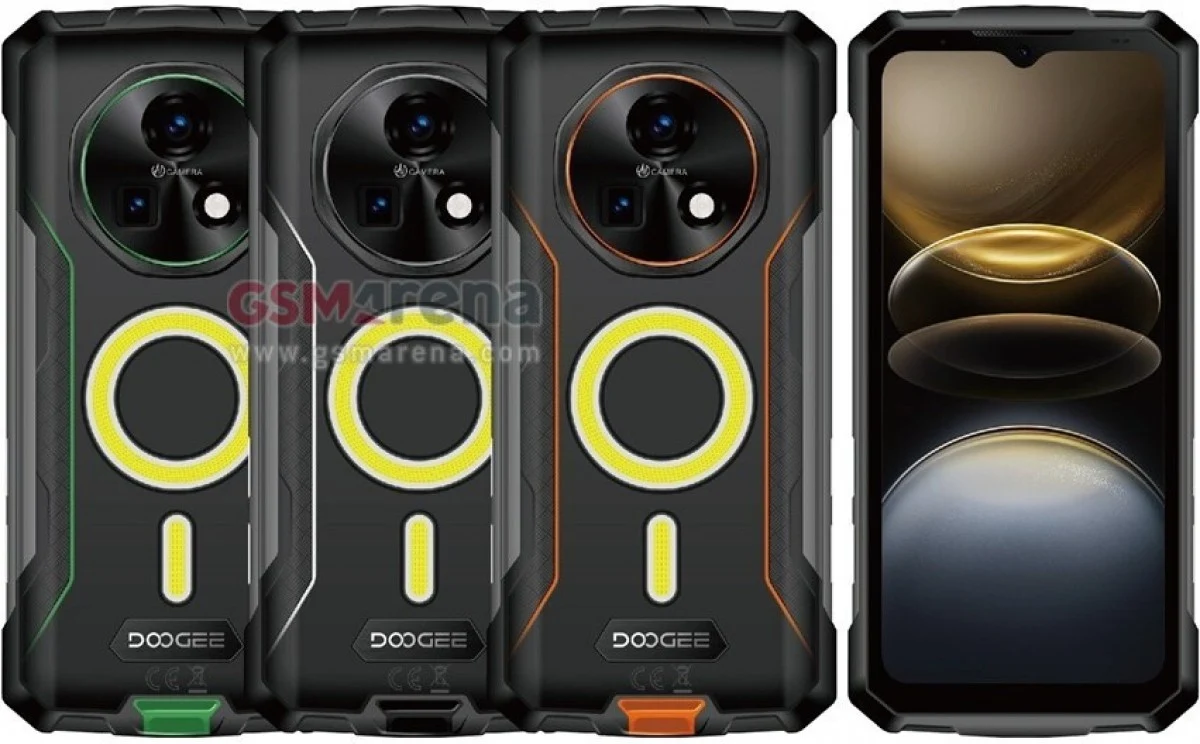
    Doogee has recently introduced the Fire 5 and is said to be preparing to broaden its rugged smartphone range with two exciting new models: the Fire 5 Ultra and Fire 5 Pro. According to leaked information from GSMArena, both of these new devices will stick to Doogee’s well-known design and toughness standards. However, the Fire 5 Ultra brings some innovative features that are especially useful for people who enjoy the outdoors or work in tough conditions.

    Specifications of the Fire 5 Ultra

    The Fire 5 Ultra will operate on Android 15 and is set to be powered by the MediaTek Helio G81 chip. It showcases a 6.6-inch HD+ LCD screen with a 90 Hz refresh rate and has an 8 MP Sony IMX355 front camera for selfies and video chats. The device is backed by an impressive 13,000 mAh battery, offering 18 W wired charging and 5 W reverse charging. This large battery should provide several days of usage for the average user, making it ideal for outdoor workers, travelers, or anyone who often finds themselves without easy access to a power source.

    Features of the Ultra Model

    The Ultra variant boasts 8 GB of RAM and 256 GB of internal storage, which can be expanded up to 2 TB with a microSD card. Its main camera is equipped with a 48 MP OmniVision OV48B2Q sensor. One of the standout features of the Fire 5 Ultra is the dual camping lights located on the back. These lights can emit up to 1,200 lumens and can light up an area up to eight meters away, serving as both a flashlight and an SOS signal with three different brightness levels.

    Overview of the Fire 5 Pro

    The Fire 5 Pro shares a lot of the same design elements as the Ultra but reduces some of the hardware specifications to come in at a more affordable price. It retains the same display size and refresh rate while also holding onto MIL-STD-810H certification and IP68 and IP69K ratings for dust and water resistance, along with protection from high-pressure water jets. The Pro model will have a 13 MP Samsung ISOCELL S5K3L6 as its main camera, along with 4 GB of RAM and 128 GB of storage. While it omits the camping light feature, it still keeps all the necessary rugged attributes like a reinforced frame and durable outer layer.

    Both devices come with NFC, a fingerprint reader on the side, and a customizable button for quick access to frequently used features like the flashlight or camera. They are expected to be available in colors like Forest Green, Blaze Orange, and Twilight Gray, maintaining the brand’s outdoor aesthetic. Even though they have large batteries and robust designs, the overall look remains sleek and practical rather than excessively bulky. In terms of cost, leaks indicate that the Fire 5 Pro will be priced around $170, while the Fire 5 Ultra will be slightly pricier at approximately $200.

    Source:
    Link


  • Google Pixel 10 Pro Camera Coach: Features and Benefits Explained

    Google Pixel 10 Pro Camera Coach: Features and Benefits Explained

    Key Takeaways

    1. The Google Pixel 10 Pro features a 6.3-inch LTPO OLED display with QHD+ resolution and a brightness of over 3,200 nits, supporting up to 120 Hz refresh rates.
    2. It is powered by the Tensor G5 processor, comes with 16 GB of RAM, and offers storage options from 128 to 1,024 GB, along with advanced connectivity features like Wi-Fi 7 and Bluetooth 6.0.
    3. The device has a robust battery of 4,970 mAh, supporting 30 W wired and 15 W wireless charging, and runs on Android 16 with seven years of updates.
    4. The triple camera system includes a 50 MP primary sensor, ultra-wide-angle, and telephoto lenses with 5× zoom, plus a 42 MP front camera capable of 8K video recording.
    5. The new Camera Coach feature assists users in taking better photos by providing real-time composition suggestions through an AI-driven process in the camera app.


    The Google Pixel 10 Pro comes with a 6.3-inch LTPO OLED screen featuring QHD+ resolution, supporting refresh rates of up to 120 Hz and boasting an impressive brightness of over 3,200 nits. It is safeguarded by Gorilla Glass Victus 2, has an IP68 rating, and is driven by the Tensor G5 processor, along with 16 GB of RAM and storage options ranging from 128 to 1,024 GB. Connectivity options include Wi-Fi 7, Bluetooth 6.0, NFC, UWB, and 5G, along with the innovative ‘Pixelsnap’ magnet for accessories. The device is equipped with a 4,970 mAh battery, which supports 30 W wired charging and 15 W wireless charging. It runs on Android 16, providing seven years of updates and advanced AI capabilities like Gemini and Circle to Search.

    Camera Specifications

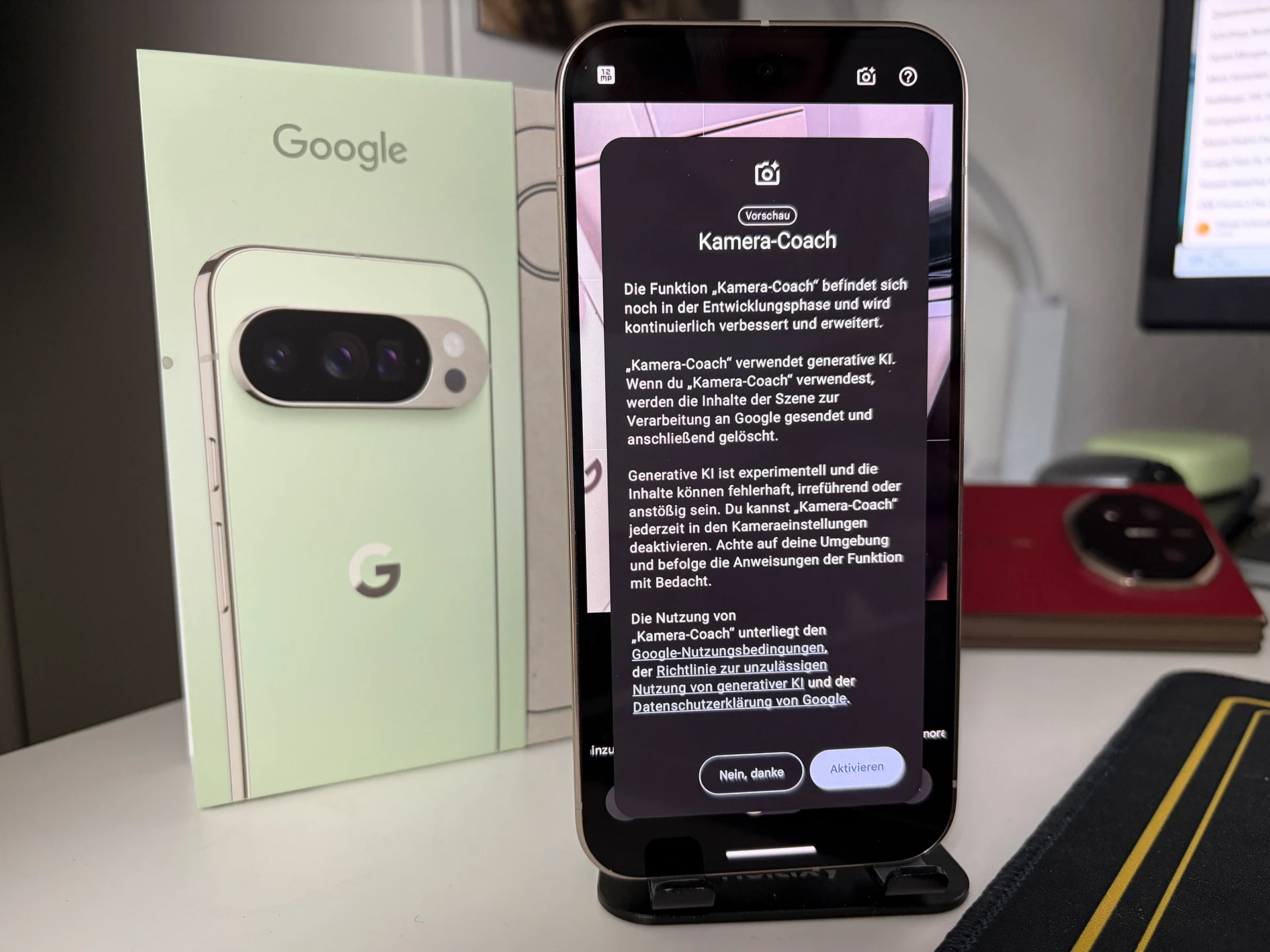
    The triple camera system boasts a 50 MP primary sensor equipped with OIS, along with an ultra-wide-angle lens and a telephoto lens that offers 5× zoom. The front-facing 42 MP camera is capable of autofocus. Users can record videos at a maximum of 8K resolution at 30 FPS or 4K at 60 FPS with HDR. A new addition to the camera functionality is the Camera Coach, which aims to assist users in taking better photos. This feature is targeted toward both seasoned photographers and beginners, and is still under development.

    Using the Camera Coach

    To use it, you need to enable it in the settings, and access it through a small AI camera icon in the camera app. Once you tap the icon, the algorithm processes the live view of the camera in the cloud. The coach then presents various possible image compositions and walks you through the steps needed for capturing the shot, which we have summarized in a series of images, including the final outcome.

    Whether or not the camera coach proves to be inspiring is something we’ll have to wait and see. Nonetheless, it could serve as a fascinating tool for those who are new to photography.


  • Vivo X300 Pro and iQoo 15 Global Release Nears with Certifications

    Vivo X300 Pro and iQoo 15 Global Release Nears with Certifications

    Key Takeaways

    1. New Android smartphones from Chinese brands include the Vivo X300 series, Oppo Find X9 series, OnePlus 15, Realme GT 8 Pro, and iQoo 15, initially launching in China.
    2. The Vivo X300 Pro and iQoo 15 have received certification in Malaysia, indicating a possible global launch soon.
    3. The Vivo X300 Pro features a 6.78-inch display, MediaTek Dimensity 9500 processor, up to 16GB RAM, 1TB storage, dual 200MP cameras, and a 6,510mAh battery.
    4. The iQoo 15 is expected to have a 6.85-inch display with a 144Hz refresh rate, Snapdragon 8 Elite Gen 5 processor, up to 16GB RAM, 1TB storage, a triple camera system, and a 7,000mAh battery with 100W charging.
    5. The Vivo X300 Pro is set to launch on October 13, and the iQoo 15 on October 15, with international releases to follow shortly.


    There are several new Android smartphones on the way from Chinese brands. This lineup includes the Vivo X300 series, Oppo Find X9 series, OnePlus 15, Realme GT 8 Pro, and iQoo 15. These devices are likely to be available first in China. In addition, the global versions of the Vivo X300 Pro and iQoo 15 have received certification in Malaysia.

    Certification Details

    The Vivo X300 Pro, identified by the model number “V2514,” has been certified by SIRIM in Malaysia. Likewise, the iQoo 15 has also obtained certification under the model number “I2501.” While these SIRIM certifications do not provide details about the devices’ specifications, they suggest that a global launch could be approaching.

    Expected Features

    The Vivo X300 Pro is anticipated to come with a flat 6.78-inch display. It will be powered by MediaTek’s latest flagship processor, the Dimensity 9500. Moreover, it might offer up to 16GB of RAM and 1TB of UFS 4.1 storage. A standout feature will be its dual 200MP Zeiss cameras. Recently, the company announced it will include a 6,510mAh battery.

    On the other hand, the iQoo 15 is likely to sport a 6.85-inch display with a 144Hz refresh rate. The brand has confirmed that it will utilize the Snapdragon 8 Elite Gen 5 processor. Similar to the Vivo X300 Pro, it is expected to offer up to 16GB of RAM and 1TB of internal storage. The iQoo 15 is rumored to have a triple rear camera system featuring a 50MP main sensor, a 50MP periscope telephoto lens, and an ultrawide lens. It may also include a hefty 7,000mAh battery with support for 100W charging.

    Launch Dates

    The Vivo X300 Pro is set to be revealed on October 13 in China, while the iQoo 15 might debut on October 15. The international release of these smartphones is anticipated to follow shortly after their launch in China.

    Source:
    Link


  • iPhone 17 Pro Flash Issue: Users See Shadows When Recording

    iPhone 17 Pro Flash Issue: Users See Shadows When Recording

    Key Takeaways

    1. The aluminium frame of the iPhone 17 Pro and Pro Max scratches easily, causing user complaints.
    2. The new chip in the devices offers powerful performance and better thermal stability for gaming.
    3. Users have found creative solutions, like attaching SSD coolers, to enhance cooling during heavy use.
    4. The relocation of the flash has led to issues, causing shadows in photos when using the flash.
    5. Many users find the flash placement annoying, comparing it to an off-center light source in their footage.


    Ever since their debut, the Apple iPhone 17 Pro and Pro Max have been making headlines for various reasons. One major point of contention is the aluminium frame, which many users and creators claim gets scratched easily.

    Praise for Performance

    On the flip side, there are positive remarks about the device’s powerful new chip that features a notably enhanced GPU. Users appreciate the improved thermal stability due to the upgraded vapour chamber, which allows the phone to run demanding AAA games without overheating. Some adventurous users have even attached multiple SSD coolers to create a type of active cooling system.

    Camera Concerns

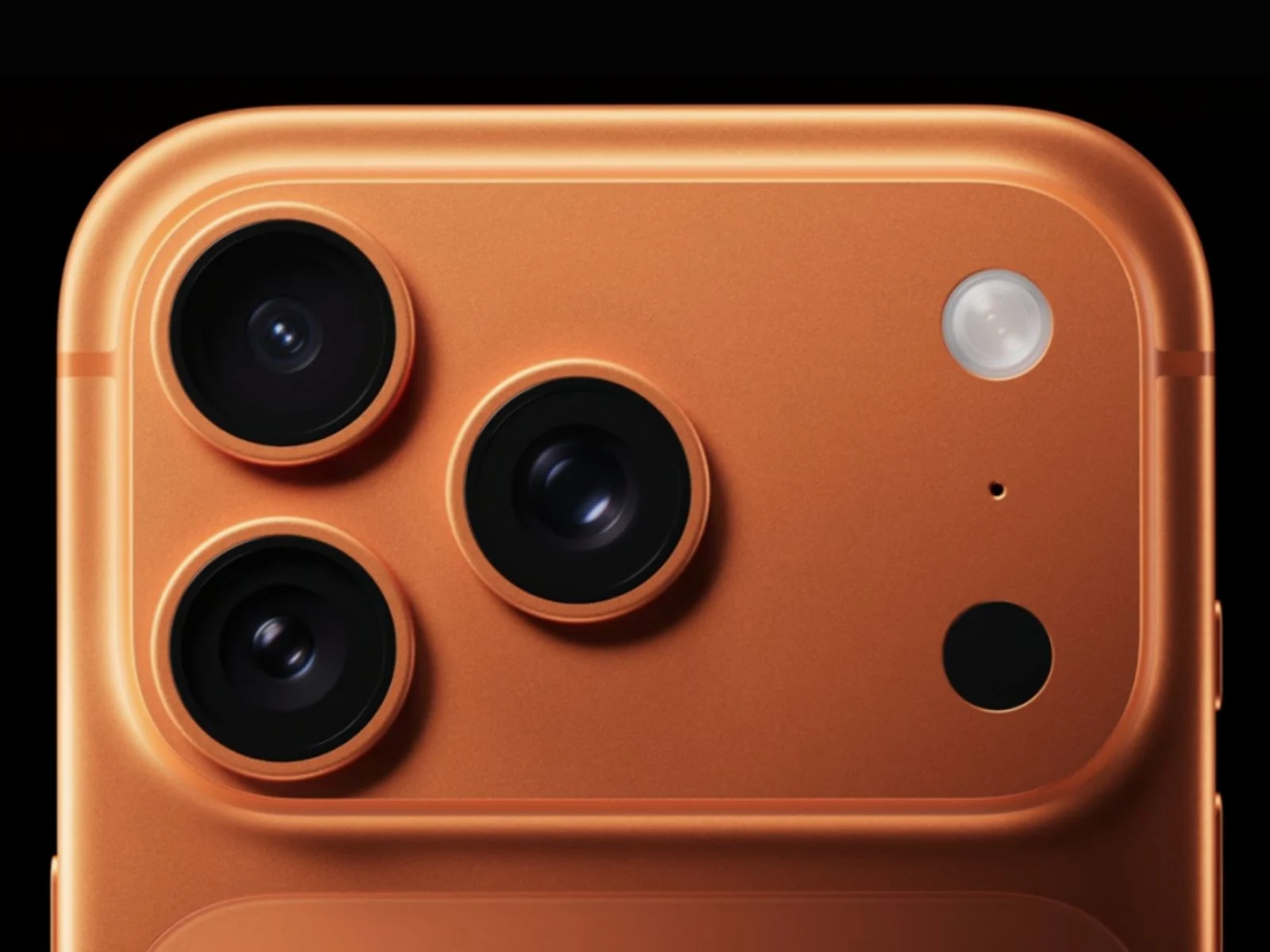
    Now, a new concern regarding the camera system has surfaced. Apple has relocated the flash away from the camera cluster to the other end in the latest iPhone 17 Pro and Pro Max series, and this change appears to have introduced a new complication.

    According to Instagram user marcustechnology, using the flash on the iPhone 17 Pro and Pro Max creates a shadow on the subject, leading to unappealing footage. This issue is not present in previous iPhone models, where the flash has always been positioned next to the camera.

    User Experience

    While using the iPhone 17 Pro series, one creator remarked that “it kind of looks like someone is holding a light from the corner, and it’s honestly super annoying.”

    For those interested, you can view the original Instagram reel below to examine the alleged problem more closely.

    Source:
    Link


  • Google Pixel 11 Might Replace Samsung Modem with MediaTek Chip

    Google Pixel 11 Might Replace Samsung Modem with MediaTek Chip

    Key Takeaways

    1. Google plans to sever ties with Samsung for the upcoming Tensor chipset, aiming for improved performance and battery life in the Pixel 11 series.
    2. The production of the Tensor G5 chip has already moved from Samsung to TSMC, but the modem still relied on Samsung’s Exynos technology.
    3. Leaks suggest the next-gen processor, Tensor G6 (codenamed “Malibu”), will completely switch from Samsung’s modem to MediaTek’s M90 modem.
    4. The MediaTek M90 modem offers significant upgrades in network efficiency and performance compared to the existing Exynos modem.
    5. Google aims to enhance battery life in the Pixel 11 series by utilizing the more energy-efficient M90 modem, following mixed results with the Tensor G5.


    Google is said to be planning to sever its last hardware connections with Samsung for the upcoming Tensor chipset. This could greatly improve both the performance and battery life of the new Pixel 11 series, as the Google Tensor G6 chip might finally feature a fresh modem from another well-known company: MediaTek.

    Transition from Samsung

    Although Google has already shifted the production of its Tensor G5 chip (which is used in the Pixel 10) from Samsung Foundry to TSMC, a vital piece—the modem that manages cellular connections—still depended on Samsung’s Exynos technology. Now, a recent leak hints that Google is ready to take the entire design process even further away from its partner in South Korea.

    New Developments

    A recent report from tech insider Mystic Leaks on Telegram indicates that Google has kicked off early internal work on the next-gen processor, which is likely named the Tensor G6 (codenamed “Malibu”). The most significant detail from this leak is the supposed choice to completely abandon the Samsung modem in favor of the MediaTek M90.

    The MediaTek M90 modem, which was introduced this year, claims to offer various important upgrades compared to the current Exynos modem used in existing Pixels:

    Improved Performance

    The shift to the M90 modem is motivated by the quest for enhanced network efficiency and performance. Since the modem is one of the biggest energy-consuming parts of a smartphone, Google aims to achieve noticeable gains in battery life for the Pixel 11 series by opting for a more efficient solution like the M90.

    This year, the Tensor G5 didn’t meet the high hopes that followed the transition to TSMC’s production facilities. Let’s keep our fingers crossed that Google makes a comeback with the next version of the chip, and that Pixel enthusiasts finally get the chipset they’ve been waiting for.

    Source:
    Link


  • Google Stops Selling Refurbished Pixel 6; Pixel 7 Now Cheaper

    Google Stops Selling Refurbished Pixel 6; Pixel 7 Now Cheaper

    Key Takeaways

    1. The Pixel 6 and Pixel 6 Pro are no longer available for purchase on the Google Store.
    2. Both models were released in 2021 and had refurbished versions offered since last October, complete with a one-year warranty.
    3. The Pixel 6 was priced at $330 and the Pixel 6 Pro at $539 before they were removed from the store.
    4. The removal may be due to the expectation that these models will stop receiving software updates next year.
    5. The Pixel 7 series is now available at reduced prices, with the refurbished Pixel 7 Pro priced at $539, matching the former cost of the Pixel 6 Pro.


    If you were thinking about purchasing a refurbished Pixel 6 or Pixel 6 Pro from Google, you might be upset to find out that these models are no longer available on the Google Store. They were up for grabs not too long ago, but now both phones have disappeared from the store’s listings.

    Background on the Pixel 6 Series

    The Pixel 6 and Pixel 6 Pro made their debut in 2021, and Google began offering refurbished versions of these phones last October. Refurbished devices are ones that have been owned before or returned, then they are skillfully examined, fixed if necessary, and restored to a nearly new state. The coolest part is that Google provides a one-year warranty for these refurbished phones, ensuring you’re protected in case any technical problems arise.

    Pricing Changes and Availability

    In the past, the refurbished Pixel 6 was priced at $330 on the Google Store, while the Pixel 6 Pro was more expensive at $539. Google has not given a clear reason for taking these models off the shelves, but it’s probably because these devices are expected to stop receiving software updates next year.

    Currently, the only refurbished phones you can find on the Google Store are the Pixel 7a, Pixel 7, and Pixel 7 Pro. The positive news is that the prices for the refurbished Pixel 7 and Pixel 7 Pro have been reduced, with the new prices being $359 and $539, respectively. Before, they were offered for $429 and $629. So, essentially, you can now buy the refurbished Pixel 7 Pro for the same amount that the Pixel 6 Pro used to cost.

    Conclusion

    In summary, if you were hoping to grab a refurbished Pixel 6 or Pixel 6 Pro, you’ll have to look elsewhere. But the Pixel 7 series is here with lower prices, making it a compelling option for those in the market for a refurbished phone.

    Source:
    Link


  • Vivo X300 and X300 Pro to Feature Ultra Battery Technology

    Vivo X300 and X300 Pro to Feature Ultra Battery Technology

    Key Takeaways

    1. Vivo is launching the Vivo X300 and Vivo X300 Pro in China by the end of the month, featuring MediaTek’s new Dimensity 9500 chipset.
    2. Both Vivo models have larger battery capacities than the previous Vivo X200 series but are lower than Xiaomi’s latest flagship batteries (6,300 mAh to 7,500 mAh).
    3. The Vivo X300 has a 6,040 mAh battery with 90 W wired charging, while the Vivo X300 Pro includes a 6,510 mAh battery with the same charging speed.
    4. The battery capacities of the Vivo X300 series exceed those of Samsung’s Galaxy S25 series, which has a maximum of 5,000 mAh.
    5. Independent reviews are essential for assessing the actual battery performance of Vivo’s new devices compared to competitors.


    Vivo is set to launch the Vivo X300 and Vivo X300 Pro in China by the end of this month. These devices will be among the first smartphones to utilize MediaTek’s new Dimensity 9500 chipset. It’s worth noting that the Find X9 and Find X9 Pro are also debuting in China before October wraps up.

    Battery and Charging Insights

    Meanwhile, some early tests from influencers have shed light on more specifications regarding Vivo’s upcoming flagship devices. New Evaluation Technology has shared insights on the battery and charging features ahead of time. Both models have capacities that exceed those of the Vivo X200, Vivo X200 Pro, and even the Vivo X200 Ultra, but they do not quite match up to the latest Xiaomi 17 series. For comparison, Xiaomi’s newest flagships come with battery capacities ranging from 6,300 mAh to 7,500 mAh.

    In contrast, the Vivo X300 is paired with its Dimensity 9500 chipset and features a 6,040 mAh battery that allows for 90 W wired charging. On the other hand, the Vivo X300 Pro offers a larger 6,510 mAh battery while retaining the same wired charging speed. Both devices significantly outshine Samsung’s Galaxy S25 series, which only reaches a maximum of 5,000 mAh with the Galaxy S25 Ultra (currently priced at $1,049.99 on Amazon).

    Waiting for Reviews

    At the end of the day, it’s best to wait for independent reviews before forming an opinion on the battery performance of Vivo’s new flagships. For example, the Galaxy Z Fold7 performs much more comparably to the Honor Magic V5 and Vivo X Fold5 in our battery evaluations than what their respective battery capacities would indicate.

    Source:
    Link


  • Pixel 10 Pro Review: Strong Features, Weak Performance Issues

    Pixel 10 Pro Review: Strong Features, Weak Performance Issues

    Key Takeaways

    1. Build Quality and Design: The Pixel 10 Pro features a high-end design with quality materials and an IP68 rating, despite minor issues like slight gaps and creaking sounds.

    2. Software Updates and AI Features: It offers seven years of updates with Android 16, including various AI capabilities, though some features, like translation, may lack accuracy.

    3. Display Issues: The vibrant OLED display has PWM flickering problems that remain unresolved, affecting user experience despite its brightness.

    4. Camera Performance: The camera delivers excellent images and zoom capabilities but struggles with fine details and low-light conditions, while new AI tools offer limited real-world benefits.

    5. Performance and Battery: While daily performance is smooth, it falls short in high-demand tasks and gaming, with average charging speeds for both wired and wireless options.


    The Google Pixel 10 Pro stands out as a small, high-end smartphone crafted from quality materials, showcasing excellent build and an IP68 rating. While there are slight drawbacks like tiny gaps and a faint creaking sound when twisted, they don’t significantly impact the overall premium feel. Its specifications are up-to-date, featuring Wi-Fi 7, Bluetooth 6.0, NFC, UWB, and the innovative ‘Pixelsnap’ magnet. That said, it has some limitations; the USB-C port is only compatible with FAT32 and exFAT formats, lacking support for NTFS, and the UFS 4.0 storage does not perform as fast as expected.

    Software Strengths and Weaknesses

    On the software front, the Google Pixel 10 Pro shines brightly. Android 16 comes with a commitment of seven years for updates and includes several AI capabilities like Gemini, Circle to Search, and live translation functions. However, the translation features often feel underdeveloped and can yield inaccurate translations. On the bright side, Google emphasizes its use of recycled materials, offers plastic-free packaging, and promises easy repair options through iFixit, although replacement parts were not available during the testing period.

    Display and Camera Performance

    The OLED screen captivates users with its brightness and vibrant color display, yet it grapples with PWM flickering, an issue that isn’t fully resolved even with the 480 Hz option. In terms of photography, the camera produces excellent images and boasts a strong zoom capability, but it struggles with capturing fine details, performing in low-light conditions, and the outcomes of AI-enhanced zoom. New tools like the Camera Coach seem to add little real-world value.

    Performance and Battery Life

    The difference between the Tensor G5 and its rivals becomes clearer with usage. The Pixel 10 Pro offers a smooth experience in daily tasks, but performance tests and gaming evaluations highlight some noticeable gaps. High-demand games like Genshin Impact may not run without hiccups, and ray tracing features are entirely missing. Battery life is satisfactory; however, the charging speed is just average, with 30 W for wired and 15 W for wireless charging.

    In conclusion, the Pixel 10 Pro (buy here on Amazon) captivates with its extensive update promises, reliable daily performance, and numerous AI features. Nonetheless, its performance issues, display flickering, and charging capabilities keep it from being a top contender in the premium smartphone market.