Category: Phones

Stay updated with the latest phone news, reviews, and trends. Discover cutting-edge smartphones, features, and innovations in our Phones category at GizNewsDaily

  • Huawei Announces Mate 80 Series and Mate X7 Launch Date

    Huawei Announces Mate 80 Series and Mate X7 Launch Date

    Key Takeaways

    1. Huawei has officially announced the Mate 80 series and the premium foldable Mate X7 smartphone.
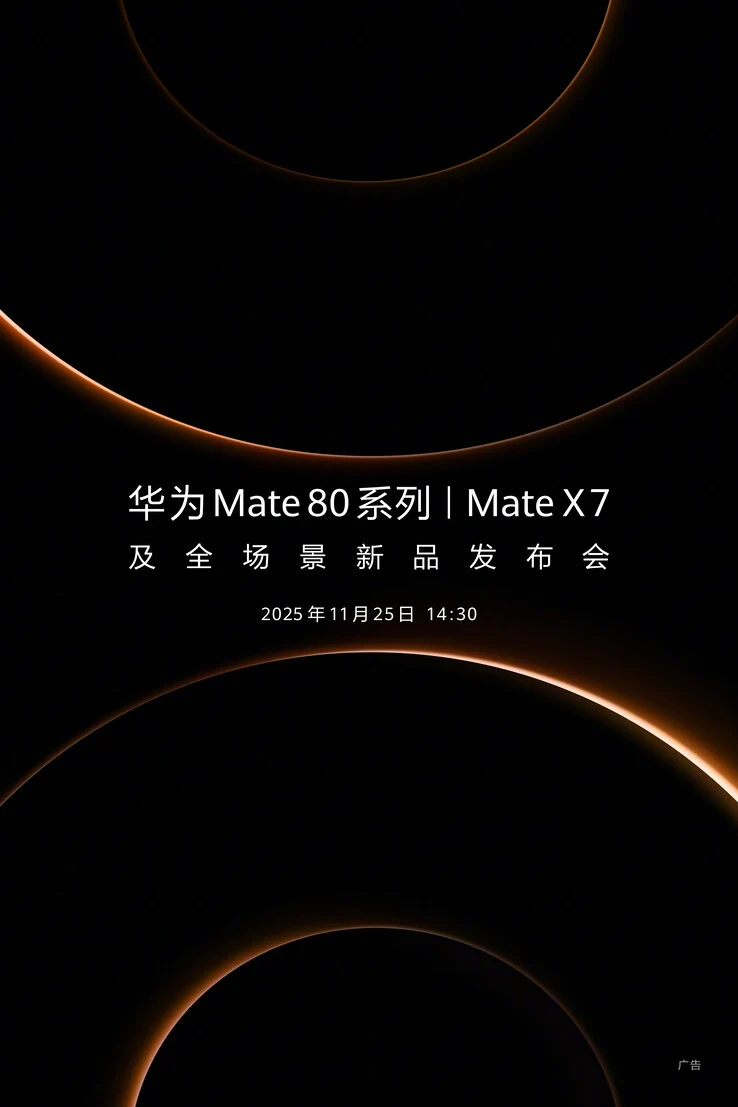
    2. The launch date for both the Mate 80 series and Mate X7 is set for November 25 in China.
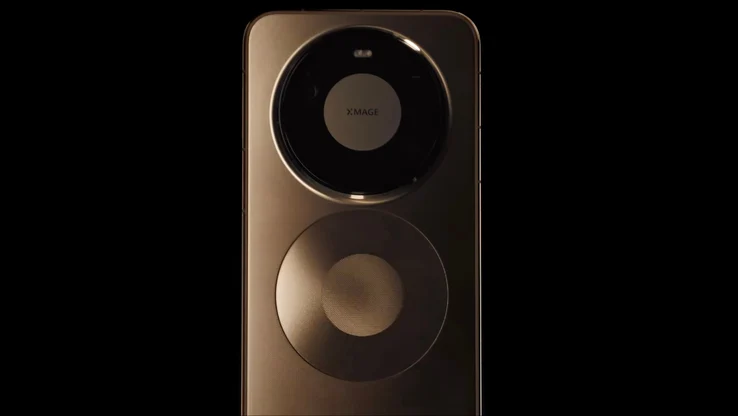
    3. The Mate 80 Pro Max model is expected to feature a gold finish and a unique circular camera setup, possibly with a second cutout for magnetic accessories.
    4. The Mate X7 will replace the Mate X6 and is rumored to have a 7.95-inch inner display with 2K resolution.
    5. Both the Mate 80 series and Mate X7 will be powered by the new Kirin 9030 processor and may include up to 20GB of RAM.


    The Huawei Mate series represents the top tier of smartphones. The well-known Chinese technology company has now officially announced the Mate 80 series, which follows last year’s Mate 70 series. In addition, they have also revealed plans to introduce the Mate X7, which is a premium foldable smartphone.

    Launch Date

    The Mate 80 series along with the Mate X7 is scheduled for release on November 25 in China. In the meantime, a new video shared by Yu Chengdong, the CEO of Huawei Consumer Business Group, provides a sneak peek at one of the devices from the Mate 80 lineup.

    Teaser Insights

    The device showcased in the teaser is likely the anticipated Mate 80 Pro Max model, which might replace the Plus version. It features a gold finish and a recognizable circular camera setup on the back. Interestingly, there seems to be a second circular cutout, which could be Huawei’s own take on MagSafe for connecting magnetic accessories. For context, the previous Mate 70 series included various models: the standard Mate 70, Mate 70 Pro, Mate 70 Pro+, and the Mate 70 RS Ultimate.

    Mate X7 Expectations

    Regarding the Mate X7, it is set to take over from last year’s Mate X6 flagship foldable smartphone. A recent leak hinted that the Mate X7 will undergo significant design changes. It’s rumored to include a 7.95-inch inner display boasting a 2K resolution. Both the Mate 80 series and the Mate X7 are expected to be driven by the new Kirin 9030 processor and can feature up to 20GB of RAM.

    Source:
    Link


  • Xiaomi Announces Early Global Launch Date for Poco F8 Series

    Xiaomi Announces Early Global Launch Date for Poco F8 Series

    Key Takeaways

    1. The Poco F8 series global launch is set for November 26, 2025, featuring a Pro and an Ultra model.
    2. The Poco F8 Ultra will likely be a rebranded Redmi K90 Pro Max, equipped with the Snapdragon 8 Elite Gen 5.
    3. Expected features of the Poco F8 Ultra include a 6.9-inch display, 120 Hz refresh rate, 7,560 mAh battery, and 100 W fast charging.
    4. The Poco F8 Pro is rumored to be a rebadged variant of the Redmi K90, potentially with a smaller size and Snapdragon 8 Elite.
    5. Both models are expected to run on Xiaomi HyperOS 3, based on Android 16.


    Xiaomi has officially announced the global launch date for the Poco F8 series, following a series of teasers about the new smartphone lineup. Earlier hints from the company suggested that the launch was coming soon, and it turns out those predictions were largely accurate.

    Launch Details

    The global event for the Poco F8 series is scheduled for November 26, 2025. This date is actually one day earlier than what was hinted at before. At this event, the brand is going to reveal two models: a Pro version and an Ultra version.

    Specifications of the Ultra

    The Poco F8 Ultra is anticipated to come equipped with the latest flagship SoC, the Snapdragon 8 Elite Gen 5. In fact, it’s being reported that this model will be a rebranded Redmi K90 Pro Max, which Xiaomi has somewhat confirmed through a recent teaser.

    If there are no changes to the specs, the Poco F8 Ultra is set to include a 6.9-inch display with a 120 Hz refresh rate, a 2.1 Bose stereo sound setup, up to 1 TB of storage, and a massive 7,560 mAh battery that supports 100 W fast charging (currently, the 140 W Anker Prime charger costs $65.99 on Amazon). Additionally, the Redmi K90 Pro Max boasts a strong triple camera system with 50 MP on the back.

    Insights on the Poco F8 Pro

    As for the Poco F8 Pro, it is rumored to be a rebadged variant of the Redmi K90. If this is indeed the case, the new phone will likely have a smaller size and will be powered by the Snapdragon 8 Elite. Both models are expected to come pre-installed with Xiaomi HyperOS 3, which is based on Android 16.


    Source:
    Link


  • Galaxy S26 Ultra Gets Upgraded Wired Charging; No Change for S26 Models

    Galaxy S26 Ultra Gets Upgraded Wired Charging; No Change for S26 Models

    Key Takeaways

    1. The Galaxy S26 and Galaxy S26 Plus will maintain wired charging speeds of 25W and 45W, respectively, without improvement from their predecessors.
    2. The Galaxy S26 Ultra is expected to have a faster wired charging capability of 60W, up from 45W in the Galaxy S25 Ultra.
    3. Despite lower wired charging speeds than the iPhone 17, the Galaxy S26 is predicted to charge faster due to a larger 4,300mAh battery.
    4. The Galaxy S26 and S26 Plus will feature improved 20W wireless charging, up from 15W in previous models, while the S26 Ultra will support 25W wireless charging.
    5. Competitors like the OnePlus 15 offer significantly faster wired charging at 120W, highlighting the S26’s slower wired charging speeds.


    The Galaxy S26 series has captured a lot of attention recently, which isn’t surprising since it’s Samsung’s upcoming major release, following the Galaxy Z TriFold. Just last week, reports surfaced indicating that the whole lineup will feature faster wireless charging. Now, fresh leaks have shed light on their wired charging specifications.

    Wired Charging Details

    A post from Anthony (@The Galox_) on X disclosed that two models in the Galaxy S26 series will not see an improvement in their wired charging speeds. The Galaxy S26 and Galaxy S26 Plus will continue to charge at 25W and 45W, respectively, similar to their predecessors. However, the Galaxy S26 Ultra is expected to support 60W fast wired charging, an increase from the 45W seen in the Galaxy S25 Ultra (the 512GB model is currently listed on Amazon for $1099.99).

    Charging Comparisons

    Interestingly, the leaker pointed out that although the Galaxy S26 charges at a lower wattage than the iPhone 17, which can handle 35W fast charging, Samsung’s device is expected to charge quicker. This assertion is supported by a screenshot from GSMArena’s testing, which shows that the Galaxy S25 (with a 4,000mAh battery) charges at 25W but reaches a full charge faster than the iPhone 17 (which has a 3,988mAh battery and charges at 35W). The Galaxy S26 is rumored to come with an even larger 4,300mAh battery.

    Wireless Charging Specs

    Nevertheless, the Galaxy S26’s 25W wired charging speed is somewhat underwhelming when compared to numerous smartphones that charge much quicker. For example, the new OnePlus 15 can charge at speeds of up to 120W and includes a wired adapter, unlike Samsung’s offerings.

    Additionally, the source provided information on the wireless charging capabilities of the three devices, which aligns with earlier reports. The Galaxy S26 and Galaxy S26 Plus will offer 20W wireless charging, an improvement from the 15W seen in their older models. The flagship, the Galaxy S26 Ultra, will support wireless charging up to 25W with a compatible charger, exceeding the 15W of the Galaxy S25 Ultra.


    Source:
    Link


  • Xiaomi Teases Upcoming Global Launch of Poco F8 Series

    Xiaomi Teases Upcoming Global Launch of Poco F8 Series

    Key Takeaways

    1. Xiaomi is set to launch the Poco F8 series on November 27, 2025, with two initial models expected.
    2. The Poco F8 Ultra may be a rebranded Redmi K90 Pro Max for markets outside China.
    3. Specs for the Redmi K90 Pro Max include Snapdragon 8 Elite Gen 5 processor, 1 TB storage, 16 GB RAM, and a 6.9-inch display with 120 Hz refresh rate.
    4. The Poco F8 Pro is expected to be a rebadged version of the Redmi K90, featuring a 6.59-inch display and a 7,100 mAh battery.
    5. The standard model of the Poco F8 series might be a rebranded Redmi Turbo 5 Pro and is likely to launch in early 2026.


    It looks like Xiaomi is preparing to unveil the Poco F8 series. The company has begun to tease the new smartphone range, and initially, two models are expected to be introduced. The launch is anticipated to occur on November 27, 2025, according to recent teasers.

    Possible Rebranding

    A recent teaser suggests that the Poco F8 Ultra might simply be a rebranded version of the Redmi K90 Pro Max for markets outside of China. This aligns with previous reports that have hinted at such a possibility.

    Specs and Features

    For those who may not have seen our coverage of the launch, the Redmi K90 Pro Max is equipped with the Snapdragon 8 Elite Gen 5 processor, offering up to 1 TB of storage and 16 GB of RAM. It features a 6.9-inch screen boasting a 120 Hz refresh rate, HDR10+, and a peak brightness of 3,500 nits. The device also includes a 2.1 Bose stereo sound system, a triple 50 MP camera setup on the rear, along with a hefty 7,560 mAh battery that supports 100 W fast charging (currently, a 100 W Anker Prime charger is priced at $49.99 on Amazon).

    Expected Models

    The Poco F8 Pro is anticipated to be a rebadged version of the Redmi K90, which is a sub-flagship model powered by the Snapdragon 8 Elite SoC. In China, this device was launched with a 6.59-inch display, a 7,100 mAh battery, and a 2.5x telephoto camera on the rear.

    As for the standard model in the upcoming series, it might be a rebranded Redmi Turbo 5 Pro, similar to how the original Poco F7 was essentially a rebranded Turbo 4 Pro. However, the standard model of the Poco F8 series is expected to launch a bit later, potentially in early 2026. Xiaomi is likely to provide more official information regarding this global smartphone series shortly.


    Source:
    Link


  • Redmi Note 15 Pro Plus Launch Expected Before 2025: Cheaper Options

    Redmi Note 15 Pro Plus Launch Expected Before 2025: Cheaper Options

    Key Takeaways

    1. Xiaomi may delay the international release of the Redmi Note 15 series until early 2026.
    2. Reliable source Abhishek Yadav suggests an earlier international release could happen, with a debut in India next month.
    3. First sales for the Redmi Note 15 series are expected to start on January 9, 2026.
    4. Xiaomi is preparing to launch the Redmi 15C in India at an introductory price of INR 11,500 (~$130).
    5. Global availability of the Redmi Note 15 series models may occur around February, potentially with multiple variants launched simultaneously.


    In the last few weeks, there’s been talk that Xiaomi might delay the international release of the Redmi Note 15 series until early 2026. As we mentioned before, these reports suggested that there might not be a global version of the Redmi Note 14 Pro Plus (curr. $354 on Amazon) ready in time to launch alongside either the Redmi Note 15 5G or the Redmi Note 15 Pro 5G.

    New Insights Emerge

    Fresh rumors have popped up that challenge those earlier claims. Notably, the usually reliable Abhishek Yadav has reported that an earlier international release could be possible. In a post on X, Yadav mentions that the series might debut in India next month, although he hasn’t shared a precise launch date yet.

    Sales Timeline Speculation

    Moreover, this same source believes that the first sales for the Redmi Note 15 series are expected to kick off on January 9, 2026, which somewhat aligns with earlier speculations. Meanwhile, Xiaomi seems to be gearing up to launch the Redmi 15C in India at an introductory price of INR 11,500 (~$130). While Yadav hasn’t indicated when the Redmi Note 15 series will go global, we can draw some conclusions based on Xiaomi’s history.

    Generally, Xiaomi tends to space out the launches of new Redmi Note phones in India and globally by a few months. Therefore, we think it’s likely that the Redmi Note 15 5G, Redmi Note 15 Pro 5G, and Redmi Note 15 Pro Plus 5G won’t be available worldwide until at least February. It’s possible that these three models could be accompanied by the Redmi Note 15 4G and Redmi Note 15 Pro 4G during a simultaneous launch event.


    Source:
    Link


  • OnePlus 15 OxygenOS Update: Features, Improvements, and Optimizations

    OnePlus 15 OxygenOS Update: Features, Improvements, and Optimizations

    Key Takeaways

    1. OnePlus 15’s initial software update enhances user experience with performance optimizations and new features.
    2. The update introduces videos as ringtones, new customization options, and a redesigned AI LinkBoost Network Engine interface.
    3. App launches from the home screen are now quicker, improving daily navigation.
    4. Customization features include resizing the clock, renaming widgets, and improved layout options for a cleaner home screen.
    5. The AI LinkBoost Network Engine update provides optimization statistics and real-time notifications for network performance.


    OnePlus has rolled out its initial software update for the newly launched flagship device, the OnePlus 15, introducing a range of modifications intended to enhance the user experience for new customers. This significant update not only optimizes performance but also incorporates various new features, such as the option to use videos as ringtones, fresh customization options, and a revamped interface for the AI LinkBoost Network Engine.

    Update Details

    The update is being released in stages for both the Indian and Global versions of the OnePlus 15 (view on Amazon), and can be recognized by the build numbers CPH2745_16.0.1.303 and CPH2747_16.0.1.303, respectively.

    Key Improvements

    A major highlight of this update is the quicker app launches from the home screen, which should enhance daily navigation efficiency. Moreover, the update refines the “Ring” fingerprint animation on the lock screen, now featuring a new glowing effect. Additionally, it includes the November 2025 security patch, along with significant improvements in customization options.

    Customization Features

    For instance, the Flux theme editing now allows users to resize the clock, and widgets can finally be renamed. You can also drag one widget onto another of the same size to create a tidier homescreen layout. On top of that, the Photos app now provides an option for automatic straightening when cropping portraits or architectural images.

    Network Enhancements

    Lastly, the AI LinkBoost Network Engine has received an update as well. Users can now access optimization statistics, receive real-time notifications when their network is accelerated in poor conditions, and perform tests for latency and upload/download speeds.

    OnePlus Community

    Source:
    Link


  • Bloomberg Unveils iPhone Air 2 Update and iPhone 18 Launch Details

    Bloomberg Unveils iPhone Air 2 Update and iPhone 18 Launch Details

    Key Takeaways

    1. The iPhone Air has not improved sales trends for the iPhone Mini and iPhone Plus models.
    2. The iPhone Air serves as a test for the upcoming iPhone Fold, expected in 2026.
    3. The next significant upgrade for the iPhone Air 2 will be the new Apple A20 chipset for better battery life.
    4. The iPhone 18 series will launch in two phases: the first in September 2026 and the second in spring 2027.
    5. Apple’s naming strategy allows flexibility for future releases, with the iPhone Air 2 likely coming about a year and a half after the first model.


    The iPhone Air has not reversed the downward trend seen with the iPhone Mini and iPhone Plus models, as indicated by multiple recent reports. Despite this, Bloomberg’s Apple expert Mark Gurman views the iPhone Air, which is the slimmest iPhone to date, as more of a test for the upcoming iPhone Fold. This device is likely set to release in 2026 along with the iPhone 18 Pro and iPhone 18 Pro Max, and will utilize several of the technologies and components seen in the iPhone Air. Gurman suggests that while the sales figures are low, they are not a major concern for Apple’s supply chain, which is why the pricing of the device was not especially competitive compared to the iPhone 17 Pro.

    Future Upgrades

    In addition, Gurman has rejected speculation regarding a dual-camera system for the next model. He reports that the most significant enhancement for the iPhone Air 2 will be the new Apple A20 chipset, which is built on a 2nm process that should lead to improved battery life. He does not foresee the dual-camera feature being added to the Air until it can be sourced from the iPhone Fold. Furthermore, he emphasizes that the iPhone 18 will be introduced in two phases. The first phase will feature the iPhone 18 Pro, iPhone 18 Pro Max, and the iPhone 18 Fold, all likely launching in September 2026. The second phase will include the iPhone 18, iPhone 18e, and iPhone Air 2, which are expected to be released in the spring of 2027.

    Strategic Naming

    The decision not to label the iPhone Air as the iPhone 17 Air grants Apple greater flexibility to launch a successor on a different timeline, with the second generation likely to arrive about a year and a half after the first. Gurman emphasizes that this schedule change was not a reaction to poor sales but was part of the original plan. This staggered release strategy is anticipated to persist for several years, including the anniversary year 2027, when a redesigned iPhone, possibly called the iPhone 20, featuring curved glass and an under-display camera, is expected to be introduced.


    Source:
    Link


  • Unisoc T9300 Chip: 200MP Cameras and Satellite for Mid-Range 5G

    Unisoc T9300 Chip: 200MP Cameras and Satellite for Mid-Range 5G

    Key Takeaways

    1. The Unisoc T9300 5G SoC is built on a 6 nm process with a 38% improvement in energy efficiency compared to the T8300, featuring an octa-core architecture and a dual-core Mali G57 GPU.

    2. The T9300 supports FHD+ resolutions at 144Hz, 1.5K at 90Hz, HDR10+ content, and has various display technologies for enhanced viewing experiences, including Netflix certification.

    3. Imaging capabilities have improved with the 7th generation Vivimagic image engine and a quad-core ISP, supporting up to 200-megapixel cameras and advanced noise reduction features.

    4. Connectivity features include dual-mode 5G support, reduced power consumption for 5G use, and NR NTN satellite communication for direct satellite connectivity.

    5. The T9300 is future-proof with support for LPDDR4X memory, UFS 2.2 storage, and upcoming software updates, including Android 16.


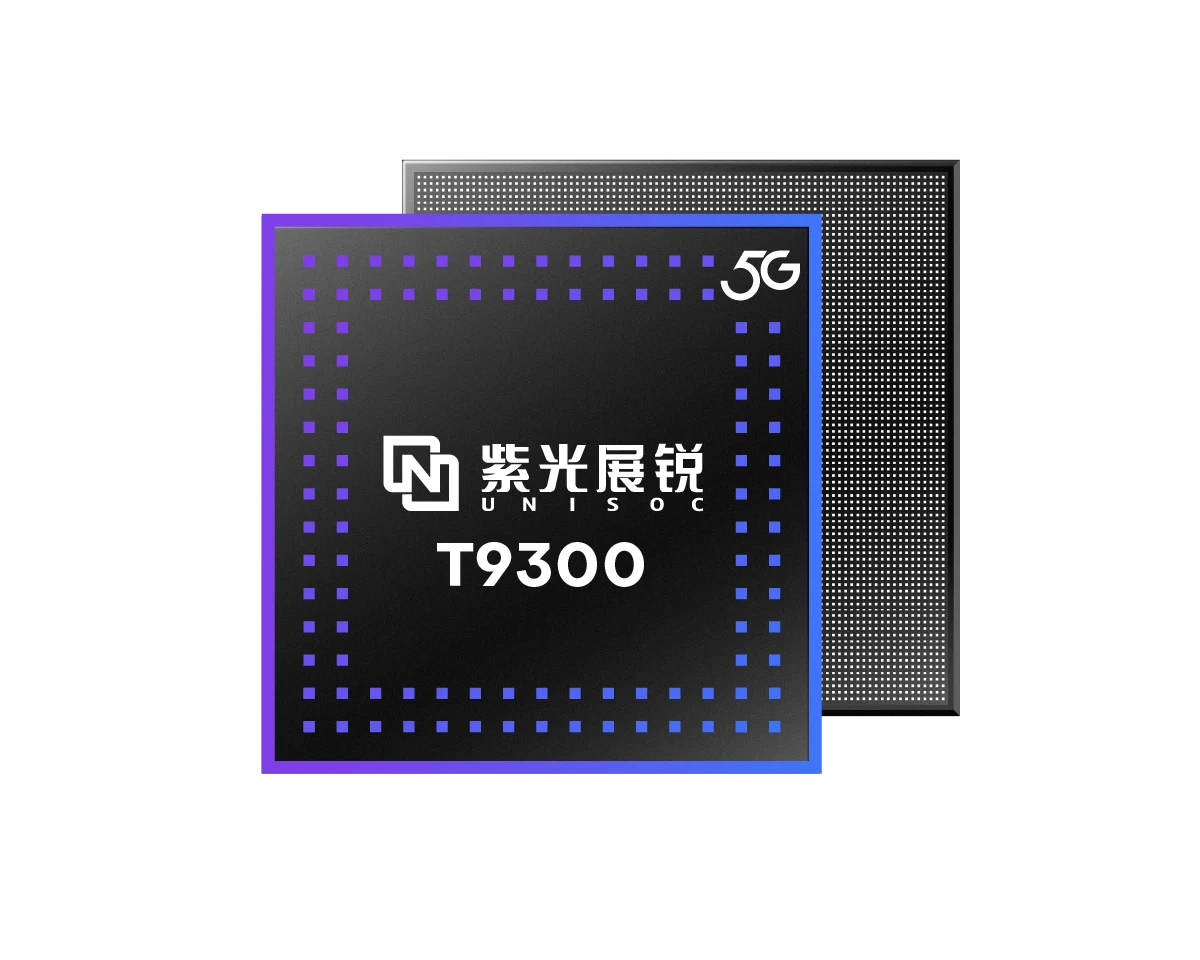
    Unisoc has silently introduced the T9300 5G SoC, which serves as the follow-up to the T8300 from last year. This new chip, built on a 6 nm process, features an octa-core architecture that includes a Cortex A78 performance core running at 2.4 GHz, along with Cortex A55 efficiency cores. Unisoc claims this new model achieves a 38% improvement in energy efficiency over its predecessor. The T9300 scores approximately 550,000 points on AnTuTu V10, slightly up from the T8300’s average of around 515,000. It comes equipped with a dual-core Mali G57 GPU, and supports LPDDR4X memory and UFS 2.2 storage.

    Display and Audio Features

    When it comes to display capabilities, the T9300 can support FHD+ resolutions at 144Hz or 1.5K resolutions at 90Hz. It is also capable of handling HDR10+ content and has gained Netflix certification. The platform is loaded with various display technologies, including VideoPQ for adjusting video contrast dynamically, VRR for a dynamic refresh rate, and multiple eye-protection modes for different lighting conditions like blue light, sunlight, and night viewing. Additionally, it promises HiFi-level audio quality and integrates the UNISOC Miracle Gaming mobile game engine.

    Imaging Improvements

    A significant advancement over the T8300 lies in the imaging features. The T9300 is equipped with the 7th generation Vivimagic image engine and introduces a new quad-core ISP, allowing for the support of 200-megapixel main cameras or dual 20+20 megapixel configurations. This system excels in noise reduction, utilizing hardware-based multi-frame noise reduction (MFNR) and temporal noise reduction (TNR) to create clearer images. Unisoc’s new 3A algorithm 5.0 is designed to enhance face brightness, improve focusing accuracy, and boost dynamic range. For low-light scenarios, a new multi-frame, multi-exposure Raw domain super night scene XDR algorithm is at hand, along with improved AI portrait segmentation.

    Connectivity and Future-Proofing

    On the connectivity side, the T9300 offers extensive support for various network modes ranging from 2G to 5G, including both SA and NSA dual-mode 5G, a 100MHz communication bandwidth, and dual-SIM dual-VoNR. Power consumption for typical 5G use cases has been reduced by more than 20% compared to the last generation. One of the most exciting features is the incorporation of NR NTN satellite communication, complying with the 3GPP R17 standard. This enables devices powered by the T9300 to connect directly to satellites for communication without relying on conventional cellular signals. The chip also supports upcoming software updates, including the latest Android 16.

    Source:
    Link


  • OnePlus 15 Overheats and Crashes in Snapdragon 8 Elite Gen 5 Test

    OnePlus 15 Overheats and Crashes in Snapdragon 8 Elite Gen 5 Test

    Key Takeaways

    1. The OnePlus 15 is one of the first global releases of the Snapdragon 8 Elite Gen 5 flagship smartphone.
    2. Initial performance tests showed the OnePlus 15 performing well, but it overheated and crashed during an extended stress test.
    3. The device failed the Wild Life Extreme Stress Test while the iPhone 17 Pro Max completed it successfully without issues.
    4. The OnePlus 15 reached temperatures of 52° C (125° F) during testing, indicating uneven heat distribution compared to the iPhone 17 Pro Max’s 40° C (104° F).
    5. Despite overheating issues, the OnePlus 15 demonstrated good gaming performance without significant temperature spikes later in the tests.


    The OnePlus 15 has made its debut globally and stands as one of the pioneering Snapdragon 8 Elite Gen 5 flagship smartphones to be released outside of China. With this worldwide introduction, more detailed insights into the device have emerged, including a recent video where the phone struggled during a stress evaluation.

    Performance Comparison

    This video, presented by Max Tech, pits the OnePlus 15 against the iPhone 17 Pro Max. The YouTuber mentions that OnePlus’s latest smartphone featuring the Snapdragon 8 Elite Gen 5 serves as a robust flagship device, boasting good speakers, a quality display, and solid build.

    When it comes to performance, the Snapdragon 8 Elite Gen 5 in the OnePlus 15 performed admirably in the initial synthetic tests. However, during an extended stress test, the device overheated and ultimately crashed.

    Stress Test Results

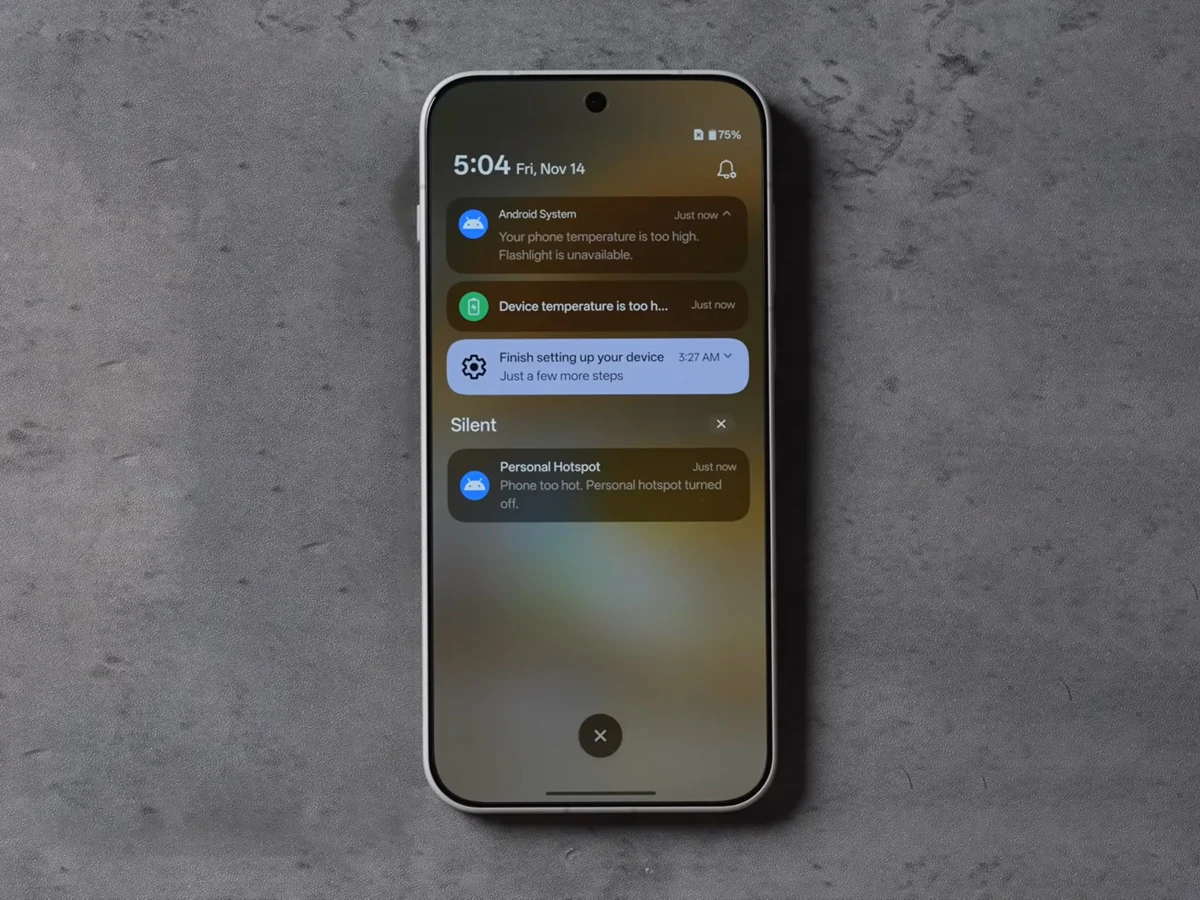
    Specifically, after passing several benchmarks, the OnePlus 15 was unable to complete the Wild Life Extreme Stress Test from 3DMark. In contrast, the iPhone 17 Pro Max managed to finish the test without any problems, while the Snapdragon 8 Elite Gen 5 device had to turn off several features like the hotspot and flashlight to prevent the temperature from increasing further.

    Max Tech utilized a thermal camera to measure the temperature, revealing that the OnePlus 15 reached up to 52° C (125° F). The thermal footage indicated that the phone did not distribute heat evenly across its surface (Black Shark FunCooler 5 Neo curr. $19.75 on Amazon). In comparison, the iPhone 17 Pro Max maintained a lower temperature of around 40° C (104° F) and was able to distribute heat more evenly.

    Gaming Performance

    Luckily, overheating didn’t affect the other aspects of the test. For instance, the OnePlus 15 demonstrated commendable gaming performance later in the video, with temperatures not escalating as high as before. You can explore further details in the video linked below.

    Max Tech

    Source:
    Link


  • OnePlus 15: High-End Model Features Hidden RAM Speed Boost

    OnePlus 15: High-End Model Features Hidden RAM Speed Boost

    Key Takeaways

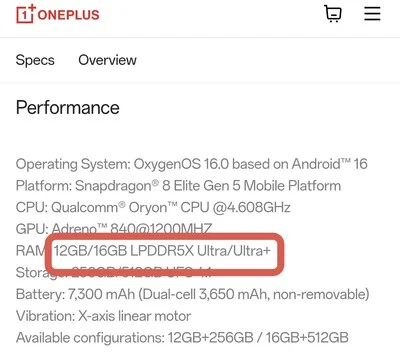
    1. The OnePlus 15 is available in two RAM options: 12GB with LPDDR5X Ultra memory and 16GB with LPDDR5X Ultra+ memory.
    2. The 12GB RAM version has a data transfer rate of up to 9,600Mbps, while the 16GB version can reach speeds of up to 10,667Mbps.
    3. The “Ultra” and “Ultra+” labels are part of OnePlus’s marketing to highlight speed enhancements, not official industry terms.
    4. The OnePlus 15’s memory speeds represent a significant upgrade from the OnePlus 13, which had LPDDR5X limited to 8,533Mbps.
    5. Future mobile memory advancements are expected with LPDDR6, focusing on power efficiency and potential speeds of 14,400Mbps.


    The OnePlus 15 has recently made its debut worldwide, turning heads with its impressive battery and high-end features. A recent battery endurance test has shed light on how long the device lasts. Yet, a noteworthy aspect about the phone’s memory might have been missed: the OnePlus 15 comes in both 12GB and 16GB RAM versions, but the RAM speed differs between these two options.

    Unveiling Memory Distinctions

    OnePlus has hinted at this variation in their official specifications. The model with 12GB RAM utilizes what they term LPDDR5X Ultra memory, while the 16GB variant is equipped with LPDDR5X Ultra+ (Plus). But what does that “Ultra+” label really mean in terms of performance?

    Speed Differences

    The key difference lies in the speed. The OnePlus 15 with 12GB RAM provides a data transfer rate of up to 9,600Mbps. On the other hand, the 16GB version delivers a notable increase in speed, capable of achieving up to 10,667Mbps. To put this into perspective, this new memory generation marks a significant upgrade from the previous OnePlus 13 model, which had its LPDDR5X limited to 8,533Mbps.

    Both variants are still classified as LPDDR5X technically. The terms “Ultra” and “Ultra+” are simply part of OnePlus’s marketing approach to showcase enhanced speeds from different generations of Samsung RAM chips. In the past, Vivo has also used the Ultra+ term for similar speed enhancements in products like the Vivo X300 Pro Satellite Communication Edition. Memory manufacturers such as Samsung do not employ these labels, opting instead to market them as upgraded versions of LPDDR5X.

    Future Memory Developments

    Even though the 16GB model maximizes LPDDR5X technology, the next significant advancement in mobile memory is set to be the LPDDR6 standard. The initial LPDDR6 modules will begin at the same 10,667Mbps speed, but the real improvement will focus on power efficiency, potentially reducing power consumption by up to 21% compared to LPDDR5X. Additionally, LPDDR6 could achieve incredible speeds of 14,400Mbps in the future, paving the way for the next generation of flagship performance.


    Source:
    Link