Tag: Imaging Capabilities

  • Unisoc T9300 Chip: 200MP Cameras and Satellite for Mid-Range 5G

    Unisoc T9300 Chip: 200MP Cameras and Satellite for Mid-Range 5G

    Key Takeaways

    1. The Unisoc T9300 5G SoC is built on a 6 nm process with a 38% improvement in energy efficiency compared to the T8300, featuring an octa-core architecture and a dual-core Mali G57 GPU.

    2. The T9300 supports FHD+ resolutions at 144Hz, 1.5K at 90Hz, HDR10+ content, and has various display technologies for enhanced viewing experiences, including Netflix certification.

    3. Imaging capabilities have improved with the 7th generation Vivimagic image engine and a quad-core ISP, supporting up to 200-megapixel cameras and advanced noise reduction features.

    4. Connectivity features include dual-mode 5G support, reduced power consumption for 5G use, and NR NTN satellite communication for direct satellite connectivity.

    5. The T9300 is future-proof with support for LPDDR4X memory, UFS 2.2 storage, and upcoming software updates, including Android 16.


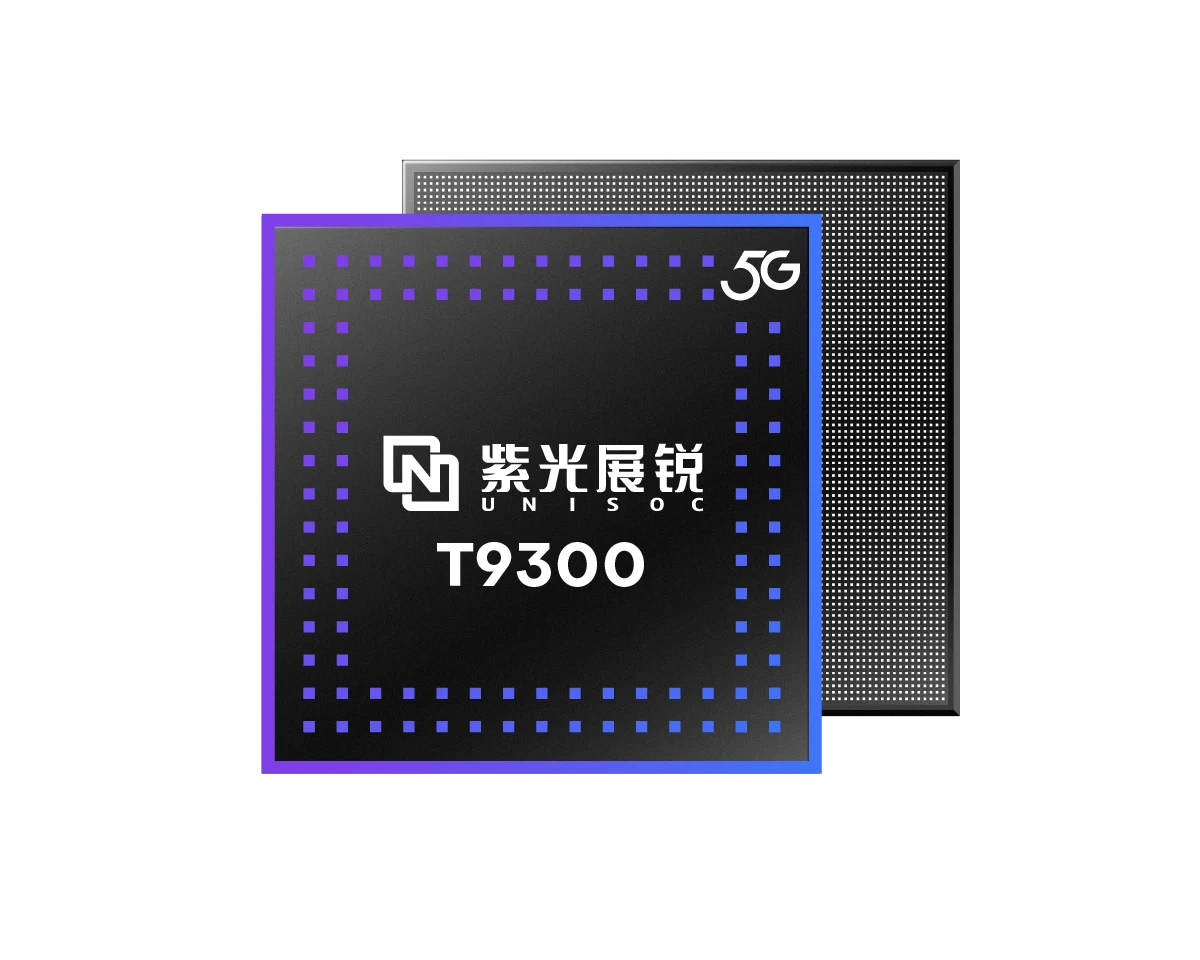
    Unisoc has silently introduced the T9300 5G SoC, which serves as the follow-up to the T8300 from last year. This new chip, built on a 6 nm process, features an octa-core architecture that includes a Cortex A78 performance core running at 2.4 GHz, along with Cortex A55 efficiency cores. Unisoc claims this new model achieves a 38% improvement in energy efficiency over its predecessor. The T9300 scores approximately 550,000 points on AnTuTu V10, slightly up from the T8300’s average of around 515,000. It comes equipped with a dual-core Mali G57 GPU, and supports LPDDR4X memory and UFS 2.2 storage.

    Display and Audio Features

    When it comes to display capabilities, the T9300 can support FHD+ resolutions at 144Hz or 1.5K resolutions at 90Hz. It is also capable of handling HDR10+ content and has gained Netflix certification. The platform is loaded with various display technologies, including VideoPQ for adjusting video contrast dynamically, VRR for a dynamic refresh rate, and multiple eye-protection modes for different lighting conditions like blue light, sunlight, and night viewing. Additionally, it promises HiFi-level audio quality and integrates the UNISOC Miracle Gaming mobile game engine.

    Imaging Improvements

    A significant advancement over the T8300 lies in the imaging features. The T9300 is equipped with the 7th generation Vivimagic image engine and introduces a new quad-core ISP, allowing for the support of 200-megapixel main cameras or dual 20+20 megapixel configurations. This system excels in noise reduction, utilizing hardware-based multi-frame noise reduction (MFNR) and temporal noise reduction (TNR) to create clearer images. Unisoc’s new 3A algorithm 5.0 is designed to enhance face brightness, improve focusing accuracy, and boost dynamic range. For low-light scenarios, a new multi-frame, multi-exposure Raw domain super night scene XDR algorithm is at hand, along with improved AI portrait segmentation.

    Connectivity and Future-Proofing

    On the connectivity side, the T9300 offers extensive support for various network modes ranging from 2G to 5G, including both SA and NSA dual-mode 5G, a 100MHz communication bandwidth, and dual-SIM dual-VoNR. Power consumption for typical 5G use cases has been reduced by more than 20% compared to the last generation. One of the most exciting features is the incorporation of NR NTN satellite communication, complying with the 3GPP R17 standard. This enables devices powered by the T9300 to connect directly to satellites for communication without relying on conventional cellular signals. The chip also supports upcoming software updates, including the latest Android 16.

    Source:
    Link


  • Leica Leitz Phone 3: 1″ Sensor, Unique Camera Features

    Leica Leitz Phone 3: 1″ Sensor, Unique Camera Features

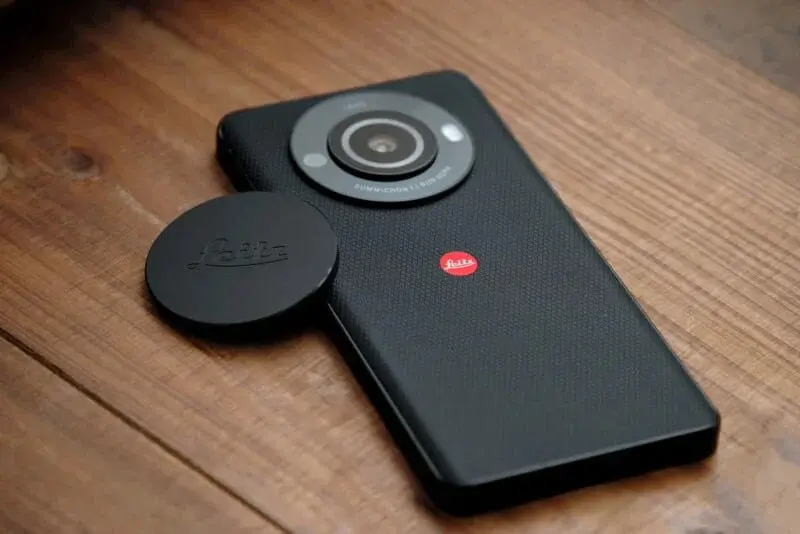
    The Leitz Phone 3 serves as the successor to Leica Leitz Phone 2, launched in November 2022 through a collaborative effort among respected camera and lens manufacturers Leica, Sharp and SoftBank. It stands out with advanced imaging functions and Leica camera modes; scheduled to go on sale exclusively in Japan starting April 19, pricing details remain undisclosed at this point in time. Let us examine its standout features together.

    This phone’s body features premium polycarbonate texture for an exceptional tactile experience reminiscent of Leica cameras, making the weighty yet comfortable feel even greater. Weighing just 209 grams ensures its substantial yet comfortable feel.

    Camera System and Features

    The Leitz Phone 3 takes its cue from its predecessor, the Leitz Phone 2, when it comes to its camera system: both feature an identical 47.2MP 1-inch sensor with eight phase detection autofocus mechanism allowing rapid and precise focussing ensuring image quality even under dim lighting conditions. Leica asserts this sensor offers rapid and precise focusing enabling exceptional image quality even under less-than-ideal circumstances.

    At 19mm focal length, the main camera on the Galaxy S24 Ultra sits comfortably between primary and ultrawide lenses found on mainstream smartphones like its counterpart. A front camera boasting 12.6MPs for selfies offers wide viewing angle of 78 degrees as well as an aperture setting of f/2.3 for front selfie shots.

    Improving image quality was particularly notable in three key areas – improved representation of light spots both visually and with respect to shape/color; refined object segmentation; and the addition of "vivid" and "enhanced" Leica tints which led to more dynamic and striking captures.

    One notable feature is "Leica Perspective Control," previously only found on Leica cameras. Furthermore, this phone’s camera system detects camera tilt during shooting and corrects it through software processing; furthermore "Leica Style" and "Leica Tone" allow users to apply aperture effects reminiscent of classic lenses on their images.

    Other Specifications

    The device features a 6.6" OLED display with a resolution of 2730 x 1260, supporting 240Hz refresh rate, and reaching maximum brightness levels of 2000nits.

    Performance wise, this phone features last year’s flagship Snapdragon 8 Gen 2 chip which, while not as powerful as current flagship models, remains highly capable and ensures smooth image processing. Furthermore, users have ample storage capacity with support for up to 1TB UHS-1 memory cards; furthermore it retains its traditional 3.5mm headphone jack for convenience.


    Leica Leitz Phone 3: 1
  • Xiaomi Official: Global Success of Xiaomi 14 Ultra, but Internationalization a Work in Progress

    Xiaomi Official: Global Success of Xiaomi 14 Ultra, but Internationalization a Work in Progress

    Xiaomi recently introduced its latest top-tier model, the Xiaomi 14 Ultra, in China on February 22. Following this, on February 25, the company made the flagship available globally for €1,499. This strategic move by Xiaomi places the phone in direct competition with industry giants like Samsung and Apple, who currently dominate these markets.

    Xiaomi 14 Ultra's Success in Global Markets

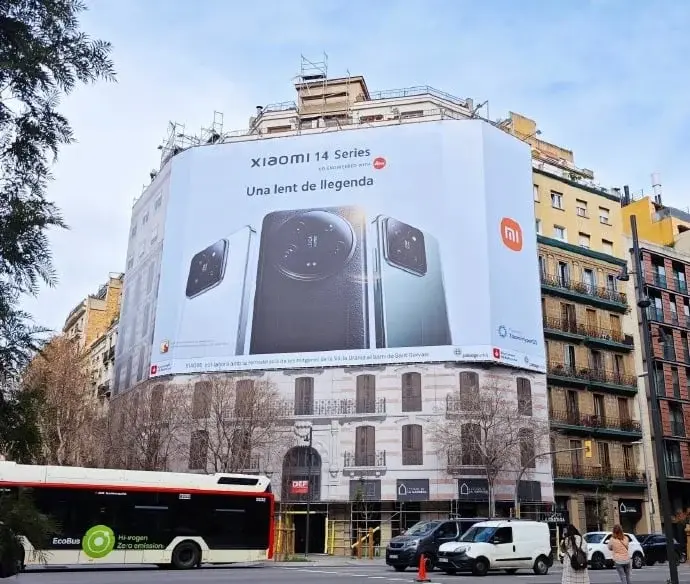
    In Barcelona, Spain

    Lu Weibing, a partner and president at Xiaomi Corporation, emphasized the significance of Xiaomi 14 Ultra's performance in the international market. In a recent Weibo post, he highlighted the importance of establishing a strong presence in global markets for Chinese brands. Despite the stronghold of Apple and Samsung, the Xiaomi 14 Ultra has garnered positive responses from users in both domestic and international markets.

    Strong Sales Performance

    On the first day of its release on February 27, Lu Weibing revealed that the initial sales of Xiaomi 14 Ultra in Europe had tripled compared to its predecessor. Moreover, the Xiaomi 14 achieved a remarkable six-fold increase in sales when compared to previous models.

    The Xiaomi 14 Ultra, priced at €1,499 (equivalent to 11,600 Yuan in China), offers a 16GB + 512GB configuration, significantly surpassing the offerings in the Chinese market. In China, variants such as 12GB+256GB, 16GB+512GB, and 16GB+1TB are priced at 6,499 Yuan, 6,999 Yuan, and 7,799 Yuan, respectively.

    Focus on Imaging Capabilities

    This ultra flagship device from Xiaomi places a strong emphasis on its imaging capabilities, featuring a 50MP 1" Sony LYT-900 main sensor supported by a variable aperture system. The telephoto cameras, with 3.2x and 5x capabilities, utilize the Sony IMX858 sensor and are adept at focusing on subjects at close range, enabling users to capture stunning close-up shots. For a detailed insight into the camera system of the Xiaomi 14 Ultra, refer to our comprehensive review of the device.