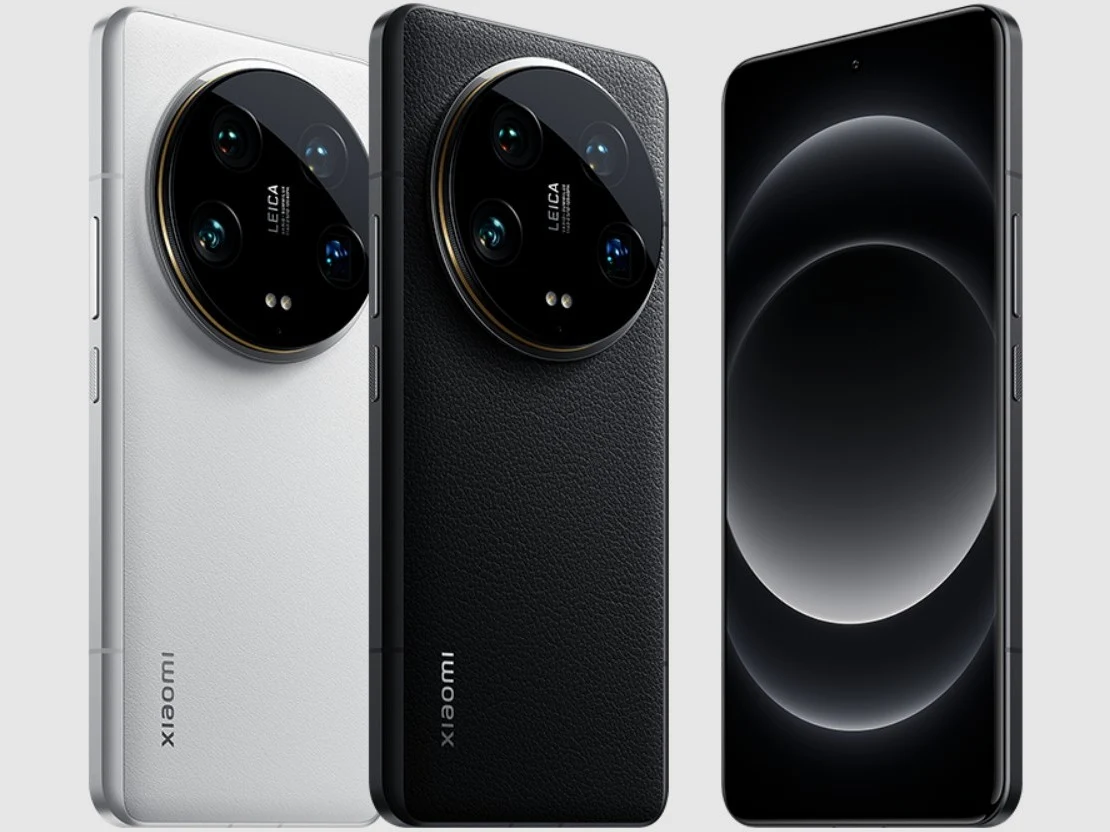
Tag: Xiaomi 14 Ultra

  • Xiaomi 14 Ultra HyperOS 3 Update: Release Timeline Revealed

    Xiaomi 14 Ultra HyperOS 3 Update: Release Timeline Revealed

    Key Takeaways

    1. The HyperOS 3 update for the Xiaomi 14 Ultra is complete and set for release.
    2. The update is based on Android 16 and carries the build number OS3.0.1.0.WNAMIXM.
    3. The global rollout is expected by the end of November, starting with Mi Pilot program users.
    4. Key improvements include a revamped user interface, optimized performance, and enhanced security features.
    5. The Chinese version of the update will be released shortly before the global version.


    The anticipation for an improved software upgrade for Xiaomi’s top-tier smartphone from last year, the Xiaomi 14 Ultra, is nearing its conclusion. Trustworthy sources have confirmed that the HyperOS 3 update for the global version of the Xiaomi 14 Ultra is finished and is set to be released.

    Update Details

    As per tech insider Erencan Yılmaz, the eagerly awaited software update, which is based on Android 16, has successfully completed its stable testing phase for the international market. The final software version is said to carry the build number OS3.0.1.0.WNAMIXM. The build number ending in “MIXM” indicates that this version is indeed the stable release intended for the global audience.

    Rollout Timeline

    The global rollout is expected to take place by the end of November, according to the report. Those who are part of the Mi Pilot program will likely be the first to receive the update.

    So, what can users look forward to with this upgrade? The HyperOS 3 comes with significant improvements, starting with a revamped user interface. Users will notice a new design and updated animations that aim to enhance the fluidity of system navigation. More importantly, the update places a strong emphasis on system optimization. It intends to resolve minor performance problems, like minor stutters and battery issues, ensuring long-term optimal performance. Additionally, building on Android 16 introduces the latest security updates and essential privacy-enhancing features from the newest platform.

    Chinese Version Arrival

    The Chinese version of the ROM is expected to be released very shortly. Since the global build is now encoded and ready for deployment, international users can anticipate that the update will not be far behind the one released in China.

    Source:
    Link


  • Xiaomi 16 Series to Launch Featuring Exclusive Nokia Technology

    Xiaomi 16 Series to Launch Featuring Exclusive Nokia Technology

    Key Takeaways

    1. Xiaomi is expected to launch the Xiaomi 16 series, including three models: Xiaomi 16, Xiaomi 16 Pro, and Xiaomi 16 Pro Max, with a fourth model coming next year.
    2. The new series will feature Nokia’s OZO Audio technology, enhancing audio recording capabilities.
    3. OZO Audio includes features like audio zoom, audio 3D, audio windscreen, and audio framing for improved sound quality.
    4. OZO Audio has previously been used in other devices, including Nokia-branded phones and models from Asus, Oppo, and OnePlus.
    5. OZO Audio will also be available in the HyperOS 3 update for older flagship models like the Xiaomi 14 Ultra and Xiaomi 15 series.


    Xiaomi is likely to introduce the Xiaomi 16 series before the year concludes. Reports suggest that there will be three initial models in the lineup: the standard Xiaomi 16, the Xiaomi 16 Pro, and the Xiaomi 16 Pro Max. Additionally, a fourth ultra variant is set to launch next year.

    Exciting New Features

    A recent report has indicated that the Xiaomi 16 smartphones will feature technology originally created by Nokia. As per Xiaomitime, both the Xiaomi 16 and its variants will include Nokia’s OZO Audio solution.

    For those unfamiliar, OZO Audio is an advanced audio recording technology that Nokia designed for its 360-degree cameras. It consists of various functionalities such as audio zoom, which allows users to focus on specific sounds, audio 3D that captures an immersive audio environment, audio windscreen that eliminates wind noise, and audio framing that guides users to point the camera toward the strongest audio source while recording.

    Previous Implementations

    Over the years, OZO Audio has found its way into other gadgets, including smartphones, meaning the Xiaomi 16 series won’t be the first to feature Nokia’s OZO Audio. Several Nokia-branded phones produced by HMD, like the Nokia 8, were released with OZO Audio. This feature has also been integrated into devices from brands like Asus, Oppo, and OnePlus, including models such as the Zenfone 8, Oppo Find X3 Pro, and the OnePlus 9 Pro.

    OZO Audio significantly improves the sound quality captured by smartphones, making it a valuable addition for devices with excellent camera setups aimed at video recording. Xiaomitime has also mentioned that OZO Audio won’t just be exclusive to the new flagship models; it will also be accessible through the HyperOS 3 update for previous flagships, including the Xiaomi 14 Ultra, the Xiaomi 15 series, and the Xiaomi 15S Pro (be sure to check our review).

    Source:
    Link


  • Snapdragon 8s Gen 4 Leak: Launch Info and Key Details

    Snapdragon 8s Gen 4 Leak: Launch Info and Key Details

    Key Takeaways

    1. The new sub-premium chipset will be named Snapdragon 8s Gen 4, not Snapdragon 8s Elite.
    2. The Snapdragon 8s Gen 4 will use ARM’s Cortex-X4 and A720 cores, replacing the Oryon cores from the Snapdragon 8 Elite.
    3. Performance specs include one Cortex-X4 core at 3.21 GHz and an expected AnTuTu score over two million.
    4. It will feature the Adreno 825 GPU, which is a less powerful version compared to the Adreno 830 in the Snapdragon 8 Elite.
    5. The Snapdragon 8s Gen 4 is set to launch in early April, with devices like the Redmi Turbo 4 Pro expected to adopt it.


    Qualcomm is gearing up to release its latest sub-premium chipset. The company introduced the Snapdragon 8s Gen 3 a year ago as a budget-friendly option compared to the Snapdragon 8 Gen 3. Many had thought that the next version would be called the Snapdragon 8s Elite, but recent updates suggest that’s not the case.

    Branding Changes

    According to Digital Chat Station, the new version of last year’s Snapdragon 8s Gen 3 will be named the “Snapdragon 8s Gen 4” rather than the Snapdragon 8s Elite. The reasoning behind this branding decision remains unclear, but it could be linked to the lack of Oryon cores that are present in the Snapdragon 8 Elite. Instead, the Snapdragon 8s Gen 4 will incorporate ARM’s Cortex-X4 and A720 cores.

    Performance Specs

    Specifically, the Snapdragon 8s Gen 4 is reported to have one Cortex-X4 core running at 3.21 GHz, three Cortex-A720 cores at 3.01 GHz, two cores at 2.80 GHz, and two more at 2.02 GHz. This arrangement is believed to allow the Snapdragon 8s Gen 4 to achieve an AnTuTu score exceeding two million. This score is comparable to those achieved by Snapdragon 8 Gen 3 devices such as the Xiaomi 14 Ultra (buy on Amazon) and the iQOO 12 Pro.

    GPU and Cache Details

    On the graphics side, the Snapdragon 8s Gen 4 is expected to feature the Adreno 825 GPU, which is likely a less powerful version of the Adreno 830 found in the Snapdragon 8 Elite. The system-level cache appears to be reduced as well, dropping from a total of 12 MB L2 cache to just 6 MB. Finally, the Snapdragon 8s Gen 4 is anticipated to hit the market in early April, with devices like the Redmi Turbo 4 Pro, Xiaomi Civi5 Pro, and iQOO Z10 Turbo Pro likely to adopt it. The Redmi Turbo 4 Pro is expected to be available for purchase by mid-April.

    Source:
    Link

  • Xiaomi Reports Over $50 Billion in Revenue for 2024

    Xiaomi Reports Over $50 Billion in Revenue for 2024

    Key Takeaways

    1. Xiaomi’s first-generation vehicle, the SU7, is gaining popularity among women and Apple fans, helping to enhance its upscale brand image.

    2. The high-performance Ultra variant of the SU7 has received approximately 19,000 pre-orders, with 10,000 confirmed, expected to boost revenue significantly in 2025.

    3. The SU7 is projected to generate 32.8 billion yuan (about $4.54 billion) in revenue for 2024, with nearly half expected in the last quarter.

    4. Xiaomi’s smartphone sales grew notably in 2024, contributing 52.4% of total revenue, with shipments up by 15.7% compared to 2023.

    5. Xiaomi reported record quarterly earnings for 4Q2024, totaling 109 billion yuan (around $15.1 billion), a 48.8% increase from 4Q2023, surpassing market expectations.


    Xiaomi has shared insights from its recent financial report concerning its first-generation vehicle, the SU7. The company claims that this model is especially favored by women and Apple enthusiasts, which is helping to “reshape Xiaomi’s user demographic and improve its upscale brand image.”

    Anticipated Growth with the Ultra Variant

    The manufacturer also pointed out that the newly introduced, high-performance Ultra version has garnered around 19,000 pre-orders, with 10,000 already confirmed. This is expected to bolster the company’s position in 2025.

    Xiaomi now projects that initiatives like the SU7 will contribute to a revenue of 32.8 billion yuan (approximately $4.54 billion) in 2024, with nearly half of this revenue (16.7 billion yuan, or about $2.31 billion) earned in the last quarter of the year (4Q2024).

    Strong Performance in Smartphone Sales

    The more established segments of Xiaomi’s business, such as smartphones, also experienced “notable” growth in 2024, making up 52.4% (or 191.8 billion yuan, roughly $26.52 billion) of the total revenue for the year.

    The company reports that its shipments rose by 15.7% compared to 2023, positioning it as the leading contributor to the industry’s expansion. Xiaomi credits the 15 Ultra model for achieving over 50% higher sales within the first 15 days of its launch compared to the previous 14 Ultra.

    Record-Breaking Quarterly Earnings

    Xiaomi asserts that its earnings for 4Q2024 are the highest recorded in the company’s history, amounting to 109 billion yuan (around $15.1 billion), which is an increase of 48.8% compared to 4Q2023.

    The profits reportedly “surpassed market predictions,” totaling 8.3 billion yuan (about $1.1 billion), representing a year-on-year increase of 69.4%.

    Source:
    Link

  • HyperOS 2.1 Update Now Available for These 7 Xiaomi Devices

    HyperOS 2.1 Update Now Available for These 7 Xiaomi Devices

    Key Takeaways

    1. Xiaomi has released the HyperOS 2.1 update for seven devices, including premium smartphones and budget-friendly Poco phones.
    2. Key devices receiving the update are Xiaomi 14 Ultra, Xiaomi 14T Pro, Xiaomi 13 Pro, Xiaomi Pad 6S Pro 12.4, POCO X6 Pro 5G, Poco F6, and Xiaomi 13 Ultra.
    3. HyperOS 2.1 introduces a Networkless mode for voice chats without internet connectivity.
    4. The update enhances animations, user experience, camera capabilities, and file transfer processes.
    5. Improvements to the user interface include a revamped album layout, upgraded search functions, and a new performance dashboard in the Gaming Toolbox.


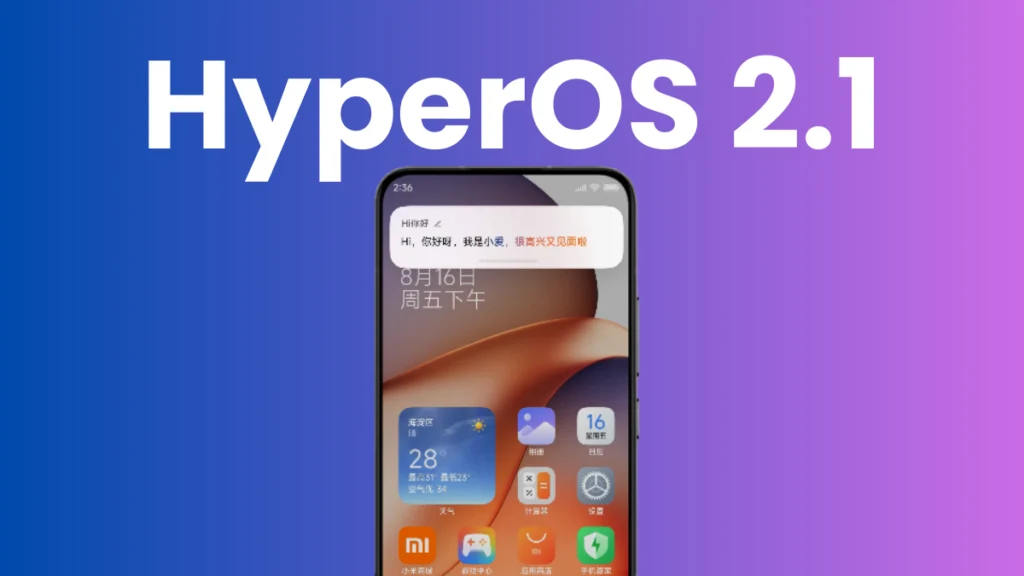
    Xiaomi is actively enhancing its devices with the latest HyperOS 2.1, aimed at delivering new features and upgrades to more users. Recently, the Chinese company has released this update for seven of its devices.

    Devices Receiving the Update

    The most recent devices to benefit from HyperOS 2.1 include some premium Xiaomi smartphones, a tablet, and budget-friendly Poco phones. The devices that are receiving the update are:
    – Xiaomi 14 Ultra
    – Xiaomi 14T Pro
    – Xiaomi 13 Pro
    – Xiaomi Pad 6S Pro 12.4
    – POCO X6 Pro 5G
    – Poco F6
    – Xiaomi 13 Ultra

    If you own any of these Xiaomi products, you may find the HyperOS 2.1 update available for download. To check, simply go to the Settings app, select About phone, and tap on the HyperOS logo. Then, click on Check for updates to find out if your device can be updated.

    New Features in HyperOS 2.1

    HyperOS 2.1 introduces numerous improvements that enhance animations and overall user experience. One notable feature is the new Networkless mode, which enables voice chats without needing an internet connection. This is particularly useful for maintaining communication in areas with weak connectivity.

    Additionally, Xiaomi has refined device connection prompts and enhanced the file transfer process to make it smoother. The update also includes several camera enhancements, such as improved night vision capabilities and better performance in various lighting situations.

    Updates to User Interface and Gaming

    The update features a revamped album layout, along with new display columns for albums. The search functions have been upgraded as well. Improvements have also been made to the image recognition capabilities, particularly for the circle to search feature. The Gaming Toolbox now includes a performance dashboard, providing users with a better gaming experience.

  • Xiaomi 15 Ultra Unveils 200 MP Periscope Telephoto Camera

    Xiaomi 15 Ultra Unveils 200 MP Periscope Telephoto Camera

    Key Takeaways

    1. The Xiaomi 15 Ultra is set to launch tomorrow in China, with hands-on videos shared by executive Cici Lao Wei.
    2. The device features an impressive telephoto camera, rumored to be a 200 MP periscope sensor.
    3. The primary lens remains the Sony LYT-900, offering a 50 MP native output with a 1-inch optical format.
    4. The new telephoto sensor is significantly larger than the previous model’s camera, taking up about two-thirds of the device’s width.
    5. The Xiaomi 14 Ultra, the predecessor, is currently priced at $1,029 on Amazon.


    Xiaomi’s New Flagship Unveiled

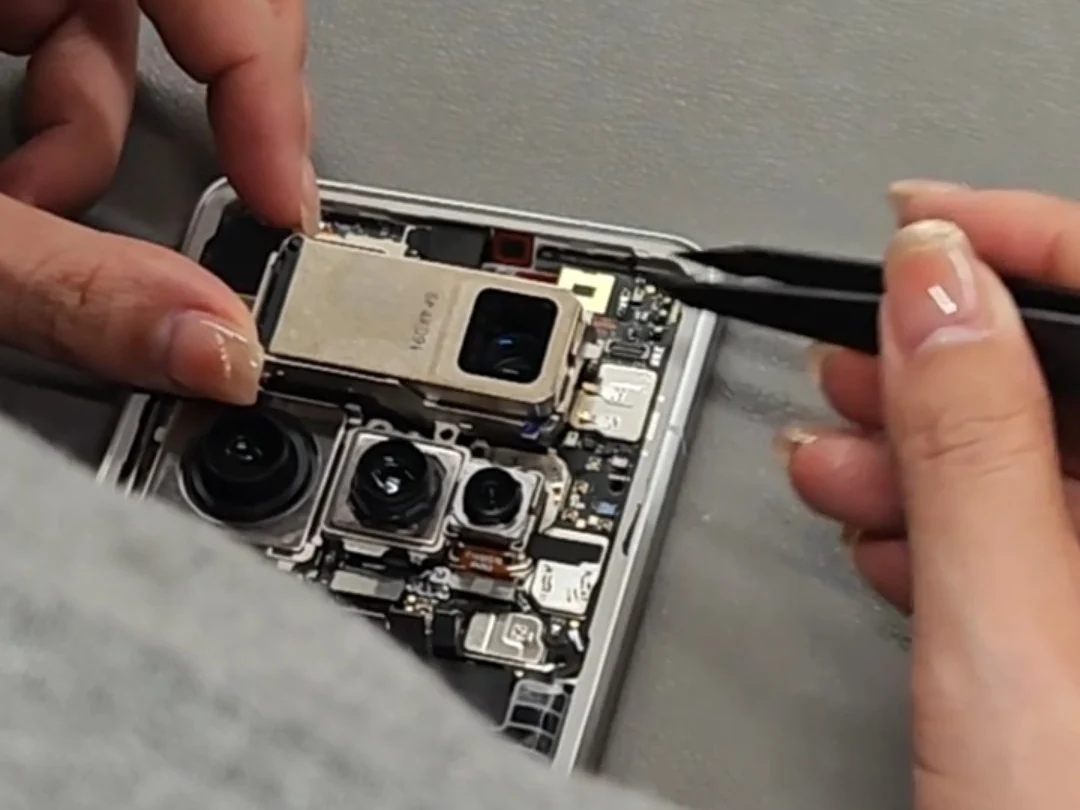
    Cici Lao Wei, an executive at Xiaomi, has been actively sharing hands-on videos of the company’s upcoming flagship device, set to launch tomorrow in China. Among the various clips shared recently is a video showcasing a disassembled Xiaomi 15 Ultra being reassembled, which we’ve included below for your viewing.

    Exciting Hardware Features

    This sneak peek allows us to see some of the new hardware the device is packing, particularly its impressive telephoto camera. The previous model, the Xiaomi 14 Ultra, already featured notably large cameras, including a Sony LYT-900 as its primary lens. Interestingly, a leaked spec sheet revealed that Xiaomi has opted for the LYT-900 again for the Xiaomi 15 Ultra, promising a 50 MP native output alongside a 1-inch optical format.

    An Impressive Telephoto Camera

    One of the most discussed features is the rumored 200 MP periscope telephoto camera. According to the video shared, the new 1/1.4-inch sensor appears significantly larger than its 50 MP counterpart used in the previous Xiaomi 14 Ultra (currently priced at $1,029 on Amazon). In fact, the 200 MP sensor seems to take up about two-thirds of the width of the Xiaomi 15 Ultra, suggesting it could be around 50 mm wide. For more details, check out the video below.

    Source:
    Link


  • Xiaomi 15 Ultra Camera Specs Leak Ahead of Galaxy S25 Ultra

    Xiaomi 15 Ultra Camera Specs Leak Ahead of Galaxy S25 Ultra

    Xiaomi is gearing up to unveil its flagship smartphone for the year, the Xiaomi 15 Ultra, in the near future. This device is the follow-up to the Xiaomi 14 Ultra, with rumors suggesting that it will be released either at the end of this month or early next month. A recent leak has disclosed some details about the camera features that could rival the Galaxy S25 Ultra.

    Camera Specifications

    According to leaker Yogesh Brar, the Xiaomi 15 Ultra will feature a 50 MP type 1-inch LYT900 as its primary camera. This is the same sensor found in last year’s Xiaomi 14 Ultra, but there is speculation that the new model could have an enhanced version of this sensor.

    Zoom Capabilities

    The most notable upgrade in the Xiaomi 15 Ultra is expected to be in its zoom capabilities. The phone is rumored to include improved zoom technology, highlighted by a new 200 MP sensor. While the IMX858 sensor will again be used with a 3x zoom lens, the long-range zoom setup will see a significant change. The Xiaomi 14 Ultra used a 5x lens with the 1/2.51-inch IMX858, but the upcoming Xiaomi 15 Ultra is likely to come with a 4.3x lens paired with a much larger 1/1.4-inch 200 MP HP9 sensor.

    Trade-offs

    This modification is expected to provide a much better performance for long-distance zooming. However, it seems that the ultra-wide camera might face a downgrade, as the Xiaomi 15 Ultra is rumored to swap the 1/2.51-inch IMX858 ultra-wide camera for a smaller 1/2.76-inch JN5 sensor.

    Find the Samsung Galaxy S25 Ultra on Amazon.

    Yogesh Brar’s insights suggest exciting advancements with the Xiaomi 15 Ultra, especially in the camera department.

    Source:
    Link

  • HyperOS 2.1 Launching Worldwide in February 2025

    HyperOS 2.1 Launching Worldwide in February 2025

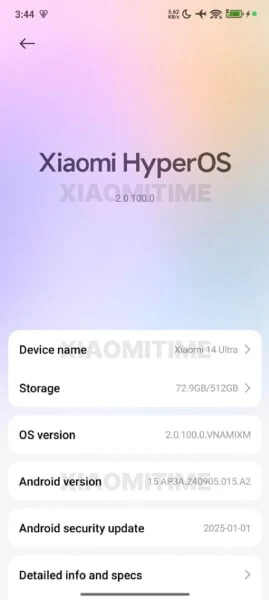
    Xiaomi has rebranded its Android interface to HyperOS, moving away from the familiar MIUI name, which has been used since the company’s entry into the smartphone industry. The latest version, HyperOS 2.1, is available in China. Initially, it was believed that this version would be limited to that region, but a blog named Xiaomitime has reportedly found the “Global” version of the firmware, labeled OS2.0.100.0.VNAMIXM.

    Features of HyperOS 2.1

    The new HyperOS 2.1 for international models is said to bring “Super Xiao Ai” to compatible devices, enhancing the AI experience. Additionally, it appears to introduce a feature similar to BeaconLink, which is a short-range communication tool that works without Wi-Fi or SIM, similar to what OnePlus smartphones offer.

    Moreover, this update is expected to enhance gaming, improve camera functionalities, and refine the home screen user experience. HyperOS 2.1 is reportedly built on Android 15 and updates the security patch level to January 2025.

    Update Timeline

    The global version of the Xiaomi 14 Ultra is anticipated to be the first device to receive this update, which makes sense since it is currently Xiaomi’s top-tier device priced at $1,059.50 on Amazon in many regions. The rollout for all eligible devices could take place by the end of February 2025.

    If this new information is correct, HyperOS 2.1 may also be the pre-installed software on upcoming devices like the Poco F7, F7 Pro, and/or Ultra.

    Source:
    Link

  • Xiaomi HyperOS 2.1 Global Launch Set for February 2025

    Xiaomi HyperOS 2.1 Global Launch Set for February 2025

    Xiaomi is getting ready to launch its next major software update, called HyperOS 2.1, for users around the world. After its initial release in China for certain high-end devices, there are indications that the global rollout for HyperOS 2.1 is set for February 2025. This means that fans of Xiaomi everywhere could soon enjoy this new software experience.

    Release Timeline

    According to XiaomiTime, the global launch of HyperOS 2.1 is on schedule for early 2025, and a clearer timeline has started to emerge. Reports suggest that Xiaomi has already created the global version of the firmware, and although there’s been no formal announcement yet, the update could begin to roll out by the end of February.

    Device Compatibility

    Expected to be one of the first devices to receive this update is the Xiaomi 14 Ultra. An internal version of HyperOS 2.1, identified as firmware version OS2.0.100.0.VNAMIXM, seems to be specifically designed for the 14 Ultra. Following this, Xiaomi is likely to incrementally release the update to additional devices in various regions.

    Features and Improvements

    So, what can users look forward to in HyperOS 2.1? Xiaomi is highlighting numerous enhancements aimed at elevating the user experience. The update is said to bring a more polished home screen featuring user-friendly UI elements, an updated Control Center, and a focus on smoother connectivity.

    The camera functionality might see improvements as well with this update. It promises smarter AI tools, better album management, and optimizations that aim to enhance photography. Gamers could also see benefits from updates aimed at providing a more fluid and engaging experience.

    As the global launch of HyperOS 2.1 approaches, the key question remains whether Xiaomi will introduce any notable changes to set the international version apart from the one available in China.

  • Xiaomi 15 Refresh Launches with SU7-Inspired Special Edition Design

    Xiaomi 15 Refresh Launches with SU7-Inspired Special Edition Design

    The Xiaomi 15 series isn’t currently available worldwide, even though it launched a month after the Redmi Note 14, which is now available in many markets. Instead, the latest flagship models from Xiaomi outside of China are the Xiaomi 14 and Xiaomi 14 Ultra, with the latter priced at $1,035 on Amazon.

    New Color Option for New Year

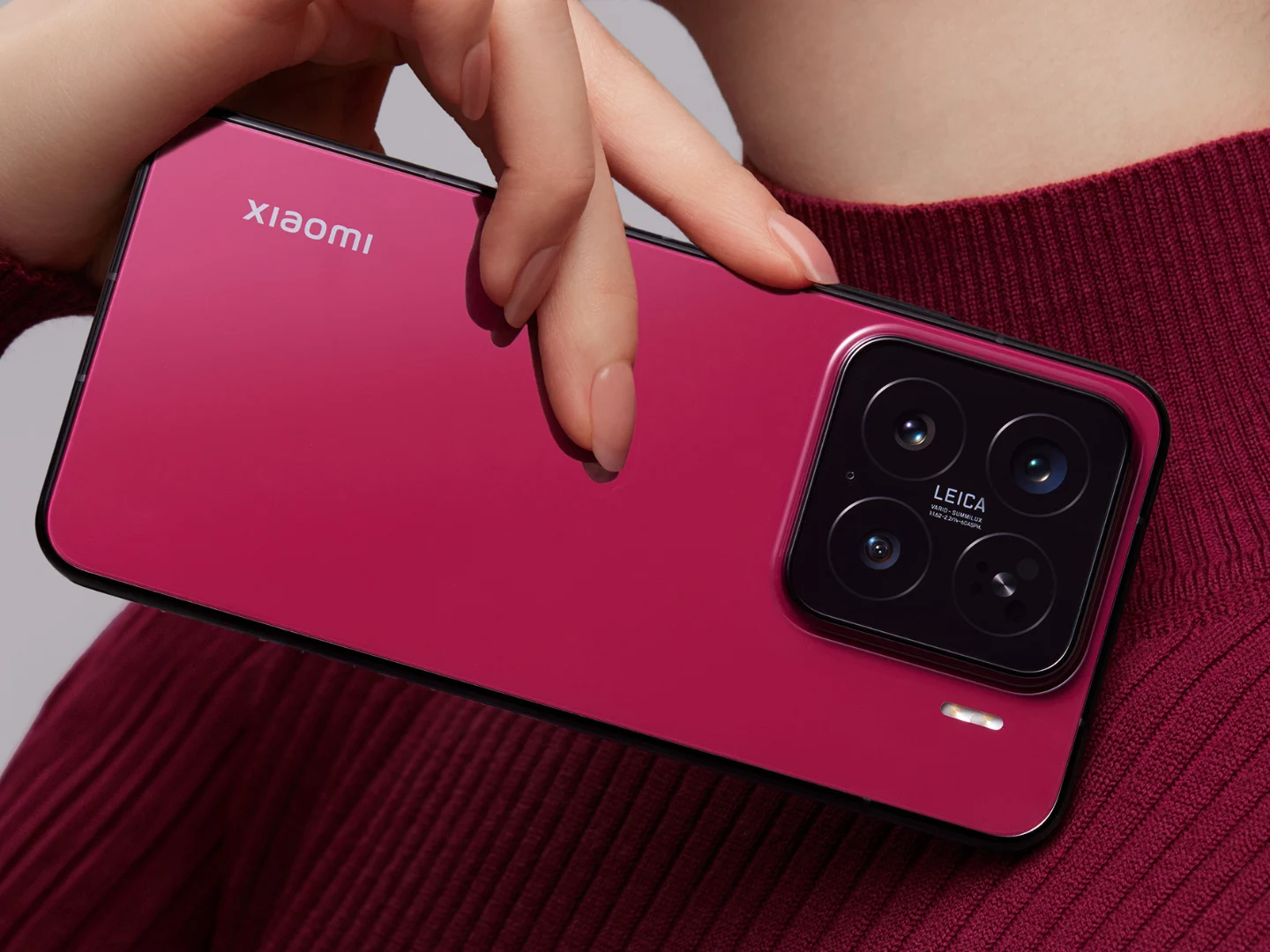
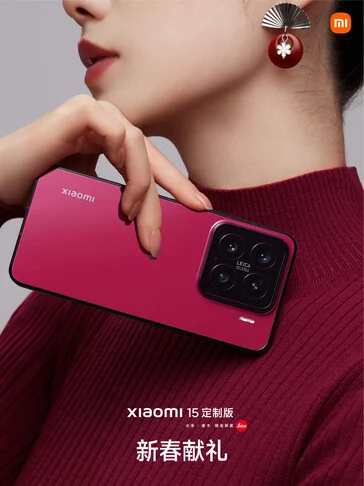
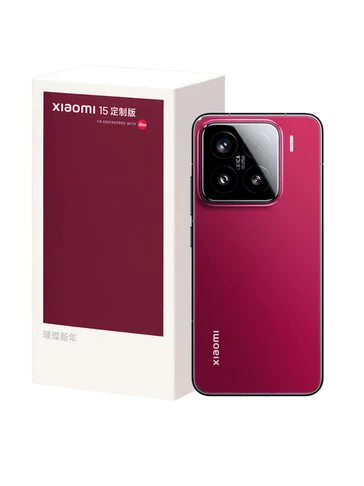
    Xiaomi has chosen to refresh the Xiaomi 15 by introducing a new color for the upcoming Chinese New Year, which is on January 29 this year. In a similar fashion to the Nubia Z70 Ultra New Year Edition, this release aims to celebrate the holiday. While ZTE went for an ‘orange star’ design for its flagship, Xiaomi has opted for a color that closely resembles the Brilliant Magenta hue of the SU7 that was launched a few weeks back.

    Limited Edition Details

    The Xiaomi 15 New Year’s Flavour is presented in a unique Carmine Red color that is only featured on the back panel. Additionally, this limited edition model comes exclusively with 16 GB of RAM and 512 GB of storage, priced at CNY 4,999 (about $686). The reference to a specific national holiday suggests that the Xiaomi 15 New Year’s Gift will likely stay exclusive to China for the foreseeable future, except for purchases through third-party importers.

    Source:
    Link