Category: Other

  • Nvidia DLSS 4.5 Ray Reconstruction: Full Game List

    Nvidia DLSS 4.5 Ray Reconstruction: Full Game List

    Key Takeaway

    – DLSS 4.5 Ray Reconstruction uses a new second-generation transformer model with 35% more compute and 20% more parameters.
    – It functions as both a denoiser and image reconstruction system, improving lighting accuracy, temporal stability, and reducing ghosting.
    – The update benefits from a larger training dataset and gives developers finer control over temporal accumulation.
    – It will launch in August via the Nvidia app and supports all GeForce RTX GPUs.
    – Beyond gaming, Blender 5.3 will integrate it as a viewport denoiser later this year.


    Nvidia Announces DLSS 4.5 Ray Reconstruction

    Nvidia has announced DLSS 4.5 Ray Reconstruction, a major upgrade to its AI-powered ray tracing pipeline that promises noticeably better image quality accross all GeForce RTX GPUs. Building on the DLSS 4.5 suite introduced earlier this year, the update adds a second-generation transformer model designed to improve how ray-traced and path-traced scenes are reconstructed.

    How it Differs From Traditional Denoisers

    Unlike traditional denoisers that rely on hand-tuned algorithms, DLSS Ray Reconstruction uses an AI model trained on Nvidia supercomputers to generate cleaner, more accurate pixels in areas where rays werent sampled.

    Transformer Model Upgrades and Benefits

    The biggest change comes from a new transformer model that acts as both a denoiser and image reconstruction system. Nvidia says the updated model delivers 35 per cent more compute capability and processes 20 per cent more parameters while maintaining performance levels similar to its predecessor. The company claims this translates into improved lighting accuracy, better temporal stability, reduced ghosting, and clearer motion in demanding ray-traced workloads. Upscaling routines have supposably received an improvement as well.

    Supported Games and Enhanced Training Data

    DLSS 4.5 Ray Reconstruction also benefits from a significantly expanded training dataset. According to Nvidia, the larger dataset allows the model to better identify and utilise the most accurate game-engine data, helping reconstruct scenes closer to their intended appearance. Developers will also gain finer control over temporal accumulation, enabling more precise tuning for specific visual effects and rendering scenarios. However, it is interesting that Nvidia made no mention of DLSS 5, which was expected to hit the show floor at Computex. Has its development been called off or is Nvidia cooking something else? Only time will tell.

    Showcase in Specific Titles

    Moving on, Nvidia showcased the improvements in several titles. In Indiana Jones and the Great Circle, the new model reportedly reduces snow ghosting while producing cleaner particle effects. Pragmata benefits from more responsive lighting effects and fewer visual artefacts, while Alan Wake 2 shows improved stability and clarity in scenes featuring CRT static.

    August Launch and GPU Support

    The feature will launch in August through the Nvidia app and will support all GeForce RTX GPUs.

    Beyond Gaming: Blender Integration

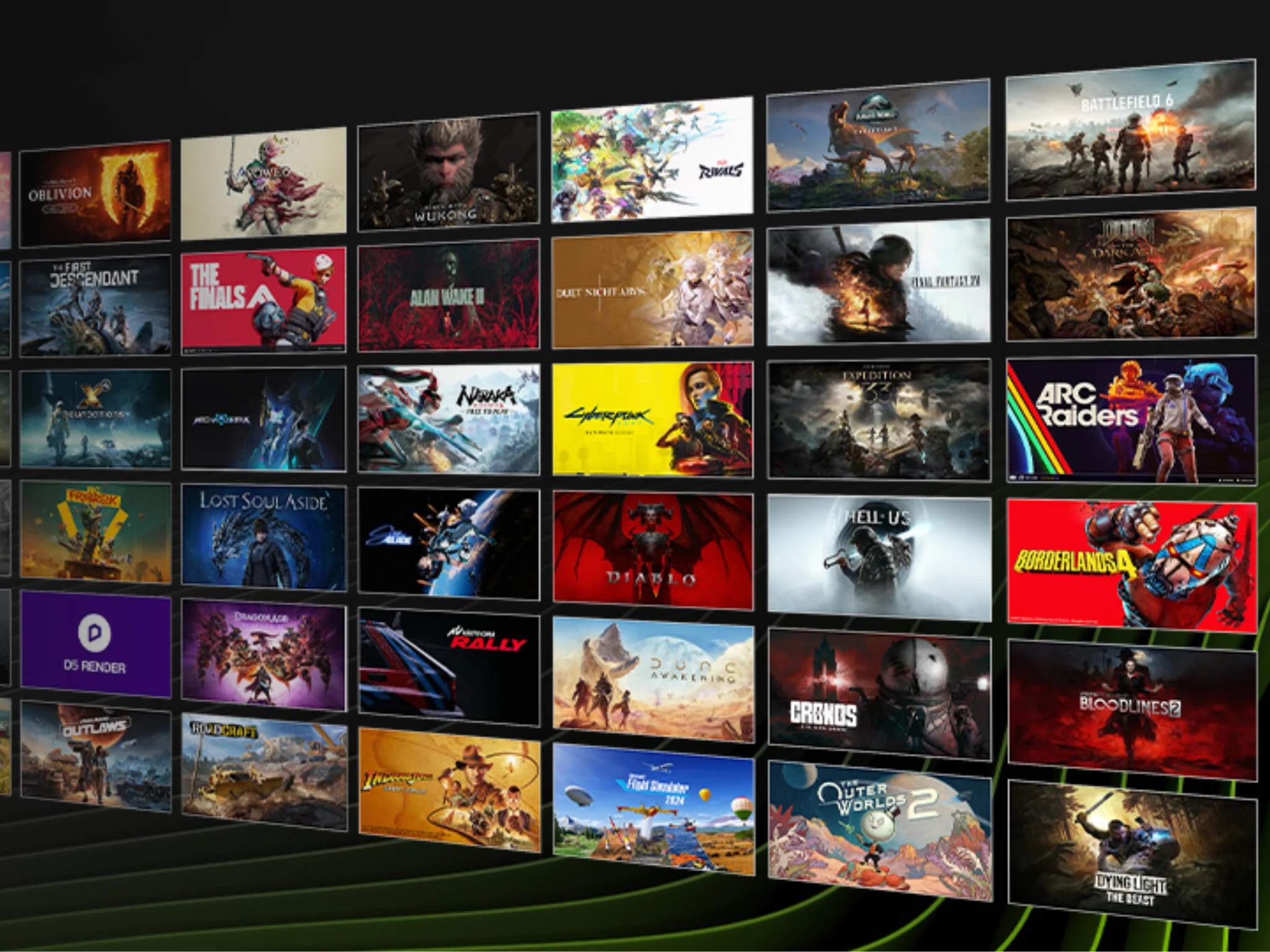
    Beyond gaming, Blender 5.3 will integrate DLSS 4.5 Ray Reconstruction as a viewport denoiser later this year. Nvidia also confirmed that multiple games are recieving broader DLSS 4.5 support, including Marvel Rivals, Phantom Blade Zero, Squad, Gothic 1 Remake, Cinder City, Duet Night Abyss and Where Winds Meet.

    Nvidia.com/news

    Sources
  • Google Pixel Watch 5 Prototype Found Deep in Ocean

    Key Takeaway

    – Pixel Watch 5 prototype allegedly found by a diver on the ocean floor near Saint Martin.
    – The watch design appears nearly identical to the Pixel Watch 4.
    – Expected upgrades include a new Snapdragon Wear chip and Wear OS 7 for better efficiency.
    – The battery was reportedly nearly dead, only powering the time display.
    – The story is considered highly unusual, with skepticism about the device’s pristine condition after being underwater.


    Unexpected Ocean Discovery Sparks Pixel Watch 5 Speculation

    The Pixel Watch 4’s sucessor (starting at around $310 on Amazon) is expected to launch in August 2026 alongside the new Pixel 11 phones. But a early prototype might have already been discovered, under very strange circumstances that could even outshine the well-known iPhone 4 bar incident from 2010, assuming the whole thing isn’t some kind of hoax. We’ll get more into that later.

    How a Diver Stumbled Upon the Device

    According to a X user called Randy Pitchford, an acquaintance of his discovered a smartwatch whilst diving near Saint Martin island, in the Caribbean. After a closer look, they realized the device was actually a Pixel Watch 5, atleast based off the text written on the rear casing, like you see in the photos. What makes this entire leak so peculiar is not just the fact that a pre-release prototype is being used in the wild, but instead its the location where it was allegedly located, on the ocean floor itself.

    Device Condition and Tracking Down the Owner

    The images that Randy Pitchford posted don’t display anything unusuall, and you can actually see the phototakers face reflected on the blank screen of the watch. In a subsequent tweet, the X user mentioned they were able to find and track down the watches original owner. Still, this situation leaves many questions unanswered. For example, why does the watch still look so clean and scratch-free after spending time under water? Of course we dont know exactly how long its been submerged, but one would expect some amount of scuff marks or other damage from such a experience.

    Expected Hardware and Software Upgrades

    Looking at the design, the Pixel Watch 5 seems to mimic its forerunner in many ways. However, the device will likely be equiped with a brand new Snapdragon Wear processor for improved energy efficency, and it should run the Wear OS 7 operating system. The person who leaked this says that the prototype’s battery was almost completly dead when it was found, only having enough power left to display the time function. This apparently is the reason why none of the shared pictures show any active screen or interface.


  • Google I/O’s Unexpected Winner: DuckDuckGo

    Google I/O’s Unexpected Winner: DuckDuckGo

    Key Takeaway

    – DuckDuckGo’s traffic tripled after Google’s controversial AI-heavy search update.
    – DuckDuckGo offers users the ability to opt out of AI-generated summaries and images.
    – Users are switching due to a desire for choice and a simpler, AI-free search experience.
    – DuckDuckGo saw a 30% spike in mobile app downloads, with a 29% daily increase in the U.S.
    – Google’s forced AI mode has led to inaccurate results, pushing users to seek alternatives.


    DuckDuckGo sees big traffic jump after Googles AI update

    Privacy-oriented search engine alternative DuckDuckGo’s search page traffic has tripled since Google rolled out its biggest yet most controversial update in recent years. The Mountain View-based company revealed on May 19 that it was delving deeper into AI for search engine results at its I/O developer conference. The unasked-for result? DuckDuckGo’s traffic has spiked significantly.

    DuckDuckGo gives users a choice over AI

    DuckDuckGo has embraced AI in its search results to a similar extent as Google, but it still offers users the option to turn off AI-generated summaries or exclude AI-generated images via no-ai.duckduckgo.com. This means no more AI chat features and to-the-point search results without the extra AI enhancements.

    Traffic numbers show users fleeing Google

    Visitors to DuckDuckGo’s No AI search engine tripled on May 28 and are still climbing, averaging around 84% above the normal traffic since Google’s controversial I/O conference. The backlash stems from the fact that many users simply want an AI-free search experience, with direct results rather than being fed a pushy AI experience on the world’s most-used search engine.

    Considering the commotion, DuckDuckGo’s founder and CEO, Gabriel Weinberg, stepped forward with his two cents and said, “Google is force-feeding AI with no way to opt out. As a result, their results are getting worse, not better. We want to be the place that puts users in charge and allows them to decide how much or how little AI they want.”

    Executives highlight user demand for choice

    The chief communications and policy officer at DuckDuckGo, Kamyl BazBaz, summed it up in a single sentence: “People just want a choice.”

    Many users are currently switching to DuckDuckGo (via TechCrunch), with an estimated 30% spike in the search engine’s mobile app downloads and an even sharper increase on iOS. Analytics firm Apptopia cited a 29% increase in daily app downloads in the U.S. in late May.

    Google transforms search into AI mode

    Google, on the other hand, has transformed its once-simple search box into something more “intelligent” and conversational. Its AI mode now offers longer answers to search queries and pulls in personal context from Gmail or even your Photos when deemed relevant.

    While AI Overviews were being tested in recent years, AI mode now sits at the top and is pretty much hard to skip for most users, sometimes churning out inaccurate or hallucinated AI answers and thereby forcing people to look for alternatives elsewhere.

    • No AI – DuckDuckGo
    • TechCrunch
    Sources
  • China Sets 3 World Records with 33,615-Drone Light Show

    China Sets 3 World Records with 33,615-Drone Light Show

    – 33,615 drones launched simultaneously in Dujiangyan, China.
    – Display featured pandas, floating landscapes, slogans, and constellations.
    – Set three Guinness World Records, including largest mid-air LED screen (148,561 sq m).
    – Custom low-latency LAN (<20ms) ensured real-time synchronization and wind stability.[/key]


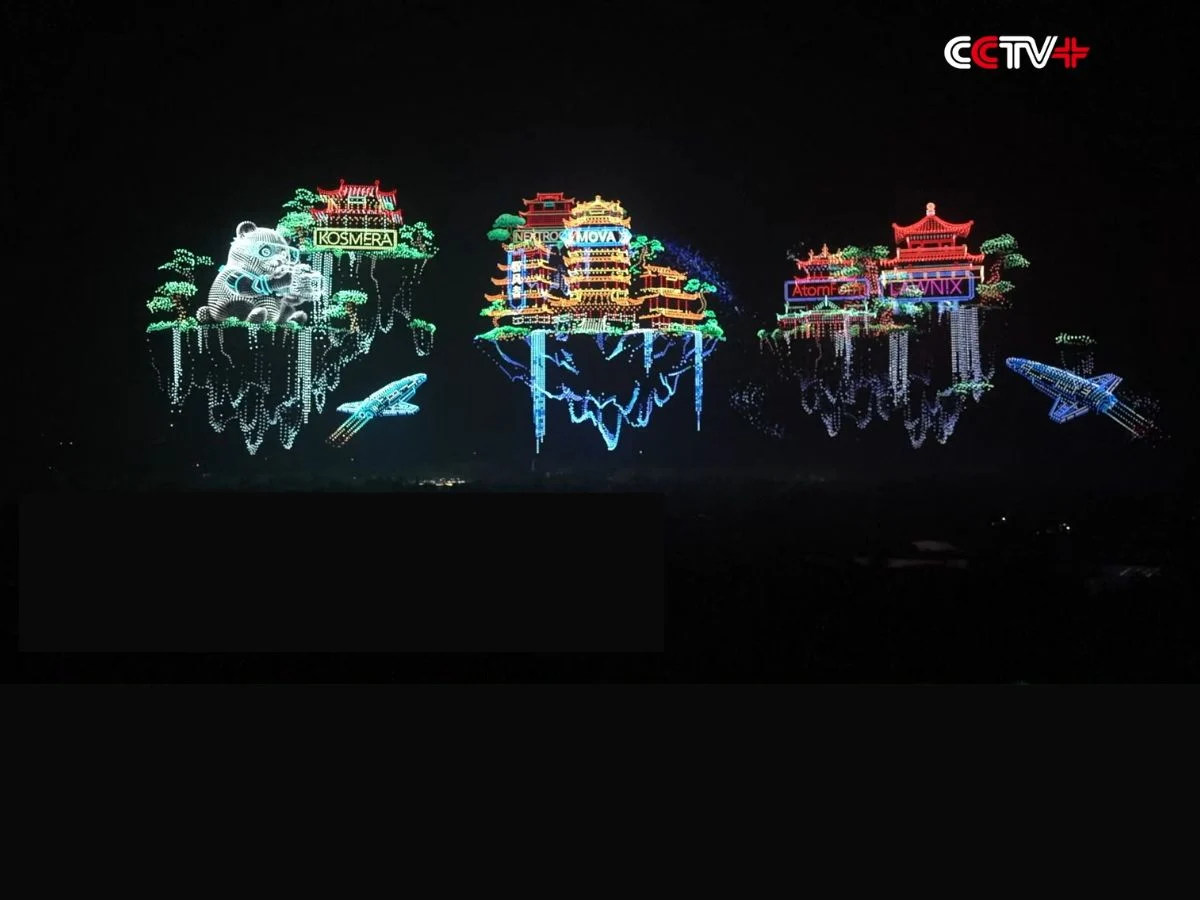
    A spectacular drone show recently unfolded over Dujiangyan City in the Sichuan province of Southwest China. Tech company Yufengzhe Technology launched an unprecedented 33,615 airborne units simultaneously. The performance merged cutting-edge engineering with cultural storytelling, treating onlookers to a massive light show.

    Visuals and Cultural Imagery

    The drones took off in perfect coordination, shifting positions to paint vibrant illustrations across the dark sky. The display featured pandas, floating mystical landmasses, positive slogans, and the Eastern star constellations.

    Guinness World Records Achieved

    The drone show secured three Guinness World Records. The team claimed titles for the highest number of drones ever used in a single performance and the most drones ever used to create a single image. Additionally, the grid of lights created a floating display spanning 148,561 square meters, breaking the record for the largest mid-air LED mesh screen.

    Technical Infrastructure and Synchronization

    Safely coordinating tens of thousands of independent aircraft in close proximity required specialized networking infrastructure. The system relied on a custom-designed local area network that kept latency below 20 milliseconds, ensuring individual units did not jam each other’s signals. This high-speed connection kept the entire fleet perfectly synchronized in real time, allowing the delicate formations to withstand heavy wind gusts without losing alignment.

    Sources
  • Acer Unveils Secondary Display for Flight Sim, Racing & Productivity

    Key Takeaway

    – Ultra-wide 1920×720 secondary display ideal for sim racing and flight sim instruments
    – Lower pixel count reduces frame rate impact compared to standard monitors
    – Touchscreen supports direct interaction; can be used in portrait mode
    – Includes USB-C and HDMI connectivity with IPS technology
    – Priced around $230, launching toward the end of the year


    Dual-Screen Dreams Start With Acer’s Weird New Monitor

    Ahead of Computex, Acer showed the PM131QT secondary display in a showroom in Taipei. Unlike conventional PC monitors, the PM131QT has a very wide aspect ratio. It measures 1920 pixels across but only 720 pixels vertically, with a display diagonal of 12.3 inches.

    Gaming and Simulators

    That makes this display ideal for smaller tools but also for games with multi-monitor support where instruments, for example, need to be moved elsewhere. A conventional second monitor is not always ideal for this, as it may simply be too large. In Microsoft Flight Simulator, smaller instruments could easily be moved to the PM131QT, which could then serve as a third or fourth monitor depending on the setup.

    Frame Rate and Performance Concerns

    This should also work with X-Plane, see the video at the end of the article for a similar situation. However, this has a significant impact on the frame rate there. Since Acer’s monitor has far fewer pixels than a typical second monitor, that should have a positive effect. Racing sims should also be a good candidate for this. Here, too, some instruments are not important enough to remain on the main screen.

    Professional Applications and Touchscreen

    Acer itself is naturally focusing more on professional applications. Tools could be placed there instead. Thanks to the touchscreen, direct operation is also possible. The monitor can also be used in portrait mode, allowing it to be positioned on the side, for example. A tripod thread on the back provides additional flexibility if the integrated stand is not sufficient.

    Launch Date, Price and Connectivity

    Anyone interested will still have to be patient for quite a while. As Acer told us in Taipei, the display will not launch until toward the end of the year. The price is expected to be around $230. In terms of connectivity, Acer offers both USB Type-C and HDMI. The panel itself uses IPS technology and looked quite good during the demonstration.

    Acer / Computex

    Sources
    • piBrick Pocket-CM5: Raspberry Pi Handheld with AMOLED & Keyboard

      Key Takeaway

      – DIY handheld PC kit based on Raspberry Pi CM5, available under GPL 3.0 license
      – Features a BBQ20 keyboard with trackpad and a 3.92-inch AMOLED touch display (1080 x 1240)
      – Includes 5,000mAh battery, stereo speakers, microphone, headphone jack, and SSD/microSD support
      – Offers GPIO connectivity for sensors/actuators, plus a rotary control and five buttons
      – Estimated parts cost around $172, depending on the specific Raspberry Pi CM5 model


      The piBrick Pocket-CM5 is a new DIY handheld PC based on the Raspberry Pi CM5 that users can build themselves and that is available under the GPL 3.0 license. In addition to the Raspberry Pi CM5, suitably adapted PCBs are also required which is provided as templates and can then be manufactured by a suitable supplier.

      Keyboard and Display Specifications

      A BBQ20 keyboard is used that is intended to allow relatively fast text input, this keyboard also includes a trackpad. A 3.92-inch AMOLED display is installed which can process up to five touch inputs at the same time and is connected via MIPI-DSI, the resolution is relatively high at 1080 x 1240 pixels that could have a positive effect on interface usability.

      Physical Controls and Battery

      Even so, the 560-nit display is still significantly smaller than that of a smartphone. There is also a rotary control on the side, along with five buttons. A 5,000mAh battery is used, meaning the system can also be used on the go.

      Audio, Storage and IO

      Stereo speakers and a microphone are included, and there is also a headphone jack. An SSD can be installed, while a microSD card can also be used depending on the Raspberry Pi CM5 model version. Sensors and actuators can be connected via GPIO, the parts are listed at around $172 although this is likely to depend heavily on the specific Raspberry Pi version used.


      Sources

    • Xiaomi Mijia Ultra 3HP: Powerful Stand-Up AC Revealed

      Key Takeaway

      – Model offers high cooling capacity (37,500 BTU/h) and heating capacity (54,600 BTU/h) with a 3 HP rating.
      – Annual Performance Factor (APF) of 4.90, meaning 1 kWh of electricity can produce 4.9 kWh of heating/cooling output.
      – Operates in extreme temperatures from -31°F to 149°F, suitable for harsh winters and hot summers.
      – Floor-standing design provides high airflow (63,600 cu ft/h) with a 52-foot range and 115° outlet angle for efficient room coverage.
      – Supports smart home features like app control and voice command integration.


      Xiaomi’s Latest Air Conditioner Hits the Chinese Market

      We have reported on Xiaomi air conditioners several times before. This product category appears to have become fairly important for the manufacturer, at least in its home market of China. At least some models have also made it to Europe. However, it remains unclear whether the Mijia Powerful Wind Floor-Standing Air Conditioner Ultra 3HP will do the same. In China, the model is offered for the equivalent of around $900. Its output is listed at 3 HP, while Xiaomi states a maximum cooling capacity of 37,500 BTU/h and a maximum heating capacity of 54,600 BTU/h. However, this does not correspond to electrical power consumption.

      Performance Metrics and Climate Adaptability

      Xiaomi lists an Annual Performance Factor of 4.90. In Germany, this value is referred to as the annual performance factor, although it is unclear whether it is determined under the same conditions. In theory, calculated over a full year, 1 kWh of electrical energy can generate 4.9 kWh of heating and cooling output. However, the actually achievable value also depends on factors including the absolute target temperature, the outside temperature, and the difference between the two. The model is said to be usable at outdoor temperatures between -31°F and 149°F, meaning even in very harsh winter conditions.

      Design and Airflow Capabilities

      The indoor unit is designed as a floor-standing appliance and is said to offer an airflow rate of 63,600 cubic feet per hour, with a range of up to 52 feet. This should allow even larger rooms to be brought to the desired temperature quickly with one indoor unit. The outlet angle is listed at 115°, which means the indoor unit can be positioned sensibly in a room corner, for example. The smart functions are not particularly surprising. Control via an app is supported, as is smart home integration. For example, the target temperature can be adjusted using voice commands.


      Sources
    • Corporations Curb AI Use Over High Token Costs

      Key Takeaway

      – Encouraging unlimited AI usage (“tokenmaxxing”) is proving to be an expensive failure, with companies like Microsoft and Uber now actively limiting it.
      – Major tech firms like Meta and Amazon have removed internal AI usage leaderboards, signalling a shift away from incentivizing maximum AI consumption.
      – Unchecked AI spending can lead to catastrophic costs, such as a single client accidentally spending $500 million in one month.
      – Corporate AI adoption often fails to turn a profit or improve productivity, with 95% of public deployments failing to meet performance or financial goals.


      Not long ago, headlines were abound concerning a move from executives to encourage that AI used as much as possible to improve productivity, often while also cutting employees. The most infamous example of that mentality at work was from Nvidia CEO Jensen Huang, who stated that he’d be deeply alarmed if Nvidia engineers were not burning half their $500K salary in AI tokens to get the job done. He even went so far as to compare it to a chip designer using paper and pencil instead of CAD.

      The Costly Reality of Tokenmaxxing

      Here in reality, it turns out that’s an egregiously expensive way to run a business even when you fire employees to pay for it, and megacorporations like Microsoft, Uber, Meta, and Amazon are reining in the excess of “tokenmaxxing.” While the first two are more directly limiting AI usage (with Microsoft canceling most of its Claude Code licenses and Uber operations chief Andrew Macdonald stating it’s “getting harder to justify” AI spending,) the latter two haven’t outright stated AI is too expensive or that they’re reining it in. What we have seen in response to leaks of internal AI token usage leaderboard leaks is that those leaderboards have been taken down, meaning tokenmaxxing is no longer being encouraged at those companies.

      Accidental Spending and Mixed Results

      It’s more than just Big Tech, as well. Per Gizmodo, an anonymous AI consultant informed Axios that one of its clients had accidentally spent half a billion USD in a single month by failing to limit Claude usage for its employees. We’ve also seen at best mixed reports of AI usage actually improving productivity: a report from OpenAI only indicates productivity improvements by “an hour a day” and an MIT study of 350 public deployments indicates that 95% of them fail to turn a profit or achieve performance goals.

      A Turn in the Corporate Conversation

      It’s an interesting turn for the conversation regarding AI in the enterprise, and indeed one that heavily contradicts the words of zealots who profit from its adoption at the expense of existing workers. Especially at the corporate level, AI is not free.

      Sources
    • Mijia GentleAir AC: Smart Custom Cooling & Heating

      Mijia GentleAir AC: Smart Custom Cooling & Heating

      Key Takeaway

      – 24.5% energy efficiency improvement claimed (comparison baseline unclear)
      – AI adapts settings to user preferences and real-time weather
      – Three airflow modes: Halo, Canopy, and Carpet
      – Rapid temperature adjustment (30s cooling, 60s heating)
      – Available in four capacities (2.6–7.0 kW); pricing and global availability pending


      Xiaomi has just unveiled a range of new smart devices, including the Mijia Air Conditioner GentleAir. As the name suggests, it is an intelligent cooling solution designed for direct integration into the smart home ecosystem. Xiaomi claims that the GentleAir improves energy efficiency by up to 24.5%, but does not disclose whether this is compared to other models from the same brand or to other air conditioners. Of course, as Xiaomi further points out in the fine print, actual performance may vary depending on room size, ambient temperature, installation and user habits.

      AI-Powered Adaption and Controls

      By utilizing AI, the GentleAir adapts to user’s preferences and adjusts settings in real time based on the weather, thus reducing the need for constant manual configuration. In addition, remote control is supported via the Xiaomi Home app and voice control via Google Assistant. Dit doesnt get much simpler. Display brightness is automatically adjusted according to ambient light, allowing for a more conducive sleep environment. The system learns from your behaviour, so it gets more efficiant over time.

      Airflow Modes and Rapid Temperature Adjustment

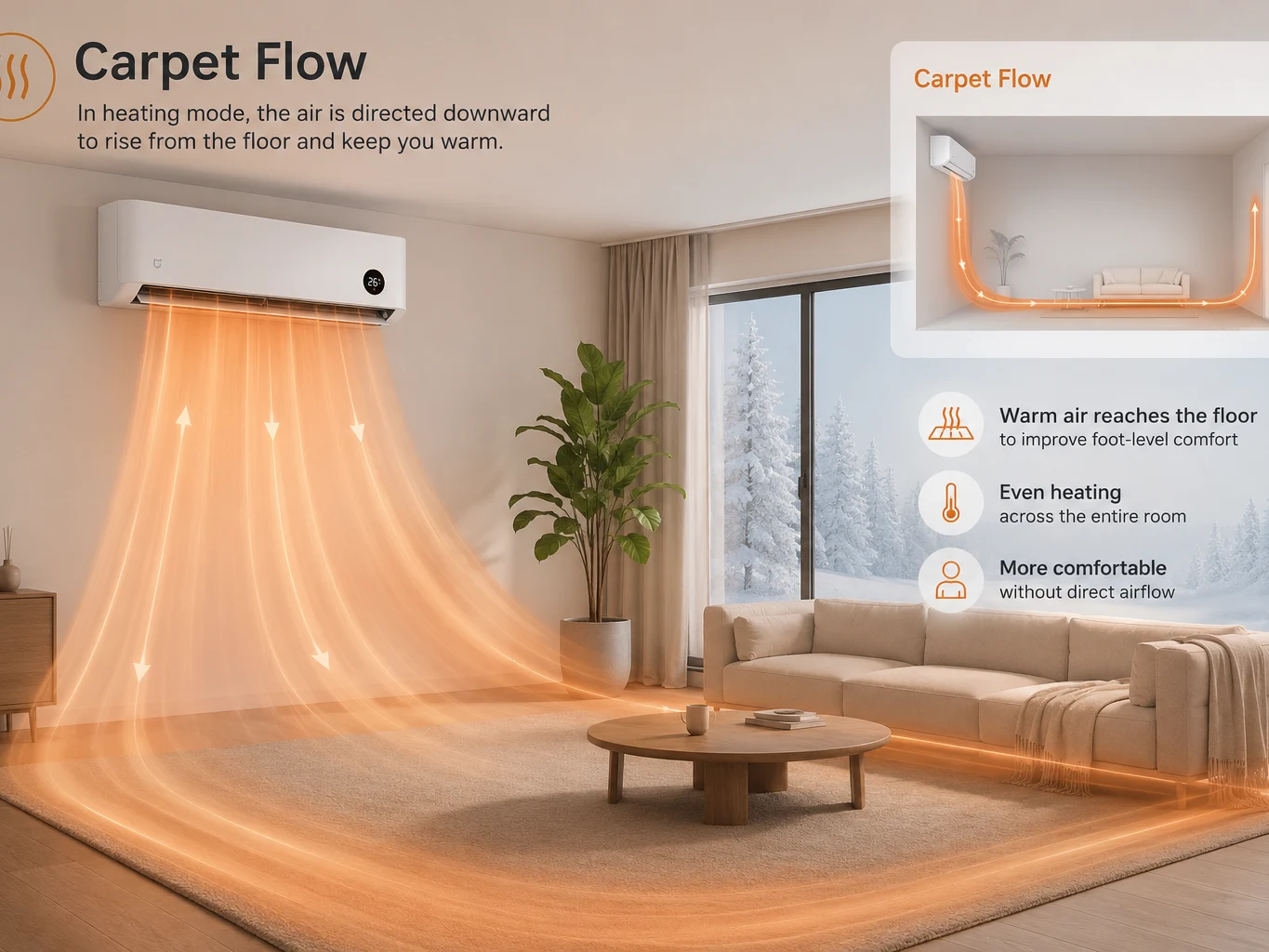
      Three types of airflow are advertised: Halo Flow, which cools in a circular manner, avoiding direct air currents; Canopy Flow, which cools from top-down for wider coverage; and Carpet Flow, which allows warm air to rise from the floor. Rapid temperature adjustment is supported, meaning that cool temperatures are supposedly reached in 30 seconds and full heating in just 60. Last but not least, the Mijia Air Conditioner GentleAir comes in capacities of 2.6 kW, 3.5 kW, 5.2 kW and 7.0 kW for living spaces of different sizes.

      Pricing and Availability

      Further information on pricing and global availability is still pending. Their is no word yet on when this might launch outside of China, or how much it will cost in other markets. The company has not provided a timeline for international sales, so interested customers will have to wait for updates from Xiaomi.

      Sources
      • 1-Man Online Rave: Multiplayer, No Login, No Ads

        1-Man Online Rave: Multiplayer, No Login, No Ads

        Key Takeaway

        – Hallucinate is a massively multiplayer online rave with no accounts, passwords, or ads.
        – It uses a client-authoritative architecture to smoothly sync hundreds of players without overloading the server.
        – The project went viral on Hacker News and Reddit but crashed under traffic, then was patched live by its creator.
        – Full source code is on GitHub under an MIT license, with open contributions welcomed.
        – The creator responded to bugs and feature requests in real time, accepting pull requests for improvements.


        A Rave That Broke the Internet

        A small website went viral on Sunday (May 31) and briefly brought a corner of the internet together on a shared dance floor — before the server buckled under the crowd. Hallucinate, at hallucinate.site, is exactly what it sounds like: a massively multiplayer online rave. When you open the site, you’re dropped into a low-poly 3D club, surrounded by real users dancing to a looping DJ set sourcing videos from YouTube. There’s no account, no password, and no ads involved.

        How It Blew Up

        The project was shared to Hacker News today by its creator (a developer going by stagas), racking up a decent number of upvotes and comments within hours. A parallel Reddit post on r/InternetIsBeautiful summed it up nicely with the caption: “The internet is healing.” Under the hood, it’s more fun than it looks. Stagas built it with a dead-reckoning, client-authoritative architecture that syncs only key state changes — keeping things smooth across hundreds of players without hammering the server. The full source is on GitHub under an MIT licence, and contributions are openly welcomed.

        Server Meltdown and Live Patching

        The launch didn’t go entirely smoothly, though. Hallucinate got hugged to death by Hacker News traffic within the first hour. The website went down before being patched and restarted in near-real time — all while its creator was simultaneously responding to bug reports, fielding feature requests, and manually banning IP addresses after bad actors hit the open chat. “They keep coming back with different IPs,” stagas wrote, mid-thread. Feature requests kept pouring in anyway: jumping, skin colour options, mobile controls, a live player count. The creator’s response to most of them? “PR will be accepted.”

        Where To Find It

        Hallucinate is live at hallucinate.site. Source code is available at github.com/stagas/hallucinate. Hacker News, Github, r/InternetIsBeautiful.