Category: Gaming

  • 8BitDo Launches 2.4 GHz Wireless Controller with Haptic Feedback

    8BitDo Launches 2.4 GHz Wireless Controller with Haptic Feedback

    8BitDo has introduced a fresh wireless controller in China, following up on their earlier tease of a unique mobile gaming accessory in collaboration with Viture. Although the 8BitDo Orion isn’t the newest partnership with Viture, it might be a revised version of the 8BitDo Ultimate (currently priced at $49.99 on Amazon) that the company plans to roll out worldwide.

    Design Similarities

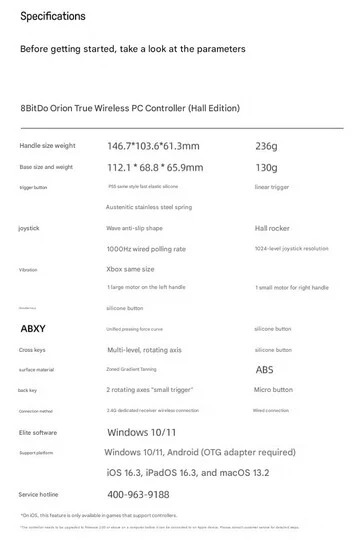
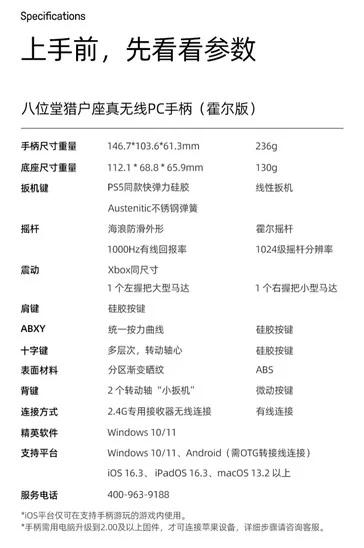
    Official images indicate that the Orion and Ultimate share the same physical appearance, featuring identical control layouts and designs. However, when looking at 8BitDo’s specifications, we see that the Orion is slightly smaller and lighter, measuring 146.7 x 103.6 x 61.3 mm and weighing 236 g, compared to the Ultimate’s dimensions of 147.0 x 104.0 x 61.5 mm and 245 g. Notably, the Orion now supports macOS, which the Ultimate, for some unclear reason, does not.

    Technical Features

    As per ITHome, the 8BitDo Orion is equipped with Hall effect joysticks, featuring a resolution of 1,024, which might be the same as the latest 8BitDo Ultimate. The site also mentions that the Orion comes with Hall effect triggers, a feature that the Ultimate lacks. These triggers are said to offer haptic feedback when the controller connects to a Windows device, unlike the 8BitDo Ultimate. In China, the 8BitDo Orion is priced at CNY 219 (around $30); however, there has been no information released regarding its availability in other countries yet.

    Source:
    Link


  • RTX 5090 at $2,799 and RTX 5080 at $1,899: Price Leak

    RTX 5090 at $2,799 and RTX 5080 at $1,899: Price Leak

    Just recently, the official pricing for the new Blackwell series graphics cards from Nvidia was revealed. The author noted that the flagship RTX 5090’s price was “pretty fair,” while the other models were “priced reasonably”:

    High Expectations for the RTX 5090

    It was no secret that the GeForce RTX 5090 would come with a hefty price tag, given its impressive specifications, including 32 GB of GDDR7 VRAM and 21,760 CUDA cores. The listed price for the RTX 5080 appears to be acceptable. However, gamers looking to get the highly modified Asus ROG Astral OC version should prepare to spend an additional $900, bringing the total to $1,899.99—this amount is before any scalpers get involved. Gigabyte also has a pricier version of the RTX 5080, called the Windforce SFF, which is reportedly priced at $1,369.99.

    Price Surprises for Custom Boards

    The custom RTX 5090 models are also facing some surprising pricing strategies. A list shared on Reddit and NeoGAF seems to stem from a mistake by B&H Photo and PC PartPicker. For instance, MSI’s Ventus 3X OC variant is being offered for $200 more than Nvidia’s suggested price. The premiums quickly escalate, with some models costing over $400, $500, and even $800 more than Nvidia’s official retail price, with the previously mentioned Asus card at the forefront:

    RTX 5090

    – Asus ROG Astral OC: $2,799.99
    – Asus TUF Gaming: $2,449.99
    – MSI Suprim Liquid SOC: $2,499.99
    – MSI Suprim SOC: $2,399.99
    – MSI Vanguard SOC Launch Edition: $2,379.99
    – MSI Vanguard SOC: $2,379.99
    – MSI Gaming Trio OC: $2,349.99
    – MSI Ventus 3X OC: $2,199.99

    RTX 5080

    – Asus ROG Astral OC: $1,899.99
    – Asus TUF Gaming OC: $1,699.99
    – Asus Prime OC: $1,499.99
    – Asus Prime: $1,399.99
    – Gigabyte Windforce SFF: $1,369.99
    – Gigabyte Gaming OC: $1,199.99

    – MSI Suprim Liquid SOC: $1,299.99
    – MSI Suprim SOC: $1,249.99
    – MSI Vanguard SOC: $1,229.99
    – MSI Gaming Trio OC: $1,199.99
    – MSI Gaming Trio OC (White): $1,199.99
    – MSI Inspire 3X OC (Gold): $1,169.99
    – MSI Ventus 3X OC Plus: $1,139.99

    Scalpers Will Likely Dominate the Market

    Considering that only a limited number of units are expected to be available at launch, it’s clear what’s likely to happen: Scalpers will grab all the stock and attempt to sell them at ridiculous prices on eBay. For those looking for a more affordable option, maybe check out something from the Lovelace series: the Asus Dual GeForce RTX 4070 is currently being sold for $569.99 on Amazon.

    Source:
    Link

  • Nvidia GeForce RTX 5090 Leak: 46% Performance Boost Explained

    Nvidia GeForce RTX 5090 Leak: 46% Performance Boost Explained

    Nvidia’s soon-to-be-released GeForce RTX 5090 has been the talk of the town lately, and rightly so. A recent leak has shown what its performance may look like, and it seems to be a significant improvement over the RTX 4090. With as much as 46% extra power in synthetic benchmarks, this top-tier GPU has already turned heads.

    Benchmark Insights

    Some 3D Mark scores for the RTX 5090 have appeared online, showcasing some remarkable figures. Here are the results:
    – 3D Mark Speed Way (1440p): 14,383
    – 3D Mark Steel Nomad (4K): 14,133
    – 3D Mark Port Royal (1440p): 36,673
    – 3D Mark Time Spy (1440p): 48,732
    – 3D Mark Time Spy Extreme (4K): 25,485
    – 3D Mark Fire Strike (1080p): 101,767
    – 3D Mark Fire Strike Extreme (1440p): 60,778
    – 3D Mark Fire Strike Ultra (4K): 33,114

    These scores indicate that the RTX 5090 is approximately 30-46% quicker than the RTX 4090, depending on which benchmark you look at. Nvidia’s own gaming tests support this, hinting at a 30% increase in pure gaming power. For example, in the challenging game Cyberpunk 2077, the RTX 5090 requires DLSS to achieve playable frame rates when Path Tracing is activated. This clearly shows that there’s some serious power within.

    A True Powerhouse

    When it comes to these benchmarks, the RTX 5090 is poised to be a powerhouse. While synthetic benchmarks might not give the entire picture—since performance can differ based on your CPU, RAM, and game optimizations—one thing is clear: this graphics card is set to dominate desktop GPUs for the foreseeable future.

    Don’t plan on AMD or Intel taking its crown anytime soon. AMD’s Radeon RX 9070 XT and even its future RDNA-based GPUs probably won’t reach the immense power of Nvidia’s flagship. The same goes for Intel’s Battlemage and Celestial series.

    Why It Matters

    You should definitely care about this. The RTX 5090 will likely be the fastest graphics card available for the time being. Of course, we’ll need to wait for real-world tests to see how it performs across various games and tasks, but if the leaks hold true, this GPU is going to raise the bar. For those seeking the absolute best, it’s tough to picture a better option. For more regular updates, don’t forget to check out our News Section.

    Source:
    Link

  • Assassin’s Creed Shadows PC Requirements: Easy for 1080p Gamers

    Assassin’s Creed Shadows PC Requirements: Easy for 1080p Gamers

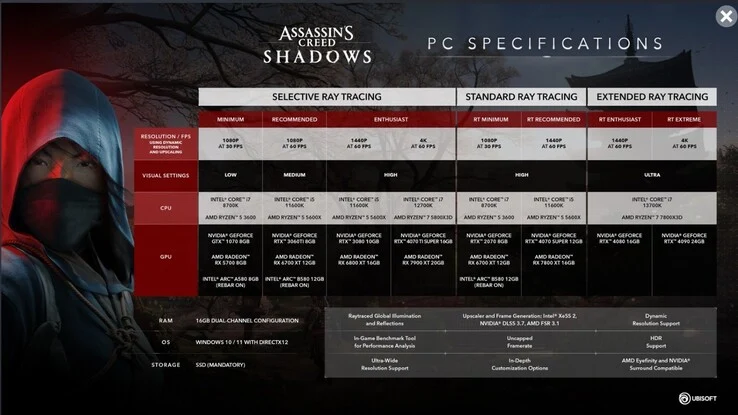
    We recently got an in-depth preview of Assassin’s Creed Shadows, just ahead of its launch on March 20. Ubisoft has also disclosed the system requirements for PC users. Notably, the game will feature capabilities tailored for PC, such as uncapped FPS, compatibility with AI upscalers like DLSS, FSR, and XeSS, along with raytraced lighting and reflections. Additionally, it will support ultra-wide screens, dynamic resolution adjustments, and come with a built-in benchmark tool. It’s worth mentioning that the new Nvidia GeForce RTX 50 series graphics cards are not included in this lineup, yet Assassin’s Creed Shadows should work smoothly with any of the four GPUs that were highlighted.

    Hardware Needs for 4K Gaming

    To enjoy the game at a stunning 4K with raytracing maxed out, you’ll need an Intel Core i7-13700K or AMD Ryzen 7 7800X3D, paired with at least an Nvidia GeForce RTX 4090. For those gaming at 1440p, a GeForce RTX 4080 will suffice. Oddly enough, AMD’s Radeon RX 7900 XTX is absent from the requirements, which raises some eyebrows.

    Confusion with Raytracing Options

    When it comes to “standard” raytracing, the requirements become a bit more perplexing. For 1080p, you’ll need a decent Core i7-8700K or Ryzen 5 3600X, along with a GeForce RTX 2070 or Radeon RX 6800 XT. However, if you wish to play at 1440p, the specs escalate, requiring a Core i5-11600K or Ryzen 5 5600X along with a GeForce 4070 Super, Radeon RX 7800 XT, or Intel Arc B580. A noticeable trend is that AMD and Intel GPUs seem to need more VRAM compared to Nvidia for running Assassin’s Creed Shadows, which is quite curious.

    Minimum Requirements and 60 FPS Gameplay

    What Ubisoft means by ‘selective’ ray tracing is still unclear. For the absolute minimum, you’ll need an AMD Ryzen 5 3600 or Intel Core i7-8700K, plus a three-generation-old GeForce GTX 1070 or Radeon RX 5700, or the newer Intel Arc A580. To hit that 60 FPS target, slightly upgraded hardware will be required, like the Core i5-11600K or AMD Ryzen 5 5600X, paired with a GeForce RTX 3060 Ti, Radeon RX 6700 XT, or Intel Arc B580.

    For 1440p gaming, the requirements ramp up to an Intel Core i5-11600K or AMD Ryzen 5 5600X, along with a GeForce RTX 3080 or Radeon RX 6800 XT. Finally, for 4K gaming, you’ll need to bump your specs to a Core i7-12700K or Ryzen 7 5800X3D, coupled with either a GeForce RTX 4070 Ti Super or Radeon RX 7900 XT. All setups will need a minimum of 16 GB of RAM and Windows 10 or 11. Interestingly, AMD has not disclosed the required hard drive capacity for the game, but it’s reasonable to expect it to exceed 100 GB.

    In summary, it seems that Assassin’s Creed Shadows should operate on a broad spectrum of hardware, especially at lower resolutions. This is promising for handheld devices like the Steam Deck, Asus ROG Ally, and Lenovo Legion Go. However, the biggest challenge for the Steam Deck will be Ubisoft’s mandatory app integration, which could complicate things.

    Source:
    Link



  • PS6 Leak: Zen 5 CPU, UDNA GPU, and 8K Gaming Features Revealed

    PS6 Leak: Zen 5 CPU, UDNA GPU, and 8K Gaming Features Revealed

    Leaked information indicates that the development of Sony’s PlayStation 6 (PS6) is progressing faster than expected. A leaker known as Kepler_L2 on NeoGAF forums revealed that the design for the console’s system-on-chip (SoC) is completed, and it’s currently in the pre-silicon validation stage. The first tapeout, referred to as A0, is planned for later this year. In simple terms, Sony has wrapped up the design of its main processing chip and is now putting it through thorough virtual testing. They aim to start producing the initial batch of these chips soon to evaluate their performance in real-world scenarios.

    Hardware Details

    According to the leak, the PS6 will feature a custom APU from AMD, which is being made by TSMC. This chip will integrate a Zen 5 CPU and an UDNA GPU, both leveraging state-of-the-art production processes. Intel lost the chance to create the PS6 processor, with AMD winning the contract in 2022. The Zen 5 CPU is rumored to come with 8 cores and 16 threads, promising a notable boost in performance compared to the Zen 2 CPU used in the PS5.

    The UDNA GPU, previously known as RDNA 5, will be built using TSMC’s N3E process. It is speculated to offer advanced features like X3D cache technology, similar to the AMD Ryzen 7 9800X3D desktop chip, which will enhance performance for gaming and other computational tasks.

    Enhanced Gaming Experience

    With the PS6, gamers can expect an upgraded gaming experience, supporting 4K at 120FPS and 8K at 60FPS, driven by the Zen 5 CPU and UDNA GPU. The PS5 made a huge leap in performance compared to the PS4, increasing computing power from 1.84 teraflops to 10.3 teraflops. While the exact performance boost for the PS6 is still uncertain, and native 4K resolution is not assured, the console is likely to use AI-driven upscaling technologies to achieve high-quality visuals. Major improvements are expected for Sony’s PlayStation Spectral Super Resolution (PSSR) and AMD’s upcoming FidelityFX Super Resolution 5 (FSR 5).

  • Radeon RX 9070 XT Pre-Order Date Leaked by Retailer

    Radeon RX 9070 XT Pre-Order Date Leaked by Retailer

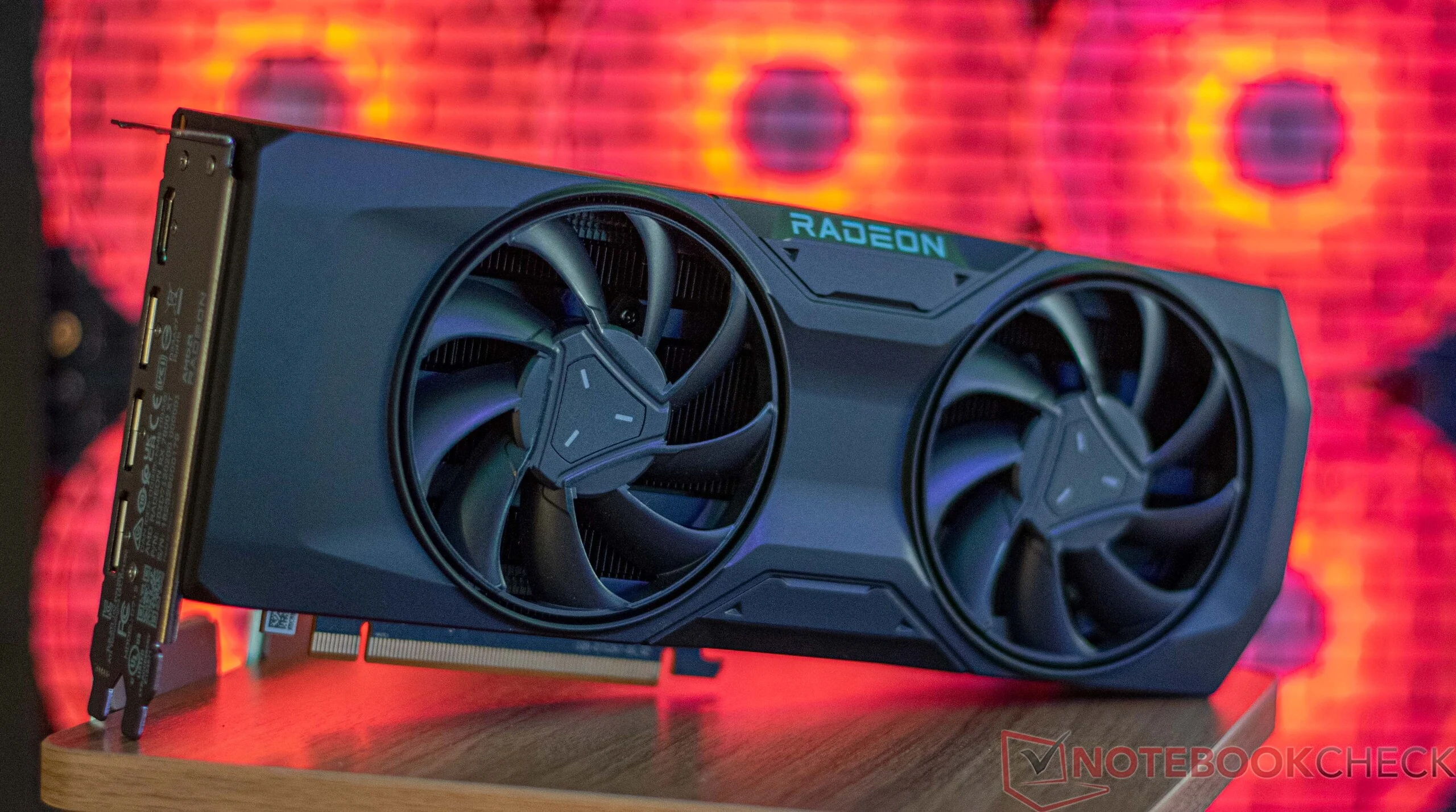
    AMD’s choice to postpone the launch of the Radeon RX 9000 series is quite strange, even though the company claims it was necessary to fix some issues with their software. What we do know is that a few GPUs are set to be sold starting in March. A recent listing from B&H Photo and Video in the US (shared by Videocardz) provides a clearer timeline.

    Pre-Order Details

    There are multiple listings for the Asus RX 9070 XT graphics cards, indicating they will be available for pre-order on March 23. This is about two months later than the rumored launch date of January 23. Keep in mind that this is just a pre-order date, and reviews for the card may come out sooner. For instance, our review of the Nvidia GeForce RX 5090 was published today, but pre-orders won’t start until January 30.

    Placeholder Dates

    However, it’s quite possible that the date mentioned above is just a placeholder. There’s a strong possibility that AMD will launch the Radeon RX 9070 XT around the same time as its Blackwell-based rival, the GeForce RTX 5070 Ti, expected to be released on February 20. Early leaks suggest that the RDNA 4 flagship could perform somewhere between the GeForce RTX 4080 and the RTX 4080 Super in rasterization, and around the RTX 4070 Ti level in ray tracing.

    Price Considerations

    Despite the performance predictions, the eventual success of the Radeon RX 9070 will largely depend on its pricing. Although this could fluctuate, recent estimates place it between $450 and $550. Additionally, we shouldn’t overlook the other models in the lineup. Variants like the RX 9070, RX 9060 XT (tentative), and RX 9060 are expected to disrupt the sub-$500 GPU market, a segment that Nvidia has largely stepped away from.

    Source:
    Link


  • Ayaneo 3 Release Date and Pricing Teased Ahead of Launch

    Ayaneo 3 Release Date and Pricing Teased Ahead of Launch

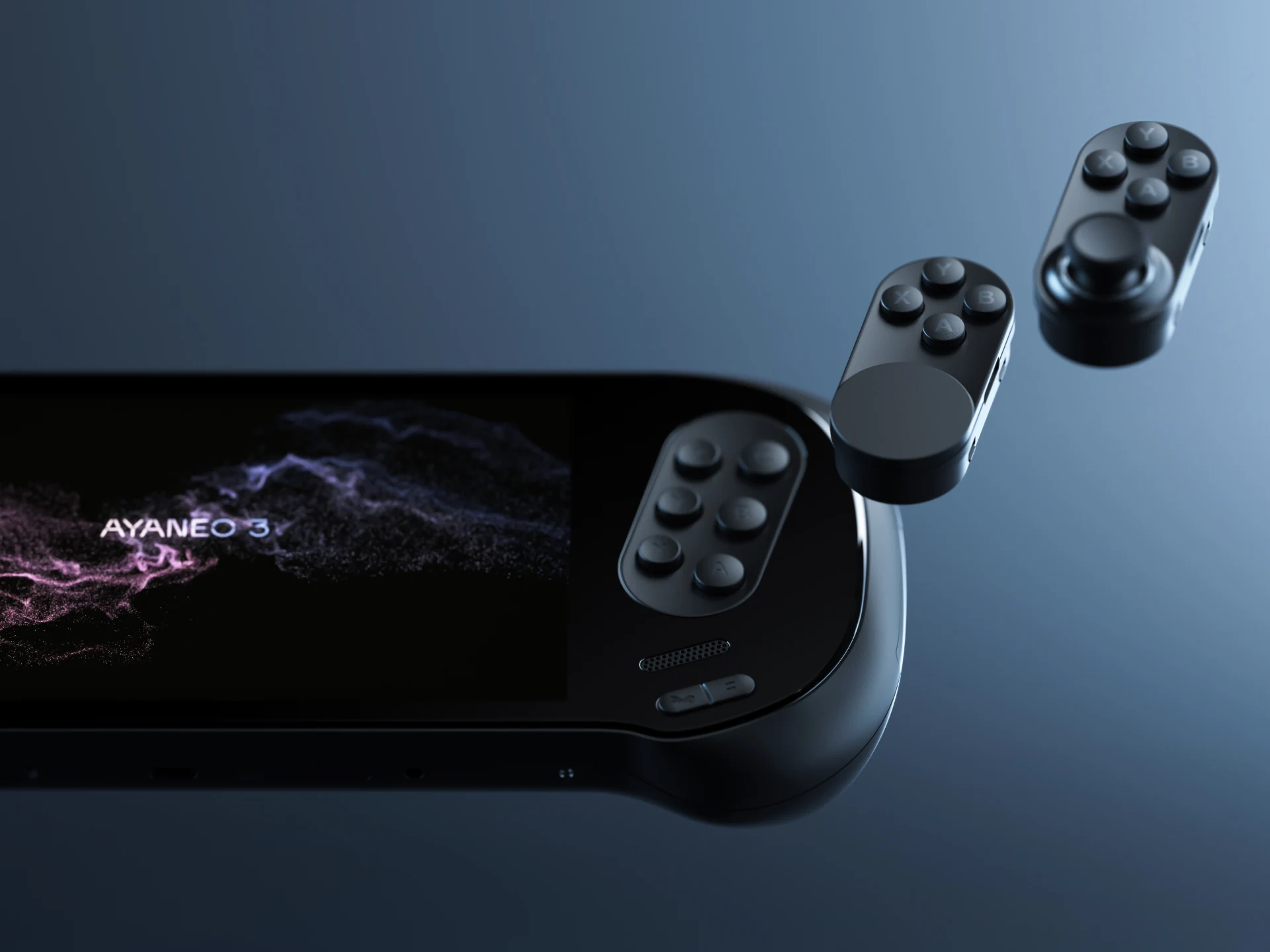
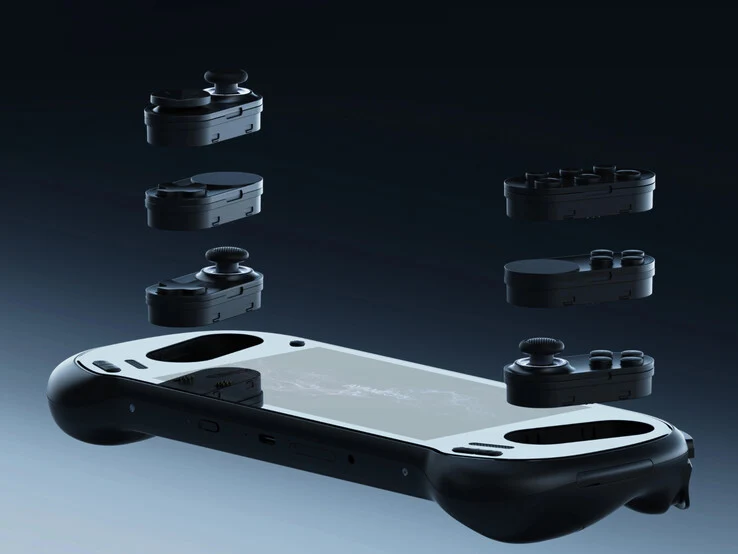
    Ayaneo has been hinting at its Ayaneo 3 gaming handheld since October, but a specific launch date has not been disclosed yet. This uncertainty continued earlier this week when the company introduced the Retro Power Edition, which features a more vibrant design compared to the current black and white models of the device.

    Upcoming Release Information

    Ayaneo suggested that the Ayaneo 3 would likely launch in late January, though no clear details were provided. However, it is now confirmed that the official release of the Ayaneo 3 will happen tomorrow at 12:00 UTC, followed by its availability on Indiegogo around 13:30 to 14:00 UTC on the same day. To sum up, the Ayaneo 3 will showcase the following hardware highlights:

    Pricing and Specifications

    Essentially, the Ayaneo 3 is expected to have power similar to the OneXFly F1 Pro (currently priced at $1,754.95 on Amazon), but it will offer better eGPU support. As for the exact price of the Ayaneo 3, it is still unclear. Currently, Ayaneo has suggested that there will be various pricing options, with early bird prices limited to “100 units per SKU.” The company also mentioned on Discord that pre-orders within the first 7 days of the campaign will receive “free gift packs,” though the contents of these packs remain unconfirmed. More information about the Ayaneo 3 can be located on its Indiegogo campaign page.

    Conclusion

    Ayaneo’s new handheld gaming device seems promising, combining powerful specifications with a unique design. The excitement builds as we await the exact pricing and features when it officially launches, alongside the details of those enticing gift packs. Stay tuned for more updates on the Ayaneo 3!

    Source:
    Link


  • Legion Go S: Best SteamOS Alternative for Lenovo’s Gaming Handheld

    Legion Go S: Best SteamOS Alternative for Lenovo’s Gaming Handheld

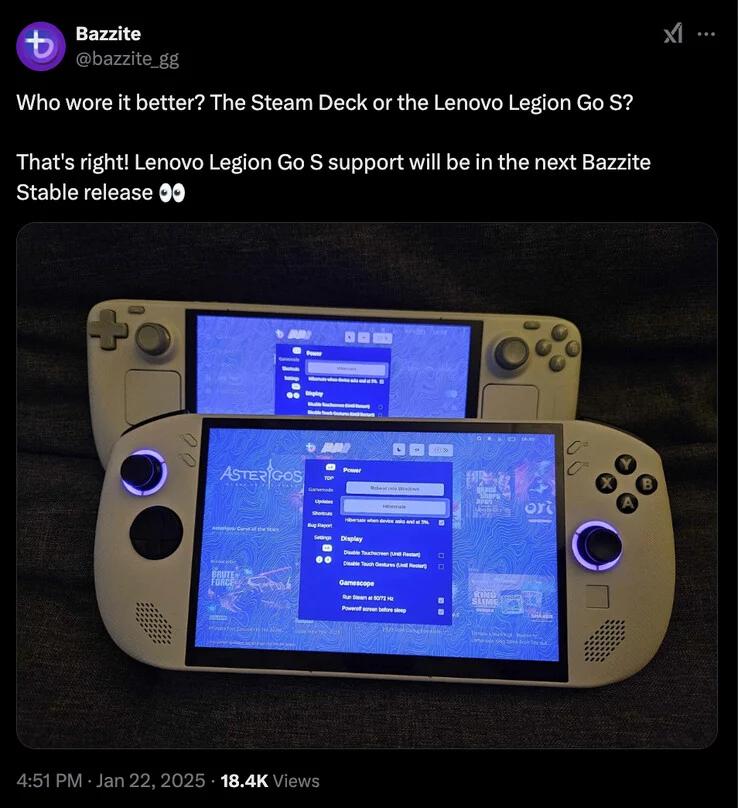
    Popular Linux distribution Bazzite has shared some exciting news regarding the Legion Go S, which Lenovo revealed earlier this month along with a special Steam OS version. While pre-orders kicked off soon after, this only applied to the Windows edition. For some unknown reason, Lenovo is postponing the Steam OS version until at least May.

    New SteamOS-like Environment

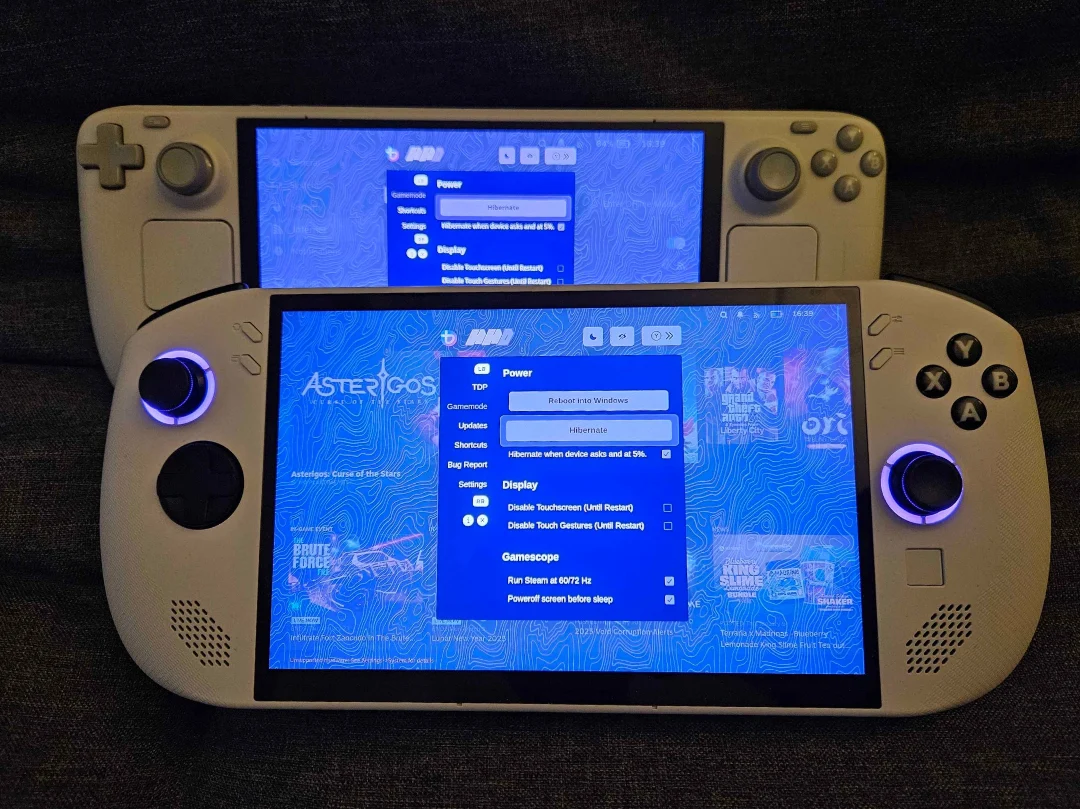
    However, users will soon be able to set up a SteamOS-like environment on the Legion Go S that is now being shipped. Bazzite announced on its social media that it has added support for the Legion Go S to its latest gaming handheld, just like it did for the Legion Go (curr. $649 on Amazon). The best part? This support is already included in Bazzite’s newest stable release, which is v41.20250121.

    Installation Details

    It’s important to note that Bazzite does not erase any existing Windows installations. The operating system can be installed as a separate partition, allowing users to dual boot back into Windows whenever needed. Bazzite also offers options for rebooting straight into Windows, which eliminates the need to access the device’s BIOS.

    Specifications and Availability

    Currently, the Legion Go S is available in most markets with two memory options, featuring 32 GB of RAM and 1 TB of storage at the top end. The more affordable option includes 16 GB of RAM and 512 GB of storage but shares the same core specifications as the more expensive model. All Legion Go S versions come equipped with an AMD Ryzen Z2 Go APU, a 55.5 Wh battery, and an 8-inch IPS display that boasts a 1200p resolution and a 120 Hz refresh rate. For installation instructions, be sure to visit Bazzite’s website.

    Source:
    Link


  • Retroid Pocket Mini Android 13 Upgrade: Caution for Users

    Retroid Pocket Mini Android 13 Upgrade: Caution for Users

    The Retroid Pocket Mini and Pocket 5 have been around for a while now, as they were released in September. Both devices share similar hardware, but the Pocket Mini fell behind the Pocket 5 at launch due to its outdated software.

    Software Discrepancy

    Surprisingly, Retroid chose to install Android 10 on the Pocket Mini, while the Pocket 5 came with Android 13. This decision resulted in the Pocket Mini having older software than the Pocket 4 and Pocket 4 Pro (currently $199 on Amazon), even though it was released nearly a year later.

    Impact of the Software Version

    This software difference might seem minor, but it prevented the Pocket Mini from running certain emulators or games that require newer Android versions—some of which Google released over five years ago. Fortunately, Retroid has fixed this issue by updating the device to Android 13, which users can download from its Discord server.

    Upgrade Concerns

    However, there are significant drawbacks at the moment. For example, the upgrade process completely wipes the device, instead of keeping the existing software. Additionally, there are several reports of bugs in the current Android 13 version. Therefore, Retro Handhelds advises users to hold off on upgrading their Pocket Minis to Android 13 unless it’s absolutely necessary.

    Source:
    Link

  • Powkiddy V20: Specs and Images Leak for New Gaming Handheld

    Powkiddy V20: Specs and Images Leak for New Gaming Handheld

    Various sources have reported on an upcoming gaming handheld from Powkiddy. At this moment, the device is known as the V20, even though it looks quite a bit like the RGB20S that Powkiddy launched nearly three years ago.

    New Specs and Features

    The V20 might be seen as an upgraded version of the Powkiddy V10 from last year, which is currently priced at $45 on Amazon. The V10 features a Rockchip RK3326 chipset paired with 1 GB of DDR3L RAM and a 3.5-inch display. In contrast, leaked details suggest that the V20 is powered by the Allwinner A133P chip, the same one used in the TrimUI Brick, TrimUI Smart Pro, and the new MagicX Mini Zero 28.

    RAM and Display Details

    While the TrimUI devices come with 2 GB of DDR4 RAM, it appears that Powkiddy has chosen to stick with the slower 1 GB of DDR3 RAM for the V20. This new handheld is believed to feature a 3.5-inch IPS display with a resolution of 640 x 480 pixels. Additionally, it is rumored to have a 5,000 mAh battery, which could provide up to 10 hours of playtime under optimal conditions. As of now, no official launch date has been announced for the Powkiddy V20, but the YouTube channel Nittrx has mentioned that the device will be available “soon.”

    Anticipation and Community Buzz

    The excitement around the Powkiddy V20 is building, especially in communities like r/SBCGaming. With its blend of familiar and updated features, many gamers are curious about how this new model will perform compared to its predecessors. The anticipation is palpable, and all eyes are on Powkiddy as they prepare for the V20’s debut.

    Source:
    Link