Category: EV vehicles

  • First Look: New Model Y in Diamond Black with Gemstone Finish

    First Look: New Model Y in Diamond Black with Gemstone Finish

    Key Takeaways

    1. Tesla introduced a new color option called Diamond Black for the standard Model Y, priced at an additional $1,500.
    2. The Diamond Black color features a unique finish with sparkle and a refined flake appearance, distinct from previous black options.
    3. Real-life footage of the Diamond Black Model Y shows its intricate finish when light hits it, enhancing its visual appeal.
    4. The Diamond Black option can be paired with a $1,000 Black and White interior, creating a stylish combination.
    5. The white interior option sold out quickly during the Launch Series, suggesting high demand for the new Diamond Black and Black and White combination.


    When Tesla released the standard version of the new Model Y in the US, which is not part of the pricey Launch Series package, they introduced a unique and exclusive color called Diamond Black.

    The Diamond Black color option is available for an additional $1,500, and it is described by Tesla as a “deep jet black with variations of sparkle and refined flake appearance,” according to their detailed description of the new hue for the Model Y.

    Captured in Action

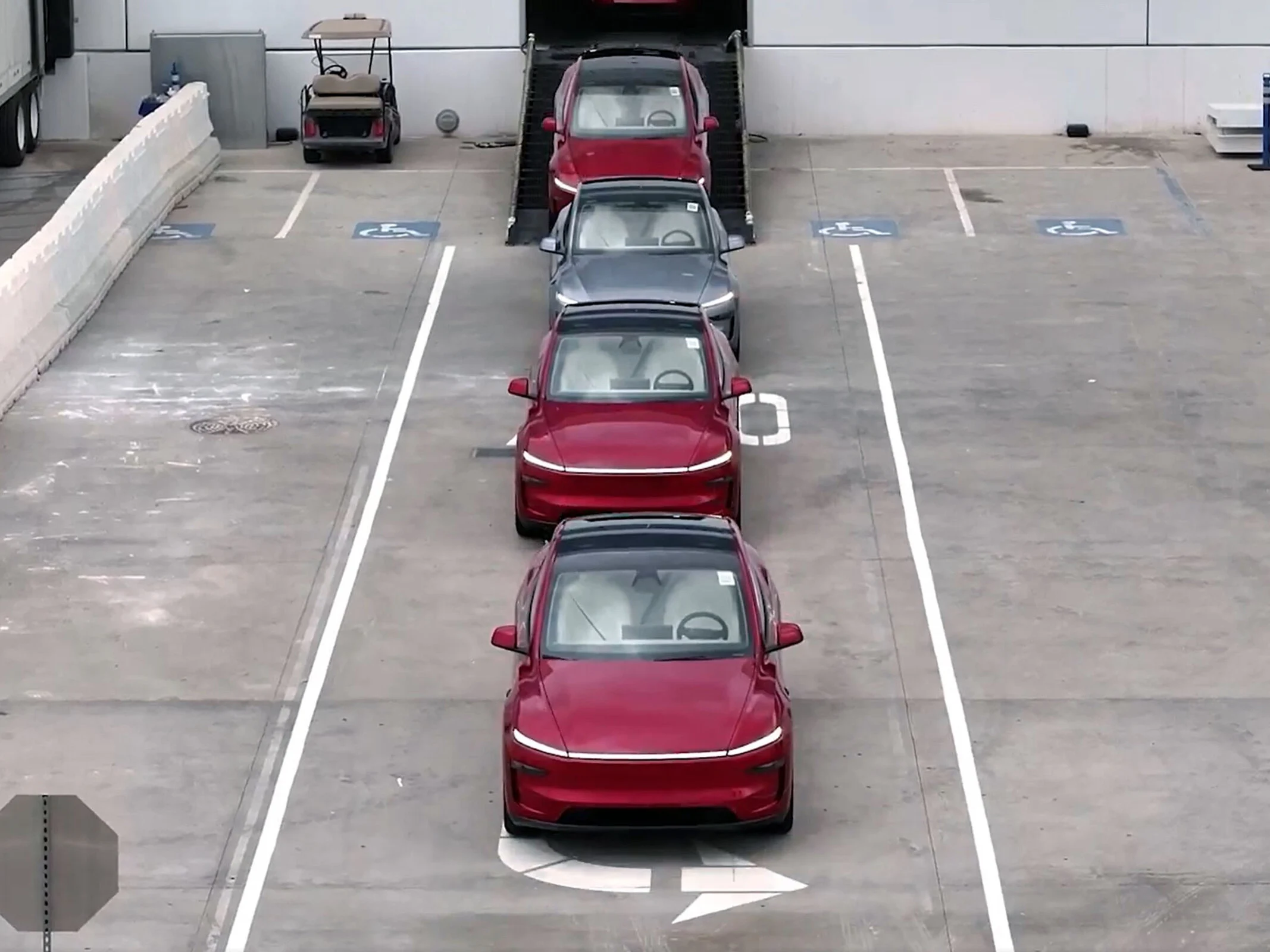
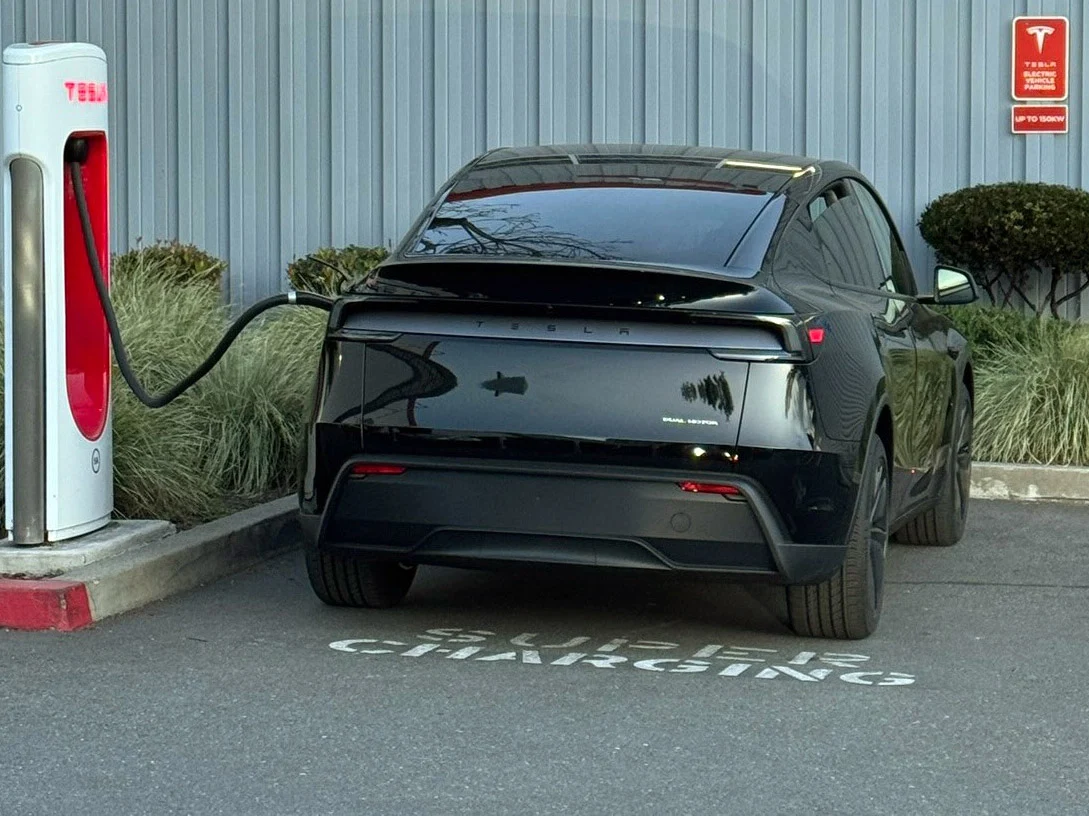
    Instead of just promotional images of the Diamond Black Model Y, the color has now been filmed up close in a real-life setting. A person recorded the 2026 Model Y in its new Diamond Black paint while it was charging at the public showroom of Tesla’s Fremont factory, sharing both a close-up video and a farther away photo.

    The footage of the Diamond Black shade shows a much more intricate finish compared to Tesla’s previous black colors, which were simpler and didn’t show much difference whether viewed from a distance or up close. The new color really does shine like diamond facets when light hits it directly, but more video will be needed to fully see the “refined flake appearance” that Tesla claims it has.

    Interior Options

    The $1,500 Diamond Black option can also be combined with a $1,000 Black and White interior choice, creating a stylish yet unconventional look. Tesla has also shared several new high-resolution images of the 2026 Model Y, including night shots that highlight the Diamond Black color and the updated interior.

    While the Model Y was still in its Launch Series phase, the white interior option quickly sold out. It’s possible that the trendy new combination of Diamond Black with Black and White interior may face a similar demand and run out soon.

    Source:
    Link


  • Tesla China Halts US-Made Model S and X Orders Due to Tariffs

    Tesla China Halts US-Made Model S and X Orders Due to Tariffs

    Key Takeaways

    1. Elon Musk warns that Tesla will face repercussions from new US tariffs despite ties with the president.
    2. Tesla has halted orders for the Model S and Model X in China, affecting customers who must import these vehicles.
    3. The shipping process for Model S and Model X can take up to eight months for Chinese buyers.
    4. American goods face an 84 percent import duty due to China’s retaliatory tariffs, raising prices for Tesla’s high-end models.
    5. Model S and Model X accounted for less than 4 percent of Tesla’s sales last quarter, suggesting limited short-term impact from halted orders.


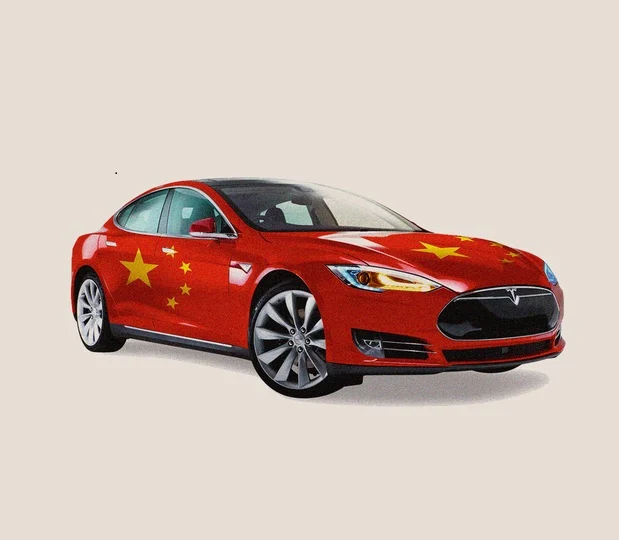
    Tesla CEO Elon Musk has expressed concerns that his company, despite its close ties to the president, will still face the repercussions of the new tariffs set by the current US government. This warning seems to be coming true, as Tesla’s operations in China have halted orders for the Model S and Model X.

    Impact on Chinese Customers

    Customers in China wishing to buy Tesla’s two most expensive electric vehicles must import them from the United States, making them susceptible to the ongoing trade tensions between the two countries. The shipping process for the Model S and Model X can take as long as eight months for buyers in China. Unfortunately, even those willing to endure the long wait can no longer place orders, as Tesla has replaced the “Order Now” buttons on these models’ websites with “View Now.” In contrast, the Model 3 and Model Y are still available for purchase, as they are produced in Shanghai.

    Tariffs and Sales

    As a result of China’s retaliatory tariffs, American goods now face a staggering 84 percent import duty. Adding these extra costs to the already high prices of the Model S and Model X could render them unaffordable for a lot of Chinese consumers. Nevertheless, it’s worth noting that these two models accounted for less than 4 percent of Tesla’s sales in the previous quarter, suggesting that the automaker may not experience significant short-term effects from this halt in orders from China.

    Tesla’s operations in China are currently navigating a complex landscape, balancing tariffs and supply issues while trying to maintain a foothold in one of the world’s largest electric vehicle markets.

    Source:
    Link

  • Tesla to Begin Cybertruck Deliveries Outside North America in 2025

    Tesla to Begin Cybertruck Deliveries Outside North America in 2025

    Key Takeaways

    1. The Cybertruck will be available in the Middle East by the end of 2025, expanding beyond North America.
    2. Initial launch countries include Saudi Arabia, the UAE, and Qatar, with deliveries expected in late 2025.
    3. Customers can already place orders for the Model 3 and Model Y in Saudi Arabia.
    4. The Cybertruck’s size is expected to appeal to the Middle Eastern market, where larger vehicles are favored.
    5. Tesla is working to boost Cybertruck sales following a recent recall, and it’s unclear if the same US models will be shipped or modified for the region.


    The Cybertruck’s Limitations are Lifting

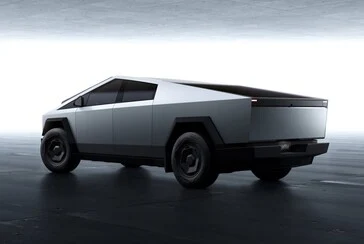
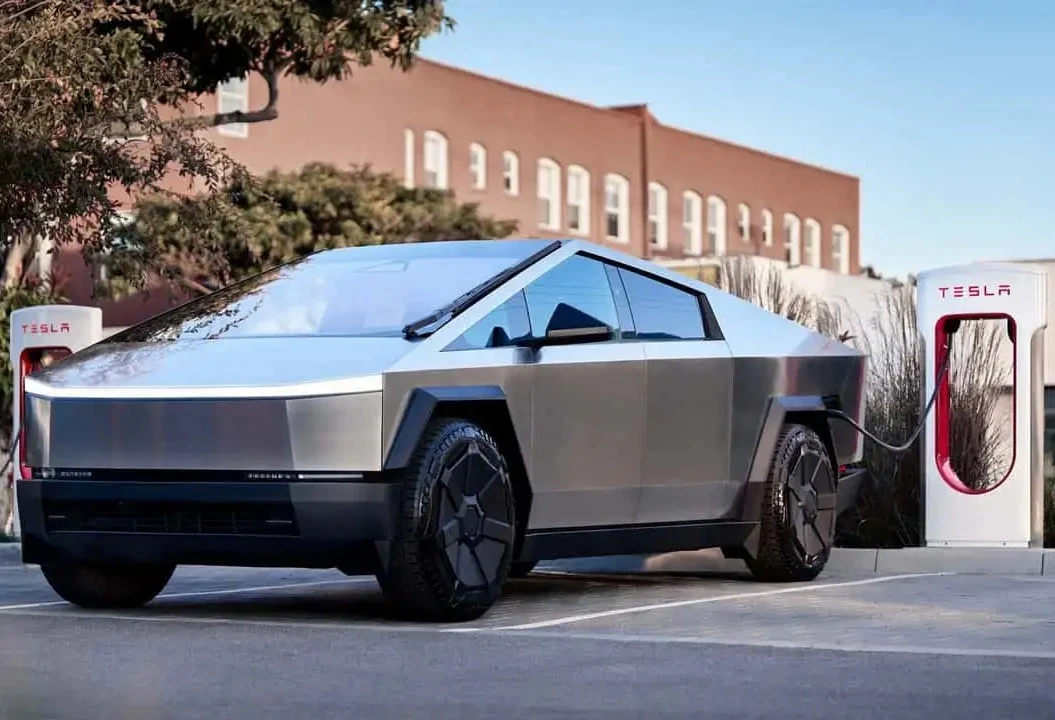
    No longer will the Cybertruck be limited to just North America. Tesla has shared exciting news that their unique steel pickup truck will be making its way to the Middle East before the end of 2025.

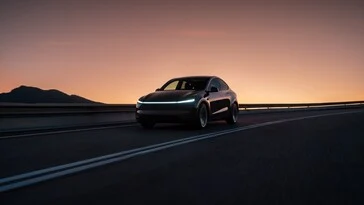
    On X, the Cybertruck’s official account shared a teaser video that features the eye-catching vehicle navigating through tough terrains typical of the Middle East, posing the question, “What if I told you I’m coming to the Middle East this year?”

    Launch Plans for the Cybertruck

    As per details on Tesla’s website, the initial countries set to get the Cybertruck will be Saudi Arabia, the United Arab Emirates (UAE), and Qatar, with deliveries expected in late 2025. Additionally, Tesla has kicked off sales in Saudi Arabia, allowing customers to place orders for the Model 3 and Model Y.

    The Cybertruck is likely to gain a large fanbase in the Middle East, where larger and more luxurious vehicles are quite popular. Its bigger size will also blend well with the expansive roads found in the area.

    Sales Strategy and Recall Issues

    Tesla is eager to enhance Cybertruck sales, especially after a recent recall indicated that the futuristic vehicle hasn’t had the best start. Nevertheless, it remains uncertain if the company will ship the same US models, which are currently banned in the UK, or offer a modified version tailored for the region.

    Source:
    Link

  • Tesla Canada Addresses $43 Million EV Rebate Controversy

    Tesla Canada Addresses $43 Million EV Rebate Controversy

    Key Takeaways

    1. Tesla denied claims of manipulating the iZEV rebate system by submitting $43 million in requests just before the deadline.
    2. The company stated that the claims were for electric vehicle sales made before the termination announcement, and they did not benefit from government funds.
    3. Tesla highlighted that dealerships could sell vehicles at reduced prices by factoring in available incentives for buyers.
    4. The automaker expressed dissatisfaction with the rebate payment freeze and the negative media portrayal affecting staff and customers.
    5. Ongoing tensions in Canada include criticism of Tesla and recent removal from an auto show due to safety concerns amid a tariff conflict with the U.S.


    Tesla has refuted claims that it manipulated the system by hastily submitting a massive number of iZEV rebate requests in Canada just before the deadline. Over a single weekend, the automaker put in claims worth $43 million as the government was concluding the program due to a lack of funds. This action led to an investigation, during which the payouts were put on hold.

    Tesla’s Defense

    In a letter dated March 28th to Transport Canada, Tesla sought to demonstrate that it acted within legal boundaries. Fereshteh Zeineddin, the company’s Director of Sales & Service for Canada, clarified that Tesla simply submitted claims for a backlog of electric vehicle sales that took place prior to the government’s announcement of the program’s termination. The automaker did not gain from any funds provided by the government, as the reduction was applied to the customers, who received the rebate ahead of time.

    Clarification on Incentives

    The letter also noted that dealerships and manufacturers were permitted to let qualified buyers pay for vehicles at a price lower than the total cost by factoring in the incentives they were eligible for.

    Tesla expressed its displeasure at discovering the rebate payment freeze through the news. It also voiced concerns over the negative treatment its staff and customers encountered due to unfavorable media coverage. The automaker suggested it might pursue legal action if the government fails to follow through on its promise to release the withheld funds.

    Ongoing Tensions in Canada

    Tesla has faced criticism in Canada, especially as the nation is involved in a tariff conflict with the United States. Recently, the company was removed from a well-known auto show due to safety issues.

    Source:
    Link

  • Tesla to Fix Model Y 12V and USB Outlets in Sentry Mode

    Tesla to Fix Model Y 12V and USB Outlets in Sentry Mode

    Key Takeaways

    1. Tesla is introducing an Accessory Power mode to keep 12V sockets powered overnight or during use.
    2. The previous solution for battery drain in Sentry Mode cut power to 12V outlets, affecting accessory use.
    3. Sentry Mode was found to drain 14% of battery capacity in 24 hours, prompting optimization of video processing.
    4. The new update will include a “Keep Accessory Power On” option, allowing continuous power until battery drops below 20%.
    5. The Accessory Power feature will work independently of Sentry Mode, preventing previous phantom battery drain issues.


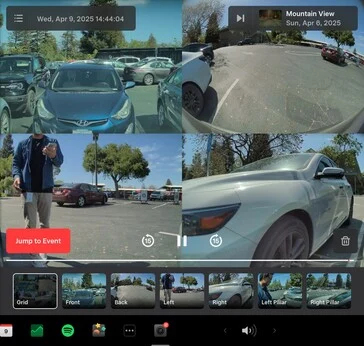
    Tesla owners who have had to leave their devices charging in their vehicles overnight or run a small fridge will be pleased to hear that an upcoming Accessory Power mode will restore power to their 12V sockets.

    Previous Battery Drain Issues

    Last year, Tesla addressed a significant battery drain problem linked to Sentry Mode, which it has now activated automatically to safeguard against vandalism. This was part of the 2024.32.6 software update. However, the solution it implemented was quite simplistic; it cut off power to the 12V outlets and USB ports when no one was in the car while in Sentry Mode. This less than smart fix meant that many Model Y owners couldn’t keep accessories like the Acopower TesFridge working overnight or charge laptops and tablets in their vehicles without power by morning.

    Confusing Power Management

    The way Tesla tackled the phantom battery drain issue in Sentry Mode, which drained 14% of the battery pack’s capacity in just 24 hours, was a bit puzzling. It was partly because of the Vision cameras recording during Sentry Mode, so Tesla optimized the video processing algorithms to significantly lower their power usage. However, for devices and accessories that needed to stay plugged into the Model Y while the driver was away, the company simply cut off power to the 12V and USB sockets. This rough approach is set to be improved with the new Accessory Power mode.

    Exciting Update Ahead

    With the upcoming Spring Update, Tesla is expected to introduce a new “Controls > Charging” menu option that allows users to select “Keep Accessory Power On.” This will ensure that all 12V sockets and USB ports receive continuous power until the vehicle’s battery level drops below 20%.

    The best part is that the new Accessory Power feature won’t require Sentry Mode to function, avoiding the risk of the phantom battery drain issues cropping up again.

    Source:
    Link

  • Tesla Unveils Lowest Cost Battery Per kWh in the Market

    Tesla Unveils Lowest Cost Battery Per kWh in the Market

    Key Takeaways

    1. Tesla claims to have achieved the lowest cost per kWh for its 4680 battery, primarily in comparison to its own suppliers.
    2. The transition to in-house production of the 4680 battery marked a significant improvement for Tesla, moving away from reliance on suppliers like LG and Panasonic.
    3. Future expectations indicate that significant milestones in battery manufacturing cost efficiency are anticipated by 2025, particularly with the ramp-up of dry battery electrode production.
    4. Tesla’s development of a lithium refinery in the U.S. suggests ongoing cost reductions for the 4680 battery, though the impact of tax credits is still uncertain.
    5. The dry cathode production method’s effects on manufacturing costs and charging performance remain unclear, with some concerns about thermal efficiency compared to competitors.


    Tesla has reached a point where it can produce its cylindrical 4680 battery at the most economical cost per kWh, indeed.

    This statement was initially made by Elon Musk during a company-wide meeting last month, although he didn’t provide many specifics. Recently, it was also verified by Tesla’s Director of Cell Manufacturing, who offered some additional information.

    Clarification on Cost Claims

    It appears that when Elon Musk referred to the lowest cost per kWh, he was talking about Tesla’s battery suppliers, not the cheapest EV battery cell in the entire world. That recognition likely goes to one of the major Chinese battery manufacturers, CATL or BYD. Nevertheless, what Tesla has accomplished with its 4680 battery optimizations is definitely noteworthy.

    The company transitioned from nearly giving up and relying on suppliers like LG or Panasonic for 4680 cells to becoming the producer of the most affordable battery it uses in under a year. During the presentation, Elon Musk humorously mentioned, “Please don’t make us do the anode, too,” alluding to the more cost-effective dry cathode method that Tesla has now mastered and is rapidly increasing production of to further reduce 4680 cell costs per kWh.

    Future Expectations

    Michael Guilfoy, Tesla’s Director of Cell Manufacturing, expressed confidence that “2025 will see significant milestones with fully ramped dry battery electrode manufacturing to provide even more cost efficiency.” He also took a moment to appreciate the team for their outstanding accomplishment.

    Tesla is also developing its own lithium refinery in the United States, which suggests that the costs of the 4680 battery are likely on a downward trajectory. However, it’s still uncertain whether Tesla’s achievement of the lowest battery cost per kWh is due to the production of the 4680 cells or the federal tax credits for domestically made batteries, as outlined in the Inflation Reduction Act.

    Uncertain Impact of Production Methods

    Moreover, it is still ambiguous whether the dry cathode production method will only revolutionize manufacturing costs or if it will also enhance the charging performance for the Cybertruck and other vehicles using the 4680 cells.

    A recent teardown compared the 4680 battery with BYD cells and revealed lower thermal efficiency, which contributed to charging issues that do not match the speed suggested by the Cybertruck’s 800V system.

    Once Tesla scales up the production of the dry 4680 battery cathode, it is expected to release the much-anticipated cheapest Cybertruck RWD version, which has already been listed as an eligible trim on the federal tax credit website.

    Source:
    Link

  • BYD Unveils First Electric Cars with 1-Megawatt Charging Tech April 9

    BYD Unveils First Electric Cars with 1-Megawatt Charging Tech April 9

    Key Takeaways

    1. BYD is launching the Han L sedan and Tang L SUV on April 9th, featuring the fastest charging technology for light-duty vehicles.
    2. The Super e-Platform allows for a driving range increase of up to 400 km in just 5 minutes of charging.
    3. Pre-orders for both models started on March 17th, with prices set at RMB 270,000 ($37,080) for the Han L and RMB 280,000 for the Tang L.
    4. The Han L accelerates from 0 to 100 km/h in 2.7 seconds, while the Tang L does so in 3.7 seconds, both equipped with advanced LiDAR technology.
    5. BYD plans to establish 4,000 new charging stations in China, with about 500 ready before the vehicles hit dealerships.


    BYD is set to launch the Han L sedan and Tang L SUV on April 9th, marking them as the quickest-charging light-duty vehicles currently in production. These models utilize the innovative Super e-Platform, allowing for an impressive increase in driving range of up to 400 km in just 5 minutes.

    Event Details

    The launch event is scheduled for 7 p.m. local time in Beijing, as stated in a BYD announcement on Weibo. The automaker asserts that these new electric vehicles represent a significant advancement in the industry.

    Pre-Orders and Pricing

    On March 17th, BYD introduced their ultra-rapid charging tech and also began accepting pre-orders for the Han L and Tang L on the same day. The starting prices for the sedan and SUV are RMB 270,000 ($37,080) and RMB 280,000, respectively.

    Performance Features

    The Han L boasts an impressive acceleration from 0 to 100 km/h in a mere 2.7 seconds, while the Tang L achieves the same speed in about 3.7 seconds. Both vehicles are fitted with God Eye, BYD’s LiDAR-based technology that competes with Tesla’s Full Self-Driving capabilities.

    The Super e-Platform enables rapid charging, providing up to 1 Megawatt of power, which is double the output of Tesla’s Superchargers. BYD aims to set up 4,000 new charging stations across China, with around 500 expected to be operational before the Han L and Tang L become available at dealerships.

    Source:
    Link

  • New Solar and Wind-Powered Motorcycle Travels 30 Miles

    New Solar and Wind-Powered Motorcycle Travels 30 Miles

    Key Takeaways

    1. The YongLE Risheng CG motorcycle features integrated solar panels and a wind turbine for energy generation.
    2. Despite added equipment, the motorcycle remains lightweight at 135 kilograms (293 lbs).
    3. It is powered by a 1,500 watt motor and a 30 amp-hour battery, achieving speeds of up to 37 mph and a range of 31 miles on a single charge.
    4. The battery can also be charged traditionally, extending its range to 75 miles.
    5. YongLE Risheng plans to launch the CG and other renewable energy vehicles, although there are security concerns about their website.


    Motorcycles have taken a leap into the electric world, but the YongLE Risheng CG offers something very unique. This two-wheeler is designed much like the Honda CG125, but it has solar panels integrated into its structure.

    Innovative Design Features

    These solar panels are cleverly positioned in a canopy that hangs over the rider’s head, and it even includes its own wind turbine. Despite this additional equipment, the overall weight of the motorcycle remains relatively light at 135 kilograms (293lb).

    While the aesthetics might not compete with models like the Lightyear 0 or Aptera, it’s believed that this design is functional. It powers the motorcycle’s 1,500 watt (W) motor and 30 amp-hour (Ah) battery, allowing it to reach speeds of up to 37 miles per hour (mph) and travel distances of 31 miles (~50 kilometers) on a single charge.

    Charging and Range

    Additionally, the motorcycle’s battery has the ability to charge through traditional methods, which can extend its range to as much as 75 miles.

    YongLE Risheng is said to be a legitimate company planning to launch the CG along with other renewable energy vehicles in the near future, although its website raises concerns about security across various web browsers.

    Source:
    Link


  • Electric Cars May Help Prevent Childhood Asthma: Study Report

    Electric Cars May Help Prevent Childhood Asthma: Study Report

    Key Takeaways

    1. Increasing electric vehicles (EVs) can reduce childhood asthma cases linked to vehicle emissions.
    2. For every 1,000 new internal combustion engine (ICE) vehicles sold, a new childhood asthma case is recorded.
    3. Replacing 21% of new fossil-fueled vehicles with EVs could stop the rise in asthma rates.
    4. The needed replacement percentages of ICE vehicles vary by state, from 7% to 42%, based on population and vehicle age.
    5. EVs are already improving public health in states with zero-emission vehicle initiatives, but affordability for lower-income families is crucial.


    A US research has discovered that increasing the number of electric vehicles on the streets can lower the chances of childhood asthma. The findings came after looking at data from the US Centers for Disease Control and Prevention gathered between 2013 and 2019.

    New Case Rates

    Harshit Gujrat, Meredith Franklin, and Steve Easterbrook observed that for every 1,000 new internal combustion engine (ICE) vehicles sold, a new childhood asthma case was recorded. They stated that just replacing 21 percent of new fossil-fueled vehicles with EVs could be “enough to stop the rise in asthma rates linked to new vehicle sales.”

    State-by-State Analysis

    The report highlights that the replacement percentages differ across states. Depending on how many people live there and how many vehicles are already on the road, some states might only need to replace 7 percent of their new ICE cars, while others could need up to 42 percent. This shows that densely populated states with older gas vehicles will gain the most from switching to electric cars.

    Public Health Benefits

    At the same time, the research indicates that EVs are already benefiting public health in the US. States that have zero-emission vehicle initiatives are seeing the bulk of these health improvements.

    The study urges that lawmakers should find methods to make EVs more affordable for lower-income families. Nonetheless, it warns that electric cars aren’t the only way to enhance children’s health.

    Source:
    Link

  • Xiaomi SU7 Crash Kills Three: Timeline, Details, Company Response

    Xiaomi SU7 Crash Kills Three: Timeline, Details, Company Response

    Key Takeaways

    1. The crash of a Xiaomi SU7 Standard electric sedan on March 29 resulted in the deaths of three female university students, marking the first known fatality linked to Xiaomi’s EV.

    2. The vehicle was equipped with a vision-based Navigate on Autopilot (NOA) system, which lacks the advanced LiDAR technology found in higher models, raising safety concerns about autonomous driving technology.

    3. The collision occurred in a construction area with altered traffic lanes and possible debris, suggesting environmental factors may have contributed to the accident.

    4. An investigation revealed that the NOA system failed to recognize smaller barriers, and the automatic emergency braking (AEB) system did not engage due to the water barrier being undetected.

    5. Xiaomi has initiated an internal investigation and expressed commitment to transparency while addressing concerns about the reliability of autonomous driving features and the effectiveness of emergency systems.


    On March 29, a tragic incident occurred involving a Xiaomi SU7 Standard electric sedan on the Dezhou-Shangrao Highway (G0321) near Tongling, Anhui Province, China. This crash resulted in the deaths of three female university students and is the first known fatality associated with Xiaomi’s first electric vehicle (EV). The event has raised significant concerns about the safety of autonomous driving technology.

    Details of the Incident and Victims

    The three victims were university students heading to Chizhou for a civil service examination. They were traveling in a Xiaomi SU7 Standard, which is the entry-level model of the SU7 series, acquired in May 2024 and delivered on October 19, 2024. This model, launched on March 28, 2024, operates with a vision-based Navigate on Autopilot (NOA) system but does not feature the LiDAR technology available in the Pro and Max variants.

    Circumstances of the Crash

    The collision took place in the Chiqi area of the highway, where construction work had altered the traffic lanes. This change, coupled with the possibility of debris from the ongoing repairs, may have contributed to the accident.

    Sequence of Events Leading to the Crash

    An investigation by Xiaomi, based on data provided to the authorities, has outlined the timeline of the crash:
    10:27:17 PM: NOA was turned on; the car was traveling at 116 km/h (72 mph).
    10:44:24 PM: The system identified obstacles, issued alerts, and started to slow down.
    10:44:25 PM: The driver regained manual control, turning the steering wheel 22.0625 degrees left and applying brakes at 31%.
    10:44:26 PM: The steering moved slightly right by 1.0625 degrees, increasing braking to 38%.
    10:44:26–10:44:28 PM: The vehicle collided with a concrete barrier at a speed of 97 km/h (60 mph), leading to a fire.

    Aftermath of the Collision

    Reports on social media, including a post from one victim’s mother, alleged that the doors of the vehicle locked automatically after the crash, trapping the occupants as flames engulfed the car. Xiaomi was unable to confirm the functioning of the doors but mentioned that there is an emergency unlock feature, the efficiency of which remains uncertain. The NOA system’s failure to identify smaller barriers, such as cones, might have played a role in the accident.

    Company Reaction and Ongoing Investigation

    In response, Xiaomi established an investigation team on March 30 and provided data by March 31. CEO Lei Jun expressed sorrow and assured transparency while offering assistance to the families of the victims. The company stated that a special task force was created immediately, and they visited the accident scene on March 30. They also clarified that they haven’t yet accessed the vehicle involved in the crash, countering rumors of it being taken to Beijing. Internal records show that the Xiaomi SU7 was operating in NOA mode at about 116 km/h before it received a warning and slowed to 97 km/h prior to the crash. The cause of the fire after the impact is still under investigation, but Xiaomi suspects it initiated in the cabin rather than in the battery. Additionally, the company reported that the automatic emergency braking (AEB) system did not engage because the water barrier was not recognized by the detection system.

    Continuing Investigation and Safety Questions

    The police investigation is ongoing, focusing on the road conditions, driver behavior, and vehicle systems. This unfortunate event brings to light essential concerns regarding the reliability of autonomous driving features, the effectiveness of emergency systems, and the need for driver education in electric vehicles.