Category: Computers

  • Compact Ergo Wireless Keyboard with Touchpad for Comfortable Travel

    Compact Ergo Wireless Keyboard with Touchpad for Comfortable Travel

    Key Takeaways

    1. The Toucan is a lightweight, wireless, low-profile split ergonomic keyboard designed for portability and comfort, improving on the previous Piantor model.
    2. It features a unique 42-key columnar stagger layout and includes a 40mm Cirque GlidePoint trackpad for easy mouse navigation without leaving the keyboard.
    3. The keyboard has a memory-in-pixel display for efficient energy use and boasts impressive battery life with ZMK firmware, lasting up to 4,000 hours on a 1,500 mAh battery.
    4. The Toucan’s construction combines an aluminum plate with a 3D-printed lower section, balancing weight and strength, and is priced between $189 and $352 depending on the model and additional components.
    5. It offers low-profile Kailh Choc V1 switches with tactile, linear, and clicky options, and is compatible with Choc V2 switches, but users should be cautious with aftermarket keycap choices due to tighter spacing.


    A well-designed ergonomic keyboard can significantly improve your workspace or gaming environment, as we discussed in our review of the Keychron Q13 Max. However, the Alice-layout mechanical keyboard mentioned earlier is bulky and heavy, making it unsuitable for travel. A small keyboard maker and online retailer called Beekeeb has introduced the Toucan, a new wireless low-profile split ergonomic keyboard that is much lighter and smaller than traditional mechanical keyboards while offering the same ergonomic advantages as the Q13 Max (currently priced at $249.99 on Amazon) and more.

    Upgrades from Previous Models

    The Toucan builds on an earlier model, the Piantor, which was inspired by the open-source Cantor split ergonomic keyboard. However, the Toucan features several enhancements that make it a great choice for anyone in need of a portable ergonomic keyboard.

    Innovative Design Features

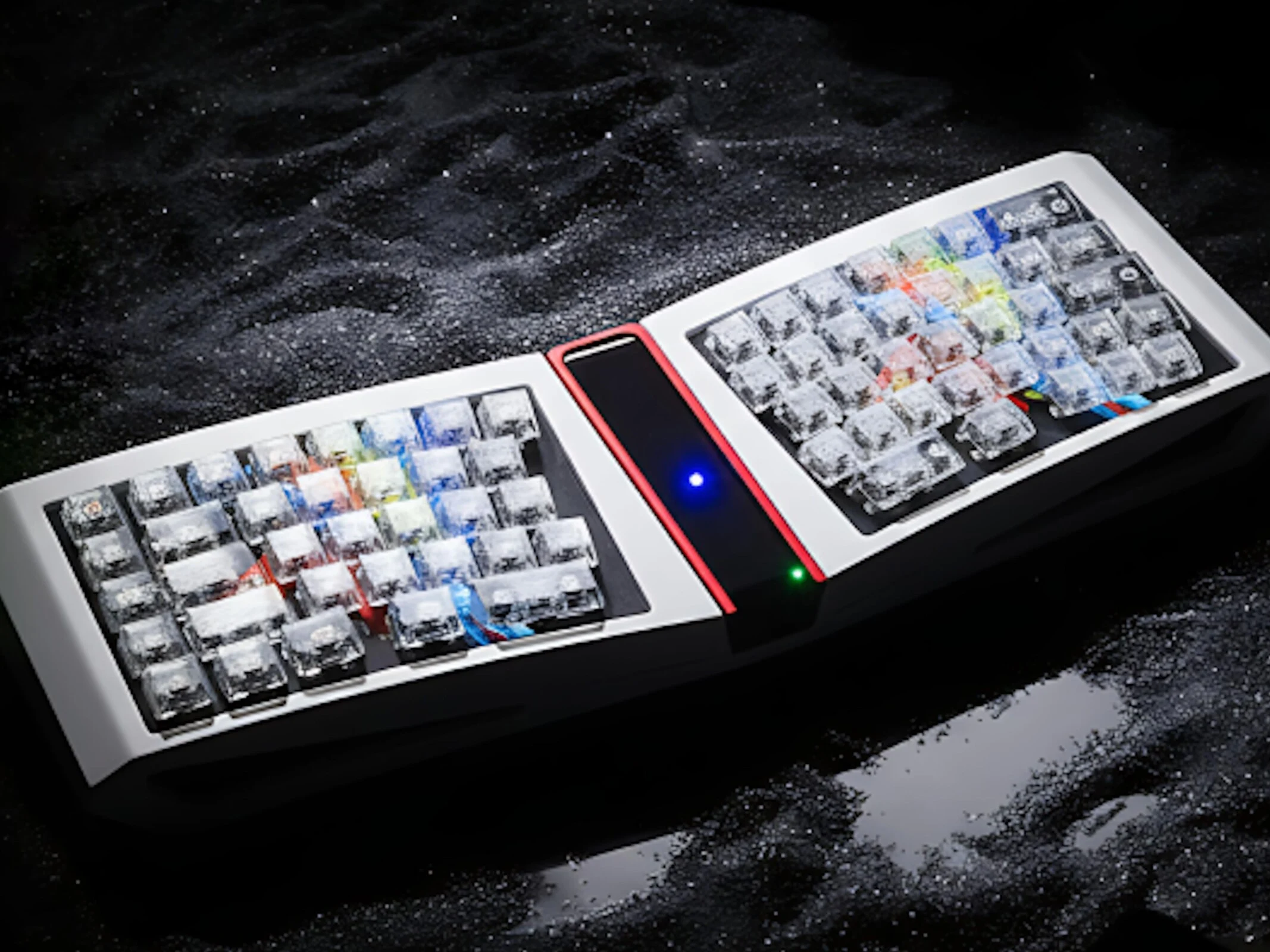
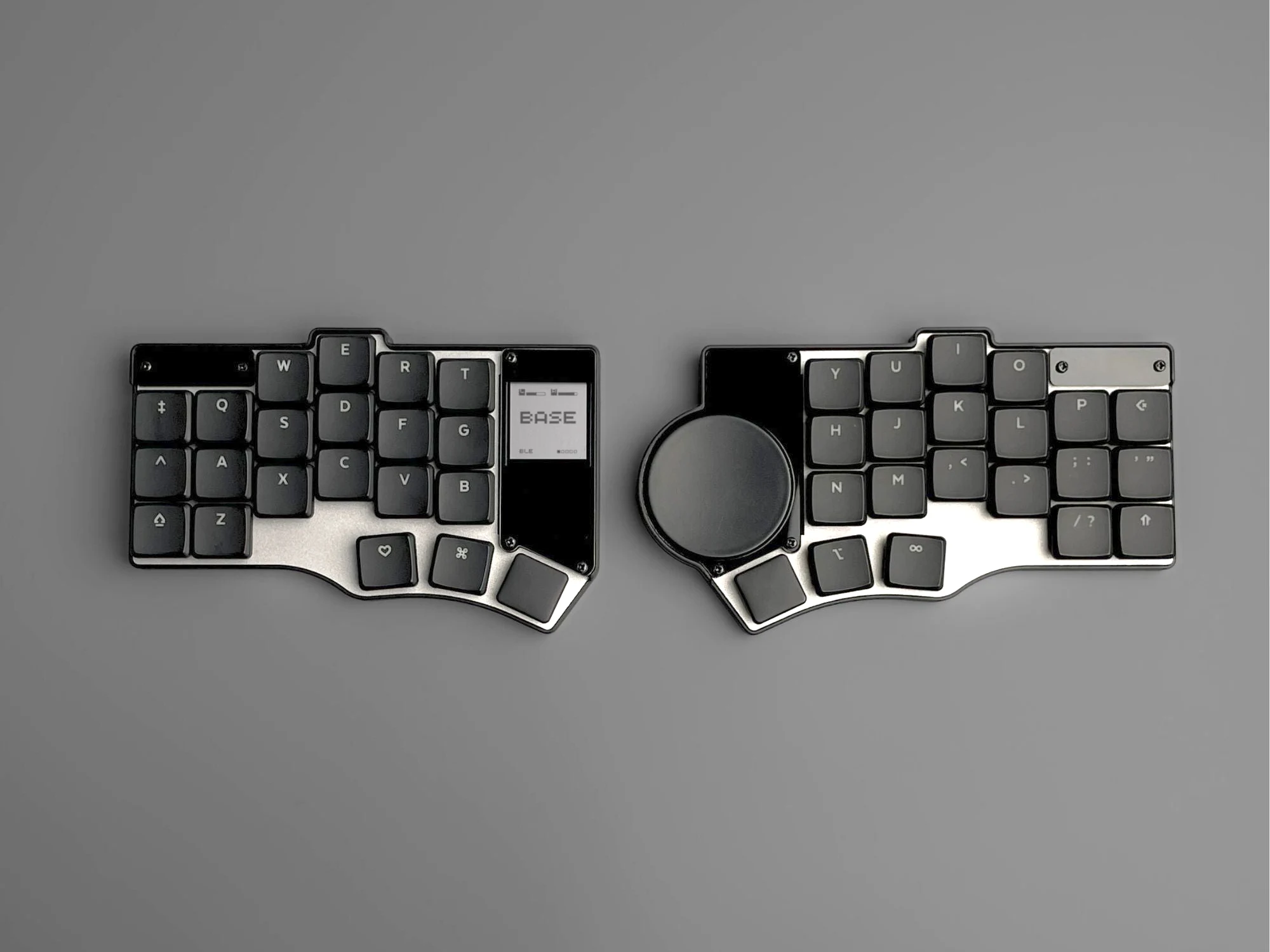
    This 42-key split keyboard uses a columnar stagger layout, where the keys are arranged vertically rather than the typical horizontal layout found on most keyboards. This design is quite common in split ergonomic keyboards, but the Toucan sets itself apart by including a 40mm circular Cirque GlidePoint trackpad on the right side of the keyboard for mouse control. This feature allows users to keep their hands on the keyboard while still navigating, condensing essential input devices into a compact, travel-friendly format.

    On the left side of the Toucan wireless keyboard, there’s a memory-in-pixel display, which is energy-efficient and usually seen in smartwatches. This low-power display works with ZMK firmware, known for its impressive battery life, allowing up to 4,000 hours on just 1,500 mAh. In contrast, the Epomaker Galaxy100 we reviewed achieved only 580 hours on an 8,000 mAh battery with QMK firmware.

    Construction and Pricing

    The keyboard’s casing combines an aluminum plate with a 3D-printed lower section, designed to provide a good balance between weight and strength.

    As of now, the Toucan can be pre-ordered with a 12% introductory discount, and shipping is set to begin in December. There are two versions available: a DIY model for $189 and a pre-soldered model for $298; however, neither comes with keycaps or switches included by default. If you choose the pre-soldered model and add keycaps and switches to your order, Beekeeb will assemble the keyboard for you. The lowest price with keycaps and switches is a steep $352, but it’s important to mention that similar keyboards, such as the ZSA Voyager, which lack wireless functionality and a pointing device, are priced at $365. Additionally, Beekeeb cannot ship the Toucan with a battery due to shipping restrictions, but you can easily find a standard $9.99 3.7 V Li-ion or Lipo battery from hobby shops or on Amazon.

    Switch Options Available

    The Toucan comes with a selection of low-profile Kailh Choc V1 switches, offering tactile, linear, and clicky choices. While it is compatible with Choc V2 switches, it has a tighter Choc spacing compared to standard MX spacing, so be cautious when choosing aftermarket keycaps.

    Source:
    Link


  • Kode Dot: Handheld Touchscreen Device for Hobbyists with Wi-Fi

    Kode Dot: Handheld Touchscreen Device for Hobbyists with Wi-Fi

    Key Takeaways

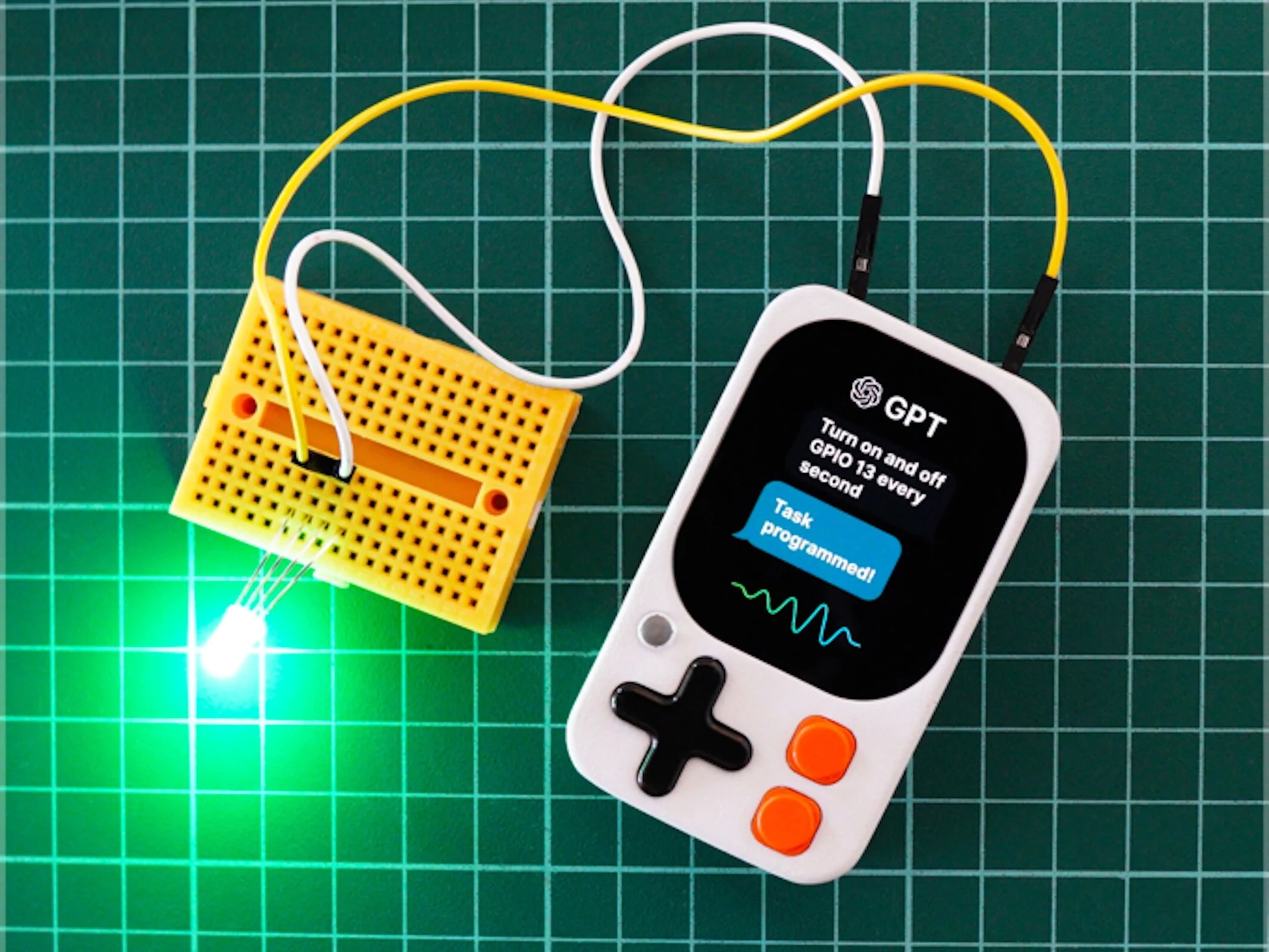
    1. The Kode Dot is a handheld gadget aimed at hobbyists for project creation, not the average consumer.
    2. It features an ESP32-S3 MCU, a 2.13-inch AMOLED touchscreen, two buttons, and a control pad for navigation.
    3. Users must program the device themselves, similar to an Arduino, and it supports connections to external sensors and actuators.
    4. The device includes a built-in gyroscope, microSD card slot, microphone, speaker, and wireless capabilities (Wi-Fi and Bluetooth).
    5. Priced at approximately $129, the Kode Dot is part of a crowdfunding campaign with an expected delivery date of July 2026.


    A new handheld gadget called the Kode Dot is now being supported through a crowdfunding campaign. It’s designed for flexible use, but it’s not aimed at the average consumer. The makers are focusing on hobbyists who want to quickly and easily create their own projects.

    Features and Components

    This portable device comes with an ESP32-S3 MCU, a System on Chip (SoC) that’s popular among makers. It has a 2.13-inch AMOLED touchscreen with a resolution of 502 x 410. Additionally, it includes two buttons and a control pad for easy navigation through menus, for instance.

    Users will need to program the model on their own, which is likely a big part of its attraction. Much like an Arduino board, it allows connections to external sensors and actuators, such as an LED or a light intensity sensor. A gyroscope is already included. There’s also a microSD card slot, and the 500 mAh battery allows for use on the go without the need for a power outlet. A microphone and speaker are built in, along with Wi-Fi and Bluetooth for wireless data transfer.

    Pricing and Availability

    The handheld system, which measures 73 x 43 x 15 millimeters, is currently priced at about $129 as part of its crowdfunding effort. As is usual with crowdfunding, there are certain risks involved, such as the chance that the device might not reach the market or might not work as promised. The expected delivery date is set for July 2026.

    Source:
    Link


  • DS Pixel Pro Keyboard: Hall Sensor Tech, 8000Hz & Displays

    DS Pixel Pro Keyboard: Hall Sensor Tech, 8000Hz & Displays

    Key Takeaways

    1. The DS Pixel Pro keyboard is currently being funded through a crowdfunding project, with a pre-order price of approximately $299.
    2. It features a unique angled design aimed at improving ergonomics, though comfort may vary for users.
    3. The keyboard includes two displays for showcasing images, but the transparent keys may hinder visibility.
    4. It utilizes advanced Hall effect-based switches, allowing customization of activation depth and a high polling rate of up to 8,000 Hz.
    5. Backing crowdfunding projects involves risks, and potential backers should carefully consider these risks before committing to a pre-order.


    The DS Pixel Pro is a newly designed keyboard that is currently being funded through a crowdfunding project. Backers can place a pre-order for the keyboard at a discounted price of approximately $299. However, as with all crowdfunding efforts, there are inherent risks involved. There’s no assurance that the product will arrive as promised in terms of quality or even that it will be delivered at all.

    Unique Design Features

    The DS Pixel Pro stands out with its distinctive design in multiple ways. For one, the keyboard is angled instead of being straight, which aims to enhance ergonomics. Whether this actually makes it more comfortable for users is likely to vary based on individual preferences. Additionally, it includes two displays that can showcase nearly any type of image content. However, the practicality of this feature might be questionable since the transparent keys significantly block the view of the screens.

    Advanced Technology

    As claimed by the manufacturer, the keyboard incorporates Hall effect-based switches, which are a newer technology that allows users to customize the activation depth, among other features. The polling rate can reach up to 8,000 Hz, making it quite responsive. It also supports wireless use, and the 20,000 mAh battery is said to last up to 12 hours, with a charging capability of up to 30 watts.

    Crowdfunding Considerations

    Backing projects on platforms like Kickstarter can be an exciting way to support innovative products, but it comes with uncertainties. It’s essential for potential backers to weigh the risks against the rewards before committing to a pre-order.

    Source:
    Link


  • Chuwi CoreBook Air Launches: New Ultra-Light 16-Inch Model

    Chuwi CoreBook Air Launches: New Ultra-Light 16-Inch Model

    Key Takeaways

    1. Chuwi has launched the CoreBook Air, featuring AMD APUs instead of Intel processors.
    2. The CoreBook Air is available with a Ryzen 5 6600H or a Ryzen 7 H 255 variant, offering improved performance.
    3. The 14-inch model has a 2,240 x 1,400 resolution, 32 GB RAM, 1 TB storage, and is priced at approximately $591.
    4. A larger 16-inch model, CoreBook Air Plus, is set to include a 1200p display and Windows Hello support.
    5. Both models are expected to be available globally starting next month.


    Chuwi has made a comeback to its CoreBook lineup with the release of the CoreBook Air, just four months after entering the gaming laptop market. Previously, the company updated the CoreBook X back in April, introducing a new Intel processor around the same time as the MiniBook X 2-in-1, which features the Processor N150 (currently priced at $349 on Amazon).

    New AMD Offerings

    In a shift from its earlier Intel-based models, the new CoreBook Air utilizes AMD APUs. Reports from Liliputing and a recent video from MadTechTalk indicate that Chuwi plans to offer the CoreBook Air with a Ryzen 5 6600H from AMD’s Rembrandt generation, featuring Zen 3+ CPU cores and a Radeon 660M integrated GPU. However, Pegasus has already launched a variant with the Ryzen 7 H 255, which has the latest Zen 4 cores and a stronger Radeon 780M integrated GPU. Notably, the latter offers a 34% performance improvement over the former based on our benchmarks.

    Specifications and Pricing

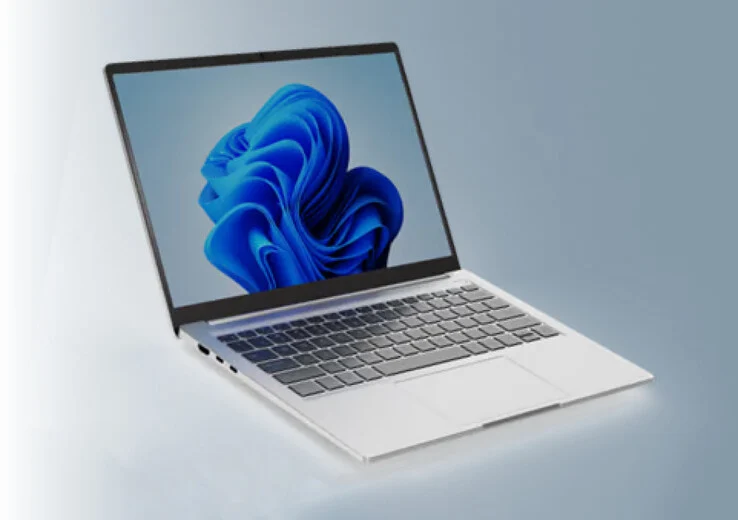
    Currently, the retailer lists a 14-inch model featuring a 2,240 x 1,400 pixel resolution and a 60 Hz IPS display with a 16:10 aspect ratio. This model also comes equipped with a 60 W battery, 32 GB of RAM, and 1 TB of storage, priced at HKD 4,599 (approximately $591), all in a package that weighs about 1 kg.

    Interestingly, a larger 16-inch model is also on the horizon. Dubbed the CoreBook Air Plus, this variant will feature a 1200p display and an IR camera that supports Windows Hello. Weighing between 1.3 kg and 1.43 kg, the CoreBook Air Plus maintains the same 60 Wh battery as the 14-inch model. Chuwi anticipates launching both the CoreBook Air and CoreBook Air Plus globally starting next month.

    Conclusion

    Overall, Chuwi’s latest offerings in the CoreBook series seem promising, especially with their updated specifications and competitive pricing. The CoreBook Air and its larger counterpart, the CoreBook Air Plus, could attract many consumers looking for quality laptops in the market.

    Source:
    Link


  • Machenike GTS Mini PC: Core Ultra 9, 64GB RAM, Foldable Display

    Machenike GTS Mini PC: Core Ultra 9, 64GB RAM, Foldable Display

    Key Takeaways

    1. Unique 2.33-inch display on top for real-time system metrics.
    2. Customizable RGB LED strip and display information via Machenike M-Control software.
    3. Powerful Intel Core Ultra 9 285H processor with six performance cores and ten efficiency cores.
    4. Supports up to 128GB of RAM and two M.2 SSDs, with various connectivity options.
    5. Priced at approximately $1,165 in China with specifications including 64GB RAM and a 1 TB SSD.


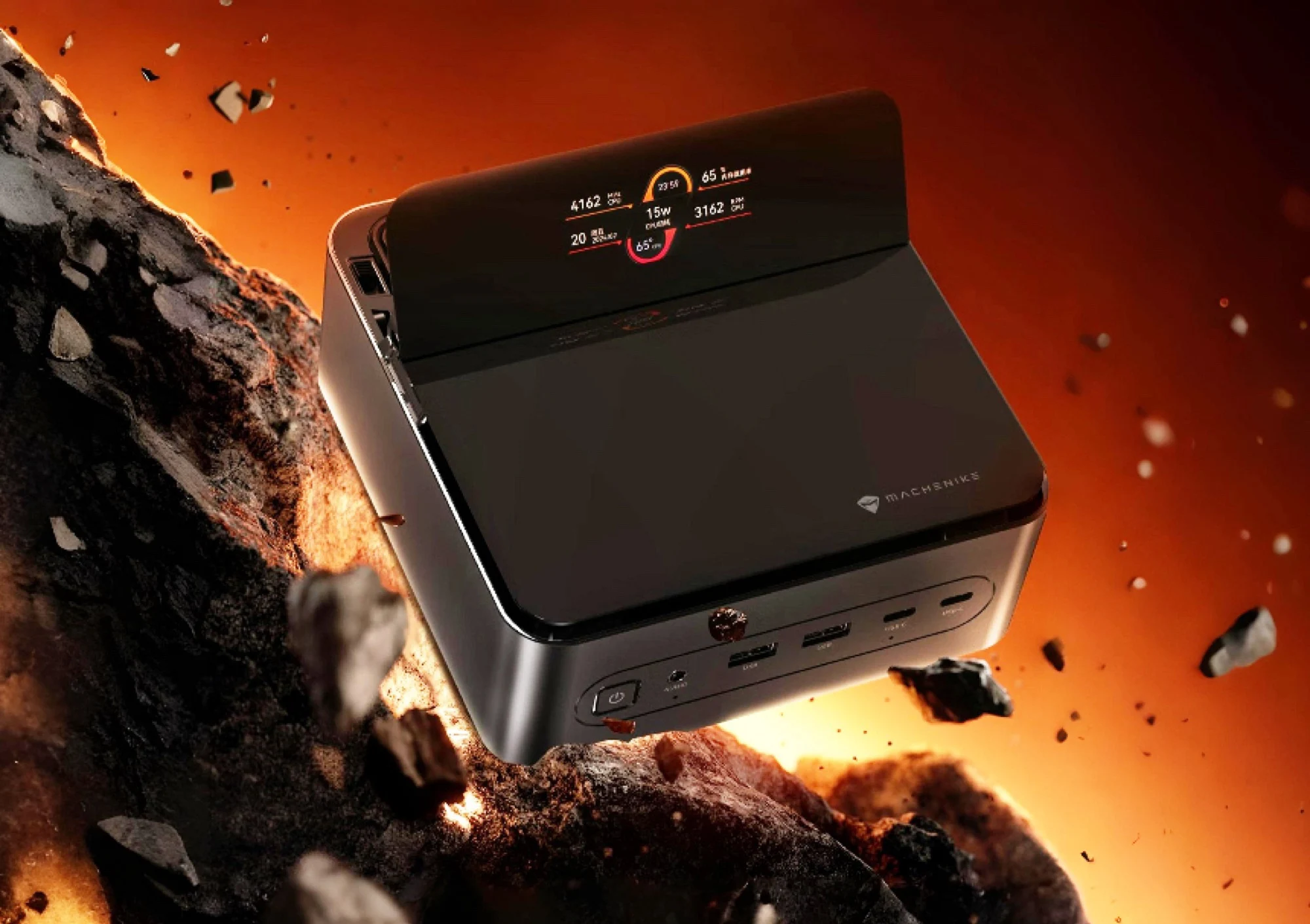
    The Machenike GTS mini PC features a predominantly classic design with one unique aspect: a 2.33-inch display positioned on the top. This screen is attached via a hinge, designed to tilt upwards for improved visibility. It provides real-time updates on several metrics, such as the current power limit of the processor, the load on the CPU and GPU, and the overall temperature of the system.

    Customizable Features

    Below the hinge lies an RGB LED strip that users can modify using the Machenike M-Control software, allowing for changes in both color and lighting style. Moreover, the display’s information is adjustable to meet user preferences. This mini PC is packed with power, featuring an Intel Core Ultra 9 285H, which comes with six performance cores, boost speeds reaching 5.4 GHz, along with a total of ten efficiency cores.

    Performance and Connectivity

    The built-in Intel Arc Graphics 140T offers sufficient power for less intense gaming experiences. Additionally, Machenike provides a dedicated AI accelerator, delivering a performance rating of 99 TOPS. The mini PC can accommodate up to 128GB of RAM and two M.2 SSDs. It also boasts a variety of ports, which include three USB-C ports (two supporting USB 4 and 40 Gbps), four USB-A ports (5 Gbps), two 2.5 Gbps Ethernet ports, HDMI 2.0, DisplayPort 1.4, and an AUX connection.

    The Machenike GTS mini PC is currently listed for sale in China on JD.com for about $1,165. At this price point, purchasers receive an Intel Core Ultra 9 285H, 64GB of RAM, and a 1 TB SSD. Information regarding its global release is still unclear, but many of Machenike’s mini PCs are available in other regions, including Europe.

    Source:
    Link


  • Hyper Launches Upgraded USB4 M.2 PCIe Enclosure at 80 Gbps

    Hyper Launches Upgraded USB4 M.2 PCIe Enclosure at 80 Gbps

    Key Takeaways

    1. The upgraded HyperDrive Next USB4 M.2 enclosure offers 80 Gbps bandwidth, enhancing speed compared to its predecessor.
    2. Compatible with PCIe 4.0 and 3.0 NVMe SSDs, it maximizes performance when paired with USB4 or Thunderbolt 5 devices.
    3. Features a silicone sleeve for drop protection and an IP55 rating for dust and minor water resistance.
    4. Tool-free design allows for easy installation and removal of M.2 SSDs up to 2280 in length and other PCIe 4.0 components.
    5. Set to release in December at a price of $199.99, while the standard 40 Gbps version is available for $119.99.


    Following the introduction of the HyperSpace Trackpad Pro, Hyper is now set to release an upgraded version of its HyperDrive Next USB4 M.2 enclosure. This new variant is anticipated to be available by the year’s end, and both the enclosure and the Trackpad Pro have received CES 2026 Innovation Awards, making them prime features at CES 2026.

    Enhanced Speed Capabilities

    The revamped HyperDrive Next USB4 M.2 PCIe Enclosure (HD2500GL) stands out by offering the full 80 Gbps bandwidth of USB4, a significant improvement over its predecessor. It is designed to fully exploit the speed capabilities of PCIe 4.0 and 3.0 NVMe SSDs, like the Samsung 990 Pro, when used with a USB4 or Thunderbolt 5 device. Additionally, this model includes an extra USB-C port for external power delivery, which allows it to maintain those high speeds during extended usage, setting it apart from many other bus-powered USB4 enclosures.

    Design and Compatibility

    The enclosure is sized at 5.31 x 2.36 x 0.7 inches and includes a silicone sleeve that is claimed to be drop-proof and IP55-rated, providing protection against dust and minor water exposure. It accommodates M.2 SSDs of up to 2280 in length, along with other PCIe 4.0 components such as AI accelerators. The tool-free design ensures that both installation and removal are quick and trouble-free.

    The HyperDrive Next USB4 M.2 PCIe Enclosure is set to debut in December with a price tag of $199.99. In contrast, the standard 40 Gbps version is currently available for $119.99.

    Source:
    Link


  • Minisforum MS-02 Ultra: New Mini-PC Details & CES 2026 Honoree

    Minisforum MS-02 Ultra: New Mini-PC Details & CES 2026 Honoree

    Key Takeaways

    1. Minisforum has introduced the MS-02 Ultra mini-PC, featuring an Intel Core Ultra 9 285HX processor and support for up to 256 GB of RAM.
    2. The MS-02 Ultra includes four M.2 2280 slots for a total of 32 TB of storage, three PCIe slots, and 25 Gigabit Ethernet.
    3. The mini-PC offers two USB V2 ports with 80 Gbps bandwidth and has a slide-out design for easy maintenance.
    4. The MS-02 Ultra has been recognized as a CES Innovation Awards 2026 Honoree and will be showcased at CES 2026.
    5. Sales for the MS-02 Ultra will not start until early next year.


    Minisforum has recently shared more information about its upcoming MS-02 Ultra mini-PC after launching the MS-R1 mini-PC and the DEG2 eGPU in the meantime. Interestingly, the company now has a more affordable version of its M1-1295 mini-PC available, currently priced at $409 on Amazon.

    Recap of the MS-02 Ultra

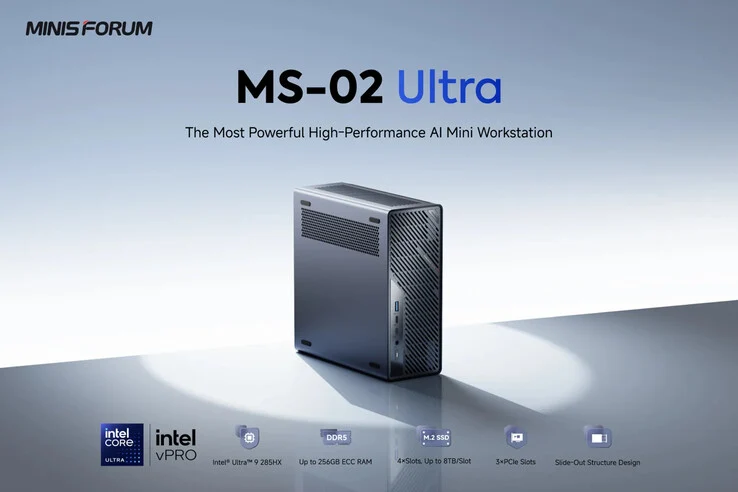
    Last month, Minisforum unveiled the MS-02 Ultra at the Japan Autumn IT Week 2025 held in Chiba. While they provided limited global hardware specifications, PC Watch was able to capture some images from the event, revealing features like the Intel Core Ultra 9 285HX processor and the option to include as much as 256 GB of RAM.

    Confirmation of Specs

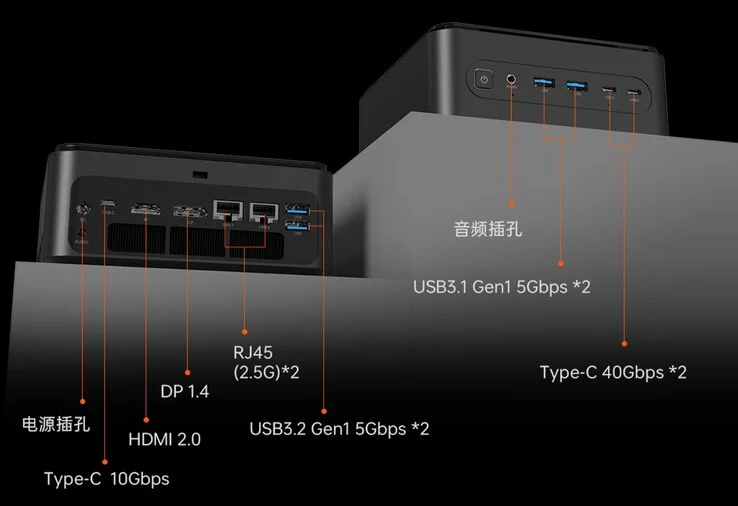
    Minisforum has now confirmed these details through its social media channels. The image shown below indicates that the MS-02 Ultra is equipped with four M.2 2280 slots that can support a maximum of 32 TB of storage. Additionally, the mini-PC features 3 PCIe slots, 25 Gigabit Ethernet, and two USB V2 ports that offer a peak bandwidth of 80 Gbps each. The MS-02 Ultra also has a slide-out design for easy maintenance, all contained in a compact 4.8-liter case.

    Awards and Future Plans

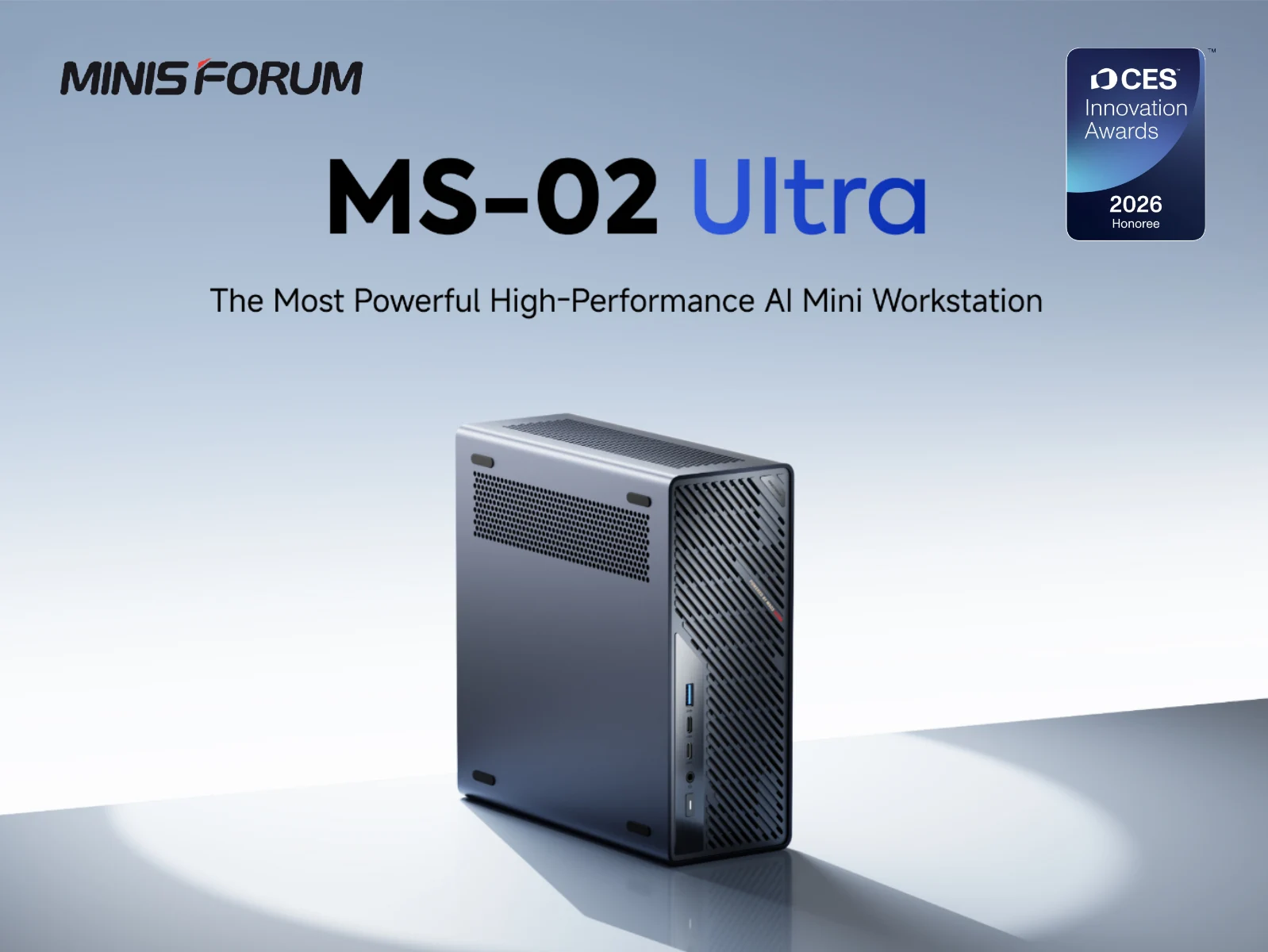
    The MS-02 Ultra has been recognized as a CES Innovation Awards 2026 Honoree in the Computer Hardware & Components category. This announcement strongly suggests that Minisforum will present the MS-02 Ultra at CES 2026 in Las Vegas this coming January. However, it also reveals that the company does not intend to begin selling its so-called ‘Mini AI workstation’ until the start of next year.

    Source:
    Link


  • SanDisk Extreme Fit USB-C Flash Drive: 1TB Capacity Available

    SanDisk Extreme Fit USB-C Flash Drive: 1TB Capacity Available

    Key Takeaways

    1. Sandisk launched the Extreme Fit USB-C flash drive, priced starting at $15.99, featuring a compact design similar to wireless dongles.
    2. The drive supports USB 3.2 Gen 1 speeds, with read speeds up to 400 MB/s for 128 GB models, and 300 MB/s for the 64 GB entry-level version.
    3. Available storage capacities range up to 1 TB, making it a versatile option for various devices, including iPadOS.
    4. Its small size allows it to function as a “plug-and-stay” storage solution without protruding much when connected.
    5. The drive weighs only 3 grams and is compatible with the Sandisk Memory Zone app for easy management.


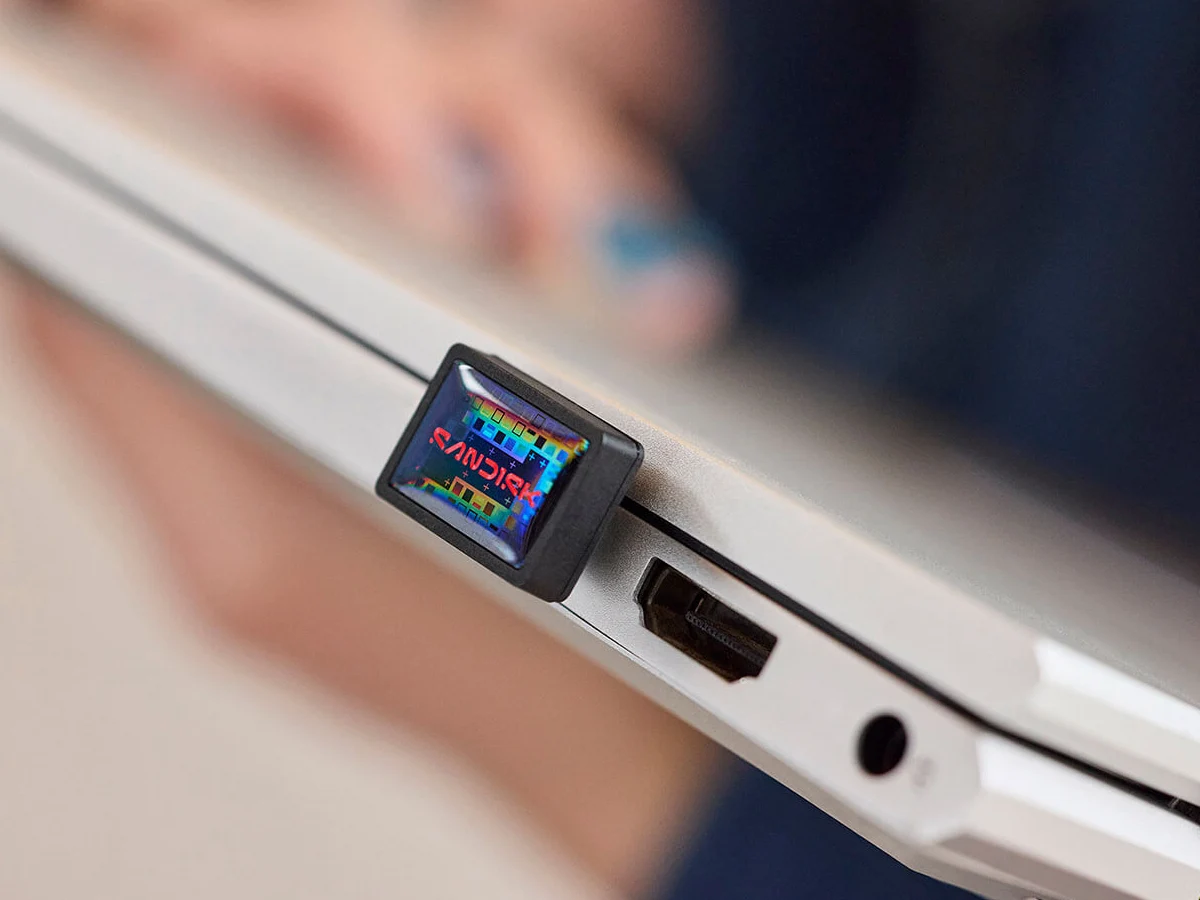
    Sandisk has launched the Extreme Fit USB-C flash drive, a compact storage option priced starting at $15.99. Unlike typical pen drives, this model features a design similar to the dongles used for wireless mice and keyboards. This design choice allows the drive to sit snugly in the port without protruding much when connected to a device.

    Performance and Speed

    In terms of performance, Sandisk claims that this drive supports USB 3.2 Gen 1 speeds. The Type-C flash drive can reach read speeds of up to 400 MB/s, but this speed is only for the models that have 128 GB of storage or more. The entry-level version, which has 64 GB, offers a read speed of up to 300 MB/s. This is still a good transfer rate considering it’s not an external SSD, like the 1 TB Samsung T9, which currently retails for $119.99 on Amazon.

    Storage Options and Compatibility

    Although the Sandisk Extreme Fit is quite compact, it comes with storage capacities up to 1 TB. This USB-C flash drive is also compatible with various platforms, including iPadOS. Sandisk emphasizes that due to its small size, it functions not only as a plug-and-play option but also as a “plug-and-stay” storage solution.

    Additional Features

    Some other important features include a stylish design, weighing just 3 grams, and compatibility with the Sandisk Memory Zone app. You can find the USB-C flash drive available in the official store with these options:

    Sandisk

    Source:
    Link


  • XMG Core 16 Value Edition Laptop with AMD Zen 4 and RTX 5060

    XMG Core 16 Value Edition Laptop with AMD Zen 4 and RTX 5060

    Key Takeaways

    1. Budget-Friendly Model: XMG launched the Core 16 VE at a starting price of €1,399, which is €200 less than the standard version.

    2. Processor and GPU: The VE model features an AMD Ryzen 7 H 255 processor with eight cores and 16 threads, paired with an RTX 5060 discrete GPU.

    3. Battery and Display Changes: The battery capacity is reduced to 80 Wh, and the display has a lower refresh rate of 180 Hz, lacking full DCI-P3 coverage.

    4. Design and Cooling: The design and cooling system remain similar to the standard model, allowing high performance with sustained ratings of 160 W for CPU and GPU.

    5. Connectivity Options: The VE model includes a wide range of ports, including HDMI 2.1, USB4 with Thunderbolt support, and Wi-Fi 6E, matching the standard version’s capabilities.


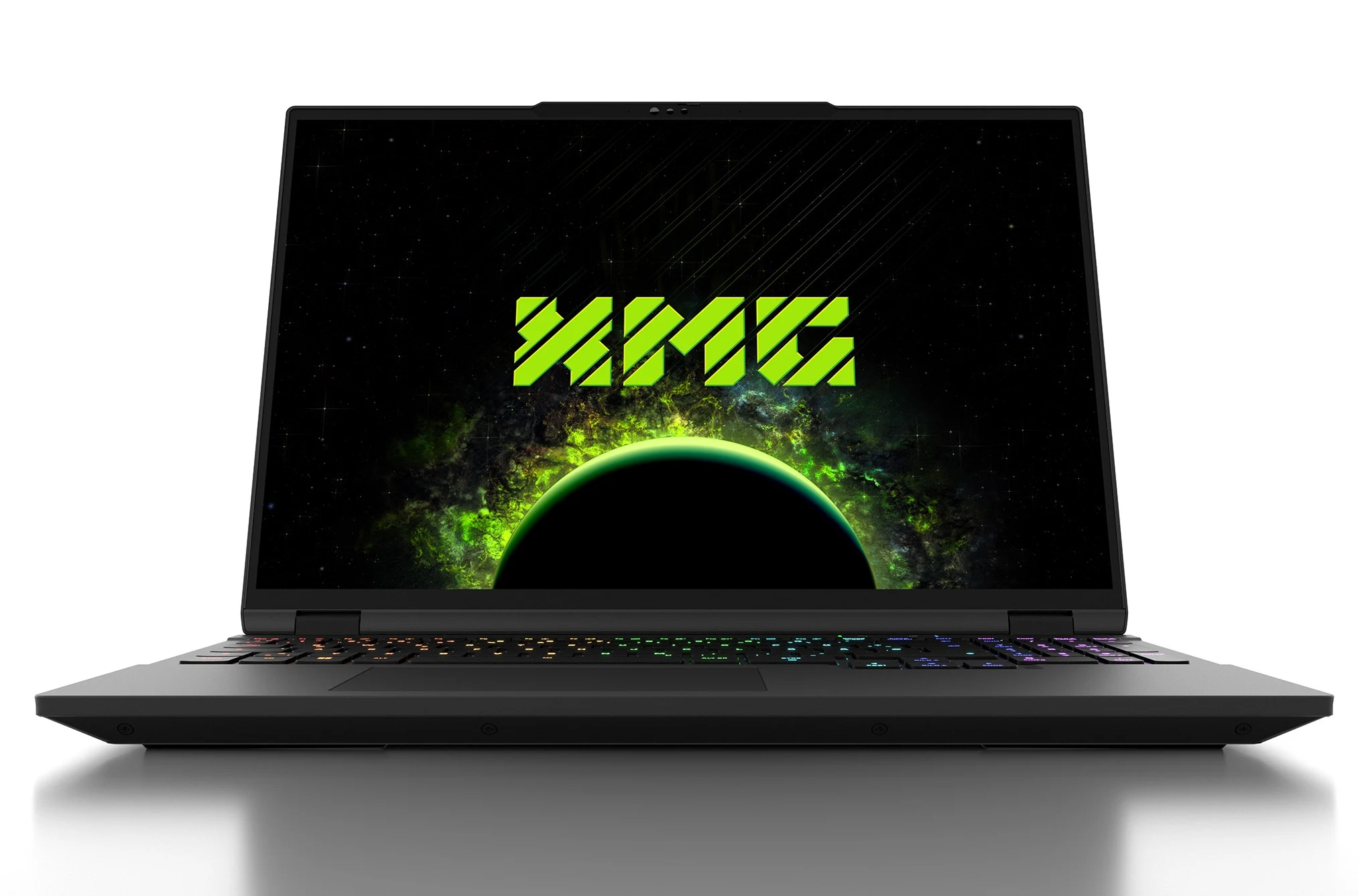
    XMG has introduced a budget-friendly 16-inch model to its Core lineup this year. The new Core 16 VE (Value Edition) is priced at €200 less than the standard version that came out in mid-August. To achieve the starting price of €1,399, XMG has chosen to use an AMD Ryzen 7 H 255 processor, which has eight Zen 4 cores and 16 threads. This processor can be paired with the RTX 5060 discrete GPU. The lower power needs of the CPU have led to a decrease in the battery capacity, which now sits at 80 Wh, down from 99.8 Wh. Additionally, the display has seen a minor downgrade, offering nearly half the maximum refresh rate and lacking full DCI-P3 coverage.

    Design and Cooling

    The structure of the VE model remains nearly the same as that of the regular version. It still boasts an aluminum chassis that measures 357 x 254 x 23 mm and weighs in at just 2.1 kg. The cooling system has also not changed, allowing the components to run at near-maximum thermal design power (TDP) for extended periods. The CPU can reach a peak of 100 W for about one minute before settling at 90 W during sustained use. The GPU can maintain its maximum 115 W total graphics power (TGP), leading to a combined CPU + GPU sustained rating of 160 W.

    Display and Performance

    The display maintains the same resolution of 2560 x 1600 with a max brightness of 500 nits as the standard version. However, with the only available GPU option being the RTX 5060, it makes sense to reduce the refresh rate to 180 Hz. The color range still covers 100% of the sRGB spectrum, but DCI-P3 coverage is no longer complete.

    The RAM and storage capabilities are identical to those in the standard version, supporting up to 128 GB DDR5-5600 RAM and up to 16 TB of SSD storage through two M.2 PCIe 4.0 slots.

    Connectivity Options

    The port selection mirrors that of the standard XMG Core 16, featuring an HDMI 2.1 port capable of 48 Gbps bandwidth, a DP40-compatible Mini DisplayPort 2.1, and a USB4 port with Thunderbolt support that allows for 140-watt power delivery (20 V, 7 A). It also includes integrated DisplayPort 2.1 with DP40, along with a connector for the 240-watt power supply located at the back. On the left and right sides, there are USB-C 3.2 Gen2 ports with DisplayPort 1.4a and 100-watt power delivery, three USB-A 3.2 Gen1 ports, a Gigabit LAN port, a 2-in-1 audio jack for headsets and microphones, and a full-size SD Express-compatible card reader. Wi-Fi 6E and Bluetooth 5.3 connectivity is enabled via an M.2 card. The VE variant also includes the same RGB keyboard, trackpad, and FHD webcam found in the standard model.

    The base configuration of the XMG CORE 16 VE (M25) consists of 16 GB (2 x 8) DDR5-5600 RAM and a 1 TB Samsung 990 EVO Plus SSD. The standard entry price is €1,399, which includes 19% VAT. The laptop is currently available for order and in stock.

    In line with the ongoing BLACK DEALS promotion, bestware.com is offering a 5% discount on the CORE 16 VE until December 2nd, bringing the starting price down to €1,329.05.

    Source:
    Link


  • OmniOne Mini PC: Battery, Touchscreen, Intel CPU & Keyboard Included

    OmniOne Mini PC: Battery, Touchscreen, Intel CPU & Keyboard Included

    Key Takeaways

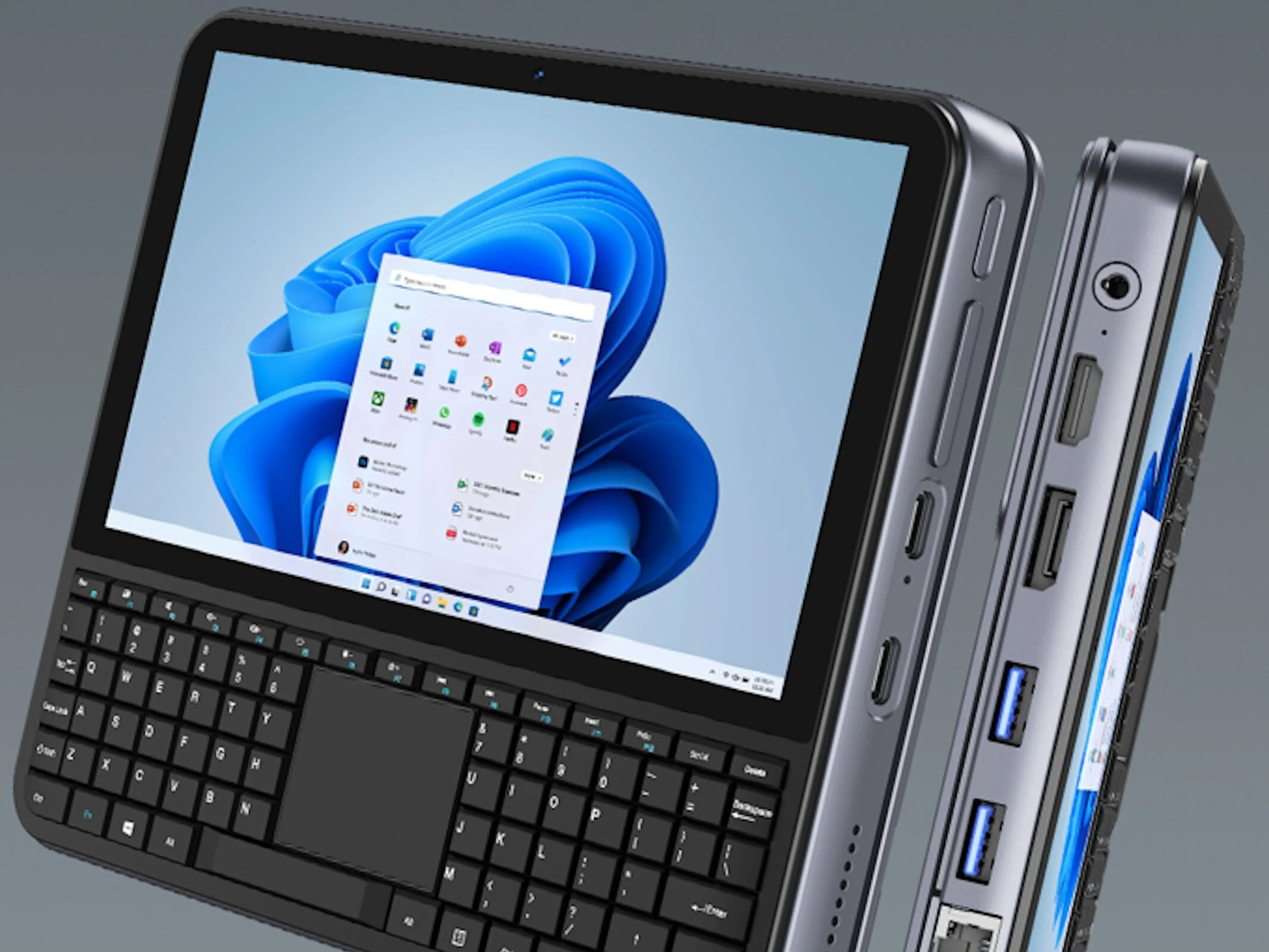
    1. The OmniOne is a compact PC tablet available for pre-order through crowdfunding, with expected delivery by February 2026.
    2. It features a 5.7-inch HD touchscreen, weighs 326 grams, and has connectivity options for dual external displays.
    3. The device runs on an Intel N150 processor with upgradeable RAM options (8, 16, or 32 GB) and supports SSDs up to 1 TB.
    4. Battery life is over 5 hours with a small 16.34 Wh battery; charging is via USB-C at 35 watts.
    5. Crowdfunding carries risks, including potential delays and performance issues, but offers a chance to support innovative technology.


    Compact PC systems that also work as tablets are starting to become more popular. One example is the OmniOne, a new mobile device that can be pre-ordered at a reduced price through a crowdfunding effort, though there are typical risks that come with crowdfunding. These risks include the chance that the product might not make it to market, or that it might not perform as expected. Those who pledge at least $359 can expect to receive their unit by February 2026.

    Specifications and Features

    The device measures 158 x 135 mm and weighs 326 grams, featuring a 5.7-inch HD touchscreen display. The brightness level is rated at 400 cd/m², which may limit its usability in bright sunlight conditions. Users can connect external displays using DisplayPort 1.2 and HDMI 2.1, allowing for the use of two displays simultaneously. It comes with a rather small 16.34 Wh battery that is claimed to provide over 5 hours of life with the display set to half brightness and wireless turned on. Charging can be done at 35 watts through USB-C.

    Performance and Connectivity

    The OmniOne runs on an Intel N150 processor, which is not exactly a high-performance chip. Users have the option of DDR4 RAM in 8, 16, or 32 GB configurations, and it supports an SSD of up to 1 TB via PCIe, making upgrades simple. A front camera is listed with a resolution of just 1 TB, along with two microphones and two speakers for audio. For networking, it offers both Wi-Fi 6 and Gigabit Ethernet options. Additionally, a keyboard featuring small keys and a touchpad is included in the package.

    Funding and Risks

    Crowdfunding platforms like Kickstarter are often great for innovative products like this. However, potential backers should be aware of the cons that come with this approach. The OmniOne may not meet its delivery timeline, or the features may not function as advertised. Still, for those willing to take a chance, it could be an exciting addition to the compact PC market.

    Source:
    Link