Category: Computers

  • Pre-Launch Discount on MS-02 Ultra Mini PC by Minisforum

    Pre-Launch Discount on MS-02 Ultra Mini PC by Minisforum

    Key Takeaways

    1. Minisforum is set to launch the MS-02 Ultra mini PC on November 20, 2025, with a focus on performance and flexibility.
    2. A special pre-launch offer includes a $50 discount for users who sign up for updates on the MS-02 Ultra teaser page.
    3. The MS-02 Ultra features an Intel Core Ultra 9 285HX processor from the Arrow Lake series and a 4-core Arc iGPU.
    4. It includes one PCIe 5.0×16 and one PCIe 4.0×16 slot for a dual-slot discrete GPU and USB4 v2 ports for high-performance eGPUs.
    5. The mini PC supports up to 16 TB of NVMe storage and is compatible with 256 GB DDR5 RAM.


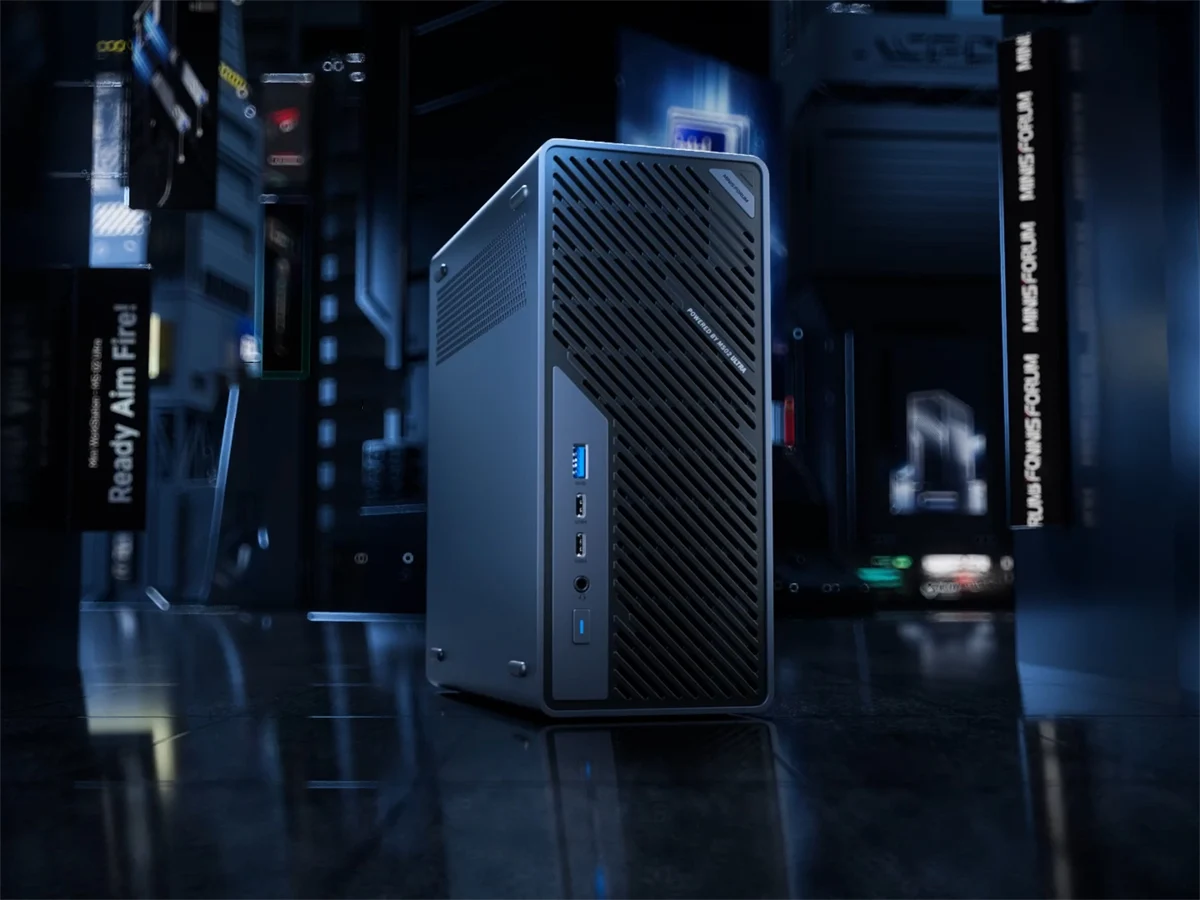
    Minisforum is preparing to unveil the MS-02 Ultra, a mini PC designed with performance in mind and intended to provide users with significant flexibility. The company has officially shared details about the system, with an anticipated launch on the horizon. Although the exact price has yet to be disclosed, a pre-launch discount has been introduced for those interested in purchasing.

    Special Discount Offer

    In a recent announcement, Minisforum mentioned that signing up for product updates via the MS-02 Ultra teaser page will allow potential buyers to receive a $50 discount. This is a great opportunity for those looking to get a deal before the official release.

    Launch Date and Availability

    For anyone who didn’t catch our earlier updates, the MS-02 Ultra is set to hit the market on November 20, 2025. However, it’s unclear if this will be the launch date worldwide, as typically, Minisforum products are launched in China first before expanding to global markets.

    Technical Specifications

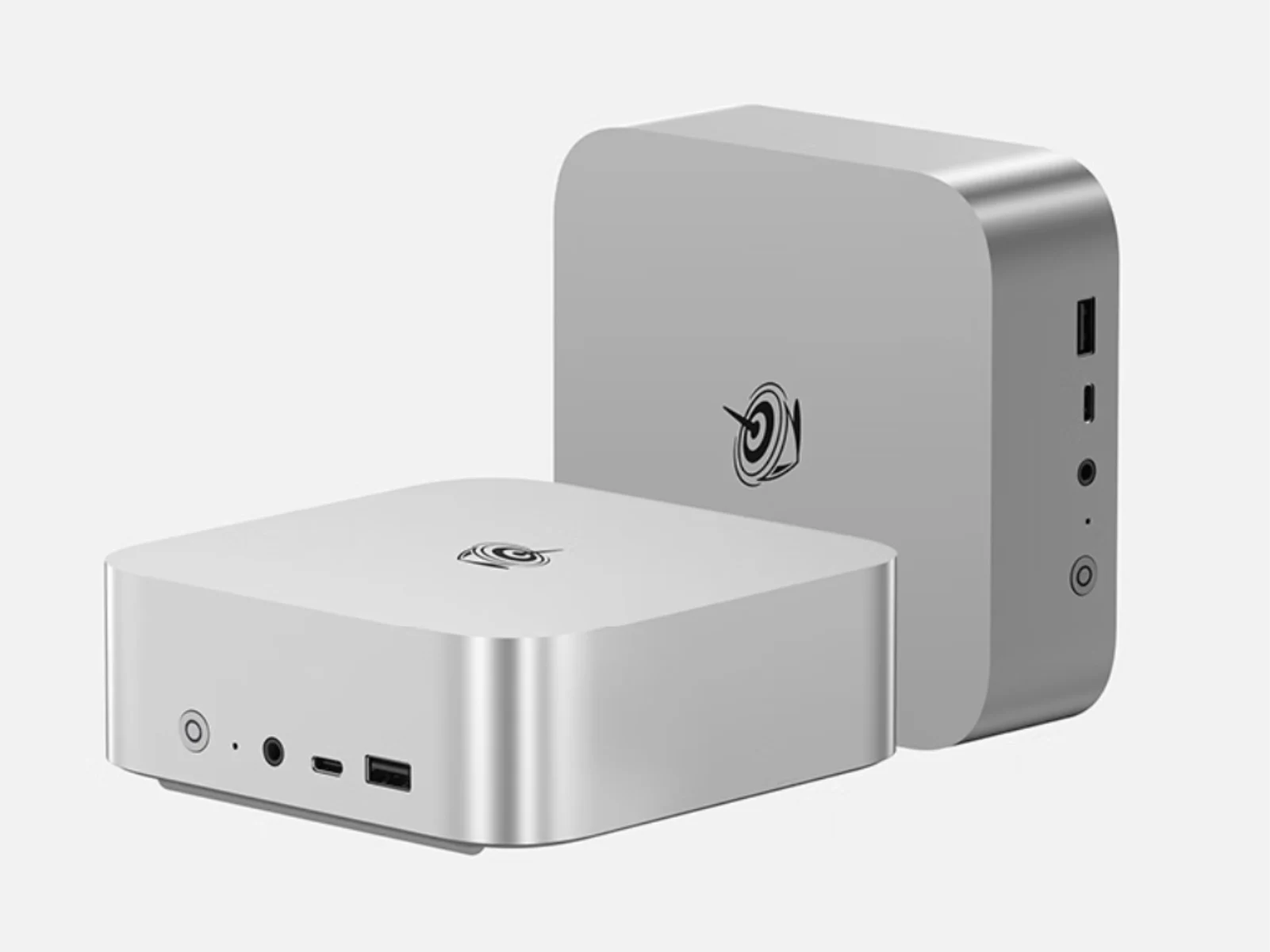
    Focusing on the technical aspects, the Minisforum MS-02 Ultra is equipped with the Intel Core Ultra 9 285HX, a processor from the Arrow Lake series aimed at performance. It features a 4-core Arc iGPU, which, while not the most advanced integrated GPU from Intel, should suffice for most users of this mini PC.

    The MS-02 Ultra includes one PCIe 5.0×16 and one PCIe 4.0×16 slot, capable of accommodating a dual-slot discrete GPU. Additionally, the USB4 v2 ports allow for connection with high-performance eGPUs. Other notable features consist of support for up to 16 TB of NVMe storage (currently, a 1 TB Crucial P310 is priced at $89.99 on Amazon), an array of ports, and compatibility with 256 GB DDR5 RAM. For further information about the system, you can refer to our earlier posts.

    Source:
    Link



  • Samsung Galaxy Book5 Edge: New 5G Windows Laptop Launch

    Samsung Galaxy Book5 Edge: New 5G Windows Laptop Launch

    Key Takeaways

    1. Samsung is set to release the Galaxy Book6 models, featuring Intel’s Panther Lake processors and improved integrated graphics.
    2. The new Galaxy Book5 Edge 5G includes a 5G modem and replaces the microSD card slot with a Nano SIM card slot, while still allowing for microSD expansion.
    3. The Galaxy Book5 Edge retains HDMI 2.1, USB4, USB 3.2 Type-A ports, and a 15.6-inch 1080p IPS screen with anti-glare coating.
    4. The weight of the Galaxy Book5 Edge has increased by 160 grams, now weighing 1.66 kg, despite using a lower-power Qualcomm Snapdragon chipset.
    5. Currently, the Galaxy Book5 Edge is available only in the UK for £949 (around $1,247), with no information on its release in other regions.


    Samsung is looking to update its line of laptops with the new Galaxy Book6 models soon. It seems that the tech giant has chosen Intel’s Panther Lake processors for the Galaxy Book6 Pro, which is likely to also feature in the anticipated Galaxy Book6 Ultra, both boasting more powerful integrated graphics. Meanwhile, Samsung has made a quiet change by launching a new version of the Galaxy Book4 Edge.

    New Features of Galaxy Book5 Edge 5G

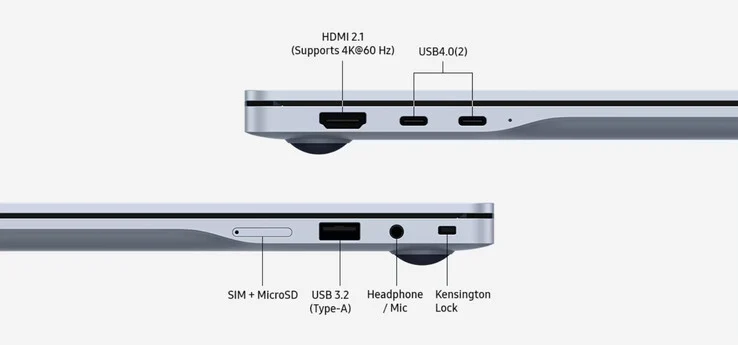
    The company has begun selling the Galaxy Book5 Edge 5G in the UK, which has some notable changes compared to the Galaxy Book4 Edge that came before it (currently priced at $699 on Amazon). True to its name, the Galaxy Book5 Edge 5G includes a 5G modem that the earlier model lacks. Additionally, Samsung has replaced the microSD card slot found in the Galaxy Book4 Edge with one that supports a Nano SIM card while still allowing for microSD card expansion.

    Ports and Display Specifications

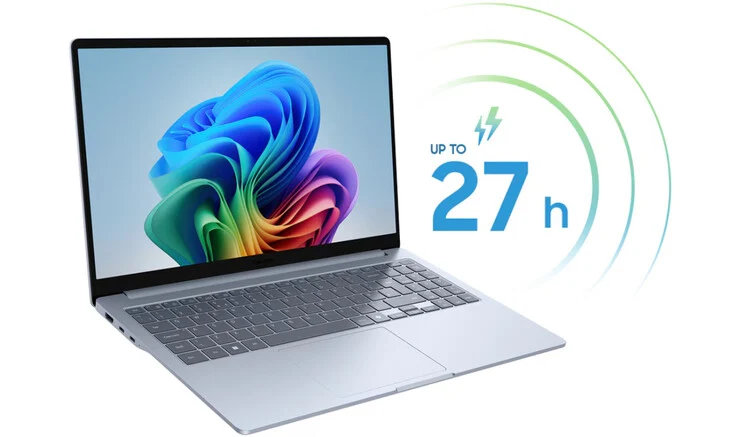
    On the flip side, the HDMI 2.1, USB4, and USB 3.2 Type-A ports from the Galaxy Book4 Edge are back, along with a Kensington lock slot and a 3.5 mm jack located on the right side of the laptop. The device also retains a 15.6-inch IPS screen that delivers 1080p resolution in a 16:9 aspect ratio and features an anti-glare coating. Similarly, the new laptop keeps the same 61.2 Wh battery capacity, supporting 65 W charging and maintaining dimensions of approximately 356.6 x 229.8 x 15.5 mm as its predecessor.

    Weight and Availability

    Strangely, the weight has actually gone up by 160 grams, bringing it to 1.66 kg, even though Samsung has opted for the lower-power Qualcomm Snapdragon X (X1-26-100) chipset. As of now, the Galaxy Book5 Edge is available only in the UK, where it is priced at £949 (around $1,247) with 16 GB of RAM and 512 GB of storage. It’s currently listed on eBay and Samsung’s official website, but it remains unknown when the Galaxy Book5 Edge will be available in other regions.

    Source:
    Link


  • Awekeys Launches Metal Keycaps for Low-Profile Mechanical Keyboards

    Awekeys Launches Metal Keycaps for Low-Profile Mechanical Keyboards

    Key Takeaways

    1. All plastic keycap sets wear out over time, and more durable options like ceramic and all-metal keycaps can help reduce this issue.
    2. Awekeys is exploring the demand for a full-metal low-profile keycap set through an interest check form.
    3. The company has shared designs for a low-profile split ortholinear keyboard in two colors: Titanium Black and Satin Silver.
    4. Compatibility with low-profile switches, including Kailh Choc, is likely but not confirmed for the new keycaps.
    5. Pricing for the new low-profile metal keycaps is uncertain, but Awekeys’ current metal keycap sets range from $139 to over $200.


    If you’ve spent time with a mechanical keyboard, you probably noticed that all plastic keycap sets will eventually show wear and tear, no matter what they are made of. We saw this issue arise quickly during our review of the Lofree Flow Lite. A way to lessen that damage, even if just a bit, is to replace those PBT keycaps with something more durable, such as the ceramic keycaps from Cerakeys or the all-metal keycaps from Awekeys. Sadly, options like these are not commonly available for low-profile mechanical keyboards, like the Iqunix Magi65 Pro (curr. $159.99 on Amazon), which we reviewed earlier.

    Awekeys’ New Initiative

    Awekeys has recently released an interest check form to find out if there’s enough demand for a full-metal low-profile keycap set. They plan to create this option, showing their commitment to making it happen. Since Awekeys is a well-known maker of all-metal keycaps, if they are taking the time to do market research on low-profile metal keycaps, there’s a strong possibility that this project will move forward. This is especially true considering how many subreddits have shared the interest check post.

    Design and Color Options

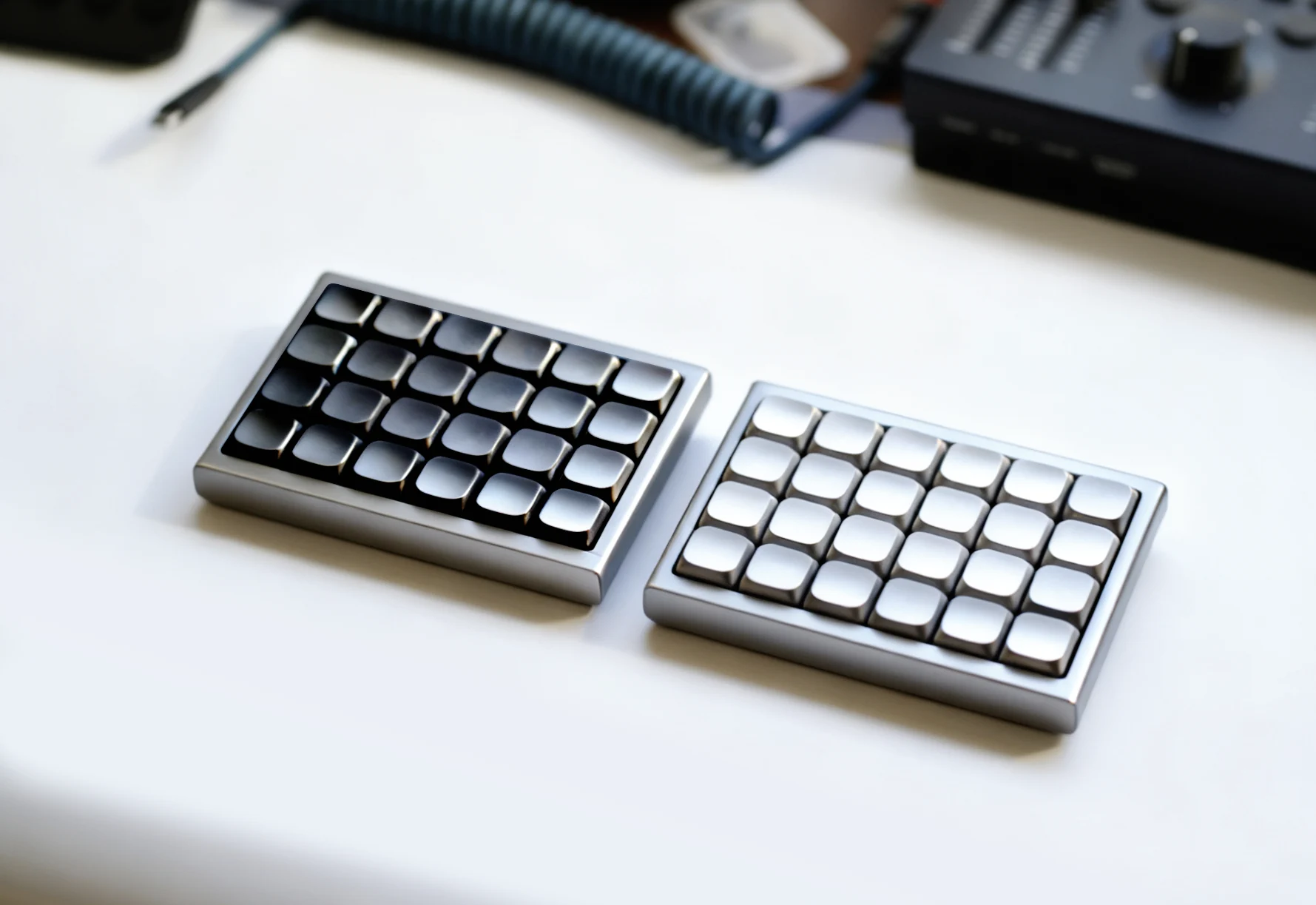
    In their social media updates, Awekeys shared a design for a low-profile split ortholinear keyboard, featuring two color choices: Titanium Black and Satin Silver. These are colors that Awekeys already offers in their current metal keycap line. While the low-profile keycap design isn’t finalized yet, the render indicates it might resemble a blend of the XDA profile and the LDSA keycap profile typical for low-profile keyboards.

    It’s not clear yet if Awekeys will cater only to MX stems (the cross-shaped stems on Kailh Choc V2 and Gateron low-profile switches). However, the posts specifically mention low-profile split ergonomic keyboards, which implies compatibility with Kailh Choc V1 switches (the low-profile switches used by Logitech and large low-profile ergonomic keyboards like the ZSA Voyager) is very likely.

    Pricing and Availability

    Since these low-profile metal keycaps are still in the early development phase, the final price is uncertain. However, it’s worth noting that a set of full-height Awekeys metal keycaps currently ranges from $139 to over $200.

    Awekeys on Reddit, Lowprokb

    Source:
    Link


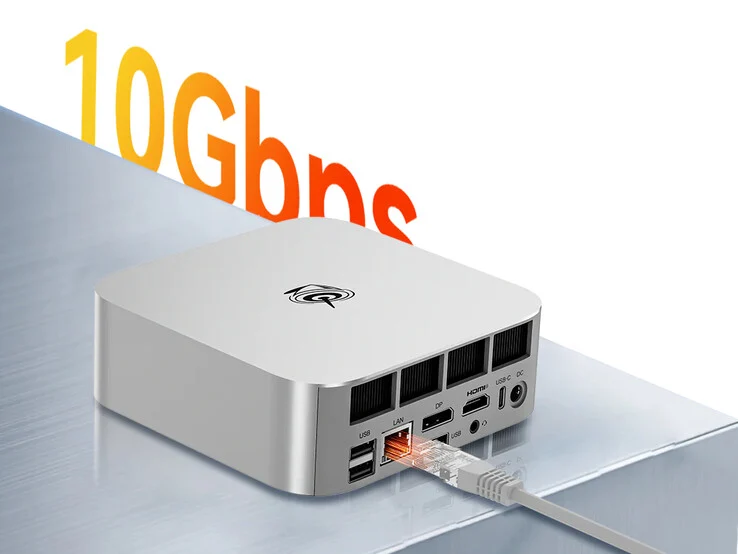
  • Beelink SER9 Max Mini-PC Launches with 10 Gbps LAN and USB4

    Beelink SER9 Max Mini-PC Launches with 10 Gbps LAN and USB4

    Key Takeaways

    1. Beelink has launched the SER9 Max, an upgrade to its SER9 series, featuring AMD’s Ryzen 7 H 255 APU with 8 Zen 4 CPU cores and Radeon 780M iGPU.
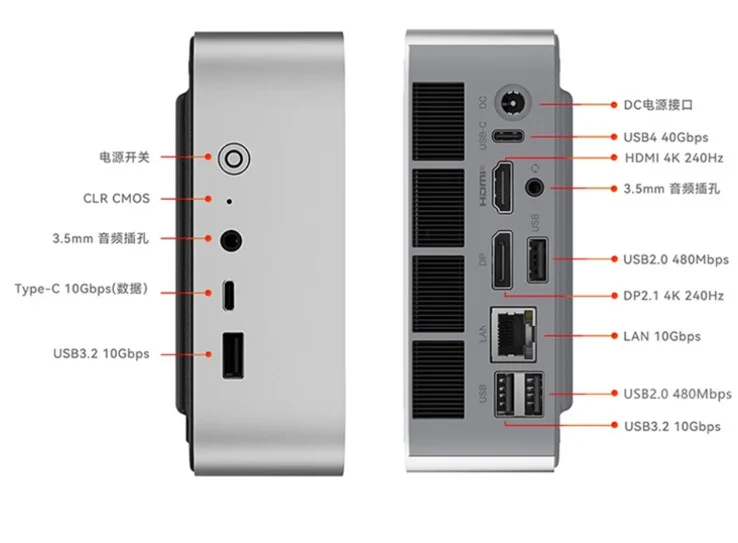
    2. The SER9 Max supports expandable storage via M.2 2280 (PCIe 4.0 x4) slots and offers multiple ports including 10 Gbps LAN, DisplayPort 2.1, and a USB4 40 Gbps port.
    3. There is some inconsistency in RAM specifications, with mentions of both LPDDR5x 6,400 MT/s and DDR5 5,600 MT/s.
    4. The SER9 Max is priced at $699 with 32 GB of RAM and 1 TB of storage, and is available for pre-order on Amazon for as low as $615 before taxes.
    5. A barebones version of the SER9 Max is offered in China at about $325, indicating potential for a more affordable global variant in the future.


    Beelink has once again revamped its SER9 series after releasing the SER9 and SER9 Pro (curr. $819 on Amazon) earlier this year. The latest addition is the SER9 Max, which comes in Frost Silver and Space Grey. It features AMD’s Ryzen 7 H 255 APU, which includes 8 Zen 4 CPU cores and a Radeon 780M iGPU running at 2,600 MHz.

    Storage and Ports

    Moreover, the SER9 Max allows for expandable storage through M.2 2280 (PCIe 4.0 x4) slots and is equipped with multiple ports on both the front and back. However, there’s some confusion as Beelink mentions that the SER9 Max has LPDDR5x 6,400 MT/s RAM in some cases and DDR5 5,600 MT/s RAM in others. Nonetheless, it boasts impressive features like 10 Gbps LAN, DisplayPort 2.1, and a USB4 40 Gbps port, all packed into a compact design measuring 135 x 135 x 44.7 mm and weighing 780 g.

    Pricing and Availability

    Currently, Beelink is selling the SER9 Max worldwide with 32 GB of RAM and 1 TB of storage. As of now, you can buy the mini-PC for $699 from the company’s official website, but it’s available for pre-order on Amazon for as low as $615 before taxes in the US.

    In China, a barebones version is being offered at a 50% discount, bringing the price to about $325 at current exchange rates. This suggests that a more affordable SER9 Max variant may be released globally in the future. For further information, check out Beelink’s website.

    Source:
    Link


  • ADATA and MSI Launch 128GB 4-Rank DDR5 CUDIMM RAM for Z890

    ADATA and MSI Launch 128GB 4-Rank DDR5 CUDIMM RAM for Z890

    Key Takeaways

    1. CUDIMM RAM is gaining popularity for local AI processing, with new features enabling higher speeds and increased capacity.
    2. ADATA has introduced a 4-rank CUDIMM RAM kit with a capacity of 256 GB, doubling the previous limit of 128 GB in dual-rank setups.
    3. The new DDR5 CUDIMM RAM is co-developed with MSI, specifically designed for Intel Z890 motherboards, providing server-grade capacities for desktops.
    4. The onboard clock driver helps manage electrical demand but does not increase speed; modules are rated at a stable 5600 MT/s.
    5. Potential for overclocking exists, with tests indicating stable performance at over 10,000 MT/s on specific MSI motherboards under development.


    CUDIMM RAM is becoming more popular, especially as local AI processing and training gain traction nowadays. With the new addition of a client clock driver directly on the RAM module, this type of memory can run steadily at higher speeds. Moreover, the capacity per module has been increased to cater to the needs of local AI model training. In the past, the capacity was limited to 64 GB per module in a dual-rank setup, but now CUDIMM RAM modules can support up to 128 GB each. ADATA is the first brand to showcase a 4-rank CUDIMM RAM kit boasting an impressive 256 GB capacity.

    New Developments with ADATA

    The latest High Capacity DDR5 4-rank CUDIMM RAM from ADATA was co-developed with MSI and is tailored specifically for Intel Z890 motherboards. ADATA is pioneering the 4-rank architecture, effectively doubling the capacity compared to the usual dual-rank method, thus providing server-grade capacities for desktop computers.

    Performance Insights

    Although this RAM includes an onboard clock driver, it does not enhance speed, as the modules are rated for stable performance at 5600 MT/s. Instead, the onboard client clock driver manages the increased electrical demand on the memory channel. MSI has ensured that its Z890 motherboards can accommodate up to 256 GB in a dual-DIMM configuration.

    Even though the 5600 MT/s speeds mentioned by ADATA might not seem remarkable, MSI hints at potential for overclocking. They report that they have tested a 4-rank CUDIMM module with an “Intel Z890 platform motherboard under development,” and the module “successfully passed a stable burn-in test at over 10,000 MT/s high frequency (with 1 Rank).” Furthermore, the ADATA kit “aligns with the overclocking optimization features of 1SPC (1 Slot Per Channel) motherboard designs.” It remains uncertain which specific MSI models will support these new 4-rank CUDIMM kits.

    Conclusion

    In summary, the advancements in CUDIMM RAM, particularly with ADATA’s new 4-rank offerings, mark a significant step in memory technology for AI applications. With the collaboration between ADATA and MSI, users can look forward to enhanced capacities and potential performance boosts, even if the current speeds may not be eye-catching.

    Source:
    Link


  • Jeff Bezos’ Blue Origin Lands Rocket, Outpaces Elon Musk to Mars

    Jeff Bezos’ Blue Origin Lands Rocket, Outpaces Elon Musk to Mars

    Key Takeaways

    1. Blue Origin achieved its first successful flight with a reusable rocket booster, marking a significant milestone in space exploration.
    2. The New Glenn booster is larger than SpaceX’s Falcon rocket and is designed for heavy payloads, enhancing Blue Origin’s capabilities.
    3. NASA’s ESCAPADE mission successfully launched two Mars probes using Blue Origin’s booster, utilizing an innovative strategy to wait at Lagrange-2 for the optimal Earth-Mars launch window.
    4. The probes, named Blue and Gold, aim to investigate Mars’ atmosphere and its changes over time, particularly due to solar winds.
    5. Rocket Lab designed the probes for NASA, ensuring low mission costs of $18 million per unit, leveraging the capabilities of Blue Origin’s new orbital vehicle.


    The space exploration company Blue Origin, which is supported by Jeff Bezos, has successfully achieved its first flight with a reusable rocket booster.

    A Significant Milestone

    This landing on a barge in the ocean occurred nearly a decade after SpaceX, led by Elon Musk, successfully returned its Falcon rocket for the first time. However, Blue Origin’s New Glenn booster is significantly larger, standing at 190 feet tall with a diameter of 23 feet, compared to Falcon’s 135 feet and 12 feet. The New Glenn is part of Blue Origin’s new generation of orbital vehicles designed for heavy payloads. It’s also much bigger than China’s Yanxingzhe-1, which made its own return flight over the summer.

    Accomplishments in Space

    Along with the successful recovery of its orbital-class rocket, SpaceX’s Jon Edwards praised the achievement as “incredibly difficult.” In this endeavor, Jeff Bezos has taken a step ahead of his competitive rival Elon Musk, who also aims for Mars exploration.

    NASA’s ESCAPADE mission, which stands for Escape and Plasma Acceleration and Dynamics Explorers, utilized the Blue Origin booster test flight to launch two Mars probes into orbit. The first stage of the rocket detached about three minutes post-liftoff, beginning its descent back through Earth’s atmosphere. Shortly after, it activated its BE-4 engines to decelerate and adjust its trajectory, leading to a safe landing on a designated recovery barge floating in the Atlantic Ocean, 375 miles from the separation point.

    The Journey to Mars

    After the first stage separation, the second stage of the rocket propelled NASA’s two Mars orbiters into space roughly 33 minutes after launch. Named Blue and Gold, these identical spacecraft are now heading towards the Lagrange-2 point, which is a stable gravitational location between Earth and the Sun, located 930,000 miles away. The probes are set to loop back and utilize Earth’s gravity as a slingshot to propel them toward Mars in the next launch window, which opens in about a year.

    This innovative strategy of lingering at Lagrange-2 until a suitable Earth-Mars launch window arises has enabled NASA to launch its probes utilizing the Blue Origin reusable rocket ahead of the window that opens every 26 months. The two probes initiated by Jeff Bezos will investigate the Martian atmosphere, particularly how it dissipates due to solar winds and other influences.

    Mars once retained water on its surface due to its atmosphere, but its thinning likely led to evaporation. The Space Sciences Laboratory at UC Berkeley, which started the ESCAPADE mission, seeks to uncover the fate of Mars’ atmosphere with the assistance of the two probes launched by Blue Origin.

    Future Mars Missions

    While SpaceX is still conducting tests on its Starship 3 rocket, intended for Mars missions in the next window in 2026, the NASA probes from Blue Origin are likely to arrive first. “We created a high delta V system that can not only travel to Mars and execute the orbit insertion maneuver, but also climbs out of Earth’s gravity well, which reduces the need for direct transfer from the launch vehicle, greatly expanding our launch options,” said Richard French, VP of Rocket Lab, who designed the probes for NASA.

    In addition to solving the Mars launch window dilemma, Rocket Lab boasts that it has managed to keep the expenses for the ESCAPADE mission down to $18 million per unit, covering both the construction of the probes and their launch. This low cost has been made possible by the new Blue Origin orbital vehicle.

    Source:
    Link


  • DIY Whimsical Mechanical Keyboard Project for Fun Typing

    DIY Whimsical Mechanical Keyboard Project for Fun Typing

    Key Takeaways

    1. Joe Scotto created the “ScottoT9,” a custom macro pad with a 12-key T9 layout designed for thumb typing.
    2. The device features a simple 3D printed casing, hand-wired assembly, and uses standard 5-pin MX-style mechanical switches with QMK firmware.
    3. Typing on the T9 keyboard requires multiple rapid taps for keypresses, and it includes a Tap Dance functionality for symbol entry.
    4. Scotto achieved a typing speed of 20–25 words per minute on the T9 keyboard, emphasizing the project’s novelty rather than advanced features.
    5. Plans and a build guide are available for free on GitHub, with the case and keycap bundle priced at $39.99 and the controller at $11.99.


    Joe Scotto, known for his unique and quirky approach to keyboard design, has recently created what he calls a “meme build.” His latest project is a custom macro pad that features a 12-key layout arranged in a 3×4 grid, designed to replicate the T9 keyboards from older mobile phones.

    Thoughtful Design Choices

    Even though he refers to it as a “meme build,” Scotto has clearly invested considerable effort into the design. He crafted the case and keycaps to ensure they are comfortable for thumb typing. Dubbed the ScottoT9, this device comes with a straightforward 3D printed casing and four stand-offs that secure the PCB and plate assembly. It uses standard 5-pin MX-style mechanical switches and operates on an Arduino Pro Micro RP2040 controller, utilizing the open-source QMK firmware.

    Unique Wiring Approach

    Unlike keyboards that often come with hot-swap sockets, such as the recently reviewed Epomaker Galaxy 68, ScottoT9 is entirely hand-wired. With only a handful of keys to connect to the controller, the assembly process is a straightforward diodeless setup.

    Typing on a T9 keyboard presents a different experience compared to compact models like the Epomaker TH40, which can be quite limiting. T9 keyboards demand multiple rapid taps to register a keypress. While traditional T9 setups utilized autocorrect features, Scotto opted against this, likely to avoid the complications of adding advanced functionalities. Instead, he programmed the ScottoT9 using QMK firmware and took advantage of the firmware’s Tap Dance functionality, allowing users to enter symbols by tapping a key multiple times. To input numbers or activate the shift function, users must hold down a key for a specified duration.

    Impressive Performance and Availability

    After he completed the programming and confirmed that the hardware was functioning correctly, Scotto tested the typing speed on the T9 keyboard, managing to reach around 20–25 words per minute. The symbol entry system appears especially intricate. While it’s remarkable that QMK can be manipulated to create something like the ScottoT9, Scotto himself acknowledges that the main appeal of this project lies in its novelty.

    Joe Scotto has also made free plans and a build guide available on GitHub. For those interested in purchasing, the 3D-printed case and keycap bundle are available for $39.99, while the RP2040 Pro Micro controller can be bought for $11.99 from his online shop. Keep in mind that you’ll need to source your own switches and have a soldering setup, such as the Hakko FX888DX-010BY Digital Soldering Station, currently priced at $121.92 on Amazon.

    Follow Joe Scotto on YouTube or check out his blog for more updates.

    Source:
    Link


  • Casio fx-9910CW ClassWiz Calculator with Spreadsheet App Launch

    Casio fx-9910CW ClassWiz Calculator with Spreadsheet App Launch

    Key Takeaways

    1. The Casio fx-9910CW ClassWiz includes a spreadsheet application and supports various math functions for junior high, high school, and college students.

    2. It efficiently handles topics like pre-algebra, algebra, probability, and matrix/vector math, featuring 5 columns and 45 rows for spreadsheets.

    3. The user interface is redesigned for better accessibility, allowing natural expression input and QR code scanning for graphing solutions.

    4. The calculator is approved for standardized exams including AP, SAT, ACT, and IB tests.

    5. The MSRP is $22.99, available in black and pink, with purchasing options directly from Casio or Amazon; bulk orders are available for educators.


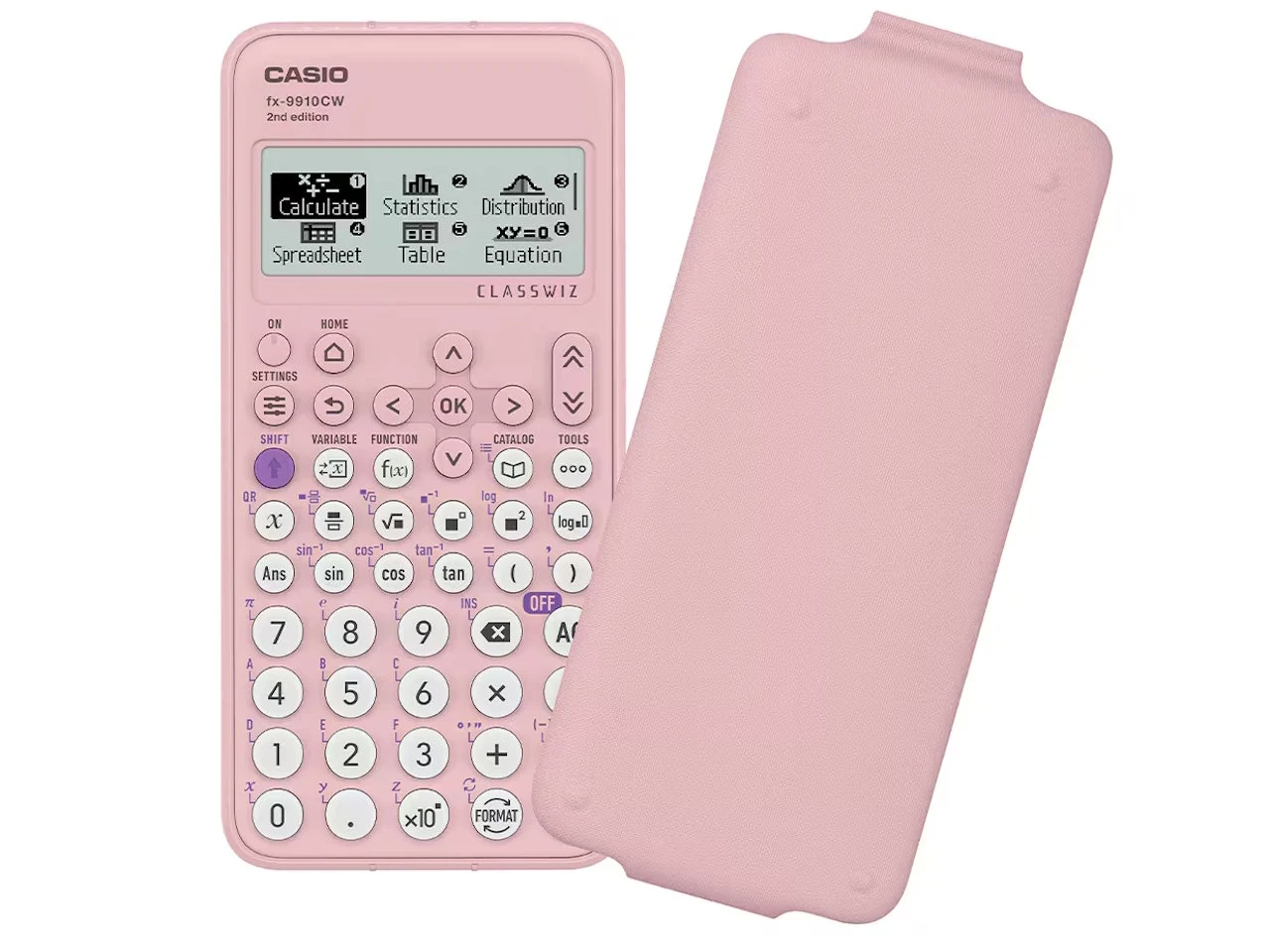
    Casio US has just launched the fx-9910CW ClassWiz advanced scientific calculator, which now includes a spreadsheet application. It offers a wide array of math functions, enabling users to tackle various mathematical problems encountered by students in junior high, high school, and college.

    Features and Capabilities

    This ClassWiz model adeptly handles challenges in areas such as pre-algebra, algebra, probability, and matrix/vector math. It can create spreadsheets consisting of 5 columns and 45 rows. Other useful features are equation solvers, calculations for inequalities, and ratio calculations.

    User-Friendly Design

    According to Casio, the user interface and button layout have been redesigned for improved accessibility. Users are able to input equations in a natural expression mode, just like they are shown in textbooks. Moreover, by scanning QR codes on the screen with a smartphone, the solutions from the calculator can also be graphed via ClassPad.net.

    The fx-9910CW is approved for use in various standardized exams, such as the AP, SAT, SAT Subject, PSAT/NMSQT, ACT, and IB tests.

    Pricing and Availability

    The MSRP for the Casio fx-9910CW is $22.99 and it comes in both black and pink. You can purchase it directly from Casio or soon from their Amazon store. Educators interested in bulk orders and discounts for educational purposes should reach out to Casio Education.

    For those looking for a more advanced graphing option, consider checking out the premium Casio fx-CG100 graphing scientific calculator.

    Source:
    Link


  • Anker Launches 3-Port 160W Charger with Digital Display Worldwide

    Anker Launches 3-Port 160W Charger with Digital Display Worldwide

    Key Takeaways

    1. Anker’s new 3-port 160W charger is now available in the UK and Europe, expanding its initial U.S. launch.
    2. The charger is priced at £129.99 in the UK and €129.99 in Germany, significantly more than the discounted 140W model.
    3. It can charge three devices simultaneously with dynamic power distribution, supporting various output configurations.
    4. The charger features a smart display for real-time charging information and an app for deeper insights and mode changes.
    5. Built-in safeguards protect against overcharging and excessive heat, and the charger is lightweight and portable.


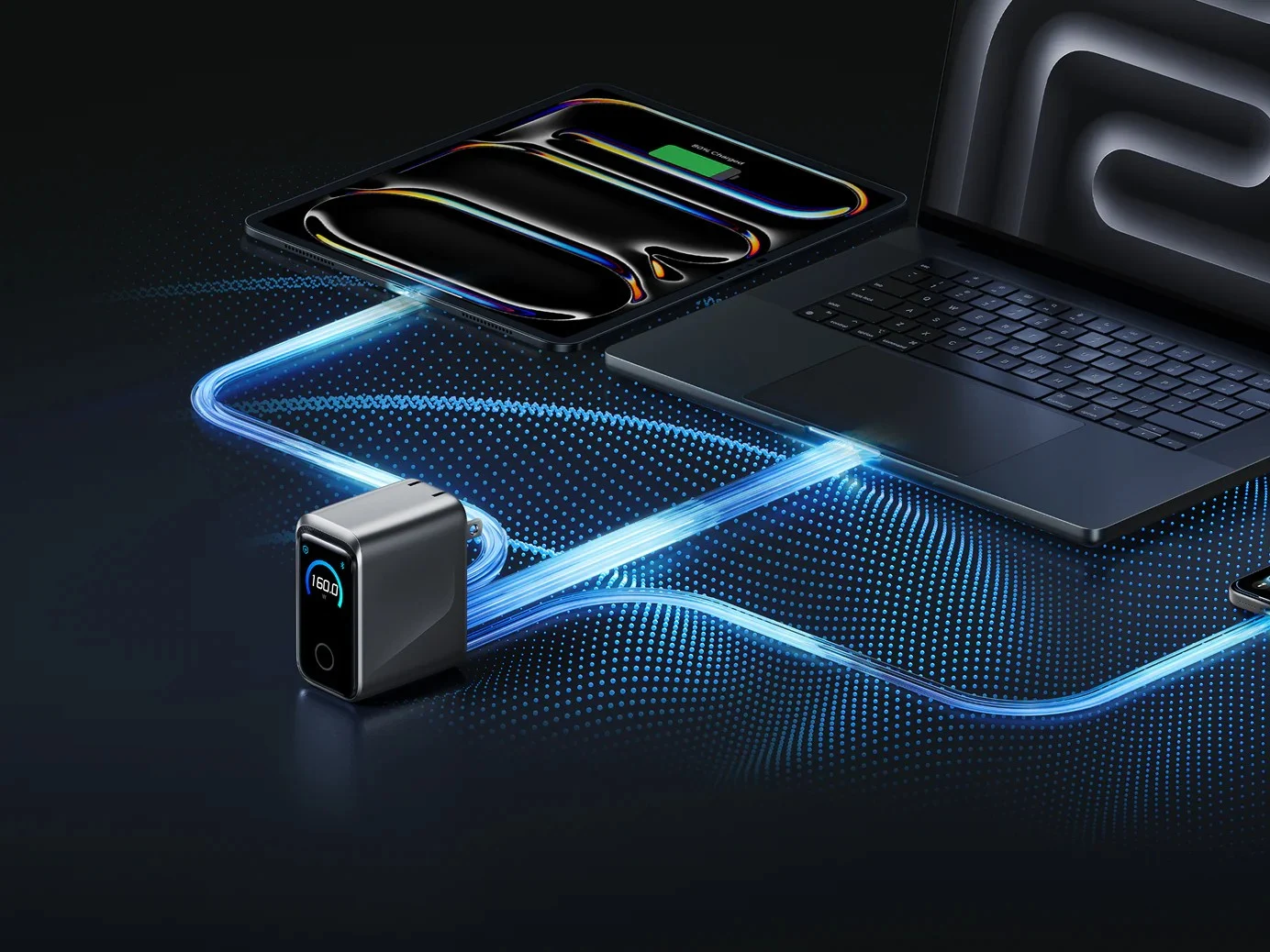
    Anker has broadened the reach of its latest 3-port 160W charger featuring a smart display to additional countries. This charger, which was initially introduced in the U.S., stands at the forefront of Anker’s smart USB-C adapter range, surpassing the 140W and 100W variants.

    Pricing and Availability

    Consumers in the UK can buy the Anker Prime Charger (160W, 3 Ports, Smart Display) on Amazon for £129.99. In Europe, it can be found in Germany through the brand’s website and on Amazon for €129.99, which is approximately €60 more than the discounted 140W model ahead of Black Friday.

    Charging Capabilities

    As previously mentioned, this adapter is capable of charging three devices simultaneously via its three USB-C ports, boasting a total output of 160W. When a single device is plugged in, each port can deliver 140W, sufficient to power a 16-inch M4 Max MacBook Pro under full load. When charging two devices, it divides the output to either 100W/60W or 70W/70W. For three devices, it supports configurations of 100W/30W/30W or 70W/70W/20W, allowing a laptop or two to be charged alongside another gadget.

    Smart Features

    Additionally, with its dynamic power distribution, Anker claims the charger can automatically identify and modify power every 2 minutes, ensuring that each device charges at its ideal speed. It also comes with built-in safeguards to avoid overcharging and excessive heat.

    The adapter measures 2.56 x 2.05 x 1.38 inches (65 x 52 x 35 mm) and features a smart display that provides real-time charging information and temperature data. You can also utilize the accompanying app for deeper insights, change charging modes, and even rotate the display. Weighing in at 7.76 oz (220 g), it’s easy to transport without any trouble.


    Source:
    Link


  • See U USB Drive with Display – Join Our Crowdfunding Campaign!

    See U USB Drive with Display – Join Our Crowdfunding Campaign!

    Key Takeaways

    1. The Movespeed See U Smart Display USB Drive has successfully raised $2,573 on Kickstarter with over 100 supporters.
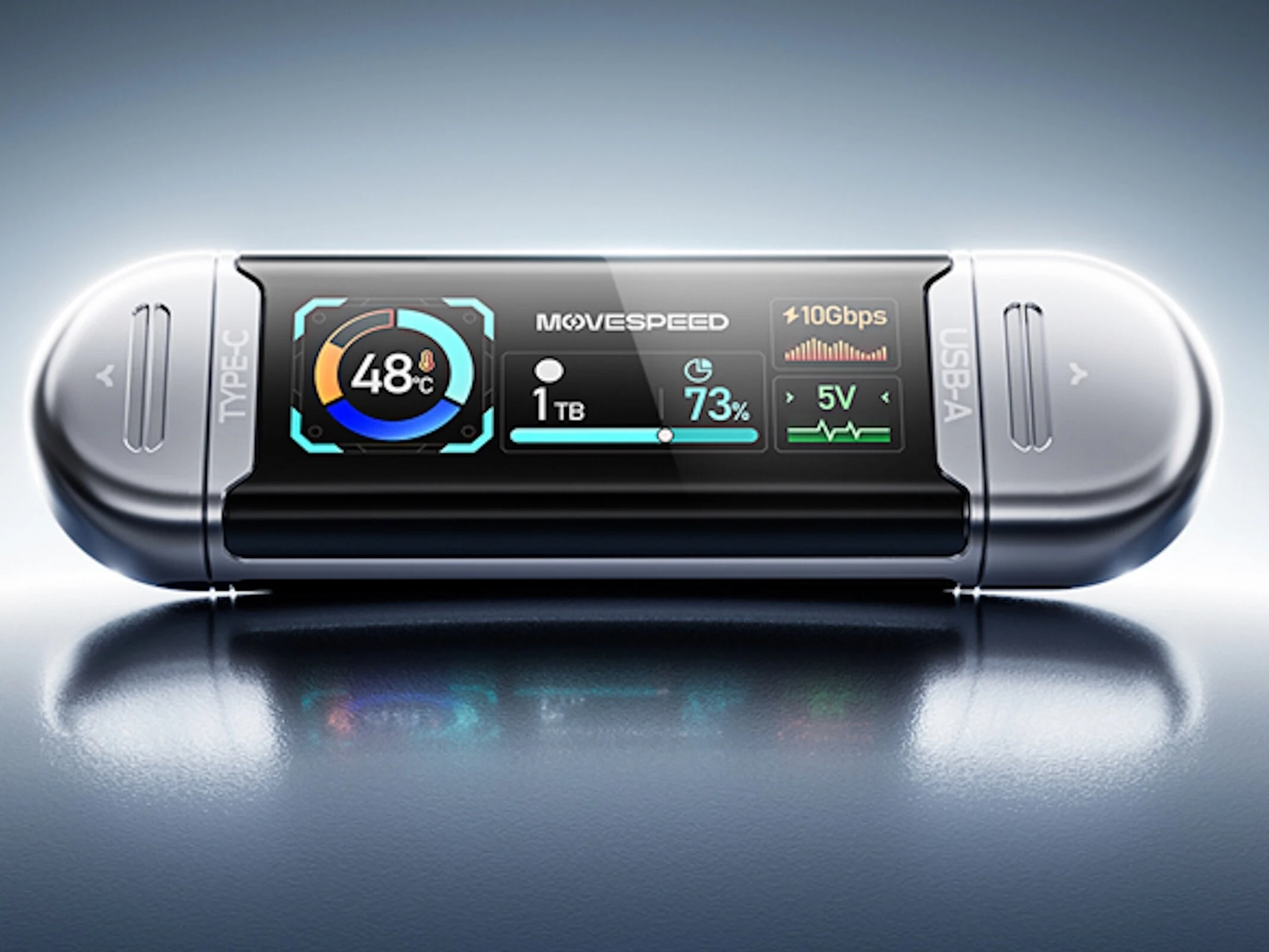
    2. Available in five storage options: 128GB, 256GB, 512GB, 1TB, and 2TB, featuring USB-C and USB-A 3.2 Gen 2.1 ports and a 1.65-inch display.
    3. Read speeds range from up to 1,000 MB/s for the smaller models to 1,080 MB/s for the larger ones, with varying write speeds.
    4. Pricing for backers starts at $69 for 128GB and goes up to $289 for 2TB, with shipping expected in January 2026, though delivery is not guaranteed.
    5. Movespeed is addressing claims of counterfeit listings on AliExpress, asserting they are investigating to protect their brand and backers.


    The Movespeed See U Smart Display USB Drive is currently raising funds on Kickstarter. It has successfully achieved its funding goal of $2,573, drawing in more than 100 supporters up to this point. This marks the third campaign for the Hong Kong-based company.

    Storage Options and Features

    The See U USB Drive, or SU10, comes in five different storage options: 128GB, 256GB, 512GB, 1TB, and 2TB. Each model is equipped with both USB-C and USB-A 3.2 Gen 2.1 ports, along with protective caps and a central display. Users can see various data points on the 1.65-inch (~42 mm) TFT screen, which includes the current temperature, capacity, and data transfer rate. As per the details on the campaign page, the display offers an average brightness of 350 nits and has a viewing angle of 170°.

    Speed and Design Specifications

    The 128GB and 256GB models deliver a read speed of up to 1,000 MB/s, while the remaining three versions provide speeds of up to 1,080 MB/s. The write speeds vary as well: the 128GB version can write at 600 MB/s, the 256GB at 900 MB/s, and the others can reach up to 1,030 MB/s. These drives feature a silver-colored metal casing, measuring 24.0 x 82.5 x 11.7mm (~0.9 x 3.2 x 0.5 inches) and weighing 43.7 g (~1.5 oz).

    Pricing and Availability

    At the moment, backers can pledge $69 for the 128GB option (MSRP $99), $99 for the 256GB option (MSRP $140), $129 for the 512GB option (MSRP $185), $169 for the 1TB option (MSRP $240), and $289 for the 2TB option (MSRP $385). Movespeed aims to begin shipping to customers worldwide in January 2026. However, as is common with crowdfunding, there is no assurance that the product will be delivered to backers. It’s also important to mention that participants from Movespeed’s first Kickstarter campaign, which started in late 2024, have reported receiving their products, although feedback has been mixed.

    In a comment on the Kickstarter page, a potential customer pointed out that this product is already available on AliExpress. Movespeed responded by labeling the listing as fake, indicating that they are “currently looking into this matter to verify the source and ensure our brand and backers are fully protected.”

    Source:
    Link