Category: Computers

  • Asustor DriveStore: Expandable NAS Devices Launching Soon

    Asustor DriveStore: Expandable NAS Devices Launching Soon

    Key Takeaways

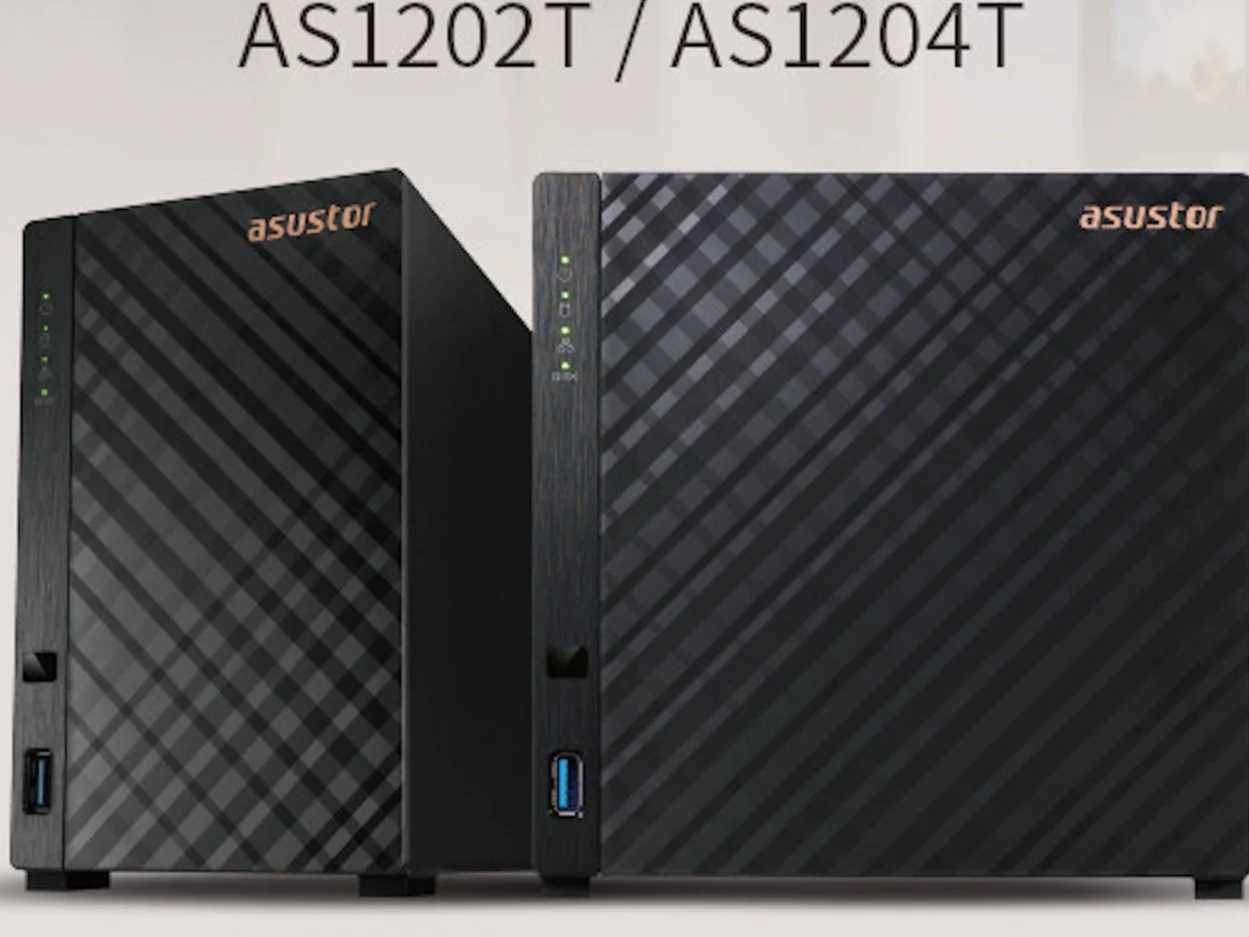
    1. Asustor is launching two new network storage devices: Drivestore AS1204T (4 HDD bays) and Drivestore AS1202T (2 HDD bays).
    2. Both models support 3.5-inch hard drives, but lack M.2 slots for SSD caching.
    3. Users can expand storage with additional units, allowing for up to 12 extra hard drives, and various RAID configurations are available.
    4. Both devices target budget-conscious users, lacking HDMI ports and supporting only 5 Gbps USB Type-A ports and a single 2.5 Gbps Ethernet port.
    5. Powered by a Realtek RTD1619B SoC with four cores, the AS1202T consumes 11.6 watts during use and 6 watts in standby, but RAM is not upgradeable.


    The company Asustor is launching two new network storage devices. These models are named Drivestore AS1204T and Drivestore AS1202T, featuring 4 and 2 HDD bays, respectively. Both models support 3.5-inch hard drives, but they do not include an M.2 slot for SSD caching. Users can increase their storage space by utilizing expansion units that allow for up to 12 more hard drives. As usual, various RAID configurations are also available.

    Cost-Effective Features

    Both NAS devices are aimed at the budget-friendly market, which is evident in their specifications. For instance, they do not include an HDMI port, and all three USB Type-A ports are confined to 5 Gbps speeds. Additionally, PCIe expansion cards aren’t supported, meaning users are restricted to one Ethernet port with a bandwidth of 2.5 Gbps. This is a notable improvement over the standard 1 Gbps port commonly found in entry-level NAS devices.

    Performance Specs

    Inside, the devices are powered by a Realtek RTD1619B SoC, which has four cores and can reach a maximum clock speed of 1.7 GHz. Sadly, the DDR4 RAM cannot be upgraded in the future. The model with two bays, Drivestore AS1202T, consumes 11.6 watts while in use, and this drops to about 6 watts when in standby mode.


    Source:
    Link


  • Astronomers Capture First Moments of Supernova Shock Wave

    Astronomers Capture First Moments of Supernova Shock Wave

    Key Takeaways

    1. Supernova 2024ggi erupted on April 10, 2024, in the galaxy NGC 3621, located 22 million light-years from Earth.
    2. The supernova had a mass between 12 to 15 times that of the sun and transformed into a neutron star post-explosion.
    3. Researchers used spectropolarimetry with the Very Large Telescope (VLT) to study the supernova’s explosion.
    4. The explosion exhibited a flattened shape and maintained symmetry despite interacting with circumstellar material.
    5. This discovery is significant for understanding cosmic events and may lead to further insights in the coming months.


    Many astronomical events take place in the vastness of space, often catching scientists off guard. One such instance is the observation of the initial moments of a supernova shock wave.

    The Supernova 2024ggi

    To delve into this phenomenon, we focus on supernova 2024ggi, which is situated in the spiral galaxy NGC 3621, approximately 22 million light-years away from our planet. When it erupted on April 10, 2024, astronomer Yi Yang from Tsinghua University in Beijing sought time for observations using the Very Large Telescope (VLT) located in Chile.

    Astronomical Findings

    As per Yang, this supernova had a mass ranging from 12 to 15 times that of the sun. Essentially, it was a red supergiant, about 500 times larger than our own sun, which transformed into a neutron star following the explosion.

    Using the FORS2 spectrograph of the Very Large Telescope, researchers employed a technique called spectropolarimetry to study this explosion. As Lifan Wang describes it:

    “Spectropolarimetry provides insights into the geometry of the explosion that other observation methods can’t reveal due to their minimal angular scales.”

    Shape and Implications

    The findings indicated that the explosion had a flattened shape and expanded symmetrically. Surprisingly, it maintained this form even after interacting with a ring of circumstellar material.

    This discovery, being a first of its kind, could enhance our understanding of the universe and the events occurring within it. Furthermore, there are possibilities for new discoveries in the upcoming months, which may lead to additional insights.

    Source:
    Link


  • Qnap QNA-UC25G2SF USB4 25GbE Network Adapter (2x SFP28)

    Qnap QNA-UC25G2SF USB4 25GbE Network Adapter (2x SFP28)

    Key Takeaways

    1. Qnap launched the QNA-UC25G2SF USB4 network adapter, succeeding the QNA-UC10G2SF.
    2. The adapter supports 2x 25 GbE with redundancy, achieving actual bandwidth of 25 Gbps, and up to 50 Gbps with specific configurations.
    3. It features a fanless design with a large heatsink and requires USB Type C Power Delivery for operation.
    4. The adapter is compatible with Windows and Linux, with macOS support in development, and is expected to release by the end of the year.
    5. Pricing details are not yet announced, but the previous model is priced at $549.


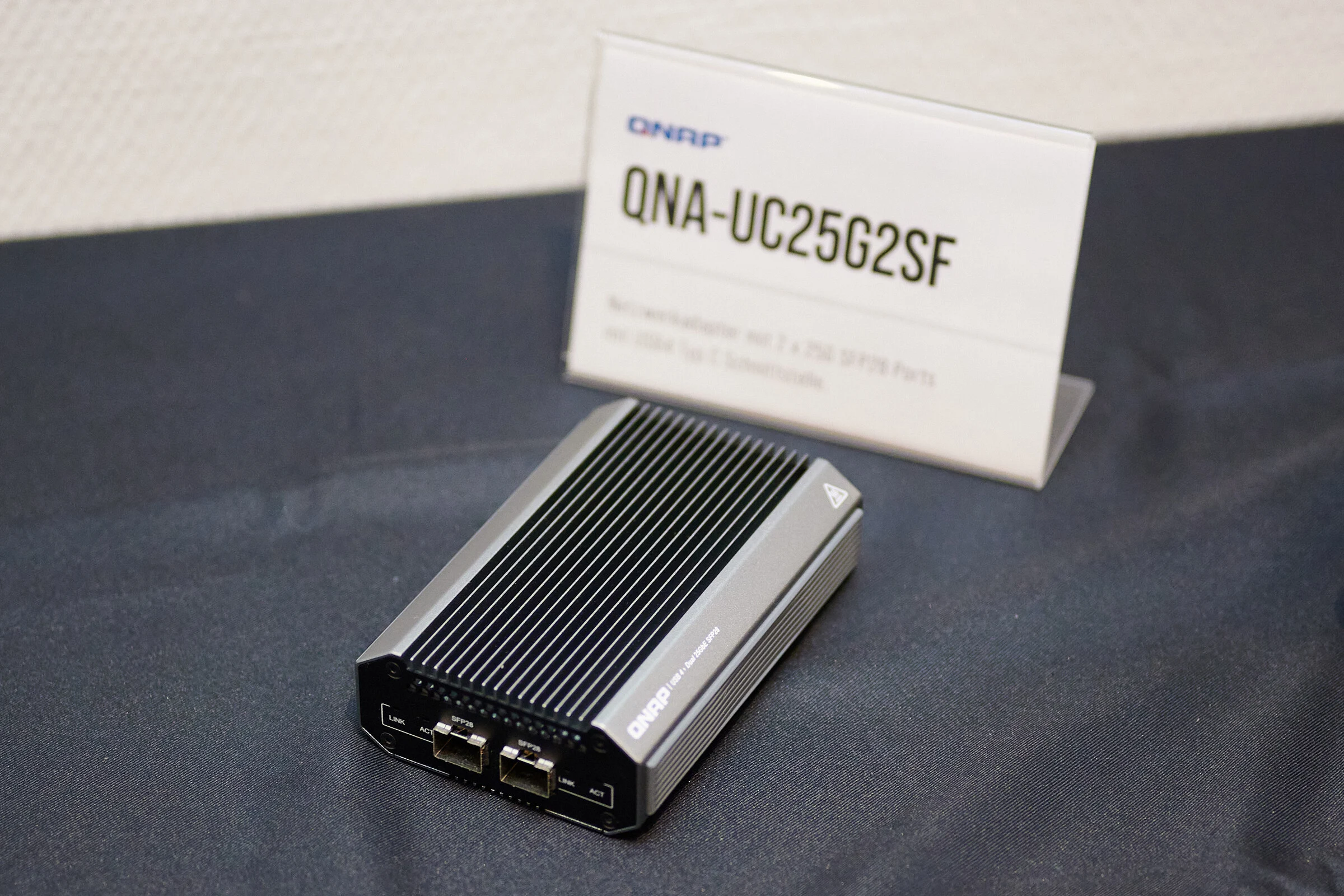
    During its global tour, Qnap has unveiled an innovative USB4 network adapter that boasts notably high speeds. True to Qnap’s style, this adapter carries a rather lengthy name: QNA-UC25G2SF. It essentially serves as the successor to the QNA-UC10G2SF, which will still be available for the moment.

    Specifications and Features

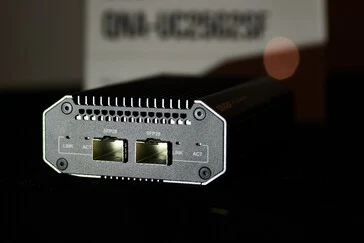
    The metallic casing contains enough room for two SFP28 transceivers and DACs (direct attached cables), as long as the distance to the switch is relatively short. Qnap states that DACs are generally effective for distances between roughly 10 to 16 feet. Performance may decline if you go beyond that range, where a transceiver with fiber optics might be a better choice. The range will then depend on the module (wavelength) and the type of cable used.

    In spite of that, this new adapter delivers 2x 25 GbE with redundancy, providing 25 Gbps of actual bandwidth. With SMB Multichannel or a well-configured LACP setup, it can even achieve 50 Gbps.

    Cooling and Power Requirements

    The network adapter is designed to operate without fans for cooling. Instead, it features a relatively large heatsink similar to the one found in the UC10 series. The device is likely to get quite warm, as indicated by a caution label. This is further suggested by the notably higher power consumption.

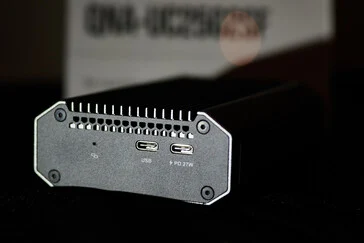
    The QNA-UC25G2SF requires USB Type C Power Delivery. In contrast, the previous model operated with USB Type C Current. Since many laptops do not support USB PD for power output, this adapter includes a second port that can deliver up to 27 watts. The main USB port is exclusively for data transmission.

    Compatibility and Pricing

    Qnap’s latest adapter is compatible with both Windows and Linux operating systems, while support for macOS is still under development. The QNA-UC25G2SF is expected to be available around the end of the year. It won’t be inexpensive, although Qnap has yet to announce an official retail price. For context, the previously mentioned QNA-UC10G2SF is listed for $549 on Amazon.


  • Minisforum X1 Lite: Affordable AMD Mini PC with eGPU Support

    Minisforum X1 Lite: Affordable AMD Mini PC with eGPU Support

    Key Takeaways

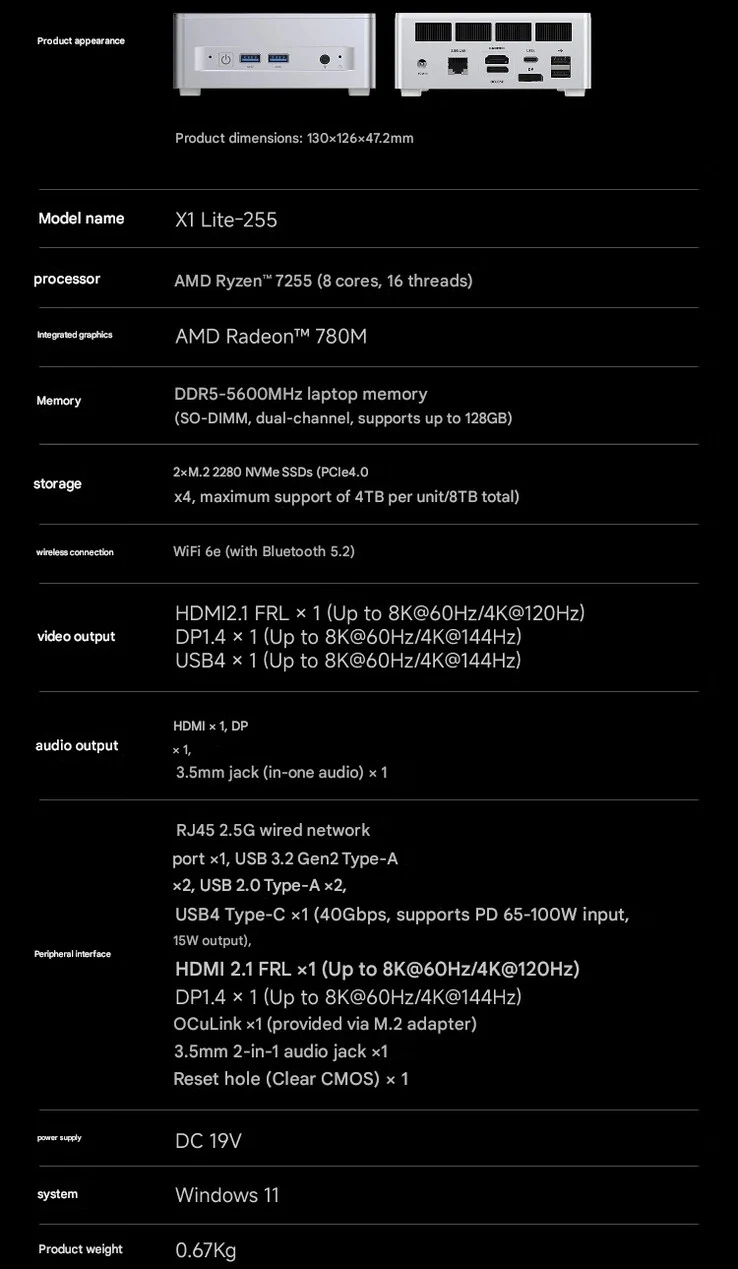
    1. The Minisforum X1 Lite is a budget-friendly mini PC powered by the Ryzen 7 255 CPU, featuring an 8-core and 16-thread setup with Radeon 780M graphics.
    2. It can run most AAA games at 1080p resolution on low settings, with support for up to 128 GB of DDR5 RAM and 8 TB of storage.
    3. The mini PC includes an advanced cooling system with a large fan, operating at a thermal design power (TDP) of 65 W, and supports external GPUs via USB4 and OCuLink ports.
    4. It features multiple ports, including USB4, DisplayPort, and HDMI, allowing for triple-display setups, and the USB4 port supports 100 W Power Delivery.
    5. Pricing starts at CNY 1,999 (approximately $281) in China, with international availability expected soon.


    Minisforum has rolled out a new budget-friendly mini PC named the X1 Lite in China. This device is powered by the Ryzen 7 255, which is a rebranded version of the Ryzen 7 8845HS from the Hawk Point series. The CPU boasts an 8-core and 16-thread setup, complemented by the Radeon 780M integrated graphics.

    Gaming Performance

    Thanks to its integrated GPU, the Minisforum X1 Lite can manage most AAA games at 1080p resolution on low visual settings. Users can enhance performance by adding up to 128 GB of DDR5 RAM and 8 TB of storage through its two M.2 slots.

    Advanced Cooling System

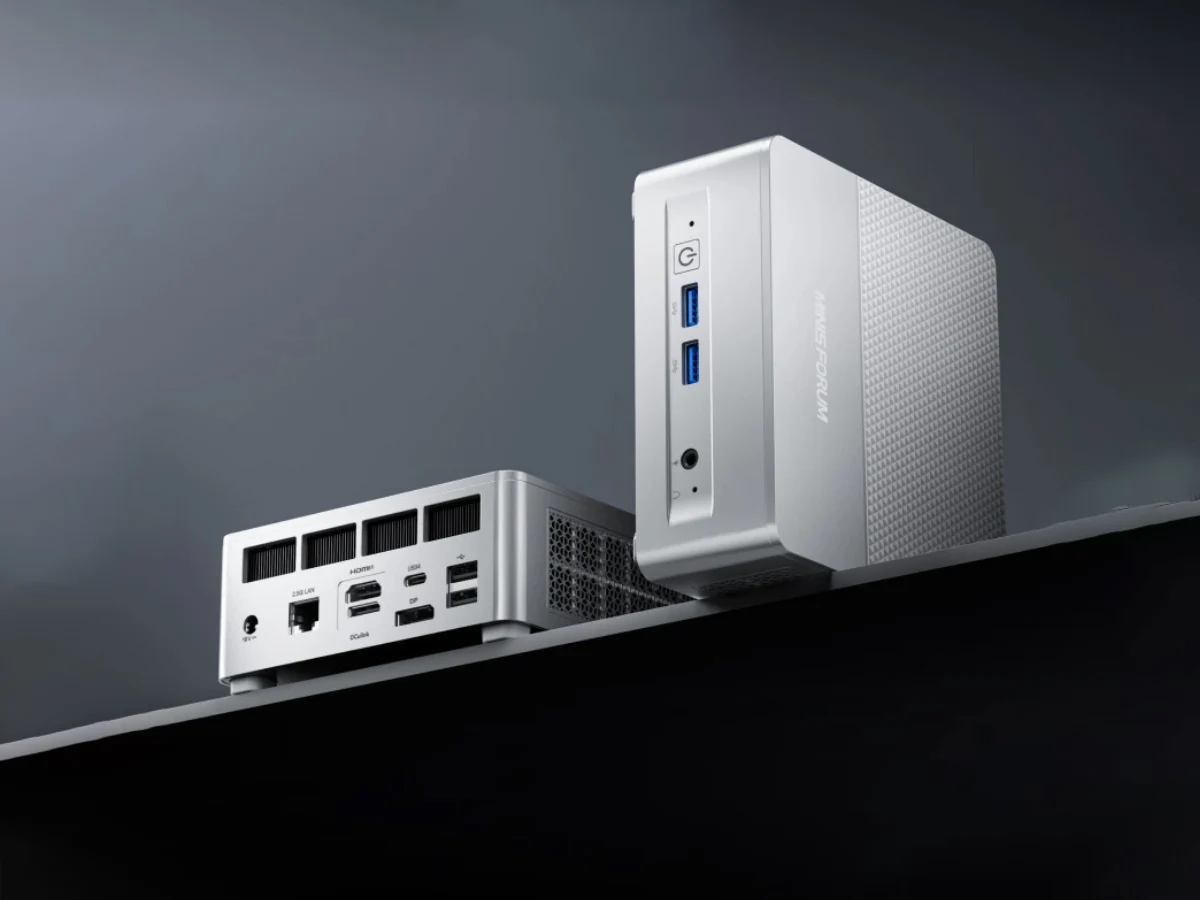
    The manufacturer emphasizes that the mini PC comes with a sophisticated cooling system featuring a large fan. It’s claimed that this setup allows the device to run smoothly at a thermal design power (TDP) of 65 W. Additionally, it supports external graphics processing units (eGPU) via the USB4 and OCuLink ports. Alongside these, the mini PC includes the following port options:

    With the inclusion of USB4, DisplayPort, and HDMI ports, the mini PC can support triple-display setups. Minisforum also highlights that the USB4 port supports 100 W Power Delivery, making it convenient to power connected devices (currently, a 3.3-feet Acer USB4 cable is priced at $19.99 on Amazon). Other notable features include WiFi 6e, a compact design, and an elegant appearance.

    Pricing and Availability

    In terms of cost, the Minisforum X1 Lite is available in China starting at CNY 1,999, which is approximately $281. While the company has not yet provided details about an international launch, it is expected to make its way to global markets soon. It’s also important to mention that


    Source:
    Link


  • Makera Unveils $900 Beginner CNC for Cutting Titanium

    Makera Unveils $900 Beginner CNC for Cutting Titanium

    Key Takeaways

    1. The Makera Z1 desktop CNC has exceeded its Kickstarter funding goal of $99,973, raising over $5 million with 28 days left.
    2. The Z1 is marketed as beginner-friendly but can also machine non-ferrous metals like copper, bronze, and aluminum, with caution advised for harder metals like steel and titanium.
    3. A demonstration video showcases the machining of titanium at 13,000 RPM, emphasizing safety measures during the process.
    4. The new AeroDust system improves cooling and chip management without needing an external air source, unlike previous models.
    5. The Z1 features a quick-tool changer and built-in camera, with Kickstarter pricing starting at $899 and a retail price of $1,199 set for January 2026.


    We recently discussed the Makera Z1 desktop CNC and its Kickstarter debut, which has already surpassed its funding target of $99,973, amassing over $5 million in pledges with 28 days remaining. Although Makera promotes the Z1 as a beginner-friendly CNC machine, they assert that this compact device can machine certain non-ferrous metals, like copper, bronze, and aluminum, provided it’s done with care. While the company states that steel and titanium can also be machined on the Z1, there are concerns about how well an aluminum-constructed CNC will handle harder metals. Makera seems keen to address these concerns in their latest YouTube video.

    Titanium Cutting Demonstration

    It’s not clear which titanium alloy is showcased in Makera’s demonstration, but they are using a range of titanium bits in a 1/4-inch collet, spinning the spindle at its peak speed of 13,000 RPM. In some sections of the video, the cutting speeds appear to be quite brisk, especially during the roughing phase. However, Makera still advises taking special safety measures and closely monitoring the milling process when working with titanium.

    The AeroDust System

    What’s particularly fascinating about this experiment is that Makera seemingly isn’t utilizing any external cooling during the machining, instead relying solely on the new AeroDust system to manage chips and keep both the tool and workpiece cool. This dust collection and cooling method represents an improvement over the $2,199.99 Carvera Air desktop CNC, which necessitates an external air source and vacuum for effective chip removal and cooling.

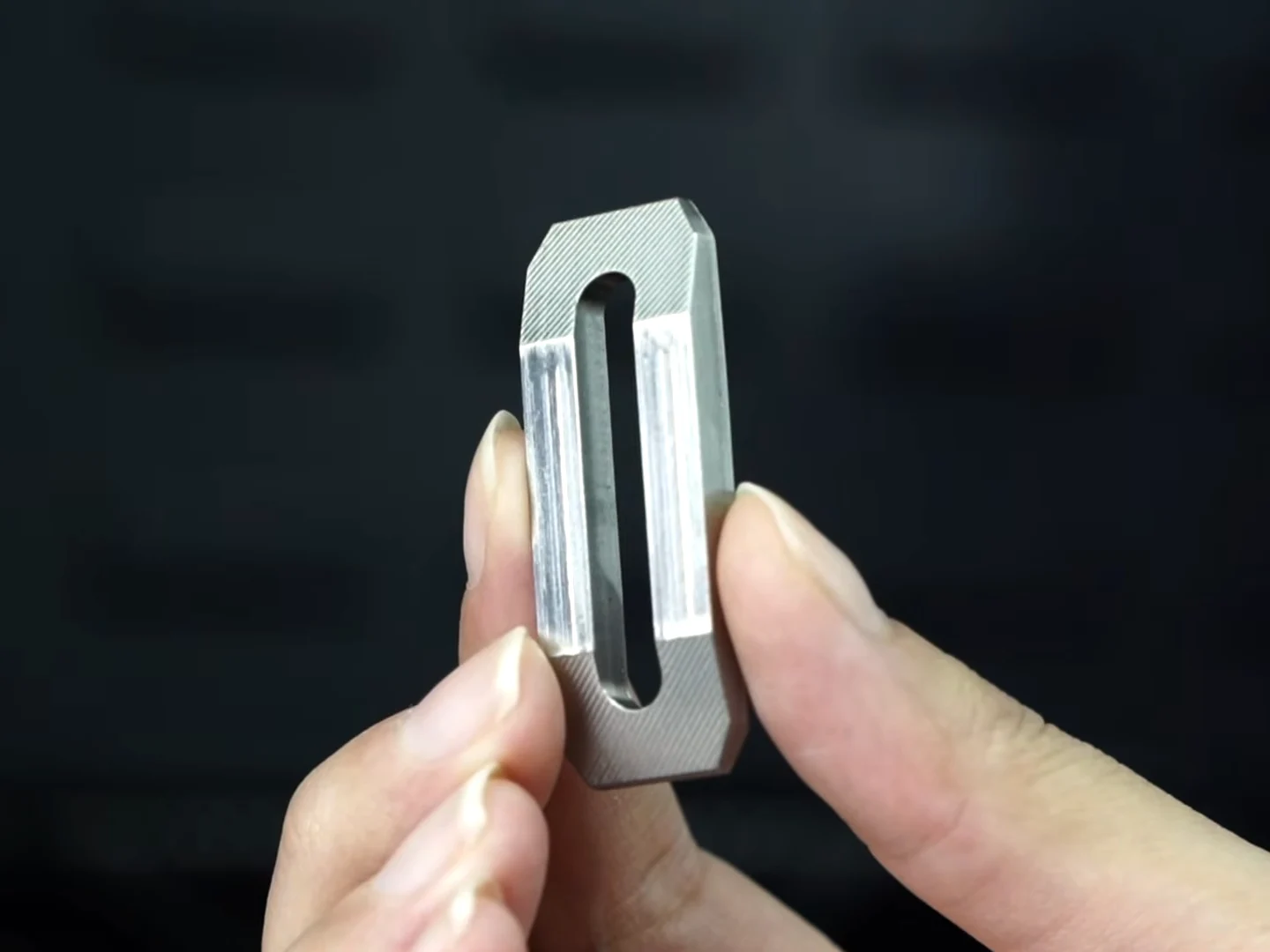
    While it’s difficult to assess the precision of the component shown in Makera’s video, at the conclusion, the company highlights a finished part that appears to be a straightforward part clamp for the CNC machine itself, with a surface finish and edges that look satisfactory.

    Specifications and Pricing

    The Kickstarter page for the Makera Z1 refrains from making bold claims about milling intricate steel and aluminum components, instead noting that these metals should only be used for “light-duty milling.” The Z1 is equipped with Nema 17 stepper motors, linear rails, and a high-torque spindle capable of running at 13,000 RPM. It also features a quick-tool changer and a built-in camera for easy operation and remote monitoring. Currently, the Kickstarter campaign offers the Z1 CNC starting at $899, with the official retail price set to be $1,199 upon its launch in January 2026.


    Source:
    Link


  • Aoostar EG02: Global Launch of Thunderbolt 5 eGPU Dock This Month

    Aoostar EG02: Global Launch of Thunderbolt 5 eGPU Dock This Month

    Key Takeaways

    1. Aoostar is launching a new eGPU dock, the EG02, worldwide, following the release of the EG01 model.
    2. The EG02 retains the design and mounting system of the EG01 but introduces OCuLink and Thunderbolt 5 connectivity.
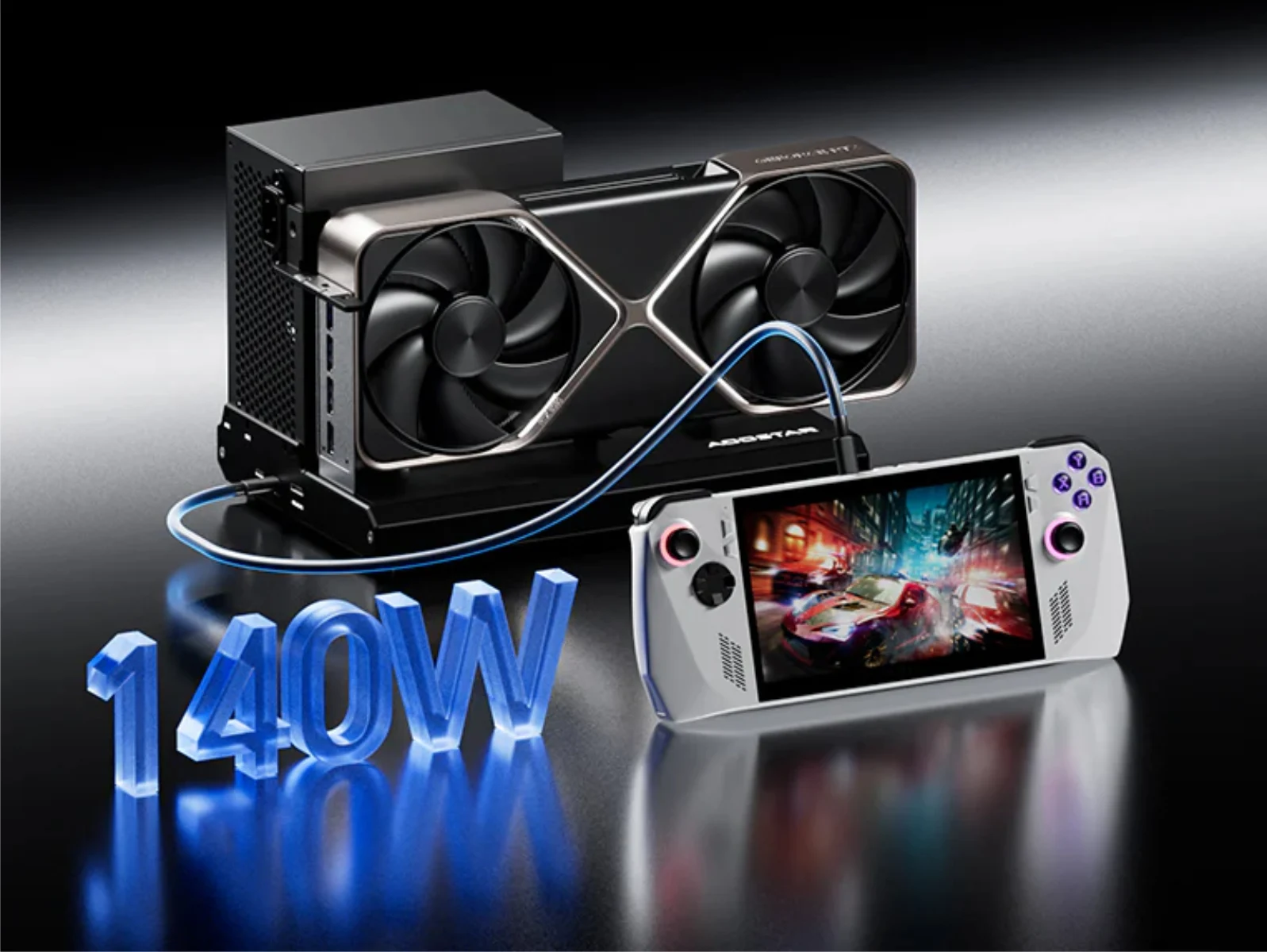
    3. The EG02 offers 140 W USB Power Delivery and 80 Gbps bandwidth through Thunderbolt 5, and 64 Gbps via OCuLink.
    4. Pre-sales for the EG02 will start at 11:07 UTC on November 15, initially priced at $219.
    5. The price of the EG02 may rise to $299 after the pre-sale period ends.


    Aoostar has quietly shared its intentions to roll out a new eGPU dock worldwide. To give some background, the company began the month by introducing the EG01 for $99. This model bears a striking similarity to the Minisforum DEG1, which is currently priced at $99 on Amazon. The Aoostar EG01 also includes a mini-PC stand and a DC power port, allowing users to power a mini-PC using an ATX or SFX power supply.

    Similarities and Differences

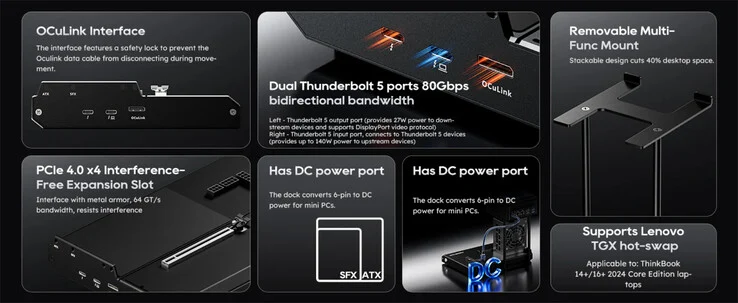
    At first glance, the Aoostar EG02 looks almost identical to the EG01. The new model keeps the same mounting system and DC power connector as its predecessor. It also follows the same design style set by the Minisforum DEG1 and Peladn’s Link S-1 or Link S-2. However, the notable change is that the Aoostar EG02 now features OCuLink and Thunderbolt 5 connectivity, similar to the Minisforum DEG2 and Peladn Link S-3.

    Performance Specs

    Consequently, the Aoostar EG02 is capable of delivering 140 W USB Power Delivery and can provide 80 Gbps bandwidth through Thunderbolt 5, along with 64 Gbps via OCuLink. It’s important to mention that while Thunderbolt 5 lags behind OCuLink concerning raw performance, the difference is much smaller than that seen with Thunderbolt 3, Thunderbolt 4, or USB 4. Pre-sales for the Aoostar EG02 are scheduled to commence at 11:07 UTC on November 15. Initially, the eGPU dock will be priced at $219, but this price could increase to $299 once the pre-sale period concludes.

    Source:
    Link


  • AMD Ryzen AI 9 HX 370 Machenike Mini GTR Mini-PC with USB4

    AMD Ryzen AI 9 HX 370 Machenike Mini GTR Mini-PC with USB4

    Key Takeaways

    1. Machenike has updated its Mini GTR mini-PC to feature AMD’s Strix Point architecture with the Ryzen AI 9 HX 370 APU.
    2. The Mini GTR includes a Radeon 890M integrated GPU, allowing it to run many AAA titles at 1080p on low to medium settings.
    3. Connectivity options include a USB4 port, 2.5 Gigabit Ethernet, six USB 3.2 Gen1 Type-A ports, and two dedicated video outputs.
    4. The mini-PC is compact, measuring 128 x 128 x 43.1 mm and weighing about 650 g, with upgradeable RAM and storage options.
    5. The Mini GTR is available in China for CNY 6,999 (around $986), with global launch details to be announced later.


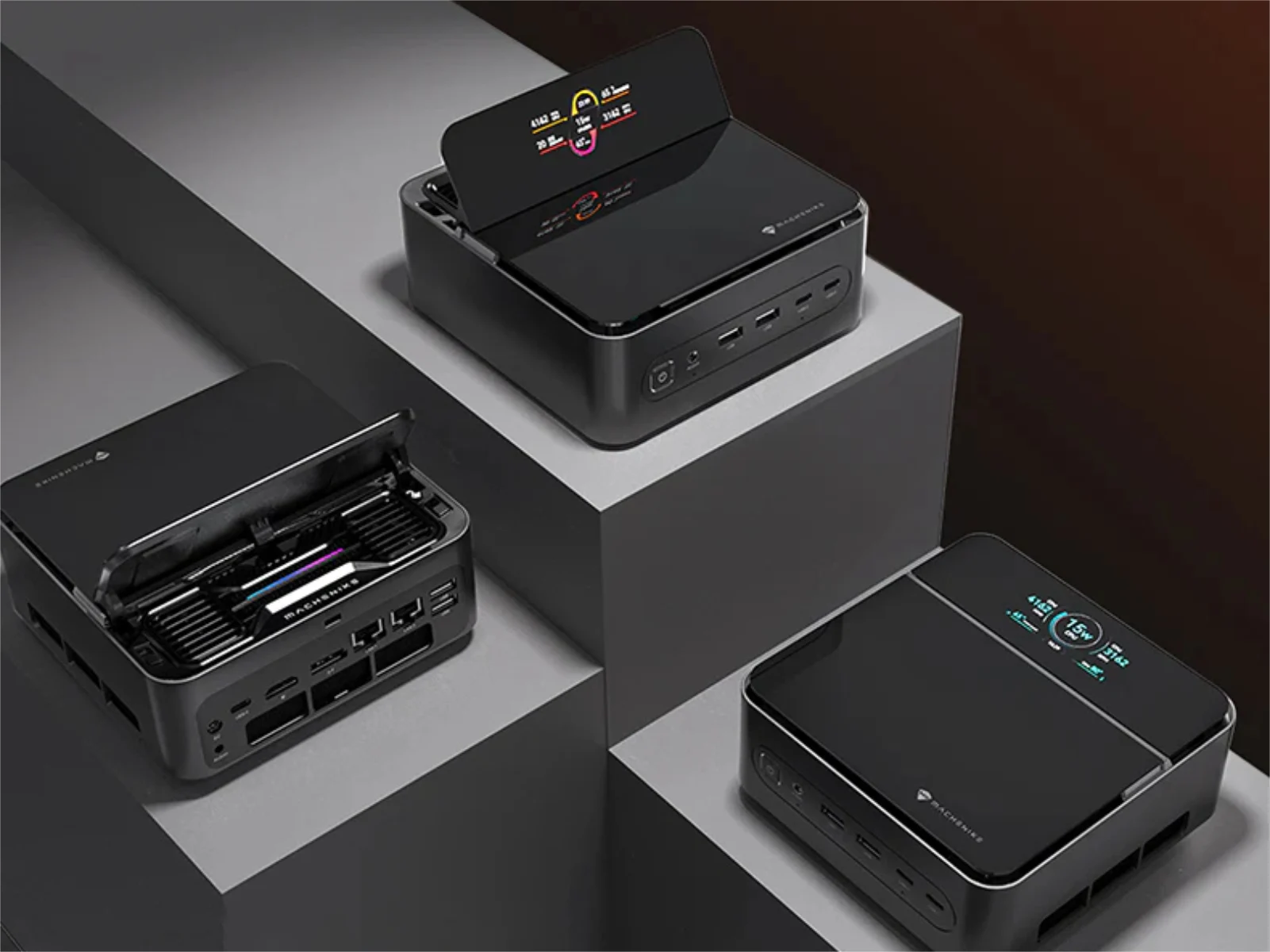
    Machenike has refreshed its Mini GTR mini-PC after recently launching the GTS featuring Intel’s Arrow Lake-H. Interestingly, the GTS is also expected to have a complete worldwide release, which we have discussed in another article. Regarding the Mini GTR, Machenike already offers it with Hawk Point APUs like the Ryzen 7 8745HS, currently priced at $649 on Amazon.

    Upgraded Architecture

    Now, the firm has transitioned its AMD-focused mini-PC to utilize AMD’s Strix Point architecture, aiming to compete more effectively with the GTS in terms of CPU and GPU capabilities. Specifically, the Mini GTR now comes with the Ryzen AI 9 HX 370, a 4 nm APU featuring 4 Zen 5 CPU cores and 8 Zen 5c CPU cores, along with the Radeon 890M integrated GPU. With a power supply of up to 70 W, the Radeon 890M should be able to handle many AAA titles at 1080p with settings on low to medium.

    Connectivity Features

    For those interested in an eGPU setup, a USB4 port is available. Additionally, this mini-PC is equipped with 2.5 Gigabit Ethernet, six USB 3.2 Gen1 Type-A ports, and two dedicated video outputs, all housed in a compact 0.74-litre case measuring 128 x 128 x 43.1 mm and weighing about 650 g. Furthermore, the Mini GTR includes upgradeable SO-DIMM RAM and M.2 2280 storage options. Currently, Machenike offers the Mini GTR with a Ryzen AI 9 HX 370, 32 GB of RAM, and 1 TB of storage for CNY 6,999 (around $986) in China. Although precise launch details for other regions are not yet available, Machenike has listed the Mini GTR on its global website.

    JD.com via ITHome

    Source:
    Link


  • Machenike GTS Mini-PC Global Release with Arrow Lake CPUs, 128GB RAM

    Machenike GTS Mini-PC Global Release with Arrow Lake CPUs, 128GB RAM

    Key Takeaways

    1. Machenike introduced the GTS mini-PC featuring Intel’s Core Ultra 9 285H processor with a built-in display in China, and plans to release it globally.
    2. The GTS Mini also offers a version with the Core Ultra 5 225H processor, which is 15% slower than the Core Ultra 9 285H.
    3. The GTS will be available as a barebones system without RAM or storage, allowing customization up to 128 GB of RAM and 2 TB of storage.
    4. The mini-PC includes multiple ports and has compact dimensions of 147 x 147 x 61 mm.
    5. Pricing information is currently unavailable, but the GTS is expected to be sold on Amazon and other retail platforms.


    Machenike introduced its GTS mini-PC in China earlier this month, featuring Intel’s Core Ultra 9 285H processor along with a built-in display. It now appears that the brand is gearing up to release the same mini-PC on a global scale. Additionally, the company has several SKUs listed on its website that were not part of the initial Chinese launch.

    Performance Details

    The GTS Mini comes equipped with the Core Ultra 5 225H, a 14-core Arrow Lake-H processor that lags about 15% behind the Core Ultra 9 285H in benchmark tests. However, the Core Ultra 9 285H is also expected to offer a version with 16 CPU cores and a more powerful Arc Graphics 140T integrated GPU.

    Configurations and Features

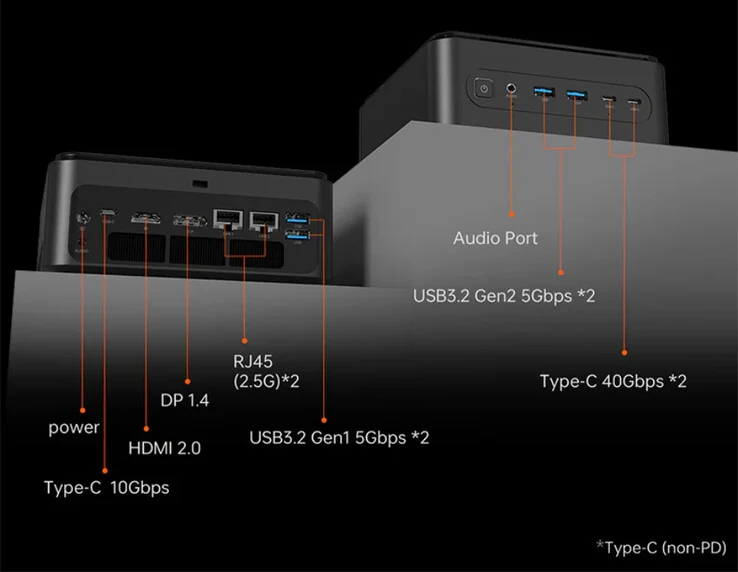
    Machenike plans to sell the GTS as a barebones system, which means it will not include RAM or storage, in order to compete with similar products like the GMKtec Evo-T1 (currently priced at $999 on Amazon), which we reviewed earlier this year. On the other hand, the mini-PC can be configured with up to 128 GB of RAM and 2 TB of storage through SODIMM and M.2 2280 slots. As shown in the image below, the GTS is also equipped with numerous ports, despite its compact dimensions of 147 x 147 x 61 mm.

    Pricing and Availability

    At the moment, Machenike has not provided any pricing information for the GTS SKUs. Nonetheless, we anticipate that the company will start offering its Arrow Lake-H powered mini-PC through Amazon and other retail platforms, rather than just on its own website. For more details, please refer to the product listing for the Machenike GTS.

    Source:
    Link


  • Qualcomm Dragonwing IQ-X: SoCs with Windows 11 & NPU Power

    Qualcomm Dragonwing IQ-X: SoCs with Windows 11 & NPU Power

    Key Takeaways

    1. Qualcomm has introduced new Dragonwing IQ-X SoCs for industrial PCs, designed to connect various devices for network control.
    2. The processors support local enhancement of AI models with a peak AI performance of 45 TOPS.
    3. Dragonwing IQ-X SoCs can operate in harsh environments, with a temperature range of -40°C to 105°C.
    4. The series features 8 to 12 Qualcomm Oryon performance cores and is compatible with Windows 11 IoT Enterprise LTSC.
    5. An evaluation kit will be available for initial assessments, with product releases expected in the coming months.


    Qualcomm has revealed new processors tailored for makers of industrial PC systems. These PCs are designed to connect a variety of devices to a network, enabling control of a valve in a plant straight from the control room. The newly introduced Dragonwing IQ-X SoCs aim to not just receive and manage data, but also to facilitate local enhancement of AI models. In this context, a peak AI performance of 45 TOPS has been stated, which is a common figure for NPUs that are integrated into processors.

    Performance in Harsh Conditions

    The Dragonwing IQ-X series SoCs are crafted to operate in challenging environmental situations, functioning within a temperature range of -40°C to 105°C, ideal for hot factory settings. Each unit features between 8 to 12 Qualcomm Oryon performance cores. As expected, the Dragonwing IQ-X series utilizes the ARM architecture and is compatible with Windows 11 IoT Enterprise LTSC.

    Compatibility and Future Plans

    Moreover, the Dragonwing IQ-X series will work with current carrier boards and specific compute modules. An evaluation kit will be offered, which will allow for initial implementation assessments. While Qualcomm has not disclosed a precise launch date, the first products are anticipated to be released in the upcoming months.


  • GMKtec Launches M8 Mini-PC with USB4 eGPU Support Under $350

    GMKtec Launches M8 Mini-PC with USB4 eGPU Support Under $350

    Key Takeaways

    1. GMKtec has launched the M8 mini-PC worldwide, following its showcase in China.
    2. The M8 resembles the EVO-X1 in design but has lower CPU and GPU capabilities.
    3. Key features of the M8 include OCuLink, USB4, dual USB 3.2 Type-A ports, and a 3.5 mm audio jack.
    4. The M8 uses a Ryzen 5 Pro 6650H processor, which is less powerful than the Ryzen AI 9 HX 370 in the EVO-X1.
    5. The starting price of the M8 is $329.99, with a $150 launch discount, and it offers options for 16 GB RAM and 512 GB or 1 TB storage.


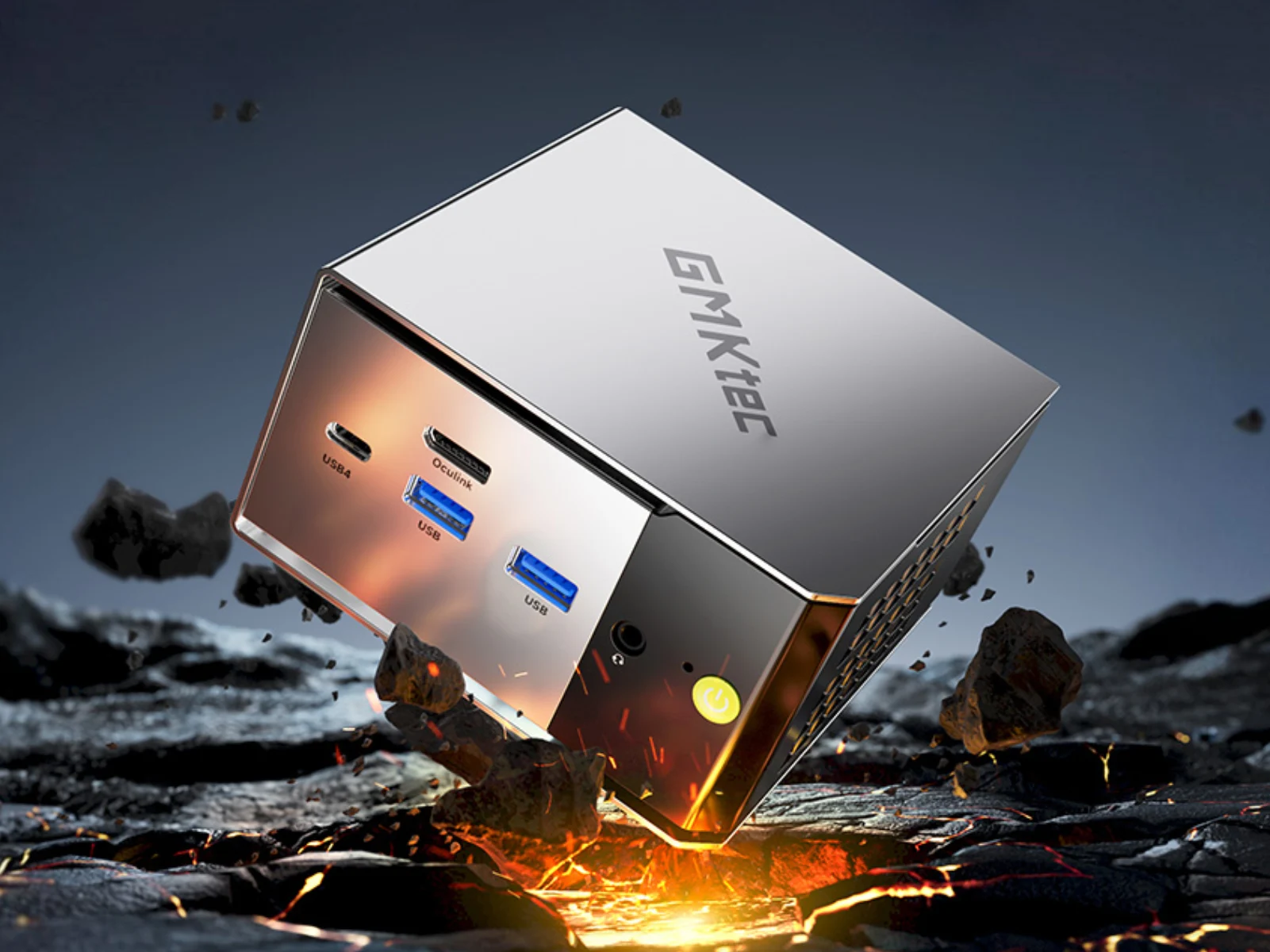
    GMKtec has officially release its M8 mini-PC worldwide, after showcasing it in China earlier this month. At first glance, the GMKtec M8 looks just like the EVO-X1, which the company introduced at the end of last year (currently priced at $799.98 on Amazon). However, the M8 doesn’t match the CPU and GPU capabilities of the EVO-X1, and this difference is seen in the price of the M8 at launch.

    Similarities Noted

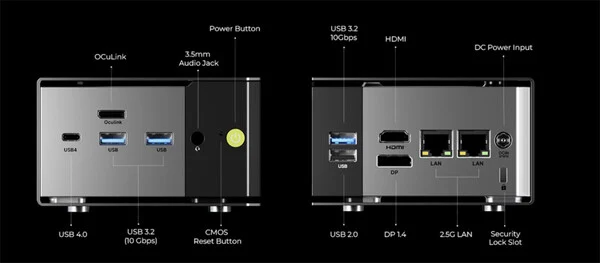
    Focusing on the similarities, the GMKtec M8 features front-facing OCuLink, USB4, and dual USB 3.2 Type-A ports. As depicted in the images above and below, these ports are accompanied by a 3.5 mm audio jack, a CMOS reset button, and a power button, which is situated right at the edge on the right side. Additionally, GMKtec has incorporated a floating metal frame as a reference to the existing EVO-X1 design.

    Performance Differences

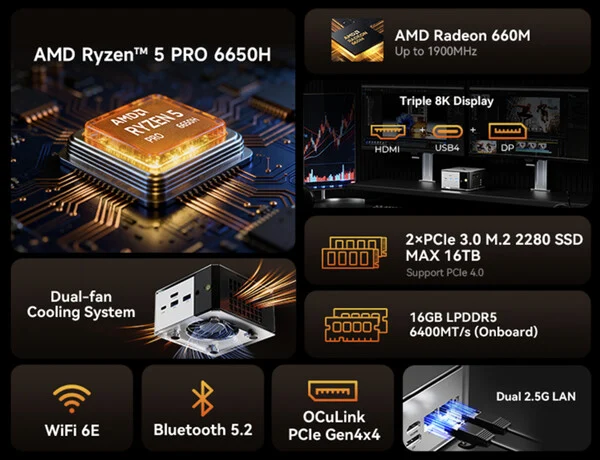
    On the other hand, GMKtec has opted for the Ryzen 5 Pro 6650H for the M8, replacing the Ryzen AI 9 HX 370 that is found in the EVO-X1. The 6 nm APU, with its six Zen 3+ cores and Radeon 660M iGPU, falls significantly short compared to the Ryzen AI 9 HX 370 in CPU performance, and even more so in gaming scenarios. Consequently, the GMKtec M8 is priced starting at $329.99, featuring 16 GB of RAM and 512 GB of storage. This is said to be a $150 launch discount, but this model is only $30 less than a version with 1 TB of storage. For more information, visit GMKtec’s official website.

    Source:
    Link