Category: Computers

  • ZSA Voyager: Low-Profile Mechanical Keyboard with Multi-Touch Pad

    ZSA Voyager: Low-Profile Mechanical Keyboard with Multi-Touch Pad

    Key Takeaway

    – Magnetic Navigator Trackpad for ZSA Voyager (and Moonlander) with left/right-handed options; $99 (or $89 without the magnet) and can attach alongside the Navigator Trackball.
    – Offers multi-touch gestures with OS-level support on Windows and Linux; MacOS requires a background app; gestures limited to two-finger swipes.
    – Lacks full Oryx configurator customization (no layer-switching or mouse-layer mapping) but remains compatible with community shells/mods thanks to the magnetic shell.
    – Includes all cables (two braided TRRS), carrying case, and magnetic shell; positioned as a premium, enthusiast accessory despite higher price vs some split keyboards.

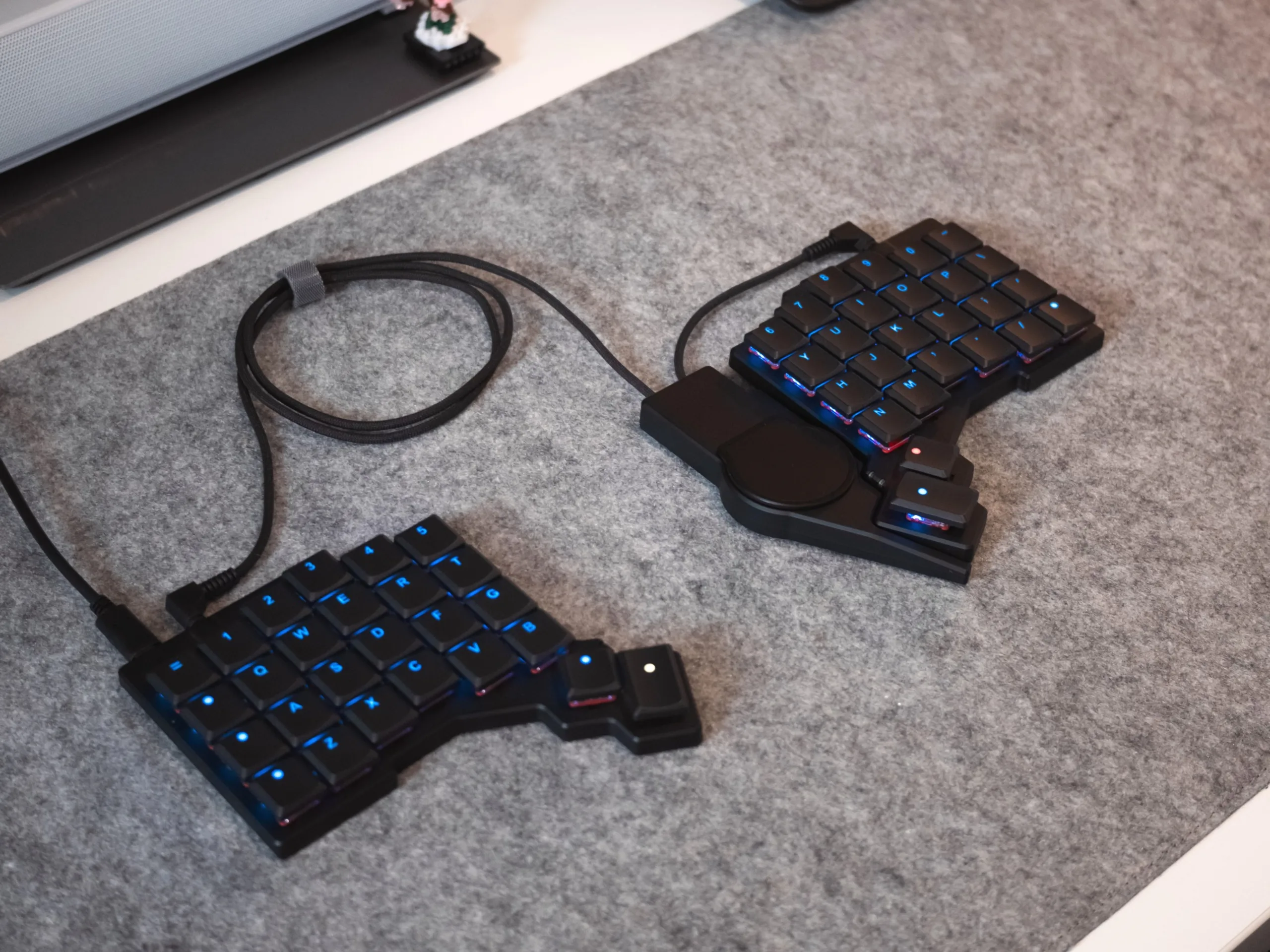
    While we didn’t touch on it much in our review of the ergonomic, low-profile ZSA Voyager mechanical keyboard, the ZSA Navigator trackball was one of the highlights of that keyboard. The navigator gives you a convenient way to use GUI-based programs without removing your hands from the keyboard and reaching for a mouse — a reach that can negatively impact posture and ergonomics. Now, ZSA has officially launched the Navigator Trackpad accessory for the Voyager and Moonlander mechanical keyboards, and although the hardware is based on the same Cirque designs as can be found in the likes of the MoErgo Go60 (which we are in the process of testing) ZSA has put in a lot of work to make the Navigator Trackpad unique.

    Launch and purpose

    The ZSA Navigator Trackpad is available from the ZSA online shop for $99 — or $89 without the magnetic attachment — in both black and white and for both left- and right-handed attachment to the ZSA Voyager keyboard. While this does make it more expensive than even some standalone split mechanical keyboards, like the highly affordable Yivu Corne V4, priced at $89.99, the Navigator Trackpad has a lot going for it for enthusiast buyers.

    Attachment and practicality

    The Navigator Trackpad magnetically attaches to the Voyager keyboard using the same plastic shell as its trackball equivalent, making it possible to have both the trackball and trackpad attached to the Voyager at the same time. This may seem silly, but having a mouse input on each hand means you can do things like assign one side to mouse navigation and the other exclusively to, for example, scrolling, or panning in specific apps.

    Gestures and OS support

    The Navigator Trackpad is hardly the first trackpad to come on an ergonomic mechanical keyboard — one can be found on the Naya Create and Beekeeb Toucan as well as on the MoErgo Go60 we’re in the process of reviewing. What sets the ZSA’s touchpad apart, though, is that it features multi-touch gesture support with integration for OS-level customisation on both Linux and Windows. MacOS will require running a background app to enable gesture support, but once that is running, it also supports full multi-touch gestures. The multi-touch gestures are limited to two-finger swipes, however, so that’s a limitation to be aware of, although it’s also more than likely most people won’t be able to comfortably put more than two fingers on the small tracking surface.

    Configurator limitations

    The trackpad doesn’t offer the same level of customisation in ZSA’s Oryx configurator as the trackball, such as switching functions with layer keys, using keyboard keys to emulate mouse clicks, or having the trackpad switch to a specific mouse layer when used, because ZSA says that these features are not necessary thanks to the touchpad gestures. Since the Navigator Trackpad uses the same magnetic shell as the trackball, it is fully compatible with the ecosystem of community-designed shells and mods, which offer different mounting locations and carrying cases.

    Cables and extras

    Like the Navigator Trackball, the trackpad comes with all the cables needed to connect the accessory to whichever ZSA keyboard it will be connected to, including two braided TRRS cables, a purpose-built carrying case, and the magnetic shell.

    Sources

  • Foxconn ransomware attack: Apple and NVIDIA data stolen

    Foxconn ransomware attack: Apple and NVIDIA data stolen

    Key Takeaway

    – Nitrogen ransomware claims 8TB/11M stolen files and hit Foxconn’s Mount Pleasant, WI, and Houston, TX facilities; production is resuming.
    – Alleged stolen data include confidential instructions, internal project docs, circuit layouts tied to Apple, Nvidia, Intel, Google, Dell, and AMD; Foxconn has not confirmed data theft.
    – Nitrogen operates a double-extortion model (encrypts data and threatens public release); a programming error in Nitrogen’s ESXi encryptor could render data unrecoverable even if ransom is paid.
    – This marks Foxconn’s third major ransomware incident in recent years (DoppelPaymer 2020; LockBit 2022/2024), highlighting the risk to large, multi-site manufacturers.

    Foxconn has confirmed a ransomware attack on several North American factories after the Nitrogen ransomware group claimed on May 11 to have stolen 8TB of data comprising more than 11 million files. The attack affected facilities in Mount Pleasant, Wisconsin, and Houston, Texas, forcing some employees to fall back on pen and paper and sending others home until network access was restored.

    Ransomware claim and immediate impact

    “The cybersecurity team immediately activated the response mechanism and implemented multiple operational measures to ensure the continuity of production and delivery,” a Foxconn spokesperson told BleepingComputer. “The affected factories are currently resuming normal production.”

    Company scale and customer base

    Foxconn is the world’s largest contract electronics manufacturer, with over 900,000 employees across 240 facilities in 24 countries and reported revenues above $260 billion in 2025. Its customer list reads like a who’s who of the tech industry: Apple, Nvidia, Intel, Google, Dell, AMD, Microsoft, and Sony all rely on it for hardware production.

    • Apple
    • Nvidia
    • Intel
    • Google
    • Dell
    • AMD
    • Microsoft
    • Sony

    Stolen data and Nitrogen group

    That customer list is exactly what Nitrogen is using as leverage. The group claims the stolen files contain confidential instructions, internal project documentation, circuit board layouts, and technical drawings tied to projects at Apple, Nvidia, Intel, Google, Dell, and AMD. Sample files have been posted on Nitrogen’s dark web leak site. Foxconn has not confirmed whether customer data was actually taken and declined to answer specific questions on the subject.

    Ransomware mechanics and risk

    Nitrogen has been active since 2023 and operates as a double-extortion group: it encrypts victim files and simultaneously threatens to publish stolen data unless a ransom is paid. The group is believed to be built on code from the leaked Conti 2 ransomware builder and is suspected of having links to the ALPHV/BlackCat ecosystem. There is a significant problem with paying the ransom, however.

    Coveware warning and data loss risk

    In February 2026, Coveware researchers published a warning that a programming error in Nitrogen’s ESXi encryptor causes it to encrypt all files with the wrong public key, making file recovery impossible even if the victim pays. This means Foxconn faces the prospect of losing access to encrypted data permanently, regardless of what it decides to do with the ransom demand.

    Past incidents and pattern

    Nitrogen made its name targeting companies in construction, financial services, manufacturing, and technology. Foxconn is its highest-profile victim to date. The Mount Pleasant facility primarily produces televisions and data servers rather than Apple consumer devices, which may limit the impact on Apple-specific product development. However, the Houston facility’s product scope has not been detailed publicly. This is at least the third major ransomware attack on Foxconn facilities in recent years. In December 2020, the DoppelPaymer group hit its Ciudad Juárez facility in Mexico, encrypting up to 1,400 servers, destroying 20 to 30TB of backups, and demanding $34 million in bitcoin. In 2022 and 2024, LockBit targeted Foxconn subsidiary Foxsemicon Integrated Technology.

  • Intel Razor Lake-AX vs AMD Strix Halo with 32 Xe3 cores

    Intel Razor Lake-AX vs AMD Strix Halo with 32 Xe3 cores

    Key Takeaway

    – Razor Lake is expected to launch in 2027.
    – Razor Lake-HX is rumored to have integrated RAM, increasing memory bandwidth but raising cost.
    – The iGPU is said to use 16 or 32 Xe3 cores, with the top model boasting roughly 3x more compute units than the Arc B390.
    – Benchmarks allegedly show Razor Lake-HX beating the RTX 5060 laptop GPU with RT on and more than doubling the performance of the Radeon 8060S; Medusa Halo is expected to be available by launch.
    – The chips are projected to run most games smoothly at 1080p with high to max details without a discrete GPU.

    Intel Razor Lake is expected to come onto the market in 2027. Over the past few days, there have already been rumors circulating that Intel Razor Lake-HX will have integrated RAM, similar to Lunar Lake. Although this makes the chips more expensive, it also enables a higher memory bandwidth, which benefits not least the GPU integrated into the chip.

    Razor Lake-HX memory and cores

    For this reason, high-performance APUs such as the Apple M5 Max or the AMD Ryzen AI Max+ 395 also rely on integrated RAM. The usually extremely reliable leaker @jaykihn0 has now provided further information on the features of Razor Lake-HX. According to this, the chips will be equipped with a GPU with either 16 or 32 Xe3 cores. Compared to the fastest iGPU from Intel Panther Lake, the Arc B390, the top model has has exactly three times as many compute units. While no details on the clock rates or TDP are yet known, GPU cores generally scale relatively linearly, meaning that the performance can already be estimated based on benchmarks of the Arc B390.

    Benchmarks and comparisons

    Our GPU benchmarks indicate that the Intel Razor Lake-HX iGPU can outperform the Nvidia GeForce RTX 5060 laptop GPU even with ray tracing enabled. Compared to the Radeon 8060S from AMD Strix Halo, Intel’s next-generation flagship iGPU should achieve more than double the performance, although AMD’s next flagship APU, Medusa Halo, should already be available by the time this chip is launched. The performance of Intel Razor Lake-HX should therefore be sufficient to run most games smoothly in 1,080p resolution with high to maximum level of detail, without the need for a dedicated graphics chip.


    Sources
  • Acer Swift 16 Remains Cool Under Heavy Stress

    Acer Swift 16 Remains Cool Under Heavy Stress

    Key Takeaway

    1. The Acer Swift 16 efficiently manages heat with a dual-fan cooling system and strategic air intake design, keeping the chassis cool during use.
    2. The laptop’s processor can briefly peak at 68 watts, with temperatures stabilizing around 75 °C during sustained activity, and minimal heat affects the exterior, though OLED longevity may be impacted over time.
    3. The cooling system generates moderate noise levels, with options for quieter operation modes suitable for different usage environments.

    Performance and Cooling Mechanisms

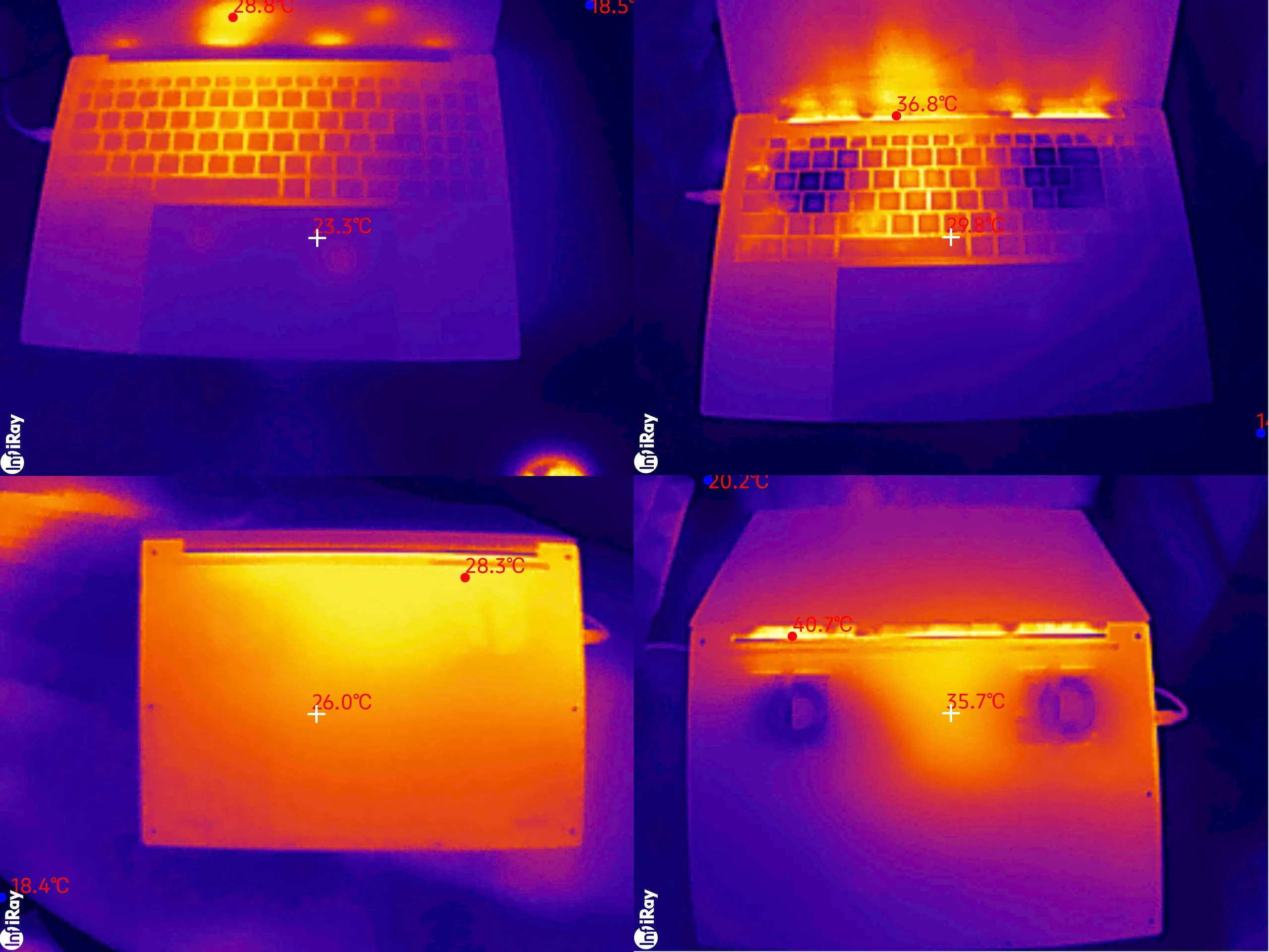
    In our expert review, the latest Acer Swift 16 shows itself to be quite capable with its Panther Lake processor. Despite executing demanding tasks, it manages to stay pretty cool owing to a dual-fan cooling setup tucked inside its slender aluminum frame. This setup efficiently manages heat from the internal components. Interestingly, the laptop’s air intake system is quite clever, with fresh air coming in both through the keyboard gaps at the top and the bottom. Such an airflow strategy is usually only found in high-end gaming laptops and helps keep the palm rests nice and cool during extended use.

    Heat Management and System Stability

    During intense load testing, the power management dynamics reveal some noteworthy behavior. The processor can briefly peak around 68 watts, which causes the cores to reach temperatures as high as 99 °C. Shortly thereafter, the system settles into a more consistent power draw of around 45 watts, and the temperature drops to a safer 75 °C. The integrated graphics card remains quite steady at temperatures between 68 and 70 °C. It’s important to mention that only a tiny bit of this internal heat makes its way to outside surfaces. A key design consideration is the placement of the exhaust vents which are aimed downward towards the OLED display, a factor that could influence the longevity of the display over time, especially considering high temperatures can affect organic light-emitting diodes (OLEDs).

    Noise Levels and Operation Modes

    When operating under maximum stress, the cooling fans make quite a bit of noise, yet it still remains within what’s typical for machines in this performance tier. At full load, measured about 48.4 dB(A) from a distance of 15 cm, the fans produce a sound concentrated mostly in the lower frequency range from 2,000 Hz to 6,000 Hz. This helps avoid annoying high-pitched sounds that can be bothersome. For less intense usage, you can opt for different cooling modes — the regular mode brings noise down to 39 dB(A), and there’s a silent mode at just 27 dB(A). These quieter modes are perfect for casual office work or simple tasks where minimal noise is preferable, making the Swift 16 quite versatile depending on your needs.

  • Lenovo Unveils 14-Inch Laptop with Intel Core Ultra X9 378H Processor

    Lenovo Unveils 14-Inch Laptop with Intel Core Ultra X9 378H Processor

    Key Takeaway

    1. The Intel Core Ultra X9 378H is a variant of the X7 368H without vPro features, positioned between the X7 368H and X9 388H in the Panther Lake lineup.
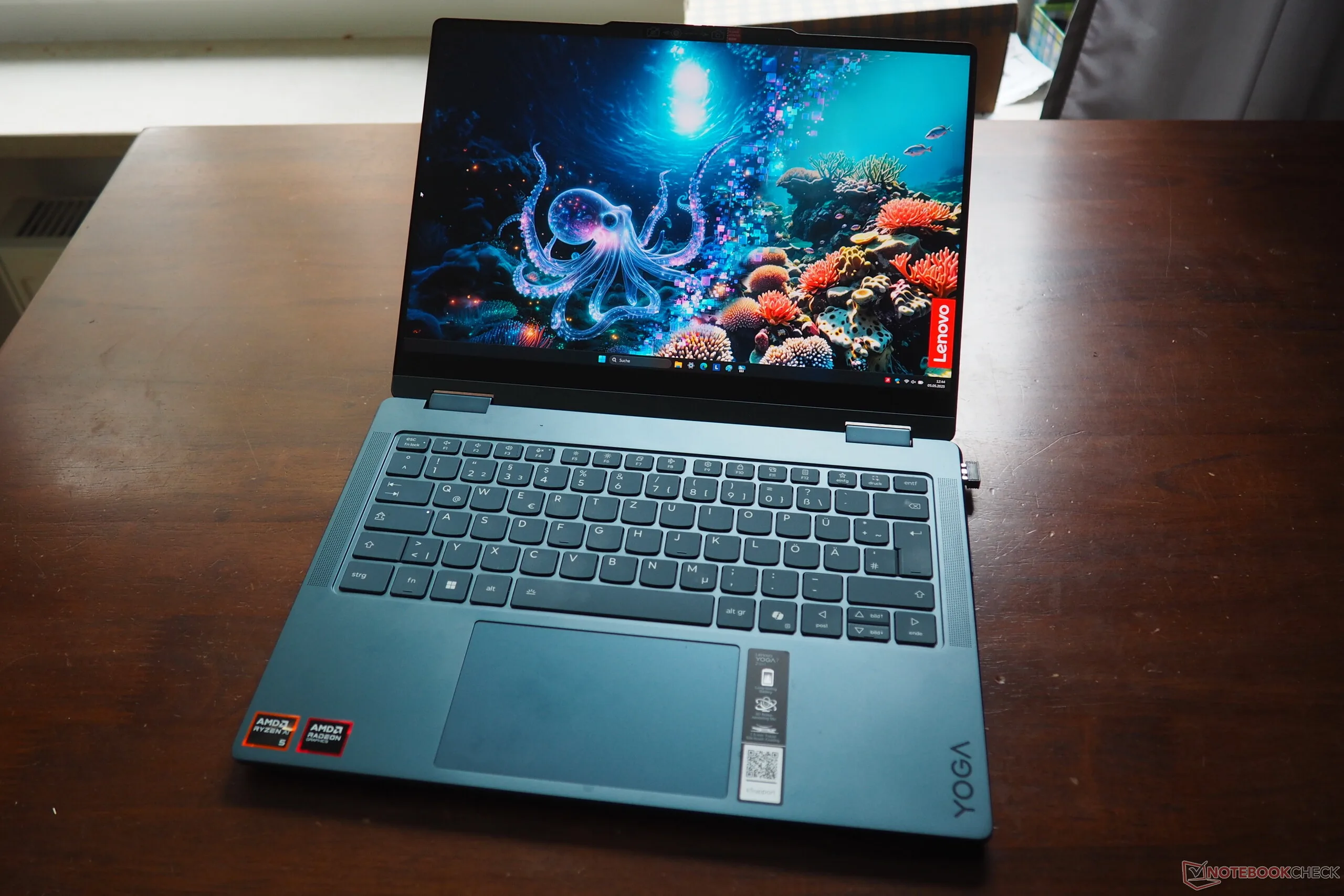
    2. Lenovo has updated the Yoga Air 14 Ultra Aura in China with the Core Ultra X9 378H, indicating upcoming availability.
    3. The processor will be paired with 32 GB of RAM and 2 TB of storage, but pricing details have not been disclosed yet.

    Introduction to Intel’s Latest Core Ultra X9 378H

    It’s been just about a month since Intel rolled out the new Core Ultra X9 378H processor. It flew under the radar, mainly because Intel didn’t make much noise about its launch. This chip is sandwiched between the Core Ultra X7 368H and Core Ultra X9 388H in the Panther Lake family. Back then, there was no clear info from either Intel or laptop makers about when the new processor would actually make its debut in their devices.

    Revealing the Technical Details

    Intel’s clarifications revealed that the Core Ultra X9 378H is pretty much the same as the Core Ultra X7 368H, but it leaves out the vPro enterprise features. In simple terms, it’s a more streamlined, perhaps slightly less business-oriented version. Recently, a notable update was seen in China, where Lenovo started updating their Yoga Air 14 Ultra Aura with this fresh Panther Lake processor.

    Expected Pricing and Specs

    At this point, Lenovo haven’t announced what they will charge for the X9 378H device yet. They’ve only said that the new laptop will be outfitted with 32 GB of RAM and a sizeable 2 TB of storage space. Judging from the model, the Yoga Air 14 Ultra Aura seems like China’s local answer to the Yoga Slim 7i Ultra Aura Edition.

    Possible Future Releases

    Given the current trend, it wouldn’t be surprising at all if Lenovo quietly upgrades the Slim 7i Ultra Aura with the Core Ultra X9 378H later this year. Keep in mind, the Yoga Slim 7i Ultra Aura Edition is already available worldwide, replacing the older Lunar Lake-based Slim 7i Ultra Aura, which can be found at around $1,199 on Amazon. It looks like more options for powerful, portable laptops are coming soon, and the X9 378H will be a part of that wave.


    Sources

  • Lenovo Yoga 7 Laptop 31% Off with OLED Display and AMD Ryzen 7

    Lenovo Yoga 7 Laptop 31% Off with OLED Display and AMD Ryzen 7

    Key Takeaway

    1. The Lenovo Yoga 7 2-in-1 laptop is currently discounted by $390, bringing its price to just under $850, offering good value for a well-equipped device.
    2. It features a capable AMD Ryzen AI 7 350 APU, 16 GB RAM, and a 1 TB SSD, with a 14-inch OLED display covering nearly 100% of the DCI-P3 color gamut.
    3. The laptop has a sleek design, decent performance for everyday tasks, and notable features such as WiFi 7, Bluetooth 5.4, and a variety of ports including HDMI and dual USB-C.
    4. The display’s brightness peaks at around 360 nits with a 60 Hz refresh rate, and the memory is soldered, limiting future upgrades to the SSD.

    Thanks to a sale on Lenovo’s official US store, the yoga 7 2-in-1 14-inch laptop is now available at a discount of 390 dollars, making its price just below 850 dollars. This deal provides an opportunity for consumers to get a capable convertible laptop without breaking the bank.

    Specifications And Performance

    The model spotted features an AMD Ryzen AI 7 350 APU with 8 cores, paired with a substantial 16GB of LPDDR5X-7500 RAM. Storage is provided via a 1TB SSD for faster access and ample space for files. Its display is a 14-inch OLED with a resolution of 1200p, offering vibrant visuals. The Ryzen APU, with its 4 Zen 5 cores plus 4 Zen 5 C cores, delivers balanced performance; in multi-core tests, it even competes with a more powerful Apple M3 Pro. There’s also an option with an Intel Core Ultra 5 258V CPU, which is slower by over 35% showing the difference in performance.

    Graphics and Usage

    It might be no surprise that this laptop doesn’t feature a dedicated GPU. Instead, it uses an RDNA 3.5 Radeon 860M iGPU which is enough for basic gaming and non-intensive graphics tasks. This makes the Yoga 7 sufficiently powerful for everyday use, like browsing, office work, and light photo editing. Based on the reviews, the overall performance is quite satisfying, with the system running quietly and without excessive heat, which means it remains comfortable during extended use.

    Display and Expandability

    The display is one of its highlights, with a resolution of 1920×1200 pixels and nearly full DCI-P3 color coverage, delivering good color accuracy straight out the box. However, the brightness maxes at just around 360 nits, which may not suffice in bright environments. The 60 Hz refresh rate can feel somewhat sluggish compared to higher-refresh displays, especially for gaming or scrolling. The touch functionality adds convenience for casual use. The RAM, however, is soldered to the motherboard, so it cannot be upgraded later, but the 1TB SSD can be swapped out, though the M.2 2242 slot limits the size to smaller cards—2280 SSDs are not compatible.

    Additional Features And Final Thoughts

    • Connectivity options include Bluetooth 5.4 and WiFi 7, which ensure fast wireless connections.
    • Security and camera features include a 5 MP IR front camera with a privacy shutter.
    • Port selection contains HDMI, microSD card slot, and two USB-C ports supporting 10 Gbps data transfer, DisplayPort, and Power Delivery.

    At this discounted price, the Lenovo Yoga 7 2-in-1 14″ gives you a lot. Potential buyers should hurry, as stock may run out soon, and it’s always good to check detailed reviews before making the decision. Remember to use the coupon code “MAYSAVINGS” during checkout for the discount.


    Sources

    • AMD Launches Ryzen 9 PRO 9965X3D Processor Worldwide

      AMD Launches Ryzen 9 PRO 9965X3D Processor Worldwide

      Key Takeaway

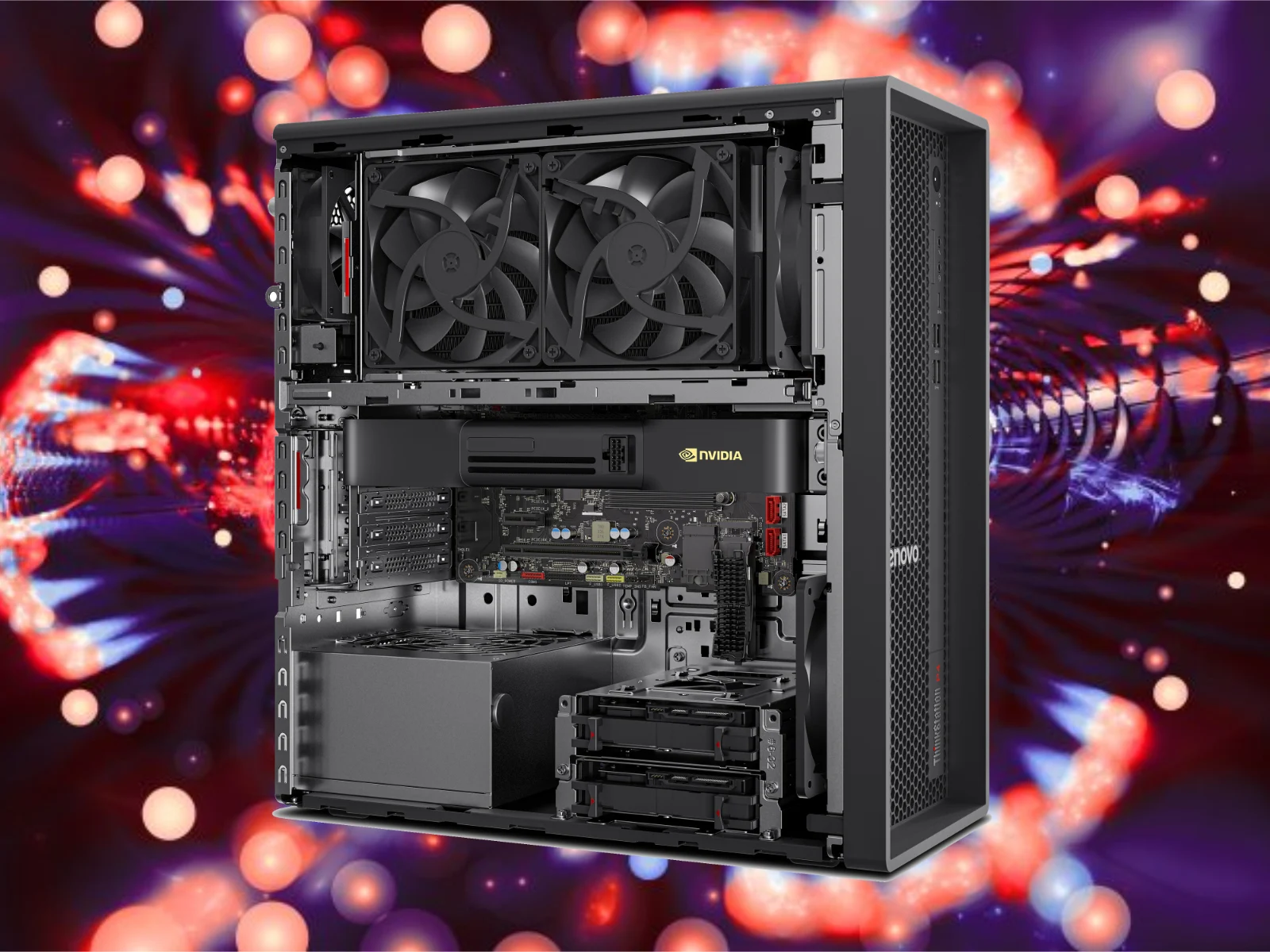
      1. Lenovo launched the ThinkStation P4 desktop featuring AMD’s Ryzen 9 PRO 9965X3D processor and Nvidia RTX Pro 6000 Blackwell GPU.
      2. The Ryzen 9 PRO 9965X3D includes 3D V-Cache and was confirmed by AMD with full specifications, but is not set to launch until July 15, 2026.
      3. The ThinkStation P4 with this processor will be available a month earlier, in June, according to Lenovo, ahead of AMD’s official release date.
      4. The Ryzen 9 PRO 9965X3D offers lower boost speeds and less L3 cache compared to other Ryzen 9000 series processors like the Ryzen 9 9950X3D and 9950X3D2.

      Lenovo’s Latest ThinkStation P4: Power packed with AMD Ryzen 9 PRO 9965X3D

      Lenovo has launched a brand new desktop called the ThinkStation P4. This machine is powered by AMD’s Ryzen 9 PRO 9965X3D, and its design is quite compact with a size of 30 litres. It comes with impressive specs, like you can get up to 256 GB of DDR5 RAM, which is quite a lot for most users. The GPU uses Nvidia’s RTX Pro 6000 Blackwell Workstation Edition, offering a massive 96 GB VRAM. This combo makes the ThinkStation P4 very suitable for demanding professional tasks.

      Special Features and Design

      Designed for power and performance, the ThinkStation P4 is ideal for professionals needing strong computing capabilities. The size and chassis design allow for easy upgrades and better heat management, making it more reliable during intensive workloads. As per the launch details, this desktop is set to deliver top-tier performance with its high-memory capacity and professional-grade GPU, making it a standout in its category. Also, Lenovo made sure to include the latest tech features that maximize productivity for creative teams and high-power users alike.

      AMD’s Ryzen 9 PRO 9965X3D: The New Challenger

      Alongside Lenovo’s product, AMD officially announced its new Ryzen 9 PRO 9965X3D processor. This CPU is part of AMD’s Granite Ridge family and it features 3D V-Cache technology, which enhances gaming and professional performance significantly. Rumors about this processor had been swirling since mid-January, but now AMD has openly confirmed its existence and shared detailed specs. It means users can now expect some of the latest features from AMD in this new chip.

      Performance Benchmarking

      The Ryzen 9 PRO 9965X3D is expected to stack up around other Ryzen 9000 series processors. It couldn’t quite match the boost clocks of other models like the Ryzen 9 9950X3D or the Ryzen 9 9950X3D2, which currently cost about $899. Also, it features 33% less L3 cache compared to the 9950X3D2, which might impact high-end gaming or intensive professional tasks. AMD states that this processor will be available starting July 15, 2026, but interestingly, Lenovo plans to have the ThinkStation P4 units on shelves a month earlier, giving users quick access to this powerful workstation.

      Summary

      • Lenovo ThinkStation P4 is a high-performance 30-litre desktop with up to 256 GB DDR5 RAM.
      • It pairs with Nvidia’s RTX Pro 6000 GPU with 96 GB VRAM, suitable for heavy-duty work.
      • AMD’s Ryzen 9 PRO 9965X3D featuring 3D V-Cache was announced with detailed specs, expected on July 15, 2026.
      • The processor offers competitive performance but falls behind in boost clock and cache size compared to other Ryzen 9000 chips.
      • Lenovo plans to make the ThinkStation P4 available earlier than AMD’s official launch date.

      Both companies are pushing forward with innovative tech, promising powerful tools for professionals and gamers alike, though some details are still eagerly awaited by the tech community.

      Sources
    • Lenovo Unveils New Desktop with 256GB RAM and 96GB VRAM

      Lenovo Unveils New Desktop with 256GB RAM and 96GB VRAM

      Key Takeaway

      1. Lenovo introduced new laptops (ThinkPad X13 Gen 7, L14 Gen 7, L16 Gen 3) and returning the ThinkStation P4 desktop workstation.
      2. The ThinkStation P4 features up to 256 GB DDR5 RAM, up to 48 TB storage, and supports high-end Nvidia RTX Pro 6000 graphics.
      3. It will be powered by an AMD PRO 675 chipset motherboard with Ryzen 9 PRO 9965X3D, supporting Windows, Linux, and Red Hat.
      4. The ThinkStation P4 is scheduled to launch in June 2026, with anticipated high pricing due to premium components.

      Lenovo’s Latest Processor & Laptop Innovations

      Earlier today, Lenovo discussed their new lineup of laptops with powerhouse processors, highlighting the ThinkPad X13 Gen 7, which will feature both AMD Ryzen 400 series and Intel Panther Lake CPUs. The company also rolled out the ThinkPad L14 Gen 7 and ThinkPad L16 Gen 3, offering options for diverse user needs. These laptops are aimed at professionals who need reliability and performance for everyday and demanding tasks alike.

      New ThinkStation P4 Desktop PC

      In the realm of high-performance desktops, Lenovo is back with the ThinkStation P4, a 30-litre tower made for serious workloads. It offers up to 256 GB of DDR5 RAM operating at 6,400 MT/s, placed across four DIMM slots for maximum expandability. Storage options are quite extensive, supporting up to 48 TB across three M.2 slots and 3.5-inch drive bays, perfect for large data sets or intensive applications. Power options include 500 W, 750 W, or 1,100 W supplies, capable of supporting high-end Nvidia RTX Pro 6000 Blackwell or Max-Q WorkStation GPUs.

      Motherboard & Processor Details

      The ThinkStation P4 will use an AMD PRO 675 chipset motherboard, optimized to run the Ryzen 9 PRO 9965X3D processor. This CPU is tailored for demanding multitasking and professional workloads, with full compatibility with Windows 11 Pro, Ubuntu Linux, and Red Hat Enterprise Linux, making it versatile for various operating environments. The specifications indicate a focus on performance and flexibility suited for professional users and enterprise environments.

      Expected Release & Pricing Insights

      Set to launch around June 2026, the pricing for the ThinkStation P4 remains undisclosed. However, considering the RTX Pro 6000 graphics card’s current price of approximately $9,350, it’s reasonable to assume this workstation will be on the higher end in terms of cost. Interested buyers should keep an eye out for updates and detailed specs closer to the release date. This new workstation is strong targeted for those needing top-tier computational power and extensive customization options.


      Sources

    • Lenovo Launches New 15-Inch Laptop with Intel Panther Lake Globally

      Lenovo Launches New 15-Inch Laptop with Intel Panther Lake Globally

      Key Takeaway

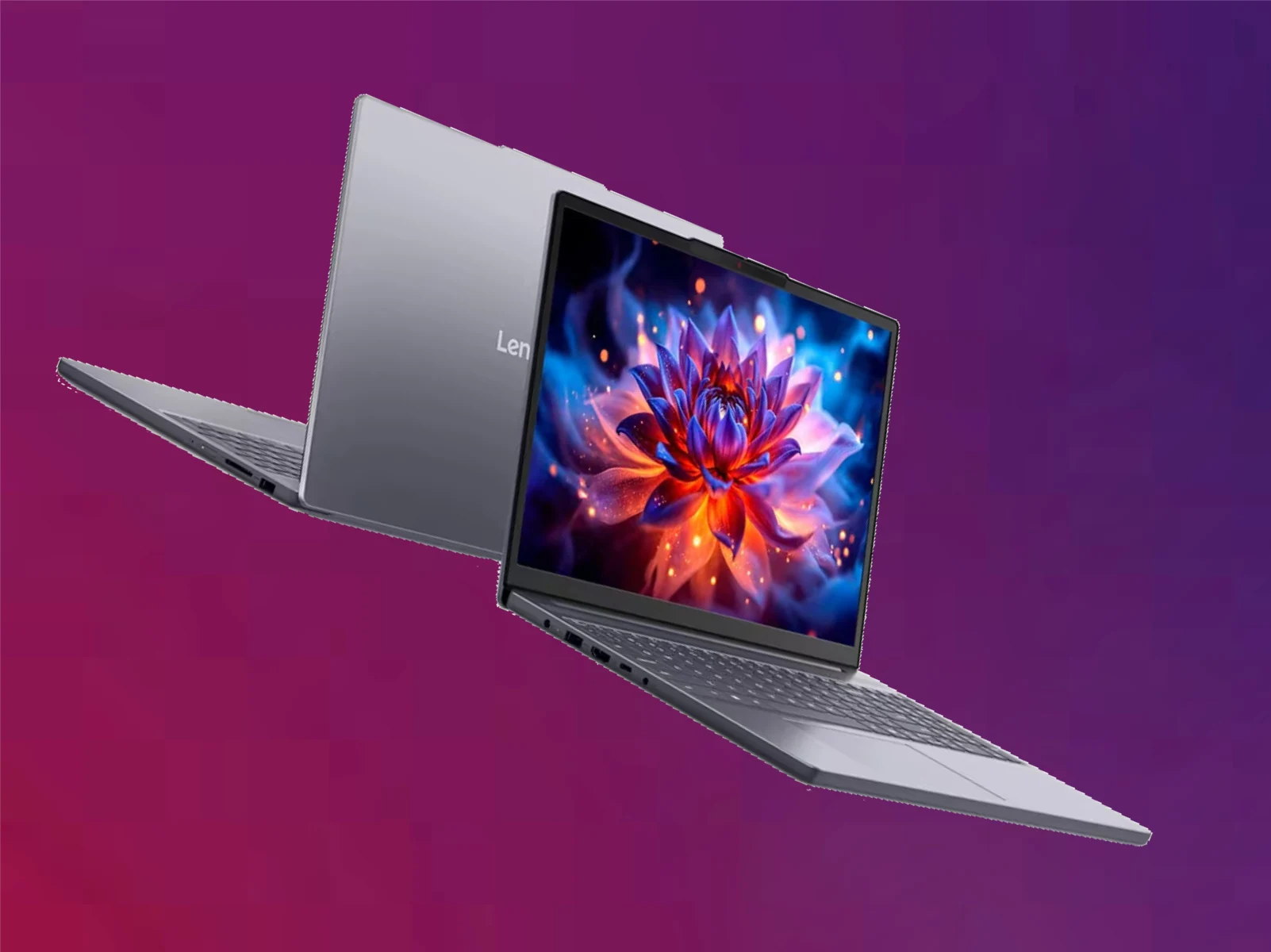
      1. Lenovo’s updated IdeaPad Slim 3i 15IPH11 features Intel’s Panther Lake platform, up to 24 GB RAM, and configurable displays including potential OLED options.
      2. The device supports 65 W charging with 50 Wh or 60 Wh batteries, and offers Wi-Fi 6 or Wi-Fi 7 connectivity options with Bluetooth 5.3 or 5.4.
      3. Starting prices vary by region, with UK at £949.99, Europe between €1,019-€1,319, and North America featuring a high-end model with Core Ultra 7 355, 16 GB RAM, and 512 GB storage.

      Lenovo’s Recent Updates to Its IdeaPad Lineup

      Lenovo is always improving their laptops which is seen with the new updates on the IdeaPad Slim series lately. They’ve introduced a couple of new models like the 13-inch and 15-inch IdeaPad Slim 5x Gen 11 versions in April, using Qualcomm’s Snapdragon X2 platform. Prior too, they released 16-inch versions of the IdeaPad Slim 5 with AMD Gorgon Point and Intel Panther Lake processors, showcasing the company’s broad approach to catering different user needs.

      New Features and Specifications

      The newest update is the IdeaPad Slim 3, now featuring Intel’s Panther Lake platform with a 15.3-inch display with 16:10 aspect ratio. It replaces the older 15IRU10 model which used Raptor Lake-U processors like the Core 5 120U (currently priced at USD 415). This latest model can be configured with either the Core Ultra 5 322 or Core Ultra 7 355 processors anywhere they’re sold, and offers up to 24 GB RAM. keep in mind that Lenovo solders 8 GB of RAM and keeps one SODIMM slot open for upgrades.

      Battery, Connectivity and Display Options

      In terms of power, Lenovo is offering either 50 Wh or 60 Wh batteries that support fast charging at 65 W. The device can also be connected via Wi-Fi 6 or Wi-Fi 7, augmented with Bluetooth 5.3 and 5.4 respectively, depending on the model’s configuration. Also, there’s a likelihood to see future configurations with 1600p OLED displays at 165 Hz, but currently, only models with a 1200p resolution and 60 Hz refresh rate are available. These screens peak at 400 nits brightness and cover 45% of the NTSC colour space.

      Pricing and Availability

      In the UK, the starting price for the IdeaPad Slim 3i is £949.99 for the version with Core Ultra 5 322. In Europe, it ranges from €1,019 to €1,319 with the same processor. In North America, Lenovo is only offering a pre-configured model with a Core Ultra 7 355, 16 GB RAM, and 512 GB storage. At the time of writing, this SKU is selling for CAD 1,679 and $1,199 in the U.S. markets. It is clear that Lenovo is trying to cover a broad audience with various configurations available across regions.


    • Geekom A9 Max 2026 Launch: Global Release, New AMD Processor & Discounts

      Geekom A9 Max 2026 Launch: Global Release, New AMD Processor & Discounts

      Key Takeaway

      1. The Geekom A9 Max has been updated with AMD’s Gorgon Point APU, offering a modest performance boost over the previous Ryzen AI 9 HX 370 model.
      2. The new A9 Max 2026 features the third-generation IceBlast cooling system, claimed to be 52% more efficient.
      3. Priced at $1,799 in the US with 32 GB RAM and 2 TB storage, the updated mini-PC is offered at a discounted rate from its original MSRP.

      Introduction to the New A9 Max Mini-PC

      Recently, Geekom has launched a new version of its A9 Max mini-PC with some upgrades, but kept the basic design and features similar. The previous model was introduced around August 2025 featuring AMD’s Ryzen AI 9 HX 370 chipset, which was priced at approximately $1,259. That earlier model was noted for its impressive performance, making it one of the most powerful mini-PCs in Geekom’s lineup.

      Upgrades and Performance

      The latest model now incorporates AMD’s new Gorgon Point APU, specifically the Ryzen AI 9 HX 470. This helps slightly boost the overall power of the system, although it still doesn’t quite match the performance offered by the more robust A9 Mega, which uses AMD’s Strix Halo processor. Nonetheless, the new A9 Max is expected to deliver some performance gains over the previous edition, promising better handling of demanding tasks.

      Cooling System Improvements

      In addition to processor upgrades, Geekom states that they’ve implemented the third generation of their IceBlast cooling system, calling it IceBlast 3.0. They claim this version is ‘52% more efficient’, although no specific details or comparison metrics were provided to see exactly what that means. This enhancement aims to better manage heat and maintain performance under load.

      Ports and Connectivity

      From an external perspective, the new A9 Max 2026 keeps the same number and types of ports as its predecessor—this includes dual USB4 ports, a 2.5 Gigabit LAN port, and five USB 3.2 Gen 2 Type-A ports. Such connectivity options ensure compatibility with a wide range of peripherals and network standards, making it a versatile mini-PC for various setups.

      Pricing and Availability

      For the US market, the A9 Max 2026 with 32 GB of RAM and 2 TB of storage is selling for $1,799, which is a discount from the original MSRP of $2,299. The same configuration is available in the UK for £1,599, and in the Eurozone for €1,699. The mini-PC is currently available through Amazon platforms in Germany, Spain, and the UK, making it accessible to customers across Europe and North America.