Category: Artificial intelligence

  • Philips Hue AI Assistant Now Available for App Users

    Philips Hue AI Assistant Now Available for App Users

    Key Takeaways

    1. The Philips Hue AI assistant is now rolling out to select users in the Benelux area (Belgium, Netherlands, Luxembourg).
    2. Currently, the assistant is only available for English-speaking customers.
    3. The AI assistant is free and located in the Home tab of the Philips Hue app, integrating with the existing search function.
    4. Users can create custom lighting scenes using voice or text commands and provide feedback on AI suggestions.
    5. Philips Hue plans to expand the AI assistant’s availability to other countries soon but has not specified a timeline.


    The Philips Hue AI assistant has started to roll out to select users. This feature was initially revealed in January 2025, and an icon related to it briefly appeared in version 5.38.1 of the Philips Hue app for iOS.

    Availability in Benelux

    Philips Hue has confirmed through its social media that the AI assistant is currently accessible to customers in the Benelux area, which includes Belgium, the Netherlands, and Luxembourg. At this point, it is only available for customers who speak English.

    Features of the Assistant

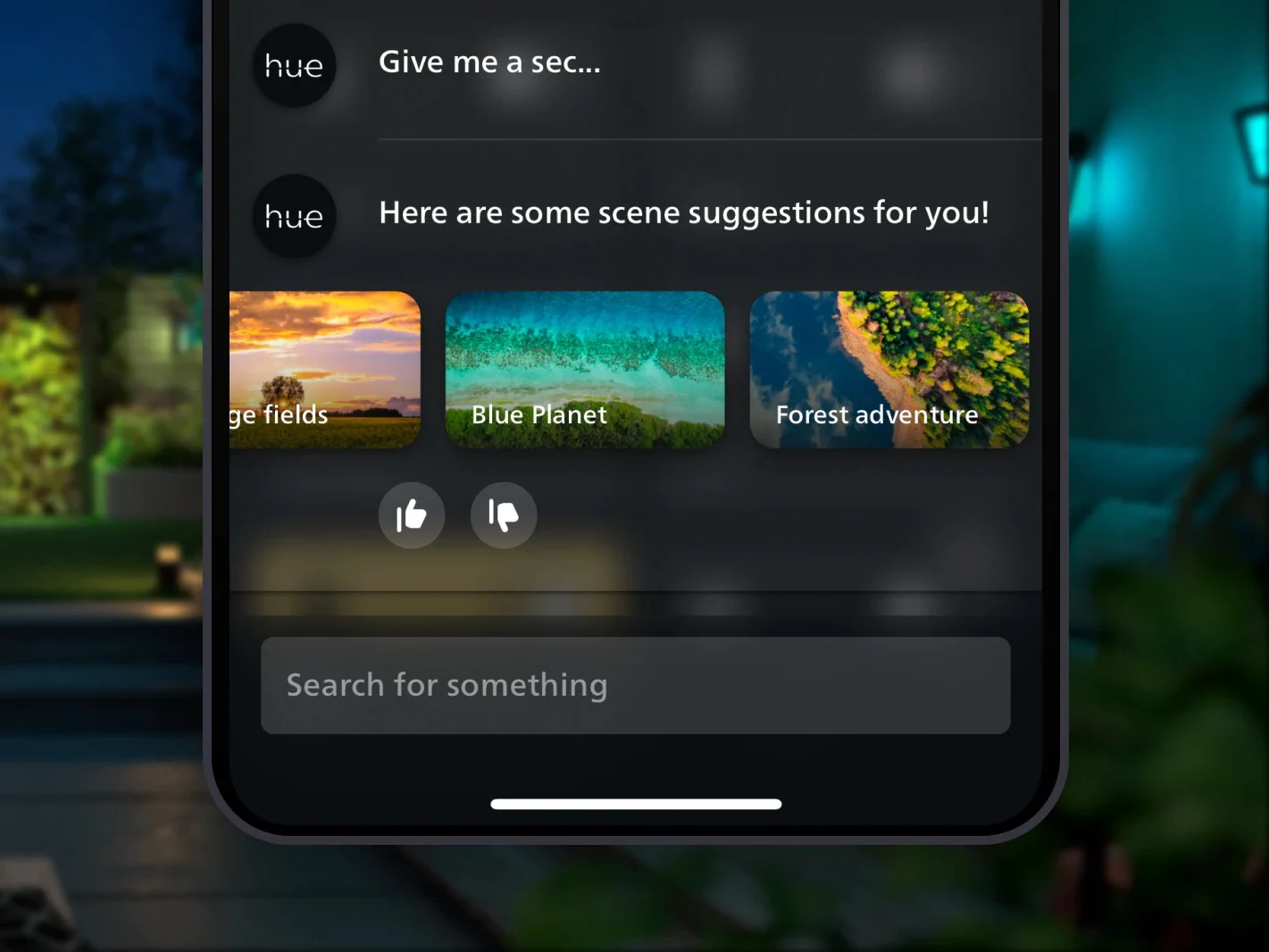
    The Philips Hue AI-powered assistant is free to use and can be found in the Home tab, where it merges with the existing search function. This new feature lets users create lighting effects that match their mood or activities. It can locate existing lighting scenes or develop custom scenes using voice or text commands. Some example commands are “Set good makeup lighting”, “What’s the best scene for spring?”, and “Which scene should I set for dinner?”.

    Users have the option to give feedback on the AI’s suggestions through like and dislike buttons. Additionally, the company advises users to “use responsibly” and cautions against sharing any personal data. In a recent post on its Instagram, Philips Hue mentioned that they plan to expand availability to other countries “soon”. However, they haven’t provided a specific timeline for this rollout.

    Source:
    Link

  • Morphic Launches AI Anime DQN and $1M Creator’s Fund

    Morphic Launches AI Anime DQN and $1M Creator’s Fund

    Key Takeaways

    1. Morphic, Inc. is a Silicon Valley company co-founded by Jaynti Kanani, known for its work in artificial intelligence and its new anime series DQN.
    2. DQN is set in an alternate timeline where World War II never ended, featuring twelve characters in a race to find a transformative hidden vault.
    3. The series utilizes Morphic Studio, an AI-driven platform that automates animation processes while allowing artists to maintain creative control.
    4. Morphic has launched a US$1 million Creator’s Fund to support emerging talent in anime, gaming, comics, and visual media.
    5. DQN represents a potential evolution in animated storytelling, showcasing a collaborative relationship between creativity and AI technology.


    Morphic, Inc., a company in Silicon Valley known for its work in artificial intelligence, was started by Jaynti Kanani, a co-founder of Polygon. They have just revealed their first original anime series, named DQN. This project is being created with Tokyo-based director Kushagra Kushwaha and his animation studio, 4861.

    A Unique Setting

    DQN is set in a different timeline where the Second World War never officially ended. The story revolves around twelve characters who find themselves caught in a worldwide race to discover a hidden vault that is thought to have the ability to change civilization itself. The series delves into a society that is technologically divided and influenced by artificial intelligence, where the control and power seem to come from access to information.

    Innovative Animation Tools

    For the series, Morphic is using Morphic Studio, an AI-driven platform that enhances animation processes through automation and precise tools. Important features include automated frame inbetweening, training character models to keep a consistent style, and detailed scene editing using interface layers and segmentation. Although this platform speeds up production, it still values the creative direction from artists, giving them control over timing, motion, and visual flow throughout the sequences. Kushwaha, who is at the helm of creative development, has previously worked on shows like JoJo’s Bizarre Adventure: Stone Ocean and Fairy Tail: 100 Years Quest.

    Supporting New Voices

    Additionally, Morphic has introduced a US$1 million Creator’s Fund aimed at supporting new talent in anime, gaming, comics, and various visual media. This initiative seeks to amplify voices that are often overlooked and to foster original storytelling across different formats. A sneak peek of DQN has been shared, and full-scale production of the series is currently in progress.

    As DQN continues its production journey, it potentially shows how the future of animated storytelling might evolve, not against AI but rather in a creative dialogue with it.

    Source:
    Link

  • Lenovo’s New Compact AI PC Features High RAM Capacity

    Lenovo’s New Compact AI PC Features High RAM Capacity

    Key Takeaways

    1. LCFC has launched a mini-PC designed specifically for AI applications, measuring 247.5 x 188.4 x 96.5 mm.
    2. The device features an integrated AMD Radeon RX 8060S and a Ryzen AI Max+ 395 APU with 16 cores and support for 32 threads, achieving a total AI performance of 126 TOPS.
    3. It includes 128 GB of LPDDR5x memory and dual 2 TB M.2 2280 SSDs, utilizing a fast PCIe 4.0 interface for storage.
    4. Connectivity options comprise several USB ports, a COM port for industrial devices, an HDMI interface, and a DisplayPort.
    5. The mini-PC is priced at ¥13,989 (approximately $1,930) and currently available in China, with no information on international pricing or availability yet.


    LCFC, a company under Lenovo, has revealed a mini-PC tailored for AI uses. It’s important to mention that the term “mini-PC” is a bit broad in this context. While the device is definitely more compact compared to standard desktop computers, it measures 247.5 x 188.4 x 96.5 mm (9.7 x 7.4 x 3.8 in), and it isn’t as small as mini-PCs produced by Minisforum (which you can find on Amazon), for instance.

    Specifications Overview

    Instead of featuring a separate GPU, this model incorporates an integrated AMD Radeon RX 8060S, which is part of the Ryzen AI Max+ 395 APU. The processor, with its 16 cores, can manage up to 32 threads at the same time, thanks to simultaneous multithreading. Furthermore, it includes a built-in NPU that can deliver 50 TOPS, bringing the total AI performance to 126 TOPS when the NPU, CPU, and iGPU work together. The LCFC mini-PC comes with 128 GB of LPDDR5x memory and two M.2 2280 SSDs, each providing 2 TB of storage through a speedy PCIe 4.0 interface. For internet connectivity, the device supports both Wi-Fi and Gigabit Ethernet.

    Connectivity and Ports

    This unit is equipped with several I/O ports, including one USB 3.2 Gen 2, one USB 3.2 Gen 1, and two USB 2.0 ports, which are perfect for devices that do not need high bandwidth, like input devices. It also seems to have a COM port for linking external devices in industrial environments. For video output, the mini-PC is outfitted with an HDMI interface and a DisplayPort. It recently launched in China, priced at ¥13,989 (approximately $1,930), although details about international pricing and availability have not been revealed yet.

    Conclusion

    With its unique specifications and design, this mini-PC from LCFC is aimed at the AI market. While it maintains a compact form, it still offers robust performance capabilities for various applications. The range of connectivity options and storage solutions makes it a valuable addition for those looking to integrate AI technology into their systems.

    Source:
    Link

  • SuperMaker AI Launches Text-to-Image, Music, Speech, and Video Service

    SuperMaker AI Launches Text-to-Image, Music, Speech, and Video Service

    Key Takeaways

    1. SuperMaker AI allows users to create realistic movies, images, speech, and music using generative AI.
    2. Users can generate speech and music easily with simple text descriptions or custom inputs for more control.
    3. Media generation is quick, taking only seconds, and new users receive 20 free starter credits for testing.
    4. Subscription plans are available for additional credits and downloading media, starting at $9.90 per month.
    5. For local AI experimentation, a high-speed Nvidia graphics card and open-source software like Wan2GP are recommended.


    SuperMaker AI has launched a new service that allows users to create realistic movies, images, speech, and music using generative artificial intelligence.

    Easy Speech and Music Creation

    To generate AI-driven speech, users just need to input the text they want to be spoken. For music, in Simple mode, a simple description is all that’s needed. In Custom mode, users can input lyrics and choose the genre, mood, voice, and tempo to create songs. When it comes to images and movies, users can either provide a reference image or movie or describe what they want to see.

    Quick Media Generation

    Once users submit their requests, SuperMaker AI takes a few dozen seconds or longer to create the media. New users are given 20 free starter credits to experiment with, which allows for the creation of up to two videos (10 credits each), four songs (5 credits each), ten images (2 credits each), and four voice tracks (5 credits each). Although no login is needed to test the service, free accounts cannot download the produced content.

    Subscription Plans for More Features

    A subscription is necessary to access more credits and to download the media generated. The basic plan costs $9.90 per month and offers 200 credits. The mid-tier plan at $29.90 provides 800 credits, while the premium plan at $49.90 offers 1,800 credits. Opting for a yearly subscription can help reduce overall expenses.

    For those interested in experimenting with AI locally on their computers, it’s suggested to use a high-speed Nvidia graphics card (like this one on Amazon) along with open-source software such as Wan2GP available on GitHub.

    Source:
    Link


  • AI-Powered Mentorship with History’s Greatest Minds Revealed

    AI-Powered Mentorship with History’s Greatest Minds Revealed

    Key Takeaways

    1. Historic Mentor offers a platform for advice from AI-generated replicas of historical figures.
    2. Users can have live audio conversations with these figures to address modern challenges.
    3. The service aims to promote clarity, discipline, reflection, inner peace, and harmony in daily life.
    4. User interactions will be personalized through stored chat histories and personal information.
    5. A waitlist is available for those interested, and users can explore related works like “The Art of War” by Sun Tzu.


    Historic Mentor has introduced a new platform that offers advice and insights from historical figures brought back to life through artificial intelligence.

    Available Historical Figures

    Users can interact with realistic virtual replicas of renowned historical individuals who are ready to assist with modern challenges by answering questions. The goal of this service is to help individuals find greater clarity, discipline, thoughtful reflection, inner peace, and harmony in their everyday lives via live audio conversations with these historical personalities. Plans are in place to include video chats in the future. However, there are no further details regarding the service or the caliber of advice being offered at this time.

    Personalized Guidance

    To enhance the user experience, chat histories and personal information about users will be stored and utilized in future interactions to offer tailored advice. For those interested, there is an option to join the waitlist on the company’s official website.

    Further Exploration

    While waiting, readers who want to explore the thoughts of these influential thinkers can read works such as Sun Tzu’s “The Art of War,” which is available for purchase on Amazon.

    Source:
    Link

  • DeepSeek Launches R1 Model with Enhanced AI and Reduced Hallucinations

    DeepSeek Launches R1 Model with Enhanced AI and Reduced Hallucinations

    Key Takeaways

    1. DeepSeek-R1-0528 outperforms its predecessor and rivals in cost-effectiveness and training speed.
    2. The model shows improvements in performance but only answers 17% correctly on the difficult Humanity’s Last Exam.
    3. Enhanced training periods and fine-tuning contribute to the model’s better results, rather than major technological breakthroughs.
    4. The new R1 model has fewer occurrences of AI hallucinations, providing more accurate information.
    5. An open-source version of the R1 model is available, requiring an Nvidia 4090 GPU with 24 GB of memory for use.


    DeepSeek has introduced the newest iteration of its innovative R1 AI large language model, named DeepSeek-R1-0528. The firm made its entrance into the AI sector with the releases of V3 and R1, both of which achieved top-ten performance in AI while being more cost-effective and quicker to train compared to rival models from companies like OpenAI and Google.

    Performance Tests

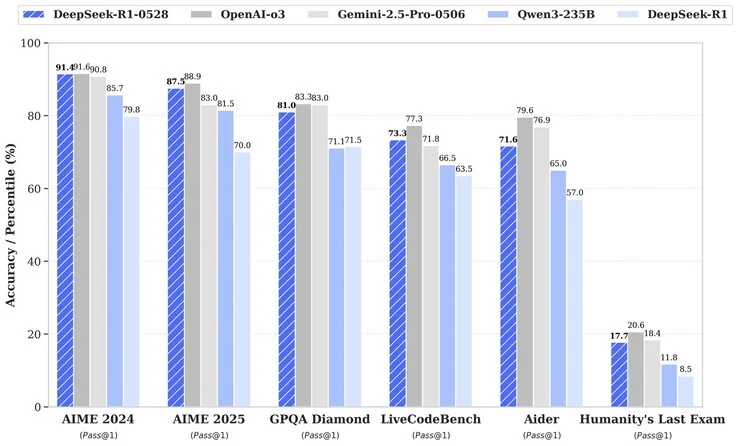
    The recent R1 model underwent evaluation using various AI benchmarks:

    When compared to the initial release of R1, DeepSeek-R1-0528 shows better performance across all tests, although it only manages to answer 17% of the questions correctly on the challenging Humanity’s Last Exam. Since its main competitors also struggle on this particular test, the improvements seen in the latest DeepSeek R1 version are likely a result of extended training periods and fine-tuning rather than any major advancements in AI technology. A key highlight of the new R1 is its reduced instances of AI hallucinations, making it less prone to providing incorrect or misleading information.

    Open-Source Availability

    For those interested in exploring the open-source R1 model, it is possible to run distilled versions with eight billion parameters using an Nvidia 4090 GPU that has 24 GB of memory.

    In summary, DeepSeek continues to push the boundaries of AI with its latest R1 model, making significant strides while maintaining affordability and efficiency. Users can find more about DeepSeek through its platforms, including DeepSeek news, DeepSeek Chat, and the DeepSeek R1 on GitHub.

    Source:
    Link


  • New AI Partnership Between The New York Times and Amazon Announced

    New AI Partnership Between The New York Times and Amazon Announced

    Key Takeaways

    1. NYT and Amazon have a new licensing agreement allowing Amazon to use NYT content in its AI products like Alexa.
    2. The deal includes using NYT articles to train Amazon’s AI models and gathering data from NYT Cooking.
    3. NYT aims to enhance accessibility to its content for Amazon customers through this partnership.
    4. The agreement expands the existing relationship between NYT and Amazon, providing more value for customers.
    5. This deal follows NYT’s lawsuit against OpenAI for allegedly using its data without permission.


    The New York Times (NYT) and Amazon have revealed a new licensing agreement that will last for several years. This deal permits Amazon, the tech giant, to showcase brief summaries and excerpts from NYT’s articles and The Athletic within its AI products like Alexa.

    Agreement Details

    Furthermore, the arrangement allows Amazon to utilize articles from The New York Times to enhance the training of its AI models. In addition, Amazon plans to gather data from NYT Cooking, which is the publication’s recipe platform.

    In their official statement, NYT expressed, “This partnership will enhance the accessibility of The New York Times’s unique content for Amazon customers across various products and services, including direct links to Times offerings, and highlights the mutual dedication of both companies to provide global news and viewpoints through Amazon’s AI products.”

    Impact on Readers

    NYT noted that this agreement “expands the existing relationship between the two companies, adding more value for Amazon customers and extending Times journalism to a broader audience.”

    The publication has made it clear that the deal involves “the immediate display of summaries and short excerpts from Times content within Amazon’s products and services, like Alexa, in addition to training Amazon’s proprietary foundation models.”

    Context of the Deal

    This agreement is significant, especially considering that in December 2023, The New York Times filed a lawsuit against OpenAI. The lawsuit claimed that OpenAI unlawfully trained its AI models using data from the publication. It alleged that OpenAI’s use of this data gave rise to chatbots that competed “with the news outlet as a source of trustworthy information.”

    Source:
    Link

  • Boston Dynamics Develops Adaptive Robot for Changing Environments

    Boston Dynamics Develops Adaptive Robot for Changing Environments

    Key Takeaways

    1. Atlas can now adapt to different environments and respond to unexpected events.
    2. The robot demonstrates quick adaptation when faced with changes, like moving shelf locations.
    3. Atlas uses its camera to locate sounds, illustrating the challenges of dynamic perception.
    4. The video highlights Moravec’s paradox, showing that simple human tasks are difficult for robots.
    5. Small mistakes in the perception system can lead to significant errors in task execution.


    Atlas keeps on changing. In a rather lengthy video with rare explanations, Boston Dynamics shows that Atlas can now handle different environments. While it still sorts car parts like before, the team hopes Atlas will learn to adjust to a more dynamic setting. This means that Atlas should be able to respond and adapt to new situations or unexpected events.

    Adapting to Challenges

    For instance, in the video, Boston Dynamics staff frequently shift the location of the shelf container where parts are sorted. This forces the robot to adapt, and it does so quickly. In another scenario, an employee drops a part near Atlas, causing a noise. The robot hears this with its microphone, but since it doesn’t have the ability to locate sounds based on the microphone, it methodically scans the area using its camera to find the part.

    The robot successfully picks up the part and puts it back on the shelf, though it isn’t as smooth as a human would be. Overall, the video illustrates Moravec’s paradox well. This paradox points out the seemingly odd fact that tasks simple for humans, like social interactions or physical movements, are hard for robots. On the other hand, tasks that are tough for humans, like complex calculations or data processing, come easy to robots.

    The Need for Dynamic Perception

    Jan Czarnowski, who leads the perception team, says that Atlas’ perception system must be flexible to handle unpredictable and changing situations. This challenge is made worse by the fact that, as the developers note, small mistakes and tiny errors can add up quickly. For example, the shelf cells have a margin of 5 cm. A slight miscalculation in grasping or placing parts into these cells, even just one centimeter off, could lead to a failure.

    Source:
    Link

  • Opera Neon: The Future Browser for Advanced Background Tasks

    Opera Neon: The Future Browser for Advanced Background Tasks

    Key Takeaways

    1. Opera offers a variety of browsers, including Opera GX for gamers and the newly introduced Opera Neon as an AI interface.
    2. Opera Neon features three main areas: Chat, Do, and Make, enhancing user experience with AI functionality.
    3. The Chat feature provides information without needing to visit multiple websites, similar to existing AI solutions.
    4. Neon Do acts as a browser assistant, performing tasks like tailored research and making reservations.
    5. Opera Make builds on the AI Browser Operator, allowing users to handle tasks online and offline, utilizing cloud services for complex operations.


    Opera isn’t merely one browser; it’s a whole range. Even on the same platform like the PC, there are multiple browsers aimed at different users, such as the Opera GX Browser, which is tailored for gamers. Recently, Opera has unveiled a new browser called Opera Neon. However, this isn’t really a traditional browser but more of an AI interface, which the company claims aims to surpass the capabilities of existing AI systems in the market.

    Features of Opera Neon

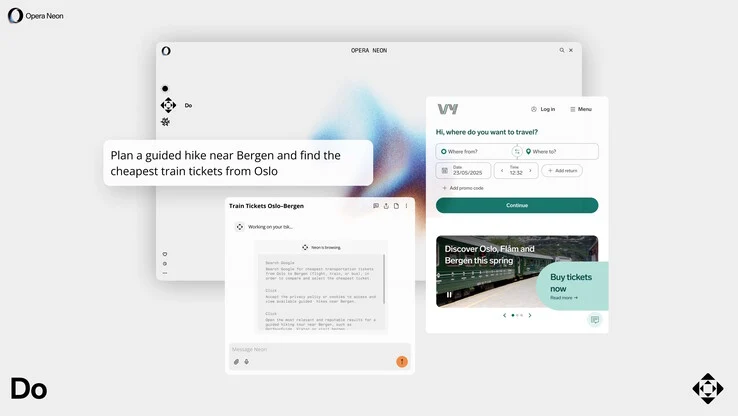
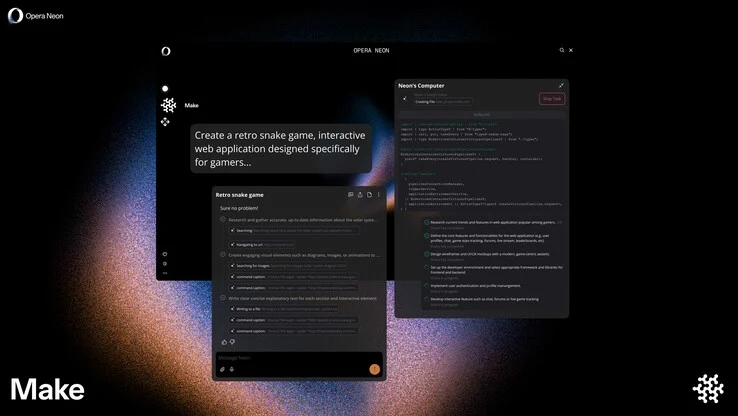
    Opera Neon’s features are categorized into three main areas: Chat, Do, and Make. The Chat option resembles other AI or LLM solutions already available, letting Opera Neon present information clearly without needing to visit several websites. On the other hand, Neon Do is quite innovative, though not completely original; it functions as a browser assistant that performs specific tasks like tailored research or making reservations.

    Understanding Opera Make

    In a previous article, we discussed what Opera Make does: it essentially builds on Opera’s AI Browser Operator for users who wish to handle different tasks while browsing or even when offline. As per Opera, complex tasks or research are executed on a cloud computer. Utilizing cloud services does come with a (monthly) charge. Currently, Opera Neon is not broadly accessible; those interested can sign up for a waiting list.

    Source:
    Link


  • Try On Clothes Virtually at Home with Google Shopping

    Try On Clothes Virtually at Home with Google Shopping

    Key Takeaways

    1. Gemini AI Integration: Google is integrating its Gemini AI into all applications and services, enhancing user experience across platforms.

    2. Virtual Try-On Feature: Users can virtually try on clothes by uploading a full-body image, with billions of clothing items available for selection.

    3. Social Sharing Options: Users can save AI-generated images of outfits and share them with friends and family for feedback.

    4. Price Tracking Feature: The “Track Price” option alerts users when their desired product prices drop, incorporating local retailers.

    5. Personalized Search Suggestions: Gemini AI offers tailored recommendations based on user needs, such as suggesting materials for travel-related purchases.


    Google I/O 2025 focused heavily on advancements in artificial intelligence. The Gemini AI is progressively being integrated into all of the applications and services provided by the tech giant. This integration extends to Google Shopping, which reportedly showcases more than 50 billion products sourced from both local shops and major shipping companies.

    User-Friendly Features

    At present, this function is exclusively available in the United States, yet it serves as an impressive preview of future innovations. To get started, users need to sign up for Search Labs, pick their favorite clothes, and then click on “Try on.” This process requires users to upload a full-body image of themselves, enabling the Gemini AI to demonstrate how the chosen apparel appears when “worn.” Google claims that there are billions of clothing items available for virtual fitting. For those seeking a second opinion, users can save the AI-generated images of their selected outfits and share them directly with friends and family.

    Price Tracking Made Easy

    Another noteworthy feature is the “Track Price” option, which operates much like traditional price comparison sites and incorporates local retailers. As per usual, users will receive alerts when their desired price is met. Furthermore, the AI is tailored to meet the specific needs of users during their searches. For instance, if someone is in search of a bag for a journey to a particular location, Gemini will suggest what type of material would be ideal for that destination, such as waterproof if traveling to London. This is meant to alleviate the hassle of independent research. These AI-driven functionalities are anticipated to roll out in the U.S. shortly.

    Source:
    Link