Category: Artificial intelligence

  • MS-C931 Mini PC with 128GB RAM: Nvidia Outperforms Intel and AMD

    MS-C931 Mini PC with 128GB RAM: Nvidia Outperforms Intel and AMD

    Key Takeaways

    1. The MSI EdgeXpert MS-C931 is marketed as an AI supercomputer, designed for local AI model processing, offering cost-effectiveness and better privacy compared to cloud services.
    2. It has compact dimensions (5.9 x 5.9 x 2 inches) and is versatile for various applications, including robotics and traffic monitoring.
    3. The device features an Nvidia Blackwell graphics card, an ARM SoC with 20 cores, and claims an AI performance of 1,000 TOPS.
    4. It can manage large language models (LLMs) with up to 200 billion parameters locally, and this capacity doubles when two units are connected.
    5. The mini PC supports up to four displays, includes WiFi 7 and Bluetooth 5.3, offers 1TB of M.2 SSD storage, and has a 10Gbit/s Ethernet port.


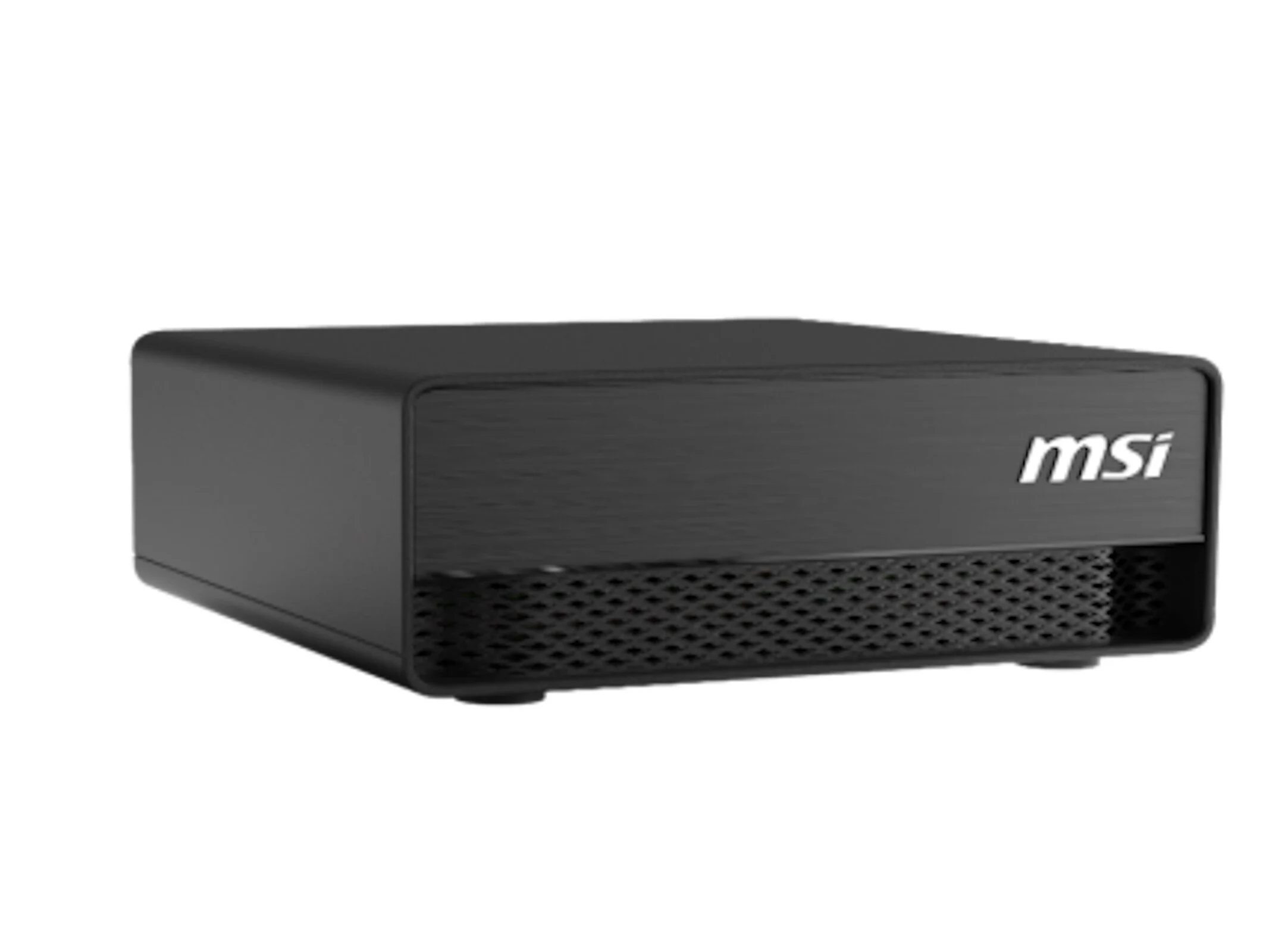
    We’ve talked about MSI products several times before, even if not all of them are meant for regular consumers. MSI also has offerings for businesses and professionals, and the new EdgeXpert MS-C931 fits right in. This mini PC is marketed as an AI supercomputer, which suggests it has the power to run AI models locally. This comes with several benefits. For one, it can be more cost-effective than using cloud-based AI services, and it also offers better privacy. This aspect could be vital for consulting firms that handle sensitive information from clients.

    Design and Versatility

    The MSI EdgeXpert has dimensions of 5.9 x 5.9 x 2 inches, and it can be utilized for various applications, including robotics. Robots, for instance, could leverage real-time image recognition when linked to the MS-C931 through a local network. Additionally, this mini PC could be effective for monitoring or controlling traffic. It is powered by an Nvidia Blackwell graphics card along with an ARM SoC that boasts 20 cores. The AI capability of this device is claimed to reach 1,000 TOPS, a significant figure compared to the NPUs in Intel and AMD CPUs, which typically have AI performance in the double digits. Plus, it includes 128GB LPDDR5x RAM and NVLink C2C for smooth access between the processor and GPU to the memory.

    Performance and Connectivity

    MSI states that a single unit of this mini PC can manage an LLM with up to 200 billion parameters locally. If two MSI MS-C931 units are connected, that number effectively doubles. Essentially, this system can also function like a regular mini PC without any complications. It supports up to four displays via USB Type-C, which can also be used for connecting various peripherals. It comes equipped with WiFi 7 and Bluetooth 5.3, while the M.2 SSD offers a storage capacity of 1TB. Additionally, the Ethernet port supports a bandwidth of 10Gbit/s, and this mini PC runs on a 240W PSU.

    Source:
    Link

  • European Open Web Index Pilot Grants Access to 1 Petabyte of Data

    European Open Web Index Pilot Grants Access to 1 Petabyte of Data

    Key Takeaways

    1. The Open Web Index (OWI) will launch a pilot program next month, providing access to nearly 1 petabyte of web data, with plans to expand to 5 PB and eventually 10 PB.

    2. The OWI serves as a collective digital library, allowing third-party services to search for documents, reducing Europe’s dependence on US-based search engines.

    3. The initiative aims to improve search quality and language options, promoting a non-profit, standards-based index that complies with European data protection laws.

    4. During the pilot phase, academic groups, startups, and developers can request data under research or commercial licenses, contributing to user-focused improvements.

    5. The project aligns with the European Commission’s InvestAI initiative, which seeks to boost funding for AI projects, potentially enhancing European competitiveness in search and AI technologies.


    The OpenWebSearch.eu group is set to launch the first federated Open Web Index (OWI) across Europe for external testers next month. This pilot program will provide access to nearly one petabyte of web data that has been collected, marking a significant move towards a comprehensive index planned to grow to 5 PB and eventually to 10 PB of content.

    A New Way to Search

    The OWI is not like a traditional search engine; instead, it acts as a collective digital library that allows third-party services like search portals, large language model providers, or research teams to search for and find documents. This initiative is backed by a collaboration of 14 universities, supercomputing centers, tech companies, and CERN, aiming to lessen Europe’s reliance on proprietary indexes from American companies like Google and Microsoft.

    Challenging the Status Quo

    Supporters of this project say that the current focus on advertising-driven platforms has hurt the quality of search results and restricted language options. By creating a non-profit, standards-based index in line with European regulations, the consortium hopes to promote services that abide by local data protection laws, offer results in various languages, and avoid aggressive advertising or biased results. Regulators in Brussels and London have often criticized the dominance of US tech giants for these very reasons.

    During the pilot phase, academic groups, startups, and individual developers will be able to request the dataset under a general research license or apply for a commercial license. Community manager Ursula Gmelch refers to this launch as “a first step towards true European digital sovereignty,” noting that initial feedback will help shape the index to better meet the needs of users. The team is particularly keen on enhancing vertical and argumentative search, retrieval-augmented generation, and other AI-related applications.

    Aligning with European Goals

    This timeline coincides with the InvestAI initiative from the European Commission, which aims to raise €200 billion for AI projects. An open Zoom meeting is planned for June 6, from 10 a.m. to noon CEST, where participants will be introduced to the platform and receive access credentials. If the pilot is successful, it could provide small and mid-sized European companies with the essential tools to develop competitive search and AI technologies that operate outside of the dominant US ecosystems.

    Source:
    Link

  • Dell Pro Max Plus Workstations Boosted by Qualcomm AI Technology

    Dell Pro Max Plus Workstations Boosted by Qualcomm AI Technology

    Key Takeaways

    1. Dell has launched a new Pro Max Plus laptop series designed for AI tasks, featuring the Qualcomm AI-100 Inference Card.
    2. The AI-100 Inference Card includes dual chips, 32 AI cores, and 64GB of LPDDR4x memory for high-performance AI inference.
    3. The laptops are equipped with Intel Core Ultra 7 processors, a 14-inch FHD+ touchscreen, DDR5 memory, and Arc Pro graphics.
    4. The devices are targeted at data scientists and AI engineers needing portable solutions for AI workloads.
    5. No official release date is set, but the laptops are aimed at enterprise clients and specialized developers rather than general consumers.


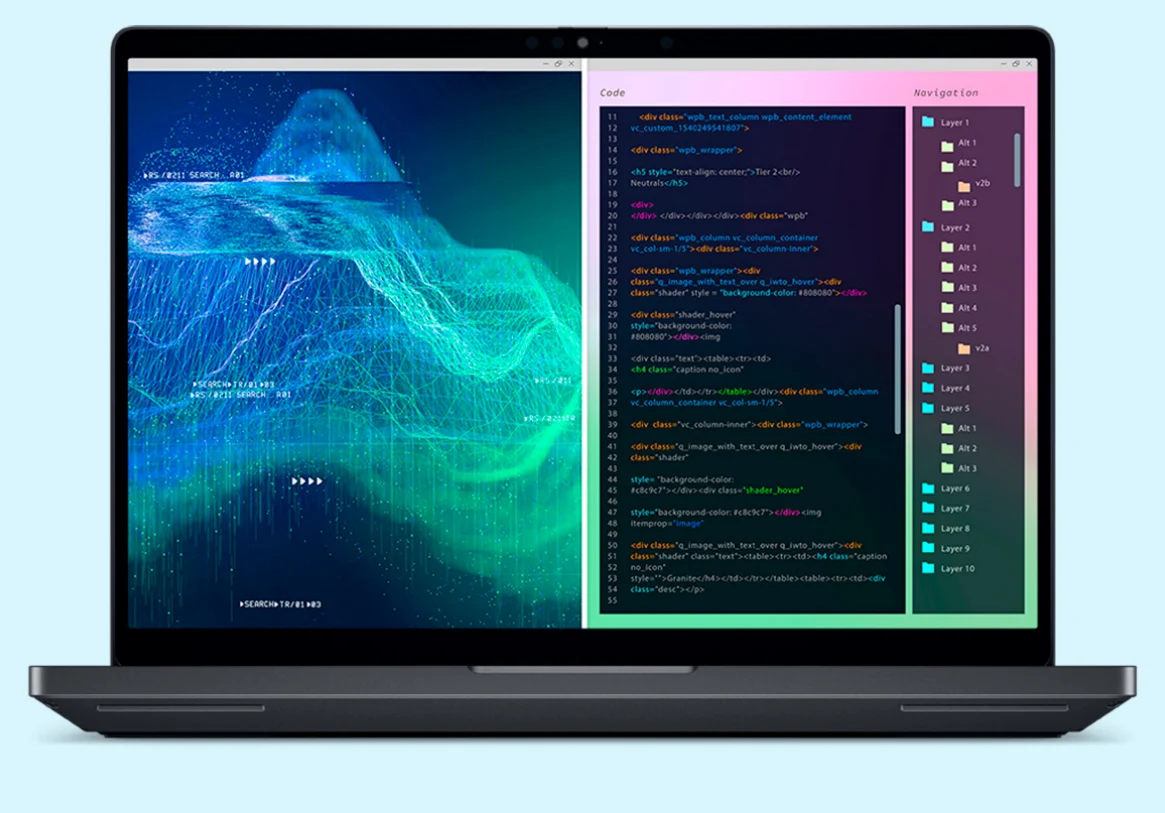
    Dell has recently unveiled a new version of its Pro Max Plus laptop series, specifically aimed at handling AI tasks. While the name might not be the catchiest, the technology inside these devices is more captivating than typical updates. The new Dell Pro Max Plus models will be among the first portable workstations to include a Qualcomm AI-100 Inference Card.

    Innovative Hardware for AI

    The AI-100 Inference Card, which features dual chips, is integrated into these machines to provide a secure, high-performance local solution for extensive AI inference. Dell claims the card boasts 32 AI cores and 64GB of LPDDR4x memory, which can manage models with parameters ranging from 30 billion to 109 billion. This places it firmly in the realm of enterprise-grade technology, yet it’s designed to be mobile and developer-friendly. It targets data scientists, AI engineers, and research experts who need portable solutions for testing and deployment purposes.

    Specifications and Features

    Although Dell has not released complete technical specifications for the Qualcomm model, the current Intel-based versions give a helpful point of comparison. These devices are powered by Intel Core Ultra 7 255H processors, equipped with a 14-inch FHD+ touchscreen (300 nits), DDR5 memory, Arc Pro graphics, and batteries up to 72Wh with ExpressCharge capabilities. The Qualcomm model is expected to keep most of the same design and connection features, including support for Wi-Fi 7 and Bluetooth 5.4, along with USB Type-C charging. This new setup could provide a secure way to run models locally, avoiding the need to send sensitive data to a server while still maintaining the speed and performance usually found in GPU-intensive systems.

    Target Audience and Availability

    There’s currently no official timeline for when these will be available, but this configuration is likely to attract enterprise clients or specialized developers rather than everyday consumers. Nevertheless, for those who need to prototype, test, or deploy AI workloads while traveling or in the field, the Pro Max Plus featuring Qualcomm’s inference card could be worth keeping an eye on.


  • NVLink Fusion Boosts Low-Latency Computing for Third-Party CPUs

    NVLink Fusion Boosts Low-Latency Computing for Third-Party CPUs

    Key Takeaways

    1. Introduction of NVLink Fusion: Nvidia launched NVLink Fusion, a new chip-level interface that enhances its NVLink technology for third-party CPUs and custom accelerators, announced at Computex 2025.

    2. Chiplet Technology Transition: NVLink Fusion changes connections from board-to-board to a compact chiplet setup, providing up to 14 times more bandwidth than standard PCIe while ensuring memory-semantic access.

    3. Collaborations and Partnerships: Companies like MediaTek, Qualcomm, and Fujitsu are integrating NVLink Fusion into their products, enhancing collaboration to utilize this new technology.

    4. Modular Solutions for Hyperscale Operators: Hyperscale cloud operators can create large GPU clusters with NVLink Fusion-enabled components, allowing for efficient scaling without performance drops typical of PCIe setups.

    5. Positioning Nvidia as a Key Link: By licensing its technology, Nvidia aims to be a central player in the AI hardware ecosystem, allowing competitors to use its bandwidth while still fitting into its software and networking environment.


    Nvidia has unveiled NVLink Fusion, a new chip-level interface that expands its proprietary NVLink technology beyond just its processors. This was announced during Computex 2025. The innovative silicon allows third-party CPUs and custom accelerators to utilize the same high-bandwidth, low-latency connection that currently links Nvidia GPUs in large-scale “AI factories.”

    Transition to Chiplet Technology

    NVLink Fusion shifts the connection from a board-to-board setup to a compact chiplet that designers can position alongside their own compute dies. Although it continues to utilize familiar PCIe signaling, it offers up to 14 times more bandwidth than a standard PCIe lane while maintaining memory-semantic access between devices. This enhanced fabric works alongside Nvidia’s existing Spectrum-X Ethernet and Quantum-X InfiniBand products, which manage scale-out traffic across server racks.

    Collaborations and Partnerships

    Multiple partners have already committed to this technology. MediaTek, Marvell, Alchip, Astera Labs, Cadence, and Synopsys are set to provide custom ASICs, IP blocks, or design services utilizing this new protocol. On the CPU front, Fujitsu is planning to integrate its upcoming 2 nm, 144-core Monaka processor with NVLink Fusion, while Qualcomm aims to connect the interface with its Arm-based server CPU. Both companies are targeting integration into Nvidia’s rack-scale reference systems without sacrificing direct GPU access.

    Modular Solutions for Hyperscale Operators

    Hyperscale cloud operators can now combine NVLink Fusion-enabled components with Nvidia’s own Grace CPUs and Blackwell-class GPUs, enabling them to create large GPU clusters linked by 800 Gb/s networking. This offers a modular approach to building clusters that can consist of thousands or even millions of accelerators, all without the usual performance drops seen in PCIe-only setups.

    By licensing a key part of its technology stack, Nvidia is positioning itself as the essential link for diverse AI hardware rather than just a closed-box supplier. Competitors who found it difficult to match NVLink’s impressive bandwidth can now leverage it, but they’ll need to do so within Nvidia’s extensive software and networking ecosystem.

    Source:
    Link

  • Nvidia’s Next Big AI Move: Cloud-Connected Humanoid Robots

    Nvidia’s Next Big AI Move: Cloud-Connected Humanoid Robots

    Key Takeaways

    1. Nvidia’s GPUs have driven significant growth in the AI industry, establishing a near-monopoly in AI hardware.
    2. CEO Jensen Huang envisions physical AI and robotics as the next industrial revolution, providing essential tools for robotics development.
    3. Nvidia launched Isaac, its first open-source humanoid robot operating system, allowing developers to enhance robots with trained models.
    4. The training process for robots involves creating videos from single images to teach new tasks using compressed action tokens.
    5. Nvidia supports developers with Universal Blackwell Systems powered by RTX PRO 6000 GPUs, facilitating powerful robot training capabilities.


    The AI industry has experienced huge growth over the past four years, largely due to Nvidia and its advanced GPUs that are specially made for AI tasks. Team Green started investing in AI back in the mid-2010s, but the real impact became noticeable only in recent years. With the hardware segment of AI now well established, and almost monopolized, Nvidia is exploring new opportunities that might increase its value even more. At this year’s Computex, Team Green hinted that one of these opportunities could be in physical AI and humanoid robotics.

    CEO’s Vision for the Future

    During his keynote earlier today, CEO Jensen Huang shared, “Physical AI and robotics will lead to the next industrial revolution. From AI brains for robots to simulated worlds for practice, or AI supercomputers for training foundational models, NVIDIA offers essential tools for each phase of the robotics development process.”

    Expanding Software Horizons

    With a focus on physical AI, Nvidia is also broadening its efforts in the software domain. The main element here is the company’s first open-source humanoid robot operating system named Isaac. Developers can build on this by adding trained models like the Gr00t N1.0, which was launched in March and has now been updated to version 1.5, introducing the Dreams component. Version 1.0, which featured the Mimic component, served as a foundation for training robot reasoning and actions. With the Dreams component, Nvidia is unveiling a framework that can produce large amounts of synthetic motion data (neural trajectories) that physical AI developers can use to teach robots various motor skills, including adapting to different environments.

    Training Process Explained

    The training method is similar to text-to-image and video models. Initially, the robots undergo post-training with Cosmos Predict world foundation models (WFMs). By using just one image as input, GR00T-Dreams can create videos of the robot doing new tasks in unfamiliar settings. The blueprint extracts action tokens (compressed data pieces easily handled by the robot’s neural network), which instruct the robot on how to carry out new actions.

    Nvidia’s Isaac GR00T is strongly connected to the Omniverse and Cosmos platforms to generate training data. The N1.5 update, along with models such as Isaac Sim 5.0 and Isaac Lab 2.2, will soon be downloadable from the Hugging Face repository. Innovative companies already utilizing the Isaac N models for humanoid robots include AeiRobot, Foxlink, Foxconn, Lightwheel, NEURA Robotics, Boston Dynamics, Agility Robotics, and XPENG Robotics.

    Developer Support and Hardware

    In addition, Nvidia is providing its Universal Blackwell Systems powered by RTX PRO 6000 GPUs, like the DGX Cloud infrastructure, enabling developers to access significant processing power for robot training with ease.

    Source:
    Link

  • Walmart Launches AI Shopping Agents for Groceries and Themed Baskets

    Walmart Launches AI Shopping Agents for Groceries and Themed Baskets

    Key Takeaways

    1. Walmart is preparing for AI shopping agents to manage online purchases instead of human users.
    2. The company is developing in-app and web-based tools to automate grocery reordering and event-specific shopping lists.
    3. Walmart anticipates the need for compatibility with third-party bots that will handle purchases, requiring standardized interaction with its systems.
    4. Algorithmic buying will shift focus from traditional marketing tactics to essential product details like specifications and pricing.
    5. Despite a rise in e-commerce sales, over 80% of retail sales still happen in physical stores, indicating that autonomous buying is still in its early stages.


    Walmart is getting ready for a future where AI shopping agents, instead of people, will handle buying products. Hari Vasudev, who is the U.S. chief technology officer for the company, believes there will be a big change in online shopping once these agents, like OpenAI’s Operator, can manage everything from searching for items to checking out without anyone needing to look at a product page.

    Developing New Tools

    To keep up with this change, Walmart is working on its own in-app and web-based agents that can automatically reorder groceries or create shopping lists for specific events, like a unicorn-themed birthday party. These new tools will use first-party data, allowing Walmart to maintain a direct connection with customers, even if the buying process becomes less visible.

    Preparing for Third-Party Bots

    The retailer is also getting ready for consumers who might choose to let third-party bots handle their purchases. Vasudev expects there will be a standard for the industry that enables these external agents to interact with Walmart’s systems, share preference information, and retrieve organized product details. Even when bots navigate the site like a person exploring aisles, Walmart’s product pages need to be readable by machines and competitively priced.

    Changing the Game

    With algorithmic buying, traditional methods such as using attractive images to create desire may no longer work; bots prioritize details like specifications, stock availability, and overall cost. Robert Hetu, an analyst at Gartner, mentions that retailers might need to update their product descriptions in real-time, offer immediate discounts, and understand that search engine rankings—whether paid or organic—will significantly impact which deals a bot sees first.

    At the moment, over 80 percent of sales still occur in physical stores, and the concept of autonomous buying is still in its early stages. However, Walmart’s impressive 22 percent increase in e-commerce sales year over year shows how quickly consumer behavior can evolve.

    Source:
    Link

  • StarPro64: Powerful Raspberry Pi Alternative with NPU and PCIe

    StarPro64: Powerful Raspberry Pi Alternative with NPU and PCIe

    Key Takeaways

    1. The StarPro64 is a new developer board from Pine64, priced at $250 but currently out of stock.
    2. It features an ESWIN EIC7700X processor with four SiFive P550 cores based on RISC-V architecture, making it a competitor to the Raspberry Pi 5.
    3. The board includes a high-performance NPU capable of 19.95 TOPS for local AI applications, such as surveillance tasks.
    4. Key specifications include 32 GB of LPDDR5 RAM, 128Mb SPI boot flash, and options for eMMC storage and microSD booting.
    5. Connectivity features consist of PCIe 3, multiple USB ports, 4K HDMI output, dual Gigabit Ethernet ports, WiFi 6, and Bluetooth 5.3.


    The StarPro64 has been officially introduced – or at least it is now featured on Pine64’s online shop. The listed price is $250, but currently, the board seems to be “out of stock,” indicating that it’s sold out at this time.

    Developer Board Details

    The StarPro64 serves as a developer board and is basically a competitor to the Raspberry Pi 5. However, it’s equipped with a different processor architecture, specifically an ESWIN EIC7700X, which includes four SiFive P550 cores based on RISC-V architecture. One notable feature is its high-performance NPU, which reportedly delivers INT8 performance of 19.95 TOPS per second, making it quite powerful for running local AI applications. A realistic application could be in the field of surveillance cameras, particularly for face or license plate recognition.

    Specifications and Features

    Standard features include 32 GB of LPDDR5 RAM and 128Mb SPI boot flash. Users have the option to add an eMMC module (up to 256GB) and utilize a microSD slot for booting purposes. For connectivity, it offers a four-lane PCIe 3 connector, two USB 3.0 ports, and two USB 2.0 ports. Additionally, there are MIPI DSI and MIPI CSI interfaces for connecting displays and cameras. It also supports HDMI output at 4K resolution and 60 Hz. Furthermore, network capabilities include two Gigabit Ethernet ports alongside dual-band WiFi 6 and Bluetooth 5.3.

    Conclusion

    Pine64’s new offering, the StarPro64, appears to be a compelling choice for developers looking for advanced features and performance. However, potential buyers might need to wait until it’s back in stock to secure their own unit.

    Source:
    Link

  • Nvidia CEO Confirms Next China Chip Won’t Be Hopper

    Nvidia CEO Confirms Next China Chip Won’t Be Hopper

    Key Takeaways

    1. The Trump administration’s new chip export restrictions to China significantly affect manufacturers like Nvidia.
    2. Nvidia launched the less powerful H20 chip to comply with earlier regulations, but tighter restrictions have now been introduced.
    3. CEO Jensen Huang stated there won’t be a new version of the Hopper processor, and further modifications to it are not possible.
    4. Nvidia expects a $5.5 billion negative impact on quarterly results due to the ban on H20 chip exports, with China representing 13% of its sales.
    5. Concerns over the use of processors for artificial intelligence have led to increased regulations from the Trump administration.


    The recent restrictions imposed by the Trump administration on chip exports to China have had a significant impact on various manufacturers, including Nvidia. This company had previously launched the H20 chip aimed at this market in response to earlier regulations. The H20 chip, however, was less powerful compared to other models, allowing it to be exported to China. Nevertheless, tighter and more stringent regulations on sales to this country have now been introduced.

    Nvidia’s Forward Plans

    Jensen Huang, the CEO of Nvidia, shared insights during a livestream on Taiwan’s Formosa TV News, stating that the company is exploring its next steps. However, he made it clear that there will not be a new version of the Hopper processor. Huang also mentioned that further modifications to this chip are not feasible. Nvidia is currently evaluating how to proceed in this challenging market.

    Financial Implications

    Following the ban on H20 chip exports, Nvidia announced that this restriction would lead to a negative impact of $5.5 billion on its quarterly results. The Chinese market plays a crucial role for Nvidia, constituting 13% of its sales for the fiscal year ending January 2025.

    Rising Concerns

    The Trump administration has heightened regulations due to worries regarding the use of these processors in powering artificial intelligence (AI), particularly after the emergence of the Chinese language model DeepSeek.

    Source:
    Link

  • Nvidia Expands AI Chip Market with New Shanghai R&D Hub

    Nvidia Expands AI Chip Market with New Shanghai R&D Hub

    Key Takeaways

    1. Nvidia is negotiating for office space in Shanghai to establish a research-and-development center focused on local customer preferences.
    2. The new team in China will verify chip designs and improve existing products but will not design new graphics-processing units due to U.S. export laws.
    3. U.S. export regulations have significantly reduced Nvidia’s revenue share from China, prompting the development of lower-specification chips.
    4. Nvidia plans to launch a modified H20 accelerator in July to comply with stricter U.S. regulations, featuring reduced memory and performance.
    5. Nvidia aims to maintain its presence in China to tap into the growing AI-chip market, projected to reach $50 billion in three years, while staying compliant with export controls.


    Nvidia is currently in talks with officials in Shanghai to secure office space for a new research-and-development center. This facility aims to monitor local customer preferences and relay that information back to the company’s main office. During a visit in April, CEO Jensen Huang gained preliminary backing from the city’s mayor, who promised tax incentives and less bureaucratic hurdles for the initiative.

    Focus on Verification and Optimization

    The new team will not be involved in designing or altering graphics-processing units while in China. Instead, the engineers will focus on verifying chip designs, improving current products, and engaging in specific projects like research in autonomous driving, as per sources familiar with the initiative. Key intellectual property development will still take place outside of China to comply with U.S. export control laws.

    Impact of U.S. Export Licenses

    Since 2022, Washington has mandated export licenses for Nvidia’s most advanced AI processors. These regulations have reduced the revenue share from China to 13% in the last fiscal year, a drop from 26% prior to the enforcement of these rules. In response, Nvidia has begun to develop lower-specification versions of several chips, which has faced criticism from some U.S. officials.

    Upcoming Product Adjustments

    In its latest development, Nvidia has informed major Chinese cloud service providers that it will launch a modified H20 accelerator in July. This new version will have reduced memory capacity and performance to comply with the stricter U.S. regulations. Additionally, a Blackwell-based component that adheres to these limits is under development, but any shipments will need approval from Washington.

    Nvidia has a workforce of around 4,000 in China, with nearly half located in Shanghai. The new office space is expected to support existing employees and future recruits, enhancing local R&D efforts without relocating sensitive chip design tasks abroad. Huang has estimated that the AI-chip market in China could grow to about $50 billion within three years; he emphasized that maintaining a presence is crucial to prevent losing ground to local competitors like Huawei.

    Source:
    Link

  • Budget Bill Enacts 10-Year Moratorium on State AI Regulations

    Budget Bill Enacts 10-Year Moratorium on State AI Regulations

    Key Takeaways

    1. A new clause in the Budget Reconciliation bill would prevent states and local governments from regulating AI for ten years.
    2. The definition of AI in the clause is broad, covering both established algorithms and new generative models, making current state regulations unenforceable.
    3. Supporters believe the moratorium fosters innovation by preventing a patchwork of regulations, while critics argue it protects companies and undermines local protections against discrimination.
    4. The provision aligns with former President Trump’s deregulation efforts and follows lobbying by tech leaders advocating for reduced oversight.
    5. The proposal faces potential opposition in Congress, particularly from Democrats and some Republicans concerned about state rights and regulatory accountability.


    House Energy and Commerce Committee chair Brett Guthrie has added a clause to the draft Budget Reconciliation bill that would prevent states and local governments from “enforcing any law or regulation regulating artificial intelligence models, artificial intelligence systems, or automated decision systems” for the upcoming decade.

    Broad Definition of AI

    This clause has a wide definition of AI, encompassing both long-established algorithms and newer generative models. If this becomes law, current state regulations—like California’s requirement for disclosure of AI-generated patient communications, its soon-to-come transparency rules for model-training data, and New York City’s bias-audit rule for hiring processes—would not be enforceable.

    Supporters vs. Critics

    Proponents of the moratorium argue that it helps prevent diverse rules that could hinder innovation. On the flip side, opponents view it as a sweeping measure that protects companies from being held accountable and undermines popular local protections against discrimination and lack of transparency.

    Political Context

    This provision is in line with former President Donald Trump’s approach to deregulating AI. It follows significant lobbying efforts by notable tech leaders, such as Elon Musk and venture capitalist Marc Andreessen, who are advisors to the current government. The measure still needs to pass through both houses of Congress, where there is likely to be pushback from Democrats and some Republicans focused on state issues.

    The lobbying supporting this moratorium mirrors a broader push for deregulation in Washington. After reversing Biden-era executive orders aimed at limiting high-risk algorithms, the Trump administration welcomed key tech figures like Elon Musk, former PayPal executive David Sacks, and investor Marc Andreessen into formal advisory positions. Detractors caution that this budget could entrench that agenda for a decade, eliminating state rules on transparency and bias audits that were put in place after well-documented issues in hiring, healthcare, and credit-scoring systems.

    Source:
    Link