Category: Artificial intelligence

  • Tesla’s Humanoid Robot Dances: Embodied Intelligence in Action

    Tesla’s Humanoid Robot Dances: Embodied Intelligence in Action

    Key Takeaways

    1. Tesla unveiled its updated humanoid robot, Optimus, showcasing improvements in “embodied intelligence” through a dance routine video.
    2. The video received over 44 million views and 4,500 comments, but many viewers expressed skepticism about the robot’s capabilities.
    3. Critics on platforms like Reddit compared Optimus’s dance to older toy robots and questioned the practicality of its performance.
    4. Unitree, a competing Chinese robot company, is gaining attention for their robots’ advanced motion technology and plans for a live boxing match.
    5. While Tesla focuses on showcasing dance, Unitree is pushing the boundaries of robotic agility and functionality.


    In a video shared on X on May 14, Tesla revealed the newest version of its humanoid robot called Optimus. This update highlights improvements in what is termed “embodied intelligence,” which refers to the robot’s ability to move in a way that resembles human behavior and is aware of its surroundings. The short 42-second video displays the robot executing a fluid dance routine that combines shuffle steps, ballet-like motions, and smooth turns, with the caption reading: “Was just getting warmed up.”

    Mixed Reactions Online

    In just one day, the video attracted over 44 million views and received more than 4,500 comments. Tesla showcases the dance as a sign of progress in embodied intelligence, but many in the online community are not convinced.

    On Reddit, the feedback from the robotics enthusiasts is quite evident: a large number of users seem to be unimpressed. Remarks such as “I already had a dancing toy robot 20 years ago” and “Why is it dancing instead of doing something useful?” capture the general mood. Some individuals have even raised doubts about the video’s genuineness, implying it could be computer-generated imagery (CGI).

    Unitree’s Rising Competition

    Meanwhile, the Chinese robot company Unitree appears to have surpassed Tesla in terms of motion technology. Their G1 and H1 models are demonstrating remarkable human-like agility, as evidenced in recent clips that show them performing spinning kicks and various combat techniques. Looking to the future, Unitree has made an exciting announcement: at the forthcoming “Iron Fist” event, two humanoid robots will engage in a live boxing match. Training videos have already been shared, creating a lot of excitement, while Tesla remains focused on its dance performances.

    Source:
    Link

  • MediaTek T930 Launches: 5G Hotspots with 10Gb/s Speeds

    MediaTek T930 Launches: 5G Hotspots with 10Gb/s Speeds

    Key Takeaways

    1. MediaTek’s T930 is the first platform designed specifically for mobile Wi-Fi hotspots and router devices using a 5G SIM, aiming for “multi-gigabit” speeds.

    2. The T930 chipset is built on a 4-nanometer process and features 4 ARM Cortex-A55 cores, reaching speeds up to 2.3GHz, suitable for devices like the Netgear Nighthawk M6 Pro.

    3. It offers enhanced download bandwidth of up to 200 MHz with 8Rx technology, boosting signal strength by 40% compared to the previous T830 model, and supports both SA and NSA 5G.

    4. The T930 introduces 6CC-carrier aggregation technology for downlink speeds up to 10Gb/s and a 5-layer 3Tx system for peak upload speeds, with these speeds primarily available in SA mode.

    5. This chipset includes a Neural Processing Unit (NPU) for AI management of IoT devices, a power management chip, a GNSS receiver, and is compatible with Wi-Fi 7, with future integration potential for Wi-Fi 8.


    MediaTek has introduced the T930, which is being hailed as the first platform designed for mobile Wi-Fi (or Mi-Fi) hotspots and router devices that utilize a 5G SIM. This chipset aims to achieve “multi-gigabit” speeds through its RJ-45 ports, making it a standout in the market.

    Cutting-Edge Technology

    The T930 chipset is manufactured using a 4-nanometer (4nm) process, similar to the new Dimensity 9400e that was also launched today (May 14, 2025) for high-end smartphones. While the T930 features 4 traditional ARM Cortex-A55 cores that can reach speeds of up to 2.3GHz, this should be sufficient for the devices it is meant to power, like the Netgear Nighthawk M6 Pro available on Amazon.

    Enhanced Performance

    This new chipset is expected to provide amazing download bandwidth of up to 200 megahertz (MHz), thanks to its support for 8Rx technology. This feature is said to boost signal strength by as much as 40% compared to the previous T830 model. Additionally, the T930 supports both sub-6GHz standalone (SA) and non-standalone (NSA) 5G, which may extend its coverage range even further.

    Innovative Features

    The T930 stands out as the first System-on-Chip (SoC) of its kind to include 6CC-carrier aggregation (CA) technology, allowing for downlink speeds reaching up to 10Gb/s. Its peak upload speeds benefit from a groundbreaking 5-layer 3Tx system, although these impressive speeds are only achievable in SA mode.

    Furthermore, this flagship T-series chipset includes a Neural Processing Unit (NPU) that provides AI-driven management over IoT and edge devices within a network. It also comes with a specialized power management chip, a GNSS receiver, and an RF transceiver.

    MediaTek has also mentioned the potential for the T930 to be integrated into devices that utilize Wi-Fi 8 in the future, while it is currently compatible with devices running Wi-Fi 7.

  • Google Tests New AI Mode Button, Replacing ‘I’m Feeling Lucky’

    Google Tests New AI Mode Button, Replacing ‘I’m Feeling Lucky’

    Key Takeaways

    1. The “I’m Feeling Lucky” button was introduced in 1998 to showcase Google’s search capabilities by directing users to the top-ranked page immediately.
    2. In 2012, Google changed the button’s functionality, offering playful phrases that led to various Google services instead of just search results.
    3. Google is planning to replace the “I’m Feeling Lucky” button with a new “AI Mode” button that connects users to a chat bot for assistance.
    4. The placement of the AI Mode button is being tested, with variations in location and design, such as an animated border.
    5. The new button is currently undergoing limited testing with select users in the US who have opted into Google’s experimental labs.


    Introduced in 1998, the “I’m Feeling Lucky” button on Google Search’s homepage was designed to highlight the search engine’s capabilities. This feature allowed users to go straight to the top-ranked page, skipping the typical results page.

    Change in Functionality

    In 2012, Google modified how the button worked. When users hovered over it, they would see phrases like “I’m Feeling Adventurous” or “I’m Feeling Puzzled,” leading them to various Google services. This change effectively turned the button into a promotional tool for the entire platform.

    New Developments with AI

    Now, it seems Google is planning to completely replace the button with a trendy term that everyone is talking about these days – “AI Mode.”

    According to The Verge, users on platforms like X and Threads have been sharing images of the new button present on their homepage. When this new button is clicked, it launches a chat with a bot to assist you in finding what you need.

    Testing the Waters

    Google appears to be not just changing the button but also experimenting with its placement. Some users have noticed the AI Mode button positioned next to the voice and image icons in the search bar, while others have seen it take the place of the “I’m Feeling Lucky” button entirely.

    The company is also exploring different styles for the new button, with some participants reporting an animated border around AI Mode. A representative from Google, Ashley Thompson, verified to The Verge that this new button is currently undergoing limited tests with select users in the US, specifically those who have opted into the company’s experimental labs.

    Source:
    Link

  • Memory Attacks Can Hijack AI Agents for Crypto Theft

    Memory Attacks Can Hijack AI Agents for Crypto Theft

    Key Takeaways

    1. Large language model agents managing crypto wallets and smart contracts are vulnerable to “memory poisoning” attacks, allowing attackers to modify stored context.
    2. Current security measures, like prompt filters, are ineffective against malicious content that enters an agent’s memory, posing significant risks.
    3. Researchers successfully manipulated ElizaOS agents to sign unauthorized smart contracts and transfer crypto assets by contaminating shared memory.
    4. Multi-user environments increase risk, as compromising one session can affect all others sharing the same memory, highlighting the need for isolation.
    5. To enhance security, memories should be treated as append-only logs with cryptographic signatures, and critical actions should use an external rules engine instead of relying solely on the model.


    Princeton University researchers have discovered that large language model agents, which manage crypto wallets and smart contracts, can be compromised. This happens when attackers modify the stored context of these agents, a vulnerability the researchers have named “memory poisoning.”

    Weakness in Current Defenses

    The study suggests that existing security measures, primarily prompt filters, are ineffective when harmful text enters an agent’s vector store or database. In their experiments, researchers found that small snippets of malicious content embedded in memory routinely bypassed protective measures that would have blocked that same content if it had been presented as a direct prompt.

    Attack Validation

    The researchers tested their attack on ElizaOS, an open-source framework that enables wallet agents to execute blockchain commands. After contaminating the shared memory, they were able to manipulate those agents into signing unauthorized smart contract transactions and moving crypto assets to addresses controlled by the attacker. This illustrates how distorted context can lead to substantial financial losses.

    Multi-User Risks

    ElizaOS allows multiple users to share a single conversation history, meaning that if one session is compromised, it can affect all other sessions that interact with the same memory. The paper cautions that any multi-user use of autonomous LLM agents faces this risk of lateral movement unless memories are kept isolated or verified.

    The authors advise that memories should be treated as append-only logs, with cryptographic signatures for each entry. They also recommend using an external rules engine for critical actions like payments and contract approvals, rather than relying solely on the model’s own judgment. Until these practices are widely adopted, entrusting real money to autonomous agents is a risk.

    Source:
    Link

  • Nvidia to Deliver 18,000 AI GPUs for $10 Billion Saudi Project

    Nvidia to Deliver 18,000 AI GPUs for $10 Billion Saudi Project

    Key Takeaways

    1. Nvidia’s shipment includes 18,000 GB300 GPUs and InfiniBand networking for a 500-megawatt facility in Saudi Arabia.
    2. AMD will supply additional accelerators and software for data centers connecting Saudi Arabia with the US as part of a $10 billion infrastructure project.
    3. The partnership with Saudi clients expands the market for high-performance AI silicon, boosting stock prices for Nvidia and AMD.
    4. The US government has paused proposed export restrictions on advanced chips to Saudi Arabia, facilitating this agreement.
    5. Humain plans to integrate new hardware with Arabic language models to establish a regional hub for generative AI research.


    Nvidia’s CEO Jensen Huang announced at the Saudi-US Investment Forum in Riyadh that the first shipment will feature 18,000 Grace Blackwell GB300 GPUs along with InfiniBand networking. This setup is sufficient to power an initial 500-megawatt facility.

    AMD’s Role in the Initiative

    On the other hand, AMD will provide extra accelerators and software aimed at data centers that will connect the Kingdom of Saudi Arabia with the United States, as stated in a different announcement. This combined order is part of a larger $10 billion infrastructure project that was revealed by the chair of Humain, Crown Prince Mohammed bin Salman.

    Impact on the AI Market

    The partnership with sovereign clients like Humain expands the market for high-performance AI silicon, which is primarily controlled by the biggest cloud service providers. Following the news, Nvidia’s stock increased by as much as 6.4 percent during trading in New York, while AMD’s shares rose by up to 4.5 percent.

    Changes in Export Controls

    This agreement comes after the US government’s choice to put on hold proposed “AI diffusion” export restrictions that would have limited advanced chip shipments to Saudi Arabia. Additionally, Saudi regulations that mandate the storage of local personal and financial data have prompted companies like Amazon, Google, and Oracle to plan billion-dollar facilities within the kingdom.

    Humain has announced plans to combine the new hardware with expansive Arabic language models, aiming to create a regional hub for generative AI research and its application.

    Source:
    Link


  • AI Use May Harm Professional Reputation, Study Finds

    AI Use May Harm Professional Reputation, Study Finds

    Key Takeaways

    1. Many people fear negative perceptions for using AI, feeling they may be seen as lazy or less skilled.
    2. A study from Duke University shows that AI usage can harm how colleagues view one’s abilities and dedication.
    3. Participants in the study judged AI users as less capable, even if their output was high quality.
    4. The negative perception is stronger for tasks seen as challenging or time-consuming.
    5. The findings highlight a conflict for professionals: while AI can increase productivity, it may also impact their reputation in the workplace.


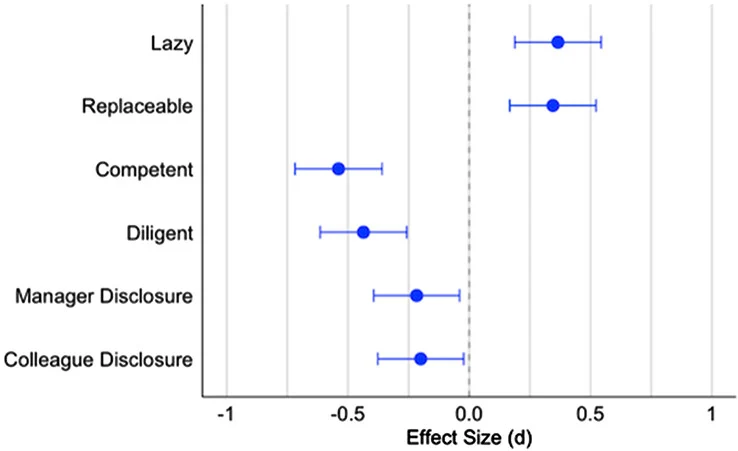
    Despite the quick growth and adoption of AI, lots of people feel that they will be seen in a bad light for using it. Users of AI worry that others will view them as lazy, less skilled, unmotivated, or even easily replaceable. These concerns seem to have been confirmed by a study published by the Proceedings Of The National Academy Of Sciences (PNAS).

    Study Insights from Duke University

    A new research from Duke University shows that using artificial intelligence (AI) in work tasks can have a bad effect on how colleagues or bosses see someone’s abilities and dedication. In a series of experiments involving 4,439 participants, the researchers looked into how individuals judge the performance of others when they know AI was involved, irrespective of age, gender, or job title. The research was based on setups where participants assessed made-up scenarios and results, with the AI usage by the individual being either revealed or changed.

    Perception of AI Users

    The findings reveal that professionals who rely on AI, even when the final output is excellent, are often thought of as less capable, less dedicated, or even lazy. This negative perception seems to be more intense when the task is seen as challenging or requiring significant time. This implies that the main issue isn’t the quality of the work done with AI but the belief that a shortcut was taken or that less effort was put in.

    The Dilemma for Professionals

    These results create a tricky situation for workers: while AI can boost productivity, it also risks how they are viewed in professional environments. Therefore, the study emphasizes the importance of understanding the social and psychological effects of AI in the workplace, especially concerning teamwork and career growth.

    Source:
    Link


  • Nvidia Increases Prices by 5-15% Due to Export Restrictions

    Nvidia Increases Prices by 5-15% Due to Export Restrictions

    Key Takeaways

    1. Nvidia faced a $5.5 billion loss due to U.S. government restrictions on chip shipments to China.
    2. Rising costs from material, logistics, and tariffs have led Nvidia to increase prices for nearly all its products.
    3. The GeForce RTX 5090 price rose by over 10%, with other RTX 50-series cards increasing by 5-10%.
    4. AI silicon demand remains strong despite export restrictions, supporting Nvidia’s financial stability.
    5. Nvidia projects significant revenue growth, estimating around $43 billion for the upcoming quarter, a 65% increase year-on-year.


    Nvidia is changing its pricing approach due to a mix of outside challenges. As per supply-chain reports from Digitimes Taiwan, the firm faced a hefty loss of $5.5 billion after the U.S. government stopped shipments of its H20 chips to China. At the same time, the transfer of Blackwell production to TSMC’s facility in Arizona, along with increased costs for materials, logistics, and tariffs, has caused expenses to rise significantly.

    Price Increases for Products

    To safeguard its profit margins, Nvidia has raised the official prices “for nearly all of its products” and has permitted board partners to do the same. The channel price for the prominent GeForce RTX 5090 has surged from about NT$90,000 to NT$100,000 ($2,966 to $3,295)—an over 10 percent rise since its launch. Other cards in the RTX 50-series have also seen price hikes of 5-10 percent. Datacenter equipment hasn’t been immune either: the H200 and B200 modules now carry an increase of around 10-15 percent, a cost that server vendors are starting to transfer to their customers.

    Continued Demand for AI Silicon

    Even with the export restrictions and rising tariffs, the need for AI silicon from both U.S. and global cloud service providers remains robust. Therefore, supply-chain insiders anticipate that Nvidia’s financial results for the quarter ending in late May will align with their previous guidance and exhibit “excellent profit performance.” The company reported a revenue of $39.3 billion in its last quarter and has projected around $43 billion for the upcoming period, suggesting a year-on-year growth of approximately 65 percent.

    Source:
    Link

  • Malaysia GPU Imports Surge 3,400% Amid Stockpiling Concerns

    Malaysia GPU Imports Surge 3,400% Amid Stockpiling Concerns

    Key Takeaways

    1. Malaysia’s GPU imports reached $2.74 billion in April 2025, a 3,400% increase from April 2023.
    2. Total GPU imports from January to April 2025 amounted to $6.45 billion, up 32% compared to all of 2024.
    3. Nvidia is the primary source of these imports, accounting for about 13% of its total sales in Q1 2025.
    4. Regulatory concerns arise over whether Malaysia is stockpiling GPUs for local use or acting as a shipping point for buyers in mainland China.
    5. The upcoming AI Diffusion Rule, effective May 15, 2025, may further increase scrutiny on Malaysia’s GPU import practices.


    Malaysia saw a massive increase in GPU imports, totaling $2.74 billion in April 2025, which marks a staggering 3,400 percent growth compared to the same month two years ago. This new record for monthly imports pushes the total for January to April to an impressive $6.45 billion, which is already 32 percent higher than the entire sum for 2024.

    Monthly Import Trends

    The rise in monthly import figures has been notable, starting with $1.12 billion in January, reflecting a 700 percent increase from the previous year. This was followed by $627 million in February, a jump to $1.96 billion in March, and finally reaching $2.74 billion in April, each showing a significant 3,400 percent rise compared to the same period in 2023.

    Source of Shipments

    The majority of these imports can be traced back to Nvidia. For the April quarter, Malaysia’s GPU imports, valued at around $5.33 billion, account for approximately 13 percent of Nvidia’s total sales of $43 billion in the first quarter. Normally, such a substantial figure would require Nvidia to disclose details about the specific country under U.S. Securities and Exchange Commission rules. However, the company’s new method of reporting revenue based on customer billing location obscures the actual destination of these products.

    Regulatory Concerns

    This situation has raised questions among regulators and industry experts about whether Malaysia is hoarding these accelerators for its own cloud services or acting as a shipping point for buyers in mainland China who are attempting to avoid stricter U.S. export restrictions. The upcoming AI Diffusion Rule, which takes effect on May 15, 2025, is likely to increase this scrutiny.

    As there is no available data on where the GPUs are ultimately headed, Malaysia’s unexpected rise to prominence underscores the lack of transparency in supply-chain reporting and the complex geopolitical issues that come with the surge in AI hardware demand.

    Source:
    Link

  • Tesla Uses AI to Improve Service Complaints and Customer Support

    Tesla Uses AI to Improve Service Complaints and Customer Support

    Key Takeaways

    1. Tesla is improving customer service by introducing a new AI Agent for direct communication with vehicle owners.
    2. The AI Agent can monitor response times, understand customer feelings, and notify higher authorities if necessary.
    3. Customers can escalate unresolved issues by typing ‘Escalate’ if they don’t receive a response within two weeks.
    4. The AI Agent is currently being tested at 10 selected service centers with built-in safeguards to prevent misuse.
    5. Tesla is leveraging its technology and AI innovations, which are also used in features like Full Self-Driving and the Tesla app.


    Tesla has been under fire for its customer service, but it’s working to make things better. The carmaker is using artificial intelligence (AI) to enhance how it communicates with customers.

    New AI Agent Introduction

    Raj Jegannathan, who leads the AI, IT Infrastructure, Cybersecurity, and Vehicle Service teams, announced on X that Tesla has rolled out a new AI Agent. This tool will engage with vehicle owners directly. It can monitor how long it takes to respond to issues, understand the feelings behind messages, and alert higher-ups if needed.

    Escalation Feature

    Jegannathan further explained that the communication system will enable Tesla owners to escalate their issues by simply typing ‘Escalate’ if they haven’t received a response within two weeks.

    Pilot Program Launch

    The AI Agent is currently functioning at 10 selected service centers. To avoid misuse, Tesla has implemented certain safeguards within the system.

    It’s fascinating to witness how Tesla is tackling one of its customers’ biggest challenges by utilizing its own technology. While the firm is best known for its electric vehicles, it also excels in AI innovation. Tesla has already woven AI into various aspects of its operations. For instance, its Full Self-Driving (FSD) feature is continually refined using real-world data from countless cars. This technology is crucial for manufacturing as well. AI also drives the Tesla app and segments of the company’s website.

    Source:
    Link

  • Arizona Court Accepts AI Video Testimony from Deceased Victim

    Arizona Court Accepts AI Video Testimony from Deceased Victim

    Key Takeaways

    1. An Arizona court allowed an AI-generated video statement of a deceased victim, Christopher Pelkey, to be shown during a sentencing hearing for his killer, Gabriel Horcasitas.

    2. The avatar was created by Pelkey’s sister, Stacey Wales, using image generation, voice cloning, and AI scripting tools, and it delivered a victim impact statement.

    3. The video included a disclaimer about its AI origin and featured actual footage of Pelkey, addressing Horcasitas and expressing the family’s feelings about their loss.

    4. Arizona law permits victim impact statements in various formats, and there were no objections to the inclusion of the AI video during the sentencing.

    5. Judge Todd Lang imposed the maximum sentence of 10.5 years, acknowledging the emotional impact of the AI-generated statement on the case.


    In a groundbreaking event for the U.S. legal system, an Arizona court has allowed an AI-created video statement of a deceased victim to be shown during a sentencing hearing. The video, which showcased a digital version of Christopher Pelkey, who lost his life in a 2021 road rage incident, was presented when Gabriel Horcasitas was being sentenced for his death.

    Creation of the Avatar

    The avatar was crafted by Pelkey’s sister, Stacey Wales, with assistance from her husband. They utilized a mix of image generation, voice cloning, and generative AI scripting tools. The resulting video displayed a digitally animated Pelkey delivering a victim impact statement directed at both the court and Horcasitas. This video was part of the family’s narrative during the sentencing phase.

    Presentation and Reactions

    The video began with a disclaimer indicating its AI origin and included actual footage of Pelkey from his life before returning to the avatar. In the video, the AI version addressed Horcasitas directly, conveying the family’s feelings about their loss and the impact of the past three and a half years on their lives.

    Under Arizona law, victim impact statements can be shared in different formats, and there were no objections to the AI video being included. The family made it clear that they authored the content, which wasn’t meant to be interpreted as Pelkey’s own words.

    Legal Insights

    Jessica Gattuso, the attorney for the family, mentioned that Arizona’s victim rights laws allowed the family to choose how to present their statement. “I didn’t see any issues with the AI and there was no objection,” she remarked.

    Judge Todd Lang, who oversaw the case, recognized the emotional weight of the video during the sentencing. He imposed the maximum sentence of 10.5 years, in line with the family’s wishes.

    Stacey Wales explained that the video was made using Stable Diffusion with LoRA (Low-Rank Adaptation) for generating images, and a different AI model to mimic Pelkey’s voice. She described the project as a way to help the court grasp the profound effect her brother’s death had on their family.

    Horcasitas was convicted in March 2025 and received his sentence this month. This case represents the first documented instance of a U.S. court accepting an AI-generated avatar to symbolize a deceased victim during sentencing.

    Source:
    Link