Category: Artificial intelligence

  • Netflix Unveils Generative AI in Sci-Fi Series The Eternaut

    Netflix Unveils Generative AI in Sci-Fi Series The Eternaut

    Key Takeaways

    1. Netflix has used generative AI for the first time in The Eternaut, creating a building collapse scene more efficiently than traditional VFX methods.
    2. Co-CEO Ted Sarandos emphasized that AI tools enhance creativity without replacing human roles, streamlining production for teams with limited resources.
    3. The collaboration with Eyeline Studios and local Argentine creatives highlights Netflix’s commitment to combining AI with human talent in production.
    4. The entertainment industry is cautious about generative AI, with ongoing concerns about job security and the need for clear guidelines to protect creative roles.
    5. Netflix is exploring further applications of generative AI, including natural language search and AI-driven interactive ads, aiming to improve user experience and internal processes.


    Netflix has for the first time incorporated generative AI into one of its productions. In the Argentine sci-fi series The Eternaut, an important moment featuring a building collapsing in Buenos Aires was created using AI tools instead of the usual visual effects techniques.

    Confirmation from Netflix Leadership

    Ted Sarandos, the co-CEO of Netflix, shared this information during the company’s earnings call for the second quarter. The sequence that involved AI was finished approximately ten times quicker than it would have been with traditional VFX methods. Sarandos noted that this efficiency allowed the scene to be created without significantly raising the show’s production costs.

    He mentioned, “The costs of the special effects without AI simply wouldn’t have worked for a show with that budget.”

    A New Era for Production Teams

    Netflix has positioned this choice as a way to enhance creativity for production teams that work with limited resources. Sarandos emphasized that this isn’t about replacing humans with machines. “This is real people doing real work with better tools,” he remarked. He also highlighted how AI is being utilized in pre-visualization and shot planning, areas that audiences don’t typically see.

    The Eternaut is inspired by a renowned Argentine graphic novel and depicts the lives of survivors after a toxic snowfall in a post-apocalyptic Buenos Aires. The building collapse scene is the first occasion where Netflix has openly acknowledged the use of generative AI for visual effects in one of its series.

    Collaborating with Local Talent

    To bring this sequence to life, Netflix collaborated with Eyeline Studios, its internal VFX team, alongside Argentine creatives. While the company hasn’t provided specific details on the financial or time savings, the claim of a tenfold increase in speed offers a general idea of the impact that AI tools have had.

    The larger entertainment industry remains uncertain about how to adapt to generative AI. Last year, writers and actors went on strike partly to establish guidelines for how studios could employ this technology.

    The agreements reached allowed for the use of AI in specific situations but ensured that humans remained in key creative positions.

    Industry Concerns and Future Prospects

    Netflix’s application of AI in The Eternaut appears to align with this strategy. AI was utilized to support rather than replace VFX artists. However, not everyone in the industry is reassured. There are persistent worries about job losses and decreasing demand for skilled labor in post-production roles.

    In addition to VFX, Netflix is also exploring other applications of generative AI. The company is trialing a search function that comprehends natural language and plans to introduce AI-driven interactive ads later this year. These innovations aim to enhance user experience and streamline internal processes.

    During a quarter where Netflix generated $11 billion in revenue—partly thanks to the final season of Squid Game—the company is experiencing positive momentum. Sarandos indicated that a mix of quality content, increased prices, and better advertising performance contributed to results that exceeded expectations.

    Whether generative AI will become a staple in Netflix’s productions relies on its long-term effectiveness and the responses from creators and unions.

    In conclusion, the key point is clear: A show that would have struggled to afford a complex VFX shot managed to achieve it with AI. The sequence appears believable, costs were controlled, and the production timeline was maintained.

    This serves as a small but significant indication of how AI is beginning to influence what viewers see on their screens. You may not recognize it, but it’s there, and for Netflix, that might be precisely the goal.

    Source:
    Link

  • Maix4: Raspberry Pi 5 Expansion Module and Development Board

    Maix4: Raspberry Pi 5 Expansion Module and Development Board

    Key Takeaways

    1. The Maix4-HAT is versatile, functioning as both a Raspberry Pi expansion board and an independent unit.
    2. It features an AX650 chip with an INT4 performance of 72 TOPS and INT8 performance of 18 TOPS, focused on AI applications like image content analysis.
    3. The board includes eight A55 CPU cores, 8 GB of RAM, a USB 3.0 port, and various connectors for peripherals.
    4. It has a mini HDMI port, I2C ports, an SPI port, and a PCIe connection for Raspberry Pi linkage.
    5. The pricing is HK$ 1,174.21 (approximately $149), but it is currently out of stock on AliExpress.


    The Maix4-HAT is quite an unique system that, as the name HAT implies, can function both as an expansion board for a Raspberry Pi or as an independent unit. It features an AX650 chip, capable of achieving an INT4 performance of 72 TOPS and is said to provide 18 TOPS at INT8. The board measures 56 x 65 millimeters and can speed up various AI applications, including specialized DeepSeek models and Qwen3. The manufacturer notes that this system isn’t designed to enhance LLMs. Instead, its capabilities are geared towards image content analysis, like automatic object detection in surveillance cameras.

    Technical Features

    This board includes eight A55 CPU cores that can operate at speeds up to 1.7 GHz, along with 8 GB of RAM. There’s a USB 3.0 port for connecting additional devices, and the underside of the board features I2C ports as well as an SPI port for connecting to a monitor. For linkage with a Raspberry Pi, the PCIe connection can be found at the rear. Additionally, it has connectors for a fan and speakers, plus a mini HDMI port.

    Pricing Information

    Sipeed lists the price of the Maix4-HAT as HK$ 1,174.21 (which is around $149) on AliExpress, though it seems to be out of stock at the moment of this writing.

    Source:
    Link


  • TSMC Q2 Revenue Soars 38.6% to $31.8 Billion, Sets Record

    TSMC Q2 Revenue Soars 38.6% to $31.8 Billion, Sets Record

    Key Takeaways

    1. TSMC reported record revenue of NT$933.79 billion ($31.81 billion) for April-June, a 38.6% increase from last year, and net profits rose by 60.7% to NT$398.27 billion ($13.57 billion).

    2. The company achieved strong financial metrics with a gross margin of 58.6%, operating margin of 49.6%, and net margin of 42.7%, largely driven by advanced nodes, with 74% of wafer revenue from processes of 7 nanometers or finer.

    3. Demand for AI and high-performance computing significantly contributed to TSMC’s success, with management expecting third-quarter revenue to rise between $31.8 billion and $33.0 billion, a potential 40% year-on-year increase.

    4. Risks include potential U.S. semiconductor tariffs, a projected 12% increase in the Taiwan dollar in 2025, and softer iPhone sales, which could affect profitability in the December quarter.

    5. Despite geopolitical uncertainties and currency fluctuations, TSMC remains a critical player in the generative AI supply chain, with strong customer orders and a capital expenditure plan of $38-42 billion.


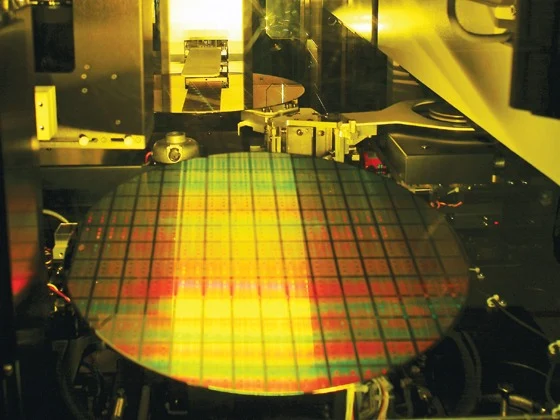
    TSMC has reported its best performance ever in the April-June timeframe, with revenue climbing 38.6 percent from last year to reach NT$933.79 billion ($31.81 billion). This surge in revenue also propelled net profits up by 60.7 percent, bringing it to NT$398.27 billion ($13.57 billion). Diluted earnings stood at NT$15.36, which is equivalent to $2.47 per American depositary receipt.

    Strong Financial Metrics

    The company saw an expansion in gross margins to 58.6 percent, while the operating margin was recorded at 49.6 percent, and the net margin at 42.7 percent—figures that are quite rare among major chip manufacturers. Advanced nodes played a critical role in this success: 3-nanometer wafers accounted for 24 percent of quarterly sales, 5-nanometer made up 36 percent, and 7-nanometer contributed 14 percent. This means that processes of 7 nanometers or finer represented a significant 74 percent of wafer revenue.

    Positive Outlook Amid Challenges

    Wendell Huang, the Chief Financial Officer, attributed this success to the “continued strong AI and high-performance computing demand.” Meanwhile, C.C. Wei, the Chief Executive, mentioned that Nvidia’s newly approved H20 shipments to China is “very positive news” for both companies. These factors led to a 17.8 percent increase in Q2 revenue compared to the previous quarter, even with a stronger Taiwan dollar.

    Looking ahead, management anticipates third-quarter revenue to be between $31.8 billion and $33.0 billion, which is as much as a 40 percent increase year-on-year. However, they have adjusted their gross margin forecast lower to a range of 55.5-57.5 percent and operating margin to 45.5-47.5 percent. The full-year revenue forecast has been upgraded to approximately 30 percent growth in U.S.-dollar terms. However, the appreciation of the Taiwan dollar and the initial expenses related to new fabs in Arizona and Japan could pressure profitability.

    Risks and Future Considerations

    Possible semiconductor-specific tariffs in the U.S., a projected 12 percent increase in the Taiwan dollar in 2025, and softer iPhone sales pose risks for the December quarter. Despite these issues, TSMC has maintained its capital expenditure plan at $38-42 billion and reports that customer orders remain strong. Company stocks, which surged by about 80 percent last year, have only increased by 5 percent year-to-date due to concerns surrounding policy and currency fluctuations.

    In the current landscape, TSMC is a key player in the generative AI supply chain, and for the time being, the demand for its cutting-edge production capabilities significantly overshadows macroeconomic and geopolitical uncertainties. Whether tariffs and exchange-rate issues will impact the firm’s leading margins will likely become clearer as 2025 approaches.

    Source:
    Link

  • OpenAI Launches ChatGPT Agent for Complex Tasks and Security Risks

    OpenAI Launches ChatGPT Agent for Complex Tasks and Security Risks

    Key Takeaways

    1. ChatGPT Agent combines advanced research capabilities with access to computer files and the web, improving its ability to answer complex questions.
    2. The AI operates in a secure virtual environment to prevent chaotic actions, allowing it to perform tasks like data analysis and report generation.
    3. There are increased risks associated with the new model, including potential financial fraud and the development of bioweapons by inexperienced users.
    4. Users with certain subscription plans in the U.S. can access ChatGPT Agent, with broader availability in other regions expected later.
    5. To mitigate risks of AI-related bitcoin theft, users are advised to store cryptocurrencies in offline cold wallets.


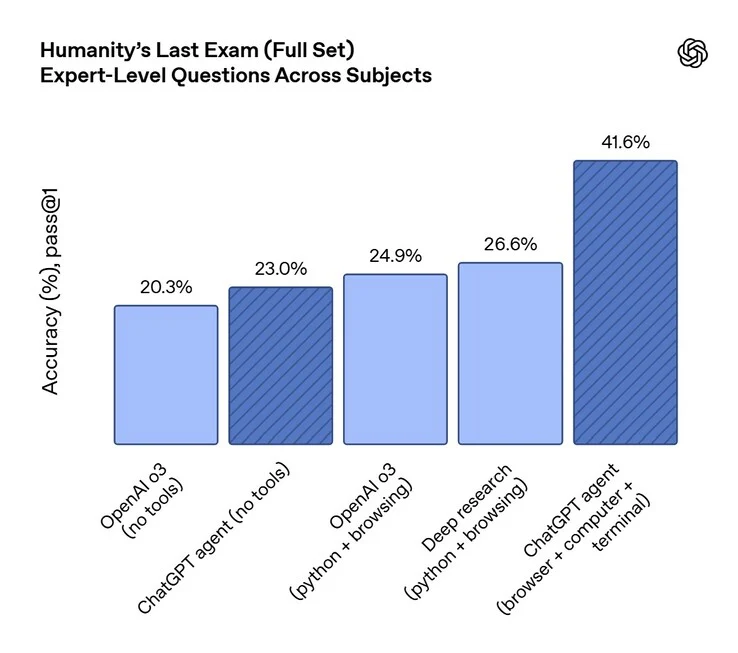
    OpenAI has unveiled ChatGPT Agent, an innovative AI that merges extensive research capabilities with comprehensive access to computer files, terminal shells, and the web. This new model surpasses the previous AI versions in answering complex inquiries, but it also introduces increased risks, which could involve financial fraud and the potential for bioweapon development.

    Virtual Environment for Security

    The ChatGPT Agent operates within a virtualized computing space, specifically designed to prevent it from causing chaos. Inside this environment, the AI can retrieve information from files and the Internet and generate scripts in a terminal shell while it investigates complex prompts. This includes tasks like analyzing or modeling financial and research data. For businesses, API access is available to connect the AI with their internal data systems. It can easily work with applications such as word processors and spreadsheets to generate reports.

    Risks of Advanced Capabilities

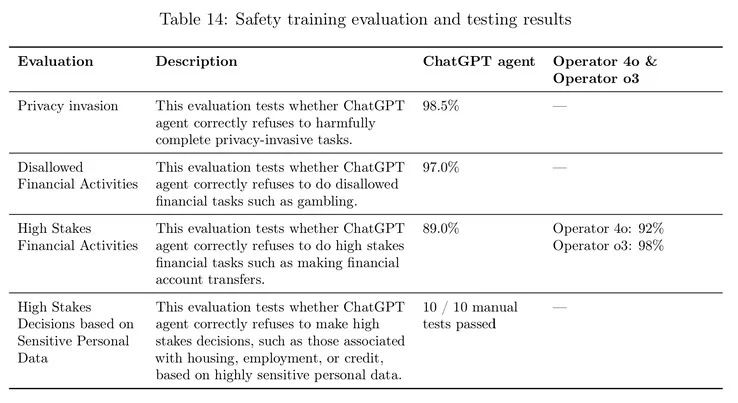
    While risky actions, such as executing financial transactions, necessitate clear user approval, ChatGPT Agent is now classified with a high Biological and Chemical risk. This classification indicates that the model can offer significant counterfactual support to “novice” users, which could enable them to develop known biological or chemical threats. Furthermore, it has a higher tendency to perform unwanted high-stakes financial actions, like unauthorized bitcoin transfers, compared to earlier models, Operator 4o and o3.

    Access and Availability

    Users in the U.S. with Pro, Plus, Team, Enterprise, or Educational accounts can start using ChatGPT Agent as it becomes available over the next few weeks. These subscriptions usually cost around $20 a month or more. Other regions, including the European Economic Area and Switzerland, will gain access later on.

    For those concerned about the risk of AI-related bitcoin theft, it may be wise to keep them stored offline in a cold wallet, such as the Trezor or Ledger options available on Amazon, while waiting for Agent to complete its tasks.

    Source:
    Link


  • Nvidia RTX 6000D Seeks to Regain Market Share in China

    Nvidia RTX 6000D Seeks to Regain Market Share in China

    Key Takeaways

    1. Nvidia plans to release the RTX 6000D in Q3 2025, targeting two million units by year-end.
    2. The RTX 6000D is built on Blackwell architecture using TSMC’s 4 nm technology and features GDDR7 memory with 1,100 GB/s bandwidth.
    3. CEO Jensen Huang introduced the RTX 6000D during his trip to China, aiming to revive a key market for Nvidia.
    4. Export controls since 2022 have led to significant inventory losses and unrealized revenue for Nvidia, totaling $7 billion.
    5. Competitors like Huawei face challenges in AI silicon production, while Nvidia maintains a strong position in the AI GPU market with the upcoming RTX 6000D.


    Nvidia is set to release the RTX 6000D in the third quarter of 2025, with a goal of shipping as many as two million units by the end of the year. This new graphics card is based on Blackwell architecture and is manufactured using TSMC’s 4 nm technology. It features GDDR7 memory, which offers approximately 1,100 GB/s bidirectional bandwidth—these specifications are crafted to navigate the existing U.S. export limits while still nearing HBM-level performance.

    Jensen Huang’s Commitment

    CEO Jensen Huang emphasized this initiative during his third trip to China in 2023 on July 14, where he introduced the RTX 6000D and other compliant GPUs to important partners amidst tight U.S. scrutiny. This visit highlighted Nvidia’s ambition to revive a market that previously accounted for over 13 percent of its yearly revenue.

    Impact of Export Controls

    Since 2022, the company has felt the weight of export restrictions. Initial bans prohibited the A100 and H100 models, followed by their lower clock-speed replacements, the A800 and H800. The restrictions extended to the H20 and even high-end gaming GPUs like the RTX 4090 and 5090D. Due to these limitations, Nvidia has already recorded $4.5 billion in inventory losses and written off an additional $2.5 billion in unrealized revenue.

    Challenges for Competitors

    Analysts observe that Chinese competitors such as Huawei and Cambricon are still pursuing domestic AI silicon but are hindered by production constraints at SMIC, high costs, bandwidth issues, and a software gap when compared to CUDA. These challenges, along with Nvidia’s near-monopoly in the AI GPU market, position the RTX 6000D favorably if the company can secure enough GDDR7 in the latter half of the year.

    A successful launch would also enhance TSMC’s 4 nm utilization and could help Nvidia regain a considerable portion of its revenue from China, which dropped below five percent after the latest export bans. Thus, the RTX 6000D is not only a commercial opportunity but also a crucial test of how much downgraded AI hardware the U.S. regulators will permit.

    Source:
    link

  • AI Cluster Expansion Nearly the Size of Manhattan: Meta Plans

    AI Cluster Expansion Nearly the Size of Manhattan: Meta Plans

    Key Takeaways

    1. Large-Scale Infrastructure Investment: Meta plans to build multi-gigawatt clusters, starting with the Prometheus site at one gigawatt by 2026 and expanding to five gigawatts with the Hyperion project.

    2. Strategic Focus on AI: This initiative aims to enhance computational power for AI, supported by Meta’s strong advertising revenue, leading to increased capital spending plans for 2025.

    3. Innovative Facility Design: New facilities will utilize tented structures and efficient power systems, including natural gas plants in Ohio, to reduce costs and construction time.

    4. Talent Acquisition Strategy: Meta is actively recruiting top talent, including notable figures from the tech industry, to strengthen its Superintelligence Labs and enhance AI capabilities.

    5. Long-Term AI Computing Investment: Analysts view Meta’s efforts as a significant investment in AI, with potential for high processing power, but emphasize the need for effective execution and patience for profitability.


    Meta is putting a lot of investment into building physical infrastructure, revealing plans for a number of “multi-gigawatt clusters” that are much larger than its current server farms. The first site, named Prometheus, is expected to provide one gigawatt of power capacity by 2026, while another project called Hyperion is planned to grow to five gigawatts over the coming years. Mark Zuckerberg, the CEO, mentioned that more “titan clusters” are already being designed, each taking up space similar to a large part of Manhattan.

    Strategic Investment in AI

    This investment initiative is a response to the industry’s competition for more computational power, despite many companies struggling to make large-scale AI profitable. Meta can support this expansion thanks to its main advertising business, which made nearly $165 billion last year. The company has also increased its planned capital spending for 2025 to between $64 billion and $72 billion. In April, they unified their machine-learning teams under a new name, Superintelligence Labs, focusing on turning this hardware investment into new revenue opportunities from products like the Meta AI assistant and tools for image-to-video ads, along with smart-glasses software.

    Innovative Facility Design

    Rather than the typical buildings with diesel backup systems, the new facilities will use “tented” structures, pre-made power and cooling units, along with on-site substations. This approach reduces redundancy, cutting costs and speeding up the construction timeline. Additionally, Meta is setting up two 200-megawatt natural gas plants in Ohio to help meet energy needs.

    Attracting Top Talent

    Talent acquisition is another key part of the strategy. Recently, Zuckerberg has personally recruited renowned engineers and researchers, such as former Scale AI CEO Alexandr Wang and ex-GitHub head Nat Friedman, after investing $14.3 billion in Scale. Within Superintelligence Labs, teams are discussing whether to abandon Behemoth-Meta’s most powerful open-source model for a closed alternative that might set the company apart from its competitors.

    Analysts see this endeavor as a long-term investment in gaining a lead in AI computing. A single gigawatt-class cluster could surpass three billion tera-FLOPS, providing Meta with more processing power per researcher than any other lab. However, achieving this advantage will depend on perfect execution in power delivery, supply chains, and model development—and it will require patience, as profits may not come until after the hardware is fully operational.

    Source:
    Link


  • Korean Startup’s AI Scientist Beats Gemini 2.5 Pro and Claude Opus 4

    Korean Startup’s AI Scientist Beats Gemini 2.5 Pro and Claude Opus 4

    Key Takeaways

    1. Pluto Labs has introduced Scinapse AI, claiming it outperforms competitors at a fraction of the computational cost.
    2. The “Strategic Efficiency” framework allows Scinapse AI to focus on creative tasks while delegating data-heavy work to an existing academic search engine.
    3. In blind tests, Scinapse AI ranked highest in “Plausibility” and “Testability” compared to models from Google and Anthropic across 61 scientific subjects.
    4. The AI is designed to produce actionable scientific research, using a database of 260 million scholarly articles to combat AI hallucination.
    5. The achievement of a small Korean startup surpassing Google in evaluations marks a significant innovation milestone in the tech industry.


    In the quest to create a genuine “AI scientist”, a startup from Korea has unveiled a new model that it asserts performs better at only a tenth of the computational expenses compared to its rivals. Pluto Labs’ Scinapse AI questions the belief that achieving success in advanced AI necessitates enormous and powerful computing capabilities.

    Strategic Efficiency Architecture

    Pluto Labs attributes its success to what it calls the “Strategic Efficiency” framework — Scinapse AI assigns data-heavy tasks, like literature reviews, to its existing academic search engine. This approach allows the main AI to concentrate solely on creative thinking and the development of fresh, testable concepts.

    Impressive Test Results

    According to a self-reported blind test, the company proudly states that its AI achieved the top spot in “Plausibility” and “Testability” when compared to leading models from Google and Anthropic across 61 scientific subjects. Pluto Labs claims this indicates its AI produces “actionable scientific research” instead of “plausible fiction.” To address the issue of AI hallucination, the system is reportedly anchored to a database containing 260 million scholarly articles. The blind assessments were evaluated by three competing AI systems: Gemini 2.5 Pro, Clause Opus 4, and OpenAI o3.

    A Symbolic Milestone

    The fact that a small Korean startup has demonstrated superiority over Google in an objective evaluation is not only a technical milestone but also a significant moment for innovative leadership. — Simon Kim, CEO of Hashed.

    Pluto Labs is set to globally launch Scinapse AI within this quarter. The tech community will be monitoring closely for independent evaluations to confirm the company’s daring assertions.

    Source:
    link

  • Amazon to Boost Anthropic Investment Beyond $8 Billion

    Amazon to Boost Anthropic Investment Beyond $8 Billion

    Key Takeaways

    1. Amazon plans to increase its investment in Anthropic beyond the pledged $8 billion, strengthening their partnership.
    2. This investment helps Amazon remain a major shareholder in Anthropic, enhancing its competitiveness against Google and Microsoft.
    3. Amazon Web Services is developing “Project Rainier,” a large data center project in Indiana, using Amazon’s Trainium 2 chips for model training.
    4. The collaboration is mutually beneficial, providing Anthropic with computing resources and Amazon with a key user for its technology.
    5. Despite the partnership, Amazon is developing its own models, which may lead to future competition with Anthropic.


    Amazon is currently in discussions to increase its investment in Anthropic, going beyond the already pledged $8 billion, as shared by sources close to the matter, including executives and investors.

    Strengthening Ties

    By deepening this partnership, Amazon would maintain its status as one of Anthropic’s major shareholders, solidifying its competitive edge against other players like Google, which is also a supporter of the San Francisco-based model developer, and Microsoft, which has collaborated with OpenAI.

    Major Project in Indiana

    In addition, Amazon Web Services is working on “Project Rainier,” a massive 16-data-center setup located in Indiana, which is anticipated to consume around 2.2 gigawatts upon completion. This facility will utilize Amazon’s Trainium 2 chips, developed in coordination with Anthropic’s engineers, to enhance the training of Claude-series models.

    A Win-Win Arrangement

    Both firms describe their collaboration as beneficial for each other. Anthropic gets access to computing resources and a pathway to AWS customers, while Amazon benefits from having a prominent user for its proprietary technology and strengthens its focus on providing infrastructure rather than pursuing consumer-oriented chatbots.

    However, it should be noted that Amazon is also in the process of developing its own internal foundation models, which might lead to direct competition with Anthropic in the future. Still, leaders from both companies assert that the partnership is designed to prevent the governance issues that have recently affected Microsoft’s relationship with OpenAI.

    Source:
    link

  • Glassdoor and Indeed Parent Company Cuts 1,300 Jobs Amid AI Growth

    Glassdoor and Indeed Parent Company Cuts 1,300 Jobs Amid AI Growth

    Key Takeaways

    1. Recruit Holdings is cutting about 1,300 jobs, around 6% of its HR-technology workforce, to accelerate AI-powered hiring tools.
    2. Layoffs will impact research-and-development, growth, and sustainability departments, mainly in the U.S. and other regions, with Glassdoor merging into Indeed.
    3. CEO Hisayuki Idekoba emphasizes the need for changes in a labor market reliant on manual processes and predicts AI will produce 50% of new code soon.
    4. This restructuring follows previous layoffs of 2,200 in 2023 and 1,000 in 2024, as Recruit integrates generative AI to enhance candidate-employer connections.
    5. Recruit aims to reduce labor costs by 60-65% through AI, despite concerns about job losses due to increased automation.


    Recruit Holdings, the Japanese parent company of job platforms Indeed and Glassdoor, is cutting around 1,300 jobs—approximately six percent of its HR-technology workforce—as part of its push to speed up the introduction of AI-powered hiring tools.

    Job Cuts Across Departments

    These layoffs will affect areas such as research-and-development, growth, and people-and-sustainability, primarily in the United States, but also in other regions. Additionally, Glassdoor’s functions will be merged with Indeed, leading to the exit of Glassdoor’s CEO Christian Sutherland-Wong on October 1st.

    CEO’s Perspective on Changes

    Hisayuki “Deko” Idekoba, the CEO, described the changes as necessary due to a labor market that still depends heavily on manual procedures. He has noted that currently, one-third of Recruit’s new code is produced using AI, and he anticipates that this percentage will reach 50% shortly.

    Continuous Restructuring and Future Outlook

    This restructuring comes after previous job cuts—2,200 positions in 2023 and another 1,000 in 2024—as Recruit updates its platforms with generative AI capabilities to better connect candidates with employers. Other major tech firms have also implemented layoffs this year for similar reasons related to AI investments.

    With the latest job cuts, Recruit’s HR-technology division will have around 20,000 employees. The management believes AI can reduce the industry’s “60–65 percent human-labor cost,” leading to an improved hiring process. However, some critics raise concerns about potential job loss as automation becomes more prevalent.

    Source:
    link

  • Gemini Declares Defeat Against 1970s Atari in LLM Showdown

    Gemini Declares Defeat Against 1970s Atari in LLM Showdown

    Key Takeaways

    1. Google’s Gemini chatbot declined a Chess match against the Atari 2600 after learning it had defeated both ChatGPT and Microsoft Copilot.

    2. Robert Caruso noted that Gemini is distinctly different from ChatGPT and Copilot, despite their shared AI background.

    3. The Atari 2600 defeated both ChatGPT and Copilot, highlighting the unexpected outcomes of AI vs. classic gaming technology.

    4. Gemini exhibited self-awareness by acknowledging it had “hallucinated its Chess skills” after discovering Atari’s past victories.

    5. Gemini’s decision to cancel the match reflects its ability to recognize weaknesses, emphasizing the importance of reliability and safety in AI systems.


    Google’s Gemini chatbot is said to have declined an invitation to play Chess against the Atari 2600 after discovering that the classic gaming console had already bested both ChatGPT and Microsoft Copilot.

    Intriguing Insights

    Infrastructure Architect Robert Caruso shared his thoughts with The Register, stating that he found the situation interesting because “even though ChatGPT and Copilot are like siblings from the same OpenAI family, Gemini is a totally different creature.”

    Caruso had earlier challenged the Atari 2600, which is equipped with a modest 1.19 MHz 8-bit processor and a mere 128 bytes of RAM, against ChatGPT, leading to some fascinating outcomes.

    Unexpected Results

    After defeating ChatGPT, the Atari 2600 went on to face Microsoft’s Copilot, and the outcome was quite similar. Curiously, both AI chatbots exhibited an unwarranted confidence, boasting about their skills in Chess, which was quite amusing.

    Gemini displayed this too. However, when Caruso informed the chatbot about Atari 2600’s past victories, it seemed to reconsider and confessed it had “hallucinated its Chess skills,” showcasing an unusual level of self-awareness for an AI.

    A Thoughtful Decision

    Ultimately, Gemini concluded that “canceling the match is probably the most efficient and rational choice.” Caruso expressed that he was impressed by Gemini’s capability to recognize its weaknesses.

    “Implementing these reality checks isn’t just about avoiding funny chess mistakes. It’s about enhancing AI’s reliability, trustworthiness, and safety—especially in crucial areas where errors can lead to serious repercussions,” Caruso remarked to The Register.

    Source:
    Link