Category: Artificial intelligence

  • Scammers Exploit X’s Grok AI to Distribute Malicious Links

    Scammers Exploit X’s Grok AI to Distribute Malicious Links

    Key Takeaways

    1. Grokking Exploit: Scammers use “Grokking” to hide harmful links in the From field of promoted posts, bypassing link restrictions on X.

    2. System-Trusted Accounts: Grok’s account is seen as “system-trusted,” allowing harmful links to slip past scrutiny and gain visibility.

    3. SEO Boost for Malicious Links: When Grok interacts with a post, it enhances the SEO and domain reputation of the linked content, leading to increased reach.

    4. Dubious Content Promotion: The promoted links often lead to fake captcha scams and malware, exploiting ad networks to monetize clicks.

    5. Evasion of Security Checks: Disguised posts evade X’s review process, lacking any scanning for malicious links, making them difficult to detect.


    Cybersecurity expert Nati Tal, who leads Guardio Labs, has pointed out a new exploit involving Grok AI that enables scammers and threat actors to get around link restrictions on promoted posts, allowing them to share harmful links on X.

    The Grokking Method

    This technique, referred to as “Grokking,” consists of concealing a link in the From field of a paid promotion and prompting Grok to locate the source of that boost. When Grok identifies the link in the From field, it inadvertently includes it in its response, increasing its visibility significantly.

    Tal explains that the reason this tactic is effective is that Grok’s X account is considered “system-trusted,” meaning it does not face the same checks or scrutiny as other accounts. Even more troubling is that these promoted posts gain engagement and rack up “100k to 5M+ impressions” with Grok’s reply appearing underneath.

    SEO and Domain Reputation Boost

    When Grok is invoked to provide an answer, it also enhances the SEO and “domain reputation” of the links, as they are “echoed by Grok on a post with millions of impressions!”

    Tal warns that these links “navigate through dubious ad networks, monetizing clicks with ‘direct links’ known to promote fake captcha scams, info-stealer malware, and other questionable grey-area content.” He emphasizes that this method renders the links “fully visible, clickable, and impossible to miss.”

    Disguised Malicious Content

    The disguised posts are often labeled as “video card” posts, accompanied by “adult content baits” that somehow evade X’s review process. Tal asserts, “There is no scanning for malicious links whatsoever on X! Yet, it is still hardly noticeable at this spot.”

    Interestingly, Grok replied to a user just underneath the post, providing a broken link when the user asked for the correct link to report the issue.

    Source:
    Link
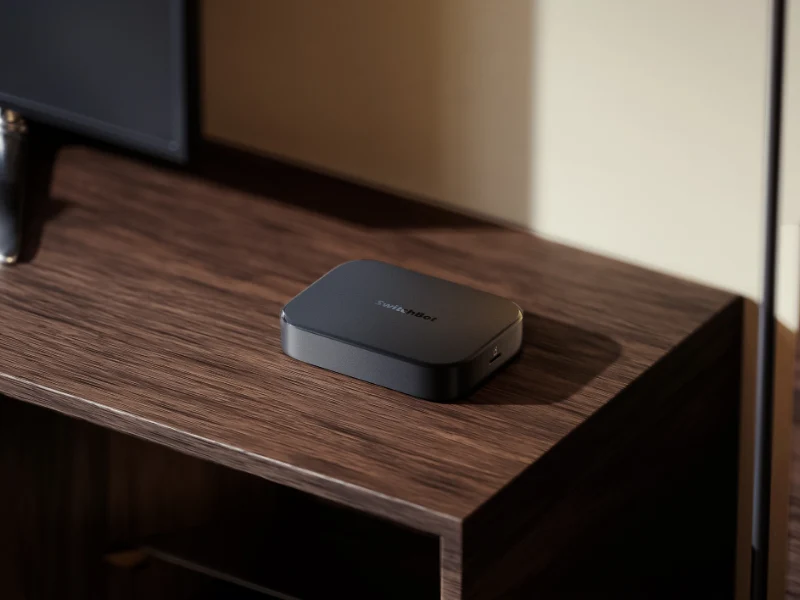


  • SwitchBot AI Hub: New Smart Home Hub with VLM Features

    SwitchBot AI Hub: New Smart Home Hub with VLM Features

    Key Takeaways

    1. The SwitchBot AI Hub is the first smart home hub to use Visual Language Model (VLM) technology, unveiled at IFA 2025.
    2. It can identify events through compatible smart cameras and activate devices based on those events, requiring a subscription for this feature.
    3. The hub can translate video footage into text, enabling smart actions like turning on lights when someone is recognized reading in a dark room.
    4. Users can search recorded video footage by text and receive daily event summaries via the SwitchBot app.
    5. It features 32 GB of built-in storage, expandable up to 1 TB, and connects with over 100 smart devices using various connectivity options.


    More information regarding the SwitchBot AI Hub has been revealed at IFA 2025. Launched in May 2025, this smart home hub is currently being showcased at the event in Berlin. The company asserts that it is the first AI hub worldwide that supports Visual Language Model (VLM) technology.

    Features of the AI Hub

    The SwitchBot AI Hub implements VLM to identify events and convert them into text, which allows it to activate smart home devices. To access this subscription-based function, the hub must be connected to one of three compatible smart cameras: the Smart Video Doorbell, the Pan/Tilt Cam Plus 2K Plus, or the Pan/Tilt Cam 3K Plus (currently priced at $69.99 on Amazon).

    Real-World Applications

    A demonstration of the SwitchBot AI Hub’s text translation capabilities using video footage is featured in a YouTube video (below). In the video, an individual is recognized as “in a dark room” while “reading a book.” According to SwitchBot, this could activate smart lighting in that space. Another application for this feature is enabling text searches of recorded video footage. For instance, you might ask, “Show me when I left my phone.” Additionally, users will receive daily event summaries through the SwitchBot app.

    Storage and Connectivity Options

    The SwitchBot AI Hub comes with 32 GB of built-in storage, which can be expanded up to 1 TB, allowing for local data storage and processing. It claims to connect with over 100 smart home devices, supporting Matter Over Bridge, Bluetooth, and dual-band 2.4GHz/5GHz Wi-Fi. It is yet to be determined when the SwitchBot AI Hub will officially launch and what the pricing will be.

    Source:
    Link


  • Nvidia H100 H200 GPU Supply Strong Despite Shortage Claims

    Nvidia H100 H200 GPU Supply Strong Despite Shortage Claims

    Key Takeaways

    1. Nvidia denies rumors of shortages for H100 and H200 GPUs, stating that they can fulfill new orders without delays.
    2. Confusion arose from Nvidia’s earnings call, leading some to believe the H100 and H200 GPUs were sold out, which Nvidia refutes.
    3. The rise in demand for the H20 GPU does not impact the production of H100 or H200 units, according to Nvidia.
    4. Nvidia has achieved record revenue of $41.096 billion in its AI sector and assures customers they can meet demand.
    5. Future high-end AI GPUs are planned for annual updates, with new models expected in 2026, 2027, and 2028, and potential manufacturing in Taiwan.


    Nvidia has recently rejected claims about shortages of H100 and H200 GPUs, which were said to prioritize H20 GPU orders, calling them “incorrect rumors.” The company asserts that cloud partners can operate all H100 and H200 units online, and they can still process new orders without any delays. This statement comes as a response to ongoing market speculation regarding a limited supply.

    Earnings Call Confusion

    Previously, comments made during Nvidia’s latest earnings call led to beliefs that the H100 and H200 GPUs were “sold out.” Some interpreted this as a sign of scarcity, but this view contradicts Nvidia’s recent assurance of ample supply, likely due to a lack of context in the earlier communications.

    H20 Demand and Production

    The H20 GPU, designed with U.S. export regulations in mind, experienced a surge in demand after Washington allowed Nvidia to resume selling it. Nonetheless, the company insists that the rise in H20 demand does not affect the production of H100 or H200 units.

    Claims about backdoors and a “kill switch” from Beijing have been denied by Nvidia and remain unsubstantiated. There are whispers of a new GPU specifically for China, codenamed B30A, but no specific information is available at this time.

    Strong Revenue and Future Plans

    Nvidia’s AI sector has achieved a record revenue of $41.096 billion, indicating strong demand. Despite this, the company maintains that it can satisfy buyer needs and encourages customers to reach out directly. Plans are in place for annual updates on upcoming high-end AI GPUs, with Rubin expected in 2026, Rubin Ultra in 2027, and Feynman in 2028. There are intentions to manufacture the new Rubin chips in Taiwan, although these details have yet to be confirmed.

    Source:
    Link


  • China Implements AI Content Labeling Law on Major Social Platforms

    China Implements AI Content Labeling Law on Major Social Platforms

    Key Takeaways

    1. Mandatory AI Content Labeling: All AI-generated text, images, audio, and videos must be clearly labeled to indicate their origin.

    2. Platform Compliance: Major platforms like WeChat, Douyin, Weibo, and Xiaohongshu have implemented specific requirements for labeling AI-generated content with strict enforcement.

    3. Penalties for Misuse: The Cyberspace Administration of China (CAC) has established penalties for those who misuse AI to spread misinformation or manipulate public opinion.

    4. Focus on Misinformation and Protection: The law aims to combat misinformation, protect copyrights, and enhance online safety, especially for young users.

    5. Global Trend: China is among the first major markets to enforce such labeling laws, with similar regulations emerging in other regions worldwide.


    China has put a new law into place that mandates social media platforms to tag content made by AI. This law went into effect on Monday, and major platforms began using their new compliance tools on the same day. This action from Beijing is part of the CAC’s “Qinglang” initiative for 2025, aimed at fighting misinformation and increasing control over AI.

    New Labeling Requirements

    All text, images, audio, and videos produced by AI must have clear labels indicating they are AI-generated. Additionally, they should include hidden identifiers like digital watermarks or metadata. This law was created by the Cyberspace Administration of China in conjunction with industry experts, public security, and broadcasting authorities. It was announced in March and has now been put into action.

    Platform-Specific Changes

    WeChat, which has about 1.4 billion active users each month, now requires content creators to announce if their posts are AI-generated. They strictly prohibit any alteration of these labels. Douyin, known as TikTok in many countries, which boasts around 766.5 million monthly active users, mandates visible tags on all AI-generated content and checks sources via metadata. Weibo has introduced a feature for reporting “unlabeled AI content,” while Xiaohongshu, also called rednote, will add labels if users forget to do so. Many platforms are also advising users to be careful with content that lacks labels and may remove posts that are incorrectly labeled.

    Penalties and Focus Areas

    The CAC has set penalties for those who misuse AI to spread false information or sway public opinions, particularly targeting paid online commentators. This law seeks to address misinformation, copyright issues, and online scams, especially focusing on misleading marketing in short-video applications and aiming to enhance protections for young users. While this promotes transparency online, there are still chances that some may evade these labeling requirements.

    China stands as one of the first big markets to enforce this mandatory labeling for AI-generated content, with similar regulations popping up in other regions globally. The Internet Engineering Task Force has suggested an AI metadata header, and devices like the Google Pixel 10 are starting to include C2PA credentials. It’s worth noting that users can still occasionally bypass these safety measures.

    Source:
    Link


  • China Boosts SME AI Adoption with New Computing Power Vouchers

    China Boosts SME AI Adoption with New Computing Power Vouchers

    Key Takeaways

    1. China’s local governments are offering “computing power vouchers” to subsidize AI training and inference for small and medium-sized enterprises (SMEs).
    2. Major cities like Shanghai and Beijing have implemented these vouchers, with Shanghai providing around CN¥600 million (approximately $84 million) to cover up to 80% of AI rental costs.
    3. The initiative aligns with China’s December 2024 policy to promote the high-quality development of the data labeling industry and reduce R&D expenses for smaller firms.
    4. The “Eastern Data, Western Computing” strategy aims to optimize the use of underutilized data centers, enhancing efficiency and lowering costs for SMEs.
    5. The effectiveness of the voucher program may be affected by administrative hurdles and regional differences in access and implementation.


    China’s local governments are introducing “computing power vouchers,” which provide significant subsidies for AI training and inference targeted at small and medium-sized enterprises (SMEs). Cities such as Beijing, Shanghai, Henan, Shandong, Chengdu, Shenzhen, and Ningbo have already implemented these vouchers. Among these, Shanghai stands out, offering around CN¥600 million (approximately $84 million) in vouchers. This covers up to 80 percent of AI rental costs, along with an additional CN¥100 million (around $14 million) designated for data and large language model (LLM) training. The goal of these initiatives is to utilize underused data centers while promoting wider AI adoption among smaller businesses.

    Policy Implementation

    The voucher initiative aligns with China’s December 2024 policy, known as “Implementation Opinions on Promoting the High-Quality Development of the Data Labeling Industry.” This program seeks to reduce research and development expenses for smaller firms. The vouchers enable SMEs to exchange credits at local or national data centers, allowing them to access computing power at rates lower than market value. Chengdu’s government has broadened its pilot initiative, now dedicating CN¥100 million (around $14 million) for research institutions. In contrast, Shandong’s provincial government has set aside CN¥30 million (approximately $4 million) and plans to allocate an additional CN¥1 billion (about $140 million). Meanwhile, applications for vouchers are already being accepted in Beijing.

    Optimizing Data Centers

    China’s “Eastern Data, Western Computing” strategy has positioned numerous facilities in the western regions where power is less expensive to meet the demands of coastal areas. This rapid setup has resulted in many facilities operating at low capacity, with some running at only 20 to 30 percent utilization. The voucher scheme is designed to establish a cohesive, nationwide high-power computing network that can efficiently distribute workloads, thus improving the usage rates of underutilized data centers.

    For small and medium enterprises, these vouchers provide access to more affordable training cycles, which facilitates faster prototyping and broader availability of AI resources that were previously too expensive. Additionally, these vouchers offer a means for local governments to make use of idle capacity and validate their capital investments. However, the effectiveness and uptake of these vouchers remain uncertain due to potential administrative hurdles and legal or logistical challenges that could hinder progress.

    Industry Context

    In related news, there are unverified reports about the installation of 39 new data centers equipped with 115,000 “illegal” Nvidia Hopper GPUs. While these reports are still pending confirmation, the broader industry landscape suggests a supportive environment for AI adoption. Nevertheless, the outcomes will likely differ across regions, depending on how swiftly local authorities can simplify access to vouchers and improve scheduling processes.

    Source:
    Link


  • Moonshot AI Launches Kimi K2: Free Alternative to DeepSeek

    Moonshot AI Launches Kimi K2: Free Alternative to DeepSeek

    Key Takeaways

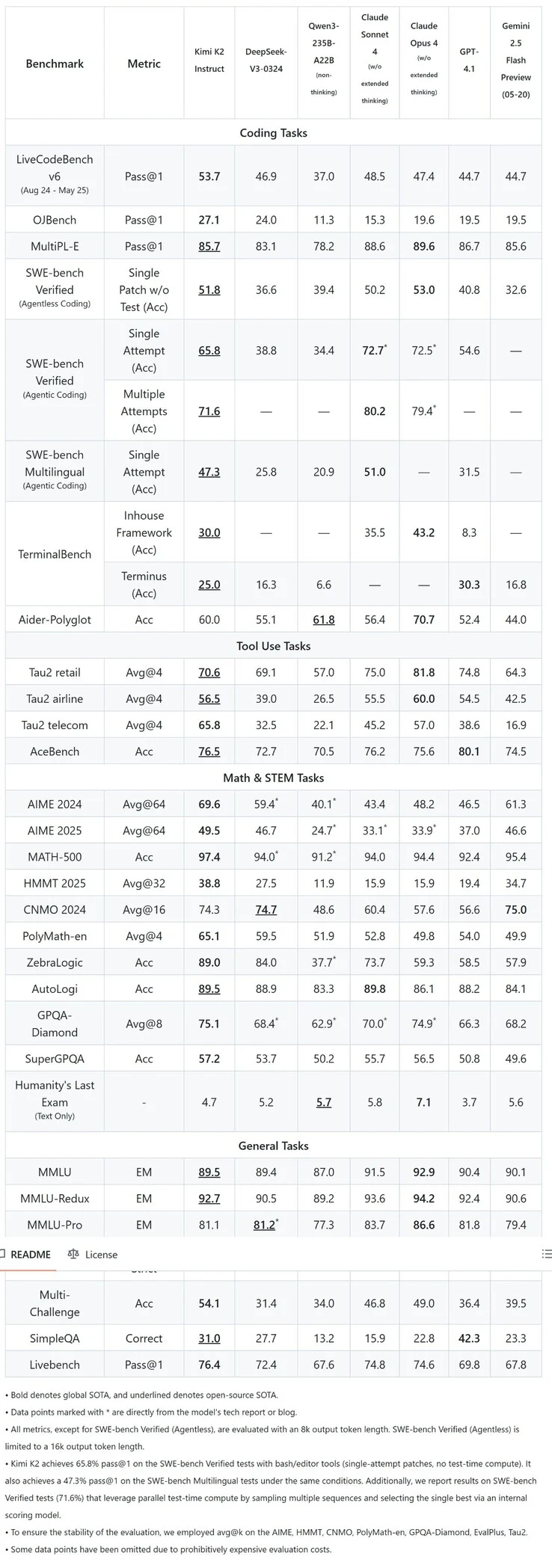
    1. Moonshot AI launched Kimi K2, a free large language model (LLM) with one trillion parameters, under a modified MIT license.
    2. Kimi K2 ranks among the top ten powerful AI models globally, outperforming the notable AI model DeepSeek.
    3. The model utilizes a mixture-of-experts (MoE) architecture with a 128K context window and 384 experts for complex problem-solving and reasoning.
    4. Kimi K2 was trained using real and simulated environments, incorporating a self-assessment mechanism and the MuonClip optimizer for improved training stability.
    5. Users can access Kimi K2 for free through a chatbot, while developers can purchase API access, requiring significant hardware for business applications.


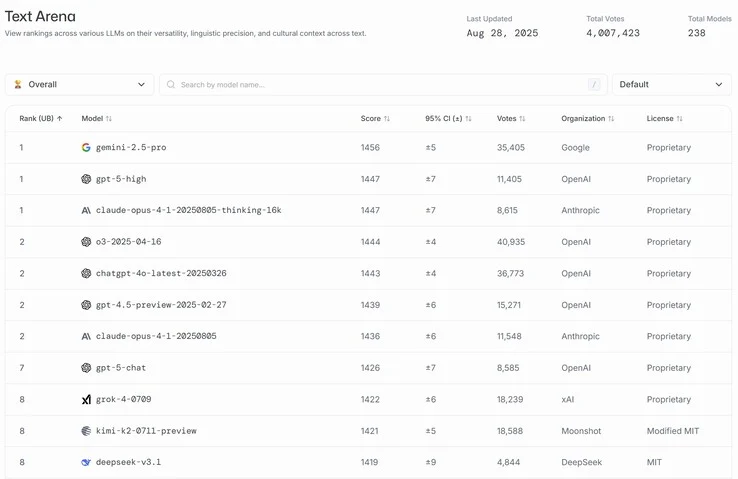
    Moonshot AI has unveiled Kimi K2, a free large language model (LLM) released under a modified MIT license. This LLM quickly secured a spot in the top ten most powerful AI models globally on the LMSys text arena leaderboard. Kimi K2 outperformed DeepSeek, another notable free AI that captured global attention for its capabilities and open licensing when it debuted at the end of 2024.

    Specifications of Kimi K2

    Kimi K2 boasts one trillion parameters (1T) and operates as a mixture-of-experts (MoE) model. It features a 128K context window and utilizes 384 experts from a subset of 32 billion active parameters. This advanced AI was designed for AI agents focused on autonomous problem-solving, reasoning, and tool utilization, making it suitable for tackling complex challenges and researching solutions to high-level business issues.

    Training Methodology

    Owing to a scarcity of real-world tool-use training data, Kimi K2 was developed using both real and simulated environments. The training process also incorporated a self-assessment mechanism, which enabled the AI to evaluate the adequacy of its own completed tasks during the training phase. Moreover, the MuonClip optimizer was created to counteract training stability problems associated with the Muon optimizer for neural networks, allowing Kimi K2 to be pre-trained swiftly on 15.5T tokens.

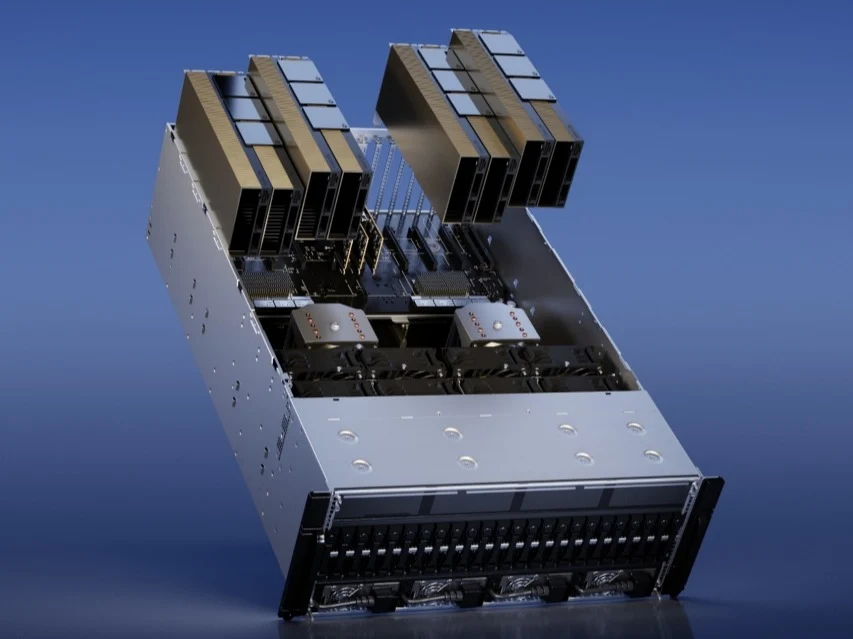
    For those interested in using Kimi K2 in a business context, a minimum of 1TB storage is necessary, along with a cluster consisting of at least 16 Nvidia H20/H200 GPUs before they can freely download it from Hugging Face. Home users can easily operate distilled versions of DeepSeek on Nvidia GPUs with 12GB or more of memory, such as this card available on Amazon, while awaiting distilled versions of Kimi K2.

    Source:
    Link


  • Honor Magic V5: Discover New AI Features in Top Foldable

    Honor Magic V5: Discover New AI Features in Top Foldable

    Key Takeaways

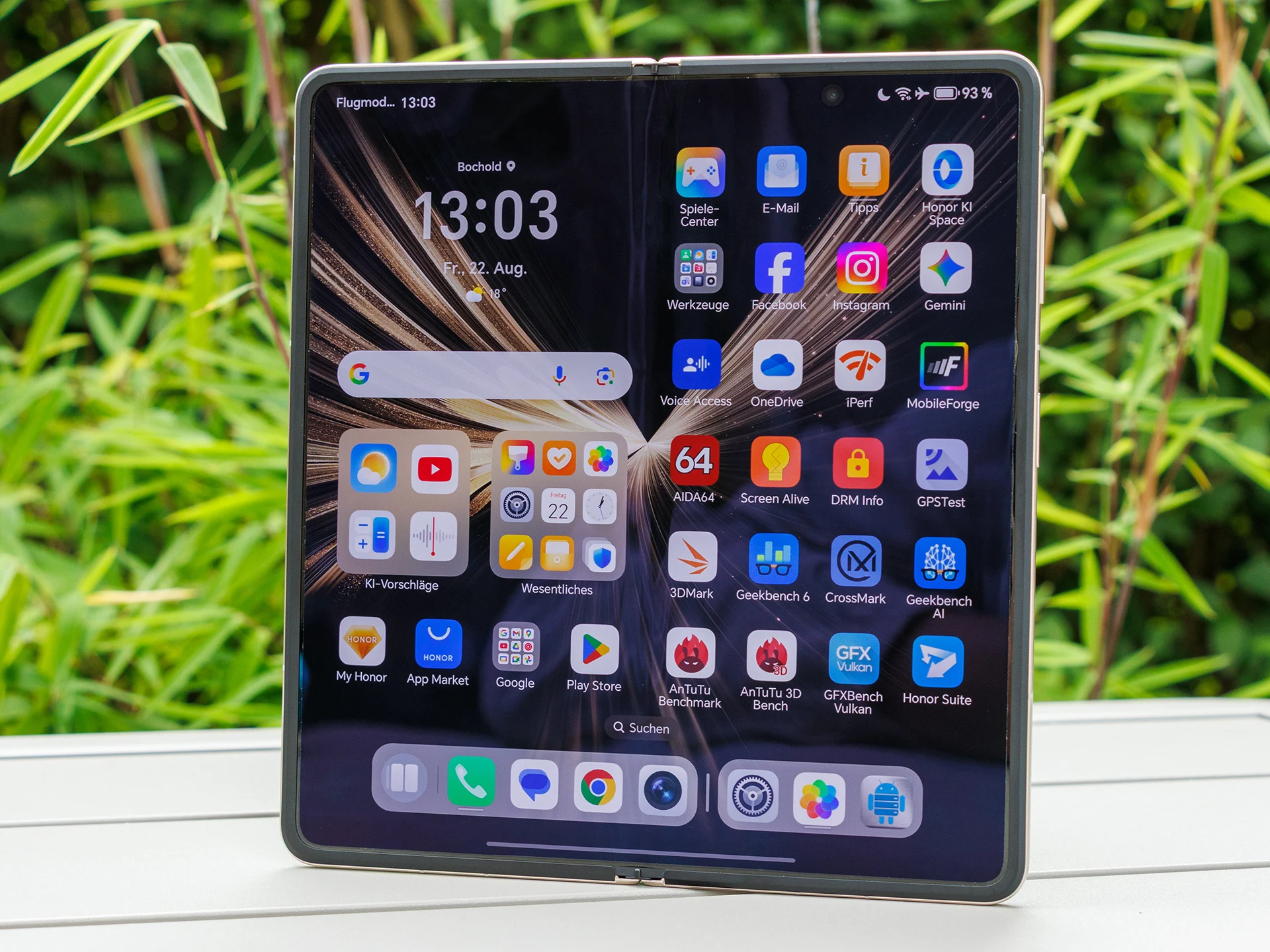
    1. AI Features: The Honor Magic V5 includes advanced AI capabilities like image editing, enhancement, and transforming pictures into short videos using Google’s Veo 2 technology.

    2. Deepfake Detection: The device offers deepfake detection that works with popular apps, but users must activate this feature in settings, ensuring processing is done locally on the device.

    3. Live Call Translation: It provides live call translation with options for cloud connectivity or on-device language models, enhancing data privacy and improving translation speed and accuracy.

    4. Language Model Efficiency: The phone reduces the size of language models significantly while offering six direct language packs, demonstrating efficient data handling.

    5. ‘Tap Tap’ Feature: The innovative ‘Tap Tap’ feature allows quick access to the Google Gemini AI assistant for various tasks, even from a locked state, enhancing user productivity.


    The Honor Magic V5 has amazed us with its performance during our review, showcasing some really cool AI features. Besides its image editing and enhancement capabilities, this foldable gadget can transform pictures into short videos using Google’s Veo 2 technology.

    AI Features and App Support

    One notable addition is Honor’s deepfake detection, which works with many popular apps like Facebook Messenger, WeChat, Viber, Telegram, Botim, Line, Zoom, Microsoft Teams, and WhatsApp. However, users need to activate this feature in their settings first, and it’s processed directly on the device.

    Live Call Translation Capabilities

    When it comes to translating live calls, users have the option to either pull the necessary data through a cloud connection or keep the language models saved on their device. The on-device language AI enables swift, precise, and entirely local translation of phone conversations in several languages, enhancing data privacy by not relying on the cloud. This technology significantly cuts down the size of large language models from 3-4 GB to 800 MB and includes six direct language packs—Chinese, English, German, French, Spanish, and Italian. It also boosts translation speed by 38% and accuracy by 16%. Two research papers that back these advancements were honored at the INTERSPEECH 2025 conference. In daily use, the translation operates quickly and is quite reliable for simple discussions.

    Innovative ‘Tap Tap’ Feature

    Another exciting addition is the ‘Tap Tap’ functionality. The HONOR Magic V5 seamlessly integrates the Google Gemini AI assistant right into the foldable phone, providing smart real-time features that enhance productivity and creativity. Users can effortlessly activate Gemini by pressing the power button or using the ‘Tap Tap’ feature, allowing them to write, plan, learn, analyze content, or interact in real-time. The ‘Tap Tap’ function also allows Gemini to be launched in locked mode with just two taps on the back of the phone.


  • China Boosts Homegrown AI Chip Production Amid U.S. Pressure

    China Boosts Homegrown AI Chip Production Amid U.S. Pressure

    Key Takeaways

    1. Shift to Inference Tasks: Chinese tech companies are focusing on running AI applications rather than training them due to U.S. restrictions on advanced Nvidia components.

    2. Alibaba’s In-House Chip Development: Alibaba is creating a versatile in-house chip for inference tasks, compatible with Nvidia’s software, to reduce dependency on U.S. technology.

    3. Diverse Strategies Among Competitors: Companies like MetaX and Cambricon are exploring different strategies, such as developing higher memory GPUs and achieving significant earnings through localized chip production.

    4. Government Support and Investment: The Chinese government is investing $8.4 billion to reduce reliance on foreign tech, while companies like Huawei are developing competitive systems despite challenges in market acceptance.

    5. Technical and Supply Chain Challenges: Ongoing issues with tooling, supply chains, and integration difficulties hinder progress, emphasizing the gap between inference capabilities and the need for advanced training infrastructure.


    China’s largest technology companies are hustling to fill the gap left by U.S. silicon, but the immediate advantages lie in running AI applications rather than training them. Restrictions on advanced Nvidia components have pushed local chip designers to create “good-enough” alternatives that maintain service continuity while longer-term investments in manufacturing develop.

    Alibaba’s Innovations

    Alibaba stands out as a key player in this shift. Once a major buyer of Nvidia products, it is now experimenting with a new in-house chip designed for a wide array of inference tasks, rather than just specific, limited applications. This chip is produced in a Chinese foundry instead of TSMC, a change brought on by U.S. regulations. To facilitate its use, Alibaba has ensured that it remains compatible with Nvidia’s software ecosystem, allowing teams to utilize their existing codebases.

    Competitive Landscape

    Other companies are taking varied approaches. For instance, the Shanghai startup MetaX has introduced a GPU featuring more memory than Nvidia’s H20, which is the most sophisticated model that Washington briefly allowed back into China before Beijing advised buyers to hold off on purchases. MetaX is looking to expand by utilizing older manufacturing processes and a multi-die strategy to overcome capacity restrictions at local fabs. Meanwhile, Cambricon has reported approximately $247 million in quarterly earnings due to robust demand for its Siyuan 590 chip and has cautioned investors following a rapid increase in share prices; its market capitalization remains significantly higher than before.

    Challenges Ahead

    State backing is extending the timeline for advancements. The Chinese government has initiated an $8.4 billion fund aimed at reducing reliance on foreign technology, while Huawei has unveiled a system that combines 384 Ascend chips. Some assessments suggest that this system could outperform leading U.S. hardware on certain metrics, although the energy costs are substantial. Nonetheless, major public cloud providers remain hesitant to make large-scale purchases of Ascend chips, partly because they view Huawei as a rival in the cloud space.

    Bottlenecks in Progress

    Obstacles in tooling and supply chains persist. Many engineers still favor Nvidia’s established software suite; integrating domestic chips can be more challenging, and there are ongoing reports of overheating and system malfunctions during prolonged training sessions. Chinese fabrication facilities, limited by restricted access to the latest technology, struggle to increase the capacity that designers need, prompting some vendors to merge smaller dies or rely on older process nodes. Although Alibaba’s latest chip aids in compatibility, it does not resolve the training challenges.

    The current divide between efficient inference and complex training underscores the existing gap. U.S. restrictions prevent the most advanced training processors from entering the market, and Alibaba’s new chip is focused on executing pre-trained models rather than developing them. Until local hardware can consistently support extensive, intensive training cycles, China’s significant advancements will lean towards maintaining responsive AI services instead of constructing larger foundational models.

    Ongoing Developments

    Despite these challenges, progress is being made. DeepSeek has suggested that software solutions, along with enhancements in domestic silicon, could advance training capabilities. Some investors believe that a fully “made-in-China” AI framework could achieve scale faster than anticipated, putting pressure on Nvidia both at home and internationally.

    Source:
    Link


  • Tesla Model Y L Introduces Seat-Aware ‘Hey, Tesla’ Command

    Tesla Model Y L Introduces Seat-Aware ‘Hey, Tesla’ Command

    Key Takeaways

    1. Tesla’s in-car voice commands have been upgraded to sophisticated AI assistants capable of managing various tasks.
    2. In China, Tesla’s AI assistant uses local chatbots like DeepSeek instead of Grok due to regulations.
    3. The new Model Y L features a three-row SUV design, enhancing the AI assistant’s usability for all passengers.
    4. The “Hey, Tesla” wake phrase enables spatial awareness, allowing passengers to interact with the AI assistant based on their seating position.
    5. The AI assistant can recognize which seat activated it, preventing accidental commands and improving user experience.


    Tesla has upgraded its in-car voice commands to sophisticated AI assistants capable of engaging in conversations and managing tasks like adjusting windows or controlling the air conditioning.

    Local Partnerships in China

    In China, Tesla’s AI assistant doesn’t utilize Grok due to local regulations. Instead, the company has teamed up with domestic chatbots that are powered by unique generative AI models, such as DeepSeek.

    Introduction of Model Y L

    With the launch of its first genuine three-row SUV, the larger Model Y L, which may only be available in China, Tesla is demonstrating the innovative ways its AI assistant can be helpful.

    For passengers seated in the third row, who are far from the car’s touchscreens, operating the A/C, changing songs, or checking the weather can be a challenge. To address this, Tesla has introduced a new wake phrase that activates the virtual AI assistant, allowing everyone in the vehicle to engage in informative discussions or use voice commands for various functions.

    The Wake Word Feature

    Similar to other virtual assistant services like Google or Alexa, the phrase “Hey, Tesla” has been added to the Model Y L in China to trigger the localized AI assistant.

    What sets this apart is that the “Hey, Tesla” phrase incorporates spatial awareness for each seat in the car, as illustrated at the 6:00 minute mark in the Model Y L video review below. For example, kids in the third row can wake the chatbot, but they can’t issue commands if that option is disabled in the settings. This prevents drivers of the Model Y L from facing sudden changes in destination or accidental music skips, which are common with children.

    The AI assistant can also identify which seat activated it and continue conversations or respond to other passengers. The new spatial awareness features are integrated into a Voice Recognition menu that enables the Model Y L to listen and respond continuously, even without hearing the wake word, similar to how an Amazon Echo smart speaker operates.

    The “Hey, Tesla” command is likely to be added to the Grok assistant used in U.S. vehicles eventually, but for now, Tesla has concluded that the larger Model Y L with its three rows of seats will gain the most from this new wake phrase.

    Source:
    Link


  • Microsoft Copilot Launches on Samsung TVs for AI Entertainment Chat

    Microsoft Copilot Launches on Samsung TVs for AI Entertainment Chat

    Key Takeaways

    1. Microsoft has launched its Copilot AI for select Samsung HDTVs and monitors, featuring hands-free voice commands.
    2. Copilot is an AI chatbot developed by Microsoft, available for free on Windows 11, Edge, and other platforms, using technology from OpenAI.
    3. Compatible devices include Samsung’s 2025 TV lineup and various smart monitors, available for purchase on Amazon.
    4. Users can interact with Copilot for entertainment-related inquiries, receive tailored show recommendations, and access episode summaries and cast information.
    5. Copilot can also answer general questions and saves chat history across devices when users log into their Microsoft accounts for personalized experiences.


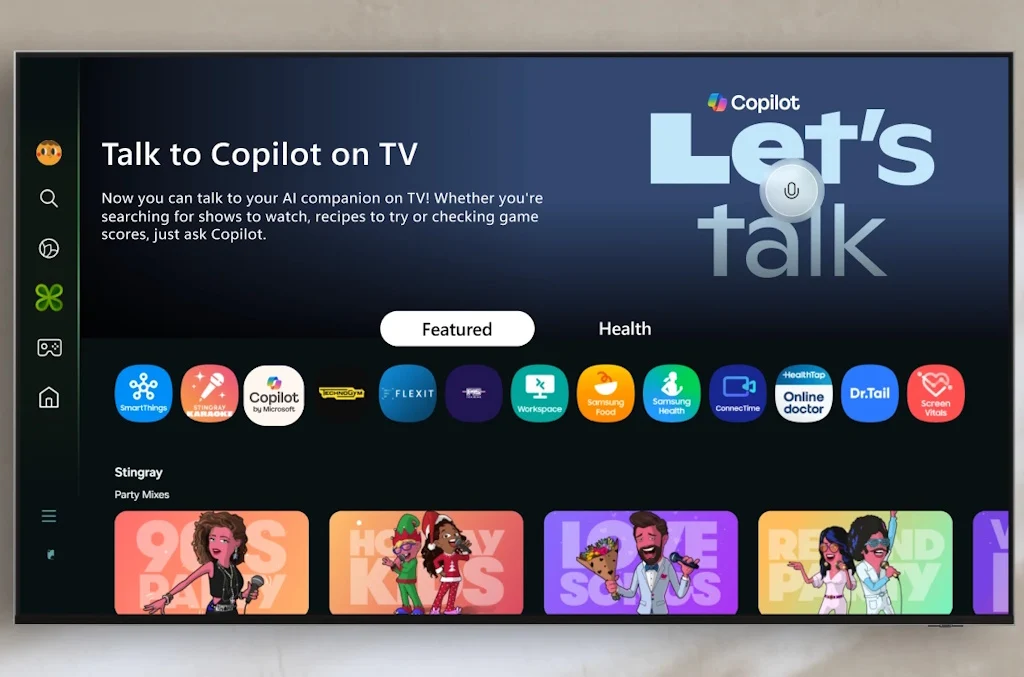
    Microsoft has introduced its Copilot AI to certain Samsung HDTVs and monitors, featuring hands-free voice commands.

    What is Copilot?

    Copilot is an AI chatbot developed by Microsoft, now available for free on Windows 11, Edge, and other platforms. This technology makes use of Microsoft’s collaboration with OpenAI, integrating cutting-edge models like GPT-5.

    Supported Devices

    The Copilot assistant is compatible with Samsung’s 2025 TV lineup, which includes models like Micro RGB, Neo QLED, OLED, The Frame Pro, The Frame series, along with the M7, M8, and M9 smart monitors. Many of these devices can be purchased from Amazon, including the Samsung OLED HDTV.

    Interaction Features

    Users of these supported models can interact with Copilot by asking questions related to their favorite shows, and the AI responds with a combination of text and visuals. It also provides tailored recommendations based on preferences, suggesting shows that resemble those they already like. Additionally, the AI offers episode or season summaries so viewers can quickly get up to speed, plus it gives background info on cast members and other important figures in a show.

    Copilot’s capabilities extend beyond entertainment; it can answer general inquiries like any other major AI chatbot. By logging into their Microsoft account, users can have their chat history saved across devices, enhancing personalization and helping the AI learn from interactions.

    Source:
    Link