Category: Artificial intelligence

  • OpenAI and Broadcom Strike $10 Billion AI Chip Partnership

    OpenAI and Broadcom Strike $10 Billion AI Chip Partnership

    Key Takeaways

    1. OpenAI is partnering with Broadcom to develop specialized AI chips to address GPU shortages.
    2. Broadcom received a significant $10 billion order for AI server racks from OpenAI, expected to boost their business by summer 2025.
    3. The new chips, referred to as “XPUs,” are designed specifically for AI training tasks and are not intended to replace Nvidia’s products.
    4. OpenAI faces challenges with GPU shortages that have delayed the launch of ChatGPT-4.5, prompting plans to increase their GPU inventory significantly.
    5. This partnership enhances OpenAI’s training capacity while reducing GPU shortage risks, and it strengthens Broadcom’s position in the AI infrastructure market.


    OpenAI is said to be partnering with Broadcom to develop special AI chips that could help solve the GPU issues the company is currently facing. During a recent earnings discussion, Broadcom revealed that a new “fourth major AI developer” has placed a significant one-time order of $10 billion for AI server racks. Sources close to the situation claim that this new customer is, in fact, OpenAI.

    Future Contributions

    Broadcom anticipates that this order will start to positively impact their business by the summer quarter of 2025. This initiative is primarily focused on ensuring they have enough training capacity rather than aiming to replace Nvidia’s offerings.

    Strategic Insights

    Hock Tan, the CEO of Broadcom, mentioned that this new client significantly alters the company’s outlook for 2026. The company refers to these specialized chips as “XPUs,” which are tailored for specific tasks like AI training. Back in August, Broadcom introduced its Jericho chip, designed to connect data centers that are as far as 60 miles apart, thus enhancing the speed of AI processing tasks.

    Challenges Ahead

    OpenAI’s leader, Sam Altman, pointed out that the shortages of GPUs have delayed the launch of their ChatGPT-4.5 model. He has already shared intentions to increase their GPU inventory by tens to hundreds of thousands. However, acquiring large quantities of GPUs requires considerable lead time, which can be a significant obstacle for AI firms.

    For OpenAI, this agreement offers a more reliable training capacity and reduces the risk of GPU shortages, even though their scaling still depends on Nvidia. Conversely, for Broadcom, this represents a stronger entry into the AI infrastructure market.

    Source:
    Link


  • ChatGPT Privacy: Understanding What Your Conversations Show

    ChatGPT Privacy: Understanding What Your Conversations Show

    Key Takeaways

    1. Many users view ChatGPT as a confidential friend, similar to doctors or therapists, but digital privacy differs significantly.
    2. OpenAI employs various technical methods to monitor interactions for harmful content and safety risks.
    3. In mental health crises, ChatGPT guides users towards professional help but does not report suicidal ideations to law enforcement to protect privacy.
    4. Conversations indicating harm to others may lead to notifications to law enforcement, raising legal and ethical concerns.
    5. The balance between user privacy and safety monitoring is complex, influenced by ongoing legal discussions and future regulations.


    Many individuals see ChatGPT as a reliable friend to whom they can share their thoughts and concerns. The hope for confidentiality is similar to what people feel when talking to doctors or therapists. However, when it comes to digital conversations with AI, the level of privacy is not the same as in traditional dialogues.

    Monitoring Content for Safety

    OpenAI uses a variety of technical methods to identify harmful content quickly. In a formal announcement, the organization states:

    “We have utilized a wide range of tools, including specific moderation models and our own models to monitor safety risks and abuse.”

    This clearly indicates that all interactions are assessed for possible dangers, and moderators may review the information if needed.

    Sensitive Mental Health Situations

    Scenarios involving mental health crises are especially delicate. OpenAI emphasizes: “If an individual shows suicidal thoughts, ChatGPT is trained to guide them towards getting professional assistance.” Simultaneously, the company distinctly separates self-harm from actions that may harm others. Suicidal ideations are not reported to law enforcement to safeguard the affected individuals’ privacy. However, it mentions:

    “When we identify users who are planning to harm others, we direct their discussions to specialized channels… we may notify law enforcement.”

    Legal and Ethical Implications

    This monitoring approach brings up various legal and ethical issues. Users wish for confidentiality but must also accept the reality of technical moderation and, in serious situations, potential reporting to authorities. It remains unclear how different legal systems will manage the delicate balance between security and individual privacy.

    The ongoing conversation surrounding ChatGPT’s privacy is intensified by global events and lawsuits. One fact is evident: privacy in AI interactions is restricted. Future legal rulings and regulatory standards will play a crucial role in defining the extent of OpenAI’s monitoring capabilities and the degree of user privacy protections.

    Source:
    Link


  • Google Delays 2030 Net-Zero Goal Due to Rising AI Data Center Energy Use

    Google Delays 2030 Net-Zero Goal Due to Rising AI Data Center Energy Use

    Key Takeaways

    1. Google has removed its “pursue net-zero by 2030” ambition from its main website, marking a shift from previous commitments.
    2. The company’s current emissions goals include achieving net-zero emissions by 2030, but the target is now presented as more of a “moonshot” than a firm promise.
    3. Google’s electricity consumption increased by 26% in 2024, raising overall greenhouse gas emissions by 48% due to the expansion of data centers.
    4. McKinsey forecasts a need for $6.7 trillion in global investments by 2030 to meet computing requirements, driven largely by AI data centers.
    5. Analysts highlight a “climate strategy crisis” in the tech industry as rising energy demands challenge the viability of emissions reduction targets.


    Google has recently removed its “pursue net-zero by 2030” ambition from its website in late June, and has changed “Operating sustainably” to “Our operations”. This net-zero commitment is now only found in the appendix of Google’s latest environmental report, instead of being highlighted on their main site. Canada’s National Observer was the first to spot this change and looked into the site’s history to trace the edits. This marks a significant shift from Google CEO Sundar Pichai’s assurance in 2020 to operate on carbon-free energy all day, every day by 2030.

    Current Emissions Goals

    The tech giant asserts that it still seeks to achieve net-zero emissions throughout its operations and value chain by 2030, boasting a 12 percent decline in data-center emissions for 2024. Although the Data Centers Sustainability page still mentions the 2030 net-zero target, the wording has been altered to present it more like a “moonshot” rather than a firm promise.

    Rising Electricity Consumption

    In 2024, Google’s electricity usage surged by 26 percent, reaching an impressive 32.2 terawatt-hours (more than Ireland’s yearly consumption), largely due to new data centers coming online. The company’s overall greenhouse gas emissions increased 48 percent year on year amid the AI boom. A single Gemini chat message utilizes about 0.24 watt-hours, indicating how electricity usage grows with increased adoption.

    Future Investment Projections

    McKinsey predicts a staggering $6.7 trillion in global investments by 2030 to satisfy computing requirements, with AI data centers alone needing a substantial $5.2 trillion, potentially increasing new electricity demand by up to 70 percent. U.S. data centers are anticipated to account for 12 percent of the national load by 2030.

    Analysts are pointing out a widespread “climate strategy crisis” in the industry as energy demand skyrockets, making some reduction targets appear meaningless without reliable paths to achieve them. There are also political hurdles regarding clean energy; the Trump administration’s position on climate initiatives and discussions about “incredibly clean” coal add complexity to corporate messaging. It’s unclear whether Google’s shift will be mirrored by other major tech firms, as Microsoft and Amazon continue to emphasize net-zero as a key focus in their recent reports.

    Source:
    Link


  • Cause and Solution for AI Hallucinations Uncovered by Researchers

    Cause and Solution for AI Hallucinations Uncovered by Researchers

    Key Takeaways

    1. AI assistants often create false statements, known as hallucinations, which can mislead users.
    2. Current evaluation metrics reward confident guesses and penalize uncertainty, leading to more hallucinations.
    3. OpenAI proposes a new scoring system that imposes penalties for confident errors and recognizes cautious responses.
    4. Examples show that models expressing uncertainty can be more reliable than those that guess confidently.
    5. OpenAI’s findings aim to improve trust in AI technology by encouraging accurate and cautious information sharing.


    AI assistants have a knack for creating information and passing it off as real. They often mix in false statements, imaginary sources, and made-up quotes, which are known as hallucinations. Many users have probably gotten used to this issue, relying on their own fact-checking to figure out what’s true and what’s not. However, OpenAI suggests there might be a way forward. On September 5, the team behind ChatGPT published a thorough paper that sheds light on why these hallucinations occur and proposes a possible fix.

    Evaluation Metrics and Hallucinations

    The paper, which spans 36 pages and is penned by Adam Kalai, Santosh Vempala from Georgia Tech, along with other OpenAI contributors, emphasizes that hallucinations arise not from careless writing but from how current evaluation criteria are structured. These criteria typically reward guesses made with confidence and punish those who express doubt. The researchers liken this to multiple-choice exams—where guessers can earn points, while those who skip questions receive nothing at all. Statistically speaking, models that guess tend to perform better, even if they often provide incorrect data.

    Proposing a New Scoring System

    Consequently, the existing leaderboards that rank AI capabilities prioritize accuracy almost exclusively, ignoring both error rates and expressions of uncertainty. OpenAI is advocating for a shift in this process. Rather than just counting the right answers, these scoreboards should impose heavier penalties on confident errors while granting some recognition for being cautious. The aim is to motivate models to admit when they’re uncertain, rather than presenting incorrect information with unwarranted confidence.

    The Impact of Uncertainty

    An example highlighted in the paper illustrates how this new approach could change things. In the SimpleQA benchmark, one model opted not to answer over half of the questions, but only got 26% of its provided answers wrong. Meanwhile, another model answered nearly all questions but made hallucinations about 75% of the time. The message is clear: showing uncertainty tends to be more reliable than guessing confidently, which only gives the false impression of accuracy.

    OpenAI’s findings may lead to a more thoughtful application of AI technology in the future, ensuring that users can trust the information they receive.

    Source:
    Link


  • Raspberry Pi Wi-Fi Chip Accurately Measures Heart Rate Without Trackers

    Raspberry Pi Wi-Fi Chip Accurately Measures Heart Rate Without Trackers

    Key Takeaways

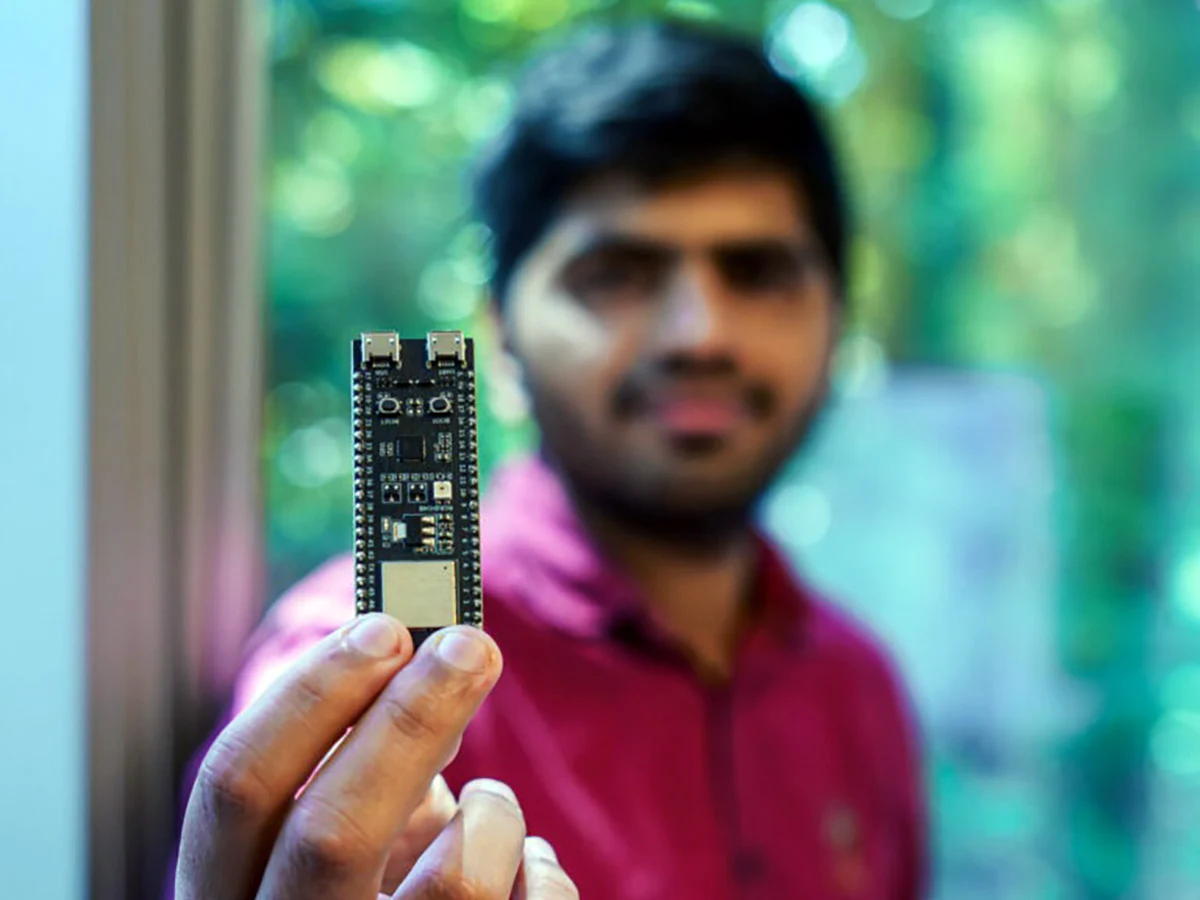
    – Inexpensive Wi-Fi chips, like the $5 ESP32, can track heart rates as accurately as high-end devices such as the Apple Watch 10.
    – The Raspberry Pi outperformed expectations by analyzing Wi-Fi Channel State Information (CSI) data with AI algorithms for heart rate measurement.
    – Wi-Fi channel characteristics change slightly with each heartbeat and breath, allowing for accurate pulse detection through machine learning.
    – The system can measure heart rates regardless of participants’ positions, making it versatile for various settings.
    – Researchers are expanding their work to include breathing rate detection, which could aid those with sleep apnea.


    Cheap Wi-fi chips, similar to those in a $30 Raspberry Pi, can accurately measure human pulse, rivaling clinical heart rate monitors and pricey fitness trackers like the Apple Watch.

    Pulse-Fi Study Insights

    Researchers from UCSC, who led the Pulse-Fi study, found that a basic Wi-Fi network made with a $5 ESP32 chip can track heart rates as effectively as the Apple Watch 10, which is currently on sale at $359 on Amazon. The findings show that these inexpensive devices can perform on par with much costlier options.

    The Raspberry Pi’s test results were even better, as the researchers analyzed Wi-Fi Channel State Information (CSI) data through AI algorithms to determine the heart rates of over 100 participants in the study.

    How It Works

    The Wi-Fi channel characteristics, such as phase, frequency in the environment, and amplitude, change slightly with every breath and heartbeat. These tiny variations are filtered using machine learning algorithms that eliminate other factors affecting CSI, allowing the Raspberry Pi to accurately measure the pulse of all 118 participants in the research.

    Interestingly, the Wi-Fi network was capable of detecting heart rates regardless of the participants’ positions—whether they were moving, standing, sitting, or lying down.

    Development of the System

    To accomplish this, the team had to build a database from the ground up and utilize a clinical-grade oximeter as a reference device. This helped the AI algorithms learn which changes in Wi-Fi channel frequency or amplitude were associated with a heartbeat and which were due to other interferences.

    The AI system they implemented allowed for pulse detection from a greater distance, enabling casual heart rate monitoring through Wi-Fi networks using the Pulse-Fi algorithm. In addition to heart rate detection, the UCSC researchers are now also focusing on recognizing breathing rate patterns, which could benefit individuals suffering from sleep apnea.

    Source:
    Link


  • Anthropic to Pay $1.5B in Landmark AI Copyright Lawsuit

    Anthropic to Pay $1.5B in Landmark AI Copyright Lawsuit

    Key Takeaways

    1. Anthropic has settled a class-action lawsuit for $1.5 billion over allegations of using copyrighted materials without permission to train its Claude AI models.
    2. The lawsuit, initiated by authors Andrea Bartz, Charles Graeber, and Kirk Wallace Johnson, claims Anthropic used pirated literary works for AI training.
    3. The settlement is the largest publicly reported recovery in US copyright litigation, addressing around 500,000 improperly used copyrighted materials.
    4. Anthropic’s payment will be made in four parts, with a total of $1.5 billion allocated for rightsholders, legal fees, and other expenses.
    5. The settlement highlights the importance of protecting authors’ rights in the AI era, emphasizing that AI companies cannot claim works from authors without permission.


    Anthropic, a startup focused on AI and known for its Claude AI models, has reached a settlement of $1.5 billion in a class-action lawsuit. This lawsuit was brought forth by authors who claimed that Anthropic used copyrighted materials without permission to train its AI systems.

    The Lawsuit’s Background

    Backed by major tech companies like Amazon and Google, Anthropic faced serious legal issues after authors Andrea Bartz, Charles Graeber, and Kirk Wallace Johnson initiated a class action lawsuit last year. Their legal representatives contended that Anthropic utilized vast amounts of pirated literary works to enhance its Claude AI models.

    Settlement Details

    This settlement is said to be “the largest publicly reported recovery in the history of US copyright litigation.” It addresses around 500,000 copyrighted materials that were improperly used for training the company’s AI models.

    In comments made to Reuters, the attorneys for the authors expressed that this settlement “sends a powerful message to AI companies and creators alike that taking copyrighted works from these pirate websites is wrong.” They described it as the “first of its kind” copyright recovery in what they termed the “AI era.”

    Anthropic’s Response

    According to a statement provided to Reuters, Anthropic affirmed their “commitment to developing safe AI systems that help people and organizations extend their capabilities, advance scientific discovery, and solve complex problems.”

    Mary Rasenberger, who is the CEO of the Authors Guild, mentioned that the settlement “is a vital step in acknowledging that AI companies cannot simply steal authors’ creative work to build their AI just because they need books to develop quality LLMs.”

    Payment Breakdown

    Anthropic will make the $1.5 billion payment in four parts: $300 million after the preliminary approval, another $300 million after final approval, $450 million within a year of the initial approval, and a final $450 million within two years of the preliminary approval.

    The total $1.5 billion will be divided among rightsholders, legal fees, and other expenses. Anthropic reportedly downloaded nearly 7 million copies of books from Libgen and PiLiMi. After removing duplicates, they will pay about $3,000 for the 500,000 titles.

    Source:
    Link


  • Anthropic Restricts Chinese Firms from Using Claude Models

    Anthropic Restricts Chinese Firms from Using Claude Models

    Key Takeaways

    1. Anthropic’s updated Terms of Service restrict access for companies with at least 50% Chinese ownership, regardless of their operation location.
    2. The changes are driven by legal, regulatory, and security concerns, focusing on military and intelligence applications.
    3. The restrictions apply to all Claude models and associated tools, including subsidiaries and joint ventures.
    4. Companies like ByteDance, Tencent, and Alibaba may face significant revenue losses due to these new ownership-based restrictions.
    5. In response, some Chinese companies are quickly adapting by developing migration tools and promoting alternative AI models.


    Anthropic has changed its Terms of Service to prevent access for companies that are mostly owned or controlled by Chinese entities. This means any company with at least 50 percent Chinese ownership is affected, no matter where they operate.

    Reasons for the Change

    Anthropic points to legal, regulatory, and security concerns related to these companies. Specific worries include possible military or intelligence applications and issues around model distillation. The updated Terms of Service became effective on September 5th, emphasizing restrictions based on ownership rather than location.

    Scope of the Restrictions

    This new restriction applies to all Claude models, including Claude 3.5 Sonnet, and also covers developer tools, subsidiaries, and joint ventures. In addition, Anthropic is pushing for export controls and national-security assessments when it comes to advanced AI models.

    Expected Impact

    This policy change is likely to impact companies like ByteDance, Tencent, and Alibaba, along with their subsidiaries and portfolio firms, potentially resulting in revenue losses in the low hundreds of millions of dollars. Although Chinese companies have faced technology bans from the West before, this is the first time restrictions are based on corporate ownership rather than their geographical location.

    In response to this new policy, companies have already started to adapt. Chinese startup Zhipu has launched a Claude-to-GLM-4.5 migration toolkit that offers “plug-and-play” switching, large context support, around 20 million free tokens, and improved throughput capabilities. Meanwhile, Alibaba has also moved to promote migration to Qwen-plus, providing attractive token allowances and competitive pricing, similar to its actions after previous OpenAI restrictions.

    Source:
    Link


  • Humanoid Robot R1 by Robbyant: Everyday Life Companion

    Humanoid Robot R1 by Robbyant: Everyday Life Companion

    Key Takeaways

    1. Robbyant’s humanoid robot R1 is designed for the catering sector, focusing on commercial kitchens and catering services.
    2. The R1 features advanced AI capabilities, allowing it to organize processes, learn recipes, and adapt to various kitchen devices.
    3. Customization options are available to fit the R1 into different kitchen setups and workflows.
    4. Robbyant aims to expand humanoid robot applications to caregiving, household duties, and medical assistance.
    5. The company is partnering with organizations in the DACH area and Europe to advance AI and digital transformation projects.


    Robbyant, part of the Ant Group, is showcasing its humanoid robot R1 for the very first time at IFA 2025 in Berlin. This robot is designed with embodied AI and is intended specifically for the catering sector, focusing on commercial kitchens and catering services. The R1 can handle cooking tasks, automate repetitive duties, and assist kitchen personnel.

    Advanced AI Capabilities

    The AI system in the robot allows it to independently organize processes, learn new recipes continuously, and adapt flexibly to varied kitchen devices. With its spatial awareness technology, the robot detects the location of ingredients and executes tasks appropriately. Robbyant provides customization options to fit the robot into various kitchen setups and workflows.

    Future Applications

    Robbyant’s strategy includes broadening the uses for humanoid robots, targeting areas like caregiving, household duties, and medical assistance. The goal is to create smart companions that can manage different daily tasks and aid in sectors that are short on labor or require more support. This could result in intelligent helpers that significantly enhance everyday activities and help alleviate the growing shortage of skilled workers.

    Partnerships for Progress

    To realize this vision, Robbyant is collaborating with partners from the DACH area and across Europe. Ant Group is lending its technological know-how and a network for projects focused on AI and digital transformation.

    The company hasn’t revealed any pricing or specific launch date yet, but they will be showcasing the robot live for the fair audience at IFA, happening from September 5 to September 9, 2025.

  • Acemate Launches AI Tennis Robot for NTRP 1.0 to 6.0 Players

    Acemate Launches AI Tennis Robot for NTRP 1.0 to 6.0 Players

    Key Takeaways

    1. Acemate’s Tennis Robot is an AI-powered machine that serves and returns shots, allowing solo practice without needing a human partner.
    2. Designed for players with an NTRP rating of 1.0 to 6.0, it mimics a professional player rated at 7.0.
    3. The robot can serve at speeds up to 80 mph, perform various shot types, and move quickly on different court surfaces.
    4. Equipped with 4K cameras, it tracks balls with a reaction time of 0.15 seconds and provides performance stats via a smartphone app.
    5. The Tennis Robot retails for $2,499, with a pre-order price of $1,599, and is expected to ship in November 2025.


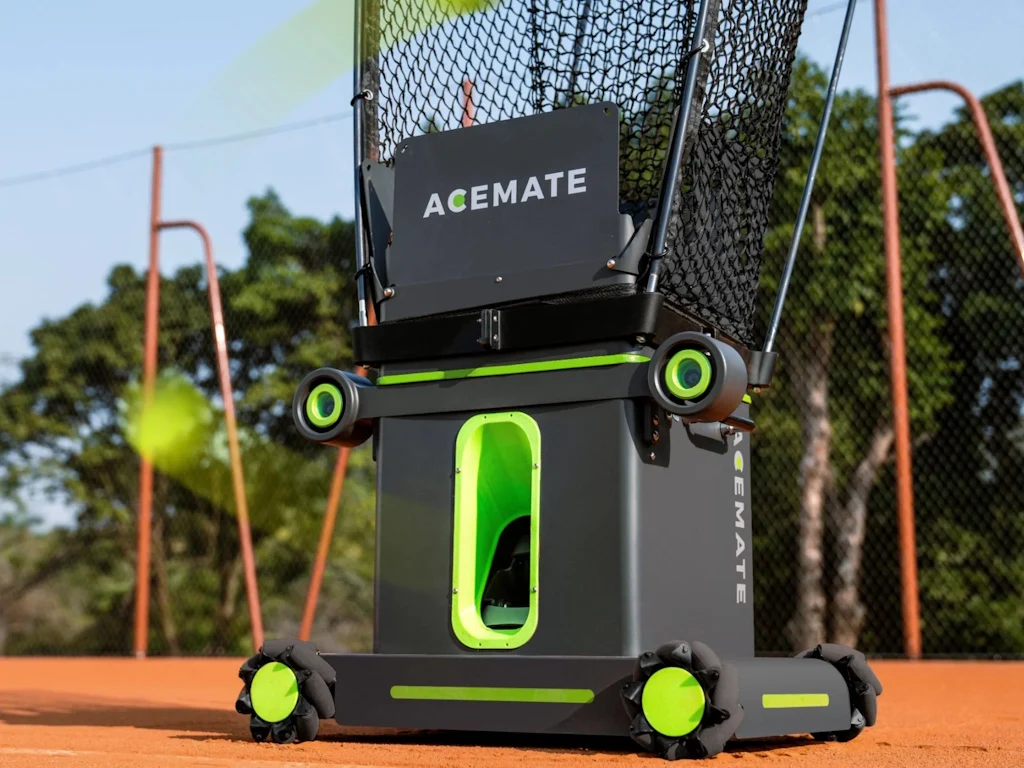
    Acemate has introduced the Tennis Robot, a machine powered by AI that can both serve and return shots. This innovative robot eliminates the need for players to sync their schedules and skill levels with other human partners.

    Performance Features

    The Tennis Robot is crafted to engage with players whose ratings fall between NTRP 1.0 and 6.0, closely mimicking the skills of a professional player rated at 7.0. It has a capacity for 80 tennis balls and runs on a replaceable 6,700 mAh battery, giving users up to three hours of playtime.

    Serving Capabilities

    This AI-driven tennis companion can serve at speeds reaching 80 mph (129 kph) and can perform a variety of shots, including topspin, backspin, flat shots, and slices. Additionally, it has the ability to lob balls as high as 26.2 ft. (8 m). Thanks to its mechanum (omnidirectional) wheels, the robot can dash at 16.4 ft. per sec. (5 m per sec.) while chasing balls across different court surfaces like clay, grass, and hard courts.

    Tracking and Statistics

    Equipped with stereo 4K cameras, the robot tracks balls with a quick reaction time of 0.15 seconds, achieving a return rate exceeding 90%, as claimed by Acemate. Players can monitor their performance stats using a smartphone app, which provides detailed information about ball placements and returns. Smartwatches can also be utilized to set preferences for rally types and skill levels.

    The Acemate Tennis Robot is priced at an MSRP of $2,499, but early birds can pre-order it for $1,599, with shipments expected to begin in November 2025. A version tailored for pickleball is currently in development.


    Source:
    Link


  • Scammers Exploit X’s Grok AI to Distribute Malicious Links

    Scammers Exploit X’s Grok AI to Distribute Malicious Links

    Key Takeaways

    1. Grokking Exploit: Scammers use “Grokking” to hide harmful links in the From field of promoted posts, bypassing link restrictions on X.

    2. System-Trusted Accounts: Grok’s account is seen as “system-trusted,” allowing harmful links to slip past scrutiny and gain visibility.

    3. SEO Boost for Malicious Links: When Grok interacts with a post, it enhances the SEO and domain reputation of the linked content, leading to increased reach.

    4. Dubious Content Promotion: The promoted links often lead to fake captcha scams and malware, exploiting ad networks to monetize clicks.

    5. Evasion of Security Checks: Disguised posts evade X’s review process, lacking any scanning for malicious links, making them difficult to detect.


    Cybersecurity expert Nati Tal, who leads Guardio Labs, has pointed out a new exploit involving Grok AI that enables scammers and threat actors to get around link restrictions on promoted posts, allowing them to share harmful links on X.

    The Grokking Method

    This technique, referred to as “Grokking,” consists of concealing a link in the From field of a paid promotion and prompting Grok to locate the source of that boost. When Grok identifies the link in the From field, it inadvertently includes it in its response, increasing its visibility significantly.

    Tal explains that the reason this tactic is effective is that Grok’s X account is considered “system-trusted,” meaning it does not face the same checks or scrutiny as other accounts. Even more troubling is that these promoted posts gain engagement and rack up “100k to 5M+ impressions” with Grok’s reply appearing underneath.

    SEO and Domain Reputation Boost

    When Grok is invoked to provide an answer, it also enhances the SEO and “domain reputation” of the links, as they are “echoed by Grok on a post with millions of impressions!”

    Tal warns that these links “navigate through dubious ad networks, monetizing clicks with ‘direct links’ known to promote fake captcha scams, info-stealer malware, and other questionable grey-area content.” He emphasizes that this method renders the links “fully visible, clickable, and impossible to miss.”

    Disguised Malicious Content

    The disguised posts are often labeled as “video card” posts, accompanied by “adult content baits” that somehow evade X’s review process. Tal asserts, “There is no scanning for malicious links whatsoever on X! Yet, it is still hardly noticeable at this spot.”

    Interestingly, Grok replied to a user just underneath the post, providing a broken link when the user asked for the correct link to report the issue.

    Source:
    Link