Category: All News

  • Samsung Galaxy A25 5G Receives TUV Rheinland Certification

    Samsung Galaxy A25 5G Receives TUV Rheinland Certification

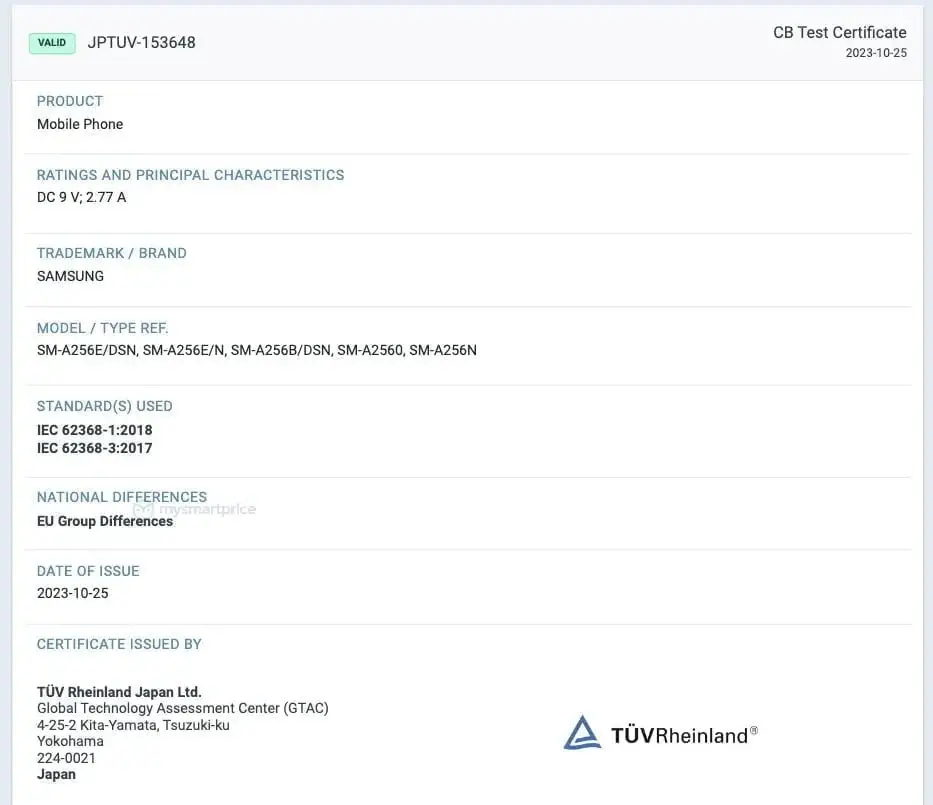
    TUV Rheinland Certification Discloses 25W Fast Charging Support for Samsung Galaxy A25 5G

    The much-anticipated Samsung Galaxy A25 5G smartphone has been causing a stir in the tech industry of late. With a plethora of leaks and certification listings circulating, it appears that the unveiling of the device is imminent. Adding to the anticipation, the Galaxy A25 5G has now surfaced on the TUV Rheinland certification platform, providing further affirmation of its existence.

    Details of Certification

    As per the TUV Rheinland documentation, the Samsung Galaxy A25 5G is recognized by the model number SM-A256E/DSN, aligning with the BIS and FCC certifications. While the certification does not offer extensive additional details, it does unveil an exciting aspect – the inclusion of 25W fast charging support.

    Design and Range of Colors

    Leaked images of the Galaxy A25 5G exhibit its design language. Envisaged features include a waterdrop notch display and a marginally thick lower chin. When it comes to color choices, users can anticipate selections from black, blue, lime green, and light blue variants. The rear panel of the device will be home to three vertically aligned camera sensors.

    Technical Specifications

    An unveiled comprehensive spec sheet has shed light on the Samsung Galaxy A25 5G’s functionalities. The smartphone is projected to flaunt a 6.5-inch FHD+ display with a 90Hz refresh rate, providing a seamless and vivid viewing experience. For enthusiasts of selfies, a 13MP front camera is on the cards. On the rear end, it is speculated that the camera arrangement will encompass a 50MP primary sensor, an 8MP ultra-wide-angle lens, and a 2MP macro module, enabling users to capture breathtaking photos from various angles.

    Beneath the surface, the Galaxy A25 5G is rumored to be fueled by an Exynos 1280 processor, ensuring competent performance and effective multitasking. It is anticipated to come with up to 8GB of RAM and provide generous storage with a capacity of up to 256GB of internal memory. To sustain the device over the course of a day, a sturdy 5,000mAh battery is anticipated.

    In Conclusion

    With the Samsung Galaxy A25 5G securing the TUV Rheinland certification, it is evident that the smartphone is edging closer to its official debut. Although specifics regarding pricing and a precise launch date remain undisclosed, the leaked specifications and design aspects hint that the Galaxy A25 5G will stand out as a potent and visually alluring choice for consumers in search of a 5G smartphone adventure. Stay updated for further developments on this forthcoming Samsung offering.

  • JD.com, NetEase, and Meituan Embrace Huawei’s HarmonyOS, Preparing to Depart from Android

    JD.com, NetEase, and Meituan Embrace Huawei’s HarmonyOS, Preparing to Depart from Android

    Chinese Tech Companies Recruiting HarmonyOS App Developers in Shift Away from Android

    Several major Chinese tech companies, including JD.com, NetEase, and Meituan, are actively recruiting HarmonyOS app developers in a strategic move that signals a departure from Google's Android ecosystem. This shift aligns with Huawei's broader strategy to establish HarmonyOS as a robust alternative ecosystem within China, reducing dependence on Android due to US sanctions.

    HarmonyOS Recruitment Drive

    Meituan, a leading service platform, is currently seeking HarmonyOS infrastructure engineers and is offering competitive monthly salaries ranging from 40,000 to 60,000 yuan for developers with HarmonyOS experience. Similarly, JD.com and NetEase are specifically looking for developers to create applications tailored for Huawei smartphones using the HarmonyOS platform.

    The recruitment drive is backed by Huawei's success in positioning HarmonyOS on over 700 million devices, with more than 2.2 million third-party developers actively contributing to the platform. Richard Yu Chengdong, CEO of Huawei's consumer business group, announced that the upcoming iteration, HarmonyOS Next, will sever ties with Android-based apps, further solidifying Huawei's commitment to the HarmonyOS ecosystem.

    HarmonyOS Next: Boosting Huawei's Position

    Scheduled for a developer preview release in the first quarter of next year, HarmonyOS Next aims to bolster Huawei's position as mainland China's fastest-growing smartphone vendor. The successful launch of Mate 60 Pro in August 2023 marked Huawei's 5G comeback, garnering significant public support and recording an impressive 37% year-on-year growth in the third quarter, according to Counterpoint Research's October report.

    HarmonyOS was introduced in August 2019 as a response to Huawei's addition to the US Entity List, which restricted its access to essential Google apps and services. Since the 2019 trade ban, Huawei has faced challenges in its relationship with Android, impacting global smartphone sales. In 2021, Huawei introduced HarmonyOS as an Android-based platform, aiming to replace Android while retaining sideloadable apps.

    The Shift Away from Android

    The recent push towards "HarmonyOS Next" represents a crucial step in Huawei's journey to distance itself from Android entirely. Reports suggest that the new version will not support APK files, opting for "HAP," a component of a full app package, as indicated on HarmonyOS' developer website. A hands-on demo in August revealed that APK files could not be opened, despite the user interface resembling Huawei's familiar Android-based designs.

    However, the decision to abandon Android entirely remains speculative, and more details are anticipated with the official release of "HarmonyOS Next" next year. As Huawei continues to make strides in developing its alternative ecosystem, the tech landscape in China may witness a significant shift away from the once-dominant Android platform.

  • The Latest C1 Electric Bike for Kids by Himiway features Electronic and Hydraulic Brakes

    The Latest C1 Electric Bike for Kids by Himiway features Electronic and Hydraulic Brakes

    The Himiway C1: A Mini Electric Dirtbike for Kids

    Gone are the days when kids learned to ride on oversized, second-hand bikes. Today, the bicycle industry has evolved significantly, offering specialized two-wheelers for children. The Himiway C1, a product from the California-based e-bike manufacturer Himiway, exemplifies this evolution. Unlike traditional bicycles, the C1 is a mini electric dirtbike, designed to introduce children aged four to 12 to the world of biking.

    A Motorbike-Like Design

    The Himiway C1 stands out for its motorbike-like design, lacking pedals and featuring footpegs. Its propulsion comes from a hand throttle, a feature that might remind one of a motorbike. This design choice by Himiway indicates a shift in how children’s bikes are conceptualized, focusing on ease of use and excitement rather than just pedaling skills.

    Impressive Power and Safety Features

    Underneath its child-friendly exterior, the C1 packs impressive power. It’s equipped with a 350-watt rear hub motor, providing a top speed of 15 miles per hour. This level of power is notable, especially for a children’s bike, making the C1 more akin to a junior electric vehicle than a simple bicycle. Himiway’s commitment to safety is evident in the inclusion of both hydraulic and electronic brakes on the rear wheel. This feature is crucial, ensuring young riders can control the bike’s speed effectively.

    Long-Lasting Battery Technology

    The C1’s battery technology is also noteworthy. With a 360-watt-hour battery pack, the bike promises up to 50 miles of riding on a single charge. This endurance ensures prolonged enjoyment for children, (hopefully) outlasting their energy levels. The bike’s design, however, doesn’t include suspension, meaning children will need to learn proper body positioning to navigate rough terrains.

    Pricing and Availability

    Priced at $800 USD, the Himiway C1 is now available for order. Its launch marks a significant step in the evolution of children’s bicycles, shifting from mere transportation tools to exciting, power-packed vehicles. The C1 offers children a unique riding experience, combining the thrill of a dirtbike with the ease of an electric bike. With its innovative design and safety features, the Himiway C1 is set to revolutionize the way kids learn and enjoy biking.

  • OnePlus Ace 3 Expected to Launch Early Next Year, Boasting a Curved 1.5K Display and a Sturdy Metal Frame.

    OnePlus Ace 3 Expected to Launch Early Next Year, Boasting a Curved 1.5K Display and a Sturdy Metal Frame.

    OnePlus is known for its commitment to delivering premium smartphones, and it seems that the upcoming Ace series will be no exception. Rumors have been circulating about the launch of the OnePlus Ace 3 in January of next year, and fans are eagerly anticipating its arrival. Meanwhile, the Ace 2 Pro, the predecessor to the Ace 3, continues to enjoy strong demand, particularly for its 12GB+256GB variant on various e-commerce platforms.

    OnePlus Ace 3 Key Specifications

    Renowned tipster Digital Chat Station (DCS) has been providing valuable insights into the OnePlus Ace 3. According to DCS, the Ace 3 will feature a design with a metal frame that resembles the matte aluminum alloy frame seen on the Apple Watch, indicating a premium build quality. The device will also sport a 1.5K curved display and a stylish gunmetal grey glass body, adding to its aesthetic appeal.

    In terms of performance, the Ace 3 will be equipped with the Snapdragon 8 Gen 2 chipset, positioning it as a high-end mid-range smartphone. Previous reports suggest that the device will house a substantial 5500mAh battery and support 100W fast charging, ensuring excellent battery life and rapid charging speeds.

    Impressive Camera Setup and Display

    Photography enthusiasts will be pleased to know that the Ace 3 will offer a versatile camera setup. It is expected to feature a 50-megapixel main camera with a 1/1.56-inch IMX890 sensor, a 32-megapixel IMX709 telephoto lens, and an 8-megapixel ultra-wide-angle lens. Additionally, the device is rumored to boast a 6.74-inch LTPO 120Hz OLED display, with a peak brightness of 2,600 nits, providing users with a stunning visual experience.

    Geekbench and Design Philosophy

    The OnePlus Ace 3 has recently made an appearance on Geekbench, potentially featuring an impressive 16GB of RAM and running on Android 13. This indicates that the device will offer high-end specifications, further enhancing its appeal to tech enthusiasts. Render images released a few months ago also suggest that the Ace 3 will maintain the traditional OnePlus design philosophy, closely resembling the OnePlus 11R/Ace 2 in appearance.

    Global Release and Rebranding

    The OnePlus Ace 3 is expected to make its debut in China early next year. However, there is speculation that OnePlus might release the device globally under the name OnePlus 12R. This follows OnePlus’s trend of rebranding Ace models for international markets. This strategy allows OnePlus to cater to diverse markets while maintaining consistency in its product lineup.

    The OnePlus Ace 3 is shaping up to be an impressive smartphone that offers a premium design, powerful performance, and excellent camera capabilities. Fans will have to wait a little longer for its official launch, but based on the leaked information, it seems that the Ace 3 will be worth the wait.

  • Users Gain Independence to Delete Their Threads Account

    Users Gain Independence to Delete Their Threads Account

    Meta has announced two welcome changes to its social media platform, Threads by Instagram. Previously, users were unable to delete their Threads accounts without also deleting their Instagram accounts. However, with the new update, users now have the ability to delete their Threads account independently. This change allows for more control over their Instagram and Threads accounts. The feature can be accessed from the Settings menu in the Delete or Deactivate Profile section. Users can then choose their preferred option, and their Instagram account will not be affected.

    Another significant change is the privacy concern regarding the content shared by Threads users. Previously, the content was visible to users on Facebook and Instagram, which raised privacy issues. However, with the latest update, a new option has been added under Settings > Privacy. This option allows users to 'opt out of being featured outside Threads', providing them with more control over their privacy.

    Both of these changes are rolling out to all users, and it is recommended that users update their Threads app to the latest version to access these new features. These updates address some of the major drawbacks that users had experienced with the Threads platform, and it is expected to improve the overall user experience.

  • OnePlus Open Sets Record Sales in India and North America

    OnePlus Open Sets Record Sales in India and North America

    OnePlus Open Sets New Sales Records in Indian and North American Markets

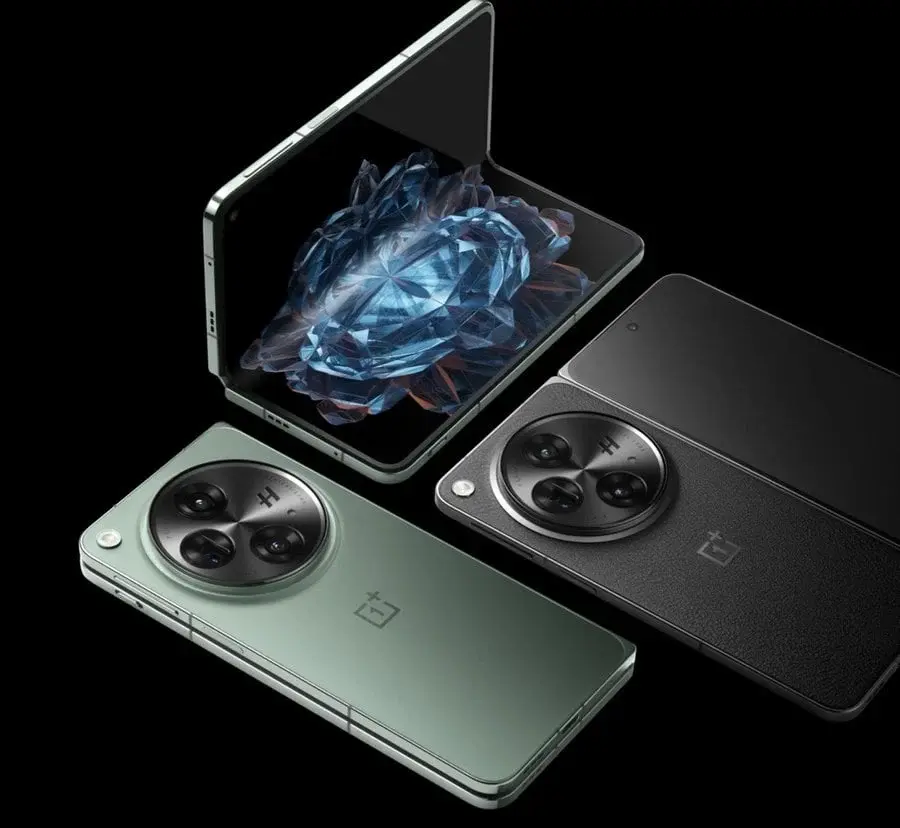
    The debut of the OnePlus Open, the company’s first foldable smartphone, has marked a significant milestone in both the Indian and North American markets. The President and COO of OnePlus, Kinder Liu, shared the news on X (formerly Twitter) through an image poster. This poster unveiled that the OnePlus Open has achieved a fresh one-day sales record in both regions. In North America, the device shattered the one-day sales record on its official website, while in India, it clinched the record on Amazon India.

    Robust Sales and Favorable Reception

    The reception of the OnePlus Open in the market has been overwhelmingly positive, with strong sales observed across diverse regions. Initially released in October, the smartphone came with an introductory offer. Fueled by the Qualcomm Snapdragon 8 Gen 2 SoC, this device boasts a maximum of 16GB RAM and 512GB internal storage. It showcases a triple 49-megapixel camera setup at the rear and 20-megapixel and 32-megapixel selfie cameras on the front (main and cover screens).

    Notable Specifications and Features

    The primary display of the OnePlus Open is a tall 7.82-inch foldable AMOLED panel, offering users an immersive visual experience. Alongside this, it includes a 6.31-inch cover display for swift access to notifications and basic functionalities. With a 4,805mAh battery pack, the device ensures prolonged usage throughout the day. Moreover, the OnePlus Open boasts 67W SuperVOOC fast charging support, enabling swift recharging when necessary.

    Sales Data Remain Undisclosed

    Although the OnePlus Open has achieved remarkable sales in India and North America, specific sales figures have not been publicized by OnePlus. Nonetheless, the announcement by Kinder Liu indicates that the device has not only broken one but two sales records this year. The company extends its gratitude to customers for their unwavering support and zeal.

    On the whole, the OnePlus Open has left a lasting impression in the market, establishing new records and garnering positive reviews. With its innovative foldable structure and impressive specifications, the attention it has received is well-deserved. As OnePlus diversifies its product lineup, the anticipation mounts to witness the groundbreaking devices the company has in store for its consumers.

  • Meet the Canoo American Bulldog: A High-Performance Electric Truck

    Meet the Canoo American Bulldog: A High-Performance Electric Truck

    Canoo’s Remarkable Recovery from Recent Challenges

    Canoo, the manufacturer of electric vehicles (EVs), has been making an impressive comeback from the array of problems it has encountered in recent times. Earlier this year, the company successfully concluded a lengthy investigation carried out by the Securities and Exchange Commission (SEC). Presently, Canoo is focused on leaving a lasting impact on the EV market through the introduction of its newest product, the American Bulldog electric pickup truck. During its unveiling, Canoo accentuated that the design and capabilities of this fresh EV are firmly grounded in the essence of the American ethos, highlighting resilience and forward thinking. Noteworthy clients in Canoo’s expanding portfolio include the US Army, NASA, and Walmart.

    A Direct Product Evolution stemming from the Canoo Screaming Eagle

    Regarded as a direct evolution of the Canoo Screaming Eagle, the Canoo American Bulldog EV was supplied to the United States Army for evaluation last year. Canoo asserts that the American Bulldog builds extensively on the company’s swift product advancement and practical field testing. The nomenclature of the pickup truck was drawn from the faithful and daring nature of the American bulldog species. It embodies core American inventiveness and stands as evidence of Canoo’s dedication to personifying the American spirit, articulated by Canoo’s CEO, Tony Aquila.

    An Elegant and Utilitarian Electric Pickup Truck

    The American Bulldog distinguishes itself as a chic and practical electric pickup truck. Nevertheless, uncertainties linger regarding whether the vehicle will eventually transition into production. Canoo has encountered noteworthy hurdles which might have impacted its performance. Although the company has started to derive revenue from its partnerships with the US government, concerns regarding sustainability and longevity persist.

    Embracing Strategic Initiatives for a Radiant Future

    Despite facing challenges, Canoo maintains confidence in its capacity to navigate through adversity. Recently, the company secured $113 million in combined incentives for its assembly and battery module manufacturing establishments. Additionally, Canoo has broadened its footprint in the Class 3 electric cargo van sector, anticipating a favorable improvement in its financial standing. These calculated maneuvers are geared towards ensuring Canoo’s enduring prosperity and competitiveness in the EV industry.

  • China Unveils Internet Speed Milestone: 1.2 Terabits/Sec

    China Unveils Internet Speed Milestone: 1.2 Terabits/Sec

    China Makes History with World’s First Advanced Internet Service Launch

    In a groundbreaking feat that exceeded industry forecasts, China has marked a historic moment by introducing the globe’s inaugural next-generation internet service two years ahead of schedule. This remarkable progress has given birth to a cutting-edge backbone network interlinking key urban centers and showcasing a remarkable data transmission rate of 1.2 terabits per second. Surpassing conventional major internet pathways by over tenfold, this network has been in operation since July, proving its reliability and efficiency during rigorous testing.

    Remarkable Velocity Achieved Through Utilization of Optical Fiber Cabling Infrastructure

    The exceptional speeds attained by China’s novel network can be attributed to an extensive optical fiber cabling architecture stretching more than 3,000 kilometers. This network links Beijing, Wuhan, and Guangzhou and is the culmination of a collaborative initiative involving Tsinghua University, China Mobile, Huawei Technologies, and Cernet Corporation. This accomplishment signifies a significant advancement in global internet speeds, superseding the recent upgrade of the United States’ Internet2, which operates at 400 gigabits per second.

    Ambitious Future Internet Technology Infrastructure (FITI) undertaking

    The Beijing-Wuhan-Guangzhou linkage is part of the ambitious Future Internet Technology Infrastructure (FITI) endeavor, which has been in the works for a decade. Spearheaded by Wu Jianping of the Chinese Academy of Engineering, this project aims not only for a superfast line but also to lay the groundwork for an even speedier internet in the forthcoming years. Highlighting the network’s remarkable capacity, Huawei Technologies’ Vice President Wang Lei emphasized its capability to transfer data equivalent to 150 high-definition films in just one second.

    Reliable and Economical Framework

    The fresh network is likened to a high-speed train track, replacing numerous standard tracks to accommodate the same volume of data. This analogy underscores the system’s efficacy and cost-effectiveness, streamlining management processes while managing significantly larger data loads. Enhancing internet speeds and impacting national education, research, and emerging requirements in data transfer for applications such as connected electric vehicles and industrial 5G technology, this system represents a significant stride forward.

    A Landmark Achievement for China’s Sovereignty in Technology

    The FITI project, backed by the government and overseen by the Education Ministry, signifies a pivotal moment in internet technology and China’s quest for technological independence. The network’s evolution entailed the domestic production of all software and hardware components, signaling a departure from China’s past reliance on foreign technologies. The strides made in routers, switches, and optical fiber connections underscore China’s expanding competence in internet technology.

    China’s initiation of the world’s premier next-generation internet service stands as a notable feat that transcends industry projections. With its remarkable data transmission speeds and expansive network reach, this fresh backbone infrastructure signifies a significant advancement in global internet velocities. By focusing on efficiency, cost-effectiveness, and domestic technology production, China underscores its dedication to technological self-reliance. As the FITI initiative continues to blaze a trail for a swifter internet in the future, China solidifies its role as a worldwide front-runner in internet technology.

  • China’s Electric Vehicle Revolution: Surpassing subsidy reductions, propelling global EV dominance through extraordinary sales achievements

    China’s Electric Vehicle Revolution: Surpassing subsidy reductions, propelling global EV dominance through extraordinary sales achievements

    China Continues to Lead Global Electric Vehicle Sales

    China, the driving force behind the global electric vehicle (EV) surge, continues to defy expectations with record-breaking sales, particularly in October. Despite the conclusion of an 11-year subsidy scheme for EV purchases in 2022, local authorities in China have stepped in, offering aid, tax rebates, and subsidies, fueling a remarkable 29% year-to-date increase in September. Notably, October’s figures reveal that China’s EV demand remains robust, showcasing resilience even after subsidy cuts.

    China’s Dominance in the Global EV Market

    Mainland China’s dominance in the global EV market is unmistakable, representing a staggering 55% of global EV sales in H1 2023, accounting for 3.4 million units. While the growth rate has moderated to 43%, a notable decrease from the extraordinary 118% seen in H1 2022, the sheer volume underscores China’s pivotal role in the ongoing EV revolution.

    Challenges and Opportunities

    The end of China’s EV support scheme did not come without challenges. Disruption, uncertainty, and a price war ensued, with Tesla leading the charge. BYD, a prominent Chinese EV brand, emerged as a leader, facing headwinds from a Tesla-led price war that posed challenges for smaller brands in the fiercely competitive market.

    Continued Strong Performance Expected

    However, experts anticipate a continued strong performance for China in 2023, asserting its position as the world’s largest auto market and a key driver of global EV sales. The final two months of the year are projected to be seasonally high for vehicle sales in China.

    Resilience and Adaptability

    As the global EV market charts new territory, China’s steadfast commitment to sustaining EV demand, despite subsidy cuts, underscores the resilience and adaptability of the country’s burgeoning electric vehicle sector. The nation’s ability to navigate challenges and maintain momentum positions it as a linchpin in the ongoing global transition toward sustainable transportation.

  • Samsung received $8 billion from Google to secure its role as the default search engine, app store, and voice assistant.

    Samsung received $8 billion from Google to secure its role as the default search engine, app store, and voice assistant.

    Google’s Multibillion-Dollar Strategy to Dominate Android Ecosystem

    In a recent antitrust trial involving Google and Epic Games, significant information has come to light regarding Google’s tactics to maintain its dominant position within the Android market. A key aspect of this strategy involves its relationship with Samsung, the largest Android Original Equipment Manufacturer (OEM).

    A Lucrative Partnership

    According to a Bloomberg report, Google paid Samsung a substantial $8 billion over a four-year period to ensure that its key services, including Google Search, Google Assistant, and the Google Play Store, remained the default options on Samsung Galaxy devices. This move was part of Google’s broader agenda to solidify its presence within the Android ecosystem and discourage OEMs from promoting competing services. For instance, Samsung has its own Bixby voice assistant and Galaxy Store, which could have potentially overshadowed Google’s offerings.

    The Crucial Role of Samsung Devices

    James Kolotouros, Google’s Vice President for Partnerships, revealed these details during his testimony. He emphasized that Samsung’s contribution accounted for more than half of the Google Play Store’s revenue, underscoring the crucial role of Samsung devices in Google’s ecosystem.

    Project Banyan: Securing Dominance

    This partnership between Google and Samsung forms part of a larger initiative by Google, known as Project Banyan, aimed at maintaining the dominance of its services on Android devices. Under this project, Google not only secured its apps’ pre-eminence on devices but also shared advertising revenue and offered incentives to OEMs for prioritizing Google’s apps. For instance, in 2020, Google proposed spending $2.9 billion, which would increase to $4.5 billion by 2023, to ensure the availability of its search, Play, and other critical apps on various devices, including those from non-Android OEMs and wireless carriers.

    Responding to Competition

    Furthermore, Google’s agreement with Samsung initially included a proposal to prevent the Galaxy Store from being placed on home screens, though this plan was later abandoned. This strategy was partly in response to competition from Apple, as Google aimed to improve the Android experience to attract potential iPhone switchers.

    Overall, the revelations from the antitrust trial shed light on Google’s multibillion-dollar strategy to dominate the Android ecosystem. By investing heavily in its partnership with Samsung and implementing Project Banyan, Google aims to solidify its position and maintain its control over key services and revenue streams within the Android market.